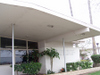
Ceiling Collapse Attributed to Construction Defect
May 19, 2011 — May 16, 2011 - CDJ Staff
WSMV, Nashville reports that the ceiling collapse in a Franklin, Tennessee Kohl’s was attributed to a construction defect by fire officials. The officials noted that the ceiling was renovated at the time. No injuries were reported.
�The report notes that “inspectors were supposed to look at the renovations next week, but fire officials said that will have to be delayed until another time.”
�Read the full story…
Analysis of the “owned property exclusion” under Panico v. State Farm
March 8, 2011 — March 8, 2011, Colorado Construction Litigation
The U.S. Court of Appeals for the Tenth Circuit recently concluded that the “owned property exclusion” applied to bar coverage for claims of property damage. See Panico v. State Farm Fire and Cas. Co., 2011 WL 322830 (10th Cir. 2011). In Panico, the plaintiffs sold property in Aspen, Colorado to the Taylors, who sued the Panicos upon discovering the property was not as represented. After refusing to defend, the Panicos sued State Farm for breach of contract. The district court concluded that the Taylors’ claims were not covered under the Panicos insurance policies and granted summary judgment in State Farm’s favor. The U.S. Court of Appeals for the Tenth Circuit affirmed.
�Mr. Panico built the house on the property as well as several additions to the house. As the Taylors lived in Florida, they primarily relied on their real estate agent and an inspector to ensure the property was acceptable. According to their complaint, the Taylors discovered that the house was “virtually uninhabitable due to serious design and construction defects, mold, rodents, and drainage problems.” Id. at *1. In their complaint, the Taylors asserted three claims for relief against the Panicos based upon misrepresentation and fraudulent concealment about the condition of the property.
�Read the full story...
�Reprinted courtesy of Heather M. Anderson of Higgins, Hopkins, McClain & Roswell, LLP. Ms Anderson can be contacted at anderson@hhmrlaw.com
Condo Owners Worried Despite Settlement
September 13, 2012 — CDJ Staff
KB Homes may have settled a construction defect claim with Willowbrook Condominium Association, but some of the owners are still concerned about the repair process. The Sarasota, Florida Herald Tribune reports that one homeowner’s living room “ends with a white tarp.” He told the paper, “We feel like we’re not even owners of our own home.” A neighbor wondered “what happens when people get displaced while their homes are gutted?”
�As part of the agreement, the condominium association will be selecting a contractor to repair the problems, while the cost will be paid by KB Homes. Nevertheless, at least one owner fears for their ability to resell his home, noting that even after repairs have been made, “do you think someone’s going to come in here and buy?”
� Read the full story…
Former New York Governor to Head Construction Monitoring Firm
September 13, 2012 — CDJ Staff
David Paterson, who succeeded Eliot Spitzer as Governor of New York, has started a new venture after leaving the Governor’s office in construction integrity monitoring. WNYC reports that Paterson will be the majority owner of Icon Compliance Services, LLC, which will both conduct investigations and work with law enforcement officials. Paterson says that in government projects “often concessions are made for political reasons in the public sector and then you never really get a product that you paid for.”
�Paterson will be working with a former vice president of Bovis Construction, Brian Aryai, who is also a former U.S. Treasury Agent. Aryai said that “it is astounding that some of the fraud that has come to the surface in the recent past,” and describes it as “almost laughable they were not detected.” Aryai tipped federal prosecutors that Bovis had been over billing on projects for at least a decade.
� Read the full story…
Arbitration Clause Found Ambiguous in Construction Defect Case
October 28, 2011 — CDJ Staff
The California Court of Appeals ruled on September 28 in the case of Burch v. Premier Homes. Ms. Burch bought a home after negotiating various addendums to the contract. The contract was a standard California Association of Realtors contract to which both the buyer and seller made additions. At issue in this case was paragraph 17 of the contract which included that “Buyer and Seller agree that any dispute or claim in Law or equity arising between them out of this Agreement or resulting transaction, which is not settled through mediation, shall be decided by neutral, binding arbitration.”
The seller/defendant’s Addendum 2 “included provisions relating to the arbitration of disputes that may arise.” Ms. Burch’s realtor, Lisa Morrin, told Burch that “she had never seen a proposed contractual provision that would require a home buyer to agree to arbitrate with a builder over construction defects.” Ms. Burch told Morrin that she did not want to buy the property if she would have to give up her rights under California law.
As part of Addendum 2, the buyer had to buy a warranty from the Home Buyers Warranty Corporation. The sale was held up for a while, as Ms. Burch waited for a copy of the warranty. When she received it, she took further exception to Addendum 2. Scott Warren of Premier Homes said he could not sell the property without Addendum 2. Ms. Burch told her realtor that despite the claims made by Mr. Warren that this was for her benefit, she felt it was more to the benefit of Premier Homes. Don Aberbrook of HBW agreed to the clause, contained in the final sentence of Addendum 2, being struck.
Subsequent to buying the home, Burch submitted a claim concerning construction defects. HBW denied the claim and Burch began an action against the defendants. Premier filed a motion to compel arbitration which Burch opposed.
The trial court ruled that the striking out of the arbitration clause at the end of Addendum 2 “created a conflict with respect to the parties’ intent as to the scope of arbitration.” The trial court found that “the parties’ intention was to preserve Burch’s right to make state law claims including her right to a jury trial for any non-warranty claims against the builder.”
The appeals court in their ruling looked at the standard of review and concluded that the purchase agreement was ambiguous and that extrinsic evidence was required to resolve that ambiguity. As the contract contained contradictory provisions as to whether or not arbitration was required, it was necessary for the trial court to examine these claims. The appeals court found that the evidence supported the conclusions of the trial court.
Finally, the appeals court found that “there was no valid agreement to arbitrate disputes.” The court noted that arbitration can only happen by mutual consent and “it is clear that Burch did not enter into an agreement to arbitrate any construction defect disputes she might have.”
Read the court’s decision…
Florida Property Bill Passes Economic Affairs Committee with Amendments
April 14, 2011 — April 14, 2011 Beverley BevenFlorez - Construction Defect Journal
The Florida Property Bill (HBB 803) was passed by the Economic Affairs Committee by a vote of 11-7, according to Property Casualty 360, after adopting nine new amendments. The additions to the bill included limiting notice of claims to a set number of years, extending the statute of limitation on property claims from five years to six years, among others.
�HB 803 and SB 408, the Senate companion bill, focus primarily on residential property insurance. They make changes to the Florida Hurricane Catastrophe Fund, while also promoting increased notification of policy changes to policyholders. Sections of the bills provide minor fixes such as renaming Citizens Property Insurance Corporation to Taxpayer-Funded Property Insurance Corporation. However, other sections of the bills contain more significant policy changes such as sinkhole coverage and hurricane claims.
�The bills’ intent, according to the SunSentinel.com, is to reduce fraudulent claims and to bring new insurers into the insurance market. However, SunSentinel.com also reports that the bills may drastically increase property insurance premiums.
�Read the full Property Casualty 360 article...
�Read the full Sun Sentinel article...
Damage During Roof Repairs Account for Three Occurrences
August 2, 2012 — Tred Eyerly, Insurance Law Hawaii
Southgate Gardens Condominium had buildings damaged by Hurricane Wilma in 2005. See Mid-Continent Cas. Co. v. Basedeo, 2012 U.S. App. LEXIS 11864 (11th Cir. June 12, 2012). First State Development Corporation was hired by Southgate to do repairs.
On November 1, 2005, First State completed tarping on the buildings. Thereafter, on November 11, 2005, First State contracted with Southgate to remove and replace the roofs of the Southgate Buildings.
The tarps placed by First State were inadequate and allowed water to enter the unit of Wayne Basdeo and cause damage. Further, when it attached the tarps, First State caused holes to be made in the roofs of buildings, leading to additional damage. First State also left open the mansards (a type of roof which has two slopes on all all sides, but with the lower slope steeper that the upper one). Finally, the peeled-back condition of the roofing allowed rain to enter.
Basdeo filed a claim with Mid-Continent.
Read the full story…
Reprinted courtesy of Tred R. Eyerly, Insurance Law Hawaii. Mr. Eyerly can be contacted at te@hawaiilawyer.com
Pier Fire Started by Welders
August 2, 2012 — CDJ Staff
Welders working on Pier 29 in San Francisco were preparing the building for the America’s Cup sailing race. Instead, they accidentally caused $2.4 million in damages. Mindy Talmadge, a fire department spokesperson, attributed the fire to crews welding a latter to a wall. According to Talmadge, a spark entered a crack in the concrete wall and “the wood on the building underneath was really dry.” It took firefighters more than two hours to extinguish the blaze.
Read the full story…
Texas “your work” exclusion
January 6, 2012 — CDCoverage.com
In American Home Assurance Co. v. Cat Tech, L.L.C., No. 10-20499 (5th Cir. Oct. 5, 2011), claimant Ergon hired insured Cat Tech to perform service on a reactor at Ergon’s refinery. During a start-up of the reactor after Cat Tech had completed its work, the reactor suffered damage. Cat Tech performed additional service and repairs. However, again upon start-up of the reactor, it suffered additional damage. Ergon hired another contractor to repair the reactor. Ergon initiated arbitration proceedings against Cat Tech. Cat Tech’s CGL insurer American Home defended Cat Tech against the Ergon arbitration under a reservation of rights.
Read the full story…
Reprinted courtesy of CDCoverage.com
Lower Court “Eminently Reasonable” but Wrong in Construction Defect Case
July 10, 2012 — CDJ Staff
Noting that “circuit court’s orders are eminently reasonable, logical and just” the Supreme Court of Appeals of West Virginia has granted a writ to halt enforcement of these orders and to compel arbitration instead in the case of State v. Tucker. The initial case concerned claims that an HVAC system had been improperly designed, constructed, manufactured, or maintained, leading to serious problems. Glenmark Holding, the owner of the Suncrest Executive Plaza brought a lawsuit against seven defendants. Three of the defendants, Morgan Keller, Inc, York International Corporation, and Johnson Controls, Inc. argued that Glenmark was obligated to enter into arbitration.
Glenmark and the other defendants argued that the motions for arbitration should be denied “so all the claims and cross-claims of the parties could be litigated in one forum, in one proceeding.” The circuit court noted that arbitration is preferred over litigation because of its supposed “expeditious, economic resolution of issues,” but that in this case, “the petitioners would expend additional, not fewer resources responding to the parties’ claims and cross-claims.” As “compulsory arbitration would be insufficient and inequitable” the court denied the request, finding the arbitration clauses “unconscionable and, therefore, unenforceable.”
Morgan Keller, York, and Johson argued that “the interpretation of arbitration clauses is governed exclusively by the Federal Arbitration Act.” The appeals court found that “the circuit court was within its authority to consider Glenmark’s claim that the arbitration clauses were unenforceable.” However, the appeals court rejected the circuit court’s conclusion about the “piecemeal” resolution of the conflict, as it contradicts a Supreme Court ruling. The Supreme Court stated in 1983 that the FAA “requires piecemeal resolution when necessary to give effect to an arbitration agreement.” In a 1985 decision, the Court held that a court could “not substitute [its] own views of economy and efficiency.”
Nor could the court find the arbitration clause to be unconscionable or unenforceable. The court noted that the contract was a standard AIA form, and was amended by the parties involved, whom the court characterized as “commercially sophisticated.” The court found that the agreement limited the rights of all parties and was not one-sided.
As the arbitration clause was neither unconscionable nor unenforceable, and Supreme Court rulings preclude a court from substituting its own procedures, even when these are “eminently reasonable, logical and just,” the appeals court halted the order of the circuit court, sending the matter to arbitration.
Read the court’s decision…
Gilroy Homeowners Sue over Leaky Homes
February 10, 2012 — CDJ Staff
Two years into a lawsuit against Shapell Homes, the builder of a subdivision called Eagle Ridge in Gilroy, California, homeowners have joined or left the lawsuit. About fifty homeowners are still in the suit, which contends that construction defects have lead to water intrusion in their homes. The lawyer for the homeowners contends that more than a hundred homes have construction defects.
�One homeowner said that soon after he joined the suit, Sharpell sent workers to his home who repaired problems to his satisfaction. “They came in within two weeks and fixed everything,” said Frank Lowry. Another homeowner, Wilson Haddow, said that he was “quite happy” after Shapell repaired problems.
�Others weren’t quite so happy. Greg Yancey said that problems had “been a nightmare” and that “it just doesn’t feel like home.” He said that his “house is possessed,” with problems that include walls that bow out and a balcony that drips rainwater to the front door. His home is currently worth far less than the $700,000 he paid in 2007.
Read the full story…
“Other Insurance” and Indemnity Provisions Determine Which Insurer Must Cover
September 1, 2011 — Tred Eyerley, Insurance Law Hawaii
A policy’s “other insurance” clause and a contractual indemnity provision were at the root for determining which of two insurers had to cover for injuries at a construction site. Valley Forge Ins. Co. v. Zurich Am. Ins. Co., 2011 U.S.Dist. LEXIS 76061 (N.D. Calif. July 14, 2011).
Hathaway was the general contractor at a demolition and construction project. Hathaway was insured by Zurich. Reinhardt Roofing was the roofing subcontractor. Reinhardt was insured by Valley Forge under a policy which named Hathaway as an additional insured. The subcontract also required Reinhardt to indemnify Hathaway for acts or omissions arising from Reinhardt’s work unless Hathaway was solely negligent.
Four of Reinhardt’s workers were injured when a canopy roof on which they were working collapsed. At the time of the accident, Hathaway’s on-site supervisor was inspecting a gap in the canopy roof, but did not order Reinhardt’s workers to stop working.
Read the full story…
Reprinted courtesy of Tred R. Eyerly, Insurance Law Hawaii. Mr. Eyerly can be contacted at te@hawaiilawyer.com
Read Her Lips: “No New Buildings”
November 18, 2011 — CDJ Staff
Martha Johnson, the head of the General Services Administration, has said that her agency will not be building any new buildings in the near future. Among other duties, the GSA is responsible for the building, renovating, and leasing of federal office space. The White House had proposed $840 million in new construction, the Senate only $56 million. The House did not appropriate any money for the agency to use for new construction.
In addition to cutbacks on new buildings, Congress is suggesting only $280 million in repairs of existing government buildings. In order to cut back, the GSA has dropped plans to renovate their own offices in favor of renovations at the Department of Homeland Security and the Food and Drug Administration.
Read the full story…
Demand for Urban Living Leads to Austin Building Boom
August 16, 2012 — CDJ Staff
The New York Times reports that Austin is undergoing a building boom as a high-tech firms, including Facebook and Google, have moved into the downtown area. With them, comes a need for more apartment buildings and more retail space. Mike Kennedy, the president and chief executive of an Austin real estate firm, told the Times “the office space was here, the housing came, and retail is arriving last to the scene.” Currently, two large projects that will add about 500 apartment units is underway, including a 222-unit, 18-story building, and another that will contain 277 units. Apartment occupancy in Austin is at ninety-seven percent.
Developers also have hotels and more office space planned. The area has about 6,000 hotel rooms with an additional 2,000 planned, but events in Austin can bring in more people than the city’s 30,000 hotel rooms can accommodate. Office space is eighty-eight percent occupied, and a lack of office space could cause firms to look elsewhere.
Read the full story…
Ohio “property damage” caused by an “occurrence.”
May 18, 2011 — May 18, 2011 - CDCoverage.com
In JTO, Inc. v. State Automobile Mut. Ins. Co., No. 2010-L-062 (Ohio Ct. App. March 25, 2011), general contractor JTO was sued by hotel project owner Marriott for breach of contract and warranties seeking damages for the repair of construction defects resulting in moisture penetration property damage to interior components. JTO filed a third party complaint against subcontractor Farizel and also tendered its defense as an additional insured under Farizel’s State Auto CGL policy.
�Read the full story…
�Reprinted courtesy of CDCoverage.com
�
�Census Bureau, HUD Show Declines in Residential Construction
�May 17, 2011 – CDJ Staff
�The U.S. Census Bureau and the Department of Housing and Urban Development released their summary of residential construction for April 2011 on May 17.
�Building permits for privately owned housing units were down 4% from last month and 12% from last year. Similarly, privately-owned housing starts were down 10% from March and 23% below the previous year.
�For further details, read the Census Bureau/HUD report
General Contractors Must Plan to Limit Liability for Subcontractor Injury
May 18, 2011 — May 18, 2011 - Douglas Reiser in the Builders Counsel Blog
It takes more than a hard hat, but safety checks, a good policy and a smart contract might save you some problems.If you are a general contractor, you will want to pay close attention to this article. A new Washington appellate decision showcases a general contractor’s liability to subcontractors who are injured on the job, when security barriers fail. But can a general limit this liability? Will its contract help?
�In Wrought Corporation, Inc., Appellant V. Mario Interiano (quick note: this opinion is unpublished, but we are here to talk about an issue that was not determined on appeal – WISHA compliance), a subcontractor was injured when a security barrier failed and he fell into an elevator shaft.
�A jury awarded a $1.56 million verdict against the general contractor, and the court of appeals affirmed on the basis that the general contractor has a non-delegable duty to ensure compliance with the Washington Industrial Safety and Health Act of 1973, codified under RCW 49.17 (WISHA).
�Read the full story… �Reprinted courtesy of Douglas Reiser of Reiser Legal LLC. Mr. Reiser can be contacted at info@reiserlegal.com
Contractor’s Coverage For Additional Insured Established by Unilateral Contract
November 18, 2011 — Tred Eyerley, Insurance Law Hawaii
The contractor was covered as an additional insured under the subcontractor’s policy even though the parties had never actually signed an agreement to add the contractor to the policy. Evanston Ins. Co. v. Westchester Surplus Lines Ins. Co., 2011 U.S. App. LEXIS 20081 (9th Cir. Oct. 3, 2011).
The policies held by Bellevue Master, the general contractor, required it to be an additional insured under any subcontractor’s liability policy. Northwest Tower Crane Services was a subcontractor. Bellevue Master LLC, faxed a message that Northwest could continue to be a subcontractor on the project if it complied with Bellevue Master’s insurance requirements. Northwest contacted its insurance broker and requested an insurance certificate be issued to Bellevue Master so that it would be an additional insured under Northwest’s policy.
Read the full story…
Reprinted courtesy of Tred R. Eyerly, Insurance Law Hawaii. Mr. Eyerly can be contacted at te@hawaiilawyer.com
Nevada Court Adopts Efficient Proximate Cause Doctrine
February 10, 2012 — Tred Eyerly, Insurance Law Hawaii
Although the Nevada Supreme Court adopted the efficient proximate cause doctrine, it determined it did not apply to salvage coverage under an all-risk policy for a rain-damaged building. Fourth Street Place, LLC v. The Travelers Indemn. Co., 2011 Nev LEXIS 114 (Nev. Dec. 29, 2011).
� Fourth Street owned an office building which was insured by an all-risk policy issued by Travelers. Fourth Street hired Above It All Roofing to repair the roof of the office building. Above It All removed the waterproof membrane on the roof and prepared to replace the membrane the following week. Over the weekend, however, substantial rain hit. On Sunday, Above It All returned to cover the exposed portions of the roof with tarps, but wind later blew the tarps away. The building suffered significant interior damage as it continued to be exposed to the rain.
Read the full story…
� � � Reprinted courtesy of Tred R. Eyerly, Insurance Law Hawaii. Mr. Eyerly can be contacted at te@hawaiilawyer.com