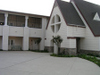
Park District Sues over Leaky Roof
August 2, 2012 — CDJ Staff
The Glen Ellyn Park District has filed suit against multiple firms over the leaks in the Ackerman Sports and Fitness Center. The district alleges at least twenty leaks can be found throughout the facility. In order to prevent further damage, they have put in a system of “buckets, tarps and flexible piping.”
According to the Chicago Daily Herald, the park district has most recently added the project construction manager, the building designer, and insurer that issued a performance bond on the builder. T.A. Bowman Constructors, the builder of the project, sued the park district. They were first name in the district’s countersuit.
The park district isn’t waiting for the outcome of the suit to repair the roof. Instead, they are using existing funds to pay for roof repairs.
Read the full story…
Surveyors Statute Trumps Construction Defect Claim in Tennessee
June 19, 2012 — CDJ Staff
The Tennessee Court of Appeals has issued an opinion in the case of Dale v. B&J Enters. (Tenn. App., 2012), affirming the ruling of the Chancery Court for Knox County. The homeowners purchased properties in Knoxville, Tennessee in 2007 and 2008. Subsequently, according to the complaint, they found “significant sink holes and depressions throughout the subdivision.” The plaintiffs determined that a previous developer in 2004 had been aware of the sink holes. The Knox County Metropolitan Planning Commission, upon giving approval, made requirements that included that sink holes, even if they were filled, had to be designated on the site plans. The developer did not indicate these locations on the final plans. The plaintiffs made claims of “failure to disclose, misrepresentation, misrepresentation by concealment, and violation of the Tennessee Consumer Protection Act.” They filed their suit in June 2009.
The defendants in the initial case, argued that they did not create the final plat, the site plan indicating the features and lot lines. This had been the work of the previous developer. In September, 2009, the plaintiffs amended their complaint to include the previous developer and its engineering firm. The engineering firm disavowed any responsibility. The developer noted that the surveyor, Benchmark Associates, had “failed to properly include the sink holes and/or depressions on the final plat.” In June, 2010, the plaintiffs added Benchmark.
Benchmark argued that the plaintiffs’ claims should be dismissed, as Tennessee has a four-year statute of limitations on claims against surveyors. The final plat was recorded on May 19, 2006, and the plaintiff filed their claims against Benchmark on June 16, 2010, slightly less than a month over four years. The plaintiffs argued that “the real issue [was] the tortious misrepresentation by Benchmark.” The Chancery Court found for Benchmark.
On appeal, the plaintiffs raised three issues. They argued that the trial court applied the wrong section of the law, and should have applied the section applying to construction and not surveyors. They also argued that the timeliness of the claim should be based on when the defects were discovered. The also raised the question of whether the laws concerning surveyors bar claims for misrepresentation. The appeals court upheld the decision of the Chancery Court.
For the plaintiff’s first claim, although the statute addressing deficiencies in construction mentions surveying, an earlier court ruling found that the legislature had removed a reference to surveyors in one part of the statute, but failed to do so in the second part. The earlier court had concluded that the “obvious intent of the legislature was to place all limits on actions against surveyors into the new statute.” As the applicable statute states that “any such action not instituted within this four (4) year period shall be forever barred,” the court held that the plaintiffs’ claims must be time barred. Further, as the intent of the legislature was determined to “place all limits on actions against surveyors into one statute,” the court felt that it could not apply the Consumer Protection Act.
Read the court’s decision…
Manhattan Developer Breaks Ground on $520 Million Project
November 18, 2011 — CDJ Staff
Rebuilding an area of Midtown West that has been condemned for decades, the Gotham Organization has broken ground on a 1,200-unit project that will include housing for a variety of household incomes and a school. One unit of the project will be affordable housing for families of annual incomes up to $40,000. Another will be for middle-income households. Additionally, there will be a 31-story tower with 550 luxury units.
The site CityBiz quotes Mayor Michael Bloomberg, as saying that the project “will grow our economy by creating 2,900 construction-related jobs.” The president of the Gotham Organization, David L. Picket notes that it will “create hundreds of new jobs, generate millions of dollars in revenue for the construction industry, contribute towards the building of a new primary, and provide homes to thousands of New Yorkers.”
Read the full story…
Construction Defect Not a RICO Case, Says Court
August 4, 2011 — CDJ Staff
The US District Court of North Carolina has rejected an attempt by a homeowner to restart her construction defect claim by turning it into a RICO lawsuit. Linda Sharp, the plaintiff in the case of Sharp v. Town of Kitty Hawk, attempted to amend a claim under the Racketeer Influenced and Corrupt Organizations Act (RICO) and argued that her case belonged in the federal courts.
Ms. Sharp sued in November, 2010 claiming construction defects. She sued in federal court, although the court noted that as she and most of the defendants are citizens of North Carolina, the state court would have been the appropriate jurisdiction. Further, the court noted that one federal claim Sharp made was dismissed with prejudice, leaving only the state law claims. These the court dismissed without prejudice, declining to exercise jurisdiction over North Carolina law.
�After the dismissal, Ms. Sharp attempted to amend her complaint after the deadline. To do so, according to the court, she would be required to obtain consent from defendants or leave of the court. She did neither.
�In his opinion, Judge W. Earl Britt rejected her motion for leave to amend. He also granted the defendants’ motion to dismiss. The clerk was directed to close the case.
� Read the court’s decision…
A Loud Boom, But No Serious Injuries in World Trade Center Accident
March 1, 2012 — CDJ Staff
The Wall Street Journal reports that nearly twenty tons of steel fell forty stories at the World Trade Center site on February 16. One person was checked by medical personnel. One person who works in the Financial District said it was “almost like thunder.” Frank Pensabene, one of the ironworkers on the site said that after “loud boom,” “all hell broke loose.” The steel beams and cables fell onto a flatbed truck, which was not occupied at the time.
Read the full story…
Court Sends Construction Defect Case from Kansas to Missouri
August 2, 2012 — CDJ Staff
The United State Court of Appeals for the Tenth Circuit has ruled in Mid-Continent Casualty Company v. The Village at Deer Creek Homeowners Association. The prior case was heard by the United States District Court for the District of Kansas. In this appeal, Mid-Continent sought a declaratory judgement. The Village at Deer Creek Homeowners Association moved to dismiss, and the district court had granted this, giving jurisdiction to the Missouri state courts.
The homeowners association had sued Greater Midwest Builders, Ltd., who had constructed the subdivision, in the Kansas state courts. The suit ended with a verdict against Greater Midwest for more than $7 million. The association and other plaintiffs in that case filed for equitable garnishment against State Auto, Mid-Continent, and Greater Midwest. State Auto removed the garnishment action to federal court in Missouri. Mid-Continent moved to sever the actions against it and transfer the case to the District of Kansas.
Subsequently, the plaintiffs filed a notice of voluntary dismissal in the Western District of Missouri. A second garnishment action followed in which Mid-Continent was named as an additional plaintiff. State Auto again removed to the Western District of Missouri, while Mid-Continent moved to sever and transfer to the District of Kansas. The Kansas court granted the association’s motion to dismiss.
In the appeal, Mid-Continent sought a declaratory judgment. This was denied by the appeals court. The district court “concluded that the Missouri courts were better situated to provide complete relief to all parties involved in the coverage dispute.” The appeals court affirmed the association’s movement to dismiss. Mid-Continent’s motion was denied as moot.
Read the court's decision…
Contractor Burns Down Home, Insurer Refuses Coverage�
May 10, 2012 — CDJ Staff
InsuranceStep reports that a Connecticut insurance company has rejected a claim over a fire in a remodeling project that killed five people. Utica First Insurance states that the coverage was invalid as the insured, Tiberias Construction, had misrepresented information about the company and the work performed in applying for insurance. During a remodel, the contractor allegedly placed fireplace ashes near trash. The trash ignited, leading to the house fire.
� Read the full story…
�
Kansas Man Caught for Construction Scam in Virginia
December 20, 2012 — CDJ Staff
A Virginia court sent charges of construction fraud against a Kansas man to a grand jury. Larry Foster visited homes in Bedford County, Virginia, tested the water, and told homeowners that they needed new water filtration systems. The homeowners paid, but Mr. Foster never delivered. One homeowner who testified paid him $1,690. Another paid even more, giving $3,090 to Mr. Foster. In order to dupe his victims, Foster used the address of a chiropractor as a business address, unbeknownst to the actual business there.. He is wanted for charges in other states as well.
Read the full story…
Boston’s Tunnel Project Plagued by Water
August 11, 2011 — CDJ Staff
Boston’s Tip O’Neil Tunnel, part of the “Big Dig” project, is suffering from water leaks which has lead to millions of dollars of damage, according to an article in the Boston Globe. The report quotes Frank DePaola, the highway administrator, as likening the water leaks to “three garden hoses.” The project’s chief engineer notes that those “three garden hoses” add up to 17 million gallons a year.
�Further, the chief engineer reports notes that the leaks could compromise both safety and structural integrity. Problems have included a 110-pound light fixture that fell in February, ventilation ducts clogged with ice during the winter, and mold in utility rooms and ventilation buildings.
Read the full story…
Tennessee Court: Window Openings Too Small, Judgment Too Large
November 18, 2011 — CDJ Staff
The Tennessee Court of Appeals has issued a ruling in the case of Dayton v. Ackerman, upholding the decision of the lower court, even as they found that the award was incorrectly computed. The Daytons purchased a house that had been designed and built by the Ackermans, who operated a construction business. The court noted that the warranty with the house promised that “for a period of 60 days, the following items will be free of defects in materials or workmanship: doors (including hardware); windows; electric switches; receptacles; and fixtures; caulking around exterior openings; pluming fixtures; and cabinet work.”
Soon, the Daytons began to experience problems with the house. Many were addressed by the Ackermans, but the Daytons continued to have problems with the windows. Neither side could specify a firm date when the Ackermans were contacted by the Daytons about the window problems. The Ackermans maintained that more than two years passed before the Daytons complained about the windows. The lower court found the Daytons more credible in this.
Initially, the Daytons included the window manufacturer in their suit, but after preliminary investigations, the Daytons dropped Martin Doors from their suit. Martin Doors concluded that the windows were improperly installed, many of them “jammed into openings that were too small for them.”
After the Daytons dismissed Martin Doors, the Ackermans sought to file a third party complaint against them. This was denied by the court, as too much time had elapsed. The Ackermans also noted that not all of the window installations were defective, however, the courts found that the Daytons ought not to have mismatched windows.
Unfortunately for the Daytons, the window repair was done incorrectly and the windows were now too small for the openings. The firm that did the repair discounted the windows and Daytons concealed the problem with plantation shutters, totalling $400 less than the original lowest estimate. However, the appeals court noted that it was here that the trial court made their computation error. Correcting this, the appeals court assessed the Ackermans $12,016.20 instead of $13,016.20.
Finally, the Ackerman’s expert was excluded as he had changed his testimony between deposition and trial. The trial reviewed the expert’s testimony and had it been admissible, it would not have changed the ruling.
Read the court’s decision…
Supreme Court of Oregon Affirms Decision in Abraham v. T. Henry Construction, et al.
April 20, 2011 — April 20, 2011 Beverley BevenFlorez - Construction Defect Journal
After reviewing the decision in Abraham v. T. Henry Construction, et al., the Oregon Supreme Court affirmed that a tort claim for property damage arising from construction defects may exist even when the homeowner and the builder are in a contractual relationship.
�When the case was initially filed, the plaintiffs alleged breach of contract and negligence. The defendants moved for summary judgment arguing that one, the claim was barred by the six-year statute of limitations and two, no special relationship (such as one between a doctor and patient) existed. The court agreed with the defendants. However, the Court of Appeals while affirming the trial court’s decision on breach of contract reversed the decision on negligence. The Court of Appeals stated that an administrative or statute rule could establish a standard of care independent from the contract.
�The Oregon Supreme Court gave an example of cases where a tort claim could exist when a contract is present: “If an individual and a contractor enter into a contract to build a house, which provides that the contractor will install only copper pipe, but the contractor installs PVC pipe instead (assuming both kinds of pipe comply with the building code and the use of either would be consistent with the standard of care expected of contractors), that failure would be a breach of contract only. […] If the failure to install the copper pipe caused a reduction in the value of the house, the plaintiff would be able to recover that amount in an action for breach of contract. […] On the other hand, if the contractor installed the PVC pipe in a defective manner and those pipes therefore leaked, causing property damage to the house, the homeowner would have claims in both contract and tort. […] In those circumstances, the obligation to install copper instead of PVC pipe is purely contractual; the manner of installing the pipe, however, implicates both contract and tort because of the foreseeable risk of property damage that can result from improperly installed pipes.”
�Read the court’s decision…
Background Owner of Property Cannot Be Compelled to Arbitrate Construction Defects
November 7, 2012 — CDJ Staff
In Truppi v. Pasco Engineering, John Quattro sued Property Management Contractors, Inc. over construction defects in William Truppi’s home. All parties are named in the suit. The California Court of Appeals ruled that Property Management Contractors, Inc. (PMCI) could not compel Mr. Quattro to arbitration.
The background of the case involves two houses built in Encinitas, California by PCMI: one for Mr. Truppi at 560 Neptune, and one for Mr. Quattro at 566 Neptune. Both contracts contained an arbitration provision. Mr. Quattro signed the contract for his residence and Mr. Truppi signed the other. Mr. Quattro then sued PCMI and its principal, William Gregory. Mr. Quattro claimed to be the true contracting party for the 560 Neptune residence and a third party beneficiary of the contract Mr. Truppi signed, and stated that PCMI was aware of this.
PCMI in a demurrer stated that Quattro “had only a ‘prospective beneficial interest in the property upon its eventual sale or lease.’” Mr. Quattro amended his complaint to account for the issues raised by PCMI. The court rejected PCMI’s demurrer to the amended complaint.
Finally, PCMI and Gregory asserted that Quattro was “not the real party in interest” and could not sue. PCMI continues to assert that Quattro lacks standing, but their attorney sent Quattro an e-mail stating, “While my client disputes that you are a party, and that you lack standing to assert the claim, to the extent you do so I believe you are obligated to proceed by way of arbitration.”
The court did not cover the issue of Quattro’s standing in the case, only if he could be compelled to arbitration. The court affirmed the lower court’s finding that Quattro could not be compelled to arbitrate the construction defect claim as neither he nor Gregory signed the contract in an individual capacity. Further, the court noted that PCMI and Gregory “denied the existence of an agreement between themselves and Quattro on the 560 contract,” and cannot compel arbitration on a non-existent agreement. And while non-signatories can, in some situations be compelled to arbitrate, the court found that “these cases are inapplicable because here they seek to have the alleged third party beneficiary (Quattro) compelled by a nonsignatory (Gregory).” The arbitration clause in question “expressly limited its application to persons or entities that signed the 560 contract.”
As Mr. Quattro was not a signatory to that agreement, the court found that he could not be held to its arbitration provision.
Read the court’s decision…
Plaintiffs In Construction Defect Cases to Recover For Emotional Damages?
March 16, 2011 — March 16, 2011 - Construction Defect Journal Staff
A recent post to the Markusson, Green, Jarvis Blog reports on an important appeals decision which promises to impact construction defect litigation in Colorado.
�The post provides analysis on the recovery of inconvenience damages. The focus of the piece is centered on Hildebrand v. New Vista Homes II, LLC, 08CA2645, 2010 WL 4492356 (Colo. Ct. App. Nov. 10, 2010), wherein it was held that " the plain language of Construction Defect Action Reform Act permits recovery of damages for inconvenience, and that the trial court did not err by allowing inconvenience damages to go to the jury".
�According to the MGJ Blog "The Hildebrand decision is important because it provides Construction Defect Plaintiffs with a foothold for collecting emotional damages. While several questions of law remain as to who or under exactly what circumstances a Plaintiff may recover these types of damages, the Hildebrand case has clearly set forth that emotional damages may be considered as part of actual damages pursuant to CDARA."
�Read Full Story...
In Colorado, Primary Insurers are Necessary Parties in Declaratory Judgment Actions
December 9, 2011 — Heather M. Anderson, Colorado Construction Litigation
The United States District Court for the District of Colorado recently ruled that primary insurers are necessary parties, under Fed. R. Civ. P. 19, in a declaratory judgment action being pursued by an excess carrier. See Insurance Co. of State of Pennsylvania v. LNC Communities II, LLC, 2011 WL 5548955 (D. Colo. 2011). Federal Rule of Civil Procedure 19 is almost identical to Colorado Rule of Civil Procedure 19 and pertains to the joinder of persons needed for “just adjudication.” The Insurance Co. of the State of Pennsylvania (“ICSOP”) sought a declaratory judgment that it did not have a duty to defend or indemnify the defendants (collectively referred to as “Lennar Companies”) with regard to the underlying lawsuit brought by The Falls at Legend Trail Owners Association, Inc. (the “HOA”). Id. at *2. In its lawsuit, the HOA alleged Lennar Companies were liable for construction defects at The Falls at Legend Trail residential development.
Lennar Companies held two primary insurance policies, one issued by OneBeacon Insurance Company f/k/a General Accident Insurance Company (“General Accident”) and the other issued by American Safety Risk Retention Group, Inc. (“American Safety”). Lennar Companies also carried excess policies issued by ICSOP and Ohio Casualty Insurance Company (“Ohio Casualty”).
Read the full story…
Reprinted courtesy of Heather M. Anderson of Higgins, Hopkins, McClain & Roswell, LLP. Ms Anderson can be contacted at anderson@hhmrlaw.com
Colorado statutory “property damage” caused by an “occurrence”
August 4, 2011 — CDCoverage.com
Colorado General Assembly House Bill 10-1394 was signed into law by the Governor on May 21, 2010, codified at Colo. Rev. Stat. § 13-20-808 (2010)
�13-20-808. Insurance policies issued to construction professionals
�(1) (a) The general assembly finds and determines that:
�(I) The interpretation of insurance policies issued to construction professionals is of vital importance to the economic and social welfare of the citizens of Colorado and in furthering the purposes of this part 8.
�(II) Insurance policies issued to construction professionals have become increasingly complex, often containing multiple, lengthy endorsements and exclusions conflicting with the reasonable expectations of the insured.
�(III) The correct interpretation of coverage for damages arising out of construction defects is in the best interest of insurers, construction professionals, and property owners.
� Read the full story…
�Reprinted courtesy of CDCoverage.com
South Carolina Legislature Redefining Occurrences to Include Construction Defects in CGL Policies
April 1, 2011 — April 1, 2011 Beverley BevenFlorez - Construction Defect Journal
The question of what circumstances must be in place for construction defects to be covered in a general commercial liability (CGL) policies is being raised by the courts and the legislature in South Carolina. The Insurance Journal reports that the American Insurance Association as well as the Property and Casualty Insurers Association of America are speaking out on the issue.
The problem seems to be centered on what defines an “occurrence.” CGL policies were not meant to cover faulty workmanship, according to the filing by the South Carolina Supreme Court. In January of this year, the South Carolina Supreme Court reversed the ruling in Crossmann Communities v Harleysville Mutual declaring that “Respondents cannot show the damage here was the result of an occurrence. Rather, the damage was a direct result and the natural and expected consequence of faulty workmanship; faulty workmanship did not cause an occurrence resulting in damage.” They focused their attention on the word “accident,” stating that there is a fortuity element that is not diminished.
�The South Carolina legislature reacted by producing a bill that would add new language directly negating the ruling by the Supreme Court. The South Carolina bill S-431 would change the definition of an occurrence in regards to construction defects as follows: “For a liability insurance policy issued to a construction professional, an ‘occurrence’ means, at a minimum: (1) an accident; or (2) continuous or repeated exposure to substantially the same general harmful condition or substance. No additional requirement of a fortuitous event is needed to constitute an ‘occurrence.’”
�S-431 is currently residing in the House Committee on Labor, Commerce and Industry.
�Read the full story...
Another Guilty Plea In Nevada Construction Defect Fraud Case
April 25, 2012 — CDJ Staff
The eleventh defendant has entered a guilty plea in the ongoing federal investigation of construction defect fraud in the Las Vegas area. Mahin Quintero plead guilty to producing a false authentication feature, a misdemeanor. Ms. Quintero’s part in the scheme was to falsely authenticate signatures on loan documents for straw buyers. Ms. Quintero stated in court that she had been ordered to destroy her notary book three years ago. According to her plea bargain, the straw buyers did not appear in front of her when she notarized their signatures. As part of the scheme, the straw buyers would take control of homeowners associates, sending construction defect complaints and repairs to favored firms.�
Read the full story…
�
Contractor Convicted of Additional Fraud
November 18, 2011 — CDJ Staff
A Pennsylvania contractor in prison for fraud has been convicted with insurance fraud. The York Daily Record reports that Steven D. Gebhart was already in jail for fraud for about $350,000 for work he either failed to finish or even start or by using substandard materials and practices when he was convicted of insurance fraud. Gebbert’s offices were destroyed in a fire that was later determined to be arson. He was not charged with this, but instead for overestimating his losses to the insurance company. Sentencing for the fraud charge will be on December 21.
Read the full story…