Court Rejects Anti-SLAPP Motion in Construction Defect Suit
September 1, 2011 — CJD Staff
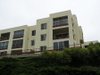
The California Court of Appeals has upheld the denial of an anti-SLAPP motion in Claredon American Insurance Company v. Bishop, Barry, Howe, Haney & Ryder. This case was triggered by a water intrusion problem at a condominium complex, the Terraces at Emerystation, built and sold by Wareham Development Corporation. The insurer, Claredon, retained Risk Enterprise Management as the third party claims administrator. REM retained the law firm Bishop, Barry, Howe, Haney & Ryder. The construction defect case was settled in 2007 and the condo owners moved back by early 2008.
Due to issues with the claims settlement, Claredon filed against REM for “professional negligence, indemnity, apportionment and contribution,” with a cross-complaint that the cross-defendants negligently defended the developer, Wareham.
In response, the cross-defendants filed a motion to strike the cross-complaint under the anti-SLAPP statute. The trial court denied this motion and now this has been upheld by the appeals court.
The court noted that “The fundamental thrust of the cross-complaint is not protected litigation-related speech and petitioning activity undertaken on another’s behalf in a judicial proceeding.”
Read the court’s decision…
Nevada Court Adopts Efficient Proximate Cause Doctrine
February 10, 2012 — Tred Eyerly, Insurance Law Hawaii
Although the Nevada Supreme Court adopted the efficient proximate cause doctrine, it determined it did not apply to salvage coverage under an all-risk policy for a rain-damaged building. Fourth Street Place, LLC v. The Travelers Indemn. Co., 2011 Nev LEXIS 114 (Nev. Dec. 29, 2011).
� Fourth Street owned an office building which was insured by an all-risk policy issued by Travelers. Fourth Street hired Above It All Roofing to repair the roof of the office building. Above It All removed the waterproof membrane on the roof and prepared to replace the membrane the following week. Over the weekend, however, substantial rain hit. On Sunday, Above It All returned to cover the exposed portions of the roof with tarps, but wind later blew the tarps away. The building suffered significant interior damage as it continued to be exposed to the rain.
Read the full story…
� � � Reprinted courtesy of Tred R. Eyerly, Insurance Law Hawaii. Mr. Eyerly can be contacted at te@hawaiilawyer.com
Five Years of Great Legal Blogging at Insurance Law Hawaii
December 9, 2011 — CDJ Staff
Our congratulations to Tred Eyerly who has been blogging at Insurance Law Hawaii for five years now. Over the years, he has posted more than five hundred posts and has provided us all with fascinating insights into the laws on insurance coverage. He describes his blog as “a commentary on insurance coverage issues in Hawaii and beyond.” We are grateful that the “beyond” has just in the last few weeks included Colorado, Illinois, Washington, Minnesota, and Rhode Island (about as far from the island of Hawaii as you can get).
You can read his blog at Insurance Law Hawaii.
Court Grants Summary Judgment to Insurer in HVAC Defect Case
August 4, 2011 — CDJ Staff
The US District Court in Colorado has determined in the case of RK Mechanical, Inc. v. Travelers Property Casualty Company of America that Travelers did not breach its insurance contract when it refused to cover RK Mechanical.
�RK Mechanical performed an HVAC installation for a residential project for which J.E. Dunn Rocky Mountain was the general contractor. As part of the work, RK “installed approximately one hundred seventy-one CPVC flanges, which were manufactured by Charlotte Pipe and Foundry Company.” Two of these flanges failed in June, 2009 leading to water damage. RK replaced the cracked flanges and engaged in water remediation. “Travelers paid Dunn and RK for the costs associated with the water damage associated with the Flange Failure.” The court notes that Travelers did not pay for the cracked flanges, however.
�Subsequently, RK examined the remaining flanges, finding many cracked ones. These were replaced with new ones. Later, all the Charlotte flanges were replaced with ones from another manufacturer. RK applied for coverage.
�All sides brought in their experts: “Microbac Laboratories, Inc. prepared a report on behalf of RK concluding that the Flange Failure was due, in part, to an assembly or workmanship defect in addition to manufacturing defects in the flanges. Higgins & Associates prepared a report on behalf of Travelers concluding that the flanges failed due to improper installation. Plastic Failure Labs prepared a report on behalf of the flange manufacturer concluding that the flanges failed due to improper installation by RK.”
�At this point, Travelers denied coverage. RK sued alleging that the coverage for flange failure and water damage implicitly includes mitigation costs. The court rejected this claim, noting it would do so even if Travelers had paid for the replacement of the first two flanges. Nor did the court find that replacement of the faulty flanges is not "a covered cause of loss." RK also argued that as it was required to mitigate, Travelers was obligated to cover costs. However, the court found that “the mitigation costs expended by RK were not incurred in an effort to avoid damages from a potential breach of contract by Travelers.” The court additionally noted that despite RK’s claims, the Colorado courts have not found a common law duty to mitigate. Finally, the court found that the exclusions in the policy were not in violation of public policy.
� Read the court’s decision…
State Audit Questions College Construction Spending in LA
August 17, 2011 — CDJ Staff
A state audit of the Los Angeles Community College District found many problems with their construction spending. Their report, as described in the Los Angeles Times, found construction money spent for other purposes, such as promotional photography and public relation tours, $28.3 million spent on projects that were later cancelled, and oversight committees that provided no oversight.
�Earlier this year, the LA Times ran a series of articles detailing problems with the Los Angles Community College District’s construction program. The LA Times reported that the State Controller’s audit reached many of the same conclusions.
�The Community College District disputed the findings.
Read the full story…
Battle of “Other Insurance” Clauses
March 23, 2011 —
Tred R. Eyerly -
Insurance Law Hawaii - March 23, 2011
The New York Court of Appeals considered the impact of competing “other insurance” provisions located in both a CGL policy and a D&O policy. See Fieldston Property Owners Assoc., Inc. v. Hermitage Ins. Co., Inv., 2011 N.Y. LEXIS 254 (N.Y. Feb. 24, 2011).
�In the underlying case, Fieldston’s officers were charged with making false statements and fraudulent claims with respect to a customer's right to access its property from adjacent streets. Suit was eventually filed against Fieldston and its officers, alleging several causes of action including injurious falsehood. Damages were sought.
�Fieldston’s CGL policy was issued by Hermitage. The “other insurance” provision stated, “If other valid and collectible insurance is available to the insured for a loss we cover . . . our obligations are limited,” but also stated it would share with all other insurance as a primary policy.
�Read the full story...�Reprinted courtesy of Tred R. Eyerly, Insurance Law Hawaii. Mr. Eyerly can be contacted at te@hawaiilawyer.com
One World Trade Center Due to Be America’s Tallest and World’s Priciest
February 10, 2012 — CDJ Staff
As One World Trade Center rises, so does the price tag. After construction delays and cost overruns, the cost of the building at the site of the September 11 attacks has risen to $3.8 billion. Part of the expense of the skyscraper is the heavily reinforced base of the building. The elevator shafts are also heavily reinforced, all part of guarding against future terrorist attacks.
� In comparison, the world’s tallest tower, the Burj Khalifa in Dubai, cost only $1.5 billion, less than half the cost of One World Trade Center. As a result, the Port Authority does not see the building as being profitable in near future. In order to fund it, the agency is raising tolls on bridge and tunnel traffic.
� Currently, about the half the unfinished building is leased. Construction is expected to conclude in 2013.
Read the full story…
Nebraska Man Sentenced for Insurance Fraud in Construction Projects
July 10, 2012 — CDJ Staff
Thomas Herink has been ordered to repay more than $5 million to his victims and will be serving three years of probation after 18 months in jail for defrauding banks and insurance companies, according to a report in the Insurance Journal. Herink falsified financial statements to lenders and insurers so that his company, Golf Services Group Inc. could participate in construction projects.
Read the full story…
Colorado statutory “property damage” caused by an “occurrence”
August 4, 2011 — CDCoverage.com
Colorado General Assembly House Bill 10-1394 was signed into law by the Governor on May 21, 2010, codified at Colo. Rev. Stat. § 13-20-808 (2010)
�13-20-808. Insurance policies issued to construction professionals
�(1) (a) The general assembly finds and determines that:
�(I) The interpretation of insurance policies issued to construction professionals is of vital importance to the economic and social welfare of the citizens of Colorado and in furthering the purposes of this part 8.
�(II) Insurance policies issued to construction professionals have become increasingly complex, often containing multiple, lengthy endorsements and exclusions conflicting with the reasonable expectations of the insured.
�(III) The correct interpretation of coverage for damages arising out of construction defects is in the best interest of insurers, construction professionals, and property owners.
� Read the full story…
�Reprinted courtesy of CDCoverage.com
Lien Law Unlikely To Change — Yet
May 26, 2011 — Melissa Brumback, Construction Law in North Carolina
For those of you following the proposed revisions to the NC lien law that is currently at the NC House Judiciary Subcommittee B, a quick update: the proposed bill (HB 489) is unlikely to be voted on this legislative session due to its unpopularity with several constituency groups, including both the AIA-North Carolinaand the NC Home Builders Association.
�Read the full story…
�Reprinted courtesy of Melissa Brumback of Ragsdale Liggett PLLC. Ms. Brumback can be contacted at mbrumback@rl-law.com.
Hawaii Building Codes to Stay in State Control
March 1, 2012 — CDJ Staff
The Hawaii State Senate voted down Senate Bill 2692. Had it been passed, the State Building Code Council would have been abolished and building codes would have become the responsibility of county governments. The bill was opposed by the Insurance Institute for Business and Home Safety. Their director of code development, Wanda Edwards said that the bill “would have undermined key components that are essential to an effective state building code regime.”
Read the full story…
There Is No Non-Delegable Duty on the Part of Residential Builders in Colorado
August 16, 2012 — Brady Iandiorio, Higgins, Hopkins, McLain & Roswell, LLC
Recently, in the Arapahoe District Court, the Honorable Michael Spear, issued an order holding that builders do not owe a non-delegable duty to homeowners. In Marx and Corken v. Alpert Custom Homes, Inc., et al., Judge Spear’s order came in response to plaintiffs’ motion for determination of question of law seeking a finding that the defendants owed a non-delegable duty to the plaintiffs and thus, to strike defendants’ designation of nonparties at fault. After being fully briefed, Judge Spear, found that such a non-delegable duty does not exist.
The case arises from the construction of a single-family residence in Aurora, Colorado. Through the construction and interaction with Alpert Custom Homes, Inc. and Scott and Sally Alpert, the defendants, Paul Marx and Kay Corken, the plaintiffs claimed they suffered various damages and losses, and brought claims for breach of contract-warranty, breach of contract, violation of the Colorado Consumer Protection Act, breaches of the implied covenant of good faith, promissory estoppel, willful breach of contract, and quantum meruit. During litigation, the defendants filed a designation of nonparties at fault, which named several parties which were at fault for the alleged construction defects at issue in the case.
Read the full story…
Reprinted courtesy of Brady Iandiorio, Higgins, Hopkins, McLain & Roswell, LLC. Mr. Iandiorio can be contacted at iandiorio@hhmrlaw.com
Irene May Benefit Construction Industry
September 1, 2011 — CDJ Staff
Noting that while it wasn’t the $15 billion disaster some predicted, Hurricane Irene still caused quite a bit of damage on its path up the Eastern Seaboard. Martha White, reporting for MSNBC cites Kinetc Analysis Corp. with an estimate of $7 billion in damage. Carl Van Horn, a professor of public policy at Rutgers University expected an initial decline in construction jobs, due to projects delayed due to the storm’s arrival, but he said, “a few weeks later, employment picks up as people rebuild.”
Kinetic says that one unknown is how much of the damage is insured. They expect only $3 billion of damage will be covered by insurance. This would likely put a drag on consumer spending, as homeowners would have to dig into their own pockets to pay for repairs, according to Karl Smith, associate professor of economics and government at the University of North Carolina at Chapel Hill.
Read the full story…
Texas Law Bars Coverage under Homeowner’s Policy for Mold Damage
July 13, 2011 — Tred R. Eyerly, Insurance Law Hawaii
Although the insurer paid for some of the mold damage at the insured’s home, the Fifth Circuit eventually determined the homeowner’s policy did not cover such damage. Rooters v. State Farm Lloyds, 2011 U.S. App. LEXIS 12306 (5th Cir. June 15, 2011).
�The policy excluded loss caused by hail to personal property unless the direct force of wind or hail made an opening in the roof allowing rain to enter. Further, the policy excluded loss caused by mold or other fungi.
�In 1999, hail and rain caused water damage to the roof and interior of the residence. State Farm paid $19,000 to repair the roof. Another $1,800 was paid for repairs to the interior of the building. In 2002, the insured noticed black mold. State Farm issued an additional check for $4,402 for mold abatement.
� Read the full story…
�Reprinted courtesy of Tred R. Eyerly, Insurance Law Hawaii. Mr. Eyerly can be contacted at te@hawaiilawyer.com
Southern California Lost $8 Billion in Construction Wages
August 17, 2011 — CDJ Staff
Los Angeles and Orange Counties are first on a list no area wants to be on. According to the Sacramento Bee, reporting on data from the U.S. Bureau of Economic Analysis, LA and Orange Counties saw an $8 billion drop in construction wages in 2010, as compared to 2006. In 2006, the region saw payrolls of $26.8 billion, but in 2010, that was reduced to $18.5 billion.
�This was not the largest percentage change. Of the metropolitan areas with the largest declines in construction earnings, Las Vegas saw a $3.6 billion drop, however that represented half of their 2006 totals of $7.2 billion. Conversely, a $3.3 billion drop in the New York area represented only 10% of what had been $33.8 billion in payroll in 2006.
Read the full story…
Defect Claims as Occurrences? Check Your State Laws
July 10, 2012 — CDJ Staff
Although four states have defined construction defect claims as occurrences, contractors are still dealing with “coverage gaps for faulty work construction,” says Mike Tsikoudakis in a piece at Business Insurance. He quotes Julian Ehrlich, the senior VP of claims for Aon Risk Services that “one of the interesting and compelling aspects of the issue of coverage for defective construction is that jurisdictions differ, so policyholders don’t know what they’re going to get.” He further notes that “in context of construction defect, the term ‘occurrence’ is ambiguous.”
One problem, as noted by Jeffrey J. Vita, a partner at Saxe Doernberger & Vita, is that construction firms end up needing to simultaneously defend against defect claims and to also file suit to be certain their insurance firms will cover claims. Insurance for construction defect claims is described as “expensive and somewhat limited.” Mr. Vita expects more states to help this situation with new laws, clarifying what is an occurrence.
Read the full story…
Gilroy Homeowners Sue over Leaky Homes
February 10, 2012 — CDJ Staff
Two years into a lawsuit against Shapell Homes, the builder of a subdivision called Eagle Ridge in Gilroy, California, homeowners have joined or left the lawsuit. About fifty homeowners are still in the suit, which contends that construction defects have lead to water intrusion in their homes. The lawyer for the homeowners contends that more than a hundred homes have construction defects.
�One homeowner said that soon after he joined the suit, Sharpell sent workers to his home who repaired problems to his satisfaction. “They came in within two weeks and fixed everything,” said Frank Lowry. Another homeowner, Wilson Haddow, said that he was “quite happy” after Shapell repaired problems.
�Others weren’t quite so happy. Greg Yancey said that problems had “been a nightmare” and that “it just doesn’t feel like home.” He said that his “house is possessed,” with problems that include walls that bow out and a balcony that drips rainwater to the front door. His home is currently worth far less than the $700,000 he paid in 2007.
Read the full story…
Construction Law Alert: A Specialty License May Not Be Required If Work Covered By Another License
March 7, 2011 — By
Steve Cvitanovic of
Haight Brown & Bonesteel, LLP.Contractors should always be sure that they understand the licensing in any Subcontract or Prime Contract before entering into any agreement. However, on March 3, 2011, in the case of Pacific Casson & Shoring, Inc. v. Bernards Bros., Inc. 2011 Cal.App.Lexis 236, the Court of Appeal determined that if a specialty license is subsumed within another license, the specialty license may not be required.
�Bernards entered into a subcontract with Pacific to excavate, backfill, grade and provide geotechnical design parameters for a hospital. The Prime Contract required the bidder to maintain a Class C-12 specialty earthwork license. However, Pacific only held a Class A general engineering license which it turns out was suspended during the performance of the work. Pacific sued Bernards for nonpayment of $544,567, but the lawsuit was dismissed because the trial court found that Pacific (1) lacked a C-12 license, and (2) Pacific’s Class A license was suspended for failure to pay an unrelated judgment. Pacific was also ordered to disgorge $206,437 in prior payments.
�The Court of Appeal reversed and remanded. The Court of Appeal agreed with Pacific and held that a C-12 specialty license was not required despite the Prime Contract. The Court of Appeal found that the C-12 specialty license would have been “superfluous” since it was fully encompassed within the Class A requirements. However, the Court of Appeal also remanded the case for further
�Read the full story...
�Reprinted courtesy of Steve Cvitanovic of Haight Brown & Bonesteel, LLP.