Washington Court Limits Lien Rights of Construction Managers
August 17, 2011 — Douglas Reiser, Builders Counsel
A newly filed, yet unpublished, court opinion opines that a construction manager cannot file a construction lien in Washington state. So, how far reaching is this opinion?
�In the case of Blue Diamond Group Inc. v. KB Seattle 1, Inc., et al, a New York construction manager filed a lien against the Westfield Southcenter Mall in Tukwila, Washington. The lien was filed after the owner of a coffee stand failed to pay Blue Diamond for consulting services used in the construction of a kiosk.
�Blue Diamond served as the owner’s agent, assisting with managing subcontractors, vendors and other tasks. The manager’s tasks also included paying invoices, managing deliveries, setting schedules and other site managerial tasks. Blue Diamond was not registered as a contractor under Washington’s RCW 18.27.
Read the full story…
�Read the court’s decision…
�Reprinted courtesy of Douglas Reiser of Reiser Legal LLC. Mr. Reiser can be contacted at info@reiserlegal.com
High School Gym Closed by Construction Defects
October 28, 2011 — CDJ Staff
The high school gym in Lake Oswego, Oregon has been shut down because testing has revealed that the construction defects have lead to deterioration of the structural integrity of the roof. The school district noted that there was a chance of collapse if there were a “significant seismic event or heavy rain and winds and snow.” The school district has been in a lawsuit with the builders since 2008, which was recently settled for $600,000.
The school board is still determining whether the original contractor will be asked to correct the defect or if they will bid the job out.
Read the full story...
Couple Sues Attorney over Construction Defect Case, Loses
June 10, 2011 — CDJ Staff
The California Court of Appeals has ruled against a couple who sued their lawyer, after they were unhappy with the results of a construction defect case. Craig and Jeanne Petrik sued Mahaffey and Associates for legal malpractice and breach of contract. Their lawyer, Douglas L. Mahaffey, had settled their case for $400,000. The Petricks claimed Mahaffey did not have the authority make an offer to compromise.
In the original case, Mahaffey held back the $400,000 awarded in the settlement until he and the Petricks came to terms on how much of that was owed to Mahaffey. The lower court concluded that the Petricks were due $146,323,18. The jury did not agree with the Petrik’s claim that conditions had been met in which Mahaffey would not be charging them costs.
Judges O’Leary and Ikola wrote the opinion, with the third judge on the panel, Judge Bedworth offering a dissent only on their view of the cost waiver clause.
Read the court’s opinion
Tacoma Construction Site Uncovers Gravestones
August 11, 2011 — CDJ Staff
The Seattle Times reports that a transit construction project has uncovered about twenty-five gravestones. The area was historically sensitive, as it is in territory once occupied by the Puyallup Tribe. At current report, no human remains have been found and the article cites the project?s archeological consultant as describing the gravestones as “not historically significant.”
Read the full story…
2011 West Coast Casualty Construction Defect Seminar – Recap
June 1, 2011 — CDJ Staff
� 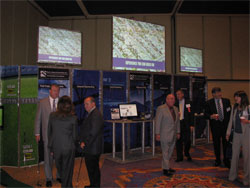 | �
�| Event exhibitors and sponsors contribute to an informative and engaging environment | �
�This year’s meeting was the best yet for the industry-leading construction defect and claims event.
�This year’s seminar concluded on May 13, 2011 with the Construction Defect Community Charitable Foundation Golf Tournament, held at Strawberry Farms Golf Course.
�The Disneyland Hotel in Anaheim, California was the place where more than 1,500 attendees convened for two days of professional development activities and seminars that included CLE workshops and panel discussions of special interest to legal and insurance professionals concerned with construction defect and claims litigation. Key events included “Challenges for Experts in Construction Defect Claims and Litigation,” “Keeping Up with Construction Defect Coverage,” and “Tips for Avoiding the ‘Perfect Storm’ in Handling of Wrap Claims.”
� �  | �
�| Supporting the golf tournament at the 15th hole | �
�This year’s Ollie award was given to George D. Calkins II, Esq. The West Coast Casualty Jerrold S. Oliver Award of Excellence was named in honor of the late Judge Jerrold S. Oliver, and recognizes an individual who is outstanding or has contributed to the betterment of the construction community.
�In addition to being the most comprehensive professional development seminar in the area of construction defects, this year’s seminar was equally valuable as a networking opportunity for members of the industry. People participated in professional development events during the day and then continued networking in the evening at numerous social events. The Lawn Party as well as the legendary Wood, Smith, Henning & Berman events were very well attended. Additional valuable networking events were hosted by a number of industry professionals at the House of Blues, and Tortilla Joe’s.
�As of this writing the 2011, West Coast Casualty's Construction Defect Seminar has applied for or has already received the following continuing education accreditation in the following areas;
�Read the full story…
�For more information about next year’s event, visit West Coast Casualty.
Contractor Convicted of Additional Fraud
November 18, 2011 — CDJ Staff
A Pennsylvania contractor in prison for fraud has been convicted with insurance fraud. The York Daily Record reports that Steven D. Gebhart was already in jail for fraud for about $350,000 for work he either failed to finish or even start or by using substandard materials and practices when he was convicted of insurance fraud. Gebbert’s offices were destroyed in a fire that was later determined to be arson. He was not charged with this, but instead for overestimating his losses to the insurance company. Sentencing for the fraud charge will be on December 21.
Read the full story…
Tucson Officials to Discuss Construction Defect Claim
July 10, 2012 — CDJ Staff
The mayor of Tucson, Arizona and the city council scheduled a meeting on June 26, 2012 in order to consult with the city’s attorneys concerning possible construction defect litigation involving the Martin Luther King, Jr. apartment building in that city. The memorandum was authored by Richard Miranda, the Tucson city manager.
Read the full story…
Ohio Court Finds No Coverage for Construction Defect Claims
March 28, 2012 — Tred Eyerly, Construction Law Hawaii
Charles and Valerie Myers hired Perry Miller to build their home. Myers v. United Ohio Ins. Co., 2012 Ohio App. LEXIS 287 (Ohio Ct. App. Jan. 26, 2012). After completion of the home, Miller was again hired to construct an addition which included a full basement, staircases, bathroom, bedroom, hallway and garage.
�After the addition was completed, one of the basement walls began to crack and bow. Miller began to make repairs, but eventually stopped working on the project. Other contractors were hired to make repairs, but further problems developed. A second basement wall began to bow and crack, allowing water into the basement. The wall eventually had to be replaced. Subsequently, the roof over the addition began to leak in five or six places before the drywall could be painted. The leaks caused water stains on the drywall and caused it to separate and tear. It was discovered the roof needed to be replaced.
�The Myers sued Miller and his insurer, United Ohio Insurance Company. The trial court ruled that the policy did not provide coverage for faulty workmanship, but did provide coverage for consequential damages caused by repeated exposure to the elements. United Ohio conceded liability in the amount of $2,000 to repair water damage to the drywall. United Ohio was also found liable for $51,576, which included $31,000 to repair the roof and ceiling and $18,576 to replace the basement wall.
Read the full story…
���Reprinted courtesy of Tred R. Eyerly, Insurance Law Hawaii. Mr. Eyerly can be contacted at te@hawaiilawyer.com
�
Construction Defect Litigation at San Diego’s Alicante Condominiums?
March 25, 2011 — Alicante HOA Website
According to recent posts in the Alicante HOA website, construction experts and legal counsel have been retained. The HOA board has been informed that testing of a variety of the building’s components are underway or will begin in the near future.
�Read More...
Can Negligent Contractors Shift Blame in South Carolina?
July 10, 2012 — CDJ Staff
Clay Olson looks back to a 1991 Carolina case, Nelson v. Concrete Supply Company. The court concluded in that case that “a plaintiff in South Carolina may recover only if his/her negligence does not exceed that of the defendant’s and amount of plaintiff’s recovery shall be reduced in proportion to amount of his or her negligence; if there is more than one defendant, plaintiff’s negligence shall be compared to combined negligence of all defendants.” In 2005, he reports, as part of tort reform in South Carolina, the legislature further addressed this.
He then suggests a possible outcome of this is that negligent contractors may be able to shift some of the blame (and cost of the settlement) to other defendants who may not be to blame. He offers a scenario in which a contractor is sued for construction defects and a jury has to allocate responsibility for indivisible damage. “A jury need only find the two subcontractors to have each contributed 15% of the indivisible damage.” He adds in another 15% for claims against the architect. Minor blame is given to the manufacturers, and suddenly the negligent contractor is paying less than 50% of the total settlement.
He notes that the previous system in place also had its problems, but notes that this one may not be “fair and equitable.”
Read the full story…
Tennessee Court: Window Openings Too Small, Judgment Too Large
November 18, 2011 — CDJ Staff
The Tennessee Court of Appeals has issued a ruling in the case of Dayton v. Ackerman, upholding the decision of the lower court, even as they found that the award was incorrectly computed. The Daytons purchased a house that had been designed and built by the Ackermans, who operated a construction business. The court noted that the warranty with the house promised that “for a period of 60 days, the following items will be free of defects in materials or workmanship: doors (including hardware); windows; electric switches; receptacles; and fixtures; caulking around exterior openings; pluming fixtures; and cabinet work.”
Soon, the Daytons began to experience problems with the house. Many were addressed by the Ackermans, but the Daytons continued to have problems with the windows. Neither side could specify a firm date when the Ackermans were contacted by the Daytons about the window problems. The Ackermans maintained that more than two years passed before the Daytons complained about the windows. The lower court found the Daytons more credible in this.
Initially, the Daytons included the window manufacturer in their suit, but after preliminary investigations, the Daytons dropped Martin Doors from their suit. Martin Doors concluded that the windows were improperly installed, many of them “jammed into openings that were too small for them.”
After the Daytons dismissed Martin Doors, the Ackermans sought to file a third party complaint against them. This was denied by the court, as too much time had elapsed. The Ackermans also noted that not all of the window installations were defective, however, the courts found that the Daytons ought not to have mismatched windows.
Unfortunately for the Daytons, the window repair was done incorrectly and the windows were now too small for the openings. The firm that did the repair discounted the windows and Daytons concealed the problem with plantation shutters, totalling $400 less than the original lowest estimate. However, the appeals court noted that it was here that the trial court made their computation error. Correcting this, the appeals court assessed the Ackermans $12,016.20 instead of $13,016.20.
Finally, the Ackerman’s expert was excluded as he had changed his testimony between deposition and trial. The trial reviewed the expert’s testimony and had it been admissible, it would not have changed the ruling.
Read the court’s decision…
Death of Construction Defect Lawyer Ruled a Suicide
June 19, 2012 — CDJ Staff
The Clark County Coroner’s Office has concluded that Nancy Quon, the construction defect attorney implicated in the wide-ranging HOA scandal, died by her own hand. The cause of death was a combination of anti-anxiety and insomnia medication mixed with alcohol. Quon survived an earlier incident in which she took GHB and her apartment was set on fire. Quon denied that it was a suicide attempt.
Read the full story…
California Bill Would Notify Homeowners on Construction Defect Options�
October 23, 2012 — CDJ Staff
The California Building Industry Association supported Assembly Bill 1892, but its goals of informing homeowners of their rights under SB800 have been accomplished through the administrative process. The Department of Consumer Affairs has now posted text on its web site noting that “prior to pursuing legal action or responding to a construction defect solicitation, you must first contact your home builder.” The text goes on to note that “if the homebuilder fails to follow any of the procedures, the homeowner is entitled to proceed with the filing of an action.”
� Read the full story…
�
Houses Can Still Make Cents: Illinois’ Implied Warranty of Habitability
March 1, 2011 — Original Story by
Marisa L. Saber Cozen O’Connor Subrogation & Recovery Law BlogIn a report published earlier this week Marisa L. Saber writes about the implied warranty of habitability in the context of construction defect litigation. The piece speaks of the difficulties in alleging tort theories against builders and vendors in light of Illinois’ expansion of the economic loss doctrine, and how the implied warranty of habitability may provide another avenue for recovery.
�Read Full Story...
California Supreme Court Finds Associations Bound by Member Arbitration Clauses
September 13, 2012 — CDJ Staff
In a decision with great implications for construction defect suits in California, the California Supreme Court has ruled in Pinnacle Museum Tower Association v. Pinnacle Market Development that arbitration clauses binding on the members of the association are also binding on the association itself. They concluded this, even though “the association did not exist as an entity independent of the developer when the declaration was drafted and recorded.” The opinion, written by Justice Baxter, was joined by four additional justices, with two separate concurrences and a dissenting opinion by Justice Kennard.
�The Pinnacle homeowners sought to bring suit over construction defect claims. In response, the developer filed a motion to compel arbitration. The association argued that the arbitration clause signed by its individual members was not binding on it. The Appeals Court invalidated the arbitration agreement “finding it marked by slight substantive unconscionability and high degree of procedural unconscionability. The Appeals Court determined that “for all intents and purposes, Pinnacle was the only party to the ‘agreement,’ and there was no independent homeowners association when Pinnacle recorded the CC&R’s.” However, the California Supreme Court said that this was “not persuasive in light of the statutory and contract principles in play.”
�The opinion notes that “the Project CC&R’s provides that Pinnacle and, by accepting a deed to any portion of the Project property, the Association and each individual condominium owner agree to submit any construction dispute to binding arbitration in accordance with the FAA.” The Court noted that “settled principles of condominium law establish that an owners association, like its constituent members, must act in conformity with the terms of a recorded declaration,” which, as the Court notes, includes the CC&Rs.
�After finding that the terms were binding on the Association, the Court then questioned whether the terms were “unenforceable as unconscionable,” noting that “the party resisting arbitration bears the burden of proving unconscionability.” But the Court found that “the arbitration provisions of article XVIII are not substantively unconscionable.” Additionally, they found “no support for the Association’s claims of unfairness and absence of mutuality.”
Read the court’s decision…
Nevada Senate Rejects Construction Defect Bill
June 7, 2011 — CDJ Staff
The Las Vegas Sun reports that Assembly Bill 401, the construction defect bill, lost in a vote of 9 to 12. The measure extended the time for construction defect suits to be filed, awarded legal costs only to successful plaintiffs, and set a definition of construction defects. Two Democrats joined the Republicans in the Senate in defeating the bill.
�Read the full story…
Construction Defects in Home a Breach of Contract
September 9, 2011 — CDJ Staff
The Supreme Court of North Dakota has ruled in Leno v. K & L Homes, affirming the verdict of the lower court. K & L Homes argued that district court had erred in several ways, including by refusing to instruct the jury on comparative fault, denying a request for inspection, and not allowing a defendant to testify on his observations during jury viewing.
The Lenos purchased a home constructed by K & L Homes, after which they alleged they found cracks, unevenness, and shifting, which they attributed to improper construction. They claimed negligence on the part of K & L Homes. K & L Homes responded that the Lenos were responsible for damage to the home. The Lenos dropped their negligence claim, arguing breach of contract and implied warranties.
Before the trial, after the discovery period had passed, K & L Homes requested to inspect the home. This was rejected by the court. Kelly Moldenhauer, the owner of K & L Homes sought to testify about his observations during the jury’s viewing of the house. The court denied this too. The jury found that K & L was in breach of contract and awarded damages to the Lenos.
The North Dakota Supreme Court noted that K & L Homes gave “warranties that the home had been built according to local building codes and laws, and that the house was fit for its particular purpose as a residence.” The court found that a defective home breached this warranty. Further, the home violated an implied warranty of fitness.
The district court had denied K & L’s request to inspect the home, as the discovery period had ended and it would not give the Lenos time to do further discovery of their own. At the time of the request, there was only twenty-two days before the trial. The Supreme Court ruled that this was not an abuse of discretion of the part of the district court.
The Lenos had requested that Moldenhauer’s testimony not be permitted, as it would “have the same effect as if the court had granted K & L Homes’ pretrial request for inspection.” K & L Homes agreed to this in court, replying, “okay.”
The decision affirms the judgment of the district court and the damages awarded to the Lenos by the jury.
Read the court’s decision…
Federal District Court Continues to Find Construction Defects do Not Arise From An Occurrence�
May 10, 2012 — CDJ Staff
Coverage for construction defects continues to be hotly contested in Hawaii state and federal courts. In a recent decision, Judge Mollway felt bound to follow the Ninth Circuit’s decision in Burlington Ins. Co. v. Oceanic Design & Constr., Inc., 383 F.3d 940, 944 (9th Cir. 2004), where the court found construction defect claims arise from breach of contract, not from an occurrence. Judge Mollway’s most recent decision on the issue is Illinois Nat. Ins. Co. v. Nordic PCL Constr., Inc., 2012 U.S. Dist. LEXIS 58464 (D. Haw. April 26, 2012).
�Nordic constructed a grocery store for Safeway. In addition to the grocery store, Nordic built a 165-space rooftop parking deck, retail shops and related improvements. After opening for business in 2007, Safeway experienced significant leaks. Safeway demanded that Nordic repair the parking deck. Nordic sent the demand letter to the insurer, who agreed to appoint counsel subject to a reservation of rights.
�Safeway filed suit against Nordic in state court alleging, among other things, breach of contract and negligence. The insurer provided Nordic with a defense, but Nordic hired independent counsel.
�The insurer filed for declaratory relief in federal district court.
� Read the full story…
�