Construction Defect Journal Marks First Anniversary
January 6, 2012 — CDJ Staff
November 2011 marked the first anniversary of the Construction Defect Journal. During the first year our staff and contributors in the insurance and legal communities have compiled several hundred articles of interest to the construction defect and claims community.
Each of these articles are maintained in the CDJ archives, and are accessible at http://www.constructiondefectjournal.com/archives.html. Each story in the archives is listed in the order it was posted to the archives. Each story in the archives opens up in its own page, so you can easily locate topics and articles of interest.
If you’re new to Construction Defect Journal, or just want peruse past articles, please take a moment to visit the CDJ Archives page. Also please feel encouraged to submit your firm’s articles or legal publications of interest to the CD community at http://www.constructiondefectjournal.com/submitStory.html.
Ensuing Loss Provision Does Not Salvage Coverage
December 9, 2011 — Tred R. Eyerly, Insurance Law Hawaii
Water intrusion caused by a construction defect was not covered under the all risk policy’s ensuing loss provision. See Friedberg v. Chubb & Son, Inc., 2011 U.S. Dist. LEXIS 123582 (D. Minn. Oct. 25, 2011).
Extensive water damage was discovered in the insureds’ home when a small hole in the exterior wall was being repaired. Chubb’s adjuster and an expert found water intrusion causing rot, mold, and damage to the home’s wood framing and insulation. Chubb denied coverage because water intruded through the roof and wall, resulting in gradual deterioration. The insureds filed suit.
The policy excluded coverage for construction defects, but insured "ensuing covered loss unless another exclusion applies."
The court agreed there was a prima facie case for coverage because the home suffered a physical loss.
Read the full story…
Reprinted courtesy of Tred R. Eyerly, Insurance Law Hawaii. Mr. Eyerly can be contacted at te@hawaiilawyer.com
Parking Garage Collapse May Be Due to Construction Defect
November 7, 2012 — CDJ Staff
A parking garage under construction at the Doral campus of Miami Dade College collapsed on October 9. Experts state that the collapse may have been due to errors in the construction process, either in the fabrication of the pre-cast components or in their assembly. The Bradenton Herald quotes Mark Santos, a structural engineer, who “would look at erection procedures ?Äì that’s probably the one question to ask first.”
During the failure, floors separated from the south wall of the structure. The contractor responsible for the garage, Ajax Building Corp, said there was “no indication of any potential cause.”
Read the full story…
The King of Construction Defect Scams
June 19, 2012 — CDJ Staff
Echoing Businessweek, the Las Vegas Sun agrees that the Nevada HOA scandal is the “king of all Vegas real estate scams,” and says that the Nevada legislatures should take action. The Sun notes that the case involves only 12 out of 2,356 HOAs in Southern Nevada.
To date, 25 people have plead guilty in the case. At the center were an attorney and contractor who allegedly referred work to each other. To enable this, they assembled a wider conspiracy of people who enriched by the process. In the words of the Sun, those involved “upended the concept of a ‘common interest’ community.”
Read the full story…
Limiting Plaintiffs’ Claims to a Cause of Action for Violation of SB-800
November 18, 2011 — Samir R. Patel, Esq. and Todd E. Verbick, Esq., Lorber, Greenfield & Polito, LLP
There has been a fair share of publicity about the SB-800 amendments to the Civil Code (Civil Code section 896, et seq.) that codified construction defect litigation in 2002. Most of the publicity is geared toward the pre-litigation standards allowing a builder the right to repair before litigation is commenced by a homeowner. Less focus and attention has been given to the fact that violation of the SB-800 performance standards is being used by plaintiff’s counsel as an additional tool in the plaintiff’s pleading tool box against builders. Closer scrutiny to SB-800 reveals that those provisions should in fact act as a limitation to the pleading tools available to plaintiffs and an additional tool for builders in the defense of cases governed by SB-800.
The typical construction defect complaint contains the boiler plate versions of numerous causes of action. These causes of action include Strict Liability, Negligence, Negligence Per Se, Breach of Contract, Breach of Contract – Third-Party Beneficiary, Breach of Express Warranties, Breach of Implied Warranties, among others. The wide array of causes of action leave a defendant “pinned to the wall” because they require a complex defense on a multitude of contract and tort related causes of action. Furthermore, the statutes of limitations as to these claims widely differ depending upon if the particular defect is considered latent or patent. The truth of the matter remains, no matter what the circumstances, if a construction defect matter ultimately goes to trial, it is inevitable that plaintiffs will obtain a judgment on at least one of these causes of action.
On its own, the Strict Liability cause of action can be a thorn in a defendant’s side. A builder is obviously placing a product into the stream of commerce and strict liability is a tough standard to defend against, particularly when it concerns intricate homes comprised of multiple components that originally sold for hundreds of thousands of dollars. A Negligence cause of action can also be difficult to defend because the duty of care for a builder is what a “reasonable” builder would have done under the circumstances. An interpretation of this duty of care can easily sway a jury that will almost always consist of sympathetic homeowners. A Negligence Per Se cause of action can also leave a defendant vulnerable to accusations that a builder violated the Uniform Building Code or a multitude of other obscure municipal construction-related code provisions during the construction of the home. Lastly, the Breach of Contract cause of action leaves a builder relying on dense and intricate purchase and sale agreements with dozens of addenda which leave the skeptical jurors turned off by what they view as one-side, boilerplate provisions. Ultimately, when a matter is about to go to trial, the complexity of these complaints can benefit a plaintiff and increase a plaintiff’s bargaining power against a defendant who is attempting to avoid a potentially large judgment.
Enter the SB-800 statutes. The SB-800 statutes apply to all homes sold after January 1, 2003. Civil Code section 938 specifically states that “[t]his title applies only to new residential units where the purchase agreements with the buyer was signed by the seller on or after January 1, 2003.” (Civil Code §, 938.) As time progresses, more residential construction defect cases will exclusively fall under the purview of SB-800. Slowly but surely more SB-800 governed litigation is being filed, and its exclusive application is looming on the horizon.
On its surface, this “right to repair” regime has left builders with a lot to be desired despite the fact that it is supposed to allow the builder the opportunity to cure any deficiencies in their product before litigation can be filed by potential plaintiffs. However, the application of the time line for repair has shown to be impractical for anything but the most minor problems involving only small numbers of residential units. Moreover, the fact that the fruits of the builder’s investigation into the claimed defects in the pre-litigation context can freely be used as evidence against it in litigation makes builders proceed with trepidation in responding with a repair. For these reasons, more SB-800 litigation can be expected to result due to the shortcomings of the pre-litigation procedures, and savvy defense counsel should anticipate the issues to be dealt with in presenting the defense of such cases at trial.
This fact should not necessarily be met with fear or disdain. Within the SB-800 statutes, the legislature made it clear that they were creating a new cause of action for construction defect claims, but it further made it clear that this cause of action is a plaintiff’s exclusive remedy. The legislature giveth, but at the same time, the legislature taketh away. Throughout numerous provisions within the SB-800 statutes, the Civil Code states that claims for construction defects as to residential construction are exclusively governed by the Civil Code, and that the Civil Code governs any and all litigation arising under breaches of these provisions. Civil Code section 896 specifically states:
In any action seeking recovery of damages arising out of, or related to deficiencies in, the residential construction … the claimant’s claims or causes of action shall be limited to violation of, the following standards, except as specifically set forth in this title. (Civil Code §, 896.)
Civil Code section 896 then provides approximately fifty-plus standards by which a construction defect claim is assessed under that provision. Civil Code section 896 covers everything from plumbing to windows, and from foundations to decks, and in several instances expressly dictates statutes of limitations as to specific areas of construction that severely truncate the 10-year latent damage limitations period. As for any construction deficiencies that are not enumerated within Civil Code section 896, Civil Code section 897 explicitly defines the intent of the standards and provides a method to assess deficiencies that are not addressed in Civil Code section 896. Civil Code section 897 states:
Intent of Standards
The standards set forth in this chapter are intended to address every function or component of a structure. To the extent that a function or component of a structure is not addressed by these standards, it shall be actionable if it causes damage. (Civil Code §, 897.)
Therefore, Civil Code section 897 acts as a catch-all by which defects that are not covered within Civil Code section 896 can be evaluated on a damage standard mirroring the Aas case (damages must be present and actual). The result of sections 896 and 897 being read in combination is a comprehensive, all-inclusive set of performance standards by which any defect raised by Plaintiffs can be evaluated and resolved under a single SB-800 based cause of action.
Civil Code section 943 makes clear that a cause of action for violation of SB-800 performance standards is a plaintiff’s sole remedy for a residential construction defect action. Specifically, Civil Code section 943 states:
Except as provided in this title, no other cause of action for a claim covered by this title or for damages recoverable under 944 is allowed. In addition to the rights under this title, this title does not apply to any action by a claimant to enforce a contract or express contractual provision, or any action for fraud, personal injury, or violation of a statute. (Civil Code §, 943.)
Civil Code section 944 provides the method for computing damages within a construction defect action, as follows:
If a claim for damages is made under this title, the homeowner is only entitled to damages for the reasonable value of repairing any violation of the standards set forth in this title, [and] the reasonable cost of repairing any damages caused by the repair efforts… . (Civil Code §, 944.)
A cursory review of these statutes yields the conclusion that the legislature was attempting to create an exclusive cause of action that trumps all other causes of action where SB-800 applies. The remedy available to plaintiffs is limited to that allowed by the Civil Code. As noted above, “[n]o other cause of action for a claim covered by this title…is allowed.” (Civil Code §, 943.) Therefore, Civil Code sections 896, 897, 943, and 944 specifically prohibit the contract-based and tort-based causes of action typically pled by plaintiffs.
Plaintiff’s counsel has seized upon the language of section 943 to advance the argument that SB-800 still allows a plaintiff to advance typical contract and tort based causes of action. On the surface, this argument may seem compelling, but a minimum of scrutiny of the express language of section 943 dispels this notion. Section 943 says that it provides rights “[i]n addition” to those under the SB-800 Civil Code provisions. Clearly, the language in section 943 is intended to expressly underscore the fact that a plaintiff is not precluded from seeking relief in addition to that allowed under SB-800 for damages not arising from a breach of the SB-800 standards or for damages in addition to those recoverable under Section 944. This language does not provide an unfettered license to bring a Strict Liability, Negligence or other cause of action against a builder where SB-800 applies.
In fact, this language only keeps the door open for plaintiffs to pursue such causes of action not arising from a breach of the SB-800 standards should there be such supporting allegations. For example, if a plaintiff alleges that a builder breached an “express contractual provision” related to the timing of the completion of the home and close of escrow, and the contract specifies damages in this regard, a plaintiff may have a viable separate cause of action for Breach of Contract for recovery of those damages precisely because that is not an issue expressly dealt with in SB-800 in the performance standards under sections 896 and 897, or in the damage recovery terms under 944. As it stands, the vast majority of complaints are seeking redress for violation of the same primary right; that is, defects specifically outlined in Section 896 and 897 or which result in damages as stated in Section 944.
So, how does a builder defend against a complaint that contains multiple causes of action regarding construction defects for a home sold after January 1, 2003? There are numerous ways to approach this. First and foremost, these superfluous and improper causes of action can be attacked by demurrer seeking dismissal of all causes of action other than the cause of action alleging violation of SB-800. If the the time period within which to file a demurrer has passed already, a motion for judgment on the pleadings can be utilized to attack the improper causes of action in the same way as a demurrer can be used for this purpose.
The limitation to a demurrer or motion for judgment on the pleadings is that the judge is restricted to viewing only the four corners of the pleading when making a ruling. It is typical for plaintiffs’ counsel to cleverly (or one might even say, disingenuously) leave the complaint purposely vague to avoid a successful defense attack on the pleadings by not including the original date the residence was sold. In that instance, a motion for summary adjudication can be used to attack a plaintiff’s complaint. By simply providing evidence that the homes were originally sold after January 1, 2003, the improper causes of action should be subject to dismissal by summary adjudication. If the plaintiff is a subsequent purchaser, the builder still has recourse to enforce the pleading limitations under SB-800. Civil Code section 945 states that “[t]he provisions, standards, rights, and obligations set forth in this title are binding upon all original purchasers and their successors-in-interest.” (Civil Code §, 945.)
Attacking a plaintiff’s complaint to eliminate multiple causes of action can have numerous benefits. The practical result is that a plaintiff will only have one viable cause of action. The advantage is that the SB-800 performance standards include the defined performance standards and shortened statutes of limitations periods with regard to specific issues. Furthermore, as to defects which are not specifically provided for in Civil Code section 896, Civil Code section 897 requires a proof of actual damages. Therefore, a plaintiff must provide evidence of current damages and not simply conditions that may potentially cause damage in the future.
The Appellate Courts have yet to directly address and interpret these SB-800 provisions. The time for that is undoubtedly drawing near. For now, however, plaintiffs will have to find ways to accurately plead construction defect claims within the confines of one cause of action for breach of the performance standards enumerated within the Civil Code.
Printed courtesy of Lorber, Greenfield & Polito, LLP. Mr. Patel can be contacted at spatel@lorberlaw.com and Mr. Verbick at tverbick@lorberlaw.com.
2011 West Coast Casualty Construction Defect Seminar – Recap
June 1, 2011 — CDJ Staff
� 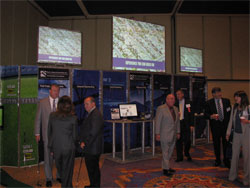 | �
�| Event exhibitors and sponsors contribute to an informative and engaging environment | �
�This year’s meeting was the best yet for the industry-leading construction defect and claims event.
�This year’s seminar concluded on May 13, 2011 with the Construction Defect Community Charitable Foundation Golf Tournament, held at Strawberry Farms Golf Course.
�The Disneyland Hotel in Anaheim, California was the place where more than 1,500 attendees convened for two days of professional development activities and seminars that included CLE workshops and panel discussions of special interest to legal and insurance professionals concerned with construction defect and claims litigation. Key events included “Challenges for Experts in Construction Defect Claims and Litigation,” “Keeping Up with Construction Defect Coverage,” and “Tips for Avoiding the ‘Perfect Storm’ in Handling of Wrap Claims.”
� �  | �
�| Supporting the golf tournament at the 15th hole | �
�This year’s Ollie award was given to George D. Calkins II, Esq. The West Coast Casualty Jerrold S. Oliver Award of Excellence was named in honor of the late Judge Jerrold S. Oliver, and recognizes an individual who is outstanding or has contributed to the betterment of the construction community.
�In addition to being the most comprehensive professional development seminar in the area of construction defects, this year’s seminar was equally valuable as a networking opportunity for members of the industry. People participated in professional development events during the day and then continued networking in the evening at numerous social events. The Lawn Party as well as the legendary Wood, Smith, Henning & Berman events were very well attended. Additional valuable networking events were hosted by a number of industry professionals at the House of Blues, and Tortilla Joe’s.
�As of this writing the 2011, West Coast Casualty's Construction Defect Seminar has applied for or has already received the following continuing education accreditation in the following areas;
�Read the full story…
�For more information about next year’s event, visit West Coast Casualty.
Surveyors Statute Trumps Construction Defect Claim in Tennessee
June 19, 2012 — CDJ Staff
The Tennessee Court of Appeals has issued an opinion in the case of Dale v. B&J Enters. (Tenn. App., 2012), affirming the ruling of the Chancery Court for Knox County. The homeowners purchased properties in Knoxville, Tennessee in 2007 and 2008. Subsequently, according to the complaint, they found “significant sink holes and depressions throughout the subdivision.” The plaintiffs determined that a previous developer in 2004 had been aware of the sink holes. The Knox County Metropolitan Planning Commission, upon giving approval, made requirements that included that sink holes, even if they were filled, had to be designated on the site plans. The developer did not indicate these locations on the final plans. The plaintiffs made claims of “failure to disclose, misrepresentation, misrepresentation by concealment, and violation of the Tennessee Consumer Protection Act.” They filed their suit in June 2009.
The defendants in the initial case, argued that they did not create the final plat, the site plan indicating the features and lot lines. This had been the work of the previous developer. In September, 2009, the plaintiffs amended their complaint to include the previous developer and its engineering firm. The engineering firm disavowed any responsibility. The developer noted that the surveyor, Benchmark Associates, had “failed to properly include the sink holes and/or depressions on the final plat.” In June, 2010, the plaintiffs added Benchmark.
Benchmark argued that the plaintiffs’ claims should be dismissed, as Tennessee has a four-year statute of limitations on claims against surveyors. The final plat was recorded on May 19, 2006, and the plaintiff filed their claims against Benchmark on June 16, 2010, slightly less than a month over four years. The plaintiffs argued that “the real issue [was] the tortious misrepresentation by Benchmark.” The Chancery Court found for Benchmark.
On appeal, the plaintiffs raised three issues. They argued that the trial court applied the wrong section of the law, and should have applied the section applying to construction and not surveyors. They also argued that the timeliness of the claim should be based on when the defects were discovered. The also raised the question of whether the laws concerning surveyors bar claims for misrepresentation. The appeals court upheld the decision of the Chancery Court.
For the plaintiff’s first claim, although the statute addressing deficiencies in construction mentions surveying, an earlier court ruling found that the legislature had removed a reference to surveyors in one part of the statute, but failed to do so in the second part. The earlier court had concluded that the “obvious intent of the legislature was to place all limits on actions against surveyors into the new statute.” As the applicable statute states that “any such action not instituted within this four (4) year period shall be forever barred,” the court held that the plaintiffs’ claims must be time barred. Further, as the intent of the legislature was determined to “place all limits on actions against surveyors into one statute,” the court felt that it could not apply the Consumer Protection Act.
Read the court’s decision…
LEED Certified Courthouse Square Negotiating With Insurers, Mulling Over Demolition
June 6, 2011 — Douglas Reiser in the Builders Counsel Blog
Apparently, Courthouse Square is still unresolved. The County hasnow hired an attorney to handle its insurance claim against Affiliated FM. Is there a lawsuit coming?
�Right now, no lawsuit is expected. According to officials, the insurer has been acting in good faith. But, its been quite a while since Salem officials learned that the Courthouse Square building had significant concrete issues that would result in probable demolition of the LEED certified building.
�If you have yet to hear about Courthouse Square, let me fill you in briefly. The Salem building was substantially completed in 2000 and LEED certified by the US Green Building Council in 2002. The project cost more than $30 Million to complete and the building was revered for its innovation as a crowning achievement for city leaders.
�But, structural problems in the building’s core were discovered as early as 2002, writes Chris Cheatham of Green Building Law Update. Final tests earlier in the year, determined that the building had to be vacated. The building has been clear since July 2010.
�Read the full story…
� �Reprinted courtesy of Douglas Reiser of Reiser Legal LLC. Mr. Reiser can be contacted at info@reiserlegal.com
Louisiana Politicians Struggle on Construction Bills, Hospital Redevelopment
June 16, 2011 — CDJ Staff
Louisiana politicians are still working on a compromise in the state’s construction budget, as reported in the Times-Picayune. Rob Marrianneax, the chair of the Senate Revenue and Fiscal Affairs Committee, removed a $45 million request from Governor Bobby Jindal and added $4 million for projects that Jindal vetoed last year.
�Two senators have formed competing plans to fund redevelopment construction for New Orleans’s Methodist Hospital. Mitch Landrieu, the mayor of New Orleans, hoped for $30 million dollars in state bonds. Senator Cynthia Willard-Lewis proposed an amendment that would supply $1.6 million, while Senator J.P. Morrell has an amendment that would supply $4 million.
�Read the full story…
Safety Officials Investigating Death From Fall
September 9, 2011 — CDJ Staff
California safety officials are looking into the circumstances surrounding the death of a construction worker who fell from a roof in Tiburon, California. Another worker found Gabriel Vasquez unconscious at the site. Vasquez was later pronounced dead. The State Division of Occupational Safety and Health are trying to determine how Vasquez fell.
Read the full story…
Federal District Court Continues to Find Construction Defects do Not Arise From An Occurrence�
May 10, 2012 — CDJ Staff
Coverage for construction defects continues to be hotly contested in Hawaii state and federal courts. In a recent decision, Judge Mollway felt bound to follow the Ninth Circuit’s decision in Burlington Ins. Co. v. Oceanic Design & Constr., Inc., 383 F.3d 940, 944 (9th Cir. 2004), where the court found construction defect claims arise from breach of contract, not from an occurrence. Judge Mollway’s most recent decision on the issue is Illinois Nat. Ins. Co. v. Nordic PCL Constr., Inc., 2012 U.S. Dist. LEXIS 58464 (D. Haw. April 26, 2012).
�Nordic constructed a grocery store for Safeway. In addition to the grocery store, Nordic built a 165-space rooftop parking deck, retail shops and related improvements. After opening for business in 2007, Safeway experienced significant leaks. Safeway demanded that Nordic repair the parking deck. Nordic sent the demand letter to the insurer, who agreed to appoint counsel subject to a reservation of rights.
�Safeway filed suit against Nordic in state court alleging, among other things, breach of contract and negligence. The insurer provided Nordic with a defense, but Nordic hired independent counsel.
�The insurer filed for declaratory relief in federal district court.
� Read the full story…
�
Delays in Filing Lead to Dismissal in Moisture Intrusion Lawsuit
September 9, 2011 — CDJ Staff
The Alabama Court of Civil Appeals has upheld a summary judgment in the case of Franklin v. Mitchell. Walter Mitchell, doing business as Southern Classic Construction built a new home for the Franklins. The Franklins moved into the home in October 2001. In April 2006 they discovered sagging floors in both the bathroom and kitchen. They contacted Mitchell who suggested the flooring might be defective. The Franklins spent eight months attempting to contact the flooring manufacturer.
In March 2007, the Franklins had the home inspected. The sagging was determined to be due to a loss of strength in the decking because of condensation from the air conditioning system. Air returns were not properly sealed and drawing moisture into the structure. There was mold on the decking and floor joints.
When Mitchell was contacted by the Franklins, he told them his one-year warranty had expired but had the HVAC subcontractor, Southern Mechanical Heating & Air (owned by Mitchell’s father, Jim Mitchell), look at the situation. SMHA replaced and braced subfloors. Later, they entered the crawl space to tape ducts, seal the air return, and insulate the air vent housing. The Franklins were not satisfied with the repairs, as not all the ducts were taped, nor were the air vent housings insulated.
Franklin complained to Walter Mitchell who again cited his one-year warranty. Jim Mitchell said he would not report complaints to his insurer, stating that the repairs were unnecessary, that the work had been done correctly in the first place, and it was only done at the request of Walter Mitchell.
In February 2009, the Franklins sued Walker Mitchell. Mitchell denied the claims, citing in part the statute of limitations. Mitchell also filed complaints against three subcontractors, including his father’s firm. Mitchell received a summary judgment as the case started after Alabama’s six-year statute of limitations.
The appeals court rejected the Franklin’s argument that the claim of damage did not start until they were aware it was due to a construction defect. The court noted that as Walter Mitchell was licensed as a “residential home builder, the statute the Franklins cite did not apply, as it concerns architects, engineers, and licensed general contactors.”
Nor did they feel that Mitchells’ claim that his warranty had expired were sufficient to override the statute of limitations, quoting an earlier case, “Vague assurances do not amount to an affirmative inducement to delay filing suit.” Their claim of subsequent negligent repairs was rejected because Mitchell did not direct the specific actions taken by his father’s firm.
Read the court’s decision…
Kansas Man Caught for Construction Scam in Virginia
December 20, 2012 — CDJ Staff
A Virginia court sent charges of construction fraud against a Kansas man to a grand jury. Larry Foster visited homes in Bedford County, Virginia, tested the water, and told homeowners that they needed new water filtration systems. The homeowners paid, but Mr. Foster never delivered. One homeowner who testified paid him $1,690. Another paid even more, giving $3,090 to Mr. Foster. In order to dupe his victims, Foster used the address of a chiropractor as a business address, unbeknownst to the actual business there.. He is wanted for charges in other states as well.
Read the full story…
Official Tried to Influence Judge against Shortchanged Subcontractor
February 10, 2012 — CDJ Staff
A contractor testified in the trial of former Cuyahoga County Commissioner Jimmy Dimora. According to Fox 8 in Cleveland, Ohio, Sean Newman, the president of Letter Perfect testified that his company was a subcontractor on the reconstruction of the locker rooms at the Cleveland Browns Stadium. Newman said his company was paid only $400,000 of their $650,000 bid. When Letter Perfect sued the contractor, D.A.S. Construction, Dimora called the judge to influence her to rule in favor of D.A.S.
� The judge in the earlier case, Bridgett McCafferty, has been found guilty of lying to the FBI during their investigation and is serving a 14-month prison sentence.
Read the full story…
�
Nevada Construction Defect Lawyers Dead in Possible Suicides
March 28, 2012 — CDJ Staff
A number of news sources have reported on the recent death of Nevada construction defect attorney, Nancy Quon. Ms. Quon was implicated in a recent scandal in which a group conspired to control homeowner associations in order to divert construction defect lawsuits to the members of the conspiracy.
�Ms. Quon was found dead in her bathtub. The details are still under investigations. She and her boyfriend were accused of a failed arson/suicide scheme in 2010. Ms. Quon survived an attempt to burn down her home. Subsequently, her boyfriend obtained some gamma-hydroxybutyric acid (GBH) for her, as part of another failed suicide attempt.
�Subsequent to Ms. Quon’s death, David Amesbury was found in California dead by hanging. Mr. Amesbury took a plea deal in the case, and he had admitted his role in providing legal and construction contracts to firms in the conspiracy. He was accused of fixing HOA elections.
Read the full story…
�Read the full story…
�Read the full story…
�Read the full story…
Homebuilding Still on the Rise
December 20, 2012 — CDJ Staff
The National Association of Home Builders reports that spending on private homes was up three percent in October 2012, bringing it to a four-year high. This was part of a trend in which fourteen of the last fifteen months have seen increases in spending on residential construction. Likewise, multifamily residences have seen thirteen months of increased spending, putting it 82% higher than its low, two years ago. ¬?In addition to new homes, remodeling is also up, reaching its highest point in five years.
Read the full story…
Homeowners Must Comply with Arbitration over Construction Defects
January 6, 2012 — CDJ Staff
The California Court of Appeals has upheld a decision by the Superior Court of Kern County that homeowners must comply with arbitration procedures in their construction defect claim. The California Court of Appeals ruled on December 14 in the case of Baeza v. Superior Court of Kern County, denying the plaintiff’s petition that the trial court vacate its order.
The plaintiffs in the case are homeowners in various developments built by Castle & Cook. The homes were sold with a contract that provided for “nonadversarial prelitigation procedures, including mediation, and judicial reference.” The homeowners made defect claims and argued that Castle & Cooke failed to comply with statutory disclosure requirements and that some of the contracts violate related statutes.
The appeals court found that there was no ground for appeal of the lower court’s order to continue with prelitigation procedures. The court noted that the plaintiffs could not seek a review of the mediation until a judgment was issued, but that then the issue would be moot. The court felt that there were issues presented that needed clarification, and so they reviewed this case. This was cleared for publication.
The court considered the intent of the legislature in passing the Right to Repair Act, noting that “under the statutory scheme, the builder has the option of contracting for an alternative nonadversarial prelitigation procedure,” as established in Chapter 4. The court noted that Chapter 4 “contains no specifics regarding what provisions the alternative nonadversarial contractual provisions may or must include.”
The plaintiffs contended that the builder was in violation of the standards set out in Section 912, however the court responded that these sections set out one set of procedures, but they concluded that “if the Legislature had intended the section 912 disclosure provisions…it could have made the requirements applicable to all builders by locating them in a section outside Chapter 4.”
Read the court’s decision…
Steps to Defending against Construction Defect Lawsuits
July 21, 2011 — CDJ Staff
Writing in Claims Journal, Bryan Rendzio notes that the decline in construction has not been matched by a decline in construction defect lawsuits over condominiums. He reviews the ways in which lawyers representing developers can help protect their clients. He identifies four important considerations in defending developers from claims of construction defects.
�He advocates a careful review of the contract. “Under a breach of contract claim, the insured’s duties to the party who brought the claim against the insured flow from the contract. Commonly, construction contracts limit the scope of recoverable damages, such as by waiving consequential damages.’
�The next step, according to Rendzio is to check of a settlement agreement is already in place, noting that these are “a familiar occurrence in the construction industry, regardless of any lawsuits having been filed.”
�He considers the statute of repose “the single-most decisive weapon an insured possesses in its arsenal during a condo defect lawsuit.” He notes that no lawsuits can be brought for construction defects after the end specified by the statute of repose, and if a lawsuit is brought beforehand, no additional parties can be named once the statute has taken effect.
�Finally, he warns adjusters to be suspicious when a condo association requests contractual indemnification. He notes that the pitfall in this is that developers and the subsequent condominium association often have similar names, given the theoretical example of a condo project built by “Fake Lakes LLC” and later run by the “Fake Lakes Condominium Association.” Writing in regards to Florida law, he notes that condominium associations do not have successor interest in contracts developers made with contractors.
Read the full story…