A Call to Washington: Online Permitting Saves Money and the Environment
October 28, 2011 — Douglas Reiser, Builders Counsel
Here’s some good news for Oregon contractors: Electronic Permitting is here. That’s right, no more standing in line with folders full of printed submittals and waiting all day for your permit. The click of a few buttons and you are in business. Great news, right? Unfortunately, Oregon isn’t sharing that celebration with Washington. So I say - why not?
Last week, the State of Oregon released its new ePermitting online interface. The website allows contractors, owners and even local building departments to create an account, submit building plans and procure permits. With your account, you can track the progress of submissions, print documents and get posting information.
The state ran a limited test version in the City of Florence since 2009, working out the kinks. Perhaps the most impressive result of the new system is that Oregon tackled the task of coagulating a local process into one central location.
Read the full story...
Reprinted courtesy of Douglas Reiser of Reiser Legal LLC. Mr. Reiser can be contacted at info@reiserlegal.com
No Resulting Loss From Deck Collapsing Due to Rot
July 10, 2012 — Tred Eyerly, Insurance Law Hawwaii
The Washington Supreme Court reversed the Court of Appeals’ decision that the ensuing loss provision provided coverage for a deck that collapsed due to rot and decay. Sprague v. Safeco Ins. Co. of Am., 2012 Wash. LEXIS 375 (Wash. May 17, 2012). Our prior post on the Court of Appeals’ decision is here.
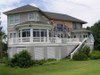
The Sprague’s home had a deck supported by six "fin walls." The fin walls were encased in a foam and stucco coating. Twenty years after they purchased the home, it was discovered that the fin walls were in an advanced state of decay. Engineers discovered that construction defects caused the supports to rot. The deck was in danger of imminent collapse.
Safeco denied coverage. The all-risk policy did not exclude collapse, but did exclude coverage for losses causes by mold, wet or dry rot.
Read the full story…
Reprinted courtesy of Tred R. Eyerly, Insurance Law Hawaii. Mr. Eyerly can be contacted at te@hawaiilawyer.com
Texas Windstorm Insurance Agency Under Scrutiny
April 5, 2011 — April 5, 2011 Beverley BevenFlorez - Construction Defect Journal
Representative Larry Taylor has introduced a bill in the Texas Legislature (HB 2818) that would further regulate the Texas Windstorm Insurance Agency (TWIA). According to Taylor, “In order to be adequately prepared for future hurricane seasons, it is imperative that TWIA be operating at maximum efficiency, that the Reserve Trust Fund be solvent and that the agency have adequate management measures in place to protect consumers and ensure that claims are paid in a timely manner. House Bill 2818 is an important step in the right direction toward restoring public confidence in TWIA.”
�HB 2818 includes measures that would create an expert panel that would advise the commissioner on how to evaluate loss from the storm, and a greater transparency of TWIA Board meetings and actions.
�In addition, the Texas Department of Insurance (TDI) has placed TWIA on Administrative Oversight. According to TDI, “While under Administrative Oversight, the Department may require its prior review and approval of executive decisions, certain expenditures, and other transactions. The insurer is required to fully cooperate with the Department and provide complete and timely disclosure of all information responsive to Department requests.”
�Read the full story (Rep. Taylor’s Press Release)...
�Read the full story (Texas Department of Insurance’s Press Release)...
California Supreme Court to Examine Arbitration Provisions in Several Upcoming Cases
December 9, 2011 — CDJ Staff
Glen C. Hansen, writing on Abbott & Kinderman’s Land Use Law Blog looks at several cases pending before the California Supreme Court which ask if a developer can insist on arbitration of construction defect claims, based on provision in the CC&Rs. Currently, there is a split of opinions in the California appeals courts on the issue.
Four of the cases are in California’s Fourth Appellate District. In the earliest case, Villa Milano Homeowners Association v. Il Davorge, from 2000, the court concluded that the arbitration clause was sufficient to require that construction defect claims undergo arbitration. However, the Fourth Appellate District Court concluded in three later cases that the arbitration clauses did not allow the developer to compel arbitration. In two cases, argued in 2008 and 2010, the court concluded that to do otherwise would deprive the homeowners of their right to a jury trial. In the most recent case, Villa Vicenza Homeowners Association v. Nobel Court Development, the court decided that the CC&Rs did not create contractual rights for the developer.
The Second Appellate District Court came to a similar decision in Promenade at Playa Vista Homeowners Association v. Western Pacific Housing, Inc. In their decision, the court noted that CC&Rs could be enforced by homeowners and homeowners associations, but not developers.
Read the full story…
Yellow Brass Fittings Play a Crucial Role in Baker v Castle & Cooke Homes�
May 10, 2012 — CDJ Staff
Baker v Castle & Cooke Homes Hawaii, et al. is a “class action filed by homeowners who allege that their homes have a construction defect. They allege that their plumbing systems include brass fittings susceptible to corrosion and likely to cause leaks. They bring this action against the developer of their homes and the manufacturers of the brass fittings.”
�Zurn, the manufacturer of the allegedly defective brass fittings, sought a dismissal, or if that could not be achieved, then “a more definite statement, of five of the six claims.” Zurn moved for summary judgment on the sixth claim, or alternately sought “summary judgment on one of the five claims it” sought to dismiss.” The court granted in part the motion, and denied the motion for summary judgment.
�The developer, Castle & Cooke, sought dismissal of the First Amended Complaint stating “that Plaintiffs have not complied with Hawaii’s Contractor Repair Act, chapter 672E of Hawaii Revised Statutes, which requires, among other things, a plaintiff to give a contractor the results of any testing done before filing an action against that contractor.” The court couldn’t determine “certain facts essential to ruling” on Castle & Cooke’s motion, and therefore denied the motion, but ordered Plaintiffs to submit requested material by the stated deadline.
�The Baker v Castle & Cooke case began with the Plaintiffs claim that the use of yellow brass fittings can lead to construction defects. They allege that “yellow brass is particularly susceptible to dezincification, a corrosion process in which zinc leaches into potable water that comes into contact with the brass. According to Plaintiffs, as the brass corrodes, it becomes porous and mechanically weak. Plaintiffs further allege that the PEX systems in the putative class members’ homes have begun to, or are about to, leak water into the walls, ceilings, and floors of their homes. Plaintiffs allege that the leakage will cause water damage and mold growth, exposing the occupants to toxins.”
�In response to the plaintiffs’ claims, Zurn argued “because their yellow brass fittings have not failed to date, Plaintiffs fail to allege, and have no evidence showing, that they have suffered any actual injury.” Plaintiffs replied, “even if the fittings have not failed as of today, failure in the future is inevitable.”
�However, the court stated, “whether Plaintiffs have suffered any injury, or whether Plaintiffs are attempting to proceed based solely on future injury, implicates Plaintiffs’ standing to bring this action, as well as whether this case is ripe for adjudication.” The court has requested the parties to submit “supplemental briefing on whether this case should be dismissed pursuant to Rule 12(b)(1). In supplemental briefs, Zurn argues that dismissal is appropriate because Plaintiffs lack standing, and Castle & Cooke argues that dismissal is appropriate because Plaintiffs’ claims are not ripe.”
�The court continues to discuss the problem of standing: “To establish standing, a plaintiff must demonstrate three things. First, the plaintiff must suffer an "injury-in-fact," which means that there must be a concrete and particularized "invasion of a legally protected interest" and the invasion is actual or imminent. Lujan v. Defenders of Wildlife, 504 U.S. 555, 560 (1992). Second, the injury must be fairly traceable to the challenged action. Third, a favorable decision must be likely to redress the injury. Id. It is the first element (injury-in-fact) that is in issue here.”
�The court found that the plaintiffs do have standing: “Even if the court could not rely on the allegations that the pipes will soon leak, the court would conclude that, for standing purposes, Plaintiffs have a sufficient injury-in-fact in the form of their alleged economic loss.” In a hearing, Plaintiffs argued that their homes had decreased in value.
�The court also denied Castle & Cooke’s motion to dismiss based on a lack of ripeness, stating “the same reasons Plaintiffs satisfy the injury-in-fact requirement for standing purposes, they satisfy the constitutional ripeness requirement.”
�Plaintiffs asserted six counts against Zurn. Zurn, in response, made a motion to dismiss counts VIII, IX, X, XII, and XIII. The court granted Zurn’s motion for Counts VIII, IX, and X only: “Counts VIII (product liability), IX (negligence), and X (strict liability) sound in tort. Zurn argues that, because Plaintiffs allege no injury other than to the PEX systems and the yellow brass fittings themselves, the economic loss rule bars their tort claims. The court agrees.”
�The court disagreed with Zurn’s motion regarding Count XII: “Count XII asserts that Zurn has breached the implied warranty of merchantability. Zurn argues that Count XII is barred by the applicable statute of limitations and that Plaintiffs do not sufficiently allege an injury. The court disagrees.”
�Zurn’s motion regarding Count XIII was also denied: “Count XIII asserts that Zurn violated section 480-2 of Hawaii Revised Statutes.” Furthermore, “Plaintiffs allege that Zurn ‘engaged in unfair and deceptive acts or practices when [it] designed, manufactured and sold Yellow Brass Fittings.’ Zurn argues that Plaintiffs fail to state a claim under section 480-2(a) because their claims are barred by the statute of limitations and they do not adequately allege reliance or a cognizable injury. The court disagrees.”
�The court denied the motion for summary judgment with respect to Counts XI and XII.
�Castle & Cooke sought to dismiss “Plaintiffs’ claims against it under section 672E-2 of Hawaii Revised Statutes, which provides for dismissal when claimants fail to comply with chapter 672E.” There was some discussion regarding the test results. Apparently, the plaintiffs had failed to provide a written notice of claim at least 90 days before filing the action. However, it is unclear if the Plaintiffs have since complied with the requirements of the chapter. “The court has received no supplemental information from either party about whether any test results from another case have been turned over or whether those materials are subject to a confidentiality agreement. The record at this point does not establish noncompliance with the requirement in chapter 672E to provide such information. The court therefore denies the motion to dismiss.”
�In summary, “Zurn’s motion to dismiss is granted as to Count VIII, Count IX, and Count X. Zurn’s motion to dismiss is denied with respect to Plaintiffs’ other claims. Zurn’s request for a more definite statement and its summary judgment motion are denied. Plaintiffs are given leave to file an amended Complaint no later than May 21, 2012.” Furthermore, “the court denies Castle & Cooke’s motion, but directs Plaintiffs to file, within two weeks, either a certificate of compliance with section 672E-3(c), or an explanation as to why they have not complied. Castle & Cooke may submit a response within two weeks of Plaintiffs’ submission. Each party’s submission is limited to 1000 words.”
� Read the court’s decision…
�
Des Moines Home Builders Building for Habitat for Humanity
September 13, 2012 — CDJ Staff
A group of Des Moines home builders is building two homes for low-income families. The homes are being constructed to meet the National Association of Home Builders’ emerald standard for green construction. According to the article in the Des Moines Register, the homes will be finished by the end of August.
� Read the full story…
Appeals Court Upholds Decision by Referee in Trial Court for Antagan v Shea Homes
May 10, 2012 — CDJ Staff
In the case Antangan v. Shea Homes Ltd. Partnership (Cal. App., 2012), Plaintiffs appealed “an order vacating a judgment and entering a modified judgment in their construction defect action against defendants Shea Homes, Inc. and Shea Homes Limited Partnership,” while the Defendant, Shea Homes Limited Partnership (Shea Homes) appealed “an order of the judicial referee denying its motion to strike and tax costs.”
�On the Antagon issue, the appeals court concluded that “the trial court did not err by vacating and modifying its judgment so that the cost of referee’s fees would be equally divided by the parties and consistent with a prior stipulation they filed in court.”
�On the Shea Homes issue, the appeals court concluded: “1) the judicial referee did not err by ruling that plaintiffs’ offers to compromise (§ 998) were validly served on Shea Homes’ counsel, 2) the offers substantially complied with statutory requirements, 3) the offers were not required to be apportioned, and 4) the referee’s award of $5,000 as costs for a person assisting plaintiffs’ counsel was not an abuse of discretion.” The appeals court affirmed the judgment.
�Here is a brief history of the trial case: “Plaintiffs Chito Antangan, Jimmy Alcova and other homeowners brought an action against defendants Shea Homes, Inc. and Shea Homes Limited Partnership for damages alleging that the properties they purchased from these ‘developer defendants’ were defective. Plaintiffs claimed numerous construction defects required them ‘to incur expenses’ for ‘restoration and repairs’ and the value of their homes had been diminished.”
�In response, Shea Homes filed a motion for an order to appoint a judicial referee. The motion was granted and it was ruled that “a referee would ‘try all issues’ and ‘report a statement of decision to this court.’”
�On May 10, 2010 the judicial referee (Thompson) “awarded plaintiffs damages and various costs, and ruled that ‘Shea Homes shall bear all of the Referee’s fees.’” The latter ruling would become a matter for contention later on.
�In July of 2010, the plaintiffs “sought, among other things, $54,409.90 for expert fees, and $14,812.50 for the services of Melissa Fox for ‘exhibit preparation & trial presentation.’ Shea Homes filed a motion to strike and/or tax costs claiming: 1) Fox was a paralegal, 2) plaintiffs were not entitled to attorney’s fees, and 3) the fees for Fox’s services were an indirect and improper method to obtain attorney’s fees. The referee disagreed and awarded $5,000 for Fox’s services. The referee also ruled that plaintiffs had properly served valid offers to compromise (§ 998) on Shea Homes’ counsel in 2009. He said those offers to defendants in the case at that time did not have to be apportioned.”
�“Antangan contends the trial court erred when it vacated and modified its original judgment, which ordered Shea Homes to pay all the referee’s fees. We disagree.”
�Antagon contended that the trial court erred when it vacated and modified its original judgment regarding Shea Homes paying the referee’s fees. The appeals court disagreed: “A trial court has inherent authority to vacate or correct a judgment that is void on its face, incorrect, or entered by mistake. (§ 473; Rochin v. Pat Johnson Manufacturing Co. (1998),67 Cal.App.4th 1228; Olivera
� Read the court’s decision…
�
Broker Not Liable for Failure to Reveal Insurer's Insolvency After Policy Issued
March 28, 2012 — Tred Eyerly, Insurance Law Hawaii
Faced with an issue of first impression in California, the Court of Appeals held that a broker was not liable for failing to reveal the insurer's insolvency occurring after issuance of the policy. Pacific Rim Mechanical Contractors, Inc. v. Aon Risk Ins. Serv. West, Inc., 2012 Cal. App. LEXIS 232 (Cal. Ct. App. Feb. 28, 2012).
�The developer for a construction project in downtown San Diego retained Aon as its broker to secure coverage. Aon procured a general liability policy for the project with Legion Indemnity Company. Legion was solvent when it issued the policy.
�The developer hired Pacific Rim (“PacRim”) as one of several subcontractors on the project. The parties entered into a contract in which the developer agreed to provide PacRim with liability insurance through an Owner Controlled Insurance Program (“OCIP”). Aon was not a party to the contract and PacRim was never its client. PacRim, however, enrolled in the OCIP by contacting Aon and providing all necessary paperwork.
Read the full story…
��Reprinted courtesy of Tred R. Eyerly, Insurance Law Hawaii. Mr. Eyerly can be contacted at te@hawaiilawyer.com
All Risk Policy Only Covers Repair to Portion of Dock That Sustains Damage
January 6, 2012 — Tred Eyerly, Insurance Law Hawaii
A portion of a dock on Lack Michigan operated by the Ports of Indiana suffered visible damage. See Ports of Indiana v. Lexington Ins. Co., 2011 U.S. Dist. LEXIS 130979 (S.D. Ind. Nov. 14, 2011). Lexington Insurance Company insured the port. Lexington agreed that a portion of the dock was damaged and paid $1.2 million for repairs. A dispute arose, however, over whether additional sections of the dock were damaged and whether the damage was the result of more than one "occurrence."
An expert report opined that a significant drop creating record lows in the water level of Lake Michigan in 2007 caused damage to the dock. Lexington maintained that only 128 feet of the dock was damaged; other portions of the dock did not sustain "direct physical loss or damage."
Read the full story…
Reprinted courtesy of Tred R. Eyerly, Insurance Law Hawaii. Mr. Eyerly can be contacted at te@hawaiilawyer.com
Construction Workers Unearth Bones
June 28, 2011 — CDJ Staff
While digging for a new steam line at Eastern Michigan University, workers unearthed some old bones. Experts have yet to determine if the bones are human or animal, however Walter Kraft, the EMU vice president of communications, noted that a handle also unearthed might have come from a casket. Cindy Heflin, reporting in AnnArbor.com notes that until 1900 a Catholic cemetery was located in the area. Although the bodies were relocated, these may have been left behind.
Read the full story…
Tucson Officials to Discuss Construction Defect Claim
July 10, 2012 — CDJ Staff
The mayor of Tucson, Arizona and the city council scheduled a meeting on June 26, 2012 in order to consult with the city’s attorneys concerning possible construction defect litigation involving the Martin Luther King, Jr. apartment building in that city. The memorandum was authored by Richard Miranda, the Tucson city manager.
Read the full story…
David McLain to Speak at the CDLA 2012 Annual Conference
June 19, 2012 — CDJ Staff
The Colorado Dense Lawyers Association will be holding their 2012 Annual Conference from July 26 through the 28, in Crested Butte, Colorado. The CDLA provides benefits to its member defense trial lawyers, including educational and information resources.
David McLain of Higgins, Hopkins, McLain & Roswell, LLC will be joining in a discussion with William J. McConnell, PE of Vertex Engineering on Saturday, July 28. Their topic will be common building code violations alleged in construction defect cases and how to respond to these allegations.
Read the full story…
After Construction Defect Case, Repairs to Austin Building
August 2, 2012 — CDJ Staff
The Austin Business Journal reports that remediation is about to begin on Met Center 10, a building that was “at the center of a complex structural defect case.” Claims were made that Grubb & Ellis failed to disclose known structural defects to a group of investors who purchased the building. The brokerage was ordered to pay $6.75 million. Repairs will take an estimated six months at a cost of $3.7 million.
Read the full story…
New Buildings in California Soon Must Be Greener
June 19, 2012 — CDJ Staff
The California Energy Commission has approved new energy efficiency standards for new homes and commercial buildings. The 2013 Building Energy Efficiency Standards are set to go into effect on January 1, 2014, and will require 30% more energy efficiency for non-residential construction and 25% more for homes. The standards do not affect hospitals, nursing homes, or prisons.
Buildings covered under the standard will have to have roofs that ready for the installation of solar panels. Additionally, non-residential buildings will require high-performance windows, advanced lighting controls, and cool-roof technologies. Residential requirements include insulated hot-water pipes, whole house fans, and more efficient windows.
The new standards are expected to add 3,500 new building industry jobs. One thing these construction workers won’t be building are power plants, since over the next thirty years, the standards are expected to save as much as six power plants.
Read the full story…
Insurers Reacting to Massachusetts Tornadoes
August 11, 2011 — CDJ Staff
The Patriot-Ledger reports that insurers could pay out as much as $200 million to cover homes damaged or destroyed in the tornadoes that hit central and southern Massachusetts in June, 2011. Joseph Murphy, Commissioner of the State Division of Insurance didn?t foresee problems with insurers covering these claims. “At this point, there doesn’t seem to be any one company overexposed in that area,” he told the Patriot-Ledger.
�Insurance executives did not think the tornadoes would cause them to raise rates. Steve Chevalier, CEO of NLC Companies, said, “it’s a major event for those impacted by it, but it’s not close to a financial hit to us.”
�One insurer noted that the winter weather generated more claims; however the cumulative value of those claims was $15 million.
� Read the full story…
New Apartment Tower on the Rise in Seattle
September 13, 2012 — CDJ Staff
The Seattle Times reports that groundbreaking is planned for a forty-story tower in Seattle. The building process will take at least five years, during which time, according to the paper, there will be nearly eight thousand new apartments in Seattle. The planned tower will add another 386 units to that.
�The developer, Holland Partner Group, has four other apartments buildings planned or in construction currently, which will account for more than a thousand of the units being added to the city’s apartment stock.
Read the full story…
History of Defects Leads to Punitive Damages for Bankrupt Developer
March 1, 2012 — CDJ Staff
The South Carolina Court of Appeals has ruled that evidence of construction defects at a developer’s other projects were admissible in a construction defect lawsuit. They issued their ruling on Magnolia North Property Owners’ Association v. Heritage Communities, Inc. on February 15, 2012.
�Magnolia North is a condominium complex in South Carolina. The initial builder, Heritage Communities, had not completed construction when they filed for bankruptcy protection under Chapter 11. The remaining four buildings were completed by another contractor. The Property Owners’ Association subsequently sued Heritage Communities, Inc. (HCI) alleging defects. The POA also sued Heritage Magnolia North, and the general contractor, BuildStar.
�The trial court ruled that all three entities were in fact one. On appeal, the defendants claimed that the trial court improperly amalgamated the defendants. The appeals court noted, however, that “all these corporations share officers, directors, office space, and a phone number with HCI.” Until Heritage Communities turned over control of the POA to the actual homeowners, all of the POA’s officers were officers of HCI. The appeals court concluded that “the trial court’s ruling that Appellants’ entities were amalgamated is supported by the law and the evidence.”
�Heritage also claimed that the trial court should not have allowed the plaintiffs to produce evidence of construction defects at other Heritage properties. Heritage argued that the evidence was a violation of the South Carolina Rules of Evidence. The court cited a South Carolina Supreme Court case which made an exception for “facts showing the other acts were substantially similar to the event at issue.” The court noted that the defects introduced by the plaintiffs were “virtually identical across all developments.” This included identical use of the same products from project to project. Further, these were used to demonstrate that “HCI was aware of water issues in the other projects as early as 1998, before construction on Magnolia North had begun.”
�The trial case ended with a directed verdict. Heritage charged that the jury should have determined whether the alleged defects existed. The appeals court noted that there was “overwhelming evidence” that Heritage failed “to meet the industry standard of care.” Heritage did not dispute the existence of the damages during the trial, they “merely contested the extent.”
�Further, Heritage claimed in its appeal that the case should have been rejected due to the three-year statute of limitations. They note that the first meeting of the POA was on March 8, 2000, yet the suit was not filed until May 28, 2003, just over three years. The court noted that here the statute of limitation must be tolled, as Heritage controlled the POA until September 9, 2002. The owner-controlled POA filed suit “approximately eight months after assuming control.”
�The court also applied equitable estoppel to the statute of limitations. During the time in which Heritage controlled the board, Heritage “assured the unit owners the construction defects would be repaired, and, as a result, the owners were justified in relying on those assurances.” Since “a reasonable owner could have believed that it would be counter-productive to file suit,” the court found that also prevented Heritage from invoking the statute of limitations. In the end, the appeals court concluded that the even apart from equitable tolling and equitable estoppel, the statute of limitations could not have started until the unit owners took control of the board in September, 2002.
�Heritage also contested the jury’s awarding of damages, asserting that “the POA failed to establish its damages as to any of its claims.” Noting that damages are determined “with reasonable certainty or accuracy,” and that “proof with mathematical certainty of the amount of loss or damage is not required,” the appeals court found a “sufficiently reasonable basis of computation of damages to support the trial court’s submission of damages to the jury.” Heritage also claimed that the POA did not show that the damage existed at the time of the transfer of control. The court rejected this claim as well.
�Finally, Heritage argued that punitive damages were improperly applied for two reasons: that “the award of punitive damages has no deterrent effect because Appellants went out of business prior to the commencement of the litigation” and that Heritages has “no ability to pay punitive damages.” The punitive damages were upheld, as the relevant earlier decision includes “defendant’s degree of culpability,” “defendants awareness or concealment,” “existence of similar past conduct,” and “likelihood of deterring the defendant or others from similar conduct.”
�The appeals court rejected all of the claims made by Heritage, fully upholding the decision of the trial court.
Read the court’s decision…
Texas “Loser Pays” Law May Benefit Construction Insurers
June 7, 2011 — CDJ Staff
Under a new law, Texas HB 274, the Texas Supreme Court will be making rules for motions to dismiss and to expedite suits of less than $100,000. The law also contains two “loser pays” provisions. If a lawsuit is found dismissed for having “no basis in fact or law,” the losing side must pay attorney costs. The other provision caps award of attorney fees if plaintiffs reject settlement offers. Texas Lawyer quotes Houston attorney Mike Gallagher as saying this will affect “the practice of everyone who handles significant lawsuits.”
�Gregory Marcum, whose practice includes construction defect litigation, plans to contact insurance companies, as the new law may save them money. “It will definitely be a factor in the defense strategy for handling a case.” He notes that “any insurance carrier would want that done.”
�Marcum notes that the offer-of-settlement rules only apply when cases go to trial. “Almost all cases settle.”
�Read HB 274
�Read the full story…