$5 Million Construction Defect Lawsuit over Oregon Townhomes
January 6, 2012 — CDJ Staff
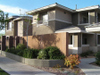
A homeowners’ association in Lake Oswego, Oregon has filed a $5 million lawsuit against the developers of the luxury townhomes. The homeowners of Sunset Crossing are suing Centurion Homes and Aspen Townhomes over claims that construction defects have lead to water intrusion and structural damages. The townhomes were built in 2005.
Andy Burns, the lawyer for Phillip and Patricia Gentelmann, the owners of both Centurion Homes and Aspen Townhomes, said the Gentelmanns were “taking these allegations very seriously.” The suit says that the construction violated state and local building codes and that the firms did not repair damage caused by water intrusion.
Read the full story…
Instant Hotel Tower, But Is It Safe?
March 28, 2012 — CDJ Staff
Broad Sustainable Building has leapfrogged in China’s construction boom by building a thirty-story hotel in just fifteen days in the city of Changsha. According to an article in the Los Angeles Times, most of the building was prefabricated, but most prefabricated buildings require a longer time for assembly. Broad claimed that it cut no corners on safety. However, Zhang Li, a Beijing architect, told the Times that “incredible speed also means incredible risk.”
�At the completion date, the interior was still partially finished. Some rooms were furnished, while others weren’t quite so ready. The hotel will be used to house clients who are visiting Broad and some of its employees.
�Broad called their process “the most profound innovation in human history” and predicted that soon a third of new buildings worldwide would be constructed this way. The company anticipates using the same process to build taller buildings, with hopes of eventually constructing a 150-story building.
�China is currently undergoing a building boom which Zhang attributed to a desire to catch up to the developed world. As a result of this boom, he noted that building inspections are often skipped in China to speed up building.
Read the full story…
Bar to Raise on Green Standard
November 7, 2012 — CDJ Staff
Next June, members of the U.S. Green Building Council will be voting on changes to the LEED green building standard. “The bar is getting raised,” said Navad Malin of BuildingGreen, a consulting and publishing firm, in an article in USA Today. Under the proposed guidelines, builders would have to project energy and water use for five years as part of the certification process. However, if the occupants aren’t as green as the builders anticipated, the buildings will not lose their certification.
The new rules will include higher energy standards, award points for avoiding potentially hazardous materials, and even determine what kind of plumbing items can be used.
Read the full story…
Insurer Rejects Claim on Dolphin Towers
July 22, 2011 — CDJ Staff
A year after residents were forced to leave Dolphin Towers in Sarasota, Florida because of concrete problems, some residents are defaulting on their obligations, abandoning their units. In June, the building’s insurer, Great American, rejected a claim, arguing that the building’s problems were due to latent defects, not covered under the policy. Repair estimates, previously put at $8.2 million, have now risen to $11.5 million. If homeowners cover this cost, it would require an assessment of about $100,000 for each unit.
�About thirty owners are in arrears on dues and fees. Charlotte Ryan, the president of the Dolphin Tower board, wrote to owners, that “the board will have no choice but to lien your property and pursue foreclosure if you do nothing to bring your delinquencies up to date.” However, as homeowners default, the funding for repairs is imperiled. The board has already spent more than $500,000 on shoring up the building and hiring consultants. Their lawyers, on the other hand, are working on a contingency basis.
� Read the full story…
Harmon Towers Case to Last into 2014
December 20, 2012 — CDJ Staff
Don’t expect a fast resolution to the Harmon Tower case in Las Vegas. The latest schedule sets trial for the construction defect claims in January 2014. Previously, these claims were going to be heard during the trial set to start in June 2013. Now the June trial will be over payment issues only.
Don’t expect the building to come down soon either. While CityCenter claims the building could come down in an earthquake, Judge Elizabeth Gonzalez had determined that as the structural testing was not random; its results cannot be extrapolated through the entire structure. As a result, CityCenter has elected to do more testing, holding off on demolishing the building. They are appealing Gonzalez’s order to the Nevada Supreme Court.
Read the full story…
Bill Seeks to Protect Legitimate Contractors
December 20, 2012 — CDJ Staff
The California construction industry sees Senate Bill 863 as a needed help to legitimate construction businesses. The bill introduces regulations that will help shut down fraudulent contractors and help reduce workers’ compensation fraud. John Upshaw of the Independent Roofing Contractors of California described the revenue lost to California and other states as “phenomenal,” saying that “we need to continue the coordinated efforts if we are to see true workers’ compensation reform.”
Read the full story…
“Details Matter” is the Foundation in a Texas Construction Defect Suit
March 1, 2012 — CDJ Staff
The Court of Appeals of Texas has ruled in the case of Barzoukas v. Foundation Design. Mr. Barzoukas contracted with Heights Development to build a house. He subsequently sued Heights Developments and “numerous other defendants who participated in the construction of his house.” Barzoukas eventually settled with all but two defendants, one who went bankrupt and Foundation Design, the defendant in this case. In the earlier phase, Barzoukas made claims of “negligence, negligent misrepresentation, fraud, fraudulent inducement, conspiracy, and exemplary damages in connection with the foundation.”
�Foundation Design had been hired to install 15-foot piers to support the foundation. The engineer of record, Larry Smith, sent a letter to Heights Development noting that they had encountered hard clay stone when drilling. Smith changed the specifications to 12-foot piers. Initially, the City of Houston called a halt to work on the home when an inspector concluded that the piers were too shallow. Heights Development later convinced the city to allow work to continue. Subsequently, experts concluded that the piers were too shallow.
�Foundation Design filed a motion for summary judgment. The trial court granted this, “without specifying the basis for its ruling.” Barzoukas contends the court was in error. Foundation Design contends that “Barzoukas failed to proffer competent evidence establishing that their conduct proximately caused damages.” Further, they did not feel that Smith’s letter gave “rise to viable claims for fraud and fraudulent inducement.”
�One problem the court had was a lack of evidence. The court noted that “the purported subcontract is entirely missing” in the pleadings. The court has no contract between Bazourkas and Heights Development, nor one between Heights Development and either Foundation Design or Smith. The court underscored the importance of this, writing, “details matter.” They found that “the details are largely missing here.” Without the contract, the court found it impossible to determine if “Smith or an entity related to him agreed to indemnify Heights Development for damages arising from Smith’s negligent performance.”
�As the material facts are in dispute, the appeals court found that there were no grounds for a summary judgment in the case. “Pointing to the existence of a contract between Heights Development and Barzoukas, or to the existence of a subcontract, is the beginning of the analysis ? not the end.”
�Foundation Design and Smith also claimed that Barzoukas’s expert did not proffer competent evidence and that the expert’s opinions were conclusory. The trial court did not rule on these claims and the appeals court has rejected them.
�Finally, Barzoukas made a claim that the trial court should not have rejected his argument of fraud and fraudulent inducement. Here, however, the appeals court upheld the decision of the lower court. “Barzoukas did not present evidence supporting an inference that Smith or Foundation Design made a purposeful misrepresentation.
�The court remanded the case to the trial court for reconsideration. One member of the panel, Judge Charles Seymore, upheld the entire decision of the trial court. He dissented with the majority, finding that the economic loss rule foreclosed the claim of negligence.
Read the court’s decision…
2011 Worst Year Ever for Home Sales
September 9, 2011 — CDJ Staff
So few new single-family homes have sold in 2011 that expectations are that this will be the worst year for new homes sales since the Commerce Department started tracking this in 1963. The Harford Courant notes that previously builders created a new supply to which was added homes under foreclosure.
Ed Leamer, economist and director of UCLA’s Anderson Forecast, says that recovery would be driven by two sectors, manufacturing and construction. “It doesn’t look like there is going to be a big recovery in manufacturing,” he says. “It is going to have to come in housing.”
The soft housing market, however, is leading to a loss of construction jobs, as reported by the Associated General Contractors of America. As a result, stock prices for the twelve largest publicly-traded home builders have declined 22.7 percent in a market that has declined 4.2 percent overall.
Read the full story…
Consulting Firm Indicted and Charged with Falsifying Concrete Reports
August 17, 2011 — CDJ Staff
The New York Times reports that a company paid to inspect concrete at major public works projects in New York has been charged with falsifying results. They had been hired by the city three years ago after their predecessor was found to have falsified results.
�According to the Times, investigators found nothing legitimate in nearly three thousand reports. The owner and five employees of American Standard Testing and Consulting Laboratories have been indicted on twenty-nine counts, including charges under New York’s racketeering law. Prison terms could be up to twenty-five years.
�Prior to the city’s contract with American Standard, the city employed a firm called Testwell. Testwell was found in 2008 to have falsified its test results.
Read the full story…
Granting Stay, Federal Court Reviews Construction Defect Coverage in Hawaii
January 6, 2012 — Tred Eyerly, Insurance Law Hawaii
The federal district court ultimately stayed a construction defect case, but offered comments on the current status of coverage disputes for such defects in Hawaii. See National Union Fire Ins. Co. of Pittsburgh, Pa. v. Simpson Mfg. Co., 2011 U.S. Dist. LEXIS 128481(D. Haw. Nov. 7, 2011).
National Union filed a complaint for declaratory relief to establish it had no duty to defend or to indemnify Simpson Manufacturing Company in four actions pending in the Hawaii state courts. The state court actions concerned allegedly defective hurricane strap tie hold downs that were manufactured and sold by Simpson. The hurricane ties allegedly began to prematurely corrode and rust, causing cracking, spalling and other damage to homes.
National Union contended the underlying allegations did not constitute "property damage" caused by an "occurrence," as defined in the policies.
Read the full story…
Reprinted courtesy of Tred R. Eyerly, Insurance Law Hawaii. Mr. Eyerly can be contacted at te@hawaiilawyer.com
After Katrina Came Homes that Could Withstand Isaac�
October 23, 2012 — CDJ Staff
In the aftermath of Hurricane Katrina, Louisiana adopted its first uniform building code. Under the new standards, homes are better able to withstand the winds generated by hurricanes. The owner of one home said that during Hurricane Isaac, “there’s no shaking of the building itself, there’s no sign of a storm except for the rain.”
�WWWLTV reports that the new standards require home to be able to withstand 130 mile per hour winds. They also must follow FEMA guidelines for elevation. Build Now, a non-profit organization, is seeking to build green homes that meet the new standards. Their executive director said “we’re building higher. We’re building stronger. We’re building greener.”
� Read the full story…
�
Construction Law Client Alert: Hirer Beware - When Exercising Control Over a Job Site’s Safety Conditions, You May be Held Directly Liable for an Independent Contractor’s Injury
April 6, 2011 — April 6, 2011 - By Mark VonderHaar and Yvette Davis in the Haight Brown & Bonesteel Blog
On February 24, 2011, the California Court of Appeal held in Jeffrey Tverberg, et al v. Fillner Construction, Inc. that the imposition of direct liability on a hirer turns on whether the hirer exercised retained control of worksite safety in such a manner that affirmatively contributed to the independent contractor’s injury. Twice, Tverberg, an independent contractor hired by a general contractor's subcontractor, asked the general contractor to make the job site safe by covering up open holes created by another unrelated subcontractor while Tverberg was working at the site. After Tverberg was injured at the site by falling in a hole, he sued both the general contractor and the subcontractor which had hired him.
�The Court of Appeal reasoned that when the general contractor instructed another subcontractor to create a condition that was potentially dangerous (i.e., creating open and uncovered bollard holes), and simultaneously required Tverberg to perform unrelated work near the open holes, the general contractor s conduct may have constituted a negligent exercise of its retained control which affirmatively contributed to Tverberg’s injury. The Court also reasoned that the general contractor affirmatively assumed responsibility for the safety of the workers near the holes by only requiring stakes and safety ribbon, and negligently discharged that responsibility which resulted in injury.
�Read the full story...
�Reprinted courtesy of Mark VonderHaar and Yvette Davis of Haight Brown & Bonesteel. Mr. VonderHaar can be contacted at mvonderhaar@hbblaw.com and Ms. Davis at ydavis@hbblaw.com.
Florida Chinese drywall, pollution exclusion, “your work” exclusion, and “sistership” exclusion.
May 26, 2011 — CDCoverage.com
In Auto-Owners Ins. Co. v. American Building Materials, Inc., No. 8:10-CV-313-T-24-AEP (M.D. Fla. May 17, 2011), insured drywall supplier ABM was sued by general contractor KB Homes seeking damages because property damage to houses built by KB Homes using defective Chinese drywall supplied by ABM. ABM’s CGL insurer Auto-Owners defended ABM under a reservation of rights and filed suit against ABM and KB Homes seeking a judicial declaration of no to duty to defend or indemnify ABM against the KB Homes lawsuit. On cross motions for summary, the federal district trial court directed entry of judgment in favor of ABM and KB Homes and against Auto-Owners, holding that Auto-Owners had a duty to defend and indemnify ABM against the KB Homes lawsuit.
Read the full story…
Reprinted courtesy of CDCoverage.com
Construction Defect Not a RICO Case, Says Court
August 4, 2011 — CDJ Staff
The US District Court of North Carolina has rejected an attempt by a homeowner to restart her construction defect claim by turning it into a RICO lawsuit. Linda Sharp, the plaintiff in the case of Sharp v. Town of Kitty Hawk, attempted to amend a claim under the Racketeer Influenced and Corrupt Organizations Act (RICO) and argued that her case belonged in the federal courts.
Ms. Sharp sued in November, 2010 claiming construction defects. She sued in federal court, although the court noted that as she and most of the defendants are citizens of North Carolina, the state court would have been the appropriate jurisdiction. Further, the court noted that one federal claim Sharp made was dismissed with prejudice, leaving only the state law claims. These the court dismissed without prejudice, declining to exercise jurisdiction over North Carolina law.
�After the dismissal, Ms. Sharp attempted to amend her complaint after the deadline. To do so, according to the court, she would be required to obtain consent from defendants or leave of the court. She did neither.
�In his opinion, Judge W. Earl Britt rejected her motion for leave to amend. He also granted the defendants’ motion to dismiss. The clerk was directed to close the case.
� Read the court’s decision…
New Web Site Tracks Settled Construction Defect Claims
June 19, 2012 — CDJ Staff
Peter Lissner, a former Nevada homebuilder, has created a new site to help track homes that have been involved in construction defect litigation. His site, housefaxreview.com, collections documentation about homes where claims of construction defects have been made. He told The Builders Magazine concerns about “the number of homes that have been served notices, received compensation, yet the homes weren’t repaired.” On the site, the creator is identified as “a family owned builder.” According to the site, “the builder had no claims until the neighborhood reached the statutory claims limit 10 years.”
Lissner also claims that in many cases, after settling construction defect lawsuits, the homeowners sell to subsequent buyers without disclosing the lawsuit or their failure to repair. “Who is going to let the new homeowner know about the issue?” he asks.
Documents on the site are priced according to their relevance. Lissner notes that those who provide documents to the site will receive free access.
Read the full story…
Avoid Gaps in Construction Defect Coverage
July 10, 2012 — CDJ Staff
The language may be standardized, but the way different states’ courts interpret it is not. That’s the problem discussed by William F. Knowles and Brendan Winslow-Nason in an article in Business Insurance. One of the major issue through the country is whether a construction defect claim and the resultant damage are an occurrence. Additionally, there are questions whether certain exclusions apply, such as “your work” or “your product” exclusions. They note that many courts “ agree that they are intended to exclude defective construction itself, while providing coverage for unintended consequences.” They further note that these are not the only insurance issues, “making it difficult for construction companies operating across state lines to ensure adequate coverage.”
Their recommendations to contractors are that they pay careful attention to where they’ve done business and “if the states have issued decisions or if there is legislation in place address the scope of coverage under additional insured endorsements.” Additionally, they suggest determining whether a contractor can negotiate a choice of law provision in their policy. The conclude that “construction companies can take proactive steps to protect themselves by identifying the applicable states’ laws, determining whether insurance is adequate under those laws, and then taking steps to resolve any gaps in their coverage.”
Read the full story…
A Call to Washington: Online Permitting Saves Money and the Environment
October 28, 2011 — Douglas Reiser, Builders Counsel
Here’s some good news for Oregon contractors: Electronic Permitting is here. That’s right, no more standing in line with folders full of printed submittals and waiting all day for your permit. The click of a few buttons and you are in business. Great news, right? Unfortunately, Oregon isn’t sharing that celebration with Washington. So I say - why not?
Last week, the State of Oregon released its new ePermitting online interface. The website allows contractors, owners and even local building departments to create an account, submit building plans and procure permits. With your account, you can track the progress of submissions, print documents and get posting information.
The state ran a limited test version in the City of Florence since 2009, working out the kinks. Perhaps the most impressive result of the new system is that Oregon tackled the task of coagulating a local process into one central location.
Read the full story...
Reprinted courtesy of Douglas Reiser of Reiser Legal LLC. Mr. Reiser can be contacted at info@reiserlegal.com
The Year 2010 In Review: Design And Construction Defects Litigation
February 25, 2011 — Candace Matson, Harold Hamersmith, and Helen Lauderdale -
Construction & Infrastructure Law Blog - February 25, 2011
This article is the first in a series summarizing construction law developments for 2010
�1. Centex Homes v. Financial Pacific Life Insurance Co., 2010 U.S. Dist. LEXIS 1995 (E.D. Cal. 2010)
�After settling numerous homeowners’ construction defect claims — and more than ten years after the homes were substantially completed — a home developer brought suit against one of the concrete fabrication subcontractors for the development seeking indemnity for amounts paid to the homeowners, as well as for damages for breach of the subcontractor’s duties to procure specific insurance and to defend the developer against the homeowners’ claims. The subcontractor brought a motion for summary adjudication on the ground the developer’s claims were barred by the ten year statute of repose contained in Code of Civil Procedure Section 337.15.
The District Court agreed the developer’s claim for indemnity was barred by Section 337.15. And it held that because the damages recoverable for breach of the subcontractor’s duty to purchase insurance are identical to the damages recoverable through the developer’s indemnity claim, the breach of duty to procure insurance claim also was time-barred. The District Court, however, allowed the claim for breach of the duty to defend to proceed. The categories of losses associated with such a claim (attorneys’ fees and other defense costs) are distinct from the damages recoverable through claims governed by Section 337.15 (latent deficiency in the design and construction of the homes and injury to property arising out of the latent deficiencies).
� �2. UDC — Universal Development v. CH2M Hill, 181 Cal. App. 4th 10 (6th Dist. Jan. 2010)
��Indemnification clauses in construction agreements often state that one party to the agreement — the “indemnitor” — will defend and indemnify the other party from particular types of claims. Of course, having a contract right to a defense is not the same as actually receiving a defense. Any indemnitor attempting to avoid paying for defense costs can simply deny the tender of defense with the hope that when the underlying claim is resolved the defense obligations will be forgotten. In the past, when parties entitled to a defense — the “indemnitees” — had long memories and pressed to recover defense costs, indemnitors attempted to justify denying the tender by claiming their defense obligations coincided with their indemnity obligations and neither arose until a final determination was made that the underlying claim was one for which indemnity was owed.
��Read the full story...
�Reprinted courtesy of Candace Matson, Harold Hamersmith, and Helen Lauderdale, Sheppard Mullin Richter & Hampton LLP. Ms. Matson can be contacted at cmatson@sheppardmullin.com, Mr. Hamersmith can be contacted at hhamersmith@sheppardmullin.com, and Ms. Lauderdale can be contacted at hlauderdale@sheppardmullin.com.