Late Filing Contractor Barred from Involving Subcontractors in Construction Defect Claim
March 1, 2012 — CDJ Staff
The Colorado Court of Appeals looked at that state’s Construction Defect Action Reform Act in determining if a general contractor could add subcontractors as third-party defendants to a construction defect lawsuit. Shaw Construction, LLC was the general contraction of the Roslyn Court condominium complex, and was sued by the homeowners’ association in a construction defect case. United Builder Services was the drywall subcontractor on the project. MB Roofing had installed roofs, gutters, and downspouts. The certificate of occupancy for the last building was issued on March 10, 2004. The project architect certified completion of all known remaining architectural items in June, 2004.
�The HOA filed a claim against the developers of the property on January, 21, 2009. A week later, the HOA amended its complaint to add Shaw, the general contractor. Shaw did not file its answer and third-party complaint until March 29, 2010, sending its notice of claim under the CDARA on March 30.
�The subcontractors claimed that the six-year statute of limitations had ended twenty days prior. Shaw claimed that the statute of limitations ran until six years after the architect’s certification, or that the HOA’s suit had tolled all claims.
�The trial court granted summary judgment to the subcontractors, determining that “substantial completion occurs ‘when an improvement to real property achieves a degree of completion at which the owner can conveniently utilize the improvement of the purpose it was intended.’”
�The appeals court noted that “Shaw correctly points out that the CDARA does not define ‘substantial completion.’” The court argued that Shaw’s interpretation went against the history and intent of the measure. “Historically, a construction professional who received a complaint responded by ‘cross-nam[ing] or add[ing] everybody and anybody who had a part to play in the construction chain.’” The court concluded that the intent of the act was to prevent unnamed subcontractors from being tolled.
�The court further rejected Shaw’s reliance on the date of the architect’s certification as the time of “substantial completion,” instead agreeing with the trial court that “the architect’s letter on which Shaw relies certified total completion.”
�The appeals court upheld the trial court’s determination that the statute of limitation began to run no later than March 10, 2004 and that Shaw’s complaint of March 29, 2010 was therefore barred. The summary judgment was upheld.
Read the court’s decision…
Plans Go High Tech
April 25, 2012 — CDJ Staff
One construction executive described it as “the wave of the future.” What is it? Accessing building plans on an iPad. According to an article in MacWorld, several companies are now offering solutions to distribute and update construction plans on iPads. Changes to plans and notes can be distributed quickly through cloud computing.
�Alan Dillon, a senior superintendent at DPR Construction told MacWorld, “I can take my iPad into the field and have my whole set of drawings.” He described a set of drawings for a large construction project as “five or six inches thick.” Danielle Douthet, of Level 10 Construction said it “can help everyone be on the same page more quickly, and make sure that everybody is working off the most current set of documents.”
�And it’s not just building plans. Other firms offer building management applications designed to be taken into the field on mobile devices.
� Read the full story…
�
Nevada Supreme Court Reverses Decision against Grader in Drainage Case
June 30, 2011 — CDJ Staff
The Nevada Supreme Court has issued an opinion in the case of Rayburn Lawn & Landscape Designers v. Plaster Development Corporation, reversing the decision of the lower court and remanding the case for a new trial.
�The case originated in a construction defect suit in which Plaster Development Corporation was sued by homeowners. Plaster filed a third-party complaint against its subcontractor, Reyburn. The testimony of Reyburn’s owner was considered to be admission of liability and so the court limited the scope of Reyburn’s closing argument and did not allow the jury to determine the extent of Reyburn’s liability. Reyburn appealed.
�Plaster, in their case, cited California’s Crawford v. Weather Sheild MFG, Inc. The court held the application of these standards, but noted that the “an indemnitor’s duty to defend an indemnitee is limited to those claims directly attributed to the indemnitor’s scope of work and does not include defending against claims arising from the negligence of other subcontractors and the indemnittee’s own negligence.”
�On the matter of law against Reyburn, the court concluded, “Given the conflicting evidence at trial as to whether Reyburn’s work was implicated in the defective retaining walls and sidewalls, and viewing the evidence and inferences in Reyburn’s favor, we conclude that a reasonable jury could have granted relief in favor of Reyburn.” The Nevada Supreme Court conduced that the district court should not have granted Plaster’s motion for judgement.
�Further, the Nevada Supreme Court found that the district court should have apportioned the fees and costs to those claims directly attributed to Reyburn’s scope of work, “if any,” and should not have assigned all attorney costs and court fees to Reyburn.
� Read the court’s decision…
2011 West Coast Casualty Construction Defect Seminar – Recap
June 1, 2011 — CDJ Staff
� 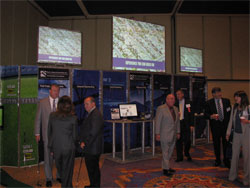 | �
�| Event exhibitors and sponsors contribute to an informative and engaging environment | �
�This year’s meeting was the best yet for the industry-leading construction defect and claims event.
�This year’s seminar concluded on May 13, 2011 with the Construction Defect Community Charitable Foundation Golf Tournament, held at Strawberry Farms Golf Course.
�The Disneyland Hotel in Anaheim, California was the place where more than 1,500 attendees convened for two days of professional development activities and seminars that included CLE workshops and panel discussions of special interest to legal and insurance professionals concerned with construction defect and claims litigation. Key events included “Challenges for Experts in Construction Defect Claims and Litigation,” “Keeping Up with Construction Defect Coverage,” and “Tips for Avoiding the ‘Perfect Storm’ in Handling of Wrap Claims.”
� �  | �
�| Supporting the golf tournament at the 15th hole | �
�This year’s Ollie award was given to George D. Calkins II, Esq. The West Coast Casualty Jerrold S. Oliver Award of Excellence was named in honor of the late Judge Jerrold S. Oliver, and recognizes an individual who is outstanding or has contributed to the betterment of the construction community.
�In addition to being the most comprehensive professional development seminar in the area of construction defects, this year’s seminar was equally valuable as a networking opportunity for members of the industry. People participated in professional development events during the day and then continued networking in the evening at numerous social events. The Lawn Party as well as the legendary Wood, Smith, Henning & Berman events were very well attended. Additional valuable networking events were hosted by a number of industry professionals at the House of Blues, and Tortilla Joe’s.
�As of this writing the 2011, West Coast Casualty's Construction Defect Seminar has applied for or has already received the following continuing education accreditation in the following areas;
�Read the full story…
�For more information about next year’s event, visit West Coast Casualty.
Architect Not Responsible for Injuries to Guests
September 1, 2011 — CDJ Staff
The Texas Court of Appeals has ruled, with one dissent, that the architectural firm that designed a home was not responsible to the injuries caused to guests when a balcony collapsed. Judge David Puryear wrote the majority opinion in Black + Vernooy Architects v. Smith.
Black + Vernooy designed a vacation home for Robert and Kathy Maxfield in 2000. The Maxfields hired a general contractor to build the home. The general contractor hired a subcontractor to build a balcony; however, the subcontractor did not follow the architect’s design in building the balcony.
A year after the house was completed; the Maxfields were visited by Lou Ann Smith and Karen Gravely. The balcony collapsed under the two women. Ms. Gravely suffered a broken finger, a crushed toe, and bruises. Ms. Smith was rendered a paraplegic as a result of the fall. They sued the Maxfields, the general contractor, and the architects for negligence. The Maxfields and the general contractor settled. A jury found that the architects held 10% of the responsibility. The architects appealed the judgment of the district court.
The Appeals Court reversed this judgment, noting that “there has been no allegation that the Architects negligently designed the balcony or that the Architects actually created the defects at issue.” Further, “the Smiths allege that the defect was caused by the construction practices of the contractor and subcontractor when the balcony was not built in accordance with the design plans of the Architects.”
The court found that even though the architects had a duty “to endeavor to guard against defects and deficiencies in the construction of the home and to generally ascertain whether the home was being built in compliance with the construction plans,” this duty did not extend to third parties.
Read the court’s decision…
Know the Minnesota Statute of Limitations for Construction Defect Claims
July 10, 2012 — CDJ Staff
Writing on the Benson Kerrane Storz Nelson web site, Alex Nelson gives an overview of the Minnesota laws covering statutes of limitation and repose. He notes that frequently when his firm declines to take a construction defect case its’ over a missed statute of limitation. He describes the time periods as both “short” and “ambigious.” The briefest limit is that a homeowner “has only 6 months within which to give written notice of the defect to the builder once the defect has manifested itself.” Any legal action must commence within two years of the same point.
The Minnesota statutes also have a six-year limitation, which starts for a single home at transfer of title to the first purchaser or when the purchaser takes possession, whichever happens first. For a condo, it is the last of “completion of the common element,” first unit sale or “Termination of Declarant control.” Fraud or misrepresentation also has a six-year limit, while negligence claims are limited to within the first two years “after the manifestation of the defect.”
The statues of repose also provide limits to filing construction defect lawsuits. Mr. Nelson points out that the longest are for negligence, fraud, and “major construction defects,” all of which have a ten-year limit. On the other hand, claims against general workmanship and materials must be made in the first year.
Read the full story…
Louisiana Politicians Struggle on Construction Bills, Hospital Redevelopment
June 16, 2011 — CDJ Staff
Louisiana politicians are still working on a compromise in the state’s construction budget, as reported in the Times-Picayune. Rob Marrianneax, the chair of the Senate Revenue and Fiscal Affairs Committee, removed a $45 million request from Governor Bobby Jindal and added $4 million for projects that Jindal vetoed last year.
�Two senators have formed competing plans to fund redevelopment construction for New Orleans’s Methodist Hospital. Mitch Landrieu, the mayor of New Orleans, hoped for $30 million dollars in state bonds. Senator Cynthia Willard-Lewis proposed an amendment that would supply $1.6 million, while Senator J.P. Morrell has an amendment that would supply $4 million.
�Read the full story…
Williams v. Athletic Field: Hugely Important Lien Case Argued Before Supreme Court
June 17, 2011 — Douglas Reiser, Builders Counsel
Well, it finally made it. The most important Washington lien case of recent memory was argued in front of the Washington Supreme Court on Tuesday, June 14, 2011. So, what should we all expect?
As I was reading through my RSS feeds this afternoon ? I was stopped dead in my tracks. Williams v . Athletic Field, the Division II case that has been a frequent topic here on Builders Counsel, has finally been argued before the Supreme Court. All of you who have been anxiously awaiting this day, you can check out the Supreme Court submissions by following this link.
The Williams case has been the center of attention for construction lawyers and construction organizations over the past year. Some have called for complete lien law reform, others have tried to patch a hole in the law. Now, we can expect a ruling from the highest court in the state. That ruling will have a major impact on whether the Legislature feels compelled to change lien law.
Read the full story…
Reprinted courtesy of Douglas Reiser of Reiser Legal LLC. Mr. Reiser can be contacted at info@reiserlegal.com
More Charges in Las Vegas HOA Construction Defect Scam�
May 10, 2012 — CDJ Staff
VegasInc.com reports that U.S. District Judge James Mahan has unsealed fourteen more criminal cases in the ongoing Las Vegas HOA corruption probe. One of the fourteen is Lisa Kim, whose Platinum Community Services managed communities in which Nancy Quon and Leon Benzer were involved.
�Two attorneys were also named. Brian Jones had previously been named in civil litigation as working to rig HOA elections in favor of the straw buyers. Jeanne Winkler had done legal work for one of the communities and for the developer before her disbarment.
�Eight of the names released were of alleged straw buyers. These individuals are said to have bought fractional shares of homes so they could stand for election on the HOA boards. One of the individuals named, Arnold Meyers, had sued the Jasmine Homeowners Association, claiming that their HOA elections were tainted. Myers claimed that homeowners received postcards stating that he did not own his condo. His suit was dropped after two homeowners claimed that their names had been forged on Meyer’s affidavits.
� Read the full story…
�
The King of Construction Defect Scams
June 19, 2012 — CDJ Staff
Echoing Businessweek, the Las Vegas Sun agrees that the Nevada HOA scandal is the “king of all Vegas real estate scams,” and says that the Nevada legislatures should take action. The Sun notes that the case involves only 12 out of 2,356 HOAs in Southern Nevada.
To date, 25 people have plead guilty in the case. At the center were an attorney and contractor who allegedly referred work to each other. To enable this, they assembled a wider conspiracy of people who enriched by the process. In the words of the Sun, those involved “upended the concept of a ‘common interest’ community.”
Read the full story…
Claims Under Colorado Defect Action Reform Act Count as Suits
July 10, 2012 — CDJ Staff
The Colorado Court of Appeals has affirmed the judgment of the lower court in Melssen v. Auto-Owners Insurance. The Melssens built a custom home for the Holleys, during which time the Melssens retained a comprehensive general liability policy from Auto-Owners, which “obligated Auto-Owerns to defend the Melssens with respect to any ‘suit’ seeking damages for ‘property damage’ during the policy period.” Soon after the house was constructed, cracks developed in the drywall, then outside stucco and basement slab. The Holleys contended that “approximately $300,000 of damages to the Holleys’ property was caused by the Melssens’ engineering and construction defects” and filed a claim under the Colorado Defect Action Reform Act (CDARA). The Melssens “demanded Auto-Owners defend and indemnify the Melssens and forwared Auto-Owners the notice of claim.”
Although the Melssens notified Auto-Owners in June 2008, it was not until October 2008 that Auto-Owners denied coverage stating that the claims were sustained outside the policy period. The Melssens filed an action against Auto-Owners. At trial, the jury ruled in favor of the Melssens awarding them damages, to which the trial court added costs and attorney fees.
On appeal, Auto-Owners contended that the trial court erred in allowing the Melssens to argue that the CDARA notice of claim “was the functional equivalent of a complaint commencing a suit.” The appeals court found that “the CDARA notice of claim process constituted an alternative dispute resolution proceeding under the policy.” The court agreed that jury should not have been asked to determine if a CDARA action is a “suit,” but as the jury found for the Melssens, the concluding it “constituted harmless error.” Further, the court found that an action under the CDARA satisfied the definition of a “suit.”
The court found for the Melssens, affirming the lower court’s decision and remanding the case to the lower court for the awarding of appeals costs to the Melssens.
Read the court’s decision…
Ohio subcontractor work exception to the “your work” exclusion
August 11, 2011 — CDCoverage.com
In Mosser Construction, Inc. v. Travelers Indem. Co., No. 09-4449 (6th Cir. July 14, 2011)(unpublished), claimant project owner Port Clinton contracted with insured general contractor Mosser for the construction of a building. Following completion, Port Clinton sued Mosser for breach of contract seeking damages because of physical injury to the project occurring after completion resulting from defective backfill material that settled improperly.��
Mosser’s CGL insurer Travelers denied a defense and Mosser filed suit against Travelers seeking a declaratory judgment. Mosser and Travelers filed cross-motions for summary judgment on the issue of whether the supplier of the backfill material?Gerken?qualified as a subcontractor for purposes of the subcontractor work exception to the “your work” exclusion—exclusion l.—for property damage to or arising out of Mosser’s completed work.  Mosser had purchased the backfill material from Gerken pursuant to a purchase order specifying that Gerken was to supply Mosser with an industry standard grade of backfill for use in the Port Clinton project.
Read the full story…
��Reprinted courtesy of CDCoverage.com
Defective Grout May Cause Trouble for Bridges
August 16, 2012 — CDJ Staff
Grout, which was used to protect the steel support cables of the Woodrow Wilson Bridge, may lead to problems instead. The Baltimore Sun reports that the Federal Highway Administration is looking at three dozen bridges in twenty-one states that were built with defective grout. The grout contains high levels of chlorides, which can lead to corrosion. The collapse of pedestrian walkway in Concord, North Carolina was attributed to chloride contamination in the grout.
The grout, SikaGrout 300PT, was advertised as "non-corrosive, does not contain chlorides," but later testing showed that it contained levels that exceeded limits by 400 percent. Throughout the country, about 16 million pounds of this were used. Sika Corp. suspended production of the grout in 2010. If repairs need to be made, it is unclear who will pay.
Read the full story…
Steps to Defending against Construction Defect Lawsuits
July 21, 2011 — CDJ Staff
Writing in Claims Journal, Bryan Rendzio notes that the decline in construction has not been matched by a decline in construction defect lawsuits over condominiums. He reviews the ways in which lawyers representing developers can help protect their clients. He identifies four important considerations in defending developers from claims of construction defects.
�He advocates a careful review of the contract. “Under a breach of contract claim, the insured’s duties to the party who brought the claim against the insured flow from the contract. Commonly, construction contracts limit the scope of recoverable damages, such as by waiving consequential damages.’
�The next step, according to Rendzio is to check of a settlement agreement is already in place, noting that these are “a familiar occurrence in the construction industry, regardless of any lawsuits having been filed.”
�He considers the statute of repose “the single-most decisive weapon an insured possesses in its arsenal during a condo defect lawsuit.” He notes that no lawsuits can be brought for construction defects after the end specified by the statute of repose, and if a lawsuit is brought beforehand, no additional parties can be named once the statute has taken effect.
�Finally, he warns adjusters to be suspicious when a condo association requests contractual indemnification. He notes that the pitfall in this is that developers and the subsequent condominium association often have similar names, given the theoretical example of a condo project built by “Fake Lakes LLC” and later run by the “Fake Lakes Condominium Association.” Writing in regards to Florida law, he notes that condominium associations do not have successor interest in contracts developers made with contractors.
Read the full story…
Montrose Language Interpreted: How Many Policies Are Implicated By A Construction Defect That Later Causes a Flood?
March 17, 2011 — By Shaun McParland Baldwin, March 17, 2011
The Court of Appeals of Indiana recently addressed the “Montrose” language added to the CGL ISO form in 2001 in the context of a construction defect claim where a fractured storm drain caused significant flooding a year after the drain was damaged. The insuring agreement requires that “bodily injury” or “property damage” be caused by an “occurrence” and that the “bodily injury” or “property damage” occur during the policy period. The Montrose language adds that the insurance applies only if, prior to the policy period, no insured knew that the “bodily injury” or “property damage” had occurred in whole or in part. Significantly, it also states that any “bodily injury“ or “property damage” which occurs during the policy period and was not, prior to the policy period known to have occurred, includes a continuation, change or resumption of that “bodily injury” or “property damage” after the end of the policy period.
� In Grange Mutual Cas. Co. v. West Bend Mut. Ins. Co., No. 29D04-0706-PL-1112 (Ct. App. IN March 15, 2011), http://www.ai.org/judiciary/opinions/pdf/03151109ehf.pdf, Sullivan was the General Contractor for a school construction project. Its subcontractor, McCurdy, installed the storm drain pipes. One of the storm pipes was fractured in 2005 while McCurdy was doing its installation work. More than a year later, the school experienced significant water damage due to flooding. It was later discovered that the flooding was due to the fractured storm drain. Sullivan’s insurer paid $146,403 for the water damage. That insurer brought a subrogation claim against McCurdy and its two insurers: West Bend and Grange. West Bend had issued CGL coverage to McCurdy while the construction was ongoing , including the date in which the storm pipe was fractured. Grange issued CGL coverage to McCurdy at the time of the flooding. Those two carriers jointly settled the subrogation claim and then litigated which insurer actually owed coverage for the loss. Significantly, the loss that was paid included only damages from the flooding, not any damages for the cost of repairing the pipe.
�Read the full story...
�Reprinted courtesy of Shaun McParland Baldwin of Tressler LLP. Ms Baldwin can be contacted at sbaldwin@tresslerllp.com
Insurer Has Duty to Disclose Insured's Interest In Obtaining Written Explanation of Arbitration Award�
October 23, 2012 — Tred Eyerly, Insurance Law Hawaii
The issue faced by the Minnesota Supreme Court was whether the insurer had a duty to disclose the insured's interest in obtaining a written explanation of an arbitration award that identified the claims of recovery and the portions of the award attributable to each. Remodeling Dimensions, Inc. v. Integrity Mut. Ins. Co., 2012 LEXIS Minn. 404 (Minn. Sup. Ct., Aug. 22, 2012).
�Remodeling Dimensions, Inc. ("RDI") built an addition for the homeowners and installed windows in the original part of the house. After construction began, the homeowners also asked RDI to fix the master bedroom window in the original part of the house.
�After completion of the project, the house sustained storm damage.
� Read the full story…
��Reprinted courtesy of Tred R. Eyerly, Insurance Law Hawaii. Mr. Eyerly can be contacted at te@hawaiilawyer.com
��
Hawaii Building Codes to Stay in State Control
March 1, 2012 — CDJ Staff
The Hawaii State Senate voted down Senate Bill 2692. Had it been passed, the State Building Code Council would have been abolished and building codes would have become the responsibility of county governments. The bill was opposed by the Insurance Institute for Business and Home Safety. Their director of code development, Wanda Edwards said that the bill “would have undermined key components that are essential to an effective state building code regime.”
Read the full story…
New Construction Laws, New Forms in California
July 10, 2012 — CDJ Staff
New construction laws came into effect in California on July 1. Writing for the Martindale-Hubble Legal Library, Glenn Mau, J. Michael McGuire, and John Tonsing, all of Archer Norris, discuss these changes. They note that the most important part of the changes to California construction law is that “all mechanics liens, stop notices and bond claims recorded after July 1, 2012 must use the new standardized forms and follow the new definitions, notice prerequisites and statutory release form language.”
Read the full story…