Insurer’s Motion for Summary Judgment Based on Earth Movement Exclusion Denied
October 28, 2011 — Tred Eyerley, Insurance Law Hawaii
After carefully dissecting the earth movement exclusion, the court denied the insurer’s motion for summary judgment. High Street Lofts Condominium Assoc., Inc. v. Am. Family Mut. Ins. Co., 2011 U.S. Dist. LEXIS 109043 (D. Colo. Sept. 26, 2011).
The City of Boulder performed road repair work near High Street’s property, some of which involved the use of a vibrating compactor to compact and set the roadbed. High Street noticed damage to its building, such as cracks in walls, sloping of floors and separations of porches from the building itself. High Street contacted the City of Boulder, who forwarded the complaint to its contractor, Concrete Express, Inc.
High Street also filed a claim with its business insurer, American Family, who denied the claim. American Family relied on an opinion letter by High Street’s engineer. The letter indicated that the damage was the result of "soil consolidation/settlement," in response to the construction activities. Based on this letter American Family concluded the claim was excluded under the policy’s earth movement exclusion.
High Street sued American Family, who moved for summary judgment.
Read the full story...
Reprinted courtesy of Tred R. Eyerly, Insurance Law Hawaii. Mr. Eyerly can be contacted at te@hawaiilawyer.com
Texas exclusions j(5) and j(6).
April 27, 2011 — April 27, 2011, by CDCoverage.com
In Evanston Ins. Co. v. D&L Masonry of Lubbock, Inc., No. 07-10-00358-CV (Tex. Ct. App. April 18, 2011), insured masonry subcontractor D&L sued its CGL insurer Evanston to recover costs incurred by D&L for the replacement of window frames damaged by D&L while performing masonry work adjacent to the window frames. The trial court granted summary judgment for D&L.
�Read the full story…
�Reprinted courtesy of CDCoverage.com
2011 West Coast Casualty Construction Defect Seminar – Recap
June 1, 2011 — CDJ Staff
� 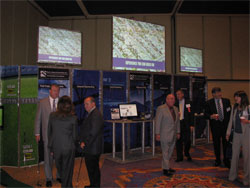 | �
�| Event exhibitors and sponsors contribute to an informative and engaging environment | �
�This year’s meeting was the best yet for the industry-leading construction defect and claims event.
�This year’s seminar concluded on May 13, 2011 with the Construction Defect Community Charitable Foundation Golf Tournament, held at Strawberry Farms Golf Course.
�The Disneyland Hotel in Anaheim, California was the place where more than 1,500 attendees convened for two days of professional development activities and seminars that included CLE workshops and panel discussions of special interest to legal and insurance professionals concerned with construction defect and claims litigation. Key events included “Challenges for Experts in Construction Defect Claims and Litigation,” “Keeping Up with Construction Defect Coverage,” and “Tips for Avoiding the ‘Perfect Storm’ in Handling of Wrap Claims.”
� �  | �
�| Supporting the golf tournament at the 15th hole | �
�This year’s Ollie award was given to George D. Calkins II, Esq. The West Coast Casualty Jerrold S. Oliver Award of Excellence was named in honor of the late Judge Jerrold S. Oliver, and recognizes an individual who is outstanding or has contributed to the betterment of the construction community.
�In addition to being the most comprehensive professional development seminar in the area of construction defects, this year’s seminar was equally valuable as a networking opportunity for members of the industry. People participated in professional development events during the day and then continued networking in the evening at numerous social events. The Lawn Party as well as the legendary Wood, Smith, Henning & Berman events were very well attended. Additional valuable networking events were hosted by a number of industry professionals at the House of Blues, and Tortilla Joe’s.
�As of this writing the 2011, West Coast Casualty's Construction Defect Seminar has applied for or has already received the following continuing education accreditation in the following areas;
�Read the full story…
�For more information about next year’s event, visit West Coast Casualty.
Judge Rejects Extrapolation, Harmon Tower to Remain Standing
November 7, 2012 — CDJ Staff
CityCenter has filed an emergency motion asking the Nevada Supreme Court to intervene in Judge Elizabeth Gonzalez’ order that the building’s defects cannot be extrapolated from those tested. CityCenter’s structural engineering expert “evaluated 397 of the Harmon’s critical structural elements and found all but one defective,” according to the article on Vegas.Inc. Judge Gonzalez would not permit this to be extrapolated to the untested 1,072, as the locations tested were not random.
Judge Gonzalez also ruled that if CityCenter does additional testing, they may not appeal her order that ruled the extrapolation inadmissible. CityCenter argued to the Nevada Supreme Court that “the notion that CityCenter should be forced to incur additional millions of dollars in testing costs and sanctions ?Äì on the condition that it waive its right to appeal this ruling ?Äì just to be permitted to present its own damages evidence, shocks the conscience.”
Gonzalez gave the okay to CityCenter to demolish the building, but its demolition would make any further testing impossible. Under Gonzalez’ ruling, the untested structural elements cannot b assumed to be defective.
Read the full story…
Water Damage Covered Under Efficient Proximate Cause Doctrine
August 2, 2012 — Tred Eyerly, Insurance Law Hawaii
A U.S. District Court in Washington found coverage in what it described as a text book study of the efficient proximate cause rule. Hiller v. Allstate Pro. & Cas. Ins. Co., 2012 U.S. Dist. LEXIS 84862 (E.D. Wash. June 19, 2012).
The Hillers purchased a newly constructed home in December 2006. They also purchased an all-risk homeowner's policy from Allstate.
In July 2010, the Hillers discovered that the carpet in the basement of the residence was saturated with water. Allstate was immediately notified. Hiller began an investigation to attempt to determine the source of the water. He poured water into a downspout drain at the northwest corner of the residence. This caused water to leak into the northwest corner of the home's basement.
An area was excavated around the northwest downspout drain. The end of the drain pipe was partially blocked by rocks and had been wrapped with fabric landscaping material. Further, a “T” pipe installed at the foot of the drain was directing water toward the house's concrete foundation. Hiller notified Allstate that the problems with the drain was due to construction defects and the system was designed to fail.
Allstate denied the claim. Based upon Hiller's information, coverage was excluded under the policy's surface water, subsurface water, inherent vice, and latent defect exclusions.
Read the full story…
Reprinted courtesy of Tred R. Eyerly, Insurance Law Hawaii. Mr. Eyerly can be contacted at te@hawaiilawyer.com
The U.S. Tenth Circuit Court of Appeals Rules on Greystone
November 18, 2011 — Derek J. Lindenschmidt, Higgins, Hopkins, McLain & Roswell, LLC
On November 1, 2011, the Tenth Circuit Court of Appeals ruled on the certified question of whether property damage caused by a subcontractor’s faulty workmanship is an “occurrence” for purposes of a commercial general liability (CGL) insurance policy. In Greystone Const., Inc. v. National Fire & Marine Ins. Co., No. 09-1412 (10th Cir. Nov. 1, 2011), the Tenth Circuit determined that because damage to property caused by poor workmanship is generally neither expected nor intended, it may qualify under Colorado law as an occurrence and liability coverage should apply. Id. at 2.
The short history of the Greystone case is as follows. In Greystone Const., Inc. v. National Fire & Marine Ins. Co., 649 F. Supp. 2d 1213 (D. Colo. 2009), two contractors and one of their insurers brought an action against a second insurer after the second insurer refused to fund the contractors’ defense in construction defect actions brought by separate homeowners. Id. at 1215. The U.S. District Court for the District of Colorado, relying on General Sec. Indem. Co. of Arizona v. Mountain States Mut. Cas. Co., 205 P.3d 529 (Colo. App. 2009), granted summary judgment in favor of the second insurer on the basis that the homeowners’ complaints did not allege accidents that would trigger covered occurrences under the second insurer’s policies. Id. at 1220. Notably, the Greystone, General Security, and other similar decisions prompted the Colorado General Assembly to enact C.R.S. § 13-20-808, which was designed to provide guidance for courts interpreting perceived coverage conflicts between insurance policy provisions and exclusions. The statute requires courts to construe insurance policies to favor coverage if reasonably and objectively possible. C.R.S. § 13-20-808(5).
The Tenth Circuit began its analysis by determining whether C.R.S. § 13-20-808, which defines the term “accident” for purposes of Colorado insurance law, would have a retroactive effect, and thereby settle the question before the court. The Tenth Circuit gave consideration to several Colorado district court orders issued since the enactment of C.R.S. § 13-20-808 which have suggested that the statute does not apply retroactively, including Martinez v. Mike Wells Constr., No. 09cv227 (Colo. Dist. Ct., Mar. 1, 2011), and Colo. Pool. Sys., Inv. V. Scottsdale Ins. Co., No. 09cv836 (Colo. Dist. Ct., Oct. 4, 2010). The Tenth Circuit also attempted to ascertain the General Assembly’s intent behind the term “all insurance policies currently in existence...” Greystone, No. 09-1412, at 12. The Tenth Circuit determined that the General Assembly would have more clearly stated its intentions for the term if it was supposed to apply retroactively to expired policies, rather than those still running. Id. at 12-13. Ultimately, the Tenth Circuit decided that C.R.S. § 13-20-808 did not apply retroactively, but noted that “the retrospective application of the statute is not necessarily unconstitutional.” Id. at 9, 11-14. As such, the Tenth Circuit advised that it was required to decide the question presented in the appeal under the principles of Colorado insurance law. Id. at 15.
Read the full story…
Reprinted courtesy of Higgins, Hopkins, McLain & Roswell, LLC. Mr. Lindenschmidt can be contacted at lindenschmidt@hhmrlaw.com
Quarter Four a Good One for Luxury Homebuilder
December 20, 2012 — CDJ Staff
Toll Brothers has announced that their fourth-quarter net income is $2.35 per share, which they attribute in part to an income tax benefit. Their revenue, at $632.8 million, easily exceeded analysts’ projections of $565.1 million. Additionally, their number of signed contracts jumped seventy percent while their cancellation rate dropped nearly half to 4.9 percent.
Read the full story…
Contractual Liability Exclusion Bars Coverage
August 2, 2012 — Tred Eyerly, Insurance Law Hawaii
The Fifth Circuit Court of Appeals considered whether coverage existed for a defectively built tennis court in light of a contractual liability exclusion. Ewing Construction Company, Inc. v. Amerisure Ins. Co., 2012 U.S. App. LEXIS 12154 (5th Cir. June 15, 2012).
Ewing Construction Company entered a contract with the School District to construct tennis courts at a school. After completion, the School District complained that the courts were cracking and flaking, rendering them unfit for playing tennis. The School District filed suit, seeking damages for defective construction. It alleged that Ewing breached its contract and performed negligently.
Ewing tendered the underlying lawsuit to Amerisure. Amerisure denied coverage and Ewing filed suit.
Read the full story…
Reprinted courtesy of Tred R. Eyerly, Insurance Law Hawaii. Mr. Eyerly can be contacted at te@hawaiilawyer.com
Instant Hotel Tower, But Is It Safe?
March 28, 2012 — CDJ Staff
Broad Sustainable Building has leapfrogged in China’s construction boom by building a thirty-story hotel in just fifteen days in the city of Changsha. According to an article in the Los Angeles Times, most of the building was prefabricated, but most prefabricated buildings require a longer time for assembly. Broad claimed that it cut no corners on safety. However, Zhang Li, a Beijing architect, told the Times that “incredible speed also means incredible risk.”
�At the completion date, the interior was still partially finished. Some rooms were furnished, while others weren’t quite so ready. The hotel will be used to house clients who are visiting Broad and some of its employees.
�Broad called their process “the most profound innovation in human history” and predicted that soon a third of new buildings worldwide would be constructed this way. The company anticipates using the same process to build taller buildings, with hopes of eventually constructing a 150-story building.
�China is currently undergoing a building boom which Zhang attributed to a desire to catch up to the developed world. As a result of this boom, he noted that building inspections are often skipped in China to speed up building.
Read the full story…
Avoid Gaps in Construction Defect Coverage
July 10, 2012 — CDJ Staff
The language may be standardized, but the way different states’ courts interpret it is not. That’s the problem discussed by William F. Knowles and Brendan Winslow-Nason in an article in Business Insurance. One of the major issue through the country is whether a construction defect claim and the resultant damage are an occurrence. Additionally, there are questions whether certain exclusions apply, such as “your work” or “your product” exclusions. They note that many courts “ agree that they are intended to exclude defective construction itself, while providing coverage for unintended consequences.” They further note that these are not the only insurance issues, “making it difficult for construction companies operating across state lines to ensure adequate coverage.”
Their recommendations to contractors are that they pay careful attention to where they’ve done business and “if the states have issued decisions or if there is legislation in place address the scope of coverage under additional insured endorsements.” Additionally, they suggest determining whether a contractor can negotiate a choice of law provision in their policy. The conclude that “construction companies can take proactive steps to protect themselves by identifying the applicable states’ laws, determining whether insurance is adequate under those laws, and then taking steps to resolve any gaps in their coverage.”
Read the full story…
School District Marks End of Construction Project by Hiring Lawyers
June 19, 2012 — CDJ Staff
A school district in northeastern Pennsylvania has retained legal services as they approach the end of a construction project. The Mid Valley School Board cited concerns about the project’s budget, but Randy Parry, Superintendent of Mid Valley schools referenced “possible litigation at the end of the project.” Mr. Parry told the Scranton Times Tribune that construction delays could be a reason for litigation.
In addition to approving an additional $20,000 for legal representation, the board also approved $21,579 for additional project costs.
Read the full story…
Massachusetts Couple Seek to Recuse Judge in Construction Defect Case
September 30, 2011 — CDJ Staff
After seeing their $1 million jury award overturned on appeal by a judge who called the award “against the weight of evidence and likely due to misapprehension, confusion or passion,” Kathryn and Christian Culley are seeking to have him removed from the case. The Massachusetts Supreme Judicial Court has rejected their claim.
The Culleys claim that Judge Thomas R. Murtagh’s decision was influence by him membership in the Andover Country Club which is represented by the opposing counsel in their construction defect case. Justice Margot G. Botsford had denied the Culley’s request, ruling that they had other remedies available to them.
The SJC noted in their ruling that if the Culleys are alleging judicial misconduct a request must be made to the Commission on Judicial Conduct. Their lawyer plans to file a new motion for recusal with the SJC.
Read the full story…
Nevada Assembly Bill Proposes Changes to Construction Defect Litigation
April 14, 2011 — April 14, 2011 Beverley BevenFlorez - Construction Defect Journal
Assemblyman John Oceguera has written a bill that would redefine the term Construction Defect, set statutory limitations, and force the prevailing party to pay for attorney’s fees. Assembly Bill 401 has been referred to the Committee on Judiciary.
�Currently, the law in Nevada states that “a defect in the design, construction, manufacture, repair or landscaping of a new residence, of an alteration of or addition to an existing residence, or of an appurtenance, which is done in violation of law, including in violation of local codes or ordinances, is a constructional defect.” However, AB401 “provides that there is a rebuttable presumption that workmanship which exceeds the standards set forth in the applicable law, including any applicable local codes or ordinances, is not a constructional defect.”
�The Nevada courts may award attorney fees to the prevailing party today. However, AB401 mandates that attorney fees must be awarded, and the exact award is to be determined by the Court. “(1) The court shall award to the prevailing party reasonable attorney’s fees, which must be an element of costs and awarded as costs; and (2) the amount of any attorney’s fees awarded must be determined by and approved by the court.”
�AB401 also sets a three year statutory limit “for an action for damages for certain deficiencies, injury or wrongful death caused by a defect in construction if the defect is a result of willful misconduct or was fraudulently concealed.”
�This Nevada bill is in the early stages of development.
�Read the full story...
Construction Defect Not an Occurrence in Ohio
November 7, 2012 — CDJ Staff
The Ohio Supreme Court has concluded that claims of defective construction or workmanship are not an occurrence under a general liability policy. The court looked at appellate decisions and concluded that CGL policies are not intended to insure against risks under the control and management of the insured. These risks should instead be mitigated with performance bonds.
The question was raised in the case Westfield Ins. Co. v. Custom Agri Systems, Inc. The Sixth District Court of Ohio concluded it was an “open question under Ohio law whether a CGL policy covers defective construction claims.” Westfield filed a motion, granted by the Sixth Circuit, to certify the question to the state Supreme Court. The Sixth Court additionally found that the contractual liability exclusion barred coverage in the case, issues a summary judgment to Westfield.
Read the full story…
California Construction Bill Dies in Committee
July 21, 2011 — CDJ Staff
AB 20, which its sponsor, Linda Halderman (R-Fresno), stated would discourage class action lawsuits against builders and protect jobs in the construction industry, has died in committee. Although the Business Journal reported in June that Haldeman was promoting the bill during a talk in her district and the bill is still on her web site, the California Assembly reports that the bill failed in committee on March 15, 2011. It is possible that the bill could be reconsidered, but the Assembly Committee on Judiciary sees the bill as responding to issues quieted by SB 800 which gives builders the right to repair alleged defects before any suit can be filed.
Read the full story…
Construction Defects Are Occurrences, Says Georgia Supreme Court
July 10, 2012 — CDJ Staff
Michael Bradford writes about the implications of a March decision of the Georgia Supreme Court in which the court found that “negligent construction resulting in damage to surrounding property constitutes an occurrence under a commercial general liability policy. The contractor in the case, American Empire Surplus Lines Insurance Co. Inc. vs. Hathaway Development Co. Inc, argued that a damage caused by a plumbing subcontractor’s work was covered. American Empire was the insurer for the plumbing subcontractor.
Bradford notes that this follows similar decisions in other courts. The George court ruled that “an occurrence can arise where faulty workmanship causes unforeseen or unexpected damage to other property.”
Read the full story…
Construction Upturn in Silicon Valley
August 17, 2011 — CDJ Staff
Work resumed after nearly three years on an office tower in Santa Clara, according to the San Jose Mercury News. Work had stalled on the building due to the economy, but now the developer is planning a second five-story building on the site. Other dormant projects in the area are also getting restarted. Santa Clara County saw the addition of 1,800 construction jobs in June.
�A spokesperson for the Operating Engineers Local 3 in Alameda told the paper, “two years ago we had five thousand folks on the out-of-work list. It’s now down to about 1,700.”
Read the full story…
Ambitious Building Plans in Boston
November 18, 2011 — CDJ Staff
Although most are unlikely to change the Boston skyline, there are several large projects on the drawing boards. The site BostInnovation covered ten of them in a recent post. Downtown Boston will be the site of several of these large projects, including three towers to be added to the Christian Science Plaza, a 404-unit residential tower in the Theater District, and perhaps the largest of these projects, a 47-story tower to be built over Copley Plaza, which will tower over the adjacent buildings. None of the planned buildings will challenge the Hancock Tower’s 60 stories.
Read the full story…