Utah Construction Defect Claims Dependant on Contracts
July 10, 2012 — CDJ Staff
An owner who wants to sue a subcontractor directly may find limited ability to do so under Utah court decisions. Writing on the JDSupra site, Stewart O. Peay and Mark O. Morris of Snell & Wilmer discuss the distinction the Utah courts make between contractor (with whom an owner has direct contracts) and subcontractors (with whom an owner does not). In the Utah courts, construction defect claims must be based on contract, rather than tort. With no contract, there is no way to pursue claims against a subcontractor alone.
They note that the Utah couts do not “accept negligence and negligent misrepresentation claims that many other jurisdictions embrace.” They recommend that in setting up contracts for a construction project, owners should ensure that they are provided with “third-party beneficiary rights to purse claims against subs.” They suggest that “the owner may require his generals to include language in the various subcontracts that incorporates some or all of the terms of the prime contract into the subcontracts.” Additionally they suggest that the owner “require the general to include ‘flow down’ provisions in the various subcontracts.”
Read the full story…
Differing Rulings On Construction Defect Claims Leave Unanswered Questions For Builders, and Construction Practice Groups. Impact to CGL Carriers, General Contractors, Builders Remains Unclear
March 7, 2011 — March 7, 2011 Construction Defect Journal Staff
In the past year a number of state and federal courts have rendered a number of conflicting decisions that promise to alter or perhaps shift entirely the paradigm, of how builders manage risk.
�According to a report today by Dave Lenckus in Property Casualty 360 “Nine state and federal courts and one state legislature over the past year have addressed whether a construction defect a defective product or faulty workmanship is fortuitous and therefore an occurrence under the commercial general liability insurance policy. Four jurisdictions determined it is; three said no; two ruled that a construction defect that causes consequential damage to property other than the work product is an occurrence; and one federal court contributed its conflicting case law that has developed in Oregon since its high court ruled in 2000 that a construction defect is not an occurrence”.
�The article strongly suggests that in the absence of a clear consensus over what the recent rulings mean for builders and contractors coverage disputes will intensify and continue to proliferate.
� Doing this on a state-by-state basis has caused a lot of confusion among buyers and sellers, said Jeffrey A. Segall, a Tampa-based senior vice president and the Florida Construction Practice leader at Willis of Florida, a unit of Willis Group Holdings.
�Read Full Story...
Federal Court Denies Summary Judgment in Leaky Condo Conversion
August 4, 2011 — CDJ Staff
In the US District Court for Illinois, Judge William Hibber has rejected the request for summary judgment sought by the developers of a condominium building in the case of Nautilus Ins. Co. v. 1735 W. Diversey, LLC (the insureds). The insureds renovated a building at 1735 W. Diversey, Chicago, converting it into condominiums. After the project was completed and all units sold, and a condominium association form, one of the owners found that unit suffered leaks during rainstorms. The condo board hired a firm, CRI, to investigate the cause of the leakage. CRI found “water infiltration through the exterior brick masonry walls, build-up of efflorescence on the interior surfaces of the masonry, and periodic spalling of portions of the brick masonry.”
�The redevelopment firm had purchased coverage from Nautilus. “Shortly after the Board filed its first complaint, the Insureds tendered the mater to Nautilus and requested that it indemnify and defend them from the Board's underlying claims. Nautilus, however, rejected the Insureds’ tender and denied coverage under both insurance policies.” Nautilus stated that the water leakage did not constitute an occurrence under the policies. The court cited these policies in which an occurrence is defined as “an accident, including continuous or repeated exposure to substantially the same general harmful conditions.” The Illinois courts have determined that construction defects are not accidents.
�The court concluded that the insured did not bring forth claims within the coverage of the policies and denied the motion for summary judgment.
� Read the court’s decision…
Construction Defect Not a RICO Case, Says Court
August 4, 2011 — CDJ Staff
The US District Court of North Carolina has rejected an attempt by a homeowner to restart her construction defect claim by turning it into a RICO lawsuit. Linda Sharp, the plaintiff in the case of Sharp v. Town of Kitty Hawk, attempted to amend a claim under the Racketeer Influenced and Corrupt Organizations Act (RICO) and argued that her case belonged in the federal courts.
Ms. Sharp sued in November, 2010 claiming construction defects. She sued in federal court, although the court noted that as she and most of the defendants are citizens of North Carolina, the state court would have been the appropriate jurisdiction. Further, the court noted that one federal claim Sharp made was dismissed with prejudice, leaving only the state law claims. These the court dismissed without prejudice, declining to exercise jurisdiction over North Carolina law.
�After the dismissal, Ms. Sharp attempted to amend her complaint after the deadline. To do so, according to the court, she would be required to obtain consent from defendants or leave of the court. She did neither.
�In his opinion, Judge W. Earl Britt rejected her motion for leave to amend. He also granted the defendants’ motion to dismiss. The clerk was directed to close the case.
� Read the court’s decision…
Drug Company Provides Cure for Development Woes
November 18, 2011 — CDJ Staff
Vertex Pharmaceuticals is poised to become the holder of Boston’s biggest commercial lease, paying $72.5 million for 1.1 million square feet on Boston’s waterfront. Vertex’s new buildings are still under construction, but the plans have spurred other development in the Fan Pier area, according to the New York Times. The Times quotes Mary A. Burke, a senior economist at the Federal Reserve Bank of Boston that the Vertex project gives “a big push” to the “momentum for economic growth.”
The Fallon Company is building Vertex’s new laboratory and office space. They are separately planning to build a high-rise with 150 luxury condominium units. According to Joseph Fallon, the chief executive and president of the Fallon Company, there is already a waiting list of 50 buyers for the condominiums.
Across the street from the Vertex site, a group including Morgan Stanley and Boston Global Investors is planning a 23-block mixed use project that would include 1.2 million square feet of retail space. Additionally, the New England Development and the Hanover Group is building a 356-unit apartment building at the adjacent Pier 4.
Read the full story…
United States District Court Confirms That Insurers Can Be Held Liable Under The CCPA.
June 19, 2012 — Chad Johnson
In D.R. Horton, Inc.-Denver v. The Travelers Indem. Co. of Am., 10-CV-02826-WJM-KMT, 2012 WL 527204 (D. Colo. Feb. 16, 2012), the court was asked to rule on Travelers’[1] motion to dismiss D.R. Horton, Inc. ?Äì Denver’s (“DRH”) claim that Travelers violated the Colorado Consumer Protection Act (“CCPA”).
In the underlying construction defect case (“CD case”), DRH, as the developer and general contractor of a construction project, tendered the defense of the CD case to certain subcontractors and to Travelers as an insurer to those subcontractors. Travelers accepted the duty to defend DRH. DRH hired counsel to defend it, and the attorney fees and costs of suit were billed to Travelers. However, for a period of over five years, Travelers failed to actually pay any portion of the defense of DRH. Finally, on October 31, 2008, Travelers offered checks for payment of only 4% of the costs and fees incurred. DRH then returned the checks to Travelers and provided Travelers with authority to support its position that the amounts in Travelers’ checks were inadequate. Thereafter, Travelers dug its heels in, and resubmitted the same checks.
DRH was then forced to file a coverage action against Travelers for declaratory judgment, breach of contract, bad faith breach of insurance contract, and deceptive trade practices under the CCPA. In its motion to dismiss DRH’s CCPA claim, Travelers’ argued that DRH failed to plead specific facts that Travelers engaged in a deceptive trade practice under C.R.S. § 6-1-105, and DRH failed to plead sufficient facts showing that Travelers’ actions significantly affect the public ?Äì a necessary element of a CCPA claim.
Read the full story…
Reprinted courtesy of Chad Johnson, Higgins, Hopkins, McLain & Roswell, LLC. Mr. Johnson can be contacted at johnson@hhmrlaw.com
Defense for Additional Insured Not Barred By Sole Negligence Provision
August 11, 2011 — Tred Eyerly, Insurance Law Hawaii
A general contractor was entitled to a defense as an additional insured when the underlying complaint did not allege it was solely negligent. A-1 Roofing Co. v. Navigators Ins. Co., 2011 Ill. App. LEXIS 656 (Ill. Ct. App. June 24, 2011).
�A-1 was the general contractor for a roof resurfacing job at a high school. Jack Frost Iron Works Inc. (“Frost”) was one of A-1’s subcontractors. Frost had a CGL policy with Navigators Insurance Company under which A-1 was an additional insured.
�An employee of Frost’s subcontractor Midwest Sheet Metal Inc. was killed at the job site when a boom-lift he was operating flipped over. The boom-lift had been leased by another Frost subcontractor, Bakes Steel Erectors, Inc. (BSE). The deceased's estate filed suit against A-1, BSE and two other defendants.
� Read the full story…
�Reprinted courtesy of Tred R. Eyerly, Insurance Law Hawaii. Mr. Eyerly can be contacted at te@hawaiilawyer.com
Home Sales Still Low, But Enough to Spur Homebuilders
August 16, 2012 — CDJ Staff
Although new home sales are still fifty percent below the average over the last forty years, the housing rebound has sent stock of homebuilders up 53 percent this year, during the same period, the S&P 500 rose only 12 percent. The San Francisco Chronicle reports that from 2005 through 2011, homebuilder stocks trailed the S&P 500.
The growth isn’t limited to homebuilders alone. Building suppliers are also seeing a growth in sales, with profits for companies that make gypsum wallboard, cabinetry, plumbing products, and other items used in home building.
Homebuilders have also been able to raise prices. Standard Pacific Corp of Irvine, California has raised prices and cut incentives. Nevertheless, the buyers still come. PulteGroup and D.R. Horton are also raising prices.
Read the full story…
Pipes May Be Defective, But Owners Lack Standing
September 13, 2012 — CDJ Staff
The United States District Court in Minnesota has determined that Steven and Cecilia Thundander cannot make a class-action claim against Uponor, Inc. over the plumbing in their home, as they do not have Article III standing. In this situation, the alleged defect is that Uponor made fraudulent claims that the pipes met National Sanitation Foundation (NSF) standards for use in potable water systems. Uponor submitted samples of other pipes, and their substitution was discovered when the NSF made an inspection of the manufacturing facility. The court noted that “the Thunanders contend that Uponor failed to inform homeowners, plumbers and consumers that it had been selling pipe that failed to meet NSF toxicity requirements at the time of sale and installation.”
�The Court noted that the Thunanders have not tested their piping to determine if they “demonstrate toxicity or lack of compliance with the NSF 61 standards,” noting also that the Complaint seeks to require Uponor to instruct the plaintiffs on “how to test the piping and water to determine the level of risk.” Lacking testing, the Court could not find that the Thundanders have defective pipes. The Court found that the “Plaintiffs have failed to adequately plead an injury in fact sufficient to confer standing as to their product liability claims.”
�The Court also concluded that it could not determine if the Plaintiff’s warranty actions could not be applied, as they “have failed to allege a plausible defect.” Even in the presence of a defect, the Court noted that more than eight years had passed before the filing of the suit, when the warranties under both Indiana and Minnesota law have a four-year statute of limitations. The Court also rejected the Thunanders tort claims, once again because “Plaintiffs have not tested their pipes,” noting that “a tort requires the existence of an injury.”
�In conclusion, Judge Nelson rejected the entirety of the complaint, granting the motions to dismiss by the defendants. However, despite the problems with the Thunanders’ claims, she found that they were not “patently frivolous or groundless.” Therefore, she denied attorney fees requested by one of the defendants.
Read the court’s decision…
Destruction of Construction Defect Evidence Leads to Sanctions against Plaintiff
July 10, 2012 — CDJ Staff
Stating that the plaintiff’s actions have left the defendants in a situation where they “cannot properly defend the action,” a judge in the US District Court of New York has sanctioned the plaintiffs in Aktas v. JMC Dev. Co.
The plaintiffs hired JMC Development and Stephen Jung, an architect, to renovate their vacation home in Adirnodack, New York. As work progressed, “due to disagreements regarding the completion date and payments for the project, the relationship began to deteriorate.” The plaintiffs hired George Villar as an owner’s representative who “testified that he deemed the workmanship to be ‘poor.’”
Subsequently, the locks where changed on the home, preventing JMC from performing any additional work, after which drywall was removed, which Villar stated was so that “the engineer come and look at the framing.” Subsequently, Villar sent a letter to JMC stating that the work was “performed in an inadequate, negligent and un-professional manner.” Villar informed JMC that they were not to visit the property. Subsequently, the plaintiffs hired another firm. “Plaintiffs testified that the materials were ‘carted away’ and ‘thrown out.’”
The plaintiffs filed a suit against JMC and others. JMC filed a motion requesting that the plaintiffs be sanctioned for their spoliation of evidence. The court noted that “the plaintiffs recognized that litigation was imminent,” and that they “had a duty to preserve the evidence. As all of JMC’s work was destroyed, there is no evidence of whether or not the work was defective. The court concluded that it will “issue an adverse inference charge that permits the jury to infer that the missing evidence was favorable to the defendants.”
In conclusion, the court granted in part the spoliation sanctions. They granted JMC a summary judgment dismissing the plaintiffs’ claims of fraud.
Read the court’s decision…
Arizona Court of Appeals Rules Issues Were Not Covered in Construction Defect Suit
December 9, 2011 — CDJ Staff
The Arizona Court of Appeals has ruled in the case of Peters v. Marque Homes. In this case, Walter Peters provided the land and funding for Marque Homes to build a luxury residence in Glendale, Arizona. By the terms of the “Joint Venture Agreement,” Peters provided the land and funding, while Marque would not charge Peters for overhead, profits, or supervision fees. The agreement specified that profits would be divided equally.
Two years later, Marque sued Peters claiming he had breached his obligations by refusing several offers for the home. Peters replied that Marque had “failed to complete the home so it is habitable to prospective purchasers.” Peters stated he had “retained an expert inspector who had identified numerous defects.” The court appointed a Special Commissioner to list the home for sale. Peters purchased the home with two stipulations ordered by the court. At this point, the earlier case was dismissed with prejudice.
Peters then sued Marque “asserting express and implied warranty claims arising out of alleged construction defects in the home.” Marque claimed that Peters’s claims were “precluded by the prior joint venture dispute.” The court granted Marque’s motion.
The appeals court reversed the lower court’s decision, determining that Peters’s claims were not precluded by the agreement. Although there had been a prior case between the two parties, warranty issues did not form a part of that case. “Peters never raised these allegations nor presented this evidence in support of any warranty claim.”
The court also noted that the “parties never agreed to preclude future warranty claims.” Marque and Peters “agreed in the stipulated sale order that ‘the sale of the property to a third party shall be “as is” with a 10-year structural warranty.’” The court noted that the agreement said nothing about one of the parties buying the house.
The appeals court left open a claim by Marque that there are no implied or express warranties available to Peters. They asked the Superior Court to address this.
Read the court’s decision…
Save A Legal Fee? Sometimes You Better Talk With Your Construction Attorney�
May 10, 2012 — Douglas Reiser, Builders Counsel
I love writing this column, because I think it’s refreshing for contractors to hear that they don’t always need an attorney. Today’s post is the “Un-Save a Legal Fee” because I want to point out a specific illustration of when you definitely need your attorney. Using a construction contract template can be fine, but you always need to consider its application to each project ? or it could bite you in the rear.
�Seattle attorney Paul Cressman published a prime depiction of bad contract management, last week. A Florida appellate court struck down a general contractor’s “pay if paid” clause when it became ambiguous because of some incorporated language from its prime contract. Specifically, a clause in the prime contract required the general contractor to pay all subcontractors before receiving payment from the owner, while the general contractor’s “pay if paid” clause required its subcontractors to wait for payment until it arrived from the owner.
� Read the full story…
�
Construction Defect Not Occurrences, Says Hawaii Court
July 10, 2012 — CDJ Staff
Some insurers in Hawaii have made it clear that they will be covering construction defects, despite a court ruling concluding that defects are not occurrences, under Hawaii law. The case, heard by Hawaii’s Intermediate Court of Appeals found that “breach-of-contract claims based on allegations of shoddy performance are not covered under CGL policies and that tort-based claims derivative of such breach of contract claims also are not covered.”
Writing in Business Insider, Michael Bradford notes that the case, Group Builders Inc. and Tradewind Insurance Co. Ltd. vs. Admiral Insurance Co., involved improperly installed insulation at the Hilton Hawaiian Village’s Kalia Tower. Hilton was forced to close 21 floors due to extensive mold in guest rooms. Although the court did recognize this property damage, they did not feel it triggered insurance coverage, noting that if disputes over the quality of work were covered, CGL policies would become professional liability policies or performance bonds.
One critic of the decision, Warren C. Perkins, the risk manager at Boh Bros. Construction of New Orleans, noted that under the decision, “it doesn’t matter what the policy says and there is no need to investigate the policy wording.”
Read the full story…
Court Grants Summary Judgment to Insurer in HVAC Defect Case
August 4, 2011 — CDJ Staff
The US District Court in Colorado has determined in the case of RK Mechanical, Inc. v. Travelers Property Casualty Company of America that Travelers did not breach its insurance contract when it refused to cover RK Mechanical.
�RK Mechanical performed an HVAC installation for a residential project for which J.E. Dunn Rocky Mountain was the general contractor. As part of the work, RK “installed approximately one hundred seventy-one CPVC flanges, which were manufactured by Charlotte Pipe and Foundry Company.” Two of these flanges failed in June, 2009 leading to water damage. RK replaced the cracked flanges and engaged in water remediation. “Travelers paid Dunn and RK for the costs associated with the water damage associated with the Flange Failure.” The court notes that Travelers did not pay for the cracked flanges, however.
�Subsequently, RK examined the remaining flanges, finding many cracked ones. These were replaced with new ones. Later, all the Charlotte flanges were replaced with ones from another manufacturer. RK applied for coverage.
�All sides brought in their experts: “Microbac Laboratories, Inc. prepared a report on behalf of RK concluding that the Flange Failure was due, in part, to an assembly or workmanship defect in addition to manufacturing defects in the flanges. Higgins & Associates prepared a report on behalf of Travelers concluding that the flanges failed due to improper installation. Plastic Failure Labs prepared a report on behalf of the flange manufacturer concluding that the flanges failed due to improper installation by RK.”
�At this point, Travelers denied coverage. RK sued alleging that the coverage for flange failure and water damage implicitly includes mitigation costs. The court rejected this claim, noting it would do so even if Travelers had paid for the replacement of the first two flanges. Nor did the court find that replacement of the faulty flanges is not "a covered cause of loss." RK also argued that as it was required to mitigate, Travelers was obligated to cover costs. However, the court found that “the mitigation costs expended by RK were not incurred in an effort to avoid damages from a potential breach of contract by Travelers.” The court additionally noted that despite RK’s claims, the Colorado courts have not found a common law duty to mitigate. Finally, the court found that the exclusions in the policy were not in violation of public policy.
� Read the court’s decision…
Construction Upturn in Silicon Valley
August 17, 2011 — CDJ Staff
Work resumed after nearly three years on an office tower in Santa Clara, according to the San Jose Mercury News. Work had stalled on the building due to the economy, but now the developer is planning a second five-story building on the site. Other dormant projects in the area are also getting restarted. Santa Clara County saw the addition of 1,800 construction jobs in June.
�A spokesperson for the Operating Engineers Local 3 in Alameda told the paper, “two years ago we had five thousand folks on the out-of-work list. It’s now down to about 1,700.”
Read the full story…
Homebuilding Still on the Rise
December 20, 2012 — CDJ Staff
The National Association of Home Builders reports that spending on private homes was up three percent in October 2012, bringing it to a four-year high. This was part of a trend in which fourteen of the last fifteen months have seen increases in spending on residential construction. Likewise, multifamily residences have seen thirteen months of increased spending, putting it 82% higher than its low, two years ago. ¬?In addition to new homes, remodeling is also up, reaching its highest point in five years.
Read the full story…
2011 West Coast Casualty Construction Defect Seminar – Recap
June 1, 2011 — CDJ Staff
� 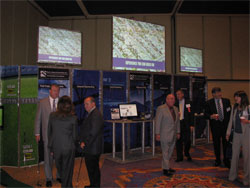 | �
�| Event exhibitors and sponsors contribute to an informative and engaging environment | �
�This year’s meeting was the best yet for the industry-leading construction defect and claims event.
�This year’s seminar concluded on May 13, 2011 with the Construction Defect Community Charitable Foundation Golf Tournament, held at Strawberry Farms Golf Course.
�The Disneyland Hotel in Anaheim, California was the place where more than 1,500 attendees convened for two days of professional development activities and seminars that included CLE workshops and panel discussions of special interest to legal and insurance professionals concerned with construction defect and claims litigation. Key events included “Challenges for Experts in Construction Defect Claims and Litigation,” “Keeping Up with Construction Defect Coverage,” and “Tips for Avoiding the ‘Perfect Storm’ in Handling of Wrap Claims.”
� �  | �
�| Supporting the golf tournament at the 15th hole | �
�This year’s Ollie award was given to George D. Calkins II, Esq. The West Coast Casualty Jerrold S. Oliver Award of Excellence was named in honor of the late Judge Jerrold S. Oliver, and recognizes an individual who is outstanding or has contributed to the betterment of the construction community.
�In addition to being the most comprehensive professional development seminar in the area of construction defects, this year’s seminar was equally valuable as a networking opportunity for members of the industry. People participated in professional development events during the day and then continued networking in the evening at numerous social events. The Lawn Party as well as the legendary Wood, Smith, Henning & Berman events were very well attended. Additional valuable networking events were hosted by a number of industry professionals at the House of Blues, and Tortilla Joe’s.
�As of this writing the 2011, West Coast Casualty's Construction Defect Seminar has applied for or has already received the following continuing education accreditation in the following areas;
�Read the full story…
�For more information about next year’s event, visit West Coast Casualty.
Colorado Court of Appeals Finds Damages to Non-Defective Property Arising From Defective Construction Covered Under Commercial General Liability Policy
December 20, 2012 — Heidi Gassman, Higgins, Hopkins, McLain & Roswell
The recently decided case of Colorado Pool Systems, Inc. v. Scottsdale Insurance Company (Colo. Ct. App. 10CA2638, October 25, 2012), confirms that absent specific exclusions in the policy, a commercial general liability (“CGL”) policy covers damages to non-defective property arising from a builder’s own defective workmanship.
Colorado Pool Systems, Inc. (“Colorado Pool”) was hired as a subcontractor to install a swimming pool at Founders Village Pool and Community Center (“Founders Village”) in Castle Rock, Colorado. After the concrete shell of the pool was placed, some of the rebar frame was found to be too close to the surface. Founders Village demanded that Colorado Pool remove and replace the pool, and Colorado Pool contacted its insurance carrier, Scottsdale Insurance Company (“Scottsdale”), with which Colorado Pool held a CGL policy. After inspecting the pool, Scottsdale’s claims adjuster stated that the insurance policy would cover losses associated with removing and replacing the pool.
Read the full story…
Reprinted courtesy of Heidi Gassman, Higgins, Hopkins, McLain & Roswell, LLC. Ms. Gassman can be contacted at gassman@hhmrlaw.com