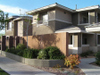
Record-Setting Construction in Fargo
November 7, 2012 — CDJ Staff
Prairie Business reports that Fargo is experiencing the most new construction it has ever seen, totaling $434 million in value, which exceeds the previous high in 2006 of $428 million. Many of the construction starts are for single family homes, although there is also an increase in construction of apartments and townhomes.
The Home Builders Association of Fargo-Moorhead also noted that there was also a large of remodeling projects. Terry Becker, the president of the HBA, said that “remodeling is just huge right now.”
Read the full story…
Georgia Supreme Court Rules Construction Defects Can Constitute an Occurrence in CGL Policies
April 5, 2011 — April 5, 2011 Beverley BevenFlorez - Construction Defect Journal
Recently, the Supreme Court of Georgia reversed the decision in American Empire Surplus Lines Insurance Company v Hathaway Development Company, Inc. stating that because Whisnant’s faulty workmanship caused damage to the surrounding properties, the construction defects constituted “occurrences” under the Commercial General Liability (CGL) policy. Unlike the South Carolina Supreme court ruling in the case of Crossman Communities v Harleysville Mutual, the Georgia Supreme Court stated that an accident can happen intentionally if the effect is not the intended result.
�Interestingly, the only dissenting judge, J. Melton, disagreed with his colleagues on the basis that “although the term ‘accident’ is not specifically defined in the policy, it is axiomatic that an ‘accident’ cannot result from ‘intentional’ behavior.” It is clear that what constitutes an occurrence in CGL policies is still being hotly debated.
�Read the full story...
Former Zurich Executive to Head Willis North America Construction Insurance Group
March 1, 2012 — CDJ Staff
Insurance Journal reports that Sean McGroarty will be directing surety operations for their construction practice in North America. Previously, Mr. McGroarty was the senior vice president and head of international surety with Zurich Financial Services. He has also worked for Liberty Mutual Group and the St. Paul Companies.
�Mr. McGroarty will be leading a team of professionals offering brokerage services for contract and commercial surety.
Read the full story…
Harmon Towers Duty to Defend Question Must Wait, Says Court
March 1, 2012 — CDJ Staff
The Harmon Towers project in Las Vegas was eventually halted short of the planned forty-seven stories after “it was determined that there was substantial defective construction, including defective installation of reinforcing steel throughout the Harmon.” The American Home Insurance Company and Lexington Insurance Company put forth a claim that they had no duty to defend Perini Construction, the builder of the defective Harmon Towers. Further, American Home seeks to recover the monies American reimbursed Perini. The United States District Court of Nevada ruled in the case of American Home Assurance Co. v. Perini Building on February 3, 2012.
�The two insurance companies covered Perini and its subcontractors, Century Steel, Pacific Coast Steel, and Ceco Concrete Construction. Century Steel was the initial subcontractor for the reinforcing steel; they were later acquired by Pacific Coast Steel. In this current case, Perini Construction is the sole defendant.
�Perini sought a dismissal of these claims, arguing that without the subcontractors joined to the case, “the Court cannot afford complete relief among existing parties.” The court rejected this claim, noting that the court can determine the duties of the insurance companies to Perini, which the court described as “separate and distinct from those of the subcontractors.” The subcontractors “have not claimed an interest in the subject matter of the action.” The court concluded that it could determine whether Perini was entitled or not to coverage without affecting the subcontractors. The court rejected Perini’s claim.
�Perini also asked the court to abstain from the case, arguing that it was better heard in a state court. The court noted that several considerations cover whether a case is heard in state or federal courts. The court noted that if the case weighed heavily on state law, the state courts would be the obvious location. Further, if there were a parallel action in the state courts, “there is a presumption that the whole suit should be heard in state courts.” This is, however, no parallel state suit, although the court noted that Perini has “threatened” to do so.
�However, the issue of who is to blame for the problems at Harmon Towers has not been resolved. The court concluded that until the “underlying action” was concluded, it was premature to consider the issues raised in this case while the earlier lawsuit was still in progress. The court denied Perini’s motion to dismiss the case. Given that the outcome of the earlier construction defect case may lead to further litigation in state court, the District Court granted Perini’s motion to abstain, but staying their judgment until the construction defect case is resolved.
Read the court’s decision…
Pipes May Be Defective, But Owners Lack Standing
September 13, 2012 — CDJ Staff
The United States District Court in Minnesota has determined that Steven and Cecilia Thundander cannot make a class-action claim against Uponor, Inc. over the plumbing in their home, as they do not have Article III standing. In this situation, the alleged defect is that Uponor made fraudulent claims that the pipes met National Sanitation Foundation (NSF) standards for use in potable water systems. Uponor submitted samples of other pipes, and their substitution was discovered when the NSF made an inspection of the manufacturing facility. The court noted that “the Thunanders contend that Uponor failed to inform homeowners, plumbers and consumers that it had been selling pipe that failed to meet NSF toxicity requirements at the time of sale and installation.”
�The Court noted that the Thunanders have not tested their piping to determine if they “demonstrate toxicity or lack of compliance with the NSF 61 standards,” noting also that the Complaint seeks to require Uponor to instruct the plaintiffs on “how to test the piping and water to determine the level of risk.” Lacking testing, the Court could not find that the Thundanders have defective pipes. The Court found that the “Plaintiffs have failed to adequately plead an injury in fact sufficient to confer standing as to their product liability claims.”
�The Court also concluded that it could not determine if the Plaintiff’s warranty actions could not be applied, as they “have failed to allege a plausible defect.” Even in the presence of a defect, the Court noted that more than eight years had passed before the filing of the suit, when the warranties under both Indiana and Minnesota law have a four-year statute of limitations. The Court also rejected the Thunanders tort claims, once again because “Plaintiffs have not tested their pipes,” noting that “a tort requires the existence of an injury.”
�In conclusion, Judge Nelson rejected the entirety of the complaint, granting the motions to dismiss by the defendants. However, despite the problems with the Thunanders’ claims, she found that they were not “patently frivolous or groundless.” Therefore, she denied attorney fees requested by one of the defendants.
Read the court’s decision…
South Carolina Law Clarifies Statue of Repose
July 11, 2011 — CDJ Staff
A new law in South Carolina, H 3375, fixes a loophole in that state’s statute of repose. State law puts a cap of eight years on construction defects, but the 2008 law that set that limit had a loophole that would allow for construction defect claims to start thirteen years after construction. The law also provides a cap on punitive damages.
�The measure was backed by the Carolinas Association of General Contractors. Their spokesperson said that the legislation “increases our state’s ability to be economically competitive and helps protect our members from frivolous lawsuits.”
Read the full story…
�Read South Carolina H 3375…
Save A Legal Fee? Sometimes You Better Talk With Your Construction Attorney�
May 10, 2012 — Douglas Reiser, Builders Counsel
I love writing this column, because I think it’s refreshing for contractors to hear that they don’t always need an attorney. Today’s post is the “Un-Save a Legal Fee” because I want to point out a specific illustration of when you definitely need your attorney. Using a construction contract template can be fine, but you always need to consider its application to each project ? or it could bite you in the rear.
�Seattle attorney Paul Cressman published a prime depiction of bad contract management, last week. A Florida appellate court struck down a general contractor’s “pay if paid” clause when it became ambiguous because of some incorporated language from its prime contract. Specifically, a clause in the prime contract required the general contractor to pay all subcontractors before receiving payment from the owner, while the general contractor’s “pay if paid” clause required its subcontractors to wait for payment until it arrived from the owner.
� Read the full story…
�
Construction Defect Litigation at San Diego’s Alicante Condominiums?
March 25, 2011 — Alicante HOA Website
According to recent posts in the Alicante HOA website, construction experts and legal counsel have been retained. The HOA board has been informed that testing of a variety of the building’s components are underway or will begin in the near future.
�Read More...
Construction Employment Rises in Half of the States
December 9, 2011 — CDJ Staff
The Labor Department has noted that half the states and the District of Columbia saw increases in construction employment during the month of October. During the same month, twenty-three states lost construction jobs.
The biggest gains were in North Dakota, Oklahoma, DC, Texas, and California. The biggest losses were in Georgia, New Mexico, Wisconsin, and Florida. There was no change for Alabama.
The chief executive officer of the Association of General Contractors of America, Stephen E. Sandherr, called for more infrastructure development. “Allowing water, transportation and energy networks to deteriorate will hurt construction employment and force taxpayers to spend more later, to fix broken infrastructure.”
Read the full story…
Construction Defect Notice in the Mailbox? Respond Appropriately
August 4, 2011 — Douglas Reiser, Builders Counsel
Recently, I have seen a rash of ignored construction defect notices. What is a construction defect notice? It’s a statutorily required notice, sent from a homeowner to a contractor, listing a number of defects found at their property. If you get one, don’t ignore it.
�The Revised Code of Washington includes a number of provisions intended for residential construction disputes. Among them is the “Notice to Customer” requirement in RCW 18.27.114, which can preempt a contractor’s lien rights, and the “Notice of Construction Defects” found in RCW 64.50.020.
�The Notice of Construction Defects is a standard notice mandated by RCW 64.50, a chapter in the Revised Code of Washington, intended to provide a pre-litigation resolution process for contractors and consumers. The chapter applies only to those losses “caused by a defect in the construction of a residence or in the substantial remodel of a residence.”(See “Action” RCW 64.50.010).
�Unfortunately, many contractors will simply ignore these notices or tell the homeowner to make a warranty claim. But, the notice actually provides a contractor with a forty-five (45) day window to alleviate the dispute.
� Read the full story…
� Reprinted courtesy of Douglas Reiser of Reiser Legal LLC. Mr. Reiser can be contacted at info@reiserlegal.com
San Diego Construction Defect Claim Settled for $2.3 Million
July 10, 2012 — CDJ Staff
The Nauman Law firm has settled the lawsuit by the Latitude Owners Association against CS-Crossroads and others, as reported in the Sacramento Bee from a press release by the firm. The owners at Latitude, a condominium community in San Diego, found that hillside crawl spaces were not property waterproofed, leading to rotting plywood, water intrusion, and pipe leaks. There were additional problems with retrofitted windows and repairs of outside decks. The case was filed in San Diego Superior Court, but settled after multiple mediations.
Read the full story…
Geometrically Defined Drainage Cavities in EIFS as a Guard Against Defects
July 10, 2012 — CDJ Staff
The blog Stucco & Insulation Contractor writes up some details on a “relatively new modification to modern Exterior Insulation Finish Systems,” known as “geometrically defined insulation boards.” They note that the insulation has grooves cut in the back to provide a route for water to drain, instead of getting trapped. They note that when EIFS is installed by a skilled applicator, this is unnecessary. However, with less experienced (and cheaper) installers, problems are more likely.
By cutting these channels, the application of EIFS is rendered “idiot proof,” as they note. Their preference would be that EIFS installers take the time to do the job right, but call this “a step in the right direction.”
Read the full story…
Residential Construction: Shrinking Now, Growing Later?
August 17, 2011 — CDJ Staff
Jim Haugey, the Chief Economist for Reed Construction Data noted that new residential construction spending fell 0.2% in June and a slightly larger drop of 0.5% in residential remodeling. While economic growth is still low, Haugey states that homebuilders have “record low inventories.” He forecasts a shrinkage of 1.5% in 2011, followed by about 20% growth in 2012.
Read the full story…
Timing of Insured’s SIR Payment Has No Effect on Non-Participating Insurer’s Equitable Contribution to Co-Insurer
April 25, 2012 — Aarti Kewalramani, Gatzke Dillon & Balance LLP
In a case of first impression, the California Court of Appeal, Fourth District, Division One, examined whether a non-participating insurer can evade its defense and indemnity obligations because the insured only paid the policy’s self-insured retention ("SIR") as part of a settlement. In Axis Surplus Lines Insurance Company v. Glencoe Insurance LTD. (April 11, 2012, D058963) __ Cal.App.4th __ [2012 WL 11903203], the critical issue for the Court was whether an insurer, with full notice and continued investigation of a claim, can "hide behind the SIR requirement in its policy." The Court declined to "sanction such gamesmanship."
�The dispute involved an equitable contribution claim between two insurers. Axis Surplus Insurance Company provided commercial general liability insurance to Pacifica Pointe L.P. During the same time period, Glencoe Insurance Ltd. provided an owner-controlled insurance policy (i.e., wrap policy) to Pacifica Pointe L.P. Both policies included provisions requiring co-carriers to split the defense and indemnity on equal shares. Pacifica was sued in a construction defect lawsuit, involving alleged resultant damages to condominiums it converted and sold. Pacifica tendered the claim to both Axis and Glencoe. While Axis agreed to defend Pacifica, subject to a reservation of rights, Glencoe declined to participate until Pacifica satisfied the $250,000 SIR on the policy. Glencoe continued to monitor the litigation from the sidelines.
�Axis and Pacifica settled the underlying construction defect lawsuit for $1 million. Pacifica advised Glencoe of the settlement, and received Glencoe’s approval to contribute its $250,000 SIR towards the settlement. Axis contributed $750,000 towards the settlement. After the settlement, Axis sued Glencoe for declaratory relief and equitable contribution, to recover a portion of the defense and indemnity it paid. The trial court found in favor of Axis and allocated Glencoe 60% of the settlement payment. Glencoe appealed.
�On appeal, the Court scrutinized whether Glencoe, as the non-participating insurer, had a legal obligation to provide a defense and indemnity to the insured, despite the timing of the SIR’s satisfaction. The Court determined that in an equitable contribution action, the participating insurer has the burden of proving merely the potential for coverage under the non-participating insurer’s policy. On this showing, the burden of proof shifts to the non-participating insurer to prove the absence of actual coverage under its policy. The Court emphasized that the timing of the SIR’s payment was inconsequential to either insurer’s burden. Because Glencoe admitted coverage existed under its policy, the Court affirmed the trial court’s decision.
�As a result, the result ultimately turned on whether the non-participating carrier had full notice of the claim and cannot use the timing of the satisfaction of the SIR to shield itself from an equitable contribution claim from the participating co-carrier.
� Published courtesy of Aarti Kewalramani of Gatzke Dillon & Balance LLP. Ms. Kewalramani can be contacted at akewalramani@gdandb.com.
�
Insurance Company Prevails in “Chinese Drywall” Case
June 17, 2011 — CDJ Staff
The Louisiana Court of Appeals rejected an appeal to reverse a summary judgment granted to Louisiana Citizens Property Insurance Company. Terrence and Rhonda Ross contracted for a remodel of their home in which Chinese-made drywall was used. When the drywall emitted harmful gasses, the Rosses filed a claim under their insurance policy. This claim was rejected under four exclusions: for faulty materials, latent defect, loss by corrosion, and loss by pollution. After the claim was denied, the Rosses sued Louisiana Citizens.
In April 2010, the lower court granted a summary judgment, followed by a May, 2010 order dismissing the Rosses’ claims against Louisiana Citizens. The Rosses appealed this decision. In the court’s review, they agreed with Louisiana Citizens and the lower court on all counts. Although the Rosses maintained that the drywall was not defective (as it still functioned as drywall), the court ruled that its emission of sulfuric gases was a defect. Further, as it was in place for two years before this became evident, it was also a latent defect. Damage to the Rosses’ home consisted of corrosion damage caused by the pollutants in the drywall.
The Rosses made an additional claim that since their policy covered smoke damage, this should be covered, as the harm was done by sulfuric gases. The court noted that the contract specifies “fumes or vapors from a boiler, furnace, or related equipment,” none of which apply in this case.
Read the court’s decision
Ghost Employees Steal Jobs from Legit Construction Firms
September 13, 2012 — CDJ Staff
Firms that skirt labor laws for construction workers can undercut firms that are obeying those laws. In a piece in Raleigh, North Carolina’s News & Observer, Doug Burton, a commercial masonry contractor summed it up: “my competitors are cheating.” The article describes the low-bidding firms “called their workers independent contractors ? or treated them like ghosts, paid under the table and never acknowledged.” The cost to the state is “unpaid medical bills for injured workers, uncollected business and personal taxes, and payments not made to a depleted state unemployment reserve.”
�One firm examined in the article, Martin’s Bricklaying, employs mostly immigrant Mexican laborers, many of whom are in the country illegally. One employee told the News & Observer, “we don’t complain.”
Read the full story…
Restitution Unlikely in Las Vegas Construction Defect Scam�
October 23, 2012 — CDJ Staff
The San Francisco Chronicle reports that the money lost in the Las Vegas HOA fraud cause is probably not recoverable. Victims of the scam have asked the court for restitution, but Judge Lloyd George doubts any of the money will be found, saying “the money is not available, it would appear.”
�One Vistana board members not part of the conspiracy told reporters that the $8 million construction defect settlement never went for needed repairs. “Within six months that money was gone,” said Bruce Wallace, a retired Air Force colonel. After the construction defect account was depleted to $450,000, two board members disappeared with the funds.
� Read the full story…
�
A Performance-Based Energy Code in Seattle: Will It Save Existing Buildings?
August 11, 2011 — Douglas Reiser, Builders Counsel
The City of Seattle has one of the most stringent energy codes in the nation. Based upon the Washington State Energy Code (which has been embroiled in litigation over its high standards), the code demands a lot from commercial developers. But, does it prevent developers from saving Seattle?s classic and old buildings? Perhaps.
�The general compliance procedure requires buildings to be examined during the permitting process. This means that buildings are examined before they begin operating. The procedure is not malleable and is applicable to all buildings, old and new, big and small.
�The downside of this procedure is that it eliminates awarding compliance to those buildings exhibiting a number of passive features, such as siting, thermal mass, and renewable energy production. This problem has prevented a number of interesting and architecturally pleasing existing building retrofits from getting off the ground. The cost of complying with the current system can be 20% more, and it might prevent builders from preserving a building?s historical integrity.
Read the full story…
�Reprinted courtesy of Douglas Reiser of Reiser Legal LLC. Mr. Reiser can be contacted at info@reiserlegal.com