Construction Defect Journal Seeks Article Submissions Regarding SB800 and Other Builders Right to Repair Laws
October 28, 2011 — CDJ Staff
As we approach the tenth anniversary of the passage and signing of SB800, California’s right-to-repair law, we’d like to hear your reactions to the law, your experiences with it, and your thoughts on it and right-to-repair laws in other states.
We invite you to submit articles either reacting to SB800 or on other matters relevant to construction defect and claims issues. You can promote your firm’s capabilities and get valuable exposure through the publication of your articles. Construction Defect Journal is widely read by our highly targeted audience of decision makers, construction attorneys, builders, owners, and claims professionals.
Articles may contain relevant images, your firm’s name, and links to your corporate website or third parties and can be submitted through e-mail to submitstory@constructiondefectjournal.com. Please remember to include your contact information if you would like it to be published with your content. If you are submitting photos or PDF documents with your article, please send them as e-mail attachments. Items submitted are assumed to be cleared for publishing upon receipt by CDJ.
Normally articles are published in full, although we reserve the right to edit content for space purposes. All articles submitted are considered for publication. For additional questions please contact editor@constructiondefectjournal.com.
2011 West Coast Casualty Construction Defect Seminar – Recap
June 1, 2011 — CDJ Staff
� 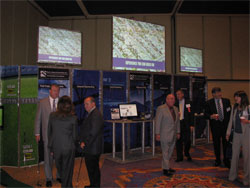 | �
�| Event exhibitors and sponsors contribute to an informative and engaging environment | �
�This year’s meeting was the best yet for the industry-leading construction defect and claims event.
�This year’s seminar concluded on May 13, 2011 with the Construction Defect Community Charitable Foundation Golf Tournament, held at Strawberry Farms Golf Course.
�The Disneyland Hotel in Anaheim, California was the place where more than 1,500 attendees convened for two days of professional development activities and seminars that included CLE workshops and panel discussions of special interest to legal and insurance professionals concerned with construction defect and claims litigation. Key events included “Challenges for Experts in Construction Defect Claims and Litigation,” “Keeping Up with Construction Defect Coverage,” and “Tips for Avoiding the ‘Perfect Storm’ in Handling of Wrap Claims.”
� �  | �
�| Supporting the golf tournament at the 15th hole | �
�This year’s Ollie award was given to George D. Calkins II, Esq. The West Coast Casualty Jerrold S. Oliver Award of Excellence was named in honor of the late Judge Jerrold S. Oliver, and recognizes an individual who is outstanding or has contributed to the betterment of the construction community.
�In addition to being the most comprehensive professional development seminar in the area of construction defects, this year’s seminar was equally valuable as a networking opportunity for members of the industry. People participated in professional development events during the day and then continued networking in the evening at numerous social events. The Lawn Party as well as the legendary Wood, Smith, Henning & Berman events were very well attended. Additional valuable networking events were hosted by a number of industry professionals at the House of Blues, and Tortilla Joe’s.
�As of this writing the 2011, West Coast Casualty's Construction Defect Seminar has applied for or has already received the following continuing education accreditation in the following areas;
�Read the full story…
�For more information about next year’s event, visit West Coast Casualty.
New Safety Standards Issued by ASSE and ANSI
March 28, 2012 — Melissa Dewey Brumback, Construction Law North Carolina
The American National Standards Institute (ANSI) and the American Society of Safety Engineers (ASSE) have recently announced their approval of two new safety standards to enhance construction site safety.
�The two new standards, which are set to take effect during June 2012, are the ANSI/ASSE A10.1-2011 Pre-Project and Pre-Task Safety and Health Planning for Construction and Demolition Operations, and the ANSI/ASSE A10.26-2011 Emergency Procedures for Construction and Demolition Sites.
�The new A10.1-2011 standard was designed to assist construction owners, contractors, and designers by ensuring that safety and health planning were standard parts of their pre-construction planning. It is also intended to help owners of construction sites to establish a process for evaluating constructor candidates with regard to their safety and health performance planning.
�The A10.26 standard applies to emergency situations, including fires, collapses, and hazardous spills. The standard deals with emergency rescue, evacuation, and transportation of injured workers, and also plans for coordinating with emergency medical facilities ahead of potential disasters.
� Read the full story…
���Reprinted courtesy of Melissa Dewey Brumback of Ragsdale Liggett PLLC. Ms. Brumback can be contacted at mbrumback@rl-law.com.
�
Insurer Must Cover Construction Defects Claims under Actual Injury Rule
March 1, 2012 — Tred Eyerly, Insurance Law Hawaii
The Texas Court of Appeals held that the insured need not prove the exact dates physical damage occurred in order to trigger defense and indemnity coverage. Vines-Herrin Custom Homes, LLC v. Great Am. Lloyds Ins. Co., 2011 Tex. App. LEXIS 10027 (Tex. Ct. App. Dec. 21, 2011).
�In 1999, the insured built a home. He was insured under a CGL policy issued by Great American from November 9, 1998 to November 9, 2000. Thereafter, the insured held a CGL policy issued by Mid-Continent from November 9, 2000 to September 18, 2002.
�After construction was completed, the insured sold the house to the buyer in May 2000. After moving in, the buyer found numerous construction defects in the home, including water entering cracks in the home, and sinking and sagging of parts of the house. The buyer sued the insured, who sought coverage under the two policies. When the insurers refused to defend the underlying suit, the insured sued for a declaratory judgment.
�The underlying case went to arbitration and an award of $2.4 million was granted to the buyer. The insured assigned to the buyer his claims against the insurers.
Read the full story…
���Reprinted courtesy of Tred R. Eyerly, Insurance Law Hawaii. Mr. Eyerly can be contacted at te@hawaiilawyer.com
�
Preparing For the Worst with Smart Books & Records
November 7, 2012 — Douglas Reiser, Builders Counsel
Contractors are often too caught up in keeping the wheel of business churning to recognize deficiencies in how their records are managed. Working hard and working often tend to leave little time for consideration of your documents. But all too often I see the unthinkable, a contractor gets into trouble and has to call on its surety for help. At that point, you might finally get your first dose of reality about your records ?Äì and it can cost you.
Read the full story…
Reprinted courtesy of Douglas Reiser of Reiser Legal LLC. Mr. Reiser can be contacted at info@reiserlegal.com
Washington Court Limits Lien Rights of Construction Managers
August 17, 2011 — Douglas Reiser, Builders Counsel
A newly filed, yet unpublished, court opinion opines that a construction manager cannot file a construction lien in Washington state. So, how far reaching is this opinion?
�In the case of Blue Diamond Group Inc. v. KB Seattle 1, Inc., et al, a New York construction manager filed a lien against the Westfield Southcenter Mall in Tukwila, Washington. The lien was filed after the owner of a coffee stand failed to pay Blue Diamond for consulting services used in the construction of a kiosk.
�Blue Diamond served as the owner’s agent, assisting with managing subcontractors, vendors and other tasks. The manager’s tasks also included paying invoices, managing deliveries, setting schedules and other site managerial tasks. Blue Diamond was not registered as a contractor under Washington’s RCW 18.27.
Read the full story…
�Read the court’s decision…
�Reprinted courtesy of Douglas Reiser of Reiser Legal LLC. Mr. Reiser can be contacted at info@reiserlegal.com
Will They Blow It Up?
March 28, 2012 — CDJ Staff
The issues concerning the Harmon Towers building in Las Vegas continue to make their way through the courts. As we noted in a previous piece, Cook County building officials stated that the building could be a hazard if Las Vegas were struck by an earthquake. The question of whether the building will continue to stand is just one of the issues in front of a judge.
�MGM Resorts International argued at a March 13 hearing for permission to implode the Harmon hotel building. They claim that more than 1,700 defects have been discovered in the building and that the building is a public safety hazard. Arguing against demolition, Perini Building Company, the general contractor for the hotel, and its subcontractors are claiming that imploding the building would destroy evidence and prejudice juries in the ongoing construction defect claims. They claim that MGM Resorts wishes to abandon the building due to the economic slowdown. Perini Corp, the contractor for the project, claims that the building can be fixed. Perini claims that MGM’s position in the construction trial would be improved if the building is demolished.
�After Judge Elizabeth Gonzalez heard the four days of testimony on the Harmon Towers building and whether it should be demolished, she scheduled more testimony, with two days in April and an entire week in July. Judge Gonzalez will be deciding whether the building will be torn down, imploded, or left in place.
Read the full story…
�Read the full story…
Good Signs for Housing Market in 2013
December 20, 2012 — CDJ Staff
Dan Green, a loan officer at Waterstone Mortgage, is optimistic about the construction market in 2013. He notes that the rise in building permit, housing starts, and housing completions are all good signs. Mortgage rates are still low, making these new homes attractive to buyers.
Read the full story…
Safety Officials Investigating Death From Fall
September 9, 2011 — CDJ Staff
California safety officials are looking into the circumstances surrounding the death of a construction worker who fell from a roof in Tiburon, California. Another worker found Gabriel Vasquez unconscious at the site. Vasquez was later pronounced dead. The State Division of Occupational Safety and Health are trying to determine how Vasquez fell.
Read the full story…
Cabinetmaker Exceeds Expectations as Conditions Improve�
October 23, 2012 — CDJ Staff
American Woodmark, the manufacturer of several national brands of cabinets and vanities, saw greater than anticipated earnings in its most recent quarter. Their revenue was $148.3 million, an increase of 13% over the same quarter a year prior. They saw a 40% increase in sales. As a result, their per-share earnings were 7 cents, instead of the projected loss of 3 cents per share. Forbes reports that the share price for American Woodmark has been rising in August 2012.
� Read the full story…
�
Damron Agreement Questioned in Colorado Casualty Insurance v Safety Control Company, et al.
February 10, 2012 — CDJ Staff
Safety Control and EMC appealed the judgment in Colorado Casualty Insurance Company versus Safety Control Company, Inc., et al. (Ariz. App., 2012). The Superior Court in Maricopa County addressed “the validity and effect of a Damron agreement a contractor and its excess insurer entered into that assigned their rights to sue the primary insurer.” Judge Johnsen stated, “We hold the agreement is enforceable but remand for a determination of whether the stipulated judgment falls within the primary insurer’s policy.”
� The Opinion provides some facts and procedural history regarding the claim. “The Arizona Department of Transportation (“ADOT”) hired DBA Construction Company (“DBA”) to perform a road-improvement project on the Loop 101 freeway. Safety Control Company, Inc. was one of DBA’s subcontractors. As required by the subcontract, Safety Control purchased from Employer’s Mutual Casualty Company (“EMC”) a certificate of insurance identifying DBA as an additional insured on a policy providing primary coverage for liability arising out of Safety Control’s work.”
� A collision occurred on site, injuring Hugo Roman. Roman then sued ADT and DBA for damages. “Colorado Casualty tendered DBA’s defense to the subcontractors, including Safety Control. Safety Control and EMC rejected the tender. Roman eventually settled his claims against DBA and ADOT. DBA and ADOT stipulated with Roman for entry of judgment of $750,000; Roman received $75,000 from DBA (paid by Colorado Casualty) and $20,000 from ADOT, and agreed not to execute on the stipulated judgment. Finally, DBA, ADOT and Colorado Casualty assigned to Roman their rights against the subcontractors and other insurers.”
� Colorado Casualty attempted to recover what “it had paid to defend DBA and ADOT and settle with Roman. However, Roman intervened, and argued that “Colorado Casualty had assigned its subrogation rights to him as part of the settlement agreement.” The suit was not dismissed, but the Superior Court allowed Roman to intervene. “Roman then filed a counterclaim against Colorado Casualty and a cross-claim against the subcontractors.”
� All claims were settled against all of the defendants except Safety Control and EMC. “The superior court ruled on summary judgment that EMC breached a duty to defend DBA and that as a result, ‘DBA was entitled to settle with Roman without EMC’s consent as long as the settlement was not collusive or fraudulent.’ After more briefing, the court held the stipulated judgment was neither collusive nor procured by fraud and that EMC therefore was liable to Roman on the stipulated judgment and for his attorney’s fees. The court also held Safety Control breached its subcontract with DBA by failing to procure completed-operations insurance coverage and would be liable for damages to the extent that EMC did not satisfy what remained (after the other settlements) of the stipulated judgment and awards of attorney’s fees.” Safety Control and EMC appealed the judgment.
� Four reasons were given for the decision of the ruling. First, “the disagreement between Roman and Colorado Casualty does not preclude them from pursuing their claims against EMC and Safety Control.” Second, “the settlement agreement is not otherwise invalid.” Third, “issues of fact remain about whether the judgment falls within the EMC policy.” Finally, “Safety Control breached the subcontract by failing to procure ‘Completed Operations’ coverage for DBA.”
� In conclusion, the Superior Court affirmed in part, reversed in part, and remanded . “Although, as stated above, we have affirmed several rulings of the superior court, we reverse the judgment against EMC and remand for further proceedings consistent with this Opinion to determine whether the stipulated judgment was a liability that arose out of Safety Control’s operations. In addition, we affirm the superior court’s declaratory judgment against Safety Control but remand so that the court may clarify the circumstances under which Safety Control may be liable for damages and may conduct whatever further proceedings it deems appropriate to ascertain the amount of those damages. We decline all parties’ requests for attorney’s fees pursuant to A.R.S. § 12-341.01 without prejudice to a request for fees incurred in this appeal to be filed by the prevailing party on remand before the superior court.”
Read the court’s decision…
Construction Case Alert: Appellate Court Confirms Engineer’s Duty to Defend Developer Arises Upon Tender of Indemnity Claim
January 27, 2010 — By
Steven M. Cvitanovic,
Haight Brown & Bonesteel, LLP, January 27, 2010
In the recent case of UDC-Universal Development, L.P. v. CH2M Hill, 2010 Cal.App.LEXIS 47 (filed January 15, 2010), the Sixth District Court of Appeal provided a stunning illustration of the far-reaching effects of the California Supreme Court’s holding in Crawford v. Weather Shield Manufacturing Inc. (2008) 44 Cal.4th 541. In Crawford, the Court held the duty to defend under an indemnity agreement arose upon the mere tender of defense of a claim covered by the indemnity.
�In the UDC case, CH2M Hill provided engineering and environmental planning services to developer UDC on a project that ultimately wound up in a construction defect lawsuit by the homeowners association ( HOA ). UDC tendered its defense to CH2M Hill, the tender was rejected, and UDC filed a cross-complaint for negligence, breach of contract and indemnity against CH2M Hill and others. After the HOA’s construction defect claims were settled, UDC proceeded to trial against CH2M Hill. The jury found in favor of CH2M Hill on the claims for negligence and breach of contract. At the request of the parties prior to trial, the trial court ruled on the application of the indemnity agreement in light of Crawford and, in so doing, found that the defense obligation arose upon the tender and that CH2M Hill breached that duty despite the jury finding in favor of CH2M Hill.
�The Court of Appeal affirmed, noting that the defense obligation arose as soon as the defense was tendered and did not depend on the outcome of the litigation, and that the HOA’s general description of the defects along with an allegation that Doe engineers were negligent triggered the duty to defend.
�Although this case did not expand the crushing impact of Crawford’s holding, it is
�Read the full story...
After Construction Defect Case, Repairs to Austin Building
August 2, 2012 — CDJ Staff
The Austin Business Journal reports that remediation is about to begin on Met Center 10, a building that was “at the center of a complex structural defect case.” Claims were made that Grubb & Ellis failed to disclose known structural defects to a group of investors who purchased the building. The brokerage was ordered to pay $6.75 million. Repairs will take an estimated six months at a cost of $3.7 million.
Read the full story…
BUILD Act Inching Closer To Reality
July 8, 2011 — Douglas Reiser, Builders Counsel
A select group of Senators have launched a marketing campaign for the BUILD Act. If this is the first you are hearing about the BUILD Act, do not fret. The Act still has a long way to go, but if successful it would bring a national infrastructure bank.
�I have been fascinated with the concept of a national infrastructure bank for quite some time. The idea has been around since the Clinton years ? and perhaps beyond. The Act’s purpose is to create a national bank (American Infrastructure Financing Authority) to provide loans and loan guarantees to encourage private investment in upgrading America’s infrastructure. For a number of years, we have seen similar legislation float around Congress. But, none of those initiatives have gained as much traction as BUILD.
Read the full story…
�Reprinted courtesy of Douglas Reiser of Reiser Legal LLC. Mr. Reiser can be contacted at info@reiserlegal.com
Ninety-Day Extension Denied to KB Home in Construction Defect Insurance Claim
July 10, 2012 — CDJ Staff
A magistrate judge has denied a request by KB Home Nevada to extend the time for service an additional ninety days. KB claims that St. Paul Fire & Marine Insurance Company has failed to defend them in a construction defect claim. However, the judge did grant KB an additional twenty days to effectuate service, noting that the request for additional time may be renewed.
Read the court’s decision…
Legislatures Shouldn’t Try to Do the Courts’ Job
March 1, 2012 — CDJ Staff
David Thamann, writing in Property Casualty 360, argues that current actions by legislatures on insurance coverage amount to “legislative interference or overreach.” He notes that under current Colorado law, “a court shall presume that the work of a construction professional that results in property damage — including damage to the work itself or other work — is an accident unless the property damage is intended and expected by the insured.” He argues that here legislators are stepping into the role of the courts. “Insureds and insurers are not always going to be pleased with a court ruling, but that is the system we have.”
Read the full story…
Arizona Court of Appeals Rules Issues Were Not Covered in Construction Defect Suit
December 9, 2011 — CDJ Staff
The Arizona Court of Appeals has ruled in the case of Peters v. Marque Homes. In this case, Walter Peters provided the land and funding for Marque Homes to build a luxury residence in Glendale, Arizona. By the terms of the “Joint Venture Agreement,” Peters provided the land and funding, while Marque would not charge Peters for overhead, profits, or supervision fees. The agreement specified that profits would be divided equally.
Two years later, Marque sued Peters claiming he had breached his obligations by refusing several offers for the home. Peters replied that Marque had “failed to complete the home so it is habitable to prospective purchasers.” Peters stated he had “retained an expert inspector who had identified numerous defects.” The court appointed a Special Commissioner to list the home for sale. Peters purchased the home with two stipulations ordered by the court. At this point, the earlier case was dismissed with prejudice.
Peters then sued Marque “asserting express and implied warranty claims arising out of alleged construction defects in the home.” Marque claimed that Peters’s claims were “precluded by the prior joint venture dispute.” The court granted Marque’s motion.
The appeals court reversed the lower court’s decision, determining that Peters’s claims were not precluded by the agreement. Although there had been a prior case between the two parties, warranty issues did not form a part of that case. “Peters never raised these allegations nor presented this evidence in support of any warranty claim.”
The court also noted that the “parties never agreed to preclude future warranty claims.” Marque and Peters “agreed in the stipulated sale order that ‘the sale of the property to a third party shall be “as is” with a 10-year structural warranty.’” The court noted that the agreement said nothing about one of the parties buying the house.
The appeals court left open a claim by Marque that there are no implied or express warranties available to Peters. They asked the Superior Court to address this.
Read the court’s decision…
Consumer Protection Act Whacks Seattle Roofing Contractor
July 21, 2011 — Douglas Reiser, Builders Council
It’s been over 1 year since we last visited the CertainTeed Corp. v. Seattle Roof Brokers lawsuit. After my original post, the contractor, James Garcia, appeared at Builders Counsel in a comment to defend himself. It appears that 1 year later, the court decided to side with CertainTeed and award them significant attorneys’ fees. Ready for the whole story? Its a pricey one.
�Back in July 2010, good friend Mike Atkins (Seattle Trademark Attorney) authored a post about a Seattle roofing contractor who had been sued for false advertising on his website. The lawsuit was raised by CertainTeed, a roofing material producer, whose products were the target of a Seattle contractor’s ire. Seattle Roof Brokers, owned by James Garcia, published content on its website, remarking that CertainTeed products have a history of “premature failure” and that they “will fail?.resale inspection after 15-20 years.”
�CertainTeed filed its action to obtain an injunction and damages under the Consumer Protection Act.
� Read the full story…
�Reprinted courtesy of Douglas Reiser of Reiser Legal LLC. Mr. Reiser can be contacted at info@reiserlegal.com