Florida Appeals Court Rules in Favor of Homeowners Unaware of Construction Defects and Lack of Permits
December 9, 2011 — CDJ Staff
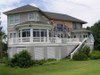
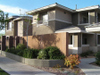
The Florida Court of Appeals has ruled that a homeowner is not liable for defects in unpermitted alterations, reversing a lower court’s decision in Jensen v. Bailey. The Jensens sold their house to the Baileys. During the sale, the Jensens filled out a property disclosure statement, checking “no” to a question about “any improvement or additions to the property, whether by your or by others that have been constructed in violation of building codes or without necessary permits.”
After moving in, the Baileys discovered several problems with the home. One involved a defective sewer connection leading to repeated backups. The Baileys also found problems with remodeling the Jensens had done in the kitchen, master bath, and bedroom. The remodeling work was not done with required permits nor was it up to code.
The court noted that an earlier case, Johnson v. Davis, established four criteria: “the seller of a home must have knowledge of a defect in the property; the defect must materially affect the value of the property; the defect must not be readily observable and must be unknown to the buyer; and the buyer must establish that the seller failed to disclose the defect to the buyer.” The court found that the first of these criteria was crucial to determining the case.
In the Johnson ruling, the then Chief Justice dissented, fearing that the courts “would ultimately construe Johnson’s requirement of actual knowledge to permit a finding of liability based on constructive knowledge,” quoting Justice Boyd, “a rule of constructive knowledge will develop based on the reasoning that if the seller did not know of the defect, he should have known about it before attempting to sell the property.” The Appeals Court concluded that the lower court hit this point in ruling on Jensen v. Bailey.
Citing other Florida cases, the court noted that the Johnson rule does require “proof of the seller’s actual knowledge of the defect.” The court cited a case in which it was concluded that the seller “should have known” that there was circumstantial evidence was that the seller did know about the defects, as the seller had been involved in the construction of the home.
In the case of the Jensens, the lower court concluded that they did not know that the work was defective, nor did they know that they were obligated to obtain permits for it. The Appeals Court found this one fact sufficient to reverse the decision and remand the case to the lower court for a final judgment in favor of the Jensens.
Read the court’s decision…
Manhattan Developer Breaks Ground on $520 Million Project
November 18, 2011 — CDJ Staff
Rebuilding an area of Midtown West that has been condemned for decades, the Gotham Organization has broken ground on a 1,200-unit project that will include housing for a variety of household incomes and a school. One unit of the project will be affordable housing for families of annual incomes up to $40,000. Another will be for middle-income households. Additionally, there will be a 31-story tower with 550 luxury units.
The site CityBiz quotes Mayor Michael Bloomberg, as saying that the project “will grow our economy by creating 2,900 construction-related jobs.” The president of the Gotham Organization, David L. Picket notes that it will “create hundreds of new jobs, generate millions of dollars in revenue for the construction industry, contribute towards the building of a new primary, and provide homes to thousands of New Yorkers.”
Read the full story…
Architectural Firm Disputes Claim of Fault
May 27, 2011 — CDJ Staff
Lake-Flato Architects has disputed the arbitration panel’s conclusion that problems with the home of Tom Hanks and Rita Wilson were due to design flaws. The firm settled with the couple for $900,000, however the Idaho Mountain Express reports that David Lake said, “the settlement in the case in no way represents that Lake Flato was responsible for faulty design.” The Express reported that “the arbitrators found that problems at the home were attributable to design errors that did not take into account the cold winter climate of the Sun Valley area.”
�Read the full story…
Harmon Towers Duty to Defend Question Must Wait, Says Court
March 1, 2012 — CDJ Staff
The Harmon Towers project in Las Vegas was eventually halted short of the planned forty-seven stories after “it was determined that there was substantial defective construction, including defective installation of reinforcing steel throughout the Harmon.” The American Home Insurance Company and Lexington Insurance Company put forth a claim that they had no duty to defend Perini Construction, the builder of the defective Harmon Towers. Further, American Home seeks to recover the monies American reimbursed Perini. The United States District Court of Nevada ruled in the case of American Home Assurance Co. v. Perini Building on February 3, 2012.
�The two insurance companies covered Perini and its subcontractors, Century Steel, Pacific Coast Steel, and Ceco Concrete Construction. Century Steel was the initial subcontractor for the reinforcing steel; they were later acquired by Pacific Coast Steel. In this current case, Perini Construction is the sole defendant.
�Perini sought a dismissal of these claims, arguing that without the subcontractors joined to the case, “the Court cannot afford complete relief among existing parties.” The court rejected this claim, noting that the court can determine the duties of the insurance companies to Perini, which the court described as “separate and distinct from those of the subcontractors.” The subcontractors “have not claimed an interest in the subject matter of the action.” The court concluded that it could determine whether Perini was entitled or not to coverage without affecting the subcontractors. The court rejected Perini’s claim.
�Perini also asked the court to abstain from the case, arguing that it was better heard in a state court. The court noted that several considerations cover whether a case is heard in state or federal courts. The court noted that if the case weighed heavily on state law, the state courts would be the obvious location. Further, if there were a parallel action in the state courts, “there is a presumption that the whole suit should be heard in state courts.” This is, however, no parallel state suit, although the court noted that Perini has “threatened” to do so.
�However, the issue of who is to blame for the problems at Harmon Towers has not been resolved. The court concluded that until the “underlying action” was concluded, it was premature to consider the issues raised in this case while the earlier lawsuit was still in progress. The court denied Perini’s motion to dismiss the case. Given that the outcome of the earlier construction defect case may lead to further litigation in state court, the District Court granted Perini’s motion to abstain, but staying their judgment until the construction defect case is resolved.
Read the court’s decision…
2011 West Coast Casualty Construction Defect Seminar – Recap
June 1, 2011 — CDJ Staff
� 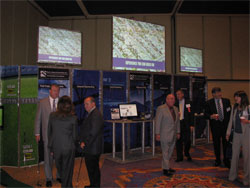 | �
�| Event exhibitors and sponsors contribute to an informative and engaging environment | �
�This year’s meeting was the best yet for the industry-leading construction defect and claims event.
�This year’s seminar concluded on May 13, 2011 with the Construction Defect Community Charitable Foundation Golf Tournament, held at Strawberry Farms Golf Course.
�The Disneyland Hotel in Anaheim, California was the place where more than 1,500 attendees convened for two days of professional development activities and seminars that included CLE workshops and panel discussions of special interest to legal and insurance professionals concerned with construction defect and claims litigation. Key events included “Challenges for Experts in Construction Defect Claims and Litigation,” “Keeping Up with Construction Defect Coverage,” and “Tips for Avoiding the ‘Perfect Storm’ in Handling of Wrap Claims.”
� �  | �
�| Supporting the golf tournament at the 15th hole | �
�This year’s Ollie award was given to George D. Calkins II, Esq. The West Coast Casualty Jerrold S. Oliver Award of Excellence was named in honor of the late Judge Jerrold S. Oliver, and recognizes an individual who is outstanding or has contributed to the betterment of the construction community.
�In addition to being the most comprehensive professional development seminar in the area of construction defects, this year’s seminar was equally valuable as a networking opportunity for members of the industry. People participated in professional development events during the day and then continued networking in the evening at numerous social events. The Lawn Party as well as the legendary Wood, Smith, Henning & Berman events were very well attended. Additional valuable networking events were hosted by a number of industry professionals at the House of Blues, and Tortilla Joe’s.
�As of this writing the 2011, West Coast Casualty's Construction Defect Seminar has applied for or has already received the following continuing education accreditation in the following areas;
�Read the full story…
�For more information about next year’s event, visit West Coast Casualty.
New Safety Standards Issued by ASSE and ANSI
March 28, 2012 — Melissa Dewey Brumback, Construction Law North Carolina
The American National Standards Institute (ANSI) and the American Society of Safety Engineers (ASSE) have recently announced their approval of two new safety standards to enhance construction site safety.
�The two new standards, which are set to take effect during June 2012, are the ANSI/ASSE A10.1-2011 Pre-Project and Pre-Task Safety and Health Planning for Construction and Demolition Operations, and the ANSI/ASSE A10.26-2011 Emergency Procedures for Construction and Demolition Sites.
�The new A10.1-2011 standard was designed to assist construction owners, contractors, and designers by ensuring that safety and health planning were standard parts of their pre-construction planning. It is also intended to help owners of construction sites to establish a process for evaluating constructor candidates with regard to their safety and health performance planning.
�The A10.26 standard applies to emergency situations, including fires, collapses, and hazardous spills. The standard deals with emergency rescue, evacuation, and transportation of injured workers, and also plans for coordinating with emergency medical facilities ahead of potential disasters.
� Read the full story…
���Reprinted courtesy of Melissa Dewey Brumback of Ragsdale Liggett PLLC. Ms. Brumback can be contacted at mbrumback@rl-law.com.
�
Insurer’s Motion for Summary Judgment Based on Earth Movement Exclusion Denied
October 28, 2011 — Tred Eyerley, Insurance Law Hawaii
After carefully dissecting the earth movement exclusion, the court denied the insurer’s motion for summary judgment. High Street Lofts Condominium Assoc., Inc. v. Am. Family Mut. Ins. Co., 2011 U.S. Dist. LEXIS 109043 (D. Colo. Sept. 26, 2011).
The City of Boulder performed road repair work near High Street’s property, some of which involved the use of a vibrating compactor to compact and set the roadbed. High Street noticed damage to its building, such as cracks in walls, sloping of floors and separations of porches from the building itself. High Street contacted the City of Boulder, who forwarded the complaint to its contractor, Concrete Express, Inc.
High Street also filed a claim with its business insurer, American Family, who denied the claim. American Family relied on an opinion letter by High Street’s engineer. The letter indicated that the damage was the result of "soil consolidation/settlement," in response to the construction activities. Based on this letter American Family concluded the claim was excluded under the policy’s earth movement exclusion.
High Street sued American Family, who moved for summary judgment.
Read the full story...
Reprinted courtesy of Tred R. Eyerly, Insurance Law Hawaii. Mr. Eyerly can be contacted at te@hawaiilawyer.com
South Carolina “occurrence” and allocation
September 1, 2011 — CDCoverage.com
In Crossman Communities of North Carolina, Inc. v. Harleysville Mutual Insurance Co., No. 26909 (S.C. Aug. 22, 2011), insured Crossman was the developer and general contractor of several condominium projects constructed by Crossman’s subcontractors over multiple years. After completion, Crossman was sued by homeowners alleging negligent construction of exterior components resulting in moisture penetration property damage to non-defective components occurring during multiple years. Crossman settled the underlying lawsuit and then filed suit against its CGL insurers to recover the settlement amount. Crossman settled with all of the insurers except for Harleysville. Crossman and Harleysville stipulated that the only coverage issue was whether there was an “occurrence.” The trial court subsequently entered judgment in favor of Crossman, determining that there was an “occurrence.” The trial court also ruled that Harleysville was liable for the entire settlement amount without offset for the amounts paid by the other insurers.
Read the full story…
Reprinted courtesy of CDCoverage.com
Construction Defect Not a RICO Case, Says Court
August 4, 2011 — CDJ Staff
The US District Court of North Carolina has rejected an attempt by a homeowner to restart her construction defect claim by turning it into a RICO lawsuit. Linda Sharp, the plaintiff in the case of Sharp v. Town of Kitty Hawk, attempted to amend a claim under the Racketeer Influenced and Corrupt Organizations Act (RICO) and argued that her case belonged in the federal courts.
Ms. Sharp sued in November, 2010 claiming construction defects. She sued in federal court, although the court noted that as she and most of the defendants are citizens of North Carolina, the state court would have been the appropriate jurisdiction. Further, the court noted that one federal claim Sharp made was dismissed with prejudice, leaving only the state law claims. These the court dismissed without prejudice, declining to exercise jurisdiction over North Carolina law.
�After the dismissal, Ms. Sharp attempted to amend her complaint after the deadline. To do so, according to the court, she would be required to obtain consent from defendants or leave of the court. She did neither.
�In his opinion, Judge W. Earl Britt rejected her motion for leave to amend. He also granted the defendants’ motion to dismiss. The clerk was directed to close the case.
� Read the court’s decision…
Contractors with Ties to Trustees Reaped Benefits from LA Community College Modernization Program
March 3, 2011 — Original reporting by Gale Holland, Michael Finnegan and Doug Smith, Los Angeles Times
In the latest installment of the “Billions To Spend” series of investigative reports focused on construction defects, management, and cost issues relevant to LACC’s Community College Modernization Projects, the LA Times examines the costs associated with the various layers of construction management and benefits that accrued to contractors with ties to LACC trustees.
�The reporting by the Times is seemingly critical of the project’s utilization of “body shops” an industry term for companies that function as employers of record. The article segment published today cites a number of circumstances wherein their utilization appears to have escalated costs substantially.
�“To gauge the cost of the staffing system, The Times reviewed thousands of pages of financial records from April 2007, when URS began managing the program, to July 2010. Reporters identified two dozen contractors serving as conduits for pay and benefits for employees they did not supervise.
�At least 230 people were employed in this manner, at a total cost of about $40 million, the records show.
�Approximately $18 million of the total was paid to the employees, according to the Times analysis. The remaining $22 million went to profit and overhead for contractors, the records indicate.
�For employees on its own payroll, the district says that medical and other benefits increase compensation costs 40% above base salaries. So if the district had employed its construction staff directly, the total cost for the period studied would have been $25 million instead of $40 million, a savings of $15 million, The Times calculated.”
�Read Full Story...
Construction Workers Unearth Bones
June 28, 2011 — CDJ Staff
While digging for a new steam line at Eastern Michigan University, workers unearthed some old bones. Experts have yet to determine if the bones are human or animal, however Walter Kraft, the EMU vice president of communications, noted that a handle also unearthed might have come from a casket. Cindy Heflin, reporting in AnnArbor.com notes that until 1900 a Catholic cemetery was located in the area. Although the bodies were relocated, these may have been left behind.
Read the full story…
Ohio “property damage” caused by an “occurrence.”
May 18, 2011 — May 18, 2011 - CDCoverage.com
In JTO, Inc. v. State Automobile Mut. Ins. Co., No. 2010-L-062 (Ohio Ct. App. March 25, 2011), general contractor JTO was sued by hotel project owner Marriott for breach of contract and warranties seeking damages for the repair of construction defects resulting in moisture penetration property damage to interior components. JTO filed a third party complaint against subcontractor Farizel and also tendered its defense as an additional insured under Farizel’s State Auto CGL policy.
�Read the full story…
�Reprinted courtesy of CDCoverage.com
�
�Census Bureau, HUD Show Declines in Residential Construction
�May 17, 2011 – CDJ Staff
�The U.S. Census Bureau and the Department of Housing and Urban Development released their summary of residential construction for April 2011 on May 17.
�Building permits for privately owned housing units were down 4% from last month and 12% from last year. Similarly, privately-owned housing starts were down 10% from March and 23% below the previous year.
�For further details, read the Census Bureau/HUD report
Insurance Company Must Show that Lead Came from Building Materials
August 17, 2011 — CDJ Staff
The Fourth Circuit Court of Appeals for Louisiana has reversed the summary judgment of a lower court in the case of Widder v. Louisiana Citizens Property Insurance Company. Judge Roland L. Belsome wrote the opinion for the panel of three judges. Ms. Widder discovered that her home and its content were contaminated by lead. She applied to her insurer, Louisiana Citizens Property Insurance, which denied her claim.
�In response to Ms. Widder’s suit, LCPIC applied for a summary judgment on the grounds that there was no physical loss and that the policy did not cover defective material, latents defects, and pollution damage.
�The appeals court found that the lead contamination of Widder’s home did meet the standards of a direct physical loss, citing a recent Chinese Drywall case. There, it was found, “when a home has been rendered unusable or uninhabitable, physical damage is not necessary.”
�The lower court addressed only one of LCPIC’s exclusions, addressing only the exclusion on basis of “faulty, inadequate or defective material.” The appeals court noted that the evidence offered at trial does not show that the building materials were the source of the lead. This provided the appeals court with a matter of fact to remand to the lower court.
Read the court’s decision…
Australian Group Seeks Stronger Codes to Combat Dangerous Defects�
October 23, 2012 — CDJ Staff
The Owners Corporation Network, a group that represents condominium owners in Australia, has raised concerns about building defects in high-rise building that can lead to safety problems. The group prepared a statement which would strengthen the rights of owners, but the government official, Fair Trading Minister Anthony Roberts, declined to sign it. A spokesperson for the group cited a fatal fire at a Sydney high rise, noting that “there had been issues of certification which has been a concern of the Owners Corporation Network.” The Australian Broadcasting Network reports that the government will be reviewing the laws concerning high-rise apartment buildings.
� Read the full story…
�
Nevada District Court Dismisses Case in Construction Defect Coverage Suit
August 16, 2012 — CDJ Staff
The United States District Court of Nevada has dismissed a case filed by Maryland Casualty Company against National Fire & Marine Insurance Company. This case follows a case in which National was sued over “200 causes of action arising out of 193 separate insurance coverage disputes related to 75 different insureds and 163 unrelated construction defect or Chapter 40 proceedings across seven states.” The judge in this initial case severed the plaintiffs, as he found that allowing joinder “would make this case impossible to manage.” In this particular instance, National seeks to have the claims made by Maryland Casualty dismissed.
Maryland Casualty alleged that for insurance policies issued to 38 companies, National was obligated to defend the insured. National was, according to the plaintiff, named as defendants in 72 unrelated lawsuits to which National disclaimed coverage. However, the court found that Maryland Casualty failed “to provide enough detail regarding the relevant property damage, policies, claims, and time periods.” The court found that Maryland failed to “state a claim upoin which relief can be granted.
The court also found that “the Complaint lacks any well-pled allegations from which the Court could conclude the Plaintiff has standing since the Complaint is devoid of information about the specific policies at issue.
The court did allow Maryland Casualty up to September 3, 2012 in which to file an amended complaint.
Read the court’s decision…
Limitations of Liability in Subcontractors’ Contracts May Not Be Enforceable in Colorado to Limit Claims by Construction Professionals.�
October 23, 2012 — Heidi J. Gassman, Higgins, Hopkins, McLain & Roswell
The Colorado Homeowner Protection Act of 2007 (“HPA”), codified at C.R.S. § 13-20-806(7), specifically voids express waivers of, or limitations on, a residential property owner’s ability to enforce any rights, remedies, and damages provided by law in a construction defect case. Practically speaking, this means that limitation of liability provisions in contracts between construction professionals and residential homeowners are void and will not be enforced in Colorado. The HPA can extend even further, however, to subcontractors on residential projects, as seen in a recent District Court ruling.
�The HPA was tested in Thacker v. Gallery Homes, et al., v. Terracon Consultants, Inc., et al., Larimer County District Court Case No. 2007CV1195. Gallery Homes hired Terracon to provide geotechnical and structural engineering services at the Colony Ridge subdivision in Loveland, Colorado. Terracon performed work for Gallery Homes under three separate contracts, each of which included a provision limiting Terracon’s total liability to Gallery Homes.
�After the project was completed, two homeowners filed suit against Gallery Homes for alleged construction defects involving movement of their basement floor systems and foundations and damage to porches, patios, garages, and driveways. Gallery Homes sued Terracon as a third-party defendant, and Terracon sought to enforce its limitation of liability provisions via a partial summary judgment motion.
� Read the full story…
�Reprinted courtesy of Heidi J. Gassman, Higgins, Hopkins, McLain & Roswell, LLC. Ms. Gassman can be contacted at gassman@hhmrlaw.com
�
Environment Decision May Expand Construction Defect Claims
August 16, 2012 — CDJ Staff
Could a California Supreme Court decision on environmental claims have an effect on construction defect cases? Jonathan B. Sokol, a lawyer at Greenberg Glusker argues just that in a post on his firm’s blog. He notes that the California Supreme Court has held that “the ‘all sums” method of allocation applies in California” and that “an insurer cannot limit its liability to just the amount of loss that occurred in its particular policy period.” While his focus is on environmental cases, he says that “the decision could also potentially expand the scope of coverage for construction defect claims and other claims involving continuous and progressive property damage and bodily injury.
Read the full story…
Courts Are Conflicted As To Whether "Good Faith" Settlement Determinations Can Be Reviewed Via Writ Petition Or Appeal
July 10, 2012 — Stephen A. Sunseri and Aarti Kewalramani, Gatzke Dillon & Ballance LLP
The Court of Appeal, Second District, Division Three, ruled in Oak Springs Villas Homeowners Association v. Advanced Truss Systems, Inc., et al., (June 14, 2012, B234568) __ Cal.App.4th __ [2012 WL 2149923], that a non-settling defendant cannot appeal a trial court's good faith settlement determination. Instead, a non-settling defendant may only file a petition for writ of mandate pursuant to Code of Civil Procedure section 877.6 to challenge a good faith determination. This decision comes on the heels of a 2011 ruling in Cahill v. San Diego Gas & Electric Co. (2011) 194 Cal.App.4th 939, which found that a writ petition is not the sole means of challenging a trial court's good faith settlement determination.
In Oak Springs Villas, supra, the condominium homeowners' association sued a developer, general contractor, and various subcontractors for alleged construction deficiencies and resultant property damage. The association eventually settled with the developer, but not with a truss manufacturer. The trial court approved the developer's motion for good faith settlement determination, and the truss manufacturer immediately appealed, instead of filing a writ petition. On appeal, the developer argued the good faith determination was not an appealable order. The truss manufacturer argued Cahill applied, as well as an older case, Justus v. Atchison (1977) 19 Cal.3d 564, which allowed for appeals when no remaining issues exist as to the appealing party.
The Court of Appeal ruled in the developer's favor and declined to follow Cahill, stating the truss manufacturer should have filed a writ petition, as expressly required under Section 877.6, subdivision (e). The Court also believed Justus was inapplicable because a non-settling party should not be allowed to have two review opportunities ?Äì one after an adverse good faith ruling, and then another after the ultimate conclusion of the case.
However, the greater effect is that Cahill and Oak Springs Villas simultaneously stand in conflict and appear to be valid law. One case allows for an appeal of a good faith settlement determination, while the other requires strict adherence to the statute. The Supreme Court is likely to review the issue. In the meantime, parties challenging good faith rulings are advised to consult the statutory requirements under Section 877.6, subdivision (e).
Printed courtesy of Stephen A. Sunseri and Aarti Kewalramani, Gatzke Dillon & Ballance LLP. Mr. Sunseri can be contacted at ssunseri@gdandb.com and Ms. Kewalramani can be contacted at akewalramani@gdandb.com.