Lockton Expands Construction and Design Team
July 19, 2011 — CDJ Staff
Lockton Companies, LLC, the largest privately held independent insurance broker, has announced that it is expanding its construction and design team with the hiring of Karen Erger and Tom Miller.
�Ms. Erger will provide professional liability practice management, loss prevention, contract and complex claims management consulting services to Lockton's architectural, engineering and construction clients in her role as Vice President, Director of Practice Management. Her background includes construction litigation at a leading construction law firm, professional liability claims defense and claims consulting for major professional liability underwriters.
�Miller joins Lockton as a Senior Vice President within the Design and Construction Unit. His role will be dedicated to serving the needs of engineering, architecture and construction firms performing services around the globe. He has spent more than 15 years concentrating on professional liability for design professionals and contractors in multiple roles. He previously managed the professional liability underwriting of one of the largest construction insurers and has developed numerous manuscript insurance products as well as focused on strategic planning to enhance business unit opportunities.
� Read the full story…
Tampa Condo Owners Allege Defects�
October 23, 2012 — CDJ Staff
Owners in the Bel Mare towers have filed a lawsuit alleging that the building have construction defects that could lead to problems during periods with high winds. The Tampa Bay Business Journal reports that the condo association has sued the developer, the general contractor, the architects, the structural engineers, and subcontractors.
� Read the full story…
�
Colorado “property damage” caused by an “occurrence” and exclusions j(5) and j(6) “that particular part”
August 11, 2011 — CDCoverage.com
In Continental Western Ins. Co. v. Shay Construction, Inc., No. 10-cv-02126 (D. Col. July 28. 2011), general contractor Milender White subcontracted with insured Shay for framing work.  Shay in turn subcontracted some of its work to others. When Shay?s subcontractors filed suit against Shay and Milender White seeking payment for their work, Milender White cross-claimed against Shay for breach of contract alleging that,Milender White notified Shay during construction that some of Shay?s work was defective and that when Shay repaired its defective work, it damaged work performed by others. Shay’s CGL insurer Continental Western filed suit against Milender White and Shay seeking a judicial declaration of no coverage. The federal district trial court granted Continental Western?s motion for summary judgment.
�� Read the full story…
�Reprinted courtesy of CDCoverage.com
Window Manufacturer Weathers Recession by Diversifying
October 28, 2011 — CDJ Staff
American Openings, a Tuscon-based window manufacturer, has responded to the loss of its sales of windows for new home construction by moving into new markets. The Arizona Daily Star reports that American Openings used to see providing windows for new homes as half their business. Now, Tom Regina, the founder and president says “single family is just dead.”
Their products are insulated windows, designed to comply with Energy Star standards. Without new homes being built, now the company is focusing on homeowners and building owners looking for more energy efficient windows. As the windows have two or three panes and special coatings, homeowners using them are eligible for tax credits.
One of their newer products combines their energy-saving coatings with “break resistant” glass. The article notes that the windows repel “all but the most determined burglars.” However, the company is still awaiting special equipment to cut the glass.
Read the full story...
Construction Workers Unearth Bones
June 28, 2011 — CDJ Staff
While digging for a new steam line at Eastern Michigan University, workers unearthed some old bones. Experts have yet to determine if the bones are human or animal, however Walter Kraft, the EMU vice president of communications, noted that a handle also unearthed might have come from a casket. Cindy Heflin, reporting in AnnArbor.com notes that until 1900 a Catholic cemetery was located in the area. Although the bodies were relocated, these may have been left behind.
Read the full story…
Architectural Firm Disputes Claim of Fault
May 27, 2011 — CDJ Staff
Lake-Flato Architects has disputed the arbitration panel’s conclusion that problems with the home of Tom Hanks and Rita Wilson were due to design flaws. The firm settled with the couple for $900,000, however the Idaho Mountain Express reports that David Lake said, “the settlement in the case in no way represents that Lake Flato was responsible for faulty design.” The Express reported that “the arbitrators found that problems at the home were attributable to design errors that did not take into account the cold winter climate of the Sun Valley area.”
�Read the full story…
District Court Awards Summary Judgment to Insurance Firm in Framing Case
August 4, 2011 — CDJ Staff
In the case of Continental Western Insurance Company v. Shay Construction Inc., Judge Walker Miller has granted a summary judgment against Shay Construction and their co-defendant, Milender White Construction Company.
�Shay was the framing subcontractor for Milender White on what the court described as “a major construction project in Grand County, Colorado.” Two of Shay’s subcontractors, Wood Source Inc. and Chase Lumber Company furnished materials, labor, and equipment to Shay. They subsequently sued for nonpayment and sought to enforce mechanic’s liens, naming both Shay and Milender as defendants. Milender White alleged that Shay had “breached its obligation under its subcontracts with Milender White.”
�Shay’s insurance provider, Continental Western, stated that its coverage did not include “the dispute between Shay, its subcontractors, particularly the cross claims asserted by Milender White.” Shay then sued Continental Western, alleging breach of contract and statutory bad faith.
�The court, however, has found with Continental Western and has granted them a summary judgment. They found “no genuine issue as to any material fact.” The judge did not side with Continental Western on their interpretation of the phrase “those sums that the insured becomes legally obligated to pay as damages.” The court found that the Colorado courts have not limited this to tort actions only. However, as Milender’s cross claim included claims of faulty workmanship on the part of Shay, Judge Miller found for Continental.
Read the court’s decision…
Safer Schools Rendered Unsafe Due to Construction Defects
February 10, 2012 — CJD Staff
Built on a program for safer school buildings, schools in Neenan County, Colorado have been shown to have mild-to-moderate structural problems, rendering some of them unsafe. The Denver Post reports that a third-party review of schools built by the Neenan Company has shown structural issues in all fifteen school buildings.
� One school, Meeker Elementary, has been closed as it could collapse under high winds or during an earthquake. Sargent Junior-Senior High School is in use, but there are plans to evacuate the buildings if winds exceed 25 mile per hour. Two schools have roofs that are unable to bear expected loads of snow during the winter.
� The Neenan Company says that the school buildings are not up to their standards and is working with the school districts to repair the buildings. Repairs are expected to be complete by August.
Read the full story…
Construction Defect Lawsuit Stayed by SB800
September 13, 2012 — CDJ Staff
The California Court of Appeals has reversed the decision of the lower court and has stayed, instead of dismissed, a claim of construction defects. A group of Victorville homeowners sued their homebuilder, K. Hovnanian Communities on a claim of construction defects. Hovnanian argued that under the procedures set forth in SB800, the suit should be dismissed, and that the claims should undergo arbitration. The trial agreed, dismissing the claims of 82 plaintiffs under a first motion, and then granted a second motion to dismiss, which affected a further 21 plaintiffs. The homeowners appealed.
�The Court noted that “the parties disagree about the standard of review,” with the Court determining that as the facts were not in dispute, they would use “an independent standard of review.”
�Reviewing the relevant statues, the Court concluded that the terms of the limited warranty set out the pre-litigation procedure, noting that “plaintiffs admit they did not comply with the limited warranty because they challenge its validity and enforceability.” The Court concluded that “plaintiffs’ action was premature.”
�The Court further noted that “a civil action will not be filed until after the contractual procedures have been followed.” Until these procedures have been followed, the Court said that they “decline to resolve issues about validity and enforceability.” However, as these issues could arise after the limited warranty procedures, the court stayed, rather than dismissed the claims.
Read the court’s decision…
Underpowered AC Not a Construction Defect
November 7, 2012 — CDJ Staff
After buying a home in Louisiana, Mike Gines determined that the home’s air conditioning unit was insufficient to maintain an appropriate temperature. He contacted the home builder, D.R. Horton, Inc., which worked with the air conditioning installer, Reliant Heating & Air Conditioning, in order to repair the system. When the problems persisted, Gines filed a class action petition against Horton and Reliant in state court. Horton and Reliant moved the case to the federal courts, whereupon Gines asserted the defendants were in violation of the Louisiana New Home Warranty Act (NHWA). Horton stated that the claim under the NHWA was invalid, because Gines had not alleged actual physical damage to his home.
The district court granted Horton’s motion to dismiss. Gines sought a reversal from the Fifth Circuit Court of Appeals and sought to have two questions of state law addressed by the Louisiana Supreme Court.
The district court ruled that the NHWA was the “sole remedy under Louisiana law for a purchaser of a new home with construction defects. Gines argued that court erred in this, but also conceded that this was the conclusion of the Louisiana Supreme Court.
Further, Gines argued that a provision in the NHWA that allows the inclusion of construction defects that do not cause damage was satisfied by paragraph 6 of the contract. The court noted that Gines did not attach a copy of the contract to either the original or amended complaint, and so the court does not need to address these claims. However, the court cautioned that if a copy had been included, they still would have rejected the claim, as “the cited language does not indicate a waiver of the physical damage requirement.” They also note that “paragraph 13 of the contract shows that Gines was aware to the absence of any such waiver in the contract.”
The court concludes that “the moral of this story is that in order to avoid the harsh result that has obtained here, the buyer of a newly constructed home in Louisiana should seek to obtain in the contract of sale an express waiver of the actual damage requirement of the NHWA.” The appeals court affirmed the decision of the circuit court and denied the application to certify questions to the Louisiana Supreme Court.
Read the court’s decision…
Illinois Court Determines Insurer Must Defend Negligent Misrepresentation Claim
December 9, 2011 — Tred R. Eyerly, Insurance Law Hawaii
Although the insureds disclosed flooding problems in the basement, the buyers purchased their home. USAA Cas. Ins. Co. v. McInerney, 2011 Ill. App. LEXIS 1130 (Ill Ct. App. Oct. 31, 2011). In a supplemental disclosure, the insureds reported that during heavy rains light seepage occurred in the basement.
After moving in, the buyers experienced significant water infiltration and flooding in the basement. The buyers and their children also began to experience mold-related illnesses.
The buyers sued for rescission of the contract or, in the alternative, damages. They alleged breach of contract, fraudulent misrepresentation and negligent misrepresentation. In the claim for negligent misrepresentation, the buyers alleged that the insureds carelessly omitted the fact that there were material defects in the basement and foundation when they should have known of such defects.
Read the full story…
Reprinted courtesy of Tred R. Eyerly, Insurance Law Hawaii. Mr. Eyerly can be contacted at te@hawaiilawyer.com
Consulting Firm Indicted and Charged with Falsifying Concrete Reports
August 17, 2011 — CDJ Staff
The New York Times reports that a company paid to inspect concrete at major public works projects in New York has been charged with falsifying results. They had been hired by the city three years ago after their predecessor was found to have falsified results.
�According to the Times, investigators found nothing legitimate in nearly three thousand reports. The owner and five employees of American Standard Testing and Consulting Laboratories have been indicted on twenty-nine counts, including charges under New York’s racketeering law. Prison terms could be up to twenty-five years.
�Prior to the city’s contract with American Standard, the city employed a firm called Testwell. Testwell was found in 2008 to have falsified its test results.
Read the full story…
Does the New Jersey Right-To-Repair Law Omit Too Many Construction Defects?
January 6, 2012 — CDJ Staff
A post on the blog of Liberty Building Forensics Group find fault with the New Jersey Home Warranty and Builders’ Registration Act for not being stringent enough. The poster notes the coverage given under the bill. In the first year, builders are responsible to remedy faulty workmanship and materials and major structural defects. While other protections expire in the first or second year, there is a ten year coverage of major construction defects.
The blogger finds fault with the exclusion New Jersey law places on these claims, arguing that “due to the stringent definition of ‘major construction defects,” the warranty affords no coverage unless the house is practically collapsing.” The bill excludes leaks, cracks, and mold, and further limits claims if the homeowner has failed to inform the builder or insurer of defects, failure to maintain the home, and alterations made by the homeowner.
The intent of the New Jersey law is given as “requiring that newly constructed homes conform to certain construction and quality standards as well as to provide buyers of new homes with insurance-backed warranty protection in the event such standards are not met.” It’s argued in the piece that it instead serves to “strip homeowners of any meaningful means of recovery for discovered construction defects.”
Read the full story…
2011 West Coast Casualty Construction Defect Seminar – Recap
June 1, 2011 — CDJ Staff
� 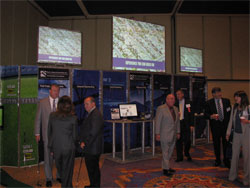 | �
�| Event exhibitors and sponsors contribute to an informative and engaging environment | �
�This year’s meeting was the best yet for the industry-leading construction defect and claims event.
�This year’s seminar concluded on May 13, 2011 with the Construction Defect Community Charitable Foundation Golf Tournament, held at Strawberry Farms Golf Course.
�The Disneyland Hotel in Anaheim, California was the place where more than 1,500 attendees convened for two days of professional development activities and seminars that included CLE workshops and panel discussions of special interest to legal and insurance professionals concerned with construction defect and claims litigation. Key events included “Challenges for Experts in Construction Defect Claims and Litigation,” “Keeping Up with Construction Defect Coverage,” and “Tips for Avoiding the ‘Perfect Storm’ in Handling of Wrap Claims.”
� �  | �
�| Supporting the golf tournament at the 15th hole | �
�This year’s Ollie award was given to George D. Calkins II, Esq. The West Coast Casualty Jerrold S. Oliver Award of Excellence was named in honor of the late Judge Jerrold S. Oliver, and recognizes an individual who is outstanding or has contributed to the betterment of the construction community.
�In addition to being the most comprehensive professional development seminar in the area of construction defects, this year’s seminar was equally valuable as a networking opportunity for members of the industry. People participated in professional development events during the day and then continued networking in the evening at numerous social events. The Lawn Party as well as the legendary Wood, Smith, Henning & Berman events were very well attended. Additional valuable networking events were hosted by a number of industry professionals at the House of Blues, and Tortilla Joe’s.
�As of this writing the 2011, West Coast Casualty's Construction Defect Seminar has applied for or has already received the following continuing education accreditation in the following areas;
�Read the full story…
�For more information about next year’s event, visit West Coast Casualty.
Godfather Charged with Insurance Fraud
July 1, 2011 — CDJ Staff
Texas-based Godfather Construction is a recipient of a fraud suit from the Cook County state attorney’s office. The firm incorporated in Illinois in April 2010, moving there to do business after storms damaged homes in the Chicago suburbs, according to a report in the Chicago Tribune. The state attorney alleges that Godfather brought unlicensed out-of-state workers and the work they performed was “incomplete or shoddy.” Godfather is claimed to have received about $60,000 from Illinois homeowners. The prosecutors are seeking restitution for Godfather’s clients and seek to forbid the firm from doing business in Illinois.
� Read the full story…
Texas res judicata and co-insurer defense costs contribution
March 23, 2011 — Original story by CDCoverage.com, March 23, 2011
In Truck Ins. Exchange v. Mid-Continent Casualty Co., No. 03-08-00526-CV (Tex. App. 3d Aug. 27, 2010), insured contractor DCI was sued by the project owner seeking damages for defective construction. DCI tendered its defense to its CGL insurers Truck and Mid-Continent. Truck agreed to defend while Mid-Continent denied a defense. While the underlying suit was pending, Mid-Continent sued DCI, but not Truck, and obtained a judicial declaration of no duty to defend or indemnify DCI in the underlying suit. After settling the underlying suit, Truck sued Mid-Continent seeking contribution towards defense costs and indemnity payments. The state trial court entered summary judgment for Mid-Continent. The intermediate appellate court affirmed.
�Read the full story...
�Reprinted courtesy of CDCoverage.com
Construction on the Rise in Denver
September 13, 2012 — CDJ Staff
In another sign of a recovery in the housing industry, the Denver Business Journal reports that the pace of new home construction has accelerated in the Denver area. According to the article, in the first seven months of 2012, forty-eight percent more permits were issued than in the first seven months of 2011. In July, 2012, there were sixty-six percent more permits than a year previously. For the Denver metropolitan area, July was the sixteenth consecutive month in which permits were up from a year previously.
Read the full story…
South Carolina Legislature Defines "Occurrence" To Include Property Damage Arising From Faulty Workmanship
May 26, 2011 — Tred R. Eyerly, Insurance Law Hawaii
On May 17, 2011, South Carolina passed legislation to combat the restrictive interpretation of what constitutes an "occurrence" under CGL policies. S.C. Code Ann. sec. 38-61-70.
� The legislation reversed a decision by the state's Supreme Court issued earlier this year. See Crossman Communities of North Carolina, Inc. v. Harleysville Mut. Ins. Co., 2011 W.L. 93716 (S.C. Jan. 7, 2011). Crossman had overruled an earlier decision by the South Carolina Supreme Court that holding that defective construction was an “occurrence.” Crossman, however, reversed course, holding that damages resulting from faulty workmanship were the “natural and probable cause” of the faulty work and, as such, did not qualify as an “occurrence.”
�Read the full story…
�Reprinted courtesy of Tred R. Eyerly, Insurance Law Hawaii. Mr. Eyerly can be contacted at te@hawaiilawyer.com