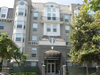
After Katrina Came Homes that Could Withstand Isaac�
October 23, 2012 — CDJ Staff
In the aftermath of Hurricane Katrina, Louisiana adopted its first uniform building code. Under the new standards, homes are better able to withstand the winds generated by hurricanes. The owner of one home said that during Hurricane Isaac, “there’s no shaking of the building itself, there’s no sign of a storm except for the rain.”
�WWWLTV reports that the new standards require home to be able to withstand 130 mile per hour winds. They also must follow FEMA guidelines for elevation. Build Now, a non-profit organization, is seeking to build green homes that meet the new standards. Their executive director said “we’re building higher. We’re building stronger. We’re building greener.”
� Read the full story…
�
Ghost Employees Steal Jobs from Legit Construction Firms
September 13, 2012 — CDJ Staff
Firms that skirt labor laws for construction workers can undercut firms that are obeying those laws. In a piece in Raleigh, North Carolina’s News & Observer, Doug Burton, a commercial masonry contractor summed it up: “my competitors are cheating.” The article describes the low-bidding firms “called their workers independent contractors ? or treated them like ghosts, paid under the table and never acknowledged.” The cost to the state is “unpaid medical bills for injured workers, uncollected business and personal taxes, and payments not made to a depleted state unemployment reserve.”
�One firm examined in the article, Martin’s Bricklaying, employs mostly immigrant Mexican laborers, many of whom are in the country illegally. One employee told the News & Observer, “we don’t complain.”
Read the full story…
Insurer Not Entitled to Summary Judgment on Construction Defect Claims
February 10, 2012 — Tred Eyerly, Insurance Law Hawaii
The insurer unsuccessfully moved for summary judgment, contending it had no obligation to defend two related underlying construction defect cases. Amerisure Ins. Co. v. R.L.Lantana Boatyard, Ltd., 2012 U.S. Dist. LEXIS 2466 (S.D. Fla. Jan. 9, 2012).
� An engineering report noted design construction defects and deficiencies in visible, physical improvements at The Moorings at Lantana Condominium. In two lawsuits, The Moorings sued the developer, R.L. Lantana Boatyard ("RLLB"), and the contractor, Current Builders of Florida.
� Current Builders was insured by Amerisure. RLLB was named as an additional insured under the Amerisure policy.
Read the full story…
� � � Reprinted courtesy of Tred R. Eyerly, Insurance Law Hawaii. Mr. Eyerly can be contacted at te@hawaiilawyer.com
�
Park District Sues over Leaky Roof
August 2, 2012 — CDJ Staff
The Glen Ellyn Park District has filed suit against multiple firms over the leaks in the Ackerman Sports and Fitness Center. The district alleges at least twenty leaks can be found throughout the facility. In order to prevent further damage, they have put in a system of “buckets, tarps and flexible piping.”
According to the Chicago Daily Herald, the park district has most recently added the project construction manager, the building designer, and insurer that issued a performance bond on the builder. T.A. Bowman Constructors, the builder of the project, sued the park district. They were first name in the district’s countersuit.
The park district isn’t waiting for the outcome of the suit to repair the roof. Instead, they are using existing funds to pay for roof repairs.
Read the full story…
Pennsylvania Court Extends Construction Defect Protections to Subsequent Buyers
December 20, 2012 — CDJ Staff
The Pennsylvania courts have long held that there is an implied warranty of habitability for the initial purchaser of a home. Now, as some defects may not immediately show up, the court has extended that implied warranty to second and subsequent purchasers. As Marc D. Brookman, David I. Haas, and Christopher Bender of Duane Morris note, “this judicially created doctrine shifts the risk of a latent defect in the construction of a new home from the purchaser to the builder-vendor.”
The Pennsylvania Supreme Court concluded that a contractual relationship is not needed for an implied warranty of habitability. The court’s concern was inequalities would result when a home was sold while other homes were protected by being within the statute of repose.
Read the full story…
Arizona Court of Appeals Rules Issues Were Not Covered in Construction Defect Suit
December 9, 2011 — CDJ Staff
The Arizona Court of Appeals has ruled in the case of Peters v. Marque Homes. In this case, Walter Peters provided the land and funding for Marque Homes to build a luxury residence in Glendale, Arizona. By the terms of the “Joint Venture Agreement,” Peters provided the land and funding, while Marque would not charge Peters for overhead, profits, or supervision fees. The agreement specified that profits would be divided equally.
Two years later, Marque sued Peters claiming he had breached his obligations by refusing several offers for the home. Peters replied that Marque had “failed to complete the home so it is habitable to prospective purchasers.” Peters stated he had “retained an expert inspector who had identified numerous defects.” The court appointed a Special Commissioner to list the home for sale. Peters purchased the home with two stipulations ordered by the court. At this point, the earlier case was dismissed with prejudice.
Peters then sued Marque “asserting express and implied warranty claims arising out of alleged construction defects in the home.” Marque claimed that Peters’s claims were “precluded by the prior joint venture dispute.” The court granted Marque’s motion.
The appeals court reversed the lower court’s decision, determining that Peters’s claims were not precluded by the agreement. Although there had been a prior case between the two parties, warranty issues did not form a part of that case. “Peters never raised these allegations nor presented this evidence in support of any warranty claim.”
The court also noted that the “parties never agreed to preclude future warranty claims.” Marque and Peters “agreed in the stipulated sale order that ‘the sale of the property to a third party shall be “as is” with a 10-year structural warranty.’” The court noted that the agreement said nothing about one of the parties buying the house.
The appeals court left open a claim by Marque that there are no implied or express warranties available to Peters. They asked the Superior Court to address this.
Read the court’s decision…
$5 Million Construction Defect Lawsuit over Oregon Townhomes
January 6, 2012 — CDJ Staff
A homeowners’ association in Lake Oswego, Oregon has filed a $5 million lawsuit against the developers of the luxury townhomes. The homeowners of Sunset Crossing are suing Centurion Homes and Aspen Townhomes over claims that construction defects have lead to water intrusion and structural damages. The townhomes were built in 2005.
Andy Burns, the lawyer for Phillip and Patricia Gentelmann, the owners of both Centurion Homes and Aspen Townhomes, said the Gentelmanns were “taking these allegations very seriously.” The suit says that the construction violated state and local building codes and that the firms did not repair damage caused by water intrusion.
Read the full story…
Court Requires Adherence to “Good Faith and Fair Dealing” in Construction Defect Coverage
September 30, 2011 — CDJ Staff
The California Court of Appeals has ruled in the case of Allied Framers, Inc. v. Golden Bear Insurance Company. Allied had been sued in a construction defect case and its primary insurer had become insolvent. Coverage for Allied’s defense was paid for by the California Insurance Guarantee Association through June 8, 2006. When warned that CIGA’s involvement was ending, Allied notified Golden Bear, which declined to provide coverage.
In the matters that followed, Golden Bear claimed that Allied had not exhausted its $1 million in primary insurance. Allied then showed that $1 million had already been paid out in the case. A few months thereafter, Golden Bear offered a $500,000 settlement on behalf of Allied which was rejected. Thereafter, Golden Bear hired new counsel to defend Allied. Golden Bear received, but allegedly did not pay, invoices Allied sent from their former counsel. Golden Bear finally settled the construction defect case for $2 million.
Allied’s original counsel sued Allied for payment. Golden Bear declined coverage. Allied then claimed that Golden Bear liable on several counts, arising from its failure to settle the construction defect action earlier than it did and its failure to pay Allied’s counsel. Golden Bear demurred, arguing that Allied had now exhausted is coverage with the $2 million settlement. The lower court sustained Golden Bear’s demurrer, dismissing Allied’s complaints.
The appeal court reviewed Allied’s seven complaints and sustained most of them. However, the court did reverse the trial court’s order in regard to Allied’s complaint that Golden Bear breached an implied covenant of good faith and fair dealing. The appeals court was not convinced that Golden Bear properly evaluated the settlement demand in the underlying construction defect case. The court found three other ways in which Golden Bear’s actions might show bad faith, in refusing to pay defense fees “after promising [Allied] such costs would be paid in full,” “failing to advise Allied about ‘actual or potential negative consequences of agreeing to the proposed settlement,’” and that their choice of counsel “failed to protect [Allied’s] interests in the negotiation.”
Read the court’s decision…
Homeowners Sue Over Sinkholes, Use Cash for Other Things
January 6, 2012 — CDJ Staff
Quoting one homeowner as saying that his house “can fall in the ground for all I care, I made my money,” the Tampa Bay Times looks at the issue of sinkhole claims in Florida. Homeowners “have paid off mortgages, put in pools, replaced roofs, or otherwise used money from sinkhole claims to do something besides fix sinkhole damage.
It’s been tough for insurance companies. Citizens Property Insurance took in $32 million in premiums for sinkhole coverage in 2010, but paid out $245 million in sinkhole claims. The Tampa Bay Times notes that some of those claims come from settling problems caused by their repairs, including one settlement of $350,000 for repairs to a house worth $39,000.
One couple, after receiving $217,000 from Citizens, sold the house to a company that bought unrepaired sinkhole homes for $190,000. The home has been sold since and remains unrepaired.
Sometimes the preferred solution by the insurance company isn’t the cheapest either. One couple was informed that Citizens was going to spend $150,000 to have the hole filled with grout. After they settled with the insurance company, they fixed the problem by installing steel piers, at a cost of about $45,000.
Read the full story…
New Apartment Tower on the Rise in Seattle
September 13, 2012 — CDJ Staff
The Seattle Times reports that groundbreaking is planned for a forty-story tower in Seattle. The building process will take at least five years, during which time, according to the paper, there will be nearly eight thousand new apartments in Seattle. The planned tower will add another 386 units to that.
�The developer, Holland Partner Group, has four other apartments buildings planned or in construction currently, which will account for more than a thousand of the units being added to the city’s apartment stock.
Read the full story…
Architect Not Liable for Balcony’s Collapse
September 13, 2012 — CDJ Staff
The Texas Supreme Court declined to hear an appeal from a woman who was partially paralyzed due to the collapse of a balcony. She had sued the architect of her friends’ home, but the Texas Third Circuit Court of Appeals had reversed a jury ruling against the architect, Sinclair Black. Black’s firm, Black + Vernooy, had designed the home and had supervised “administration of the construction contract.” Despite a contractual obligation to “endeavor to guard the owner against defects and deficiencies,” the balcony builder had not followed the architect’s specifications, including in the construction of the balcony.
�While the jury found Black liable for ten percent of the blame, Black argued that he could not be held liable for the contractor’s negligence, nor did he have any duty to third parties.
Read the full story…
Court Rules on a Long List of Motions in Illinois National Insurance Co v Nordic PCL�
May 10, 2012 — CDJ Staff
The case Illinois National Insurance Co. v Nordic PCL, et al. “involves a dispute about whether insurance benefits are available to a general contractor who built structures that allegedly have construction defects. Plaintiffs Illinois National Insurance Company (‘Illinois National’) and National Union Fire Insurance Company of Pittsburgh, PA (‘National Union’) (collectively, the ‘Insurers’), commenced this action for declaratory relief against Defendant Nordic PCL Construction, Inc., f/k/a Nordic Construction, Ltd. ("Nordic"), on August 23, 2011.”
�The court was asked to rule on a long list of motions: “Counterclaim Defendants’ Request for Judicial Notice in Support of Their (1) Motion to Dismiss the Counterclaim and (2) Motion to Strike Portions of the Counterclaim, ECF No. 16 (‘Request for Judicial Notice’); Counterclaim Defendants’ Motion to Dismiss Counterclaim Filed October 24, 2011, ECF No. 14 (‘Motion to Dismiss Counterclaim’); Counterclaim Defendants’ Motion to Strike Portions of the Counterclaim Filed October 24, 2011, ECF No. 15 (‘Motion to Strike’); Third-Party Defendant Marsh USA, Inc.’s Motion to Dismiss or, in the Alternative, Stay Proceedings in Favor of Pending State Action, ECF No. 33 (‘Marsh’s Motion To Dismiss Or Stay’); Defendant and Third-Party Plaintiff Nordic PCL Construction, Inc., f/k/a Nordic Construction Ltd.’s Substantive Joinder to Third-Party Defendant Marsh USA Inc.’s Motion to Dismiss or, in the Alternative, Stay Proceedings in Favor of Pending State Action, ECF No. 36 (‘Nordic’s Joinder’); and Third-Party Defendant Marsh USA, Inc.’s Motion for Judgment on the Pleadings on Counts V and VI of Defendant/Third-Party Plaintiff Nordic PCL Construction, Inc.’s Third-Party Complaint, ECF No. 29 (‘Marsh’s Motion for Judgment on the Pleadings’).”
�In result, the court reached the following decisions: “The court GRANTS IN RELEVANT PART the Insurers’ Request for Judicial Notice to the extent it covers matters relevant to these motions; GRANTS IN PART the Insurers’ Motion to Dismiss Counterclaim, but gives Nordic leave to amend the Counterclaim in certain respects; DENIES the Insurers’ Motion to Strike; DENIES Marsh’s Motion To Dismiss Or Stay and Nordic’s Joinder; and GRANTS Marsh’s Motion for Judgment on the Pleadings.”
�The court provides a bit of background on the case: “This action arises out of alleged construction defects involving two projects on which Nordic acted as the general contractor. Nordic is a defendant in a pending state court action with respect to one of the projects and says it spent more than $400,000 on repairs with respect to the other project. Nordic tendered the defense of the pending state court action to the Insurers and sought reimbursement of the cost of repairs already performed. The Insurers responded by filing this action to determine their rights under the insurance policies issued to Nordic.”
�Furthermore, the court presented a brief procedural history: “The Insurers commenced this declaratory action in this court on August 23, 2011. The Complaint asserts two claims, one seeking a declaration that the Insurers have no duty to provide a defense or indemnification regarding the Safeway Action, the other seeking such a declaration regarding the Moanalua Claims. Along with its Answer, Nordic filed a Counterclaim against the Insurers. The Counterclaim asserts breach of contract, breach of the covenant of good faith and fair dealing, misrepresentations and omissions of material fact, and bad faith, and seeks declaratory relief against the Insurers.”
�The procedural history continues: “Nordic also filed a Third-Party Complaint against Marsh, the broker that had procured the Policies from the Insurers for Nordic. Nordic alleges that it reasonably believed that the Policies would provide completed operations insurance coverage for the types of construction defects alleged in the Safeway Action and Moanalua Claims. The Third-Party Complaint asserts breach of contract, negligence, promissory estoppel, breach of fiduciary duties, implied indemnity, and contribution and equitable subrogation.”
�In conclusion, “The court GRANTS IN RELEVANT PART the Insurers’ Request for Judicial Notice. With regard to the Insurers’ Motion to Dismiss Counterclaim, the court GRANTS the motion as to Count I (breach of contract), Count II (duty of good faith and fair dealing), Count III (fraudulent and negligent misrepresentation), the portion of Count IV (bad faith) premised on fraud, and Count IV (declaratory relief). The court DENIES the motion as to Count IV (bad faith) that is not premised on fraud. Except with respect to the "occurrence" issue, which the court disposes of here on the merits, and Count V, which concerns only a form of relief, Nordic is given leave to amend its Counterclaim within three weeks of the date of this order. The court DENIES the Insurers’ Motion to Strike, DENIES Marsh’s Motion to Dismiss or Stay and Nordic’s Joinder, and GRANTS Marsh’s Motion for Judgment on the Pleadings with respect to Counts V and VI of the Third-Party Complaint.”
� Read the court’s decision…
�
Construction Demand Unsteady, Gains in Some Regions
June 29, 2011 — CDJ Staff
The Associated General Contractors of America reported Tuesday, June 28 that construction employment increased in 120 of the 337 metropolitan areas surveyed between May 2010 and May 2011.
�‘While construction employment has stopped plunging, any sign of a recovery remains spotty at best,” said Ken Simonson, the association’s chief economist. ‘The close to even split between areas adding and losing jobs is a reminder that for every market doing well, there is another market that is still hurting.”
�The largest number of jobs created was in the Dallas, Texas region, with 5,600 new jobs, a five percent increase. The northern Massachusetts/southern New Hampshire region near Haverhill saw the greatest percentage increase, although that twenty-two percent increase represents only 800 new jobs. The Chicago, Illiinois area added 4,600 jobs, a four percent increase.
�Other regions were not so lucky. The Atlanta, Georgia area saw a loss of 7,400 jobs, an eight percent loss. Las Vegas also lost 7,400 jobs, which there represented a sixteen percent decline. The New York City area lost 6,700 jobs, a six percent reduction. The Riverside, California area lost 5,300 jobs, a nine percent loss.
�Stephen E. Sandherr, the association’s chief executive officer, blamed a combination of regulation and budget squeezes. "Some in Washington never met a regulation they didn’t like and others never found a penny they didn’t want to pinch. Together that makes for a bad way to boost employment and a great way to stifle the private sector and neglect critical economic infrastructure.”
� Read the full story…
Broker Not Liable for Failure to Reveal Insurer's Insolvency After Policy Issued
March 28, 2012 — Tred Eyerly, Insurance Law Hawaii
Faced with an issue of first impression in California, the Court of Appeals held that a broker was not liable for failing to reveal the insurer's insolvency occurring after issuance of the policy. Pacific Rim Mechanical Contractors, Inc. v. Aon Risk Ins. Serv. West, Inc., 2012 Cal. App. LEXIS 232 (Cal. Ct. App. Feb. 28, 2012).
�The developer for a construction project in downtown San Diego retained Aon as its broker to secure coverage. Aon procured a general liability policy for the project with Legion Indemnity Company. Legion was solvent when it issued the policy.
�The developer hired Pacific Rim (“PacRim”) as one of several subcontractors on the project. The parties entered into a contract in which the developer agreed to provide PacRim with liability insurance through an Owner Controlled Insurance Program (“OCIP”). Aon was not a party to the contract and PacRim was never its client. PacRim, however, enrolled in the OCIP by contacting Aon and providing all necessary paperwork.
Read the full story…
��Reprinted courtesy of Tred R. Eyerly, Insurance Law Hawaii. Mr. Eyerly can be contacted at te@hawaiilawyer.com
2011 West Coast Casualty Construction Defect Seminar – Recap
June 1, 2011 — CDJ Staff
� 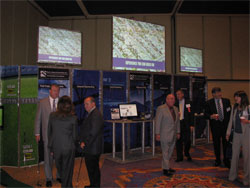 | �
�| Event exhibitors and sponsors contribute to an informative and engaging environment | �
�This year’s meeting was the best yet for the industry-leading construction defect and claims event.
�This year’s seminar concluded on May 13, 2011 with the Construction Defect Community Charitable Foundation Golf Tournament, held at Strawberry Farms Golf Course.
�The Disneyland Hotel in Anaheim, California was the place where more than 1,500 attendees convened for two days of professional development activities and seminars that included CLE workshops and panel discussions of special interest to legal and insurance professionals concerned with construction defect and claims litigation. Key events included “Challenges for Experts in Construction Defect Claims and Litigation,” “Keeping Up with Construction Defect Coverage,” and “Tips for Avoiding the ‘Perfect Storm’ in Handling of Wrap Claims.”
� �  | �
�| Supporting the golf tournament at the 15th hole | �
�This year’s Ollie award was given to George D. Calkins II, Esq. The West Coast Casualty Jerrold S. Oliver Award of Excellence was named in honor of the late Judge Jerrold S. Oliver, and recognizes an individual who is outstanding or has contributed to the betterment of the construction community.
�In addition to being the most comprehensive professional development seminar in the area of construction defects, this year’s seminar was equally valuable as a networking opportunity for members of the industry. People participated in professional development events during the day and then continued networking in the evening at numerous social events. The Lawn Party as well as the legendary Wood, Smith, Henning & Berman events were very well attended. Additional valuable networking events were hosted by a number of industry professionals at the House of Blues, and Tortilla Joe’s.
�As of this writing the 2011, West Coast Casualty's Construction Defect Seminar has applied for or has already received the following continuing education accreditation in the following areas;
�Read the full story…
�For more information about next year’s event, visit West Coast Casualty.
Arbitration Clause Found Ambiguous in Construction Defect Case
October 28, 2011 — CDJ Staff
The California Court of Appeals ruled on September 28 in the case of Burch v. Premier Homes. Ms. Burch bought a home after negotiating various addendums to the contract. The contract was a standard California Association of Realtors contract to which both the buyer and seller made additions. At issue in this case was paragraph 17 of the contract which included that “Buyer and Seller agree that any dispute or claim in Law or equity arising between them out of this Agreement or resulting transaction, which is not settled through mediation, shall be decided by neutral, binding arbitration.”
The seller/defendant’s Addendum 2 “included provisions relating to the arbitration of disputes that may arise.” Ms. Burch’s realtor, Lisa Morrin, told Burch that “she had never seen a proposed contractual provision that would require a home buyer to agree to arbitrate with a builder over construction defects.” Ms. Burch told Morrin that she did not want to buy the property if she would have to give up her rights under California law.
As part of Addendum 2, the buyer had to buy a warranty from the Home Buyers Warranty Corporation. The sale was held up for a while, as Ms. Burch waited for a copy of the warranty. When she received it, she took further exception to Addendum 2. Scott Warren of Premier Homes said he could not sell the property without Addendum 2. Ms. Burch told her realtor that despite the claims made by Mr. Warren that this was for her benefit, she felt it was more to the benefit of Premier Homes. Don Aberbrook of HBW agreed to the clause, contained in the final sentence of Addendum 2, being struck.
Subsequent to buying the home, Burch submitted a claim concerning construction defects. HBW denied the claim and Burch began an action against the defendants. Premier filed a motion to compel arbitration which Burch opposed.
The trial court ruled that the striking out of the arbitration clause at the end of Addendum 2 “created a conflict with respect to the parties’ intent as to the scope of arbitration.” The trial court found that “the parties’ intention was to preserve Burch’s right to make state law claims including her right to a jury trial for any non-warranty claims against the builder.”
The appeals court in their ruling looked at the standard of review and concluded that the purchase agreement was ambiguous and that extrinsic evidence was required to resolve that ambiguity. As the contract contained contradictory provisions as to whether or not arbitration was required, it was necessary for the trial court to examine these claims. The appeals court found that the evidence supported the conclusions of the trial court.
Finally, the appeals court found that “there was no valid agreement to arbitrate disputes.” The court noted that arbitration can only happen by mutual consent and “it is clear that Burch did not enter into an agreement to arbitrate any construction defect disputes she might have.”
Read the court’s decision…
Mortar Insufficient to Insure Summary Judgment in Construction Defect Case
January 6, 2012 — CDJ Staff
The US District Court of Nevada issued a summary judgment in the case of R&O Construction Company V. Rox Pro International Group, Ltd. on December 19, 2011. The case involved the installation of stone veneer at a Home Depot location (Home Depot was not involved in the case). R&O’s subcontractor, New Creation Masonry, purchased the stone veneer from Arizona Stone. Judge Larry Hicks noted that “the stone veneer failed and R&O was forced to make substantial structural repairs to the Home Depot store.”
Rox Pro asked the court for a summary judgment, which the court granted only in part. The court looked at two issues in the case, whether the installation instructions constituted a breach of implied warranty of merchantability, and whether there was a breach of an implied warranty of fitness for a particular purpose.
Judge Hicks found that there was a breach of implied warranty of merchantability. The instructions drafted by Real Stone and distributed by Arizona Stone were not sufficient for affixing the supplied stones, according to R&O’s expert, a claim the plaintiffs dispute. “Because there is an issue of material fact concerning the installation guidelines, the court shall deny Arizona Stone’s motion for a summary judgment on this issue.”
On the other hand, the judge did not find that the instructions had any bearing as to whether R&O bought the stone, since the stone was selected by the shopping center developer. This issue was, in the view of the judge, appropriately dismissed.
Read the court’s decision…
Arizona Homeowners Must Give Notice of Construction Defect Claims
August 2, 2012 — CDJ Staff
Chris Combs of the Combs Law Group notes that “the new home construction industry is recovering” and that some of the buyers of these homes “will have claims for construction defects.” But not so quick on filing that claim.
Under Arizona law, as Mr. Combs notes the law “requires that, at least 90 days before filing any lawsuit, the buyer furnish notice by certified mail to the homebuilder specifying in detail the construction defect.” Only if there is no agreement over proposed repair can the homeowner file a lawsuit.
Read the full story…