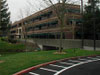
After Construction Defect Case, Repairs to Austin Building
August 2, 2012 — CDJ Staff
The Austin Business Journal reports that remediation is about to begin on Met Center 10, a building that was “at the center of a complex structural defect case.” Claims were made that Grubb & Ellis failed to disclose known structural defects to a group of investors who purchased the building. The brokerage was ordered to pay $6.75 million. Repairs will take an estimated six months at a cost of $3.7 million.
Read the full story…
Destruction of Construction Defect Evidence Leads to Sanctions against Plaintiff
July 10, 2012 — CDJ Staff
Stating that the plaintiff’s actions have left the defendants in a situation where they “cannot properly defend the action,” a judge in the US District Court of New York has sanctioned the plaintiffs in Aktas v. JMC Dev. Co.
The plaintiffs hired JMC Development and Stephen Jung, an architect, to renovate their vacation home in Adirnodack, New York. As work progressed, “due to disagreements regarding the completion date and payments for the project, the relationship began to deteriorate.” The plaintiffs hired George Villar as an owner’s representative who “testified that he deemed the workmanship to be ‘poor.’”
Subsequently, the locks where changed on the home, preventing JMC from performing any additional work, after which drywall was removed, which Villar stated was so that “the engineer come and look at the framing.” Subsequently, Villar sent a letter to JMC stating that the work was “performed in an inadequate, negligent and un-professional manner.” Villar informed JMC that they were not to visit the property. Subsequently, the plaintiffs hired another firm. “Plaintiffs testified that the materials were ‘carted away’ and ‘thrown out.’”
The plaintiffs filed a suit against JMC and others. JMC filed a motion requesting that the plaintiffs be sanctioned for their spoliation of evidence. The court noted that “the plaintiffs recognized that litigation was imminent,” and that they “had a duty to preserve the evidence. As all of JMC’s work was destroyed, there is no evidence of whether or not the work was defective. The court concluded that it will “issue an adverse inference charge that permits the jury to infer that the missing evidence was favorable to the defendants.”
In conclusion, the court granted in part the spoliation sanctions. They granted JMC a summary judgment dismissing the plaintiffs’ claims of fraud.
Read the court’s decision…
Joinder vs. Misjoinder in Colorado Construction Claims: Roche Constructors v. One Beacon
July 10, 2012 — David McLain, Higgins, Hopkins, McLain & Roswell, LLC
Often, those practicing in the construction defect field have faced questions concerning the joinder of a party. Recently, the U.S. District Court for the District of Colorado weighed in on the requirements for joinder under the Colorado Rules of Civil Procedure. See Roche Constructors, Inc. v. One Beacon America Ins. Co., 2012 WL 1060000 (D. Colo. 2012). Roche secured a construction contract to build a detention facility for the Lincoln County Sheriff’s Office in Lincoln County, Nebraska. In turn, Roche entered into a subcontract with Dobberstein Roofing Company, Inc. in October 2009 to install the roofing system and other related work at the detention facility. The subcontract agreement required Dobberstein to maintain adequate commercial general liability insurance and to add Roche as an additional insured under the policy. Roche maintained a builder’s risk policy issued by OneBeacon America Insurance Company and Dobberstein secured a certificate of liability insurance underwritten by Transportation Insurance Company (“TIC”). Id. at *1.
Roche alleged that Dobberstein constructed the roofing system in a negligent manner in violation of the subcontract. Roche claims it incurred additional costs to repair structural damage to the roofing system as a result of Dobberstein’s negligent work. In order to cover said damage, Roche tendered insurance claims to OneBeacon and TIC.
Read the full story…
Reprinted courtesy of David McLain, Higgins, Hopkins, McLain & Roswell, LLC. Mr. McLain can be contacted at mclain@hhmrlaw.com
Construction Defect Not Occurrences, Says Hawaii Court
July 10, 2012 — CDJ Staff
Some insurers in Hawaii have made it clear that they will be covering construction defects, despite a court ruling concluding that defects are not occurrences, under Hawaii law. The case, heard by Hawaii’s Intermediate Court of Appeals found that “breach-of-contract claims based on allegations of shoddy performance are not covered under CGL policies and that tort-based claims derivative of such breach of contract claims also are not covered.”
Writing in Business Insider, Michael Bradford notes that the case, Group Builders Inc. and Tradewind Insurance Co. Ltd. vs. Admiral Insurance Co., involved improperly installed insulation at the Hilton Hawaiian Village’s Kalia Tower. Hilton was forced to close 21 floors due to extensive mold in guest rooms. Although the court did recognize this property damage, they did not feel it triggered insurance coverage, noting that if disputes over the quality of work were covered, CGL policies would become professional liability policies or performance bonds.
One critic of the decision, Warren C. Perkins, the risk manager at Boh Bros. Construction of New Orleans, noted that under the decision, “it doesn’t matter what the policy says and there is no need to investigate the policy wording.”
Read the full story…
Construction Defects: 2010 in Review
July 10, 2012 — CDJ Staff
Candace Matson, Harold Hammersmith, and Helen Lauderdale, all of Sheppard Mullin, recently looked at design and construction defect litigation in 2010. They look at three California construction law cases. In one prominent case, the developer’s claims were barred under California law. However, the court did allow a claim for breach of the duty to defend.
In a second case, the California Supreme Court ruled that a duty to defend is separate from a duty to indemnify. A developer sought to include its engineering subcontractor in a suit. The subcontractor unsuccessfully argued that it had no duty to defend as the homeowners had not sued it.
The third case involved a lawyer who had represented a homeowner accused a libel against a construction firm and then later represented one of the subcontractors the firm had employed. The California Court of appeals concluded that there was no conflict of interest and so the contractor could not disqualify the subcontractor’s lawyer.
Read the full story…
Good Signs for Housing Market in 2013
December 20, 2012 — CDJ Staff
Dan Green, a loan officer at Waterstone Mortgage, is optimistic about the construction market in 2013. He notes that the rise in building permit, housing starts, and housing completions are all good signs. Mortgage rates are still low, making these new homes attractive to buyers.
Read the full story…
Policyholder Fails to Build Adequate Record to Support Bad Faith Claim
May 19, 2011 — May 19, 2011 -
Tred R. Eyerly,
Insurance Law HawaiiThe importance of careful preparation and documentation was the take away lesson in a Texas bad faith case, C.K. Lee v. Catlin Specialty Ins. Co., 2011 U.S. Dist. LEXIS 19145 (S.D. Tex. Feb. 28, 2011).
�C.K. Lee owned a commercial shopping center in Houston. Catlin issued a commercial property policy to Lee. On September 12, 2008, Hurricane Ike hit and caused substantial property damage throughout the Texas Gulf Coast area. On September 24, 2008, Lee submitted a claim for damage to the roof of his shopping center to Catlin.
�Catlin hired Engle Martin to represent its interests in adjusting the claim. Engle Martin eventually adjusted over 200 Ike-related claims for Catlin.
�In November 2008, Engle Martin and Emergency Services Inc., retained by Lee, inspected Lee’s property. Engle Martin observed evidence of roof repairs that had apparently been made both before and after Hurricane Ike. Engle Martin decided it was necessary to use an infrared scan of the roof to help identify which damages, if any, were attributable to wind and which, if any, were attributable to sub par, prior repairs or natural deterioration.
�Engle Martin retained Project, Time & Cost (PT&C) to conduct the infrared inspection. PT&C’s inspection determined there was no wind-related damage to the roof and no breaches or openings created by wind. Instead, the roof had exceeded its life expectancy and was in need of replacement due to normal wear and weathering. Consequently, Catlin decided that the damage to Lee’s roof was not caused by winds from Hurricane Ike.
�Meanwhile, Lee’s contractor, Emergency Services, prepared a report estimating that the total cost of repairing the roof would be $871,187. Engle Martin’s estimate for repair of the roof was $22,864.
�Lee filed suit for breach of contract, breach of the duty of good faith and fair dealing, and violations of the Texas Insurance Code. Catlin moved for summary judgment on all claims but breach of contract, arguing that because there was a bona fide dispute concerning the cause of the damages and whether they were covered under the policy, there was no evidence of bad faith or violations of the Texas Insurance Code.
�Read the full story…
� �Reprinted courtesy of Tred R. Eyerly, Insurance Law Hawaii. Mr. Eyerly can be contacted at te@hawaiilawyer.com
Virginia Chinese Drywall and pollution exclusion
May 27, 2011 — CDCoverage.com
In Nationwide Mut. Ins. Co. v. The Overlook, LLC, No. 4:10cv69 (E.D. Va. May 13, 2011), homeowner Edmonds sued insured developer/general contractor Overlook seeking damages resulting from defective Chinese drywall installed in Edmonds’ home. Overlook’s CGL insurer Nationwide defended Overlook under a reservation of rights and filed a declaratory judgment action. The federal district trial court granted Nationwide’s motion for summary judgment.
Read the full story…
Reprinted courtesy of CDCoverage.com
New Construction Laws, New Forms in California
July 10, 2012 — CDJ Staff
New construction laws came into effect in California on July 1. Writing for the Martindale-Hubble Legal Library, Glenn Mau, J. Michael McGuire, and John Tonsing, all of Archer Norris, discuss these changes. They note that the most important part of the changes to California construction law is that “all mechanics liens, stop notices and bond claims recorded after July 1, 2012 must use the new standardized forms and follow the new definitions, notice prerequisites and statutory release form language.”
Read the full story…
Court Clarifies Sequence in California’s SB800
December 20, 2012 — CDJ Staff
As California’s Right-To-Repair law, SB800, nears its ninth birthday, it has remained “largely untested in the legal system” as noted by Megan MacNee of Wood, Smith, Henning & Berman LLP on the site RealEstateRama. She writes that some homeowners have requested documents prior to filing a claim, which she describes as an attempt to “game the system,” and “analogous to requiring a party to litigation to comply with discovery before a complaint is filed.”
The court determined that homeowners may not request documents from the builder until they have actually filed a claim. The court noted that SB800 lacks any clear indication that homeowners may request documents before filing a claim (and also does not indicate that a builder would have to provide documents in these circumstances). The court concluded that the section that sets up the prelitigation procedures occurs before they section on documents discovery.¬? “Because the document request is part of the prelitigation procedure, and the prelitigation procedure does not begin until the homeowner has served notice of a claim, it follows that there can be no prelitigation obligation to produce documents under section 912, subdivision (a) unless the homeowner has commenced the prelitigation procedure by serving notice of a claim.”
Read the full story…
Construction Worker Dies after Building Collapse
November 18, 2011 — CDJ Staff
A Bronx construction worker died when the pillars gave way in the basement where he was working. The two-story commercial building collapsed, burying Mr. Kebbeh under about six feet of rubble. The New York Times reports that firefighters dug him out with their bare hands. Mr. Kebbeh was taken to Jacobi Medical Center where he died. Two other construction workers escaped unharmed.
Read the full story…
No Coverage Under Ensuing Loss Provision
September 9, 2011 — Tred Eyerley, Construction Law Hawaii
The cost of removing and replacing cracked flanges to prevent future leakage was not covered as an ensuing loss under a builder’s risk policy in RK Mechanical, Inc. v. Travelers Prop. Casualty Co. of Am., 2011 U.S. Dist. LEXIS 83958 (D. Colo. Aug. 1, 2011).
The insured, RK Mechanical Inc., was a subcontractor hired to install plumbing for a residential construction project. RK was an additional insured on the general contractor’s policy with Travelers. RK installed approximately 170 CPVC flanges on the project. Subsequently, two of the flanges cracked, allowing water to overflow and causing water damage to the project. Travelers was notified of the flange failure and resulting water damage.
RK subsequently removed and replaced the two cracked flanges and began water remediation. Travelers paid for the cost of the water damage due to the cracked flanges.
RK then examined all of the flanges installed in the project and discovered many were cracked and/or showed signs of potential failure. RK removed and replaced the cracked flanges. RK tendered a claim and demand for indemnity to Travelers for these repair costs. Travelers denied the claim. RK then sued for breach of contract and declaratory relief. The parties filed cross motions for summary judgment.
Read the full story…
Reprinted courtesy of Tred R. Eyerly, Insurance Law Hawaii. Mr. Eyerly can be contacted at te@hawaiilawyer.com
Florida “get to” costs do not constitute damages because of “property damage”
August 11, 2011 — CDCoverage.com
In Palm Beach Grading, Inc. v. Nautilus Ins. Co., No. 10-12821 (11th Cir. July 14, 2011), claimant general contractor Palm Beach Grading (?PBG?) subcontracted with insured A-1 for construction of a sewer line for the project.  A-1 abandoned its work and PBG hired another subcontractor to complete construction of the sewer line.  The new subcontractor discovered that A-1?s work was defective requiring repair and replacement of portions of the sewer line which also required the destruction and replacement of surrounding work.�
Read the full story…
Reprinted courtesy of CDCoverage.com
Virginia Homebuilding Slumps After Last Year’s Gain
June 19, 2012 — CDJ Staff
As of May, only 61 residential construction permits have been issues in Roanoke County, Virginia, leaving officials doubtful that this year will meet last year’s mark of 179 permits. Residential construction was at its highest in the county in 2004. The worst year since then was 2009, when the county issued 143 permits. The county is in the western end of the state, near the border with West Virginia, and far from the D.C. metropolitan area.
Arnold Covey, the Director of Community Development for the county said that “it may be until 2014 before we really see a difference. The article by WDBJ7.com notes that a “key part” of the county budget comes from real estate.
Read the full story…
Construction Defects as Occurrences, Better Decided in Law than in Courts
December 9, 2011 — CDJ Staff
Construction defect claims are now occurrences for insurance purposes in four states, Arkansas, Colorado, Hawaii, and South Carolina, yet there are still frustrations for commercial general liability policyholders. Business Insurance describes court decisions on whether construction defect claims are covered as “incongruous,” and this drives up coverage and litigation costs. Construction firms often find they are defending themselves on two fronts, both the construction defect claim and also whether their insurance covers it.
Frank Armstrong, the Senior Vice President and National Director of Construction Claims for Willis North America says that the problem starts with the word “occurrence,” as various state courts have different interpretations of the word. “Certain pieces of it don’t fit well, at lest according to some courts in the country, with coverage for construction defect risks.”
Another insurance executive, Julian Ehlich, the Senior Vice President of Claims for Aon Risk Solutions’ construction services group notes that “jurisdictions differ, so policyholders don’t know what they’re going to get.”
Read the full story…
Firm Sued For Construction Defects in Parking Garage�
October 23, 2012 — CDJ Staff
Northhampton County, Pennsylvania is suing a contractor who resurfaced a parking garage in 2009. According to the Express-Times, three years later, the surface is cracked and the county is seeking $700,000 for repairs. Additionally, they have withheld $44,000 of the $2.2 million contract because of the problems. John Stoffa, Northampton County Executive, says that the garage is stable, but not up to safety standards.
� Read the full story…
�
Nevada Assembly Sends Construction Defect Bill to Senate
June 6, 2011 — CDJ Staff
In a 26 to 16 vote, the Nevada Assembly has passed Assembly Bill 401, which extends the time limit for legal action over home construction defects. According to the Las Vegas Sun, Assembly member Marcus Conklin, Democrat of Las Vegas, said the bill was about “keeping the consumer whole.” However, Ira Hansen, Republican of Sparks, told the sun that suits are happening before contractors can make repairs. The bill would allow attorney fees even if repairs are made.
�Read the full story…
Another Las Vegas Tower at the Center of Construction Defect Claims
November 7, 2012 — CDJ Staff
Accusations are coming from both sides over construction defects at a Las Vegas tower, only this time, it’s not the Harmon Towers, it’s Hilton Grand Vacations, which is part of the Planet Hollywood Resort. The project was originally dubbed PH Towers Westgate, and it was developed by Westgate Resorts, which is suing the contractor, Tutor-Saliba for $10 million over late completion and construction defects.
Among the defects Westgate is claiming are cracked floor tiles in the valet lobby and cracks and delamination of the pool deck. Tutor-Saliba argues that the failure of the valet lobby floor is due to Westgate specifying only 1/16th inch-wide grouting, instead of the specified ¬º inch, and Westgate’s refusal to allow expansion joints on the pool deck has lead to problems there. Westgate’s attorney, Robert Schumacher, attributes the problems to “shoddy construction practices.”
According to the article in the Las Vegas Review Journal, plans were only 60 percent complete when construction began, leading to “thousands of change orders.” Despite not meeting an August completion deadline, Tutor-Saliba is claiming it is owed a $1.5 million bonus nevertheless.
Read the full story…