Gilroy Homeowners Sue over Leaky Homes
February 10, 2012 — CDJ Staff
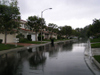
Two years into a lawsuit against Shapell Homes, the builder of a subdivision called Eagle Ridge in Gilroy, California, homeowners have joined or left the lawsuit. About fifty homeowners are still in the suit, which contends that construction defects have lead to water intrusion in their homes. The lawyer for the homeowners contends that more than a hundred homes have construction defects.
�One homeowner said that soon after he joined the suit, Sharpell sent workers to his home who repaired problems to his satisfaction. “They came in within two weeks and fixed everything,” said Frank Lowry. Another homeowner, Wilson Haddow, said that he was “quite happy” after Shapell repaired problems.
�Others weren’t quite so happy. Greg Yancey said that problems had “been a nightmare” and that “it just doesn’t feel like home.” He said that his “house is possessed,” with problems that include walls that bow out and a balcony that drips rainwater to the front door. His home is currently worth far less than the $700,000 he paid in 2007.
Read the full story…
LEED Certified Courthouse Square Negotiating With Insurers, Mulling Over Demolition
June 6, 2011 — Douglas Reiser in the Builders Counsel Blog
Apparently, Courthouse Square is still unresolved. The County hasnow hired an attorney to handle its insurance claim against Affiliated FM. Is there a lawsuit coming?
�Right now, no lawsuit is expected. According to officials, the insurer has been acting in good faith. But, its been quite a while since Salem officials learned that the Courthouse Square building had significant concrete issues that would result in probable demolition of the LEED certified building.
�If you have yet to hear about Courthouse Square, let me fill you in briefly. The Salem building was substantially completed in 2000 and LEED certified by the US Green Building Council in 2002. The project cost more than $30 Million to complete and the building was revered for its innovation as a crowning achievement for city leaders.
�But, structural problems in the building’s core were discovered as early as 2002, writes Chris Cheatham of Green Building Law Update. Final tests earlier in the year, determined that the building had to be vacated. The building has been clear since July 2010.
�Read the full story…
� �Reprinted courtesy of Douglas Reiser of Reiser Legal LLC. Mr. Reiser can be contacted at info@reiserlegal.com
The Colorado Court of Appeals Rules that a Statutory Notice of Claim Triggers an Insurer’s Duty to Defend.�
October 23, 2012 — David M. McLain, Higgins, Hopkins, McLain & Roswell
Gene and Diane Melssen d/b/a Melssen Construction (“Melssen”) built a custom home for the Holleys, during which period of time Melssen retained a CGL insurance coverage from Auto Owners Insurance Company. Soon after completion of the house, the Holleys noticed cracks in the drywall and, eventually, large cracks developed in the exterior stucco and basement slab. Thereafter, the Holleys contacted Melssen, the structural engineer, an attorney, and Auto-Owners, which assigned a claims adjuster to investigate the claim.
�In April 2008, the Holleys sent Melssen a statutory notice of claim pursuant to C.R.S. § 13-20-803.5 (“NOC”). In this NOC, the Holleys claimed approximately $300,000 in damages related to design and construction defects. The Holleys also provided a list of claimed damages and estimated repairs, accompanied by two reports from the Holleys’ consultant regarding the claimed design and construction defects. In June 2008, Melssen tendered the defense and indemnity of the claim to Auto-Owners. While Auto-Owners did not deny the claim at that time, it did not inspect the property or otherwise adjust the claim. Thereafter, in October 2008, Auto-Owners sent Melssen a letter denying coverage on the basis that the damage occurred outside of the applicable policy period.
�Ultimately, Melssen settled the claims against it for $140,000.
� Read the full story…
�Reprinted courtesy of David McLain, Higgins, Hopkins, McLain & Roswell, LLC. Mr. McLain can be contacted at mclain@hhmrlaw.com
�
Texas “Loser Pays” Law May Benefit Construction Insurers
June 7, 2011 — CDJ Staff
Under a new law, Texas HB 274, the Texas Supreme Court will be making rules for motions to dismiss and to expedite suits of less than $100,000. The law also contains two “loser pays” provisions. If a lawsuit is found dismissed for having “no basis in fact or law,” the losing side must pay attorney costs. The other provision caps award of attorney fees if plaintiffs reject settlement offers. Texas Lawyer quotes Houston attorney Mike Gallagher as saying this will affect “the practice of everyone who handles significant lawsuits.”
�Gregory Marcum, whose practice includes construction defect litigation, plans to contact insurance companies, as the new law may save them money. “It will definitely be a factor in the defense strategy for handling a case.” He notes that “any insurance carrier would want that done.”
�Marcum notes that the offer-of-settlement rules only apply when cases go to trial. “Almost all cases settle.”
�Read HB 274
�Read the full story…
Supreme Court of Oregon Affirms Decision in Abraham v. T. Henry Construction, et al.
April 20, 2011 — April 20, 2011 Beverley BevenFlorez - Construction Defect Journal
After reviewing the decision in Abraham v. T. Henry Construction, et al., the Oregon Supreme Court affirmed that a tort claim for property damage arising from construction defects may exist even when the homeowner and the builder are in a contractual relationship.
�When the case was initially filed, the plaintiffs alleged breach of contract and negligence. The defendants moved for summary judgment arguing that one, the claim was barred by the six-year statute of limitations and two, no special relationship (such as one between a doctor and patient) existed. The court agreed with the defendants. However, the Court of Appeals while affirming the trial court’s decision on breach of contract reversed the decision on negligence. The Court of Appeals stated that an administrative or statute rule could establish a standard of care independent from the contract.
�The Oregon Supreme Court gave an example of cases where a tort claim could exist when a contract is present: “If an individual and a contractor enter into a contract to build a house, which provides that the contractor will install only copper pipe, but the contractor installs PVC pipe instead (assuming both kinds of pipe comply with the building code and the use of either would be consistent with the standard of care expected of contractors), that failure would be a breach of contract only. […] If the failure to install the copper pipe caused a reduction in the value of the house, the plaintiff would be able to recover that amount in an action for breach of contract. […] On the other hand, if the contractor installed the PVC pipe in a defective manner and those pipes therefore leaked, causing property damage to the house, the homeowner would have claims in both contract and tort. […] In those circumstances, the obligation to install copper instead of PVC pipe is purely contractual; the manner of installing the pipe, however, implicates both contract and tort because of the foreseeable risk of property damage that can result from improperly installed pipes.”
�Read the court’s decision…
Coverage Rejected Under Owned Property and Alienated Property Exclusions
June 6, 2011 —
Tred R. Eyerly,
Insurance Law HawaiiThe insured’s request for a defense when sued in a construction defect action was denied under the owned property exclusion and the alienated property exclusion in1777 Lafayette Partners v. Golden Gate Ins. Co., 2011 U.S. Dist. LEXIS 48562 (N.D. Cal. April 29, 2011).
�In 1999, Lafayette Partners purchased an abandoned walnut processing factory to convert into living and working units. The property was developed into a rental property from 2000-2001, and thereafter rented. In May 2003, Lafayette Partners entered into a sales agreement with Wolff Enterprises LLC. The sale closed in February 2005. Wolff then converted the rental units into condominiums.
�In December 2007, the Walnut Factory Owners Association sued Wolff for construction defects. In Lafayette Partners was added to the suit in 2009. The suit alleged a variety of defective conditions, including the roofs, exteriors, windows, electrical , plumbing, and mechanical components and systems.
�Read the full story…
� � �Reprinted courtesy of Tred R. Eyerly, Insurance Law Hawaii. Mr. Eyerly can be contacted at te@hawaiilawyer.com
Consulting Firm Indicted and Charged with Falsifying Concrete Reports
August 17, 2011 — CDJ Staff
The New York Times reports that a company paid to inspect concrete at major public works projects in New York has been charged with falsifying results. They had been hired by the city three years ago after their predecessor was found to have falsified results.
�According to the Times, investigators found nothing legitimate in nearly three thousand reports. The owner and five employees of American Standard Testing and Consulting Laboratories have been indicted on twenty-nine counts, including charges under New York’s racketeering law. Prison terms could be up to twenty-five years.
�Prior to the city’s contract with American Standard, the city employed a firm called Testwell. Testwell was found in 2008 to have falsified its test results.
Read the full story…
Housing Market on Way to Recovery�
October 23, 2012 — CDJ Staff
Bloomberg News reports that new home purchases neared a two-year high, with July sales being the strongest since April 2010. Economists polled by Bloomberg expected an annual pace of 380,000 sales, the current levels are at 373,000. Strongest sales gains were in the Northeast, with a 20 percent jump. The Midwest and Western regions had small gains, and the South saw a drop of 4.9 percent. As the Northeast’s home prices are highest and the South’s the lowest, the pattern of sales lead to a sharp increase in median sales price.
�Meanwhile, existing stocks of homes continued to deplete, reaching a record low of 38,000 completed homes on the market. In response, builders are constructing new homes at a pace not seen since April 2010, accord to the Commerce Department.
� Read the full story…
�
Construction Defects Are Occurrences, Says South Carolina High Court
December 20, 2012 — CDJ Staff
The South Carolina Supreme Court has left the legislature’s new, expanded definition of “occurrence” in place, declining to declare it unconstitutional. South Carolina included faulty workmanship as an occurrence in response to a Supreme Court decision, which the court later reversed. One of the parties in that earlier decision, Harleysville Insurance, challenged the new law, claiming that the legislature didn’t have the power to pass a law to overturn a court ruling. The court did not concur.
However, the court did determine that the law was not retroactive and covered only claims filed after the law became effective in May 2011. The Chief Justice of South Carolina noted that “insurance coverage for construction liability lacks clarity, particularly with respect to whether construction defects constitute ‘occurrences’ under construction general insurance policies.”
Read the full story…
California Supreme Court to Examine Arbitration Provisions in Several Upcoming Cases
December 9, 2011 — CDJ Staff
Glen C. Hansen, writing on Abbott & Kinderman’s Land Use Law Blog looks at several cases pending before the California Supreme Court which ask if a developer can insist on arbitration of construction defect claims, based on provision in the CC&Rs. Currently, there is a split of opinions in the California appeals courts on the issue.
Four of the cases are in California’s Fourth Appellate District. In the earliest case, Villa Milano Homeowners Association v. Il Davorge, from 2000, the court concluded that the arbitration clause was sufficient to require that construction defect claims undergo arbitration. However, the Fourth Appellate District Court concluded in three later cases that the arbitration clauses did not allow the developer to compel arbitration. In two cases, argued in 2008 and 2010, the court concluded that to do otherwise would deprive the homeowners of their right to a jury trial. In the most recent case, Villa Vicenza Homeowners Association v. Nobel Court Development, the court decided that the CC&Rs did not create contractual rights for the developer.
The Second Appellate District Court came to a similar decision in Promenade at Playa Vista Homeowners Association v. Western Pacific Housing, Inc. In their decision, the court noted that CC&Rs could be enforced by homeowners and homeowners associations, but not developers.
Read the full story…
Lien Claimant’s Right to Execute against Bond Upheld in Court of Appeals
February 10, 2012 — Douglas Rieser, Builders Counsel
Stonewood v. Infinity Homes is a simple construction dispute over a matter of about $9,000.00. But sometimes these tiny little disputes turn into expensive legal battles over mere procedural quivering. In Stonewood, a small subcontractor won a big victory yesterday when the Divison 1 Court of Appeals upheld its judgment against a lien release bond posted by an owner.
� Infinity Homes contracted with Stonewood Design to lay tile in one of its customer’s homes. Stonewood did the work, but Infinity withheld roughly $9,000.00 of the contract sums for what it alleged were trade damages left on the tile. The two parties were unable to come to an agreement over payment and Stonewood proceeded with a lien under RCW 60.04. It then filed an action to enforce the lien against the homeowner, Infinity and its bonding company.
Read the full story…
� Reprinted courtesy of Douglas Reiser of Reiser Legal LLC. Mr. Reiser can be contacted at info@reiserlegal.com
�
2011 West Coast Casualty Construction Defect Seminar – Recap
June 1, 2011 — CDJ Staff
� 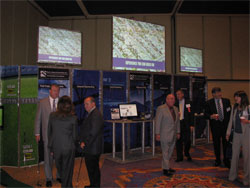 | �
�| Event exhibitors and sponsors contribute to an informative and engaging environment | �
�This year’s meeting was the best yet for the industry-leading construction defect and claims event.
�This year’s seminar concluded on May 13, 2011 with the Construction Defect Community Charitable Foundation Golf Tournament, held at Strawberry Farms Golf Course.
�The Disneyland Hotel in Anaheim, California was the place where more than 1,500 attendees convened for two days of professional development activities and seminars that included CLE workshops and panel discussions of special interest to legal and insurance professionals concerned with construction defect and claims litigation. Key events included “Challenges for Experts in Construction Defect Claims and Litigation,” “Keeping Up with Construction Defect Coverage,” and “Tips for Avoiding the ‘Perfect Storm’ in Handling of Wrap Claims.”
� �  | �
�| Supporting the golf tournament at the 15th hole | �
�This year’s Ollie award was given to George D. Calkins II, Esq. The West Coast Casualty Jerrold S. Oliver Award of Excellence was named in honor of the late Judge Jerrold S. Oliver, and recognizes an individual who is outstanding or has contributed to the betterment of the construction community.
�In addition to being the most comprehensive professional development seminar in the area of construction defects, this year’s seminar was equally valuable as a networking opportunity for members of the industry. People participated in professional development events during the day and then continued networking in the evening at numerous social events. The Lawn Party as well as the legendary Wood, Smith, Henning & Berman events were very well attended. Additional valuable networking events were hosted by a number of industry professionals at the House of Blues, and Tortilla Joe’s.
�As of this writing the 2011, West Coast Casualty's Construction Defect Seminar has applied for or has already received the following continuing education accreditation in the following areas;
�Read the full story…
�For more information about next year’s event, visit West Coast Casualty.
Recent Case Brings Clarity and Questions to Statute of Repose Application
August 16, 2012 — Douglas Reiser, Builders Counsel
I have often chatted about the Washington Statute of Repose on this blog. The Statute of Repose prevents construction claims, for the most part, from being raised 6 years from the date of substantial completion or termination. Well, a recent Court of Appeals case dove deep into the specific determinative factors that tell us when to start the clock. It certainly raises questions about how long we really have to file suit.
The Statute of Repose has been a frequent topic here, so I will simply direct you to my prior post for further information on how this law works. A recent post was published about a lawsuit that might raise some questions about when and how the clock begins to roll, and claim periods begin to diminish.
Read the full story…
Reprinted courtesy of Douglas Reiser of Reiser Legal LLC. Mr. Reiser can be contacted at info@reiserlegal.com
Green Buildings Could Lead to Liabilities
March 28, 2012 — CDJ Staff
Attempts to build “green,” reducing energy costs and increasing the use of sustainable building materials, may lead to more lawsuits, according to a report issued by the British Columbia Construction Association. The report warned those who were going to build green look into the implications. The report looked at the result of green building practices and requirements adopted in the United States.
�The report warns that “the use of novel, less harmful building material or new construction techniques may give rise to liability due to: contractor inexperience with installation; lack of long-term evaluation of green materials; lack of understanding of how new building materials may impact existing traditional building systems; or warranties provided unintentionally about the durability or effectiveness of unproven materials or techniques.”
�Manley McLachlan, president of the BCAA noted that they are aware of “legal action around the performance of the buildings,” noting that while fast-growing trees help toward LEED certification, their wood is more prone to mold. He also felt that low-VOC paints needed more testing to prove their durability as exterior finishes.
Read the full story…
Coverage Exists Under Ensuing Loss Provision
July 10, 2012 — Tred Eyerly, Insurance Law Hawaii
Finding coverage under the ensuing loss provision, the Washington Supreme Court overruled a Court of Appeals decision we previously reported here. Vision One, LLC v. Philadelphia Indem. Ins. Co., 276 P.3d 300 (Wash. 2012).
Vision developed a condominium project. Before concrete was poured, a subcontractor supplied the shoring to temporarily support the poured concrete slabs. After the shoring installation was completed, concrete was poured on the first floor. When the pouring was finished, the shoring gave way. The framing, rebar and newly poured concrete came crashing down onto the the lower level parking area, where the wet concrete eventually hardened. It took several weeks to clean up the debris and repair the damage.
Vision had a builders’ risk policy with Philadelphia. The policy excluded losses caused by or resulting from deficient design or faulty workmanship. Collapse, however, was not listed as an excluded event. Further, the exclusion for faulty workmanship contained a resulting loss clause providing that "if loss or damage by a Covered Cause of Loss results, [Philadelphia] will pay for the loss or damage caused by that Covered Cause of Loss."
Philadelphia denied coverage under the faulty workmanship exclusion.
Read the full story…
Reprinted courtesy of Tred R. Eyerly, Insurance Law Hawaii. Mr. Eyerly can be contacted at te@hawaiilawyer.com
California insured’s duty to cooperate and insurer’s right to select defense counsel
April 14, 2011 — April 14, 2011 - CDCoverage.com
In Travelers Property Casualty Co. v. Centex Homes, No. C 10-02757 (N.D. Cal. April 1, 2011), general contractor Centex was sued by homeowners for construction defects. Centex tendered its defense to Travelers as an additional insured under policies issued by Travelers to two Centex subcontractors. Travelers agreed to defend Centex under a reservation of rights and selected defense counsel to defend Centex. Centex refused to accept the defense, asserting that it was entitled to select defense counsel. Travelers filed suit against Centex seeking a declaratory judgment that Centex had breached the duty to cooperate condition in the Travelers’ policy.
�Read the full story...
�Reprinted courtesy of CDCoverage.com
Preparing for Trial on a Cause of Action for Violation of Civil Code section 895, et seq.�
May 10, 2012 — Samir R. Patel, Esq., Lorber, Greenfield, & Polito, LLP
In 2002, the California Legislature enacted the Right to Repair Act (hereinafter “SB-800”), as codified in Title VII of the Civil Code. As set forth in Civil Code section 895, et seq., SB-800 established a set of standards for residential construction, and provides a statutory protocol to address alleged violations of those standards. SB-800 applies to all new single family homes sold after January 1, 2003, and it created its own cause of action governed completely by its own terms, in that in order to state a cause of action under SB-800, a plaintiff may only allege a violation of the Act. (Civ. Code, § 938.) Under Civil Code sections 896, 897, 943, and 944, the Legislature made it clear that it intended to create a single cause of action for construction defects in homes that fall under the purview of SB-800. By passing SB-800, the Legislature eliminated multiple and often redundant or conflicting causes of action, burdens of proof, statutes of limitations, and types of damages that were common in construction defect actions prior to the enactment of the same.
�Civil Code section 895, et seq. has significantly changed the landscape of construction defect lawsuits. Yet, for years, the only attention given to the statutes focused solely on the codified pre-litigation process that requires plaintiffs and builders to meet and confer regarding defects and attempt a process to repair the alleged defects before litigation is pursued. A major impediment to the implementation of the pre-litigation procedures has often been that the statutes specifically state that the information obtained during the pre-litigation process is admissible at trial. Hence, through use of the pre-litigation process, plaintiffs’ counsel can engage in a builder funded fishing expedition and later use the information obtained to advance their litigation goals. As such, many builders have chosen to opt out of codified pre-litigation process altogether, an option which the builder can elect within their Purchase and Sale Agreements.
�Recently, counsel for builders throughout California have turned their attention to the “exclusive remedy” aspect of SB-800 by seeking, often successfully, to limit plaintiffs to a single cause of action for violation of SB-800. Civil Code section 943 makes clear that a cause of action for violation of SB-800 performance standards is a plaintiff’s sole remedy for a residential construction defect action. Civil Code section 943 states:
�Except as provided in this title, no other cause of action for a claim covered by this title or for damages recoverable under 944 is allowed. (Civ. Code, § 943.) Â
�The question remains: what is the benefit of requiring plaintiffs to trim down their complaint and eliminate their tried and true common law causes of action, and requiring them to pursue only a single cause of action for violation of SB800?
�The construction standards enumerated within SB-800 include fifty-plus functionality standards. On their face, any benefit to pursuing a construction defect action under a single cause of action for violation of SB-800 initially appears trivial at best, in light of the fact that a jury may be very confused with the complexity of the functionality standards set forth within the Civil Code. Nevertheless, Title VII of the Civil Code actually contains numerous provisions that builders can utilize to their benefit throughout the process of construction defect litigation, including during preparation for trial.
�First and foremost, counsel for builders can assert numerous affirmative defenses that will be beneficial if the matter proceeds to trial. These affirmative defenses, as codified in Civil Code section 945.5, include mitigation, in whole or in part, for damages caused by: an unforeseen act of nature; a homeowner’s failure to allow reasonable and timely access for inspections and repair under the pre-litigation procedures; the homeowner’s failure to follow the builder’s recommendations and commonly accepted homeowner maintenance obligations; ordinary wear and tear; misuse; abuse; or neglect. Builders should include these affirmative defenses within their responsive pleadings and as trial approaches, prepare appropriate motions in limine and request special jury instructions regarding the same. As frustrated builders and their attorneys are well aware, many construction defect suits result from a homeowner’s failure to properly maintain their property in a manner that is consistent with normal maintenance procedures and guidelines. Furthermore, within the ten year statute of limitations for most defects, ordinary wear and tear is often attributable to numerous deficiencies alleged by plaintiffs. The affirmative defense for a homeowner’s failure to allow inspections and repairs is also vital, as plaintiffs’ counsel may encourage a homeowner to forego the repair and seek monetary damages, allowing plaintiffs’ counsel to ultimately obtain their share of attorney’s fees. Therefore, the SB-800 statutes provide the builder with recourse and distinctive mitigation defenses that were previously and confusingly mixed into tort and contract related defenses. These affirmative defenses can also be utilized by counsel during the cross-examination of plaintiff homeowners and expert witnesses. Defense counsel should fully grasp these defenses and utilize them as defense themes throughout litigation.
�As a plaintiff is limited to a single cause of action for violation of SB-800, if defense counsel has failed to properly eliminate excessive tort and contract causes of action prior to trial, a motion for summary adjudication, or at the very least, a motion for judgment on the pleadings should be brought to limit the introduction of evidence outside of a single cause of action for violation of SB-800. Practical judges are always looking for ways to streamline and expedite trials, and they are currently ruling that SB-800 is the exclusive remedy available to plaintiffs. In fact, plaintiffs’ firms in SB-800 matters are now voluntarily limiting their complaints to this one cause of action.
�Special jury instructions can also be crafted to limit a jury’s computation of damages pursuant to Civil Codesection 944, which provides the method for computing damages within a construction defect action, as follows:
�If a claim for damages is made under this title, the homeowner is only entitled to damages for the reasonable value of repairing any violation of the standards set forth in this title, the reasonable cost of repairing any damages caused by the repair efforts, the reasonable cost of repairing and rectifying any damages resulting from the failure of the home to meet the standards, the reasonable cost of removing and replacing any improper repair by the builder, reasonable relocation and storage expenses, lost business income if the home was used as a principal place of a business licensed to be operated from the home, reasonable investigative costs for each established violation, and all other costs or fees recoverable by contract or statute. (Civ. Code, § 944.) [Emphasis added.]
�Civil Code section 944 specifically prohibits recovery for damages outside the scope of its explicit language as it states “the homeowner is only entitled to ... damages for the reasonable value of repairing any violation of the standards set forth in this title....” [Emphasis added.] The statute ultimately provides a “reasonableness” standard for the computation of damages that did not exist when computing damages on traditional common law tort and contract claims. Therefore, defense counsel should prepare special jury instructions to limit evidence of damages introduced at trial to the reasonable value of repairing any violation of the standards, and to exclude any evidence of damages beyond the reasonableness standard. Defense counsel should seize the opportunity to utilize the theme of “reasonableness” when attacking plaintiffs’ allegations and plaintiffs’ proposed repair methodology throughout the discovery process and at trial.
�Defense counsel may also prepare a motion in limine or special jury instruction regarding the limitation of evidence regarding defects that did not cause resultant damage. Civil Code section 897 states:
�Intent of Standards
�The standards set forth in this chapter are intended to address every function or component of a structure. To the extent that a function or component of a structure is not addressed by these standards, it shall be actionable if it causes damage. (Civ. Code, § 897.) [Emphasis added.]
�Defense counsel can argue that the introduction of any evidence supporting a claim for construction-related deficiencies that are not enumerated within Civil Code section 896, or for deficiencies where no damage has occurred is prohibited and must be excluded at trial. This requirement of resultant damages is familiar as the general rule was previously established in Aas v. Superior Court (2000) 24 Cal.4th 627, in which the California Supreme Court held that there is no tort recovery for construction defects that have not actually caused property damage. The legislature effectively codified this rule within Civil Code section 897.
�A motion in limine can also be crafted to limit expert testimony to the standards enumerated in Civil Code section 896, and to deficiencies that caused damage pursuant to Civil Code 897. The motion in limine can be based upon Civil Code section 943 and the fact that claims for defects in homes which were sold after January 1, 2003 may only be pursued under a single cause of action for violation of SB-800. As such, expert testimony should be controlled by the standards set forth in Civil Code section 896. Furthermore, throughout a construction defect matter, defense counsel should ensure that their experts are well versed with the standards and that they can provide testimony that utilizes the same. Defense counsel’s knowledge of the standards will also be helpful during the cross-examination of plaintiffs’ expert witnesses.
�If, despite the efforts of defense counsel, the complaint still has numerous causes of action, or if only some homes fall under the purview of SB-800 while others do not, defense counsel can utilize a motion to bifurcate trial. The motion’s basis is that a cause of action for violation of SB-800 will require the introduction of evidence regarding the violations of the fifty-plus standards, and the tort and contract-based claims would also require the introduction of a wide range of evidence to prove each cause of action. For example, in order to prove the tort causes of action, plaintiffs must prove elements such as: duty, breach, proximate and actual causation, and that the builder placed the homes into the stream of commerce. (See Richards v. Stanley (1954) 43 Cal.2d 60, 63; Kriegler v. Eichler Homes, Inc. (1969) 269 Cal.App.2d 224, 227.) On the contract causes of action, plaintiffs must prove the existence of a valid written contract for the sale of the home, including proof regarding the existence of basic contractual elements such as offer, acceptance, and consideration. (Civ. Code, § 1624 subd. (a); Roth v. Malson (1997) 67 Cal.App.4th 552, 557.) Defense counsel can argue that exposing the jury to elements that may or may not be applicable to all of the homes in the action will complicate and confuse the jury. Thus, concurrently exposing the jury to the SB-800 claims and the non-SB-800 claims will necessitate undue consumption of time, and create the substantial danger of undue prejudice of confusing the issues or misleading the jury.
�One of the most important and relevant features of the SB-800 statutes is that they include shortened statutes of limitation as to certain enumerated defects. The codified statutes of limitations apply from the date of “close of escrow,” and are much more definitive than statutes of limitations regarding tort and contract claims. Therefore, they can be utilized within a motion for summary adjudication in cases where only one or a few defects are alleged. For example, under Civil Code section 896, et seq., there is a five year limitation on paint (Civ. Code, § 896, subd. (g)(1)); a four year limitation on plumbing fixtures (Civ. Code, § 896, subd. (e)); a three year limitation on landscaping (Civ. Code § 896, subd. (g)(12)); and a one year limitation on irrigation systems and drainage (Civ. Code, § 896, subd. (g)(7)). The non-SB-800 claims are subject to a four year statute of limitation for patent defects and a ten year statute of limitation for latent defects. (See Code of Civ. Proc., §§ 337.1, 337.15.) The contrast between the statute of limitations for the SB-800 claims and non-SB-800 claims can complicate a matter at trial, further establishing the necessity to limit plaintiffs to a single cause of action for violation of SB-800. Hence, defense counsel should also utilize a motion to bifurcate the statute of limitations issues from the issue of liability if a question of fact exists. If successful on the motion to bifurcate, plaintiff’s counsel will be barred from the introducing evidence at trial regarding a defect where the statute of limitations has run.
�Defense counsel should also seek to simplify the construction standards for the jury. Ultimately, by drafting jury instructions and a special verdict form that is easy to navigate, counsel can promote an easy interpretation of the standards enumerated within the Civil Code. The best route for drafting a special verdict form is to draft it as a check-list, similar to a traditional real estate walk-through check-list. By incorporating the shortened statutes of limitations into the special verdict form, defense counsel can effectively frame the case for the jury. The special verdict form should also allow the jury to easily eliminate any claim for damages that is mitigated, in whole or in part, through the codified affirmative defenses. Defense counsel should also consider drafting a trial brief that effectively and simplistically provides the trial court judge with an understanding of the specific defects before the court, and simultaneously notes which Civil Code standards are implicated and the scope of the same. If the trial judge is not well versed in construction defect litigation, defense counsel should be all the more careful in breaking down the parameters and limitations codified within SB-800 for the court.
�The strategies outlined within this article are only a few tactics that can be utilized to defend a construction defect suit. Depending on the defect allegations within any particular case, defense counsel should become intimately familiar with Title VII of the Civil Code and use all aspects of the same to their advantage. If not, plaintiffs’ counsel will have the advantage during “court-house step” settlement discussions and at trial.
� Printed courtesy of Samir R. Patel, Esq. of Lorber, Greenfield, & Polito, LLP. Mr. Patel can be contacted at spatel@lorberlaw.com.
�
Delaware “occurrence” and exclusions j(5) and j(6)
June 10, 2011 — CDCoverage.com
In Goodville Mut. Cas. Co. v. Baldo, No. 09-338 (D. Del. June 2, 2011), claimants condominium association and unit owners sued project developer Rehoboth and general contractor Capano seeking damages because of moisture penetration property damage to common elements and individual units resulting from construction defects. Rehoboth and Capano filed a third party complaint against insured property manager Baldo alleging that, if Rehoboth and Capano were liable to claimants, Baldo was also liable because of Baldo’s failure to properly manage, maintain, and repair the property
Read the full story…
Reprinted courtesy of CDCoverage.com