

















Tenth Circuit Finds Insurer Must Defend Unintentional Faulty Workmanship
December 9, 2011 — Tred R. Eyerly, Insurance Law Hawaii
Applying Colorado law, the Tenth Circuit found a duty to defend construction defect claims where the faulty workmanship was unintentional. Greystone Const. Inc. v. National Fire & Marine Ins. Co., 2011 U.S. App. LEXIS 22053 (10th Cir. Nov. 1, 2011). A prior post [here] discussed the Tenth Circuit’s certified question to the Colorado Supreme Court in this matter, a request that was rejected by the Colorado court.
In two underlying cases, Greystone was sued by the homeowner for damage caused to the foundation by soil expansion. In both cases, the actual construction was performed by subcontractors. Further, in neither case was the damage intended or anticipated. Nevertheless, National Union refused to defend, contending property damage resulting from faulty construction was not an occurrence.
Relying on a Colorado Court of Appeals case, General Security Indemn. Co. of Arizona v. Mountain States Mut. Cas. Co., 205 P.3d 529 (Colo. App. 2009), the district court granted summary judgment to National Union.
On appeal, the Tenth Circuit first considered whether Colorado legislation enacted to overturn General Security could be applied retroactively. The statute, section 13-20-808, provided courts "shall presume that the work of a construction professional that results in property damage, including damage to the work itself or other work, is an accident unless the property damage is intended and expected by the insured."
Read the full story…
Reprinted courtesy of Tred R. Eyerly, Insurance Law Hawaii. Mr. Eyerly can be contacted at te@hawaiilawyer.com
Kentucky Court Upholds Arbitration Award, Denies Appeal
June 15, 2011 — CDJ Staff
The Kentucky Court of Appeals has ruled in Lake Cumberland Community Action Agency v. CMW, Inc. affirming the arbitration award. CMW, Inc. was responsible for the construction of a facility to be used for pre-school students and the housing of Alzheimer patients and senior citizens. An agreement was made that any disputes would be heard by an arbitrator selected by the construction industry.
The plaintiff alleged that there were design and construction defects in the building trusses, violation of the Kentucky Building Code, and problems with the HVAC system. The arbitrator awarded $106,000 to the plaintiff which then sought to vacate the award. The circuit court upheld the arbitrator’s decision.
The Court of Appeals found that there was no basis for rejecting the arbitrator’s decision, noting “there is nothing to show that there was any fraud or bias on the part of the arbitrator.” The appeals court, with all three judges concurring, upheld the arbitration award.
Read the court’s decision
Construction Law Alert: A Specialty License May Not Be Required If Work Covered By Another License
March 7, 2011 — By
Steve Cvitanovic of
Haight Brown & Bonesteel, LLP.Contractors should always be sure that they understand the licensing in any Subcontract or Prime Contract before entering into any agreement. However, on March 3, 2011, in the case of Pacific Casson & Shoring, Inc. v. Bernards Bros., Inc. 2011 Cal.App.Lexis 236, the Court of Appeal determined that if a specialty license is subsumed within another license, the specialty license may not be required.
Bernards entered into a subcontract with Pacific to excavate, backfill, grade and provide geotechnical design parameters for a hospital. The Prime Contract required the bidder to maintain a Class C-12 specialty earthwork license. However, Pacific only held a Class A general engineering license which it turns out was suspended during the performance of the work. Pacific sued Bernards for nonpayment of $544,567, but the lawsuit was dismissed because the trial court found that Pacific (1) lacked a C-12 license, and (2) Pacific’s Class A license was suspended for failure to pay an unrelated judgment. Pacific was also ordered to disgorge $206,437 in prior payments.
The Court of Appeal reversed and remanded. The Court of Appeal agreed with Pacific and held that a C-12 specialty license was not required despite the Prime Contract. The Court of Appeal found that the C-12 specialty license would have been “superfluous” since it was fully encompassed within the Class A requirements. However, the Court of Appeal also remanded the case for further
Read the full story...
Reprinted courtesy of Steve Cvitanovic of Haight Brown & Bonesteel, LLP.
Negligent Construction an Occurrence Says Ninth Circuit
June 30, 2011 — CDJ Staff
One June 27, the US Court of Appeals has rejected an appeal from Mid-Continent Casualty Company. Mid-Continent had appealed a summary judgment granted to Titan Construction Company.
Titan Construction had built condominiums for the Williamsburg Condominium Association, which later filed a construction defect lawsuit against Titan and other defendants. Titan settled with the developer, Kennydale, assigning its rights against Mid-Continent to Kennydale. Mid-Continent filed suit, claiming that “it had no obligation to indemnify or defend Titan, Kennydale, or various other defendants.” The district court found in favor of Mid-Continent, granting a summary judgment, concluding that Titan’s insurance covered “occurrences,” and none had taken place.
On appeal, the court found that the negligent construction of the condominiums constituted an “occurrence” The case was remanded and the district court this time found in favor of Titan, “concluding that Mid-Continent failed to raise a triable issue as to the applicability of the remaining policy exclusions.
The Ninth Circuit Court of Appeals has now affirmed that decision and Titan’s summary judgment stands.
Read the court’s decision…
Court finds subcontractor responsible for defending claim
May 18, 2011 — May 18, 2011 - CDJ Staff
In an unpublished decision, the California Fourth Appellate District Court has reversed the judgment of Judge Linda B. Quinn of the Superior Court of San Diego. In the case Inland California, Inc. v. G.A. Abell, Inland, a general contractor had subcontracted with Apache Construction and Precision Electric Company (G.A. Abell).
Apache alleged that extra demolition and drywall work was needed due to Precision’s electrical work. Inland tendered a defense of Apache’s claims. However, Precision did not provide any defense. Inland withheld payment from Precision.
At trial, Inland “conceded Precision earned the $98,000 in progress payments Inland withheld.†They were obligated to additionally pay Precision’s costs and attorney fees.
The Fourth Appellate District court has overturned this and remanded the case back to the lower court. The judges determined that Precision was obligated to defend itself against the claims raised by Apache and therefore vacated the judgment against Inland.
Read the court’s decision…
Safety Officials Investigating Death From Fall
September 9, 2011 — CDJ Staff
California safety officials are looking into the circumstances surrounding the death of a construction worker who fell from a roof in Tiburon, California. Another worker found Gabriel Vasquez unconscious at the site. Vasquez was later pronounced dead. The State Division of Occupational Safety and Health are trying to determine how Vasquez fell.
Read the full story…
Changes To Indemnification Statute Are Here! Say Hello To Defense Duties
June 19, 2012 — Douglas Reiser, Builders Counsel
A months back, I discussed the passage of SHB 1559. The law changes the existing statutory indemnification regulation to include the costs of defense and to rid contracts of unfair indemnification for someone else’s sole negligence. The law went into effect last week!
Check back to my recent article on the changes set forth in the new law. The amendments to RCW 4.24.115 will broaden the existing law and clarify what types of indemnification are unenforceable. In short, an “up the chain” contractor (such as a general contractor) cannot expect to pass 100% of the defense and indemnification obligations downward if it is partially liable.
Read the full story…
Reprinted courtesy of Douglas Reiser of Reiser Legal LLC. Mr. Reiser can be contacted at info@reiserlegal.com
Condo Board May Be Negligent for not Filing Construction Defect Suit in a Timely Fashion
December 9, 2011 — CDJ Staff
The Maryland Court of Special Appeals has ruled that condominium association boards have a duty to “properly pursue any claims,” overturning the decision of a lower court that said that it had no legal duty to file suit. Tom Schild, writing at Marylandcondominiumlaw.net, writes about Greenstein v. Avalon Courts Six Condominium, Inc.
In this case, the condominium board waited six years after residents complained about water intrusion problems before suing the developer. The court ruled that the suit could not be filed, as the statute of limitations was only three years. After residents were assessed for the repairs, homeowners sued the board, arguing that their delay lead to the need for the special assessment.
After overturning the decision, the Court of Special Appeals has asked the trial court to review the negligence claim.
Read the full story…
Boyfriend Pleads Guilty in Las Vegas Construction Defect Scam Suicide
November 7, 2012 — CDJ Staff
One of the odder twists of the Las Vegas construction defect scandal was the charge that Nancy Quon’s boyfriend helped her in an initial suicide attempt. Quon, implicated by not charged in the case of taking control of homeowner boards in order to profit from construction defect settlements. William Webb was alleged to have bought the drug GBH in order to allow Quon, his girlfriend, to commit suicide. Ms. Quon later overdosed on a combination of alcohol and prescription drugs.
In addition to pleading guilty to the drug charges, Webb also made a plea bargain with prosecutors in which he did not admit guilt in an insurance fraud charge, but acknowledged that prosecutors would likely be successful at obtaining a conviction. Webb will be sentenced February 7 and is expected to receive a sentence of six years imprisonment.
Read the full story…
Contractor Liable for Soils Settlement in Construction Defect Suit
February 10, 2012 — CDJ Staff
The California Court of Appeals ruled on January 9 in Burrow v. JTL Dev. Corp., a construction defect case in which houses suffered damage due to improperly compacted soil, upholding the decision of the lower court.
Turf Construction entered into a deal with JTL to develop a parcel they acquired. A third firm, Griffin Homes, withdrew from the agreement “when a geotechnical and soils engineering firm reported significant problems with soil stability on 14 of the lots.” Turf Construction then took over compacting and grading the lots. Turf “had never compacted or graded a residential tract before.” Robert Taylor, the owner of Turf, “testified he knew there was a significant problem with unstable soils.”
After homes were built, the plaintiffs bought homes on the site. Shortly thereafter, the homes suffered damage from soil settlement “and the damage progressively worsened.” They separately filed complaints which the court consolidated.
During trial, the plaintiff’s expert said that there had been an inch and a half in both homes and three to five inches in the backyard and pool areas. “He also testified that there would be four to eight inches of future settlement in the next fifteen to twenty years.” The expert for Turf and JTL “testified that soil consolidation was complete and there would be no further settlement.”
Turf and JTL objected to projections made by the plaintiffs’ soil expert, William LaChappelle. Further, they called into question whether it was permissible for him to rely on work by a non-testifying expert, Mark Russell. The court upheld this noting that LaChappelle “said that they arrived at the opinion together, through a cycle of ‘back and forth’ and peer review, and that the opinion that the soil would settle four to eight inches in fifteen to twenty years was his own.”
Turf and JTL contended that the court relied on speculative damage. The appeals court disagreed, stating that the lower court based its award “on evidence of reasonably certain damage.”
Turf also that it was not strictly liable, since it did not own or sell the properties. The court wrote that they “disagree because Turf’s grading activities rendered it strictly liable as a manufacturer of the lots.” The court concluded that “Turf is strictly liable as a manufacturer of the lots.”
Judge Coffee upheld the decision of the lower court with Judges Yegan and Perren concurring.
Read the court’s decision…
Repair of Part May Necessitate Replacement of Whole
February 10, 2012 — CDJ Staff
Judge Gleuda E. Edmonds, a magistrate judge in the United States District Court of Arizona issued a ruling in Guadiana v. State Farm on January 25, 2012. Judge Edmonds recommended a partial summary judgment in favor of the plaintiff.
Ms. Guandiana’s home had water damage due to pluming leaks in September 2004. She was informed that polybutylene pluming in her house could not be repaired in parts “it must be completely replaced.” She had had the plumbing replaced. State Farm denied her claim, arguing that “the tear-out provision did not cover the cost of accessing and replacing those pipes that were not leaking.”
In September 2007, State Farm filed a motion to dismiss. The court rejected this motion, stating that “If Guadiana can establish as a matter of fact that the system that caused the covered loss included all the pipes in her house and it was necessary to replace all the pipes to repair that system, State Farm is obligated to pay the tear-out costs necessary to replace all the pipes, even those not leaking.”
In March 2009, State Farm filed for summary judgment, which the court granted. State Farm argued that “the tear-out provision only applied to ‘repair’ and not ‘replace’ the system that caused the covered leak.” As for the rest of the piping, State Farm argued that “the policy does not cover defective materials.”
In December 2011, Ms. Guadiana filed for summary judgment, asking the court to determine that “the policy ‘covers tear-out costs necessary to adequately repair the plumbing system, even if an adequate repair requires replacing all or part of the system.”
In her ruling, Judge Edmonds noted that Ms. Guadiana’s claim is that “the water damage is a covered loss and she is entitled to tear-out costs necessary to repair the pluming system that caused that covered loss.” She rejected State Farm’s claim that it was not obligated to replace presumably defective pipes. Further, she rejected State Farm’s argument that they were only responsible for the leaking portion, noting “Guadiana intends to prove at trial that this is an unusual case where repair of her plumbing system requires replacement of all the PB plumbing.”
Judge Edmonds concluded by directing the District Court to interpret the tear out issue as “the tear-out provision in State Farm’s policy requires State Farm to pay all tear-out costs necessary to repair the plumbing system (that caused the covered loss) even if repair of the system requires accessing more than the leaking portion of the system.”
Read the court’s decision…
2011 West Coast Casualty Construction Defect Seminar – Recap
June 1, 2011 — CDJ Staff
 |
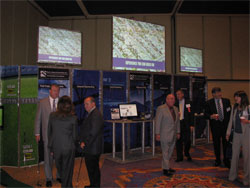
| Event exhibitors and sponsors contribute to an informative and engaging environment |
This year’s meeting was the best yet for the industry-leading construction defect and claims event.
This year’s seminar concluded on May 13, 2011 with the Construction Defect Community Charitable Foundation Golf Tournament, held at Strawberry Farms Golf Course.
The Disneyland Hotel in Anaheim, California was the place where more than 1,500 attendees convened for two days of professional development activities and seminars that included CLE workshops and panel discussions of special interest to legal and insurance professionals concerned with construction defect and claims litigation. Key events included “Challenges for Experts in Construction Defect Claims and Litigation,” “Keeping Up with Construction Defect Coverage,” and “Tips for Avoiding the ‘Perfect Storm’ in Handling of Wrap Claims.”
 |
| Supporting the golf tournament at the 15th hole |
This year’s Ollie award was given to George D. Calkins II, Esq. The West Coast Casualty Jerrold S. Oliver Award of Excellence was named in honor of the late Judge Jerrold S. Oliver, and recognizes an individual who is outstanding or has contributed to the betterment of the construction community.
In addition to being the most comprehensive professional development seminar in the area of construction defects, this year’s seminar was equally valuable as a networking opportunity for members of the industry. People participated in professional development events during the day and then continued networking in the evening at numerous social events. The Lawn Party as well as the legendary Wood, Smith, Henning & Berman events were very well attended. Additional valuable networking events were hosted by a number of industry professionals at the House of Blues, and Tortilla Joe’s.
As of this writing the 2011, West Coast Casualty's Construction Defect Seminar has applied for or has already received the following continuing education accreditation in the following areas;
Read the full story…
For more information about next year’s event, visit West Coast Casualty.
Another Colorado District Court Refuses to Apply HB 10-1394 Retroactively
October 28, 2011 — David M. McLain, Colorado Construction Litigation
In Martinez v. Mike Wells Construction Company, 09CV227, Teller County District Court Judge Edward S. Colt refused to apply C.R.S. § 13-20-808 retroactively to provide coverage for the underlying construction defect allegations. According to the recitation of facts in Judge Colt’s March 2011 order, Martinez contracted with Mike Wells Construction to serve as the general contractor for the construction of a home. At that time, Mike Wells Construction was insured through ProBuilders Specialty Insurance Company, RRG. Disputes arose between Martinez and Mike Wells Construction, resulting in Martinez ordering it off of the project in mid-November 2007 and terminating its right to work there by letter dated November 28, 2007.
Mike Wells, the owner of the corporation, subsequently died. Martinez sued Mike Wells Construction in July 2009 for breach of contract and various claims relating to alleged defecting workmanship. Martinez provided notice of the suit to the special administrator of the probate estate. No answer having been filed, the court entered a default judgment against Mike Wells Construction and Martinez sought to garnish Mike Wells Construction’s ProBuilders insurance policy.
Read the full story...
Reprinted courtesy of Higgins, Hopkins, McLain & Roswell, LLC. Mr. McClain can be contacted at mclain@hhmrlaw.com
Ghost Employees Steal Jobs from Legit Construction Firms
September 13, 2012 — CDJ Staff
Firms that skirt labor laws for construction workers can undercut firms that are obeying those laws. In a piece in Raleigh, North Carolina’s News & Observer, Doug Burton, a commercial masonry contractor summed it up: “my competitors are cheating.” The article describes the low-bidding firms “called their workers independent contractors ? or treated them like ghosts, paid under the table and never acknowledged.” The cost to the state is “unpaid medical bills for injured workers, uncollected business and personal taxes, and payments not made to a depleted state unemployment reserve.”
One firm examined in the article, Martin’s Bricklaying, employs mostly immigrant Mexican laborers, many of whom are in the country illegally. One employee told the News & Observer, “we don’t complain.”
Read the full story…
Contractor Sues License Board
June 30, 2011 — CDJ Staff
Judge Kendall J. Newman of the US District Court handed down a decision on June 24 on the case of Kent v California Department of Consumer Affairs. Mr. Kent, appearing as his own counsel, had brought the suit against the California Department of Consumer Affairs and the Contractors State Licensing Board after he was arrested in a sting operation and, as the plaintiff put it, “was absurdly arrested and uncooperatively detained for a time longer than necessary or allowed by law under the false pretense of contracting with out a license.” Mr. Kent’s alleged that Rick Lopez, one of the defendants, formed him to read allow from the California Business and Professions Code. He said he was later handcuffed and placed in an uncomfortable chair, “enduring physical pain and emotional agony.”
Although Kent was given a Notice to Appear, he alleged that a further defendant, Stuart Rind, “closed the plaintiff’s case marked citation A7773 without giving written notice to anyone.” As a result, the Placer County District Attorney’s Office had no record of his Notice to Appear.
Kent alleged that subsequently his firm was essentially shut down for two years and that he was prevented from “legally contracting or selling services for any other contractor or qualifying for any other licensed capacity governed by the CSLB.” After this, the CSLB suspended the license for his firm, DSI Construction. He was assessed a $1,500 fine, after which he claims he sent a letter to the CSLB demanding money damages. The judge noted that the letter was not included in the plaintiff’s Ninth Amended Complaint.
Judge Kendall recommended that the plaintiff’s Complaints be dismissed, although he did allow that sixth, and perhaps the eighth and ninth, could be amended with a tenth amended complaint.
Read the court’s decision…
Construction Workers Face Dangers on the Job
November 18, 2011 — CDJ Staff
OSHA calculates that for each 33,000 active construction workers, one will die on the job each year, making their risk over the course of their careers at one out of every 200 workers. This puts it many times over OSHA’s definition of “significant risk” of 1 death per 1,000 workers over the course of their careers. According to an article in People’s World, “the main risk of death is from falls.”
At a talk at the American Public Health Association’s meeting, one expert noted that “construction workers make up 6 percent to 8 percent of all workers, but account for 20 percent of all deaths on the job every year.”
Read the full story…
The King of Construction Defect Scams
June 19, 2012 — CDJ Staff
Echoing Businessweek, the Las Vegas Sun agrees that the Nevada HOA scandal is the “king of all Vegas real estate scams,” and says that the Nevada legislatures should take action. The Sun notes that the case involves only 12 out of 2,356 HOAs in Southern Nevada.
To date, 25 people have plead guilty in the case. At the center were an attorney and contractor who allegedly referred work to each other. To enable this, they assembled a wider conspiracy of people who enriched by the process. In the words of the Sun, those involved “upended the concept of a ‘common interest’ community.”
Read the full story…
Micropiles for bad soil: a Tarheel victory
March 14, 2011 — Original article by by Melissa Brumback on March 14, 2011
Despite foundation challenges, construction is almost complete on the expansion at University of North Carolina’s Kenan stadium. The project started with a deep foundation system from design-build contractor GeoStructures. Known as the Carolina Student-Athlete Center for Excellence, the addition was built on a parcel with a knotty mix of fill soils, subsurface boulders and varying depths to rock. To achieve uniform foundation support, GeoStructures designed a Micropile system (also known as a Mini pile system) which could be drilled into the variable ground conditions.
Read the full story...
Reprinted courtesy of Melissa Brumback of Ragsdale Liggett PLLC. Ms. Brumback can be contacted at mbrumback@rl law.com.