Tampa Condo Owners Allege Defects�
October 23, 2012 — CDJ Staff
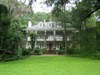
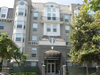
Owners in the Bel Mare towers have filed a lawsuit alleging that the building have construction defects that could lead to problems during periods with high winds. The Tampa Bay Business Journal reports that the condo association has sued the developer, the general contractor, the architects, the structural engineers, and subcontractors.
� Read the full story…
�
Hovnanian Sees Second-Quarter Profit, Points to Recovery
June 19, 2012 — CDJ Staff
Hovnanian Enterprises has shown a profit in the second quarter, which the company attributes to recovery in the homebuilding industry. Apart from a sales promotion in 2007, the company sold more homes per community in April than it has in any other month since 2006. Ara K. Hovnanian said that “the sales improvements we have experienced are fairly wide-based in terms of geography, price points and buyer profiles.”
The quarter’s profit was $1.8 million. In the year prior, Hovnanian faced losses of $72.7 million. The Wall Street Journal’s Marketwatch reported that Hovnanian’s stock price recently went up 19%.
Read the full story…
Housing Prices Up through Most of Country
December 20, 2012 — CDJ Staff
Home prices in October were up more than six percent compared with prices in October 2011. The LA Times noted that some of the strongest gains were in California and Arizona. The Phoenix metropolitan area saw a 24.5% rise in home prices. In California, Riverside and Los Angeles were just above the national average, at 7.3% and 6.4%, contributing to the state’s overall nine percent increase.
The news wasn’t good throughout the entire country, as five states did not see any price increases. Mark Fleming, the chief economist at CoreLogic, a research firm in Irvine, California said that “the housing recovery that started earlier in 2012 continues to gain momentum.
Read the full story…
2011 West Coast Casualty Construction Defect Seminar – Recap
June 1, 2011 — CDJ Staff
� 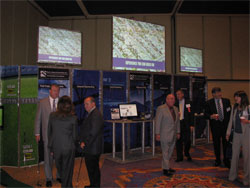 | �
�| Event exhibitors and sponsors contribute to an informative and engaging environment | �
�This year’s meeting was the best yet for the industry-leading construction defect and claims event.
�This year’s seminar concluded on May 13, 2011 with the Construction Defect Community Charitable Foundation Golf Tournament, held at Strawberry Farms Golf Course.
�The Disneyland Hotel in Anaheim, California was the place where more than 1,500 attendees convened for two days of professional development activities and seminars that included CLE workshops and panel discussions of special interest to legal and insurance professionals concerned with construction defect and claims litigation. Key events included “Challenges for Experts in Construction Defect Claims and Litigation,” “Keeping Up with Construction Defect Coverage,” and “Tips for Avoiding the ‘Perfect Storm’ in Handling of Wrap Claims.”
� �  | �
�| Supporting the golf tournament at the 15th hole | �
�This year’s Ollie award was given to George D. Calkins II, Esq. The West Coast Casualty Jerrold S. Oliver Award of Excellence was named in honor of the late Judge Jerrold S. Oliver, and recognizes an individual who is outstanding or has contributed to the betterment of the construction community.
�In addition to being the most comprehensive professional development seminar in the area of construction defects, this year’s seminar was equally valuable as a networking opportunity for members of the industry. People participated in professional development events during the day and then continued networking in the evening at numerous social events. The Lawn Party as well as the legendary Wood, Smith, Henning & Berman events were very well attended. Additional valuable networking events were hosted by a number of industry professionals at the House of Blues, and Tortilla Joe’s.
�As of this writing the 2011, West Coast Casualty's Construction Defect Seminar has applied for or has already received the following continuing education accreditation in the following areas;
�Read the full story…
�For more information about next year’s event, visit West Coast Casualty.
Contractor Removed from Site for Lack of Insurance
October 28, 2011 — CDJ Staff
The MetroWest Daily News reports that a demolition firm was told to leave the construction site at Natick High School since their failure to have workers compensation insurance makes them unable to work on the project. The contractor, Atlantic Dismantling and Site Construction, Inc. may have been working illegally since September.
The equipment that Atlantic had rented for the job was repossessed in August. Brait Builders Corp, the general contractor for the site had rented equipment so Atlantic could continue their work.
Their lack of insurance was discovered when a worker had a minor job-related injury. The state had issued a stop-work order for the firm and they could not legally bid on public projects. The school system did not receive any notice of this, and the school’s facilities director said of the general contractor, “chances are Brait never heard of anything either.”
Read the full story...
Legislatures Shouldn’t Try to Do the Courts’ Job
March 1, 2012 — CDJ Staff
David Thamann, writing in Property Casualty 360, argues that current actions by legislatures on insurance coverage amount to “legislative interference or overreach.” He notes that under current Colorado law, “a court shall presume that the work of a construction professional that results in property damage — including damage to the work itself or other work — is an accident unless the property damage is intended and expected by the insured.” He argues that here legislators are stepping into the role of the courts. “Insureds and insurers are not always going to be pleased with a court ruling, but that is the system we have.”
Read the full story…
Cabinetmaker Exceeds Expectations as Conditions Improve�
October 23, 2012 — CDJ Staff
American Woodmark, the manufacturer of several national brands of cabinets and vanities, saw greater than anticipated earnings in its most recent quarter. Their revenue was $148.3 million, an increase of 13% over the same quarter a year prior. They saw a 40% increase in sales. As a result, their per-share earnings were 7 cents, instead of the projected loss of 3 cents per share. Forbes reports that the share price for American Woodmark has been rising in August 2012.
� Read the full story…
�
Insurer Not Liable for Construction Defect Revealed by Woodpecker
September 13, 2012 — CDJ Staff
The Eighth Circuit Court of Appeals has ruled that an insurance provision that excluded construction defects must stand in Friedberg v. Chubb, granting a summary judgment to the insurance firm.
�The Friedbergs discovered extensive water damage to their home after a woodpecker drilled a hole in a vertical support. They sought insurance coverage under their Chubb “Masterpiece” policy. The decision quotes the policy as covering “all risk of physical loss” “unless stated otherwise or an exclusion applies.” These exclusions included “gradual or sudden loss,” “structural movement,” and “faulty planning, construction or maintenance,” but the policy covered “ensuing covered loss unless another exclusion applies.”
�Chubb’s expert determined that the Friedbergs’ home had defective construction, and “attributed the damage to the beams and walls below the beam to a failure to install control joints.” After Chubb denied coverage, the Friedbergs sued, although the court ruled that “even under the Friedbergs’ theory, the water damage was a loss caused by faulty construction and therefore excluded under the policy.”
�On appeal, the Friedbergs argued that “the loss resulted from the combination of both faulty construction and the presence of water” and that Minnesota’s “concurrent causation” doctrine must apply, which according to the decision, “when a loss results from both a covered peril and an excluded peril, coverage exists unless the excluded peril is the ‘overriding cause’ of the loss.” The court rejected this reasoning, noting that “once the house was plagued with faulty construction, it was a foreseeable and natural consequence that water would enter.”
�The Friedbergs also contended that “the damage caused by the intrusion of water into their home is an ‘ensuing covered loss’ for which they are due coverage.” The court also rejected this claim, noting that Minnesota law excludes defective construction from the ensuing loss provision. The court said that “the Friedbergs’ reading of their ensuing-loss clause, by contrast, would dramatically limit their policy’s faulty-construction exclusion, because almost ‘any loss cause by’ faulty construction could also be characterized as an ensuing loss under an all-risk policy.”
Read the court’ decision…
Congress Addresses Homebuilding Credit Crunch
May 20, 2011 — CDJ Staff
The National Association of Home Builders (NAHB) reports that Representatives Gary Miller (CA), Brad Miller (NC) and twenty-nine cosponsors have put forth a bill with bipartisan support to “address the severe credit crunch for acquisition, development, and construction (AD&C) financing.” They report in addition to more than 1.4 million construction workers who have been “idled since 2006,” the housing slump has cost 3 million jobs and $145 million in wages.
NAHB reports that they worked closely with lawmakers on the bill. The association had members meet with legislators both in D.C. and in their home districts. They state that HR 1755 would help homebuilders “find the credit they need to move forward with new or existing projects.”
The bill would allow lenders to use the value upon completion when assessing loan collateral and ban the use of foreclosed or distressed sale properties in assessing values of projects. The would bill would also lessen restrictions by banking regulators, which the lead sponsors said “have hindered federal and state chartered banks and thrifts’ ability to make and maintain loans to qualified small home builders that have viable projects.”
The NAHB is urging members of Congress to cosponsor the bill and is urging the Senate to introduce a companion bill.
Read the full story…
Read HR 1755
Harmon Towers Duty to Defend Question Must Wait, Says Court
March 1, 2012 — CDJ Staff
The Harmon Towers project in Las Vegas was eventually halted short of the planned forty-seven stories after “it was determined that there was substantial defective construction, including defective installation of reinforcing steel throughout the Harmon.” The American Home Insurance Company and Lexington Insurance Company put forth a claim that they had no duty to defend Perini Construction, the builder of the defective Harmon Towers. Further, American Home seeks to recover the monies American reimbursed Perini. The United States District Court of Nevada ruled in the case of American Home Assurance Co. v. Perini Building on February 3, 2012.
�The two insurance companies covered Perini and its subcontractors, Century Steel, Pacific Coast Steel, and Ceco Concrete Construction. Century Steel was the initial subcontractor for the reinforcing steel; they were later acquired by Pacific Coast Steel. In this current case, Perini Construction is the sole defendant.
�Perini sought a dismissal of these claims, arguing that without the subcontractors joined to the case, “the Court cannot afford complete relief among existing parties.” The court rejected this claim, noting that the court can determine the duties of the insurance companies to Perini, which the court described as “separate and distinct from those of the subcontractors.” The subcontractors “have not claimed an interest in the subject matter of the action.” The court concluded that it could determine whether Perini was entitled or not to coverage without affecting the subcontractors. The court rejected Perini’s claim.
�Perini also asked the court to abstain from the case, arguing that it was better heard in a state court. The court noted that several considerations cover whether a case is heard in state or federal courts. The court noted that if the case weighed heavily on state law, the state courts would be the obvious location. Further, if there were a parallel action in the state courts, “there is a presumption that the whole suit should be heard in state courts.” This is, however, no parallel state suit, although the court noted that Perini has “threatened” to do so.
�However, the issue of who is to blame for the problems at Harmon Towers has not been resolved. The court concluded that until the “underlying action” was concluded, it was premature to consider the issues raised in this case while the earlier lawsuit was still in progress. The court denied Perini’s motion to dismiss the case. Given that the outcome of the earlier construction defect case may lead to further litigation in state court, the District Court granted Perini’s motion to abstain, but staying their judgment until the construction defect case is resolved.
Read the court’s decision…
Defective Grout May Cause Trouble for Bridges
August 16, 2012 — CDJ Staff
Grout, which was used to protect the steel support cables of the Woodrow Wilson Bridge, may lead to problems instead. The Baltimore Sun reports that the Federal Highway Administration is looking at three dozen bridges in twenty-one states that were built with defective grout. The grout contains high levels of chlorides, which can lead to corrosion. The collapse of pedestrian walkway in Concord, North Carolina was attributed to chloride contamination in the grout.
The grout, SikaGrout 300PT, was advertised as "non-corrosive, does not contain chlorides," but later testing showed that it contained levels that exceeded limits by 400 percent. Throughout the country, about 16 million pounds of this were used. Sika Corp. suspended production of the grout in 2010. If repairs need to be made, it is unclear who will pay.
Read the full story…
Defense for Additional Insured Not Barred By Sole Negligence Provision
August 11, 2011 — Tred Eyerly, Insurance Law Hawaii
A general contractor was entitled to a defense as an additional insured when the underlying complaint did not allege it was solely negligent. A-1 Roofing Co. v. Navigators Ins. Co., 2011 Ill. App. LEXIS 656 (Ill. Ct. App. June 24, 2011).
�A-1 was the general contractor for a roof resurfacing job at a high school. Jack Frost Iron Works Inc. (“Frost”) was one of A-1’s subcontractors. Frost had a CGL policy with Navigators Insurance Company under which A-1 was an additional insured.
�An employee of Frost’s subcontractor Midwest Sheet Metal Inc. was killed at the job site when a boom-lift he was operating flipped over. The boom-lift had been leased by another Frost subcontractor, Bakes Steel Erectors, Inc. (BSE). The deceased's estate filed suit against A-1, BSE and two other defendants.
� Read the full story…
�Reprinted courtesy of Tred R. Eyerly, Insurance Law Hawaii. Mr. Eyerly can be contacted at te@hawaiilawyer.com
High School Gym Closed by Construction Defects
October 28, 2011 — CDJ Staff
The high school gym in Lake Oswego, Oregon has been shut down because testing has revealed that the construction defects have lead to deterioration of the structural integrity of the roof. The school district noted that there was a chance of collapse if there were a “significant seismic event or heavy rain and winds and snow.” The school district has been in a lawsuit with the builders since 2008, which was recently settled for $600,000.
The school board is still determining whether the original contractor will be asked to correct the defect or if they will bid the job out.
Read the full story...
Continuous Trigger of Coverage Adopted for Loss Under First Party Policy
August 2, 2012 — Tred Eyerly, Insurance Law Hawaii
The Seventh Circuit predicted that the Wisconsin Supreme Court would adopt the continuous injury trigger for first party property loss that extends over several policy periods. Miller v. Safeco Ins. Co. of Am., 2012 U.S. App. LEXIS 12940 (7th Cir. June 25, 2012).
A home inspection report performed before the Millers purchased their home showed a soft spot on the roof. The stucco's finish color was also uneven and stained. Further, some water damage was found in the study and skylights above the kitchen sink. But the report advised that the exterior walls, chimney, grass roof, flashings, floor joists/beams and columns, garage walls and floor appeared serviceable. A roof specialist determined the soft spot was not significant and could be repaired for $1,500.
The Millers purchased a homeowner's policy from Safeco on June 30, 2005. The policy went into effect the next day when the Millers closed on the property. But the Millers did not see the policy's terms until Safeco mailed them a copy of the policy at the end of July.
Before receiving the policy, the Millers discovered severe inner wall water leaks and significant water infiltration on three of the home's exterior walls.
Read the full story…
Reprinted courtesy of Tred R. Eyerly, Insurance Law Hawaii. Mr. Eyerly can be contacted at te@hawaiilawyer.com
Federal Judge Dismisses Insurance Coverage Lawsuit In Construction Defect Case
December 9, 2011 — CDJ Staff
A federal judge dismissed a coverage lawsuit brought by Mid Continent Casualty Company against its insured, Greater Midwest Builders Ltd.
Plaintiff brought this declaratory judgment action in response to a suit filed in Johnson County District Court, seeking a judicial determination that it had no coverage obligation for claims asserted against its insured. This case was stayed until the state court action entered judgment against the insured. The prevailing parties then commenced a garnishment action against the plaintiff, and another insurance company, in state court in Missouri. The court was asked whether it should lift the stay and proceed with the case, or decline jurisdiction in favor of resolution in the Missouri state court.
The court granted the motion to dismiss holding that proceeding with the case would lead to protracted, piecemeal litigation, while deferring to the Missouri state court would decide all the claims involved in the dispute.
Read the court’s decision…
Former Zurich Executive to Head Willis North America Construction Insurance Group
March 1, 2012 — CDJ Staff
Insurance Journal reports that Sean McGroarty will be directing surety operations for their construction practice in North America. Previously, Mr. McGroarty was the senior vice president and head of international surety with Zurich Financial Services. He has also worked for Liberty Mutual Group and the St. Paul Companies.
�Mr. McGroarty will be leading a team of professionals offering brokerage services for contract and commercial surety.
Read the full story…
Pennsylvania Court Extends Construction Defect Protections to Subsequent Buyers
December 20, 2012 — CDJ Staff
The Pennsylvania courts have long held that there is an implied warranty of habitability for the initial purchaser of a home. Now, as some defects may not immediately show up, the court has extended that implied warranty to second and subsequent purchasers. As Marc D. Brookman, David I. Haas, and Christopher Bender of Duane Morris note, “this judicially created doctrine shifts the risk of a latent defect in the construction of a new home from the purchaser to the builder-vendor.”
The Pennsylvania Supreme Court concluded that a contractual relationship is not needed for an implied warranty of habitability. The court’s concern was inequalities would result when a home was sold while other homes were protected by being within the statute of repose.
Read the full story…
District Court’s Ruling Affirmed in TCD v American Family Mutual Insurance Co.�
May 10, 2012 — CDJ Staff
In the case, TCD, Inc. v American Family Mutual Insurance Company, the district court’s summary judgment was in favor of the defendant. In response, the Plaintiff, TCD, appealed “on the ground that the insurance company had no duty to defend TCD under a commercial general liability (CGL) insurance policy.” The appeals court affirmed the decision.
�The appeals ruling provides a brief history of the case: “This case arises out of a construction project in Frisco, Colorado. The developer, Frisco Gateway Center, LLC (Gateway), entered into a contract with TCD, the general contractor, to construct a building. TCD entered into a subcontract with Petra Roofing and Remodeling Company (Petra) to install the roof on the building. The subcontract required Petra to "indemnify, hold harmless, and defend" TCD against claims arising out of or resulting from the performance of Petra’s work on the project. The subcontract also required Petra to name TCD as an additional insured on its CGL policy in connection with Petra’s work under the subcontract.”
�Furthermore, “TCD initiated this case against Petra and the insurance company, asserting claims for declaratory judgment, breach of insurance contract, breach of contract, and negligence. The district court entered a default judgment against Petra, and both the remaining parties moved for summary judgment. The court granted summary judgment on the entirety of the action, in favor of the insurance company, concluding that the counterclaims asserted by Gateway against TCD did not give rise to an obligation to defend or indemnify under the CGL policy.”
�The appeals court rejected each contention made by TCD in turn. First, “TCD contend[ed] that Gateway’s counterclaims constitute[d] an allegation of ‘property damage,’ which is covered under the CGL policy.” The appeals court disagreed. Next, “TCD argue[d] that [the court] should broaden or extend the complaint rule, also called the ‘four corners’ rule, and allow it to offer evidence outside of the counterclaims to determine the insurance company’s duty to defend in this case.” The appeals court was not persuaded by TCD’s argument.
�The judgment was affirmed. Judge Roman and Judge Miller concur.
� Read the court’s decision…
�