Coverage Exists Under Ensuing Loss Provision
July 10, 2012 — Tred Eyerly, Insurance Law Hawaii
Finding coverage under the ensuing loss provision, the Washington Supreme Court overruled a Court of Appeals decision we previously reported here. Vision One, LLC v. Philadelphia Indem. Ins. Co., 276 P.3d 300 (Wash. 2012).
Vision developed a condominium project. Before concrete was poured, a subcontractor supplied the shoring to temporarily support the poured concrete slabs. After the shoring installation was completed, concrete was poured on the first floor. When the pouring was finished, the shoring gave way. The framing, rebar and newly poured concrete came crashing down onto the the lower level parking area, where the wet concrete eventually hardened. It took several weeks to clean up the debris and repair the damage.
Vision had a builders’ risk policy with Philadelphia. The policy excluded losses caused by or resulting from deficient design or faulty workmanship. Collapse, however, was not listed as an excluded event. Further, the exclusion for faulty workmanship contained a resulting loss clause providing that "if loss or damage by a Covered Cause of Loss results, [Philadelphia] will pay for the loss or damage caused by that Covered Cause of Loss."
Philadelphia denied coverage under the faulty workmanship exclusion.
Read the full story…
Reprinted courtesy of Tred R. Eyerly, Insurance Law Hawaii. Mr. Eyerly can be contacted at te@hawaiilawyer.com
Tampa Condo Owners Allege Defects�
October 23, 2012 — CDJ Staff
Owners in the Bel Mare towers have filed a lawsuit alleging that the building have construction defects that could lead to problems during periods with high winds. The Tampa Bay Business Journal reports that the condo association has sued the developer, the general contractor, the architects, the structural engineers, and subcontractors.
� Read the full story…
�
No Coverage for Counterclaim Alleging Construction Defects Pled as Breach of Contract
September 13, 2012 — Tred Eyerley, Insurance Law Hawaii
The Colorado Court of Appeals considered whether counterclaims against the insured for alleged faulty construction work were based in contract or constituted allegations of an "accident" under the policy. TCD, Inc. v. Am. Family Mutual Ins. Co., 2012 WL 1231964 (Colo. Ct. App. April 12, 2012).
�The developer, Frisco Gateway Center, LLC, contracted with TCD, the general contractor, to construct a building. TCD, in turn, subcontracted with Petra Roofing to install the roof. The subcontract required Petra to "indemnify, hold harmless, and defend" TCD against claims arising out of resulting from the performance of Petra's work on the project. Petra was also required to name TCD as an additional insured on its CGL policy.
�After a dispute arose between TCD and Gateway regarding payment and performance on the project, TCD sued Gateway and other parties seeking payment. Gateway counterclaimed against TCD for breach of contract and negligence. TCD demanded coverage from Petra's insurer, but coverage was denied.
Read the full story…
��Reprinted courtesy of Tred R. Eyerly, Insurance Law Hawaii. Mr. Eyerly can be contacted at te@hawaiilawyer.com
�
Coverage Rejected Under Owned Property and Alienated Property Exclusions
June 6, 2011 —
Tred R. Eyerly,
Insurance Law HawaiiThe insured’s request for a defense when sued in a construction defect action was denied under the owned property exclusion and the alienated property exclusion in1777 Lafayette Partners v. Golden Gate Ins. Co., 2011 U.S. Dist. LEXIS 48562 (N.D. Cal. April 29, 2011).
�In 1999, Lafayette Partners purchased an abandoned walnut processing factory to convert into living and working units. The property was developed into a rental property from 2000-2001, and thereafter rented. In May 2003, Lafayette Partners entered into a sales agreement with Wolff Enterprises LLC. The sale closed in February 2005. Wolff then converted the rental units into condominiums.
�In December 2007, the Walnut Factory Owners Association sued Wolff for construction defects. In Lafayette Partners was added to the suit in 2009. The suit alleged a variety of defective conditions, including the roofs, exteriors, windows, electrical , plumbing, and mechanical components and systems.
�Read the full story…
� � �Reprinted courtesy of Tred R. Eyerly, Insurance Law Hawaii. Mr. Eyerly can be contacted at te@hawaiilawyer.com
Time to Repair Nevada’s Construction Defect Laws?
February 10, 2012 — CDJ Staff
The Builders Magazine writes that during the previous session of the Nevada legislature, reforms sought by the building industry were stopped by the Speaker of the Nevada Assembly. The new session brings a new speaker and new hope for construction defect reform in Nevada.
� Pat Hickey, a member of the Assembly and a small business owner told The Builders Magazine that “we need to apply pressure on the legislators to fix the law.” He also recommended that people “go to Governor Sandoval and ask for his help.” Builders seeks legislation that will include right to repair and it should “define construction defect in such a way that it allows for a fair process.”
Read the full story…
Does the New Jersey Right-To-Repair Law Omit Too Many Construction Defects?
January 6, 2012 — CDJ Staff
A post on the blog of Liberty Building Forensics Group find fault with the New Jersey Home Warranty and Builders’ Registration Act for not being stringent enough. The poster notes the coverage given under the bill. In the first year, builders are responsible to remedy faulty workmanship and materials and major structural defects. While other protections expire in the first or second year, there is a ten year coverage of major construction defects.
The blogger finds fault with the exclusion New Jersey law places on these claims, arguing that “due to the stringent definition of ‘major construction defects,” the warranty affords no coverage unless the house is practically collapsing.” The bill excludes leaks, cracks, and mold, and further limits claims if the homeowner has failed to inform the builder or insurer of defects, failure to maintain the home, and alterations made by the homeowner.
The intent of the New Jersey law is given as “requiring that newly constructed homes conform to certain construction and quality standards as well as to provide buyers of new homes with insurance-backed warranty protection in the event such standards are not met.” It’s argued in the piece that it instead serves to “strip homeowners of any meaningful means of recovery for discovered construction defects.”
Read the full story…
The Year 2010 In Review: Design And Construction Defects Litigation
February 25, 2011 — Candace Matson, Harold Hamersmith, and Helen Lauderdale -
Construction & Infrastructure Law Blog - February 25, 2011
This article is the first in a series summarizing construction law developments for 2010
�1. Centex Homes v. Financial Pacific Life Insurance Co., 2010 U.S. Dist. LEXIS 1995 (E.D. Cal. 2010)
�After settling numerous homeowners’ construction defect claims — and more than ten years after the homes were substantially completed — a home developer brought suit against one of the concrete fabrication subcontractors for the development seeking indemnity for amounts paid to the homeowners, as well as for damages for breach of the subcontractor’s duties to procure specific insurance and to defend the developer against the homeowners’ claims. The subcontractor brought a motion for summary adjudication on the ground the developer’s claims were barred by the ten year statute of repose contained in Code of Civil Procedure Section 337.15.
The District Court agreed the developer’s claim for indemnity was barred by Section 337.15. And it held that because the damages recoverable for breach of the subcontractor’s duty to purchase insurance are identical to the damages recoverable through the developer’s indemnity claim, the breach of duty to procure insurance claim also was time-barred. The District Court, however, allowed the claim for breach of the duty to defend to proceed. The categories of losses associated with such a claim (attorneys’ fees and other defense costs) are distinct from the damages recoverable through claims governed by Section 337.15 (latent deficiency in the design and construction of the homes and injury to property arising out of the latent deficiencies).
� �2. UDC — Universal Development v. CH2M Hill, 181 Cal. App. 4th 10 (6th Dist. Jan. 2010)
��Indemnification clauses in construction agreements often state that one party to the agreement — the “indemnitor” — will defend and indemnify the other party from particular types of claims. Of course, having a contract right to a defense is not the same as actually receiving a defense. Any indemnitor attempting to avoid paying for defense costs can simply deny the tender of defense with the hope that when the underlying claim is resolved the defense obligations will be forgotten. In the past, when parties entitled to a defense — the “indemnitees” — had long memories and pressed to recover defense costs, indemnitors attempted to justify denying the tender by claiming their defense obligations coincided with their indemnity obligations and neither arose until a final determination was made that the underlying claim was one for which indemnity was owed.
��Read the full story...
�Reprinted courtesy of Candace Matson, Harold Hamersmith, and Helen Lauderdale, Sheppard Mullin Richter & Hampton LLP. Ms. Matson can be contacted at cmatson@sheppardmullin.com, Mr. Hamersmith can be contacted at hhamersmith@sheppardmullin.com, and Ms. Lauderdale can be contacted at hlauderdale@sheppardmullin.com.
Illinois Court Determines Insurer Must Defend Property Damage Caused by Faulty Workmanship
July 11, 2011 — Tred R. Eyerly, Insurance Law Hawaii
The Illinois Court of Appeals determined the insurer must defend allegations of property damage arising from faulty workmanship. Milwaukee Mut. Ins. Co. v. J.P. Larsen, Inc., 2011 Ill. App. Unpub. LEXIS 1443 (Ill. Ct. App. June, 20, 2011).
�Larsen was a subcontractor for Weather-Tite in a condominium building. Weather-Tite installed windows on the project and hired Larsen to apply sealant to the windows. The windows subsequently leaked and caused water damage within the complex.
�The homeowner’s association sued Weather-Tite for breach of express and implied warranties. Weather-Tite filed a third-party complaint against Larsen, seeking contribution and alleging that Larsen was in breach of contract by failing to add Weather-Tite as an additional insured under Larsen’s CGL policy.
�Both Weather-Tite and Larsen tendered to Larsen’s insurer. Both tenders were denied because the insurer contended the complaints alleged only construction defects, and not “property damage” or an “occurrence” within the terms of the policy.
�The insurer filed suit for a declaratory judgment. The trial court granted the insurer’s motion as to Weather-Tite, but granted Larsen’s cross-motion for summary judgment.
� Read the full story…
�Reprinted courtesy of Tred R. Eyerly, Insurance Law Hawaii. Mr. Eyerly can be contacted at te@hawaiilawyer.com
Wine without Cheese? (Why a construction contract needs an order of precedence clause)(Law Note)
August 11, 2011 — Melissa Brumback
For today’s law note, I’m addressing a comment that came to me last week from Dave O’Hern of Miller O’Hern Construction. Dave writes:
�I am a general contractor doing a fuel tank replacement project for our county. In the specifications there is a spec for a UL 142 tank, on the plans the spec references UL 2085 ? a much more expensive tank. My subcontractor bid the UL 142 tank. The specifications state that the specs and plans are on the same level of precedence.
�The county wants me to furnish the more expensive tank without compensation citing the clause that states the plans and specs are complementary and what is called for by one is binding as if called by all and the most stringent requirement will apply.
Read the full story…
���Reprinted courtesy of Melissa Brumback of Ragsdale Liggett PLLC. Ms. Brumback can be contacted at mbrumback@rl-law.com.
�
Insurer Settles on Construction Defect Claim
July 10, 2012 — CDJ Staff
Law360 reports that Arch Specialty Insurance Company has settled over claims that it wrongly denied coverage in a construction defect claim. The court dismissed Arch with prejudice. Terms of the settlement were not disclosed and the attorneys made not comment to Law360.
Read the full story…
Good and Bad News on Construction Employment
February 10, 2012 — CDJ Staff
The construction industry hit a two-year high in January, with 21,000 jobs added that month. The mild winter is assumed to have helped. According to the General Contractors of America, the construction industry currently employs about 5.57 million people. This is a 21 percent gain over January 2010. Ken Simonson, the chief economist of GCA, noted that “the unemployment rate in construction is still double that of the overall economy.” He said it was not currently clear if “the recent job growth reflects a sustained pickup or merely acceleration of homebuilding and highway projects that normally halt when the ground freezes in December and January.”
� Stephen Sandherr, the chief executive officer of the GCA, said that the federal government had to make infrastructure funding a top priority. “Without adequate long-term funding for infrastructure, competitive tax rates and fewer costly regulatory hurdles, the construction industry may lose some of the jobs it gained in the last year.”
Read the full story…
Colorado Senate Bill 12-181: 2012’s Version of a Prompt Pay Bill�
May 10, 2012 — W. Berkeley Mann, Jr., Higgins, Hopkins, McLain & Roswell, LLC
A potentially important legislative bill has been introduced in waning days of the 2012 legislative session, which would change many of the commercial practices that prevail in the construction industry. Senate Bill 12-181 applies to all building and construction contracts and would prohibit any contract provision that requires a contractor, subcontractor, or supplier to waive their lien in advance of payment. It also would ban any “choice of law” provisions that make a Colorado-based construction contract subject to enforcement only in another state, or under the laws of another state.
�The bill also seeks to change many existing commercial practices between contractors, subcontractors, and suppliers. It is presently unclear whether the bill allows parties to contract around these payment procedure provisions, or whether these requirements are simply “gap filling” provisions that pertain if there are no written contract terms specified on these issues. The proposed statute would mandate payment to subcontractors and material suppliers due within seven days in the absence of a dispute about the work or materials being billed. After this seven day period, the bill would require the payment of interest at the rate of 1.5% monthly (18% annually). In any later suit for payment, the creditor would also be able to collect reasonable attorneys’ fees. Additionally, non-payment to a subcontractor or supplier who is later found to be entitled to prompt payment would excuse the subcontractor or supplier, and its surety bond provider, from any further performance under the contract.
�It is presently unclear whether the bill allows parties to contract around these payment procedure provisions. However, it is clear that the bill provides some leeway for change orders, as long as there is (1) negotiation in good faith between the parties concerning the changed scope of work, and (2) a 50% payment of a subcontractor’s costs by the changing party within 30 days of the change order work being done. Additionally, the bill provides for retainage, but in an amount of no more than 5%.
�The bill is presently set for hearing before the Colorado Senate Committee on Business, Labor, and Technology Committee on May 2, 2012 at 1:30 p.m.
� Read the full story…
�Reprinted courtesy of W. Berkeley Mann, Jr. of Higgins, Hopkins, McLain & Roswell, LLC. Mr. Mann can be contacted at mann@hhmrlaw.com.
�
2011 West Coast Casualty Construction Defect Seminar – Recap
June 1, 2011 — CDJ Staff
� 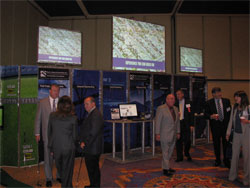 | �
�| Event exhibitors and sponsors contribute to an informative and engaging environment | �
�This year’s meeting was the best yet for the industry-leading construction defect and claims event.
�This year’s seminar concluded on May 13, 2011 with the Construction Defect Community Charitable Foundation Golf Tournament, held at Strawberry Farms Golf Course.
�The Disneyland Hotel in Anaheim, California was the place where more than 1,500 attendees convened for two days of professional development activities and seminars that included CLE workshops and panel discussions of special interest to legal and insurance professionals concerned with construction defect and claims litigation. Key events included “Challenges for Experts in Construction Defect Claims and Litigation,” “Keeping Up with Construction Defect Coverage,” and “Tips for Avoiding the ‘Perfect Storm’ in Handling of Wrap Claims.”
� �  | �
�| Supporting the golf tournament at the 15th hole | �
�This year’s Ollie award was given to George D. Calkins II, Esq. The West Coast Casualty Jerrold S. Oliver Award of Excellence was named in honor of the late Judge Jerrold S. Oliver, and recognizes an individual who is outstanding or has contributed to the betterment of the construction community.
�In addition to being the most comprehensive professional development seminar in the area of construction defects, this year’s seminar was equally valuable as a networking opportunity for members of the industry. People participated in professional development events during the day and then continued networking in the evening at numerous social events. The Lawn Party as well as the legendary Wood, Smith, Henning & Berman events were very well attended. Additional valuable networking events were hosted by a number of industry professionals at the House of Blues, and Tortilla Joe’s.
�As of this writing the 2011, West Coast Casualty's Construction Defect Seminar has applied for or has already received the following continuing education accreditation in the following areas;
�Read the full story…
�For more information about next year’s event, visit West Coast Casualty.
Washington Court Limits Lien Rights of Construction Managers
August 17, 2011 — Douglas Reiser, Builders Counsel
A newly filed, yet unpublished, court opinion opines that a construction manager cannot file a construction lien in Washington state. So, how far reaching is this opinion?
�In the case of Blue Diamond Group Inc. v. KB Seattle 1, Inc., et al, a New York construction manager filed a lien against the Westfield Southcenter Mall in Tukwila, Washington. The lien was filed after the owner of a coffee stand failed to pay Blue Diamond for consulting services used in the construction of a kiosk.
�Blue Diamond served as the owner’s agent, assisting with managing subcontractors, vendors and other tasks. The manager’s tasks also included paying invoices, managing deliveries, setting schedules and other site managerial tasks. Blue Diamond was not registered as a contractor under Washington’s RCW 18.27.
Read the full story…
�Read the court’s decision…
�Reprinted courtesy of Douglas Reiser of Reiser Legal LLC. Mr. Reiser can be contacted at info@reiserlegal.com
South Carolina Legislature Defines "Occurrence" To Include Property Damage Arising From Faulty Workmanship
May 26, 2011 — Tred R. Eyerly, Insurance Law Hawaii
On May 17, 2011, South Carolina passed legislation to combat the restrictive interpretation of what constitutes an "occurrence" under CGL policies. S.C. Code Ann. sec. 38-61-70.
� The legislation reversed a decision by the state's Supreme Court issued earlier this year. See Crossman Communities of North Carolina, Inc. v. Harleysville Mut. Ins. Co., 2011 W.L. 93716 (S.C. Jan. 7, 2011). Crossman had overruled an earlier decision by the South Carolina Supreme Court that holding that defective construction was an “occurrence.” Crossman, however, reversed course, holding that damages resulting from faulty workmanship were the “natural and probable cause” of the faulty work and, as such, did not qualify as an “occurrence.”
�Read the full story…
�Reprinted courtesy of Tred R. Eyerly, Insurance Law Hawaii. Mr. Eyerly can be contacted at te@hawaiilawyer.com
Parking Garage Collapse May Be Due to Construction Defect
November 7, 2012 — CDJ Staff
A parking garage under construction at the Doral campus of Miami Dade College collapsed on October 9. Experts state that the collapse may have been due to errors in the construction process, either in the fabrication of the pre-cast components or in their assembly. The Bradenton Herald quotes Mark Santos, a structural engineer, who “would look at erection procedures ?Äì that’s probably the one question to ask first.”
During the failure, floors separated from the south wall of the structure. The contractor responsible for the garage, Ajax Building Corp, said there was “no indication of any potential cause.”
Read the full story…
Nevada Budget Remains at Impasse over Construction Defect Law
June 1, 2011 — CDJ Staff
Negotiations for the Nevada state budget have stalled over proposals to amend the state’s construction defect laws. Assembly Republicans had offered changes to the law to make it friendlier to contractors; however, after a state Supreme Court ruling that the state could not move a local government entity’s funds into state coffers, pressure has increased on the governor to lift the expiration dates of taxes approved in 2009.
The Reno Gazette-Journal quotes John Madole, a construction industry lobbyist, “We agree with them that you have to address the issue of the attorney fees, and for all practical purposes, they are automatically awarded when anybody brings any kind of suit.”
Speaker of the Assembly, John Oceguera, a Democrat, has proposed a bill that “makes it absolutely crystal clear that the only time you get attorney's fees is if you're the prevailing party.”
Read the full story…
Unfinished Building Projects Litter Miami
November 18, 2011 — CDJ Staff
Buildings born in ambitious development plans that were never brought to completion form a grim reminder of the building bust in Miami, according to an article in the Miami Herald. One project started in 2007 as a residential project, later there were hopes to develop it as a hotel. These plans are ten months old with no work done.
Another project was projected as a 30-story office and commercial tower. Four were built before the project was abandoned. The article describes the site as “squalid.” Another project completed the planned 17 stories, but no work has been done beyond constructing the shell. Once planned as luxury condos, the owner owes more than $30,000 in property taxes.
Each of the three sites profiled in the Miami Herald have become dumping grounds for trash. The building skeletons have also become damaged by the elements. Some abandoned projects have been taken over by homeless people. Businesses near the abandoned properties have been hurt. The buildings also represent failed obligations to subcontractors who have put liens on the properties for work they performed but were never paid for.
Read the full story…