Insurance Company Must Show that Lead Came from Building Materials
August 17, 2011 — CDJ Staff
The Fourth Circuit Court of Appeals for Louisiana has reversed the summary judgment of a lower court in the case of Widder v. Louisiana Citizens Property Insurance Company. Judge Roland L. Belsome wrote the opinion for the panel of three judges. Ms. Widder discovered that her home and its content were contaminated by lead. She applied to her insurer, Louisiana Citizens Property Insurance, which denied her claim.
�In response to Ms. Widder’s suit, LCPIC applied for a summary judgment on the grounds that there was no physical loss and that the policy did not cover defective material, latents defects, and pollution damage.
�The appeals court found that the lead contamination of Widder’s home did meet the standards of a direct physical loss, citing a recent Chinese Drywall case. There, it was found, “when a home has been rendered unusable or uninhabitable, physical damage is not necessary.”
�The lower court addressed only one of LCPIC’s exclusions, addressing only the exclusion on basis of “faulty, inadequate or defective material.” The appeals court noted that the evidence offered at trial does not show that the building materials were the source of the lead. This provided the appeals court with a matter of fact to remand to the lower court.
Read the court’s decision…
Construction Law Client Alert: California Is One Step Closer to Prohibiting Type I Indemnity Agreements In Private Commercial Projects
June 15, 2011 — Haight Brown & Bonesteel, LLP
On June 1, 2011 by majority vote, the California Senate passed Senate Bill 474, which would amend Civil Code section 2782, and add Civil Code section 2782.05. The passage of this new law is a critical development for real estate developers, general contractors and subcontractors because it will affect how these projects are insured and how disputes are resolved.
�Civil Code section 2782 was amended in 2007 to prohibit Type I indemnity agreements for residential projects only. Since 2007, various trade associations and labor unions have lobbied to expand those very same restrictions to other projects. These new provisions apply to contracts, entered into after January 1, 2013, that are not for residential projects, and that are not executed by a public entity. The revisions provide that any provision in a contract purporting to indemnify, hold harmless, and defend another for their negligence or other fault is against public policy and void. These provisions cannot be waived.
�A provision in a contract requiring additional insured coverage is also void and unenforceable to the extent it would be prohibited under the new law. Moreover, the new law does not apply to wrap-up insurance policies or programs, or a cause of action for breach of contract or warranty that exists independently of the indemnity obligation.
�The practical impact of this new law is that greater participation in wrap-up insurance programs will likely result. While many wrap-up programs suffer from problems such as insufficient limits, and disputes about funding the self-insured retention, the incentive for the developer or general contractor to utilize wrap-up insurance will be greater than ever before because they will no longer be able to spread the risk of the litigation to the trades and the trade carriers.
�Read the full story…
�Reprinted courtesy of Steve Cvitanovic of Haight Brown & Bonesteel, LLP.
Landmark San Diego Hotel Settles Defects Suit for $6.4 Million
March 4, 2011 — April 4, 2011 Beverley BevenFlorez - Construction Defect Journal
After five years of legal battles, the condo owners of the El Cortez Hotel building in downtown San Diego settled for $6.4 million, as reported by The San Diego Union-Tribune on March 28, 2011. The Homeowners Association will net just over $3 million from the settlement.
�The litigation may have had an adverse effect on the value of the condos within the El Cortez Hotel building. According to an article by Kelly Bennett of Voice of San Diego, “Many condos in the building originally sold for more than $600,000. Currently, the three units on the market are asking for just more than $200,000, the U-T said.”
�Andrew Berman, the owners’ attorney, told The San Diego Union-Tribune that the five years of litigation included six lawsuits, 200 depositions, and multiple construction tests.
�Read the full story... (San Diego Union Tribune)
�Read the full story... (Voice of San Diego)
Certificate of Merit to Sue Architects or Engineers Bill Proposed
May 3, 2011 — May 3, 2011 Beverley BevenFlorez - Construction Defect Journal
North Carolina may become the twelfth state to require a Certificate of Merit to sue an architect or engineer. If North Carolina Senate Bill 435 (SB435) passes, then plaintiffs when filing a complaint will need to also attach an affidavit of a third-party licensed professional engineer or architect stating that the case has merit.
�SB435 is a short two pages in its current form. The bill states that the “third-party licensed professional engineer or licensed architect shall (i) be competent to testify and hold the same professional license and practice in the same area of practice as the defendant design professional and (ii) offer testimony based upon knowledge, skill, experience, education, training, and practice. The affidavit shall specifically state for each theory of recovery for which damages are sought, the negligence, if any, or other action, error, or omission of the design professional in providing the professional service, including any error or omission in providing advice, judgment, opinion, or a similar professional skill claimed to exist and the factual basis for each such claim. The third-party licensed professional engineer or licensed architect shall be licensed in this State and actively engaged in the practice of engineering or architecture respectively.”
�A few of the amendments allude to disciplining design professionals who certify civil actions that are without merit. The bill has been referred to the Committee on Judiciary I.
�While North Carolina is considering enacting a Certificate of Merit law, eleven other states already require one, including Arizona, California, Colorado, Georgia, Maryland, Minnesota, New Jersey, Oregon, Pennsylvania, South Carolina, and Texas. Christopher D. Montez, a partner with Thomas, Feldman & Wilshusen, LLP, has written a useful summary for each state’s certificate of merit scheme.
�Read the text of SB435
�Track the progress of SB435
�Read more from Christopher D. Montez’s article on Thomas, Feldman & Wilshusen, LLP site
Utah Construction Defect Claims Dependant on Contracts
July 10, 2012 — CDJ Staff
An owner who wants to sue a subcontractor directly may find limited ability to do so under Utah court decisions. Writing on the JDSupra site, Stewart O. Peay and Mark O. Morris of Snell & Wilmer discuss the distinction the Utah courts make between contractor (with whom an owner has direct contracts) and subcontractors (with whom an owner does not). In the Utah courts, construction defect claims must be based on contract, rather than tort. With no contract, there is no way to pursue claims against a subcontractor alone.
They note that the Utah couts do not “accept negligence and negligent misrepresentation claims that many other jurisdictions embrace.” They recommend that in setting up contracts for a construction project, owners should ensure that they are provided with “third-party beneficiary rights to purse claims against subs.” They suggest that “the owner may require his generals to include language in the various subcontracts that incorporates some or all of the terms of the prime contract into the subcontracts.” Additionally they suggest that the owner “require the general to include ‘flow down’ provisions in the various subcontracts.”
Read the full story…
Insurer’s Discovery Requests Ruled to be Overbroad in Construction Defect Suit
October 28, 2011 — CDJ Staff
The US District Court has ruled in the case of D.R. Horton Los Angeles Holding Co. Inc. v. American Safety Indemnity, Co. D.R. Horton was involved in a real estate development project. Its subcontractor, Ebensteiner Co., was insured by ASIC and named D.R. Horton as an additional insured and third-party beneficiary. D.R. Horton, in response to legal complaints and cross-complaints, filed for coverage from ASIC under the Ebensteiner policy. This was refused by ASIC. ASIC claimed that “there is no potential coverage for Ebensteiner as a Named Insurer and/or D.R. Horton as an Additional Insured.” They stated that “the requirements for coverage are not satisfied.”
The case same to trial with the deadline for discovery set at March 1, 2011. ASIC stated they were seeking the developer’s “job file” for the Canyon Gate project. D.R. Horton claimed that ASIC’s discovery request was overbroad and that it would be “unduly burdensome for it to produce all documents responsive to the overbroad requests.”
D.R. Horton did agree to produce several categories of documents, which included:
“(1) final building inspection sign-offs for the homes that are the subject of the underlying litigation;(2) an updated homeowner matrix for the underlying actions; (3) the concrete subcontractor files; (4) the daily field logs for D.R. Horton’s on-site employee during Ebensteiner’s work; (5) documents relating to concrete work, including documents for concrete suppliers; (6) documents relating to compacting testing; (7) documents relating to grading; and (8) D.R. Horton’s request for proposal for grading”
The court found that the requests from ASIC were overbroad, noting that the language of the ASIC Request for Production of Documents (RFP) 3-5 would include “subcontractor files for plumbing, electric, flooring, etc. - none of these being at issue in the case.” The court denied the ASIC’s motion to compel further documents.
The court also found fault with ASIC’s RFPs 6 and 7. Here, D.R. Horton claimed the language was written so broadly it would require the production of sales information and, again, subcontractors not relevant to the case.
Further, the court found that RFPs 8, 10, 11, and 13 were also overbroad. RFP 8 covered all subcontractors. D.R. Horton replied that they had earlier complied with the documents covered in RFPs 10 and 11. The court concurred. RFP 13 was denied as it went beyond the scope of admissible evidence, even including attorney-client communication.
The court denied all of ASIC’s attempts to compel further discovery.
Read the court’s decision…
Homeowners Must Comply with Arbitration over Construction Defects
January 6, 2012 — CDJ Staff
The California Court of Appeals has upheld a decision by the Superior Court of Kern County that homeowners must comply with arbitration procedures in their construction defect claim. The California Court of Appeals ruled on December 14 in the case of Baeza v. Superior Court of Kern County, denying the plaintiff’s petition that the trial court vacate its order.
The plaintiffs in the case are homeowners in various developments built by Castle & Cook. The homes were sold with a contract that provided for “nonadversarial prelitigation procedures, including mediation, and judicial reference.” The homeowners made defect claims and argued that Castle & Cooke failed to comply with statutory disclosure requirements and that some of the contracts violate related statutes.
The appeals court found that there was no ground for appeal of the lower court’s order to continue with prelitigation procedures. The court noted that the plaintiffs could not seek a review of the mediation until a judgment was issued, but that then the issue would be moot. The court felt that there were issues presented that needed clarification, and so they reviewed this case. This was cleared for publication.
The court considered the intent of the legislature in passing the Right to Repair Act, noting that “under the statutory scheme, the builder has the option of contracting for an alternative nonadversarial prelitigation procedure,” as established in Chapter 4. The court noted that Chapter 4 “contains no specifics regarding what provisions the alternative nonadversarial contractual provisions may or must include.”
The plaintiffs contended that the builder was in violation of the standards set out in Section 912, however the court responded that these sections set out one set of procedures, but they concluded that “if the Legislature had intended the section 912 disclosure provisions…it could have made the requirements applicable to all builders by locating them in a section outside Chapter 4.”
Read the court’s decision…
A Downside of Associational Standing - HOA's Claims Against Subcontractors Barred by Statute of Limitations
March 28, 2012 — Bret Cogdill, Colorado Construction Litigation
In multi-family construction defect litigation in Colorado, homeowners associations rely on associational standing to pursue claims affecting more than two units and to bring claims covering an entire development. This practice broadens an association’s case beyond what individual, aggrieved owners would otherwise bring on their own against a developer or builder-vendor. However, reliance on associational standing to combine homeowners’ defect claims into a single lawsuit has its drawbacks to homeowners.
�A recent order in the case Villa Mirage Condominium Owners’ Association, Inc., v. Stetson 162, LLC, et al., in El Paso County District Court, presents an example. There, the HOA unsuccessfully sought a determination from the court that its claims against subcontractors were not barred by the statute of limitations. To do so, the HOAs attempted to apply the Colorado Common Interest Ownership Act (“CCIOA”), which governs the creation and operation of HOAs, and a statute intended to apply to persons under a legal disability.
�Under CCIOA, during the period of “declarant control” the developer may appoint members to the association’s executive board until sufficient homeowners have moved into the development and taken seats on the board.
Read the full story…
��Reprinted courtesy of Bret Cogdill of Higgins, Hopkins, McClain & Roswell, LLC. Mr. Cogdill can be contacted at cogdill@hhmrlaw.com.
Five Years of Great Legal Blogging at Insurance Law Hawaii
December 9, 2011 — CDJ Staff
Our congratulations to Tred Eyerly who has been blogging at Insurance Law Hawaii for five years now. Over the years, he has posted more than five hundred posts and has provided us all with fascinating insights into the laws on insurance coverage. He describes his blog as “a commentary on insurance coverage issues in Hawaii and beyond.” We are grateful that the “beyond” has just in the last few weeks included Colorado, Illinois, Washington, Minnesota, and Rhode Island (about as far from the island of Hawaii as you can get).
You can read his blog at Insurance Law Hawaii.
Insurer Able to Refuse Coverage for Failed Retaining Wall
October 28, 2011 — CDJ Staff
The Eleventh District of the US Court of Appeals has ruled in the case of Nix v. State Farm Fire & Casualty Company. In this case, the Nixes filed a claim after a portion of the retaining wall in their home collapsed and their basement flooded. State Farm denied the claim “on the ground that the policy excluded coverage for collapses caused by defects in construction and for damage caused by groundwater.”
The court reviewed the Nixes’ policy and found that State Farm’s statement did specifically exclude both of these items. In reviewing the lower court’s ruling, the appeals court noted that State Farm’s expert witness, Mark Voll, determined that the retaining wall “lacked reinforcing steel, as required by a local building code, and could not withstand the pressure created by groundwater that had accumulated during a heavy rainfall.” Additionally, a french drain had been covered with clay soil and so had failed to disperse the groundwater.
The Nixes argued that the flooding was due to a main line water pipe, but their opinions were those of Terry Nix and the contractor who made temporary repairs to the wall. “Those opinions were not admissible as lay testimony. Neither Nix nor the contractor witnessed the wall collapse or had personal knowledge about the construction of the Nixes’ home.”
The lower court granted a summary judgment to State Farm which has been upheld by the appeals court.
Read the court’s decision…
History of Defects Leads to Punitive Damages for Bankrupt Developer
March 1, 2012 — CDJ Staff
The South Carolina Court of Appeals has ruled that evidence of construction defects at a developer’s other projects were admissible in a construction defect lawsuit. They issued their ruling on Magnolia North Property Owners’ Association v. Heritage Communities, Inc. on February 15, 2012.
�Magnolia North is a condominium complex in South Carolina. The initial builder, Heritage Communities, had not completed construction when they filed for bankruptcy protection under Chapter 11. The remaining four buildings were completed by another contractor. The Property Owners’ Association subsequently sued Heritage Communities, Inc. (HCI) alleging defects. The POA also sued Heritage Magnolia North, and the general contractor, BuildStar.
�The trial court ruled that all three entities were in fact one. On appeal, the defendants claimed that the trial court improperly amalgamated the defendants. The appeals court noted, however, that “all these corporations share officers, directors, office space, and a phone number with HCI.” Until Heritage Communities turned over control of the POA to the actual homeowners, all of the POA’s officers were officers of HCI. The appeals court concluded that “the trial court’s ruling that Appellants’ entities were amalgamated is supported by the law and the evidence.”
�Heritage also claimed that the trial court should not have allowed the plaintiffs to produce evidence of construction defects at other Heritage properties. Heritage argued that the evidence was a violation of the South Carolina Rules of Evidence. The court cited a South Carolina Supreme Court case which made an exception for “facts showing the other acts were substantially similar to the event at issue.” The court noted that the defects introduced by the plaintiffs were “virtually identical across all developments.” This included identical use of the same products from project to project. Further, these were used to demonstrate that “HCI was aware of water issues in the other projects as early as 1998, before construction on Magnolia North had begun.”
�The trial case ended with a directed verdict. Heritage charged that the jury should have determined whether the alleged defects existed. The appeals court noted that there was “overwhelming evidence” that Heritage failed “to meet the industry standard of care.” Heritage did not dispute the existence of the damages during the trial, they “merely contested the extent.”
�Further, Heritage claimed in its appeal that the case should have been rejected due to the three-year statute of limitations. They note that the first meeting of the POA was on March 8, 2000, yet the suit was not filed until May 28, 2003, just over three years. The court noted that here the statute of limitation must be tolled, as Heritage controlled the POA until September 9, 2002. The owner-controlled POA filed suit “approximately eight months after assuming control.”
�The court also applied equitable estoppel to the statute of limitations. During the time in which Heritage controlled the board, Heritage “assured the unit owners the construction defects would be repaired, and, as a result, the owners were justified in relying on those assurances.” Since “a reasonable owner could have believed that it would be counter-productive to file suit,” the court found that also prevented Heritage from invoking the statute of limitations. In the end, the appeals court concluded that the even apart from equitable tolling and equitable estoppel, the statute of limitations could not have started until the unit owners took control of the board in September, 2002.
�Heritage also contested the jury’s awarding of damages, asserting that “the POA failed to establish its damages as to any of its claims.” Noting that damages are determined “with reasonable certainty or accuracy,” and that “proof with mathematical certainty of the amount of loss or damage is not required,” the appeals court found a “sufficiently reasonable basis of computation of damages to support the trial court’s submission of damages to the jury.” Heritage also claimed that the POA did not show that the damage existed at the time of the transfer of control. The court rejected this claim as well.
�Finally, Heritage argued that punitive damages were improperly applied for two reasons: that “the award of punitive damages has no deterrent effect because Appellants went out of business prior to the commencement of the litigation” and that Heritages has “no ability to pay punitive damages.” The punitive damages were upheld, as the relevant earlier decision includes “defendant’s degree of culpability,” “defendants awareness or concealment,” “existence of similar past conduct,” and “likelihood of deterring the defendant or others from similar conduct.”
�The appeals court rejected all of the claims made by Heritage, fully upholding the decision of the trial court.
Read the court’s decision…
Court Requires Adherence to “Good Faith and Fair Dealing” in Construction Defect Coverage
September 30, 2011 — CDJ Staff
The California Court of Appeals has ruled in the case of Allied Framers, Inc. v. Golden Bear Insurance Company. Allied had been sued in a construction defect case and its primary insurer had become insolvent. Coverage for Allied’s defense was paid for by the California Insurance Guarantee Association through June 8, 2006. When warned that CIGA’s involvement was ending, Allied notified Golden Bear, which declined to provide coverage.
In the matters that followed, Golden Bear claimed that Allied had not exhausted its $1 million in primary insurance. Allied then showed that $1 million had already been paid out in the case. A few months thereafter, Golden Bear offered a $500,000 settlement on behalf of Allied which was rejected. Thereafter, Golden Bear hired new counsel to defend Allied. Golden Bear received, but allegedly did not pay, invoices Allied sent from their former counsel. Golden Bear finally settled the construction defect case for $2 million.
Allied’s original counsel sued Allied for payment. Golden Bear declined coverage. Allied then claimed that Golden Bear liable on several counts, arising from its failure to settle the construction defect action earlier than it did and its failure to pay Allied’s counsel. Golden Bear demurred, arguing that Allied had now exhausted is coverage with the $2 million settlement. The lower court sustained Golden Bear’s demurrer, dismissing Allied’s complaints.
The appeal court reviewed Allied’s seven complaints and sustained most of them. However, the court did reverse the trial court’s order in regard to Allied’s complaint that Golden Bear breached an implied covenant of good faith and fair dealing. The appeals court was not convinced that Golden Bear properly evaluated the settlement demand in the underlying construction defect case. The court found three other ways in which Golden Bear’s actions might show bad faith, in refusing to pay defense fees “after promising [Allied] such costs would be paid in full,” “failing to advise Allied about ‘actual or potential negative consequences of agreeing to the proposed settlement,’” and that their choice of counsel “failed to protect [Allied’s] interests in the negotiation.”
Read the court’s decision…
2011 West Coast Casualty Construction Defect Seminar – Recap
June 1, 2011 — CDJ Staff
� 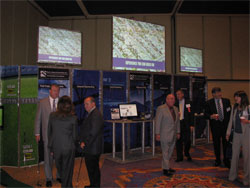 | �
�| Event exhibitors and sponsors contribute to an informative and engaging environment | �
�This year’s meeting was the best yet for the industry-leading construction defect and claims event.
�This year’s seminar concluded on May 13, 2011 with the Construction Defect Community Charitable Foundation Golf Tournament, held at Strawberry Farms Golf Course.
�The Disneyland Hotel in Anaheim, California was the place where more than 1,500 attendees convened for two days of professional development activities and seminars that included CLE workshops and panel discussions of special interest to legal and insurance professionals concerned with construction defect and claims litigation. Key events included “Challenges for Experts in Construction Defect Claims and Litigation,” “Keeping Up with Construction Defect Coverage,” and “Tips for Avoiding the ‘Perfect Storm’ in Handling of Wrap Claims.”
� �  | �
�| Supporting the golf tournament at the 15th hole | �
�This year’s Ollie award was given to George D. Calkins II, Esq. The West Coast Casualty Jerrold S. Oliver Award of Excellence was named in honor of the late Judge Jerrold S. Oliver, and recognizes an individual who is outstanding or has contributed to the betterment of the construction community.
�In addition to being the most comprehensive professional development seminar in the area of construction defects, this year’s seminar was equally valuable as a networking opportunity for members of the industry. People participated in professional development events during the day and then continued networking in the evening at numerous social events. The Lawn Party as well as the legendary Wood, Smith, Henning & Berman events were very well attended. Additional valuable networking events were hosted by a number of industry professionals at the House of Blues, and Tortilla Joe’s.
�As of this writing the 2011, West Coast Casualty's Construction Defect Seminar has applied for or has already received the following continuing education accreditation in the following areas;
�Read the full story…
�For more information about next year’s event, visit West Coast Casualty.
JDi Data Introduces Mobile App for Litigation Cost Allocation
October 23, 2012 — CDJ Staff
JDi Data of Fort Lauderdale, Florida has announced that they are about to release a mobile app for their Vendor Cost Control service. Their mobile app is a web app, and so can be used by customers on the iOS, Android, or Blackberry platforms. It provides a secure link to their database with no risk of releasing proprietary information. JDi Data notes that their product will allow users to “track their full subscribed case listings,” give them “easy access to carrier allocations, payments, and outstanding balances reports,” and to “call or email case managers directly from their mobile application.
�James DeRosa, the founder of JDi Data says that “pushing the boundaries of technology has enabled us to further our goal of providing credible reporting and cost allocation expertise to insured, carriers and the legal community.”
� Read the full story…
�
California Lawyer Gives How-To on Pursuing a Construction Defect Claim
September 13, 2012 — CDJ Staff
On his recently started blog, Harry Kaladjian writes about construction defect litigation in California. He notes that after taking possession, homeowners sometimes notices problems such as “slab cracks in the garage, water leaking through the ceiling, warped floors, improper framing, cracking stucco, etc.” He goes on to note that once that happens, there are series of things homeowners must do.
�The first is to be concerned about the statute of limitations. Then, “once it has been established that defects exist, the homeowner must refer to the ‘Right to Repair Act’ and ‘Calderon Procedures.’” These, he notes set out the “pre-litigation procedures prior to filing a lawsuit.”
Read the full story…
Tacoma Construction Site Uncovers Gravestones
August 11, 2011 — CDJ Staff
The Seattle Times reports that a transit construction project has uncovered about twenty-five gravestones. The area was historically sensitive, as it is in territory once occupied by the Puyallup Tribe. At current report, no human remains have been found and the article cites the project?s archeological consultant as describing the gravestones as “not historically significant.”
Read the full story…
No “Special Relationship” in Oregon Construction Defect Claim
July 10, 2012 — CDJ Staff
Writing on his firm’s blog, Justin Stark discusses recent changes in construction defect claims in Oregon where, as he points out, “courts in Oregon have been lowering legal hurdles that construction defect plaintiffs must overcome in bringing their cases.” He cites a case in which water damage was discovered more than six years after construction was complete. The owners claimed breach of contract and negligence. The trial court found for the contractor, who argued “that there was no ‘special relationship’ with the owners that could support the negligence claim.”
This was overturned on appeal, with the court concluding that if there was a violation of the building code, then the negligence claim could stand. This was appealed to the Oregon Supreme court which concluded that “neither a special relationship nor a statutory standard of care, such as the building code, is necessary to bring a negligence claim here.”
Stark notes that “many forms of construction contract incorporate the phrase ‘workmanlike,’ which implicates the ‘common law standard of care’ in negligence law.
Read the full story…
Mandatory Arbitration Provision Upheld in Construction Defect Case
May 18, 2011 — May 18, 2011 Beverley BevenFlorez - Construction Defect Journal
The Superior Court of New Jersey reversed the decision in Frumer v. National Home Insurance Company (NHIC) and the Home Buyers Warranty Corporation (HBW), stating that the mandatory arbitration provision within the Frumer’s home warranty policy was binding.
�The Frumers alleged that the construction defects were discovered immediately after moving into their million dollar home. After failing to achieve any results from dealing with the builder, they turned to their home warranty. There was some dispute over claims, and a settlement offer was rejected by the Frumers. The Frumers elected to commence litigation rather than utilize the binding arbitration.
�The NHIC and the HBW filed a motion to compel arbitration, however, the motion judge denied the motion: “…the Warranty leaves open the option for [plaintiffs] to commence litigation, which [plaintiffs have] done in this case. The clause also states that ‘the filing of a claim against this limited Warranty shall constitute the election of remedy and shall bar the Homeowner from all other remedies.’ However, the provision does not state that the filing of a claim elects arbitration as the exclusive remedy, and any ambiguity in the language must be inferred against the drafter.”
�The NHIC and the HBW appealed the decision. The Superior Court reversed the decision: “Where, such as here, the homeowner files a claim against the warranty for workmanship/systems defects, the warranty clearly and unequivocally establishes binding arbitration as the exclusive remedy. There is, however, no election of remedies for a dispute involving a major structural defect claim. The warranty clearly and unequivocally establishes binding arbitration as the exclusive remedy.”
�Charles Curley of Halberstadt Curley in Conshohocken, Pa., the local counsel for National Home and Home Buyers, told the New Jersey Law Journal that “the ruling reaffirms New Jersey’s commitment to enforcing arbitration agreements and requiring people to go to mandatory arbitration when the contracts call for it.”
�“At this point, their hope is that the warranty company will do what it's supposed to do — repair covered defects,” Eric McCullough, the Frumer’s lawyer said to the New Jersey Law Journal.
�Read the full story…