


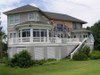











Failure to Meet Code Case Remanded to Lower Court for Attorney Fees
May 24, 2011 — CDJ Staff
Judge Patricia J. Cottrell, ruling on the case Roger Wilkes, et al. v. Shaw Enterprises, LLC, in the Tennessee Court of Appeals, upheld the trial court’s conclusion that “the builder constructed the house in accordance with good building practices even though it was not in strict conformance with the building code.” However, Judge Cottrell directed the lower court to “award to Appellants reasonable attorneys' fees and costs incurred in their first appeal, as determined by the trial court.”
Judge Cottrell cited in her opinion the contract which specified that the house would be constructed “in accordance with good building practices.” However, after the Wilkes discovered water leakage, the inspections revealed that “that Shaw had not installed through-wall flashing and weep holes when the house was built.” The trial court concluded that:
“Separate and apart from the flashing and weep holes, the trial court concluded the Wilkeses were entitled to recover damages for the other defects they proved based on the cost of repair estimates introduced during the first and second trials, which the court adjusted for credibility reasons. Thus, the trial court recalculated the amount the Wilkeses were entitled to recover and concluded they were entitled to $17,721 for the value of repairs for defects in violation of good business practices, and an additional 15%, or $2,658.15, for management, overhead, and profit of a licensed contractor. This resulted in a judgment in the amount of $20,370.15. The trial court awarded the Wilkeses attorneys” fees through the Page 9 first trial in the amount of $5,094.78 and discretionary costs in the amount of $1,500. The total judgment following the second trial totaled $26,973.93.”
In this second appeal, Judge Cottrell concluded, that “the trial court thus did not have the authority to decide the Wilkeses were not entitled to their attorneys” fees and costs incurred in the first appeal.”
Read the court’s decision
HOA Has No Claim to Extend Statute of Limitations in Construction Defect Case
October 28, 2011 — CDJ Staff
The California Court of Appeals ruled on September 20, 2011 in the case of Arundel Homeowners Association v. Arundel Green Partners, a construction defect case involving a condominium conversion in San Francisco. Eight years after the Notice of Completion was filed, the homeowners association filed a lawsuit alleging a number of construction defects, including “defective cabinets, waterproofing membranes, wall-cladding, plumbing, electrical wiring, roofing (including slope, drainage and flashings), fire-rated ceilings, and chimney flues.” Three years of settlement negotiations followed.
Negotiations ended in the eleventh year with the homeowners association filing a lawsuit. Arundel Green argued that the suit should be thrown out as California’s ten-year statute of limitations had passed. The court granted judgment to Arundel Green.
The homeowners then filed for a new trial and to amend its complaint, arguing that the statute of limitations should not apply due to the doctrine of equitable estoppel as Arundel Green’s actions had lead them to believe the issues could be solved without a lawsuit. “The HOA claimed that it was not until after the statute of limitations ran that the HOA realized Arundel Green would not keep its promises; and after this realization, the HOA promptly brought its lawsuit.” The trial court denied the homeowners association’s motions, which the homeowners association appealed.
In reviewing the case, the Appeals Court compared Arundel to an earlier California Supreme Court case, Lantzy. (The homeowners also cited Lantzy as the basis of their appeal.) In Lantzy, the California Supreme Court set up a four-part test as to whether estoppel could be applied. The court applied these tests and found, as was the case in Lantzy, that there were no grounds for estoppel.
In Arundel, the court noted that “there are simply no allegations that Arundel Green made any affirmative statement or promise that would lull the HOA into a reasonable belief that its claims would be resolved without filing a lawsuit.” The court also cited Lesko v. Superior Court which included a recommendation that the plaintiffs “send a stipulation?Ķextending time.” This did not happen and the court upheld the dismissal.
Read the court’s decision…
Limitations of Liability in Subcontractors’ Contracts May Not Be Enforceable in Colorado to Limit Claims by Construction Professionals.
October 23, 2012 — Heidi J. Gassman, Higgins, Hopkins, McLain & Roswell
The Colorado Homeowner Protection Act of 2007 (“HPA”), codified at C.R.S. § 13-20-806(7), specifically voids express waivers of, or limitations on, a residential property owner’s ability to enforce any rights, remedies, and damages provided by law in a construction defect case. Practically speaking, this means that limitation of liability provisions in contracts between construction professionals and residential homeowners are void and will not be enforced in Colorado. The HPA can extend even further, however, to subcontractors on residential projects, as seen in a recent District Court ruling.
The HPA was tested in Thacker v. Gallery Homes, et al., v. Terracon Consultants, Inc., et al., Larimer County District Court Case No. 2007CV1195. Gallery Homes hired Terracon to provide geotechnical and structural engineering services at the Colony Ridge subdivision in Loveland, Colorado. Terracon performed work for Gallery Homes under three separate contracts, each of which included a provision limiting Terracon’s total liability to Gallery Homes.
After the project was completed, two homeowners filed suit against Gallery Homes for alleged construction defects involving movement of their basement floor systems and foundations and damage to porches, patios, garages, and driveways. Gallery Homes sued Terracon as a third-party defendant, and Terracon sought to enforce its limitation of liability provisions via a partial summary judgment motion.
Read the full story…
Reprinted courtesy of Heidi J. Gassman, Higgins, Hopkins, McLain & Roswell, LLC. Ms. Gassman can be contacted at gassman@hhmrlaw.com
Insurers Reacting to Massachusetts Tornadoes
August 11, 2011 — CDJ Staff
The Patriot-Ledger reports that insurers could pay out as much as $200 million to cover homes damaged or destroyed in the tornadoes that hit central and southern Massachusetts in June, 2011. Joseph Murphy, Commissioner of the State Division of Insurance didn?t foresee problems with insurers covering these claims. “At this point, there doesn’t seem to be any one company overexposed in that area,” he told the Patriot-Ledger.
Insurance executives did not think the tornadoes would cause them to raise rates. Steve Chevalier, CEO of NLC Companies, said, “it’s a major event for those impacted by it, but it’s not close to a financial hit to us.”
One insurer noted that the winter weather generated more claims; however the cumulative value of those claims was $15 million.
Read the full story…
Ensuing Loss Provision Found Ambiguous
April 25, 2012 — Tred Eyerly, Construction Law Hawaii
After the insurer denied coverage in a homeowner’s policy for construction defects under various exclusions, the court found the ensuing loss provision was ambiguous.Kesling v. Am. Family Mut. Ins. Co., 2012 U.S. Dist. LEXIS 38857 (D. Colo. March 22, 2012).
After purchasing a home from the sellers, the insureds noticed problems with the deck of the home. Massive cracking appeared, causing lifting and leaking on the deck and water running through the exterior foundation wall into the home. There was also damage to the roof and crawlspace.
The insureds had a homeowner’s policy with American Family, which covered accidental direct physical loss to property described in the policy unless the loss was excluded. They requested coverage for "conditions, defects and damages." American Family denied coverage because wear and tear, as well as damage to foundations, floors and roofs were excluded. The policy did provide coverage, however, for "any resulting loss to property described . . . above, not excluded or excepted in this policy.
When coverage was denied, the insureds sued American Family.
Read the full story…
Reprinted courtesy of Tred R. Eyerly, Insurance Law Hawaii. Mr. Eyerly can be contacted at te@hawaiilawyer.com
Another Las Vegas Tower at the Center of Construction Defect Claims
November 7, 2012 — CDJ Staff
Accusations are coming from both sides over construction defects at a Las Vegas tower, only this time, it’s not the Harmon Towers, it’s Hilton Grand Vacations, which is part of the Planet Hollywood Resort. The project was originally dubbed PH Towers Westgate, and it was developed by Westgate Resorts, which is suing the contractor, Tutor-Saliba for $10 million over late completion and construction defects.
Among the defects Westgate is claiming are cracked floor tiles in the valet lobby and cracks and delamination of the pool deck. Tutor-Saliba argues that the failure of the valet lobby floor is due to Westgate specifying only 1/16th inch-wide grouting, instead of the specified ¬º inch, and Westgate’s refusal to allow expansion joints on the pool deck has lead to problems there. Westgate’s attorney, Robert Schumacher, attributes the problems to “shoddy construction practices.”
According to the article in the Las Vegas Review Journal, plans were only 60 percent complete when construction began, leading to “thousands of change orders.” Despite not meeting an August completion deadline, Tutor-Saliba is claiming it is owed a $1.5 million bonus nevertheless.
Read the full story…
Liability policy covers negligent construction: GA high court
October 31, 2010 — Original article by
Michael Bradford in Business Insurance
ATLANTA—Negligent construction that results in damage to surrounding property constitutes an occurrence under a commercial general liability policy, the Georgia Supreme Court has ruled.
In a 6-1 opinion Monday in
American Empire Surplus Lines Insurance Co. Inc. vs. Hathaway Development Co. Inc., the Georgia high court upheld a lower court ruling that the general contractor’s claim for damage caused by a subcontractor’s faulty plumbing work was covered.
The ruling on construction defects is the latest in number of such cases across the United States
Read Full Story...
Reprinted courtesy of Michael Bradford of Business Insurance.
Virginia Chinese Drywall “property damage” caused by an “occurrence” and number of “occurrences”
August 4, 2011 — CDCoverage.com
In Dragas Management Corp. v. Hanover Insurance Co., No. 2:10cv547 (E.D. Va. July 21, 2011), claimant residential home general contractor and developer DMC filed for arbitration against insured drywall supply and install subcontractor Porter-Blaine seeking damages for (1) the replacement of defective Chinese drywall, and (2) the repair of resulting property to other components of the DMC homes and homeowners’ personal property in seventy-four homes. Porter-Blaine’s CGL insurer Citizens and excess insurer Hanover defended Porter-Blaine in the DMC arbitration.
Read the full story…
Reprinted courtesy of CDCoverage.com
Good and Bad News on Construction Employment
February 10, 2012 — CDJ Staff
The construction industry hit a two-year high in January, with 21,000 jobs added that month. The mild winter is assumed to have helped. According to the General Contractors of America, the construction industry currently employs about 5.57 million people. This is a 21 percent gain over January 2010. Ken Simonson, the chief economist of GCA, noted that “the unemployment rate in construction is still double that of the overall economy.” He said it was not currently clear if “the recent job growth reflects a sustained pickup or merely acceleration of homebuilding and highway projects that normally halt when the ground freezes in December and January.”
Stephen Sandherr, the chief executive officer of the GCA, said that the federal government had to make infrastructure funding a top priority. “Without adequate long-term funding for infrastructure, competitive tax rates and fewer costly regulatory hurdles, the construction industry may lose some of the jobs it gained in the last year.”
Read the full story…
Texas “Loser Pays” Law May Benefit Construction Insurers
June 7, 2011 — CDJ Staff
Under a new law, Texas HB 274, the Texas Supreme Court will be making rules for motions to dismiss and to expedite suits of less than $100,000. The law also contains two “loser pays” provisions. If a lawsuit is found dismissed for having “no basis in fact or law,” the losing side must pay attorney costs. The other provision caps award of attorney fees if plaintiffs reject settlement offers. Texas Lawyer quotes Houston attorney Mike Gallagher as saying this will affect “the practice of everyone who handles significant lawsuits.”
Gregory Marcum, whose practice includes construction defect litigation, plans to contact insurance companies, as the new law may save them money. “It will definitely be a factor in the defense strategy for handling a case.” He notes that “any insurance carrier would want that done.”
Marcum notes that the offer-of-settlement rules only apply when cases go to trial. “Almost all cases settle.”
Read HB 274
Read the full story…
No Coverage for Negligent Misrepresentation without Allegations of “Bodily Injury” or “Property Damage”
February 10, 2012 — Tred Eyerly, Insurance Law Hawaii
Jeff City Industries was the general contractor for a sewer system improvement project in Branson, Missouri. Bituminous Cas. Corp. v. United HRB Gen. Contractors, Inc., 2011 U.S. Dist. LEXIS 145666 (W.D. Mo. Dec. 19, 2011). Branson sued Jeff City, alleging breach of the construction contract for the project. The claims included improperly bedded sewer piping, improper aligning portions of trenching for the sewer piping, improper service line connections to the sewer piping, etc.
Read the full story…
Reprinted courtesy of Tred R. Eyerly, Insurance Law Hawaii. Mr. Eyerly can be contacted at te@hawaiilawyer.com
Fifth Circuit Reverses Insurers’ Summary Judgment Award Based on "Your Work" Exclusion
November 18, 2011 — Tred Eyerley, Insurance Law Hawaii
Application of the facts to the "your work" exclusion was the key to resolving coverage issued in Am. Home Assurance Co. v. Cat Tech L.L.C., 2011 U.S. App. LEXIS 21076 (5th Cir. Oct. 5, 2011).
Ergon Refining, Inc. hired Cat Tech L.L.C. to service a hydrotreating reactor. In January 2005, Cat Tech replaced certain parts in the reactor. After Cat Tech finished the job and left, Ergon noticed a high pressure drop in the reactor, forcing it to be shut down. Cat Tech returned in February 2005, removed, repaired and replaced the damaged parts, and loaded new parts. After completion, a second large pressure drop occurred during the reactor’s start-up process. The reactor was shut down until October 2005, when Ergon hired a different contractor to perform the repair work. Additional damage to the reactor was found.
Read the full story…
Reprinted courtesy of Tred R. Eyerly, Insurance Law Hawaii. Mr. Eyerly can be contacted at te@hawaiilawyer.com
Water District Denied New Trial in Construction Defect Claim
August 16, 2012 — CDJ Staff
The United District Court in Tampa, Florida has rejected the motion by Tampa Bay Water for a new trial in their claims that HDR Engineering negligently designed the C.W. Bill Young Regional Reservoir. The claims went to a jury trial, at the end of nineteen days, the jury deliberated for four hours, finding for HDR Engineering. In rejecting Tampa Bay’s motion, the judge noted that “on close examination, TBW’s contentions have little to do with the factual determinations of the jury, which evidently concluded that TBW did not meet its burden of proof, an unsurprising conclusion, considering HDR’s evidence and the weaknesses in TBW’s evidence.”
The court cited an earlier decision that “a new trial may be granted where the jury’s ‘verdict is against the great, not merely the greater weight of the evidence.’” However, the court found that the jury’s verdict “was well supported by the evidence” and that “TBW’s case showed signs of weakness at virtually every turn.” TBW’s expert “changed his opinion late in the case concerning the culpability of the contractor.” As a result, “Brumund’s change in opinions effectively bolstered HDR’s faulty construction defense.”
TBW also raised claims a pre-trial order prevented it “from introducing evidence that HDR did not fulfill its contractual quality control responsibilities” and that evidentiary rulings prevented “TBW from introducing evidence concerning quality control.” However, TBW dismissed its claims over quality control, then “attempted no less than three times during ?Ķ testimony to introduce evidence of the purpose of the quality control requirement and quality control assurance.”
TBW also contended “that it was precluded from introducing evidence that HDR’s inspectors never reported that the protective layer exceeded three feet after inspecting the work as part of HDR’s quality control duties.” The court noted that “TBW asked these very questions of HDR’s Engineer of Record.” The court also found that testimony regarding photographs of the construction was properly excluded as TBW never entered the photos into evidence.
TBW had made an argument for a jury view. Prior the trial “after discussion, and to their credit, the parties agreed to a jointly-prepared helicopter ‘flyover’ video.” The court noted that “the size and physical characteristics of the reservoir were adequately and effectively depicted in the video.” The hazards the jury did not, then, have to encounter included the narrow, unpaved rim of the reservoir, snakes, and alligators.
Read the court’s decision…
California Construction Bill Dies in Committee
July 21, 2011 — CDJ Staff
AB 20, which its sponsor, Linda Halderman (R-Fresno), stated would discourage class action lawsuits against builders and protect jobs in the construction industry, has died in committee. Although the Business Journal reported in June that Haldeman was promoting the bill during a talk in her district and the bill is still on her web site, the California Assembly reports that the bill failed in committee on March 15, 2011. It is possible that the bill could be reconsidered, but the Assembly Committee on Judiciary sees the bill as responding to issues quieted by SB 800 which gives builders the right to repair alleged defects before any suit can be filed.
Read the full story…
Analysis of the “owned property exclusion” under Panico v. State Farm
March 8, 2011 — March 8, 2011, Colorado Construction Litigation
The U.S. Court of Appeals for the Tenth Circuit recently concluded that the “owned property exclusion” applied to bar coverage for claims of property damage. See Panico v. State Farm Fire and Cas. Co., 2011 WL 322830 (10th Cir. 2011). In Panico, the plaintiffs sold property in Aspen, Colorado to the Taylors, who sued the Panicos upon discovering the property was not as represented. After refusing to defend, the Panicos sued State Farm for breach of contract. The district court concluded that the Taylors’ claims were not covered under the Panicos insurance policies and granted summary judgment in State Farm’s favor. The U.S. Court of Appeals for the Tenth Circuit affirmed.
Mr. Panico built the house on the property as well as several additions to the house. As the Taylors lived in Florida, they primarily relied on their real estate agent and an inspector to ensure the property was acceptable. According to their complaint, the Taylors discovered that the house was “virtually uninhabitable due to serious design and construction defects, mold, rodents, and drainage problems.” Id. at *1. In their complaint, the Taylors asserted three claims for relief against the Panicos based upon misrepresentation and fraudulent concealment about the condition of the property.
Read the full story...
Reprinted courtesy of Heather M. Anderson of Higgins, Hopkins, McClain & Roswell, LLP. Ms Anderson can be contacted at anderson@hhmrlaw.com
Seven Tips to Manage Construction Defect Risk
July 10, 2012 — CDJ Staff
Jody T. Wright looks at “seven strategies being used around the country to identify, manage and mitigate your exposures” in a piece in Business Insurance. Wright, Senior VP, Construction Department Manager for Lockton Companies in Denver, gives seven simple steps from the perspective of a insurer.
His first step is to match your project to your insurance. He suggests keeping the riskier projects separate, noting that from an insurer’s point-of-view, “any project that creates a homeowners association carries a higher potential threat of future litigation.” This leads to his second point: you need to “determine what makes your liability insurer nervous.” In other words, talk with your insurer.
His third point suggests that builders look back and see if there is a pattern of problems that have lead to payouts from your insurer. Keep your insurer happier by making sure these areas don’t continue to be problems. Nor should you look for new problems. He suggests against leading in new technologies.
Three more points deal with being careful about with whom you associate. He tells builders to negotiate their contracts, avoiding clauses that would obligate a builder to “indemnify the owner for the negligent work of others that they did not control.” Avoid subcontractors “with loss patterns that might affect your project and reputation.” Builders should identify “owners with a pattern of suing contractors” adding that risk to the cost of the job. They should also identify “the most effective attorneys and expert witnesses” and get them involved before the litigation starts.
Read the full story…
Late Filing Contractor Barred from Involving Subcontractors in Construction Defect Claim
March 1, 2012 — CDJ Staff
The Colorado Court of Appeals looked at that state’s Construction Defect Action Reform Act in determining if a general contractor could add subcontractors as third-party defendants to a construction defect lawsuit. Shaw Construction, LLC was the general contraction of the Roslyn Court condominium complex, and was sued by the homeowners’ association in a construction defect case. United Builder Services was the drywall subcontractor on the project. MB Roofing had installed roofs, gutters, and downspouts. The certificate of occupancy for the last building was issued on March 10, 2004. The project architect certified completion of all known remaining architectural items in June, 2004.
The HOA filed a claim against the developers of the property on January, 21, 2009. A week later, the HOA amended its complaint to add Shaw, the general contractor. Shaw did not file its answer and third-party complaint until March 29, 2010, sending its notice of claim under the CDARA on March 30.
The subcontractors claimed that the six-year statute of limitations had ended twenty days prior. Shaw claimed that the statute of limitations ran until six years after the architect’s certification, or that the HOA’s suit had tolled all claims.
The trial court granted summary judgment to the subcontractors, determining that “substantial completion occurs ‘when an improvement to real property achieves a degree of completion at which the owner can conveniently utilize the improvement of the purpose it was intended.’”
The appeals court noted that “Shaw correctly points out that the CDARA does not define ‘substantial completion.’” The court argued that Shaw’s interpretation went against the history and intent of the measure. “Historically, a construction professional who received a complaint responded by ‘cross-nam[ing] or add[ing] everybody and anybody who had a part to play in the construction chain.’” The court concluded that the intent of the act was to prevent unnamed subcontractors from being tolled.
The court further rejected Shaw’s reliance on the date of the architect’s certification as the time of “substantial completion,” instead agreeing with the trial court that “the architect’s letter on which Shaw relies certified total completion.”
The appeals court upheld the trial court’s determination that the statute of limitation began to run no later than March 10, 2004 and that Shaw’s complaint of March 29, 2010 was therefore barred. The summary judgment was upheld.
Read the court’s decision…
Save A Legal Fee? Sometimes You Better Talk With Your Construction Attorney
May 10, 2012 — Douglas Reiser, Builders Counsel
I love writing this column, because I think it’s refreshing for contractors to hear that they don’t always need an attorney. Today’s post is the “Un-Save a Legal Fee” because I want to point out a specific illustration of when you definitely need your attorney. Using a construction contract template can be fine, but you always need to consider its application to each project ? or it could bite you in the rear.
Seattle attorney Paul Cressman published a prime depiction of bad contract management, last week. A Florida appellate court struck down a general contractor’s “pay if paid” clause when it became ambiguous because of some incorporated language from its prime contract. Specifically, a clause in the prime contract required the general contractor to pay all subcontractors before receiving payment from the owner, while the general contractor’s “pay if paid” clause required its subcontractors to wait for payment until it arrived from the owner.
Read the full story…