Brown Paint Doesn’t Cover Up Construction Defects
April 25, 2012 — CDJ Staff
In a decision that describes the case as illustrating “the perils that real estate brokers and their agents assume when acting as a dual listing agent to both the buyers and sellers of the same house,” the California Court of Appeals has issued a decision in William L. Lyon & Associates v. The Superior Court of Placer County. Lyon & Associates sought summary judgment to dismiss the claims of the Henleys who bought a home in a transaction where a Lyon agent represented both sides.
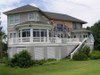
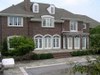
�The prior owners of the home, the Costas, had used a Lyon agent in purchasing their home. When they later sought to sell it, that agent “became aware of some of the house’s defects and problems.” In response, the Costas sought the help of another agent, Connie Gidal, also of Lyons & Associates. Photos taken in the presence of Ms. Gidal show defects of the paint and stucco. The Costas also took the step of painting the house dark brown. During the sale process, “rain caused many of the painted-over defects to reappear.” The Costas “purchased more dark brown paint and covered up the newly visible damage prior to inspection by the Henleys.”
�With the damage concealed, the Henleys bought the home in May 2006. The agreement with Lyons & Associates noted that “a dual agent is obligated to disclose known facts materially affecting the value or desirability of the property to both parties.” Escrow closed on May 9, 2006. The contract with the broker included a two-year limit on the time to bring legal action.
�The Henleys moved in during June 2006, and “began to discover construction defects that had been concealed by the Costas.” In addition to the painted-over stucco problems, the Henleys found that the Costas had “installed quartzite stone overlays on the backyard steps in a manner that caused water intrusion on the house’s stucco walls.”
�In May 2009, the Henleys sued the Costas, Ron McKim Construction, Lyons & Associates, and Ms. Gidal. Their complaint alleged that Lyons & Associates had committed breach of contact, negligence, fraud, breach of fiduciary duty, and negligent nondisclosure in connection with the construction defects. The Costas named Lyons in a cross complaint. Lyons moved for summary judgments on the grounds that the two-year statute of limitations had expired before the complaint and cross-complaint were filed. Both the Henleys and the Costas opposed this claim. The court denied the motion and Lyons appealed.
�The appeals court upheld the denial, noting that the both California Supreme Court decision and later action by the legislature compels real estate brokers and salespersons “to conduct a reasonably competent and diligent visual inspection of the property offered for sale.” The court noted that under California law, brokers have responsibilities to both sellers and buyers. The section of law cited by Lyons applies to seller’s agents. The court rejected the contention by Lyons that they were “cooperating brokers.” The Henleys were “not constrained by the two-year statute of limitations.”
�Lyons contended that even if California’s statute did not apply, there was a contractual limit of two years. The court also rejected this, agreeing with the Henleys that “the two-year limitation period must be extended by the discovery rule.”
�The court noted that “Lyon & Associates may not reap the benefit of a shortened contractual limitation period when its own alleged malfeasance contributed to the delay in the discovery of the buyer’s injury.” The court found that the Henleys could proceed with their breach of contract claim, because, “when a breach of contract is committed in secret, such as the intentional nondisclosure of a real estate broker regarding a previously visible construction defect, the contractual limitations period is properly held subject to the discovery rule.” The court felt that the interpretation favored by the California Association of Realtors would “halve the applicable statute of limitations period.”
�In addition to rejecting Lyon request for summary judgment on the claims made by the Henleys, the court also rejected the request of summary judgment on the claims made by the Costas, concluding that neither claim is time-barred. Costs were awarded to both the Henleys and Costas.
� Read the court’s decision…
�
BHA Expands Construction Experts Group
October 28, 2011 — Bert L. Howe & Associates, Inc. - Corporate Offices
Bert L. Howe & Associates, Inc., one of the nation’s leading construction forensics firms is pleased to announce the expansion of the company’s civil and structural engineering capabilities.
JERRY M. MILES, PE - Mr. Miles has been a licensed civil engineer in California since 1987 and has served as the lead civil engineer on many projects in several states. His experience includes contract administration services as the owner’s representative on a variety of projects including mastered planned communities, residential subdivisions, shopping centers and multi-family residential projects. He has also been involved in providing water quality management plans and storm water pollution prevention plans. Mr. Miles has also served on the Town of Apple Valley’s Building Department Dispute Resolution Board.
His more than 26 years of engineering experience includes geotechnical evaluations, structural design of wood-framed, masonry, and concrete tilt-up buildings, small and large subdivision engineering construction/improvements plans, hydrology/hydraulic reports and design, forensic investigation and expert witness testimony. Mr. Miles has qualified as an expert in numerous jurisdictions and Federal court. He has been called upon to provide deposition testimony on more than twenty-five occasions and has successfully testified at arbitration and trial. Click here to view Mr. Miles’ Current CV.
MATTHEW J. STIEFEL, PE - With a background that spans a multitude of design and new construction projects to catastrophic claims analysis, Mr. Stiefel brings a unique set of credentials and experience to the construction experts group at Bert L. Howe & Associates. Mr. Stiefel has more than 13 years’ experience in civil, structural, and geotechnical engineering; providing design and construction consulting services on a variety of projects that include multi-family and single family dwellings, commercial buildings, transportation facilities, industrial facilities, storm drain channels, water and wastewater pipelines. His engineering experience encompasses multiple disciplines of civil engineering including geotechnical design and evaluation, foundation design, structural design of wood-framed buildings, preparation of grading plans and site drainage analysis. He has provided cause and origin analysis for insurance adjusters on many residential and commercial sites related to issues involving moisture intrusion and mold, foundation movement, site drainage, soil movement, wind damage, and other various losses. Click here to view Mr. Stiefel’s Current CV.
Hospital Construction Firm Settles Defect Claim for $1.1 Million
September 13, 2012 — CDJ Staff
Law360 reports that Bovis Lend Lease has settled claims of $10 million in damages for $1.1 million. Bovis was building three annexes to a hospital in Oklahoma. The hospital alleged that a faulty moisture barrier system lead to damage throughout the hospital.
�Bovis is a division of the Lend Lease Group, a multinational construction firm based Sydney, Australia.
Read the full story…
Wine without Cheese? (Why a construction contract needs an order of precedence clause)(Law Note)
August 11, 2011 — Melissa Brumback
For today’s law note, I’m addressing a comment that came to me last week from Dave O’Hern of Miller O’Hern Construction. Dave writes:
�I am a general contractor doing a fuel tank replacement project for our county. In the specifications there is a spec for a UL 142 tank, on the plans the spec references UL 2085 ? a much more expensive tank. My subcontractor bid the UL 142 tank. The specifications state that the specs and plans are on the same level of precedence.
�The county wants me to furnish the more expensive tank without compensation citing the clause that states the plans and specs are complementary and what is called for by one is binding as if called by all and the most stringent requirement will apply.
Read the full story…
���Reprinted courtesy of Melissa Brumback of Ragsdale Liggett PLLC. Ms. Brumback can be contacted at mbrumback@rl-law.com.
�
Eighth Circuit Remands to Determine Applicability of Collapse Exclusion
January 6, 2012 — Tred Eyerly, Insurance Law Hawaii
The Eighth Circuit determined a jury instruction regarding the applicability of the "all-risk" policy’s exclusion for "collapse" was inadequate. See KAAPA Ethanol, LLC v. Affiliated FM Ins. Co., 2011 U.S. App. LEXIS 22158 (8th Cir. Nov. 3, 2011).
KAAPA had nine large, cylindrical, stainless steel tanks fabricated at its location. Soon after operations began in 2003, some of the tanks experienced unusual movement and began to shift. A geotechnical engineer found "silty clay" had been used for infill instead of compacted granular fill called for in engineering drawings. A year long plan to repair all nine tanks was implemented.
Affiliated’s "all-risk" policy excluded damage caused by faulty workmanship. It also excluded damage caused by settling or cracking. The settling exclusion went on to provide, "This exclusion will not apply to loss or damage resulting from collapse of: a building or structure; or material part of a building or structure." Affiliated denied coverage because of the faulty workmanship and settling exclusions.
Read the full story…
Reprinted courtesy of Tred R. Eyerly, Insurance Law Hawaii. Mr. Eyerly can be contacted at te@hawaiilawyer.com
Lawsuit over Construction Defects Not a Federal Case
August 16, 2012 — CDJ Staff
The United State District Court in California has dismissed the claims of a contractor against the United States government, on the grounds that it was not within the subject matter jurisdiction of the court. The origins of the case are in a related construction defect claim. The current plaintiff, Performance Contracting, Inc., did the lath and plaster work for a building for the Department of Veterans Affairs. After the building was completed, the Veterans Affairs complained to the general contractor, Wynema, Inc., of water intrusion problems.
Wyema and Performance conducted testing and the water intrusion was found to be due to “a variety of design defects and omissions, including: 1) omission of proper window flashing; 2) inadequate waterproof membrane around the windows; 3) inadequate T-molding around the windows; 4) lack of a window sill pan for the windows; 5) lack of any backing in the window framing; 6) lack of any backing for the stucco expansion joints and seams; and 7) failure to require that a performance mock-up of the window assembly and adjacent areas be built and water tested.” Wyema filed a construction defect action against Performance and other subcontractors.
In the current case, Performance claims that Veteran Affairs was negligent, that it “breached its duty to Plaintiff when it provided deficient plants and specifications” and “failed to properly oversee construction and inspect Project work.” The court determined that it could not hear this case, noting that “Federal Courts are presumptively without jurisdiction over civil actions.”
Performance raised its claims under the Federal Tort Claims Act. The judge was not persuaded by this claim, noting that the FTCA does not apply to purported breach of the General Contract. The FTCA waives the government’s sovereign immunity in cases of “injury or loss of property, or personal injury or death caused by the negligent or wrongful act or omission of an employee of the Government while acting within the scope of his office or employment, under circumstances where the United States, if a private person, would be liable to the claimant in accordance with the law of the place where the act or omission occurred.”
Performance was unable to pursue its claims in the Court of Federal Claims as there was no contract between Performance and the government. However, the court noted that Performance’s inability to file suit in the Court of Federal Claims does not open up a path to the District Court. “Litigants are not guaranteed a forum in which to sue the United States.” The court further noted that “if this Court were to accept Plaintiff’s logic, non-parties to contracts, but not parties, would be free to pursue contract claims in the fora of their choosing.”
Read the court’s decision…
Ensuing Losses From Faulty Workmanship Must be Covered�
May 10, 2012 — Tred Eyerly, Insurance Law Hawaii
Coverage for damages resulting from faulty workmanship in the construction of an apartment complex was at issue in The Bartram, LLC v. Landmark Am. Ins. Co., 2012 U.S. Dist. LEXIS 44535 (N.D. Fla. March 30, 2012).
�The owner of the apartments, Bartram, had primary coverage and three layers of excess coverage. Each contract excluded loss from faulty workmanship. The policies provided, however, "if loss or damage by a Covered Cause of Loss results, we will pay for that resulting loss or damage."
�Bartram contended water intrusion occurred because of faulty workmanship, which caused damage to the buildings’ exterior and interior finishes, wood sheathing, framing, balcony systems, drywall ceilings and stucco walls. This damage was separate from the work needed to simply fix the faulty workmanship. Therefore, Bartram argued, the ensuing losses that resulted from the water intrusion was covered.
�The insurer argued the ensuing loss exception was not applicable if the ensuing loss was directly related to the original excluded loss.
� Read the full story…
��Reprinted courtesy of Tred R. Eyerly, Insurance Law Hawaii. Mr. Eyerly can be contacted at te@hawaiilawyer.com
��
“Details Matter” is the Foundation in a Texas Construction Defect Suit
March 1, 2012 — CDJ Staff
The Court of Appeals of Texas has ruled in the case of Barzoukas v. Foundation Design. Mr. Barzoukas contracted with Heights Development to build a house. He subsequently sued Heights Developments and “numerous other defendants who participated in the construction of his house.” Barzoukas eventually settled with all but two defendants, one who went bankrupt and Foundation Design, the defendant in this case. In the earlier phase, Barzoukas made claims of “negligence, negligent misrepresentation, fraud, fraudulent inducement, conspiracy, and exemplary damages in connection with the foundation.”
�Foundation Design had been hired to install 15-foot piers to support the foundation. The engineer of record, Larry Smith, sent a letter to Heights Development noting that they had encountered hard clay stone when drilling. Smith changed the specifications to 12-foot piers. Initially, the City of Houston called a halt to work on the home when an inspector concluded that the piers were too shallow. Heights Development later convinced the city to allow work to continue. Subsequently, experts concluded that the piers were too shallow.
�Foundation Design filed a motion for summary judgment. The trial court granted this, “without specifying the basis for its ruling.” Barzoukas contends the court was in error. Foundation Design contends that “Barzoukas failed to proffer competent evidence establishing that their conduct proximately caused damages.” Further, they did not feel that Smith’s letter gave “rise to viable claims for fraud and fraudulent inducement.”
�One problem the court had was a lack of evidence. The court noted that “the purported subcontract is entirely missing” in the pleadings. The court has no contract between Bazourkas and Heights Development, nor one between Heights Development and either Foundation Design or Smith. The court underscored the importance of this, writing, “details matter.” They found that “the details are largely missing here.” Without the contract, the court found it impossible to determine if “Smith or an entity related to him agreed to indemnify Heights Development for damages arising from Smith’s negligent performance.”
�As the material facts are in dispute, the appeals court found that there were no grounds for a summary judgment in the case. “Pointing to the existence of a contract between Heights Development and Barzoukas, or to the existence of a subcontract, is the beginning of the analysis ? not the end.”
�Foundation Design and Smith also claimed that Barzoukas’s expert did not proffer competent evidence and that the expert’s opinions were conclusory. The trial court did not rule on these claims and the appeals court has rejected them.
�Finally, Barzoukas made a claim that the trial court should not have rejected his argument of fraud and fraudulent inducement. Here, however, the appeals court upheld the decision of the lower court. “Barzoukas did not present evidence supporting an inference that Smith or Foundation Design made a purposeful misrepresentation.
�The court remanded the case to the trial court for reconsideration. One member of the panel, Judge Charles Seymore, upheld the entire decision of the trial court. He dissented with the majority, finding that the economic loss rule foreclosed the claim of negligence.
Read the court’s decision…
Defective Grout May Cause Trouble for Bridges
August 16, 2012 — CDJ Staff
Grout, which was used to protect the steel support cables of the Woodrow Wilson Bridge, may lead to problems instead. The Baltimore Sun reports that the Federal Highway Administration is looking at three dozen bridges in twenty-one states that were built with defective grout. The grout contains high levels of chlorides, which can lead to corrosion. The collapse of pedestrian walkway in Concord, North Carolina was attributed to chloride contamination in the grout.
The grout, SikaGrout 300PT, was advertised as "non-corrosive, does not contain chlorides," but later testing showed that it contained levels that exceeded limits by 400 percent. Throughout the country, about 16 million pounds of this were used. Sika Corp. suspended production of the grout in 2010. If repairs need to be made, it is unclear who will pay.
Read the full story…
A Call to Washington: Online Permitting Saves Money and the Environment
October 28, 2011 — Douglas Reiser, Builders Counsel
Here’s some good news for Oregon contractors: Electronic Permitting is here. That’s right, no more standing in line with folders full of printed submittals and waiting all day for your permit. The click of a few buttons and you are in business. Great news, right? Unfortunately, Oregon isn’t sharing that celebration with Washington. So I say - why not?
Last week, the State of Oregon released its new ePermitting online interface. The website allows contractors, owners and even local building departments to create an account, submit building plans and procure permits. With your account, you can track the progress of submissions, print documents and get posting information.
The state ran a limited test version in the City of Florence since 2009, working out the kinks. Perhaps the most impressive result of the new system is that Oregon tackled the task of coagulating a local process into one central location.
Read the full story...
Reprinted courtesy of Douglas Reiser of Reiser Legal LLC. Mr. Reiser can be contacted at info@reiserlegal.com
Construction Suit Ends with Just an Apology
February 10, 2012 — CDJ Staff
After suing a contractor for failing to complete the remodeling of their home, an Orange County couple has settled for an apology. Douglas J. Pettibone represented the contractor, who had lost his business after a broken neck, multiple surgeries, and an addiction to pain medicine. Mr. Pettibone represented his client pro bone. The case was settled in arbitration by JAMS.
� Mr. Pettibone noted that his client gave “a heartfelt and very moving apology.” The remodeling was completed by another contractor, two years after Thorp Construction stopped work on the project. After the apology, the case was dismissed.
Read the full story…
Construction Company Head Pleads Guilty to Insurance and Tax Fraud
December 20, 2012 — CDJ Staff
The former head of Orients Construction Company and of Melrose Construciton Company, Herlindo Garcia-Merlos, has entered a guilty plea to charges that the gave false informoation to his insurer, New Jersey Manufacturers Insurance Group, for more than three years in order to lower his workers compensation payments. Mr. Garcia-Merlos was able to underpay by more than $315,000 as a result of this deception.
Mr. Garcia-Merlos additionally failed to file tax returns for his companies and underreported his wages on his own tax returns. The State of New Jersey is seeking an eight-year prison term and restitution of more than $400,000.
Read the full story…
Will They Blow It Up?
March 28, 2012 — CDJ Staff
The issues concerning the Harmon Towers building in Las Vegas continue to make their way through the courts. As we noted in a previous piece, Cook County building officials stated that the building could be a hazard if Las Vegas were struck by an earthquake. The question of whether the building will continue to stand is just one of the issues in front of a judge.
�MGM Resorts International argued at a March 13 hearing for permission to implode the Harmon hotel building. They claim that more than 1,700 defects have been discovered in the building and that the building is a public safety hazard. Arguing against demolition, Perini Building Company, the general contractor for the hotel, and its subcontractors are claiming that imploding the building would destroy evidence and prejudice juries in the ongoing construction defect claims. They claim that MGM Resorts wishes to abandon the building due to the economic slowdown. Perini Corp, the contractor for the project, claims that the building can be fixed. Perini claims that MGM’s position in the construction trial would be improved if the building is demolished.
�After Judge Elizabeth Gonzalez heard the four days of testimony on the Harmon Towers building and whether it should be demolished, she scheduled more testimony, with two days in April and an entire week in July. Judge Gonzalez will be deciding whether the building will be torn down, imploded, or left in place.
Read the full story…
�Read the full story…
Contractor’s Home Not Covered for Construction Defects
September 13, 2012 — CDJ Staff
The US District Court in Seattle has rejected most of the claims made by a Des Moines man over insurance coverage for water damage to his home. Judge John C. Coughenour granted summary judgment to Liberty Northwest in Ayar v. Liberty Northwest Insurance Corporation.
�Sayad Ayar was the general contractor for the construction of his house. As a homeowner held a $1.5 million insurance policy from Liberty Northwest (LNW) that excluded “faulty, inadequate, or defective construction.”
�In 2008, less than three years after his house was constructed, Mr. Ayar filed a claim after water leaked through his living room ceiling. LNW hired an engineering firm to investigate the damage. The engineering firm, CASE Forensics, concluded that the water intrusion was due to “the failure to install an adequate and continuous waterproof membrane, flashing, and drainage system within the balcony at the time of construction.” Ayar’s expert attributed the leakage to “damage done to the weather deck waterproofing during a storm event with high winds,” which would be covered under the policy. CASE Forensics reviewed these conclusions and rejected them. LNW denied coverage.
�Further problems lead to further investigations, and in each case, LNW attributed the problems to construction defects. During this process, LNW “authorized Ayar to cut into the ceiling’s drywall in order to assist in determining the source of the water intrusion.” Mr. Ayar moved his family to a rental home. He requested that LNW cover the rental and other other costs.
�LNW’s adjuster concluded that no coverage was available, but recommended paying Mr. Ayar $19,648.68 to reinstall drywall and repair the hole in the ceiling. The insurance company paid $2,000 to cover the cost of cutting into the ceiling. The also claimed the amount of drywall he removed was “excessive” and would not cover his relocation as “his home had been livable and because the loss was not covered.”
�Ayar made four claims to the court in support of the argument that LNW misrepresented “pertinent facts or insurance policy provisions.” The court rejected three of these, noting that as all water damage was excluded, LNW’s citation of other sources of water intrusion was not a misrepresentation. “LNW did not rely on this provision as the reason for denying coverage.” Nor was LNW’s reference to “fungi, wet or dry rot” a misrepresentation. As for their reference to construction defects, it “was clearly appropriate given that the construction defect exclusion was the principal basis or denying the claim.” However, the court found that regarding the removal of drywall, “a triable issue of the facts exists.”
�Ayar also claimed that LNW did not conduct a reasonable investigation, but the court found no evidence to support this conclusion. “This is not a case where the insurer failed to investigate or did so only half-heartedly.” Although the thoroughness of the investigation could not questioned, the court concluded that its timing could. Ayar claimed that LNW engaged in unreasonable delays. LNW counters that the delays were due to “Ayar’s own obstructive behavior and failure to cooperate with LNW’s investigation.”
�The court dismissed all of Ayar’s claims, with the exception of whether LNW should have informed him that they would not pay for drywall repair unless there was damage, and whether LNW’s investigation failed to conclude its investigation within a thirty-day time line.
Read the court’s decision…
Vegas Hi-Rise Not Earthquake Safe
July 12, 2011 — CDJ Staff
If an earthquake hit Las Vegas, the Harmon Tower would not withstand it. A report from Weidlinger Associates told MGM Resorts that “in a code-level earthquake, using either the permitted or current code specified loads, it is likely that critical structural members in the tower will fail and become incapable of supporting gravity loads, leading to a partial or complete collapse of the tower.” The inspection came at the request of county officials, according to the article in Forbes.
�According to Ronald Lynn, directory of the building division in the county’s development services division, “these deficiencies, in their current state, make the building uninhabitable.” The county is concerned about risks to adjacent buildings.
�MGM Resorts is currently in litigation, separate from the stability issues, with Perini Corp., the builders of Harmon Tower.
� Read the full story…
Court Rejects Anti-SLAPP Motion in Construction Defect Suit
September 1, 2011 — CJD Staff
The California Court of Appeals has upheld the denial of an anti-SLAPP motion in Claredon American Insurance Company v. Bishop, Barry, Howe, Haney & Ryder. This case was triggered by a water intrusion problem at a condominium complex, the Terraces at Emerystation, built and sold by Wareham Development Corporation. The insurer, Claredon, retained Risk Enterprise Management as the third party claims administrator. REM retained the law firm Bishop, Barry, Howe, Haney & Ryder. The construction defect case was settled in 2007 and the condo owners moved back by early 2008.
Due to issues with the claims settlement, Claredon filed against REM for “professional negligence, indemnity, apportionment and contribution,” with a cross-complaint that the cross-defendants negligently defended the developer, Wareham.
In response, the cross-defendants filed a motion to strike the cross-complaint under the anti-SLAPP statute. The trial court denied this motion and now this has been upheld by the appeals court.
The court noted that “The fundamental thrust of the cross-complaint is not protected litigation-related speech and petitioning activity undertaken on another’s behalf in a judicial proceeding.”
Read the court’s decision…
Construction Defects Lead to Demolition
May 26, 2011 — CDJ Staff
Ten years after it was built, demolition of Seattle’s McGuire Building has begun, as Jeanne Lang Jones reports in the Puget Sound Business Journal. Construction defects had rendered the 25-story apartment building uninhabitable. The major problem was corroded steel cabling. According to the report, “the building’s owners reached an undisclosed settlement last year with St. Louis-based contractor McCarthy Building Companies.”
�Read the full story…
MGM Seeks to Demolish Harmon Towers
September 1, 2011 — CJD Staff
Citing public safety concerns and the cost of repair, MGM Resorts International is seeking to demolish the unfinished hotel tower. The company has a few hurdles to go through before they start laying the charges to implode the structure. Any plans would have to be approved by not only Clark County officials, but also the district court has an order blocking any activity during litigation between MGM and the general contractor on the project, Perini Building Company.
Architectural Record reports that MGM states it would take “approximately 18 months to conduct test and come up with an approved, permitted design to fix the Harmon.” MGM feels that repairs would then take another two to three years. Perini contends that they could “provide stamped drawings detailing all necessary repairs within three months.” They attribute MGM’s desire to demolish the building as “buyer’s remorse.”
Read the full story…