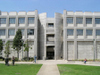
After Construction Defect Case, Repairs to Austin Building
August 2, 2012 — CDJ Staff
The Austin Business Journal reports that remediation is about to begin on Met Center 10, a building that was “at the center of a complex structural defect case.” Claims were made that Grubb & Ellis failed to disclose known structural defects to a group of investors who purchased the building. The brokerage was ordered to pay $6.75 million. Repairs will take an estimated six months at a cost of $3.7 million.
Read the full story…
Louisiana Politicians Struggle on Construction Bills, Hospital Redevelopment
June 16, 2011 — CDJ Staff
Louisiana politicians are still working on a compromise in the state’s construction budget, as reported in the Times-Picayune. Rob Marrianneax, the chair of the Senate Revenue and Fiscal Affairs Committee, removed a $45 million request from Governor Bobby Jindal and added $4 million for projects that Jindal vetoed last year.
�Two senators have formed competing plans to fund redevelopment construction for New Orleans’s Methodist Hospital. Mitch Landrieu, the mayor of New Orleans, hoped for $30 million dollars in state bonds. Senator Cynthia Willard-Lewis proposed an amendment that would supply $1.6 million, while Senator J.P. Morrell has an amendment that would supply $4 million.
�Read the full story…
Construction Employment Rises in Half of the States
December 9, 2011 — CDJ Staff
The Labor Department has noted that half the states and the District of Columbia saw increases in construction employment during the month of October. During the same month, twenty-three states lost construction jobs.
The biggest gains were in North Dakota, Oklahoma, DC, Texas, and California. The biggest losses were in Georgia, New Mexico, Wisconsin, and Florida. There was no change for Alabama.
The chief executive officer of the Association of General Contractors of America, Stephen E. Sandherr, called for more infrastructure development. “Allowing water, transportation and energy networks to deteriorate will hurt construction employment and force taxpayers to spend more later, to fix broken infrastructure.”
Read the full story…
Application of Efficient Proximate Cause Doctrine Supports Coverage
January 6, 2012 — Tred Eyerly, Insurance Law Hawaii
Relying on the efficient proximate cause doctrine, the court determined coverage potentially existed for damage caused by water. Union Sav. Bank v. Allstate Indem. Co., 2011 U.S. Dist. LEXIS 134398 (S.D. Ind. Nov. 21, 2011).
The Tods purchased property that was mortgaged by Union Savings. The Tods obtained a Landlords Policy for the property from Allstate. When the Tods were in default on their loan, Union Savings notified them that foreclosure proceedings would commence. Union Savings sent an appraiser to the property who discovered water in the basement. Water and electricity to the building were off. Union Savings notified Allstate and later filed a formal claim under the mortgagee clause in the Landlords Policy. This clause stated, "A covered loss will be payable to the mortgagees named on the policy declaration. . . ."
Allstate denied coverage, citing exclusions for water damage.
Read the full story…
Reprinted courtesy of Tred R. Eyerly, Insurance Law Hawaii. Mr. Eyerly can be contacted at te@hawaiilawyer.com
South Carolina “occurrence” and allocation
September 1, 2011 — CDCoverage.com
In Crossman Communities of North Carolina, Inc. v. Harleysville Mutual Insurance Co., No. 26909 (S.C. Aug. 22, 2011), insured Crossman was the developer and general contractor of several condominium projects constructed by Crossman’s subcontractors over multiple years. After completion, Crossman was sued by homeowners alleging negligent construction of exterior components resulting in moisture penetration property damage to non-defective components occurring during multiple years. Crossman settled the underlying lawsuit and then filed suit against its CGL insurers to recover the settlement amount. Crossman settled with all of the insurers except for Harleysville. Crossman and Harleysville stipulated that the only coverage issue was whether there was an “occurrence.” The trial court subsequently entered judgment in favor of Crossman, determining that there was an “occurrence.” The trial court also ruled that Harleysville was liable for the entire settlement amount without offset for the amounts paid by the other insurers.
Read the full story…
Reprinted courtesy of CDCoverage.com
Exclusion Bars Coverage for Mold, Fungus�
October 23, 2012 — Tred Eyerly, Insurance Law Hawaii
The court considered whether rain damage to a house was barred by the policy's mold exclusion. Stewart v. State Farm Fire & Cas. Co., 2012 U.S. Dist LEXIS 127804 (D. S.D. Sept. 7, 2012).
�The insureds hired DJ Construction to build a new home. Before construction was completed, it was discovered that DJ Construction and some of its subcontractors had failed to protect the partially constructed house from the elements, which allowed melting snow and rain to intrude into the house. Soon after this discovery, DJ Construction abandoned the project. The house remained incomplete and uninhabitable.
�The insureds sued DJ Construction.
� Read the full story…
��Reprinted courtesy of Tred R. Eyerly, Insurance Law Hawaii. Mr. Eyerly can be contacted at te@hawaiilawyer.com
��
Arbitration Clause Found Ambiguous in Construction Defect Case
October 28, 2011 — CDJ Staff
The California Court of Appeals ruled on September 28 in the case of Burch v. Premier Homes. Ms. Burch bought a home after negotiating various addendums to the contract. The contract was a standard California Association of Realtors contract to which both the buyer and seller made additions. At issue in this case was paragraph 17 of the contract which included that “Buyer and Seller agree that any dispute or claim in Law or equity arising between them out of this Agreement or resulting transaction, which is not settled through mediation, shall be decided by neutral, binding arbitration.”
The seller/defendant’s Addendum 2 “included provisions relating to the arbitration of disputes that may arise.” Ms. Burch’s realtor, Lisa Morrin, told Burch that “she had never seen a proposed contractual provision that would require a home buyer to agree to arbitrate with a builder over construction defects.” Ms. Burch told Morrin that she did not want to buy the property if she would have to give up her rights under California law.
As part of Addendum 2, the buyer had to buy a warranty from the Home Buyers Warranty Corporation. The sale was held up for a while, as Ms. Burch waited for a copy of the warranty. When she received it, she took further exception to Addendum 2. Scott Warren of Premier Homes said he could not sell the property without Addendum 2. Ms. Burch told her realtor that despite the claims made by Mr. Warren that this was for her benefit, she felt it was more to the benefit of Premier Homes. Don Aberbrook of HBW agreed to the clause, contained in the final sentence of Addendum 2, being struck.
Subsequent to buying the home, Burch submitted a claim concerning construction defects. HBW denied the claim and Burch began an action against the defendants. Premier filed a motion to compel arbitration which Burch opposed.
The trial court ruled that the striking out of the arbitration clause at the end of Addendum 2 “created a conflict with respect to the parties’ intent as to the scope of arbitration.” The trial court found that “the parties’ intention was to preserve Burch’s right to make state law claims including her right to a jury trial for any non-warranty claims against the builder.”
The appeals court in their ruling looked at the standard of review and concluded that the purchase agreement was ambiguous and that extrinsic evidence was required to resolve that ambiguity. As the contract contained contradictory provisions as to whether or not arbitration was required, it was necessary for the trial court to examine these claims. The appeals court found that the evidence supported the conclusions of the trial court.
Finally, the appeals court found that “there was no valid agreement to arbitrate disputes.” The court noted that arbitration can only happen by mutual consent and “it is clear that Burch did not enter into an agreement to arbitrate any construction defect disputes she might have.”
Read the court’s decision…
California Supreme Court Finds Associations Bound by Member Arbitration Clauses
September 13, 2012 — CDJ Staff
In a decision with great implications for construction defect suits in California, the California Supreme Court has ruled in Pinnacle Museum Tower Association v. Pinnacle Market Development that arbitration clauses binding on the members of the association are also binding on the association itself. They concluded this, even though “the association did not exist as an entity independent of the developer when the declaration was drafted and recorded.” The opinion, written by Justice Baxter, was joined by four additional justices, with two separate concurrences and a dissenting opinion by Justice Kennard.
�The Pinnacle homeowners sought to bring suit over construction defect claims. In response, the developer filed a motion to compel arbitration. The association argued that the arbitration clause signed by its individual members was not binding on it. The Appeals Court invalidated the arbitration agreement “finding it marked by slight substantive unconscionability and high degree of procedural unconscionability. The Appeals Court determined that “for all intents and purposes, Pinnacle was the only party to the ‘agreement,’ and there was no independent homeowners association when Pinnacle recorded the CC&R’s.” However, the California Supreme Court said that this was “not persuasive in light of the statutory and contract principles in play.”
�The opinion notes that “the Project CC&R’s provides that Pinnacle and, by accepting a deed to any portion of the Project property, the Association and each individual condominium owner agree to submit any construction dispute to binding arbitration in accordance with the FAA.” The Court noted that “settled principles of condominium law establish that an owners association, like its constituent members, must act in conformity with the terms of a recorded declaration,” which, as the Court notes, includes the CC&Rs.
�After finding that the terms were binding on the Association, the Court then questioned whether the terms were “unenforceable as unconscionable,” noting that “the party resisting arbitration bears the burden of proving unconscionability.” But the Court found that “the arbitration provisions of article XVIII are not substantively unconscionable.” Additionally, they found “no support for the Association’s claims of unfairness and absence of mutuality.”
Read the court’s decision…
An Upward Trend in Commercial Construction?
March 28, 2012 — Melissa Dewey Brumback, Construction Law North Carolina
Year-end economic indicators demonstrate that private commercial construction may be increasing in 2012, primarily as demand grows for new projects built in the United States.
�According to an article in Businessweek, the Architecture Billings Index held at 52 in December, indicating a modest expansion in the market. The American Institute of Architects said that the commercial and industrial component of the number climbed to 54.1 in December, the highest in 10 months.
�The monthly survey of U.S.-based architecture firms is one of the main indicators of nonresidential construction, and these numbers suggest that modest improvement may be on the horizon.
�The information is confirmed by data from the Census Bureau that shows that spending on lodging, office, commercial and manufacturing buildings grew 8.2 percent in November to $9.2 billion from a year ago. These types of commercial and industrial projects are historically canaries in the mine and are usually the first part of the industry to improve as the economy expands.
Read the full story…
��Reprinted courtesy of Melissa Dewey Brumback of Ragsdale Liggett PLLC. Ms. Brumback can be contacted at mbrumback@rl-law.com.
Safety Officials Investigating Death From Fall
September 9, 2011 — CDJ Staff
California safety officials are looking into the circumstances surrounding the death of a construction worker who fell from a roof in Tiburon, California. Another worker found Gabriel Vasquez unconscious at the site. Vasquez was later pronounced dead. The State Division of Occupational Safety and Health are trying to determine how Vasquez fell.
Read the full story…
South Carolina Contractors Regain General Liability Coverage
May 20, 2011 — CDJ Staff
PR Newswire reports that the Carolinas Associated General Contractors (CAGC) have successfully persuaded the South Carolina legislature to pass a bill restoring commercial general liability (CGL) coverage. Governor Nikki Hartley signed the legislation on May 17.
�A South Carolina Supreme Court decision given on January 7, 2011, had ended commercial general liability coverage in the state. Senate Bill 431 addressed this decision, restoring the ability of home builders to obtain CGL coverage.
�PR Newswire quotes South Carolina homebuilder, Allen Amsler: “We have seen a lot of legislation with substantial impact to our business over the years. However, I would place this in the same level of importance with the original tort reform legislation. The effects of the Supreme Court’s ruling could have been catastrophic to our industry in South Carolina had it not been for this bill. Thanks to all those in the House, Senate and the Governor’s office who assisted us.”
�Read the full story…
Construction Job Opening Rise in October
December 20, 2012 — CDJ Staff
There was a significant increase in the number of open construction jobs during October, according to a report for the National Association of Home Builders. Working from preliminary data provided by the Bureau of Labor Statistics, the NAHB said that the number of open positions reached “levels and rates last seen in 2007.” As the data is still preliminary, the NAHB noted that the conclusions should be taken with caution.
While there was a spike in job openings, the hiring of people to fill these positions hasn’t caught up with it, and there was a small decline in hires. But to return to the good news, there was also a drop in layoffs in that same period.
Through October, about 8,000 people have been hired in the construction sector. The NAHB notes that this does not correspond with the recent increases with home construction. They suggest that “it may be the case that startups in the home building and remodeling sectors are being missed by the establishment survey.” Another possibility they raise is that already-employed construction workers are simply working more hours.
Read the full story…
Arizona Homeowners Must Give Notice of Construction Defect Claims
August 2, 2012 — CDJ Staff
Chris Combs of the Combs Law Group notes that “the new home construction industry is recovering” and that some of the buyers of these homes “will have claims for construction defects.” But not so quick on filing that claim.
Under Arizona law, as Mr. Combs notes the law “requires that, at least 90 days before filing any lawsuit, the buyer furnish notice by certified mail to the homebuilder specifying in detail the construction defect.” Only if there is no agreement over proposed repair can the homeowner file a lawsuit.
Read the full story…
Another Guilty Plea In Nevada Construction Defect Fraud Case
April 25, 2012 — CDJ Staff
The eleventh defendant has entered a guilty plea in the ongoing federal investigation of construction defect fraud in the Las Vegas area. Mahin Quintero plead guilty to producing a false authentication feature, a misdemeanor. Ms. Quintero’s part in the scheme was to falsely authenticate signatures on loan documents for straw buyers. Ms. Quintero stated in court that she had been ordered to destroy her notary book three years ago. According to her plea bargain, the straw buyers did not appear in front of her when she notarized their signatures. As part of the scheme, the straw buyers would take control of homeowners associates, sending construction defect complaints and repairs to favored firms.�
Read the full story…
�
Eleventh Circuit Asks Georgia Supreme Court if Construction Defects Are Caused by an "Occurrence"
December 20, 2012 — Tred Eyerly, Insurance Law Hawaii
The Eleventh Circuit certified a question to the Georgia Supreme Court, asking whether property damage can constitute an "occurrence" under a CGL policy where its effects are not felt on "other property." HDI-Gerling Am. Ins. Co. v. Morrison Homes, Inc., 2012 U.S. App. Ct. LEXIS 23813 (11th Cir. Nov. 19, 2012).
The general contractor, Taylor Morrison Services, Inc., was covered by a CGL policy issued by Gerling. The policy excluded "expected or intended injury," contractual liability," and business risk exclusions. Morrison was sued by homeowners in a class action suit. Morrison had allegedly omitted four inches of gravel required beneath the base of the concrete foundations by the Uniform Building Code. Thereafter, the houses sustained water intrusion, cracks in the floors and driveways, and warped and buckling flooring.
Gerling defended, but sued Morrison for a declaratory judgment.
Read the full story…
Reprinted courtesy of Tred R. Eyerly, Insurance Law Hawaii. Mr. Eyerly can be contacted at te@hawaiilawyer.com
Architectural Firm Disputes Claim of Fault
May 27, 2011 — CDJ Staff
Lake-Flato Architects has disputed the arbitration panel’s conclusion that problems with the home of Tom Hanks and Rita Wilson were due to design flaws. The firm settled with the couple for $900,000, however the Idaho Mountain Express reports that David Lake said, “the settlement in the case in no way represents that Lake Flato was responsible for faulty design.” The Express reported that “the arbitrators found that problems at the home were attributable to design errors that did not take into account the cold winter climate of the Sun Valley area.”
�Read the full story…
Parking Garage Collapse May Be Due to Construction Defect
November 7, 2012 — CDJ Staff
A parking garage under construction at the Doral campus of Miami Dade College collapsed on October 9. Experts state that the collapse may have been due to errors in the construction process, either in the fabrication of the pre-cast components or in their assembly. The Bradenton Herald quotes Mark Santos, a structural engineer, who “would look at erection procedures ?Äì that’s probably the one question to ask first.”
During the failure, floors separated from the south wall of the structure. The contractor responsible for the garage, Ajax Building Corp, said there was “no indication of any potential cause.”
Read the full story…
Construction Workers Face Dangers on the Job
November 18, 2011 — CDJ Staff
OSHA calculates that for each 33,000 active construction workers, one will die on the job each year, making their risk over the course of their careers at one out of every 200 workers. This puts it many times over OSHA’s definition of “significant risk” of 1 death per 1,000 workers over the course of their careers. According to an article in People’s World, “the main risk of death is from falls.”
At a talk at the American Public Health Association’s meeting, one expert noted that “construction workers make up 6 percent to 8 percent of all workers, but account for 20 percent of all deaths on the job every year.”
Read the full story…