Residential Construction Down in San Diego
September 13, 2012 — CDJ Staff
While new home construction is on the rise in some parts of the country, San Diego has seen a fall, comparing the first seven months of 2012 with the first seven months of 2011, dropping nine percent, according to an article in the San Diego Business Journal. The news isn’t all bad, since although July residential construction dropped sharply, nonresidential construction increased thirty-six percent.
Read the full story…
Insurer Must Defend Claims for Diminution in Value of Damaged Property
June 19, 2012 — Tred Eyerly, Insurance Law Hawaii
The insurer’s duty to defend a developer sued by purchasers of homes for damages for diminution in value of homes was at issue in Mid-Continent Cas. Co. v. Academy Dev., Inc., 2012 WL 1382459 (5th Cir. April 20, 2012).
In the underlying action, plaintiffs alleged the developer knew when it sold the homes that the lake walls were falling and that water was leaking from the lakes onto adjacent home sites. They sought damages for diminution in the value of their homes resulting from the defective lakes. The action was tried in 2008, and the jury returned a verdict for the developer.
Mid-Continent initially defended under a reservation of rights.
Reprinted courtesy of Tred R. Eyerly, Insurance Law Hawaii. Mr. Eyerly can be contacted at te@hawaiilawyer.com
Read the full story…
Insurance Company Must Show that Lead Came from Building Materials
August 17, 2011 — CDJ Staff
The Fourth Circuit Court of Appeals for Louisiana has reversed the summary judgment of a lower court in the case of Widder v. Louisiana Citizens Property Insurance Company. Judge Roland L. Belsome wrote the opinion for the panel of three judges. Ms. Widder discovered that her home and its content were contaminated by lead. She applied to her insurer, Louisiana Citizens Property Insurance, which denied her claim.
�In response to Ms. Widder’s suit, LCPIC applied for a summary judgment on the grounds that there was no physical loss and that the policy did not cover defective material, latents defects, and pollution damage.
�The appeals court found that the lead contamination of Widder’s home did meet the standards of a direct physical loss, citing a recent Chinese Drywall case. There, it was found, “when a home has been rendered unusable or uninhabitable, physical damage is not necessary.”
�The lower court addressed only one of LCPIC’s exclusions, addressing only the exclusion on basis of “faulty, inadequate or defective material.” The appeals court noted that the evidence offered at trial does not show that the building materials were the source of the lead. This provided the appeals court with a matter of fact to remand to the lower court.
Read the court’s decision…
Homeowner Loses Suit against Architect and Contractor of Resold Home
June 14, 2011 — CDJ Staff
The California Court of Appeals in the case of Kizor v. Architects ruled that Mr. Kizor could not make construction defect claims against the architect and contractor of his home, as the defects had caused significant damage to the former owners, and it was they, not Kizor, who could have asserted those claims.
�The background of the case was that John and Miranda Redig hired BRU Architects to design a home. During construction in 2000, they wrote to the roofing supplier complaining about leaks. The leaks were caulked, but the roof continued leaking during rains. The Redigs sold their house to Kizor in 2002, with an addendum to the sale contract protecting themselves from liability for further problems with the roof. “Seller has no responsibility for the condition of the roof and stucco and buyer absolves seller of any liability in connection therewith.”
�In 2006, Kizor sued the architects, contractor, and subcontractor. The defendants moved for summary judgment which was granted. Kizor appealed, and in this current court case, appeal was denied.
�Read the court’s decision
2011 West Coast Casualty Construction Defect Seminar – Recap
June 1, 2011 — CDJ Staff
� 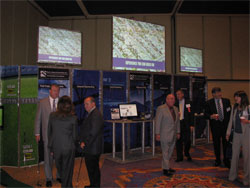 | �
�| Event exhibitors and sponsors contribute to an informative and engaging environment | �
�This year’s meeting was the best yet for the industry-leading construction defect and claims event.
�This year’s seminar concluded on May 13, 2011 with the Construction Defect Community Charitable Foundation Golf Tournament, held at Strawberry Farms Golf Course.
�The Disneyland Hotel in Anaheim, California was the place where more than 1,500 attendees convened for two days of professional development activities and seminars that included CLE workshops and panel discussions of special interest to legal and insurance professionals concerned with construction defect and claims litigation. Key events included “Challenges for Experts in Construction Defect Claims and Litigation,” “Keeping Up with Construction Defect Coverage,” and “Tips for Avoiding the ‘Perfect Storm’ in Handling of Wrap Claims.”
� �  | �
�| Supporting the golf tournament at the 15th hole | �
�This year’s Ollie award was given to George D. Calkins II, Esq. The West Coast Casualty Jerrold S. Oliver Award of Excellence was named in honor of the late Judge Jerrold S. Oliver, and recognizes an individual who is outstanding or has contributed to the betterment of the construction community.
�In addition to being the most comprehensive professional development seminar in the area of construction defects, this year’s seminar was equally valuable as a networking opportunity for members of the industry. People participated in professional development events during the day and then continued networking in the evening at numerous social events. The Lawn Party as well as the legendary Wood, Smith, Henning & Berman events were very well attended. Additional valuable networking events were hosted by a number of industry professionals at the House of Blues, and Tortilla Joe’s.
�As of this writing the 2011, West Coast Casualty's Construction Defect Seminar has applied for or has already received the following continuing education accreditation in the following areas;
�Read the full story…
�For more information about next year’s event, visit West Coast Casualty.
Couple Sues Attorney over Construction Defect Case, Loses
June 10, 2011 — CDJ Staff
The California Court of Appeals has ruled against a couple who sued their lawyer, after they were unhappy with the results of a construction defect case. Craig and Jeanne Petrik sued Mahaffey and Associates for legal malpractice and breach of contract. Their lawyer, Douglas L. Mahaffey, had settled their case for $400,000. The Petricks claimed Mahaffey did not have the authority make an offer to compromise.
In the original case, Mahaffey held back the $400,000 awarded in the settlement until he and the Petricks came to terms on how much of that was owed to Mahaffey. The lower court concluded that the Petricks were due $146,323,18. The jury did not agree with the Petrik’s claim that conditions had been met in which Mahaffey would not be charging them costs.
Judges O’Leary and Ikola wrote the opinion, with the third judge on the panel, Judge Bedworth offering a dissent only on their view of the cost waiver clause.
Read the court’s opinion
Homebuilding on the Rise in Nation’s Capitol
November 7, 2012 — CDJ Staff
Is the homebuilding crunch over in DC? The Washington Post has reported that while new home construction is up throughout the country, in the DC area, construction has reached levels last seen in 2006. From January to August 2012, there were more than 19,000 building permits issued in the area, nearly doubling the number issued by that point in 2011.
While building is on a quicker pace, what’s being built has changed. As compared to 2006, there are more townhomes, condos, and smaller homes being built. The article notes that 11 percent of new construction is condos, while in 2006, it was only 5 percent.
Read the full story…
Court Sends Construction Defect Case from Kansas to Missouri
August 2, 2012 — CDJ Staff
The United State Court of Appeals for the Tenth Circuit has ruled in Mid-Continent Casualty Company v. The Village at Deer Creek Homeowners Association. The prior case was heard by the United States District Court for the District of Kansas. In this appeal, Mid-Continent sought a declaratory judgement. The Village at Deer Creek Homeowners Association moved to dismiss, and the district court had granted this, giving jurisdiction to the Missouri state courts.
The homeowners association had sued Greater Midwest Builders, Ltd., who had constructed the subdivision, in the Kansas state courts. The suit ended with a verdict against Greater Midwest for more than $7 million. The association and other plaintiffs in that case filed for equitable garnishment against State Auto, Mid-Continent, and Greater Midwest. State Auto removed the garnishment action to federal court in Missouri. Mid-Continent moved to sever the actions against it and transfer the case to the District of Kansas.
Subsequently, the plaintiffs filed a notice of voluntary dismissal in the Western District of Missouri. A second garnishment action followed in which Mid-Continent was named as an additional plaintiff. State Auto again removed to the Western District of Missouri, while Mid-Continent moved to sever and transfer to the District of Kansas. The Kansas court granted the association’s motion to dismiss.
In the appeal, Mid-Continent sought a declaratory judgment. This was denied by the appeals court. The district court “concluded that the Missouri courts were better situated to provide complete relief to all parties involved in the coverage dispute.” The appeals court affirmed the association’s movement to dismiss. Mid-Continent’s motion was denied as moot.
Read the court's decision…
Texas Court of Appeals Conditionally Grant Petition for Writ of Mandamus to Anderson
April 25, 2011 — April 25, 2011 Beverley BevenFlorez - Construction Defect Journal
The Texas Court of Appeals conditionally grant mandamus relief to Anderson Construction Company and Ronnie Anderson (collectively “Anderson”)… from the trial court in a construction defect lawsuit filed by Brent L. Mainwaring and Tatayana Mainwaring. See Tex. Prop. Code Ann. 27.001-.007 (West 2000 & Supp. 2010). Relators contend the trial court abused its discretion by compelling discovery while the case was abated by operation of law.
�The Court of Appeals opinion describes what led up to the proceedings: “The Mainwarings’ original petition identified certain defects in their Anderson-constructed home. Those defects concerned the roof trusses and framing, air conditioning, mortar and masonry, exterior doors and windows, and weep holes. With respect to the five areas of defects identified in their original petition, the Mainwarings gave Anderson the statutorily required notice on January 13, 2010. After implementing agreed extensions, Anderson made an offer of settlement for the defects the Mainwarings identified in their notice. Almost eight months later, the Mainwarings filed an amended petition adding defects they had not included in their original petition and notice. The additional defects the Mainwarings included in their amended petition had not been addressed by Anderson’s offer of settlement.”
�Following these events, Anderson claimed the Mainwarings did not respond in writing to their settlement offer. “Anderson filed a verified plea in abatement on December 2, 2010. In the trial court, Anderson claimed that the Mainwarings failed to respond in writing to Anderson’s settlement offer, as required by Section 27.004(b) of the RCLA. See Tex. Prop. Code Ann. 27.004(b)(1). The Mainwarings moved to compel discovery responses from Anderson. The Mainwarings alleged that they rejected Anderson’s settlement offer, and that if their response was insufficient, they contend that Anderson’s offer was rejected by operation of law on the twenty-fifth day after the Mainwarings received it. See Tex. Prop. Code Ann. 27.004(i). The Mainwarings’ motion to compel was not supported by affidavit. See Tex. Prop. Code Ann. 27.004(d)(2). On January 13, 2011, Anderson filed a verified supplemental plea in abatement. Anderson alleged that the Mainwarings failed to provide written notice concerning the newly alleged defects and complained the Mainwarings were attempting to circumvent the inspection and resolution procedure of the RCLA. Over Anderson’s objection that the lawsuit had been abated, the trial court granted the Mainwarings’ motion to compel discovery.”
�After listening to both sides, the Court of Appeals offered this reasoning for their opinion: “The parties do not dispute that Anderson inspected the property before the Mainwarings alleged the existence of additional defects in their amended pleading, nor do the Mainwarings claim that Anderson has been given an opportunity to inspect the additional defects the Mainwarings identified in their amended pleadings. We conclude the trial court did not have the discretion to deny or lift the abatement until the Mainwarings established their compliance with the statute. In other words, the Mainwarings are required to provide Anderson a reasonable opportunity to inspect the additional defects identified by their amended pleading, which will allow Anderson the opportunity to cure or settle with respect to the newly identified defects.”
�The Court of Appeals spoke directly on the issue of mandamus relief: “The Mainwarings contend that mandamus relief is not available because the trial court’s ruling does not prevent Anderson from making settlement offers during the discovery process. ‘An appellate remedy is “adequate” when any benefits to mandamus review are outweighed by the detriments.’ In re Prudential Ins. Co. of Am., 148 S.W.3d 124, 136 (Tex. 2004). The failure to abate a case is typically not subject to mandamus. See In re Allstate Cnty. Mut. Ins. Co., 85 S.W.3d 193, 196 (Tex. 2002) (citing Abor v. Black, 695 S.W.2d 564, 567 (Tex. 1985)). In this case, however, the case was abated by operation of law. By ignoring the statutory abatement, the trial court interfered with the statutory procedure for developing and resolving construction defect claims. See In re Kimball Hill Homes Tex., Inc., 969 S.W.2d 522, 525 (Tex. App. Houston [14th Dist.] 1998, orig. proceeding) (An appeal provides an inadequate remedy for the trial court’s failure to observe automatic abatement pursuant to the RCLA.). The benefits of mandamus review are not outweighed by the detriments of mandamus review in this case.“
�In conclusion, “The trial court had no discretion to compel discovery while the case was abated, and Anderson, who has been compelled to respond to discovery during a period the case was under an automatic abatement, has no adequate remedy on appeal. Accordingly, we conditionally grant the petition for writ of mandamus. The writ will issue only if the trial court fails to vacate its order of February 3, 2011, and fails to refrain from proceeding with the case until a motion to reinstate is filed that establishes compliance with the notice and inspection requirements of the Residential Construction Liability Act.”
�Read the trial court’s decision…
Lockton Expands Construction and Design Team
July 19, 2011 — CDJ Staff
Lockton Companies, LLC, the largest privately held independent insurance broker, has announced that it is expanding its construction and design team with the hiring of Karen Erger and Tom Miller.
�Ms. Erger will provide professional liability practice management, loss prevention, contract and complex claims management consulting services to Lockton's architectural, engineering and construction clients in her role as Vice President, Director of Practice Management. Her background includes construction litigation at a leading construction law firm, professional liability claims defense and claims consulting for major professional liability underwriters.
�Miller joins Lockton as a Senior Vice President within the Design and Construction Unit. His role will be dedicated to serving the needs of engineering, architecture and construction firms performing services around the globe. He has spent more than 15 years concentrating on professional liability for design professionals and contractors in multiple roles. He previously managed the professional liability underwriting of one of the largest construction insurers and has developed numerous manuscript insurance products as well as focused on strategic planning to enhance business unit opportunities.
� Read the full story…
Contractor Manslaughter? Safety Shortcuts Are Not Worth It
August 11, 2011 — Douglas Reiser, Builders Counsel
It’s been a while since I discussed the importance of safety. But, a recent article on ENR.com compelled this brief article. Don’t shortcut safety — you could be facing serious criminal repercussions.
�A New York crane company owner and one of his employees are each facing a second-degree manslaughter charge for the death of two construction workers.  The charges stem from the collapse of a crane in New York City. The district attorney determined that the crane owner cut a few corners to reduce its operation costs, significantly sacrificing safety.
�Another example was the 2010 trial of another New York crane operator who was charged with manslaughter. In that case, the criminal charges failed to stick, but an administrative judge found that the contractor used a damaged sling to support the steel collar binding the tower-crane mast to the 18th floor of a high-rise building being constructed. The company also used four slings instead of the eight, as specified by the crane manufacturer; improperly attached the slings and failed to pad or soften them.
Read the full story…
��Reprinted courtesy of Douglas Reiser of Reiser Legal LLC. Mr. Reiser can be contacted at info@reiserlegal.com
Construction Worker Dies after Building Collapse
November 18, 2011 — CDJ Staff
A Bronx construction worker died when the pillars gave way in the basement where he was working. The two-story commercial building collapsed, burying Mr. Kebbeh under about six feet of rubble. The New York Times reports that firefighters dug him out with their bare hands. Mr. Kebbeh was taken to Jacobi Medical Center where he died. Two other construction workers escaped unharmed.
Read the full story…
No Coverage for Counterclaim Alleging Construction Defects Pled as Breach of Contract
September 13, 2012 — Tred Eyerley, Insurance Law Hawaii
The Colorado Court of Appeals considered whether counterclaims against the insured for alleged faulty construction work were based in contract or constituted allegations of an "accident" under the policy. TCD, Inc. v. Am. Family Mutual Ins. Co., 2012 WL 1231964 (Colo. Ct. App. April 12, 2012).
�The developer, Frisco Gateway Center, LLC, contracted with TCD, the general contractor, to construct a building. TCD, in turn, subcontracted with Petra Roofing to install the roof. The subcontract required Petra to "indemnify, hold harmless, and defend" TCD against claims arising out of resulting from the performance of Petra's work on the project. Petra was also required to name TCD as an additional insured on its CGL policy.
�After a dispute arose between TCD and Gateway regarding payment and performance on the project, TCD sued Gateway and other parties seeking payment. Gateway counterclaimed against TCD for breach of contract and negligence. TCD demanded coverage from Petra's insurer, but coverage was denied.
Read the full story…
��Reprinted courtesy of Tred R. Eyerly, Insurance Law Hawaii. Mr. Eyerly can be contacted at te@hawaiilawyer.com
�
Australian Group Seeks Stronger Codes to Combat Dangerous Defects�
October 23, 2012 — CDJ Staff
The Owners Corporation Network, a group that represents condominium owners in Australia, has raised concerns about building defects in high-rise building that can lead to safety problems. The group prepared a statement which would strengthen the rights of owners, but the government official, Fair Trading Minister Anthony Roberts, declined to sign it. A spokesperson for the group cited a fatal fire at a Sydney high rise, noting that “there had been issues of certification which has been a concern of the Owners Corporation Network.” The Australian Broadcasting Network reports that the government will be reviewing the laws concerning high-rise apartment buildings.
� Read the full story…
�
Green Buildings Could Lead to Liabilities
March 28, 2012 — CDJ Staff
Attempts to build “green,” reducing energy costs and increasing the use of sustainable building materials, may lead to more lawsuits, according to a report issued by the British Columbia Construction Association. The report warned those who were going to build green look into the implications. The report looked at the result of green building practices and requirements adopted in the United States.
�The report warns that “the use of novel, less harmful building material or new construction techniques may give rise to liability due to: contractor inexperience with installation; lack of long-term evaluation of green materials; lack of understanding of how new building materials may impact existing traditional building systems; or warranties provided unintentionally about the durability or effectiveness of unproven materials or techniques.”
�Manley McLachlan, president of the BCAA noted that they are aware of “legal action around the performance of the buildings,” noting that while fast-growing trees help toward LEED certification, their wood is more prone to mold. He also felt that low-VOC paints needed more testing to prove their durability as exterior finishes.
Read the full story…
Homeowners Not Compelled to Arbitration in Construction Defect Lawsuit
January 6, 2012 — CDJ Staff
A California appeals court has ruled that developers cannot enforce CC&Rs in a case where a developer cited an arbitration clause it had inserted into the CC&R. The homeowners are alleging construction defect and wished to sue the developer who claimed a right to this under the CC&Rs.
The Marina del Rey Argonaut reports that particular appeal dealt only with whether the developer could compel arbitration. The underlying construction defect issues will subsequently have to be determined at trial.
The attorney for the homeowners’ association, Dan Clifford, noted that “arbitration has to be agreed to by both parties.” The covenant was drafted by the developer and in addition to requiring arbitration, it had a clause that it could not be amended without the consent of the developers. The court ruled that CC&Rs “can be enforced only by the homeowners association, the owner of a condominium or both.”
Read the full story…
New Safety Standards Issued by ASSE and ANSI
March 28, 2012 — Melissa Dewey Brumback, Construction Law North Carolina
The American National Standards Institute (ANSI) and the American Society of Safety Engineers (ASSE) have recently announced their approval of two new safety standards to enhance construction site safety.
�The two new standards, which are set to take effect during June 2012, are the ANSI/ASSE A10.1-2011 Pre-Project and Pre-Task Safety and Health Planning for Construction and Demolition Operations, and the ANSI/ASSE A10.26-2011 Emergency Procedures for Construction and Demolition Sites.
�The new A10.1-2011 standard was designed to assist construction owners, contractors, and designers by ensuring that safety and health planning were standard parts of their pre-construction planning. It is also intended to help owners of construction sites to establish a process for evaluating constructor candidates with regard to their safety and health performance planning.
�The A10.26 standard applies to emergency situations, including fires, collapses, and hazardous spills. The standard deals with emergency rescue, evacuation, and transportation of injured workers, and also plans for coordinating with emergency medical facilities ahead of potential disasters.
� Read the full story…
���Reprinted courtesy of Melissa Dewey Brumback of Ragsdale Liggett PLLC. Ms. Brumback can be contacted at mbrumback@rl-law.com.
�
Ambitious Building Plans in Boston
November 18, 2011 — CDJ Staff
Although most are unlikely to change the Boston skyline, there are several large projects on the drawing boards. The site BostInnovation covered ten of them in a recent post. Downtown Boston will be the site of several of these large projects, including three towers to be added to the Christian Science Plaza, a 404-unit residential tower in the Theater District, and perhaps the largest of these projects, a 47-story tower to be built over Copley Plaza, which will tower over the adjacent buildings. None of the planned buildings will challenge the Hancock Tower’s 60 stories.
Read the full story…