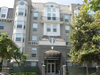
The Maryland Court of Special Appeals has ruled that condominium association boards have a duty to “properly pursue any claims,” overturning the decision of a lower court that said that it had no legal duty to file suit. Tom Schild, writing at Marylandcondominiumlaw.net, writes about Greenstein v. Avalon Courts Six Condominium, Inc.
In this case, the condominium board waited six years after residents complained about water intrusion problems before suing the developer. The court ruled that the suit could not be filed, as the statute of limitations was only three years. After residents were assessed for the repairs, homeowners sued the board, arguing that their delay lead to the need for the special assessment.
After overturning the decision, the Court of Special Appeals has asked the trial court to review the negligence claim.
Under a new law, Texas HB 274, the Texas Supreme Court will be making rules for motions to dismiss and to expedite suits of less than $100,000. The law also contains two “loser pays” provisions. If a lawsuit is found dismissed for having “no basis in fact or law,” the losing side must pay attorney costs. The other provision caps award of attorney fees if plaintiffs reject settlement offers. Texas Lawyer quotes Houston attorney Mike Gallagher as saying this will affect “the practice of everyone who handles significant lawsuits.”
�Gregory Marcum, whose practice includes construction defect litigation, plans to contact insurance companies, as the new law may save them money. “It will definitely be a factor in the defense strategy for handling a case.” He notes that “any insurance carrier would want that done.”
�Marcum notes that the offer-of-settlement rules only apply when cases go to trial. “Almost all cases settle.”
�Coverage of the ongoing litigation concerning the Harmon Hotel continues to proliferate. Architectural Record and a number of other news outlets continue to provide additional details and coverage of the matter. Chief among the conditions alleged are improperly installed reinforcing steel inside link beams on 15 floors. MGM Claims that the conditions amount to hundreds of millions of dollars in damages, while Perini (the builder) indicated in a July 12th statement that the buildings problems are related to the design, and the they are “fixable.”
�There is significant speculation that MGM Resorts International isn’t interested in repairing the hotel due to a glut of hotel rooms attendant to the troubled economy. In a statement Tuesday Perini reportedly stated that “Repairing and opening the Harmon would only create a greater glut of unused hotel rooms for MGM,” “If market conditions were better and MGM found that demand existed for the Harmon hotel rooms, MGM would not be claiming that the Harmon is unstable.”
�MGM asserts that Perini failed to ”properly construct” the project. Clark County’s Department of Development Services has reportedly asked MGM to provide a plan to fix the project by August 15th.
�The Harmon is part of the $8.5 billion CityCenter project that opened in the fourth quarter of 2009 and is jointly owned by MGM Resorts and Dubai World.
�Prior reports indicated that the owner (MGM) had considered razing the entire project. The future of the project remains uncertain.
Construction Defect Not a RICO Case, Says Court
August 4, 2011 — CDJ Staff
The US District Court of North Carolina has rejected an attempt by a homeowner to restart her construction defect claim by turning it into a RICO lawsuit. Linda Sharp, the plaintiff in the case of Sharp v. Town of Kitty Hawk, attempted to amend a claim under the Racketeer Influenced and Corrupt Organizations Act (RICO) and argued that her case belonged in the federal courts.
Ms. Sharp sued in November, 2010 claiming construction defects. She sued in federal court, although the court noted that as she and most of the defendants are citizens of North Carolina, the state court would have been the appropriate jurisdiction. Further, the court noted that one federal claim Sharp made was dismissed with prejudice, leaving only the state law claims. These the court dismissed without prejudice, declining to exercise jurisdiction over North Carolina law.
�After the dismissal, Ms. Sharp attempted to amend her complaint after the deadline. To do so, according to the court, she would be required to obtain consent from defendants or leave of the court. She did neither.
�In his opinion, Judge W. Earl Britt rejected her motion for leave to amend. He also granted the defendants’ motion to dismiss. The clerk was directed to close the case.
� Read the court’s decision…
Minnesota Starts Wide-Ranging Registration of Contractors
July 10, 2012 — CDJ Staff
Minnesota has replaced its Independent Contractor Exemption Certificate program with the Contractor Registration Pilot Project, according to an article in the Martindale-Hubble Legal Library by Michael B. Lapicola. Mr. Lapicola notes that “it will be a violation of the law to contract with or perform construction services for another person without first being registered with the Pilot Project, or to contract with or pay another person to perform construction services if the other person is not registered with the Pilot Project. There are, however, quite a few exceptions, including those who are currently registered with the earlier program. Additionally, independent contractors who do not register can avoid the fine (up to $2,000) by registering within thirty days of fines being levied. Individuals and firms that do not perform building construction or improvements are exempt from the hiring aspects of the statute.
Minnesota’s goal is to “assist state agencies to investigate employee misclassification in the building industry.” Employees of construction firms do not individually register. Rather, the intent of the of law is to stop those who would “require any individual through coercion, misrepresentation or fraudulent means to adopt independent contractor status” or to “knowingly misrepresent or misclassify an individual as an independent contractor.”
Read the full story…
Court Requires Adherence to “Good Faith and Fair Dealing” in Construction Defect Coverage
September 30, 2011 — CDJ Staff
The California Court of Appeals has ruled in the case of Allied Framers, Inc. v. Golden Bear Insurance Company. Allied had been sued in a construction defect case and its primary insurer had become insolvent. Coverage for Allied’s defense was paid for by the California Insurance Guarantee Association through June 8, 2006. When warned that CIGA’s involvement was ending, Allied notified Golden Bear, which declined to provide coverage.
In the matters that followed, Golden Bear claimed that Allied had not exhausted its $1 million in primary insurance. Allied then showed that $1 million had already been paid out in the case. A few months thereafter, Golden Bear offered a $500,000 settlement on behalf of Allied which was rejected. Thereafter, Golden Bear hired new counsel to defend Allied. Golden Bear received, but allegedly did not pay, invoices Allied sent from their former counsel. Golden Bear finally settled the construction defect case for $2 million.
Allied’s original counsel sued Allied for payment. Golden Bear declined coverage. Allied then claimed that Golden Bear liable on several counts, arising from its failure to settle the construction defect action earlier than it did and its failure to pay Allied’s counsel. Golden Bear demurred, arguing that Allied had now exhausted is coverage with the $2 million settlement. The lower court sustained Golden Bear’s demurrer, dismissing Allied’s complaints.
The appeal court reviewed Allied’s seven complaints and sustained most of them. However, the court did reverse the trial court’s order in regard to Allied’s complaint that Golden Bear breached an implied covenant of good faith and fair dealing. The appeals court was not convinced that Golden Bear properly evaluated the settlement demand in the underlying construction defect case. The court found three other ways in which Golden Bear’s actions might show bad faith, in refusing to pay defense fees “after promising [Allied] such costs would be paid in full,” “failing to advise Allied about ‘actual or potential negative consequences of agreeing to the proposed settlement,’” and that their choice of counsel “failed to protect [Allied’s] interests in the negotiation.”
Read the court’s decision…
Is There a Conflict of Interest When a CD Defense Attorney Becomes Coverage Counsel Post-Litigation?
September 1, 2011 — Chad Johnson of Higgins, Hopkins, McLain & Roswell, LLC
In Weitz Co., LLC v. Ohio Cas. Ins. Co., the U.S. District Court for the District of Colorado was asked to rule on a motion to disqualify counsel in an insurance coverage action. 11-CV-00694-REB-BNB, 2011 WL 2535040 (D. Colo. June 27, 2011). Motions to disqualify counsel are viewed with suspicion, as courts “must guard against the possibility that disqualification is sought to ‘secure a tactical advantage in the proceedings.’” Id. at *2 (citing Religious Technology Center v. F.A.C.T. Net, Inc., 945 F. Supp. 1470, 1473 (D. Colo. 1996).
Weitz Company, LLC (“Weitz”) is a general contractor and defendant in an underlying construction defect suit which had concluded before the action bringing rise to this order. In the underlying action, Weitz made third-party claims against subcontractors, including NPW Contracting (“NPW”). Weitz was listed as an additional insured under NPW’s policies with both Ohio Casualty Insurance Company and Mountain States Mutual Casualty Company (collectively “the Carriers”). The Carriers accepted Weitz’s tender of defense under a reservation of rights. However, neither insurance carrier actually contributed to Weitz’s defense costs in the underlying action. At the conclusion of the construction defect action, the parties unsuccessfully attempted to apportion the attorney’s fees and costs. Eventually, Weitz brought suit against the recalcitrant carriers. The Lottner firm, which had previously represented Weitz in the underlying construction defect action, continued to represent Weitz in this coverage action.
Read the full story…
Reprinted courtesy of Higgins, Hopkins, McLain & Roswell, LLC. Mr. Johnson can be contacted at johnson@hhmrlaw.com
General Contractor/Developer May Not Rely on the Homeowner Protection Act to Avoid a Waiver of Consequential Damages in an AIA Contract
August 4, 2011 — Higgins, Hopkins, McLain & Roswell, LLC
Recently, in Caribou Ridge Homes, LLC v. Zero Energy, LLC, et al., Case No. 10CV1094, Boulder County District Court Judge Ingrid S. Bakke entered a ruling and order on the Plaintiff’s Motion for Determination of Question of Law Pursuant to C.R.C.P. 56(h) on Issue of Damages. The Order found that the Plaintiff was not a homeowner intended to be protected by the Homeowner Protection Act (the “HPA”) and thus could not pursue its claims for consequential damages against Defendant.
�By way of background, on June 18, 2008, Plaintiff Caribou Ridge Homes, LLC (“Caribou”) entered into a Standard Form Agreement Between Owner and Contractor AIA Document A114-2001 (the “Contract”) with Defendant Zero Energy, LLC (“Zero Energy”). Plaintiff hired Zero Energy to serve as a general contractor for the construction of a single-family home in the Caribou Ridge subdivision in Nederland, Colorado. A provision in the contract contained a mutual waiver of consequential damages (“Waiver”).
Read the full story…
�Reprinted courtesy Higgins, Hopkins, McLain & Roswell, LLC
BUILD Act Inching Closer To Reality
July 8, 2011 — Douglas Reiser, Builders Counsel
A select group of Senators have launched a marketing campaign for the BUILD Act. If this is the first you are hearing about the BUILD Act, do not fret. The Act still has a long way to go, but if successful it would bring a national infrastructure bank.
�I have been fascinated with the concept of a national infrastructure bank for quite some time. The idea has been around since the Clinton years ? and perhaps beyond. The Act’s purpose is to create a national bank (American Infrastructure Financing Authority) to provide loans and loan guarantees to encourage private investment in upgrading America’s infrastructure. For a number of years, we have seen similar legislation float around Congress. But, none of those initiatives have gained as much traction as BUILD.
Read the full story…
�Reprinted courtesy of Douglas Reiser of Reiser Legal LLC. Mr. Reiser can be contacted at info@reiserlegal.com
Homebuilders Go Green in Response to Homebuyer Demand�
May 10, 2012 — CDJ Staff
McGrawHill Construction reports that 17 percent of new homes and remodels in 2011 were done with green building practices. Their report estimates that by 2016, this will rise to 29 to 38 percent of the market for home construction and remodeling.
�Consumers see the green buildings as more desirable, particularly where they are more energy efficient. Two thirds of builders noted their customers were interested in features that would lower the energy use of their homes. Consumers also feel that green building materials are more durable and see green homes as higher quality.
� Read the full story…
�
In Re Golba: The Knaubs v. Golba and Rollison, Debtors
June 19, 2012 — Brady Iandiorio
Now comes another cautionary tale for builders and developers, especially those using single purpose business entities to handle individual construction projects. The United States Bankruptcy Court in Denver, Colorado, through the Honorable Michael Romero, provided an order regarding plaintiffs’ problems with a home they purchased from an entity controlled or represented by defendants. Plaintiffs, Kelvin and Holly Knaub (the “Knaubs”) filed adversary proceedings against debtor Robert Golba in his bankruptcy proceeding and against debtor Greg Rollison in his separate bankruptcy proceeding. The adversary proceedings were partially consolidated to proceed in parallel but not substantively.
The Knaubs purchased a home from Gemm Homes (“Gemm”) in May 2003. Problems stemming from the foundation caused the Knaubs to seek an explanation and ultimately a solution from Gemm and then from Avalon Homes (“Avalon”), which the Knaubs claim is just a continuation of Gemm. Through their complaint, the Knaubs seek relief for 1) damages caused by fraudulent representations and false pretenses under 11 U.S.C. § 523(a)(2)(A), based on Golba’s misrepresentation that Gemm and Rollison were not involved in Avalon; 2) damages caused by actual fraud under § 523(a)(2)(A), based on Golba’s and Rollison’s alleged conspiracy fraudulently to convey the assets of Gemm to the Avalon entities; and 3) damages caused by breach of fiduciary duty under § 523(a)(4), alleging Gemm was an insolvent company which owed a fiduciary duty to its creditors, and alleging Golba participated in transferring Gemm’s assets to Avalon for no consideration. In the Golba action, the third claim for relief was dismissed.
The facts of the case are important and somewhat convoluted. In an effort to make the cases clear, the evidence, allegations, and facts will be laid out in detail below. The Knaubs’ house was purchased from Gemm and soon after both Gemm and Rollison had an engineering company perform an analysis which discovered the foundation was not laid on stable ground.
Read the full story…
Reprinted courtesy of Brady Iandiorio, Higgins, Hopkins, McLain & Roswell, LLC. Mr. Iandiorio can be contacted at iandiorio@hhmrlaw.com
Construction Defect Journal Seeks Article Submissions Regarding SB800 and Other Builders Right to Repair Laws
October 28, 2011 — CDJ Staff
As we approach the tenth anniversary of the passage and signing of SB800, California’s right-to-repair law, we’d like to hear your reactions to the law, your experiences with it, and your thoughts on it and right-to-repair laws in other states.
We invite you to submit articles either reacting to SB800 or on other matters relevant to construction defect and claims issues. You can promote your firm’s capabilities and get valuable exposure through the publication of your articles. Construction Defect Journal is widely read by our highly targeted audience of decision makers, construction attorneys, builders, owners, and claims professionals.
Articles may contain relevant images, your firm’s name, and links to your corporate website or third parties and can be submitted through e-mail to submitstory@constructiondefectjournal.com. Please remember to include your contact information if you would like it to be published with your content. If you are submitting photos or PDF documents with your article, please send them as e-mail attachments. Items submitted are assumed to be cleared for publishing upon receipt by CDJ.
Normally articles are published in full, although we reserve the right to edit content for space purposes. All articles submitted are considered for publication. For additional questions please contact editor@constructiondefectjournal.com.
Ohio “property damage” caused by an “occurrence.”
May 18, 2011 — May 18, 2011 - CDCoverage.com
In JTO, Inc. v. State Automobile Mut. Ins. Co., No. 2010-L-062 (Ohio Ct. App. March 25, 2011), general contractor JTO was sued by hotel project owner Marriott for breach of contract and warranties seeking damages for the repair of construction defects resulting in moisture penetration property damage to interior components. JTO filed a third party complaint against subcontractor Farizel and also tendered its defense as an additional insured under Farizel’s State Auto CGL policy.
�Read the full story…
�Reprinted courtesy of CDCoverage.com
�
�Census Bureau, HUD Show Declines in Residential Construction
�May 17, 2011 – CDJ Staff
�The U.S. Census Bureau and the Department of Housing and Urban Development released their summary of residential construction for April 2011 on May 17.
�Building permits for privately owned housing units were down 4% from last month and 12% from last year. Similarly, privately-owned housing starts were down 10% from March and 23% below the previous year.
�For further details, read the Census Bureau/HUD report
Construction Defect Lawsuits? There’s an App for That
July 10, 2012 — CDJ Staff
The website ebeeky.com reviews Picture It Settled, an app designed to help people engaged in lawsuits figure out where settlement strategies would be most successful. First available for Android and then iOS, the app is now available for Blackberry. One user of the application wrote that “anyone who has set through a construction defect mediation can immediately grasp the value of this app.
The app tracks the negotiation process, allowing users to see a history of bids and counteroffers. It also models the negotiation process in order to predict the ultimate cost of settlement. These numbers are based on past similar negotiations that the user has entered.
Read the full story…
Yellow Brass Fittings Play a Crucial Role in Baker v Castle & Cooke Homes�
May 10, 2012 — CDJ Staff
Baker v Castle & Cooke Homes Hawaii, et al. is a “class action filed by homeowners who allege that their homes have a construction defect. They allege that their plumbing systems include brass fittings susceptible to corrosion and likely to cause leaks. They bring this action against the developer of their homes and the manufacturers of the brass fittings.”
�Zurn, the manufacturer of the allegedly defective brass fittings, sought a dismissal, or if that could not be achieved, then “a more definite statement, of five of the six claims.” Zurn moved for summary judgment on the sixth claim, or alternately sought “summary judgment on one of the five claims it” sought to dismiss.” The court granted in part the motion, and denied the motion for summary judgment.
�The developer, Castle & Cooke, sought dismissal of the First Amended Complaint stating “that Plaintiffs have not complied with Hawaii’s Contractor Repair Act, chapter 672E of Hawaii Revised Statutes, which requires, among other things, a plaintiff to give a contractor the results of any testing done before filing an action against that contractor.” The court couldn’t determine “certain facts essential to ruling” on Castle & Cooke’s motion, and therefore denied the motion, but ordered Plaintiffs to submit requested material by the stated deadline.
�The Baker v Castle & Cooke case began with the Plaintiffs claim that the use of yellow brass fittings can lead to construction defects. They allege that “yellow brass is particularly susceptible to dezincification, a corrosion process in which zinc leaches into potable water that comes into contact with the brass. According to Plaintiffs, as the brass corrodes, it becomes porous and mechanically weak. Plaintiffs further allege that the PEX systems in the putative class members’ homes have begun to, or are about to, leak water into the walls, ceilings, and floors of their homes. Plaintiffs allege that the leakage will cause water damage and mold growth, exposing the occupants to toxins.”
�In response to the plaintiffs’ claims, Zurn argued “because their yellow brass fittings have not failed to date, Plaintiffs fail to allege, and have no evidence showing, that they have suffered any actual injury.” Plaintiffs replied, “even if the fittings have not failed as of today, failure in the future is inevitable.”
�However, the court stated, “whether Plaintiffs have suffered any injury, or whether Plaintiffs are attempting to proceed based solely on future injury, implicates Plaintiffs’ standing to bring this action, as well as whether this case is ripe for adjudication.” The court has requested the parties to submit “supplemental briefing on whether this case should be dismissed pursuant to Rule 12(b)(1). In supplemental briefs, Zurn argues that dismissal is appropriate because Plaintiffs lack standing, and Castle & Cooke argues that dismissal is appropriate because Plaintiffs’ claims are not ripe.”
�The court continues to discuss the problem of standing: “To establish standing, a plaintiff must demonstrate three things. First, the plaintiff must suffer an "injury-in-fact," which means that there must be a concrete and particularized "invasion of a legally protected interest" and the invasion is actual or imminent. Lujan v. Defenders of Wildlife, 504 U.S. 555, 560 (1992). Second, the injury must be fairly traceable to the challenged action. Third, a favorable decision must be likely to redress the injury. Id. It is the first element (injury-in-fact) that is in issue here.”
�The court found that the plaintiffs do have standing: “Even if the court could not rely on the allegations that the pipes will soon leak, the court would conclude that, for standing purposes, Plaintiffs have a sufficient injury-in-fact in the form of their alleged economic loss.” In a hearing, Plaintiffs argued that their homes had decreased in value.
�The court also denied Castle & Cooke’s motion to dismiss based on a lack of ripeness, stating “the same reasons Plaintiffs satisfy the injury-in-fact requirement for standing purposes, they satisfy the constitutional ripeness requirement.”
�Plaintiffs asserted six counts against Zurn. Zurn, in response, made a motion to dismiss counts VIII, IX, X, XII, and XIII. The court granted Zurn’s motion for Counts VIII, IX, and X only: “Counts VIII (product liability), IX (negligence), and X (strict liability) sound in tort. Zurn argues that, because Plaintiffs allege no injury other than to the PEX systems and the yellow brass fittings themselves, the economic loss rule bars their tort claims. The court agrees.”
�The court disagreed with Zurn’s motion regarding Count XII: “Count XII asserts that Zurn has breached the implied warranty of merchantability. Zurn argues that Count XII is barred by the applicable statute of limitations and that Plaintiffs do not sufficiently allege an injury. The court disagrees.”
�Zurn’s motion regarding Count XIII was also denied: “Count XIII asserts that Zurn violated section 480-2 of Hawaii Revised Statutes.” Furthermore, “Plaintiffs allege that Zurn ‘engaged in unfair and deceptive acts or practices when [it] designed, manufactured and sold Yellow Brass Fittings.’ Zurn argues that Plaintiffs fail to state a claim under section 480-2(a) because their claims are barred by the statute of limitations and they do not adequately allege reliance or a cognizable injury. The court disagrees.”
�The court denied the motion for summary judgment with respect to Counts XI and XII.
�Castle & Cooke sought to dismiss “Plaintiffs’ claims against it under section 672E-2 of Hawaii Revised Statutes, which provides for dismissal when claimants fail to comply with chapter 672E.” There was some discussion regarding the test results. Apparently, the plaintiffs had failed to provide a written notice of claim at least 90 days before filing the action. However, it is unclear if the Plaintiffs have since complied with the requirements of the chapter. “The court has received no supplemental information from either party about whether any test results from another case have been turned over or whether those materials are subject to a confidentiality agreement. The record at this point does not establish noncompliance with the requirement in chapter 672E to provide such information. The court therefore denies the motion to dismiss.”
�In summary, “Zurn’s motion to dismiss is granted as to Count VIII, Count IX, and Count X. Zurn’s motion to dismiss is denied with respect to Plaintiffs’ other claims. Zurn’s request for a more definite statement and its summary judgment motion are denied. Plaintiffs are given leave to file an amended Complaint no later than May 21, 2012.” Furthermore, “the court denies Castle & Cooke’s motion, but directs Plaintiffs to file, within two weeks, either a certificate of compliance with section 672E-3(c), or an explanation as to why they have not complied. Castle & Cooke may submit a response within two weeks of Plaintiffs’ submission. Each party’s submission is limited to 1000 words.”
� Read the court’s decision…
�
No Third-Quarter Gain for Construction
November 18, 2011 — CDJ Staff
The Associated Builders and Contractors released their analysis of construction work under contract and found that there was no increase in construction backlog from the second quarter of 2011. There was still improvement, however, over 2010, as the third quarter backlog is 16.3 percent higher than that of a year ago.
The current backlog is 8.1 months, which according to Anirban Basu, the chief economist of the ABC, “is consistent with flat construction spending.” He noted that less than 8 months indicated a decline.
Read the full story…
Louisiana Politicians Struggle on Construction Bills, Hospital Redevelopment
June 16, 2011 — CDJ Staff
Louisiana politicians are still working on a compromise in the state’s construction budget, as reported in the Times-Picayune. Rob Marrianneax, the chair of the Senate Revenue and Fiscal Affairs Committee, removed a $45 million request from Governor Bobby Jindal and added $4 million for projects that Jindal vetoed last year.
�Two senators have formed competing plans to fund redevelopment construction for New Orleans’s Methodist Hospital. Mitch Landrieu, the mayor of New Orleans, hoped for $30 million dollars in state bonds. Senator Cynthia Willard-Lewis proposed an amendment that would supply $1.6 million, while Senator J.P. Morrell has an amendment that would supply $4 million.
�Read the full story…
Window Manufacturer Weathers Recession by Diversifying
October 28, 2011 — CDJ Staff
American Openings, a Tuscon-based window manufacturer, has responded to the loss of its sales of windows for new home construction by moving into new markets. The Arizona Daily Star reports that American Openings used to see providing windows for new homes as half their business. Now, Tom Regina, the founder and president says “single family is just dead.”
Their products are insulated windows, designed to comply with Energy Star standards. Without new homes being built, now the company is focusing on homeowners and building owners looking for more energy efficient windows. As the windows have two or three panes and special coatings, homeowners using them are eligible for tax credits.
One of their newer products combines their energy-saving coatings with “break resistant” glass. The article notes that the windows repel “all but the most determined burglars.” However, the company is still awaiting special equipment to cut the glass.
Read the full story...