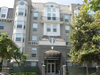
Restitution Unlikely in Las Vegas Construction Defect Scam�
October 23, 2012 — CDJ Staff
The San Francisco Chronicle reports that the money lost in the Las Vegas HOA fraud cause is probably not recoverable. Victims of the scam have asked the court for restitution, but Judge Lloyd George doubts any of the money will be found, saying “the money is not available, it would appear.”
�One Vistana board members not part of the conspiracy told reporters that the $8 million construction defect settlement never went for needed repairs. “Within six months that money was gone,” said Bruce Wallace, a retired Air Force colonel. After the construction defect account was depleted to $450,000, two board members disappeared with the funds.
� Read the full story…
�
Preparing for Trial on a Cause of Action for Violation of Civil Code section 895, et seq.�
May 10, 2012 — Samir R. Patel, Esq., Lorber, Greenfield, & Polito, LLP
In 2002, the California Legislature enacted the Right to Repair Act (hereinafter “SB-800”), as codified in Title VII of the Civil Code. As set forth in Civil Code section 895, et seq., SB-800 established a set of standards for residential construction, and provides a statutory protocol to address alleged violations of those standards. SB-800 applies to all new single family homes sold after January 1, 2003, and it created its own cause of action governed completely by its own terms, in that in order to state a cause of action under SB-800, a plaintiff may only allege a violation of the Act. (Civ. Code, § 938.) Under Civil Code sections 896, 897, 943, and 944, the Legislature made it clear that it intended to create a single cause of action for construction defects in homes that fall under the purview of SB-800. By passing SB-800, the Legislature eliminated multiple and often redundant or conflicting causes of action, burdens of proof, statutes of limitations, and types of damages that were common in construction defect actions prior to the enactment of the same.
�Civil Code section 895, et seq. has significantly changed the landscape of construction defect lawsuits. Yet, for years, the only attention given to the statutes focused solely on the codified pre-litigation process that requires plaintiffs and builders to meet and confer regarding defects and attempt a process to repair the alleged defects before litigation is pursued. A major impediment to the implementation of the pre-litigation procedures has often been that the statutes specifically state that the information obtained during the pre-litigation process is admissible at trial. Hence, through use of the pre-litigation process, plaintiffs’ counsel can engage in a builder funded fishing expedition and later use the information obtained to advance their litigation goals. As such, many builders have chosen to opt out of codified pre-litigation process altogether, an option which the builder can elect within their Purchase and Sale Agreements.
�Recently, counsel for builders throughout California have turned their attention to the “exclusive remedy” aspect of SB-800 by seeking, often successfully, to limit plaintiffs to a single cause of action for violation of SB-800. Civil Code section 943 makes clear that a cause of action for violation of SB-800 performance standards is a plaintiff’s sole remedy for a residential construction defect action. Civil Code section 943 states:
�Except as provided in this title, no other cause of action for a claim covered by this title or for damages recoverable under 944 is allowed. (Civ. Code, § 943.) Â
�The question remains: what is the benefit of requiring plaintiffs to trim down their complaint and eliminate their tried and true common law causes of action, and requiring them to pursue only a single cause of action for violation of SB800?
�The construction standards enumerated within SB-800 include fifty-plus functionality standards. On their face, any benefit to pursuing a construction defect action under a single cause of action for violation of SB-800 initially appears trivial at best, in light of the fact that a jury may be very confused with the complexity of the functionality standards set forth within the Civil Code. Nevertheless, Title VII of the Civil Code actually contains numerous provisions that builders can utilize to their benefit throughout the process of construction defect litigation, including during preparation for trial.
�First and foremost, counsel for builders can assert numerous affirmative defenses that will be beneficial if the matter proceeds to trial. These affirmative defenses, as codified in Civil Code section 945.5, include mitigation, in whole or in part, for damages caused by: an unforeseen act of nature; a homeowner’s failure to allow reasonable and timely access for inspections and repair under the pre-litigation procedures; the homeowner’s failure to follow the builder’s recommendations and commonly accepted homeowner maintenance obligations; ordinary wear and tear; misuse; abuse; or neglect. Builders should include these affirmative defenses within their responsive pleadings and as trial approaches, prepare appropriate motions in limine and request special jury instructions regarding the same. As frustrated builders and their attorneys are well aware, many construction defect suits result from a homeowner’s failure to properly maintain their property in a manner that is consistent with normal maintenance procedures and guidelines. Furthermore, within the ten year statute of limitations for most defects, ordinary wear and tear is often attributable to numerous deficiencies alleged by plaintiffs. The affirmative defense for a homeowner’s failure to allow inspections and repairs is also vital, as plaintiffs’ counsel may encourage a homeowner to forego the repair and seek monetary damages, allowing plaintiffs’ counsel to ultimately obtain their share of attorney’s fees. Therefore, the SB-800 statutes provide the builder with recourse and distinctive mitigation defenses that were previously and confusingly mixed into tort and contract related defenses. These affirmative defenses can also be utilized by counsel during the cross-examination of plaintiff homeowners and expert witnesses. Defense counsel should fully grasp these defenses and utilize them as defense themes throughout litigation.
�As a plaintiff is limited to a single cause of action for violation of SB-800, if defense counsel has failed to properly eliminate excessive tort and contract causes of action prior to trial, a motion for summary adjudication, or at the very least, a motion for judgment on the pleadings should be brought to limit the introduction of evidence outside of a single cause of action for violation of SB-800. Practical judges are always looking for ways to streamline and expedite trials, and they are currently ruling that SB-800 is the exclusive remedy available to plaintiffs. In fact, plaintiffs’ firms in SB-800 matters are now voluntarily limiting their complaints to this one cause of action.
�Special jury instructions can also be crafted to limit a jury’s computation of damages pursuant to Civil Codesection 944, which provides the method for computing damages within a construction defect action, as follows:
�If a claim for damages is made under this title, the homeowner is only entitled to damages for the reasonable value of repairing any violation of the standards set forth in this title, the reasonable cost of repairing any damages caused by the repair efforts, the reasonable cost of repairing and rectifying any damages resulting from the failure of the home to meet the standards, the reasonable cost of removing and replacing any improper repair by the builder, reasonable relocation and storage expenses, lost business income if the home was used as a principal place of a business licensed to be operated from the home, reasonable investigative costs for each established violation, and all other costs or fees recoverable by contract or statute. (Civ. Code, § 944.) [Emphasis added.]
�Civil Code section 944 specifically prohibits recovery for damages outside the scope of its explicit language as it states “the homeowner is only entitled to ... damages for the reasonable value of repairing any violation of the standards set forth in this title....” [Emphasis added.] The statute ultimately provides a “reasonableness” standard for the computation of damages that did not exist when computing damages on traditional common law tort and contract claims. Therefore, defense counsel should prepare special jury instructions to limit evidence of damages introduced at trial to the reasonable value of repairing any violation of the standards, and to exclude any evidence of damages beyond the reasonableness standard. Defense counsel should seize the opportunity to utilize the theme of “reasonableness” when attacking plaintiffs’ allegations and plaintiffs’ proposed repair methodology throughout the discovery process and at trial.
�Defense counsel may also prepare a motion in limine or special jury instruction regarding the limitation of evidence regarding defects that did not cause resultant damage. Civil Code section 897 states:
�Intent of Standards
�The standards set forth in this chapter are intended to address every function or component of a structure. To the extent that a function or component of a structure is not addressed by these standards, it shall be actionable if it causes damage. (Civ. Code, § 897.) [Emphasis added.]
�Defense counsel can argue that the introduction of any evidence supporting a claim for construction-related deficiencies that are not enumerated within Civil Code section 896, or for deficiencies where no damage has occurred is prohibited and must be excluded at trial. This requirement of resultant damages is familiar as the general rule was previously established in Aas v. Superior Court (2000) 24 Cal.4th 627, in which the California Supreme Court held that there is no tort recovery for construction defects that have not actually caused property damage. The legislature effectively codified this rule within Civil Code section 897.
�A motion in limine can also be crafted to limit expert testimony to the standards enumerated in Civil Code section 896, and to deficiencies that caused damage pursuant to Civil Code 897. The motion in limine can be based upon Civil Code section 943 and the fact that claims for defects in homes which were sold after January 1, 2003 may only be pursued under a single cause of action for violation of SB-800. As such, expert testimony should be controlled by the standards set forth in Civil Code section 896. Furthermore, throughout a construction defect matter, defense counsel should ensure that their experts are well versed with the standards and that they can provide testimony that utilizes the same. Defense counsel’s knowledge of the standards will also be helpful during the cross-examination of plaintiffs’ expert witnesses.
�If, despite the efforts of defense counsel, the complaint still has numerous causes of action, or if only some homes fall under the purview of SB-800 while others do not, defense counsel can utilize a motion to bifurcate trial. The motion’s basis is that a cause of action for violation of SB-800 will require the introduction of evidence regarding the violations of the fifty-plus standards, and the tort and contract-based claims would also require the introduction of a wide range of evidence to prove each cause of action. For example, in order to prove the tort causes of action, plaintiffs must prove elements such as: duty, breach, proximate and actual causation, and that the builder placed the homes into the stream of commerce. (See Richards v. Stanley (1954) 43 Cal.2d 60, 63; Kriegler v. Eichler Homes, Inc. (1969) 269 Cal.App.2d 224, 227.) On the contract causes of action, plaintiffs must prove the existence of a valid written contract for the sale of the home, including proof regarding the existence of basic contractual elements such as offer, acceptance, and consideration. (Civ. Code, § 1624 subd. (a); Roth v. Malson (1997) 67 Cal.App.4th 552, 557.) Defense counsel can argue that exposing the jury to elements that may or may not be applicable to all of the homes in the action will complicate and confuse the jury. Thus, concurrently exposing the jury to the SB-800 claims and the non-SB-800 claims will necessitate undue consumption of time, and create the substantial danger of undue prejudice of confusing the issues or misleading the jury.
�One of the most important and relevant features of the SB-800 statutes is that they include shortened statutes of limitation as to certain enumerated defects. The codified statutes of limitations apply from the date of “close of escrow,” and are much more definitive than statutes of limitations regarding tort and contract claims. Therefore, they can be utilized within a motion for summary adjudication in cases where only one or a few defects are alleged. For example, under Civil Code section 896, et seq., there is a five year limitation on paint (Civ. Code, § 896, subd. (g)(1)); a four year limitation on plumbing fixtures (Civ. Code, § 896, subd. (e)); a three year limitation on landscaping (Civ. Code § 896, subd. (g)(12)); and a one year limitation on irrigation systems and drainage (Civ. Code, § 896, subd. (g)(7)). The non-SB-800 claims are subject to a four year statute of limitation for patent defects and a ten year statute of limitation for latent defects. (See Code of Civ. Proc., §§ 337.1, 337.15.) The contrast between the statute of limitations for the SB-800 claims and non-SB-800 claims can complicate a matter at trial, further establishing the necessity to limit plaintiffs to a single cause of action for violation of SB-800. Hence, defense counsel should also utilize a motion to bifurcate the statute of limitations issues from the issue of liability if a question of fact exists. If successful on the motion to bifurcate, plaintiff’s counsel will be barred from the introducing evidence at trial regarding a defect where the statute of limitations has run.
�Defense counsel should also seek to simplify the construction standards for the jury. Ultimately, by drafting jury instructions and a special verdict form that is easy to navigate, counsel can promote an easy interpretation of the standards enumerated within the Civil Code. The best route for drafting a special verdict form is to draft it as a check-list, similar to a traditional real estate walk-through check-list. By incorporating the shortened statutes of limitations into the special verdict form, defense counsel can effectively frame the case for the jury. The special verdict form should also allow the jury to easily eliminate any claim for damages that is mitigated, in whole or in part, through the codified affirmative defenses. Defense counsel should also consider drafting a trial brief that effectively and simplistically provides the trial court judge with an understanding of the specific defects before the court, and simultaneously notes which Civil Code standards are implicated and the scope of the same. If the trial judge is not well versed in construction defect litigation, defense counsel should be all the more careful in breaking down the parameters and limitations codified within SB-800 for the court.
�The strategies outlined within this article are only a few tactics that can be utilized to defend a construction defect suit. Depending on the defect allegations within any particular case, defense counsel should become intimately familiar with Title VII of the Civil Code and use all aspects of the same to their advantage. If not, plaintiffs’ counsel will have the advantage during “court-house step” settlement discussions and at trial.
� Printed courtesy of Samir R. Patel, Esq. of Lorber, Greenfield, & Polito, LLP. Mr. Patel can be contacted at spatel@lorberlaw.com.
�
The U.S. Tenth Circuit Court of Appeals Rules on Greystone
November 18, 2011 — Derek J. Lindenschmidt, Higgins, Hopkins, McLain & Roswell, LLC
On November 1, 2011, the Tenth Circuit Court of Appeals ruled on the certified question of whether property damage caused by a subcontractor’s faulty workmanship is an “occurrence” for purposes of a commercial general liability (CGL) insurance policy. In Greystone Const., Inc. v. National Fire & Marine Ins. Co., No. 09-1412 (10th Cir. Nov. 1, 2011), the Tenth Circuit determined that because damage to property caused by poor workmanship is generally neither expected nor intended, it may qualify under Colorado law as an occurrence and liability coverage should apply. Id. at 2.
The short history of the Greystone case is as follows. In Greystone Const., Inc. v. National Fire & Marine Ins. Co., 649 F. Supp. 2d 1213 (D. Colo. 2009), two contractors and one of their insurers brought an action against a second insurer after the second insurer refused to fund the contractors’ defense in construction defect actions brought by separate homeowners. Id. at 1215. The U.S. District Court for the District of Colorado, relying on General Sec. Indem. Co. of Arizona v. Mountain States Mut. Cas. Co., 205 P.3d 529 (Colo. App. 2009), granted summary judgment in favor of the second insurer on the basis that the homeowners’ complaints did not allege accidents that would trigger covered occurrences under the second insurer’s policies. Id. at 1220. Notably, the Greystone, General Security, and other similar decisions prompted the Colorado General Assembly to enact C.R.S. § 13-20-808, which was designed to provide guidance for courts interpreting perceived coverage conflicts between insurance policy provisions and exclusions. The statute requires courts to construe insurance policies to favor coverage if reasonably and objectively possible. C.R.S. § 13-20-808(5).
The Tenth Circuit began its analysis by determining whether C.R.S. § 13-20-808, which defines the term “accident” for purposes of Colorado insurance law, would have a retroactive effect, and thereby settle the question before the court. The Tenth Circuit gave consideration to several Colorado district court orders issued since the enactment of C.R.S. § 13-20-808 which have suggested that the statute does not apply retroactively, including Martinez v. Mike Wells Constr., No. 09cv227 (Colo. Dist. Ct., Mar. 1, 2011), and Colo. Pool. Sys., Inv. V. Scottsdale Ins. Co., No. 09cv836 (Colo. Dist. Ct., Oct. 4, 2010). The Tenth Circuit also attempted to ascertain the General Assembly’s intent behind the term “all insurance policies currently in existence...” Greystone, No. 09-1412, at 12. The Tenth Circuit determined that the General Assembly would have more clearly stated its intentions for the term if it was supposed to apply retroactively to expired policies, rather than those still running. Id. at 12-13. Ultimately, the Tenth Circuit decided that C.R.S. § 13-20-808 did not apply retroactively, but noted that “the retrospective application of the statute is not necessarily unconstitutional.” Id. at 9, 11-14. As such, the Tenth Circuit advised that it was required to decide the question presented in the appeal under the principles of Colorado insurance law. Id. at 15.
Read the full story…
Reprinted courtesy of Higgins, Hopkins, McLain & Roswell, LLC. Mr. Lindenschmidt can be contacted at lindenschmidt@hhmrlaw.com
Eighth Circuit Remands to Determine Applicability of Collapse Exclusion
January 6, 2012 — Tred Eyerly, Insurance Law Hawaii
The Eighth Circuit determined a jury instruction regarding the applicability of the "all-risk" policy’s exclusion for "collapse" was inadequate. See KAAPA Ethanol, LLC v. Affiliated FM Ins. Co., 2011 U.S. App. LEXIS 22158 (8th Cir. Nov. 3, 2011).
KAAPA had nine large, cylindrical, stainless steel tanks fabricated at its location. Soon after operations began in 2003, some of the tanks experienced unusual movement and began to shift. A geotechnical engineer found "silty clay" had been used for infill instead of compacted granular fill called for in engineering drawings. A year long plan to repair all nine tanks was implemented.
Affiliated’s "all-risk" policy excluded damage caused by faulty workmanship. It also excluded damage caused by settling or cracking. The settling exclusion went on to provide, "This exclusion will not apply to loss or damage resulting from collapse of: a building or structure; or material part of a building or structure." Affiliated denied coverage because of the faulty workmanship and settling exclusions.
Read the full story…
Reprinted courtesy of Tred R. Eyerly, Insurance Law Hawaii. Mr. Eyerly can be contacted at te@hawaiilawyer.com
Building Boom Leads to Construction Defect Cases
August 2, 2012 — CDJ Staff
Professor Evan McKenzie of the University of Illinois at Chicago says that rise of construction defect litigation in the Las Vegas area followed the same pattern it did in other places, according to an article in the Las Vegas Review Journal. “Step one,” according to Professor McKenzie, “there was this enormous growth in construction. Then these attorneys began to swarm in from all over, especially Southern California.” McKenzie noted that during a building boom, construction “outpaces the ability of building inspectors to do their job.”
But, despite his contention that “rapid growth in housing stock” leads to “shoddy construction,” another problem of growth was that “eventually there were too many lawyers chasing too many condominium complexes and subdivisions.” What came next was that “attorneys start coming up with cases that really aren’t good cases.” It’s in the interest of these attorneys that HOA boards sue.
Read the full story…
Contractor Sues License Board
June 30, 2011 — CDJ Staff
Judge Kendall J. Newman of the US District Court handed down a decision on June 24 on the case of Kent v California Department of Consumer Affairs. Mr. Kent, appearing as his own counsel, had brought the suit against the California Department of Consumer Affairs and the Contractors State Licensing Board after he was arrested in a sting operation and, as the plaintiff put it, “was absurdly arrested and uncooperatively detained for a time longer than necessary or allowed by law under the false pretense of contracting with out a license.” Mr. Kent’s alleged that Rick Lopez, one of the defendants, formed him to read allow from the California Business and Professions Code. He said he was later handcuffed and placed in an uncomfortable chair, “enduring physical pain and emotional agony.”
�Although Kent was given a Notice to Appear, he alleged that a further defendant, Stuart Rind, “closed the plaintiff’s case marked citation A7773 without giving written notice to anyone.” As a result, the Placer County District Attorney’s Office had no record of his Notice to Appear.
�Kent alleged that subsequently his firm was essentially shut down for two years and that he was prevented from “legally contracting or selling services for any other contractor or qualifying for any other licensed capacity governed by the CSLB.” After this, the CSLB suspended the license for his firm, DSI Construction. He was assessed a $1,500 fine, after which he claims he sent a letter to the CSLB demanding money damages. The judge noted that the letter was not included in the plaintiff’s Ninth Amended Complaint.
�Judge Kendall recommended that the plaintiff’s Complaints be dismissed, although he did allow that sixth, and perhaps the eighth and ninth, could be amended with a tenth amended complaint.
� Read the court’s decision…
South Carolina Legislature Defines "Occurrence" To Include Property Damage Arising From Faulty Workmanship
May 26, 2011 — Tred R. Eyerly, Insurance Law Hawaii
On May 17, 2011, South Carolina passed legislation to combat the restrictive interpretation of what constitutes an "occurrence" under CGL policies. S.C. Code Ann. sec. 38-61-70.
� The legislation reversed a decision by the state's Supreme Court issued earlier this year. See Crossman Communities of North Carolina, Inc. v. Harleysville Mut. Ins. Co., 2011 W.L. 93716 (S.C. Jan. 7, 2011). Crossman had overruled an earlier decision by the South Carolina Supreme Court that holding that defective construction was an “occurrence.” Crossman, however, reversed course, holding that damages resulting from faulty workmanship were the “natural and probable cause” of the faulty work and, as such, did not qualify as an “occurrence.”
�Read the full story…
�Reprinted courtesy of Tred R. Eyerly, Insurance Law Hawaii. Mr. Eyerly can be contacted at te@hawaiilawyer.com
Granting Stay, Federal Court Reviews Construction Defect Coverage in Hawaii
January 6, 2012 — Tred Eyerly, Insurance Law Hawaii
The federal district court ultimately stayed a construction defect case, but offered comments on the current status of coverage disputes for such defects in Hawaii. See National Union Fire Ins. Co. of Pittsburgh, Pa. v. Simpson Mfg. Co., 2011 U.S. Dist. LEXIS 128481(D. Haw. Nov. 7, 2011).
National Union filed a complaint for declaratory relief to establish it had no duty to defend or to indemnify Simpson Manufacturing Company in four actions pending in the Hawaii state courts. The state court actions concerned allegedly defective hurricane strap tie hold downs that were manufactured and sold by Simpson. The hurricane ties allegedly began to prematurely corrode and rust, causing cracking, spalling and other damage to homes.
National Union contended the underlying allegations did not constitute "property damage" caused by an "occurrence," as defined in the policies.
Read the full story…
Reprinted courtesy of Tred R. Eyerly, Insurance Law Hawaii. Mr. Eyerly can be contacted at te@hawaiilawyer.com
Oregon agreement to procure insurance, anti-indemnity statute, and self-insured retention
March 5, 2011 — By
CDCoverage.com, March 5, 2011
In Continental Casualty Ins. Co. v. Zurich American Ins. Co., No. 09-35484 (9th Cir. Oct. 28, 2010), general contractor TCR was sued by an employee of subcontractor Safeway for bodily injuries suffered while working on the project. In the subcontract, Safeway agreed to procure primary insurance providing coverage for TCR for liability arising out of Safeway’s negligence. Safeway’s CGL policy included a self-insured retention that had to be satisfied before the insurer had a duty to defend. TCR filed suit against Safeway alleging that
�Read the full story...�Reprinted courtesy of CDCoverage.com
Insurer Not Liable for Construction Defect Revealed by Woodpecker
September 13, 2012 — CDJ Staff
The Eighth Circuit Court of Appeals has ruled that an insurance provision that excluded construction defects must stand in Friedberg v. Chubb, granting a summary judgment to the insurance firm.
�The Friedbergs discovered extensive water damage to their home after a woodpecker drilled a hole in a vertical support. They sought insurance coverage under their Chubb “Masterpiece” policy. The decision quotes the policy as covering “all risk of physical loss” “unless stated otherwise or an exclusion applies.” These exclusions included “gradual or sudden loss,” “structural movement,” and “faulty planning, construction or maintenance,” but the policy covered “ensuing covered loss unless another exclusion applies.”
�Chubb’s expert determined that the Friedbergs’ home had defective construction, and “attributed the damage to the beams and walls below the beam to a failure to install control joints.” After Chubb denied coverage, the Friedbergs sued, although the court ruled that “even under the Friedbergs’ theory, the water damage was a loss caused by faulty construction and therefore excluded under the policy.”
�On appeal, the Friedbergs argued that “the loss resulted from the combination of both faulty construction and the presence of water” and that Minnesota’s “concurrent causation” doctrine must apply, which according to the decision, “when a loss results from both a covered peril and an excluded peril, coverage exists unless the excluded peril is the ‘overriding cause’ of the loss.” The court rejected this reasoning, noting that “once the house was plagued with faulty construction, it was a foreseeable and natural consequence that water would enter.”
�The Friedbergs also contended that “the damage caused by the intrusion of water into their home is an ‘ensuing covered loss’ for which they are due coverage.” The court also rejected this claim, noting that Minnesota law excludes defective construction from the ensuing loss provision. The court said that “the Friedbergs’ reading of their ensuing-loss clause, by contrast, would dramatically limit their policy’s faulty-construction exclusion, because almost ‘any loss cause by’ faulty construction could also be characterized as an ensuing loss under an all-risk policy.”
Read the court’ decision…
West Hollywood Building: Historic Building May Be Defective
August 16, 2012 — CDJ Staff
The Sunset Lanai apartment building in West Hollywood, California has its fans, it also has its detractors. Designed by Edward H. Flickett and built in 1952 by George Alexander, the building isn’t wearing its years lightly. Its owner has opposed a move by the West Hollywood Preservation Commission that the building is a “local cultural resource.” Instead, Edwin Silver, the building’s owner says the group has overstated the building’s significance. His lawyer points to “design and construction flaws,” and says the building is prone to flooding and leaks. Repairs to the building have an estimated cost of $2.3 million, according to the L.A. Times.
The West Hollywood City Council decided to table the question of a historical designation as that might impede repairs. However, they did decide that if Silver seeks to demolish the building, they will grant the protection.
Read the full story…
Construction Defect Not an Occurrence in Ohio
November 7, 2012 — CDJ Staff
The Ohio Supreme Court has concluded that claims of defective construction or workmanship are not an occurrence under a general liability policy. The court looked at appellate decisions and concluded that CGL policies are not intended to insure against risks under the control and management of the insured. These risks should instead be mitigated with performance bonds.
The question was raised in the case Westfield Ins. Co. v. Custom Agri Systems, Inc. The Sixth District Court of Ohio concluded it was an “open question under Ohio law whether a CGL policy covers defective construction claims.” Westfield filed a motion, granted by the Sixth Circuit, to certify the question to the state Supreme Court. The Sixth Court additionally found that the contractual liability exclusion barred coverage in the case, issues a summary judgment to Westfield.
Read the full story…
Ninety-Day Extension Denied to KB Home in Construction Defect Insurance Claim
July 10, 2012 — CDJ Staff
A magistrate judge has denied a request by KB Home Nevada to extend the time for service an additional ninety days. KB claims that St. Paul Fire & Marine Insurance Company has failed to defend them in a construction defect claim. However, the judge did grant KB an additional twenty days to effectuate service, noting that the request for additional time may be renewed.
Read the court’s decision…
Defective Shingle Claims Valid Despite Bankruptcy
June 19, 2012 — CDJ Staff
The Third Circuit Court has allowed claims to go forward against Owens Corning for making allegedly defective shingles. The shingles split, leading to leaking roofs. The building products manufacturer filed for bankruptcy in 2000, which “extinguished” claims against it. The company was facing millions in liabilities over asbestos lawsuits.
The lawsuit was filed in 2009. The courts initially found the lawsuit timely, but the Third Circuit Court later applied determined the exposure stated before the bankruptcy. On appeal, the court has reversed this and is again allowing the suit to proceed.
Read the full story…
Houses Can Still Make Cents: Illinois’ Implied Warranty of Habitability
March 1, 2011 — Original Story by
Marisa L. Saber Cozen O’Connor Subrogation & Recovery Law BlogIn a report published earlier this week Marisa L. Saber writes about the implied warranty of habitability in the context of construction defect litigation. The piece speaks of the difficulties in alleging tort theories against builders and vendors in light of Illinois’ expansion of the economic loss doctrine, and how the implied warranty of habitability may provide another avenue for recovery.
�Read Full Story...
Firm Sued For Construction Defects in Parking Garage�
October 23, 2012 — CDJ Staff
Northhampton County, Pennsylvania is suing a contractor who resurfaced a parking garage in 2009. According to the Express-Times, three years later, the surface is cracked and the county is seeking $700,000 for repairs. Additionally, they have withheld $44,000 of the $2.2 million contract because of the problems. John Stoffa, Northampton County Executive, says that the garage is stable, but not up to safety standards.
� Read the full story…
�
No-Show Contractor Can’t Hide from Construction Defect Claim
June 19, 2012 — CDJ Staff
The failure of R. J. Haas to produce documents or make himself available for deposition has worn out the patience of the US District Court in San Jose. Judge Howard Lloyd issued a ruling inProbuilders Specialty Ins. Co. v. Valley Corp. (N.D. Cal., 2012).
Probuilders issued an insurance policy covering Haas for their work on the construction of a single-family home for Ty and Karen Levine. The Levines sued Haas for “shoddy and incomplete work.” Probuilders contends that Haas “made material misrepresentations with respect to verifying that the subcontractors had insurance.” Since November 2011, Haas has been without legal counsel in this matter.
Despite Probuilder’s attempts, the court noted that “Hass any not provided any documents in response to the plaintiff’s three sets of requests for production of documents.” Haas also “has refused to make himself available for deposition.” Haas was first scheduled for deposition in September, 2011. Subsequently, Haas has rescheduled his deposition repeatedly, postponing it to January 4, then February 13, and then agreed to be deposed “before the then-scheduled March 15 mediation,” after which he said he would “be unavailable to be deposed before April.
The court noted that although Haas “hay have had legitimate reasons for wishing to continue his deposition, such as illness and his attempt to retain new counsel,” however, the court concluded that “Haas has had ample time to retain new counsel and prepare for deposition.
The court also found fault with Haas’s objections to certain terms in the Request for Admissions, among them “named,” “independent contractor,” and “work,” noting that Haas called these “vague and ambiguous.” The court called it “quibbling,” and noted that the federal courts disfavor this. Later in the decision, the court made it clear that Haas “is obligated under the Federal Rules of Civil Procedure to respond to discovery requests.” And concludes, “that he has apparently been seeking to retain new counsel for over five months does not give him license to ignore plaintiff’s discovery requests entirely.
The court granted Probuilders the option of filing a motion for sanctions. Mr. Haas did not attend or participate.
Read the court’s decision…
Product Exclusion: The Big Reason Behind The Delay of LEED 2012
July 10, 2012 — Douglas Reiser, Builders Counsel
By now, you have probably heard that the USGBC has decided to delay implementation of its previously named “LEED 2012” rating system. What you might not know is exactly why this is happening. Rest assured that the decision was not made willy nilly ?Äì LEED 2012 had many industrial groups running for the hills.
I have spent the past few weeks reading a number of articles on the backlash. LEED 2012 was intended to create a seismic shift; it was not a mere update. A strict focus on reduction of chemicals, created mass panic that a large number of material providers’ products would essentially be banned from green projects ?Äì meaning most local, state and federal projects.
Read the full story…
Reprinted courtesy of Douglas Reiser of Reiser Legal LLC. Mr. Reiser can be contacted at info@reiserlegal.com