Cleveland Condo Board Says Construction Defects Caused Leaks
March 1, 2012 — CDJ Staff
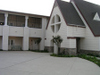
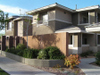
A Cleveland condo association has sued the developer of their building, claiming that construction defects resulted in water intrusion. The K&D Group, which still owns forty units in the 160-unit building, claim that it’s a maintenance issue that they’d like to see fixed, but it’s their responsibility as the developer. Doug Price, CEO of K&D calls it a “frivolous lawsuit.” He blames a “hostile board” and told The Plain Dealer “there’s simple maintenance that they refuse to do.”
�An outside company evaluated Stonebridge Towers. According to the condo board’s lawyer, Laura Hauser, the building design and construction are to blame for the water intrusion. Hauser said that the board’s “goal through this litigation is to find a resolution for the association, the building and the owners.”
�David Kaman, a Cleveland attorney not involved in the lawsuit, told the Plain Dealer that construction litigation in the Cleveland area had fallen off from 2007, but he sees it on the rise, which he attributes to cost-cutting on recently finished projects. “If an owner moves in and two years later the wallpaper needs to be replaced because the wall is leaking, that’s a construction defect.”
Read the full story…
Mortar Insufficient to Insure Summary Judgment in Construction Defect Case
January 6, 2012 — CDJ Staff
The US District Court of Nevada issued a summary judgment in the case of R&O Construction Company V. Rox Pro International Group, Ltd. on December 19, 2011. The case involved the installation of stone veneer at a Home Depot location (Home Depot was not involved in the case). R&O’s subcontractor, New Creation Masonry, purchased the stone veneer from Arizona Stone. Judge Larry Hicks noted that “the stone veneer failed and R&O was forced to make substantial structural repairs to the Home Depot store.”
Rox Pro asked the court for a summary judgment, which the court granted only in part. The court looked at two issues in the case, whether the installation instructions constituted a breach of implied warranty of merchantability, and whether there was a breach of an implied warranty of fitness for a particular purpose.
Judge Hicks found that there was a breach of implied warranty of merchantability. The instructions drafted by Real Stone and distributed by Arizona Stone were not sufficient for affixing the supplied stones, according to R&O’s expert, a claim the plaintiffs dispute. “Because there is an issue of material fact concerning the installation guidelines, the court shall deny Arizona Stone’s motion for a summary judgment on this issue.”
On the other hand, the judge did not find that the instructions had any bearing as to whether R&O bought the stone, since the stone was selected by the shopping center developer. This issue was, in the view of the judge, appropriately dismissed.
Read the court’s decision…
Insurer Not Liable for Construction Defect Revealed by Woodpecker
September 13, 2012 — CDJ Staff
The Eighth Circuit Court of Appeals has ruled that an insurance provision that excluded construction defects must stand in Friedberg v. Chubb, granting a summary judgment to the insurance firm.
�The Friedbergs discovered extensive water damage to their home after a woodpecker drilled a hole in a vertical support. They sought insurance coverage under their Chubb “Masterpiece” policy. The decision quotes the policy as covering “all risk of physical loss” “unless stated otherwise or an exclusion applies.” These exclusions included “gradual or sudden loss,” “structural movement,” and “faulty planning, construction or maintenance,” but the policy covered “ensuing covered loss unless another exclusion applies.”
�Chubb’s expert determined that the Friedbergs’ home had defective construction, and “attributed the damage to the beams and walls below the beam to a failure to install control joints.” After Chubb denied coverage, the Friedbergs sued, although the court ruled that “even under the Friedbergs’ theory, the water damage was a loss caused by faulty construction and therefore excluded under the policy.”
�On appeal, the Friedbergs argued that “the loss resulted from the combination of both faulty construction and the presence of water” and that Minnesota’s “concurrent causation” doctrine must apply, which according to the decision, “when a loss results from both a covered peril and an excluded peril, coverage exists unless the excluded peril is the ‘overriding cause’ of the loss.” The court rejected this reasoning, noting that “once the house was plagued with faulty construction, it was a foreseeable and natural consequence that water would enter.”
�The Friedbergs also contended that “the damage caused by the intrusion of water into their home is an ‘ensuing covered loss’ for which they are due coverage.” The court also rejected this claim, noting that Minnesota law excludes defective construction from the ensuing loss provision. The court said that “the Friedbergs’ reading of their ensuing-loss clause, by contrast, would dramatically limit their policy’s faulty-construction exclusion, because almost ‘any loss cause by’ faulty construction could also be characterized as an ensuing loss under an all-risk policy.”
Read the court’ decision…
Defective Grout May Cause Trouble for Bridges
August 16, 2012 — CDJ Staff
Grout, which was used to protect the steel support cables of the Woodrow Wilson Bridge, may lead to problems instead. The Baltimore Sun reports that the Federal Highway Administration is looking at three dozen bridges in twenty-one states that were built with defective grout. The grout contains high levels of chlorides, which can lead to corrosion. The collapse of pedestrian walkway in Concord, North Carolina was attributed to chloride contamination in the grout.
The grout, SikaGrout 300PT, was advertised as "non-corrosive, does not contain chlorides," but later testing showed that it contained levels that exceeded limits by 400 percent. Throughout the country, about 16 million pounds of this were used. Sika Corp. suspended production of the grout in 2010. If repairs need to be made, it is unclear who will pay.
Read the full story…
Eighth Circuit Remands to Determine Applicability of Collapse Exclusion
January 6, 2012 — Tred Eyerly, Insurance Law Hawaii
The Eighth Circuit determined a jury instruction regarding the applicability of the "all-risk" policy’s exclusion for "collapse" was inadequate. See KAAPA Ethanol, LLC v. Affiliated FM Ins. Co., 2011 U.S. App. LEXIS 22158 (8th Cir. Nov. 3, 2011).
KAAPA had nine large, cylindrical, stainless steel tanks fabricated at its location. Soon after operations began in 2003, some of the tanks experienced unusual movement and began to shift. A geotechnical engineer found "silty clay" had been used for infill instead of compacted granular fill called for in engineering drawings. A year long plan to repair all nine tanks was implemented.
Affiliated’s "all-risk" policy excluded damage caused by faulty workmanship. It also excluded damage caused by settling or cracking. The settling exclusion went on to provide, "This exclusion will not apply to loss or damage resulting from collapse of: a building or structure; or material part of a building or structure." Affiliated denied coverage because of the faulty workmanship and settling exclusions.
Read the full story…
Reprinted courtesy of Tred R. Eyerly, Insurance Law Hawaii. Mr. Eyerly can be contacted at te@hawaiilawyer.com
Exclusion Bars Coverage for Mold, Fungus�
October 23, 2012 — Tred Eyerly, Insurance Law Hawaii
The court considered whether rain damage to a house was barred by the policy's mold exclusion. Stewart v. State Farm Fire & Cas. Co., 2012 U.S. Dist LEXIS 127804 (D. S.D. Sept. 7, 2012).
�The insureds hired DJ Construction to build a new home. Before construction was completed, it was discovered that DJ Construction and some of its subcontractors had failed to protect the partially constructed house from the elements, which allowed melting snow and rain to intrude into the house. Soon after this discovery, DJ Construction abandoned the project. The house remained incomplete and uninhabitable.
�The insureds sued DJ Construction.
� Read the full story…
��Reprinted courtesy of Tred R. Eyerly, Insurance Law Hawaii. Mr. Eyerly can be contacted at te@hawaiilawyer.com
��
Contractual Liability Exclusion Bars Coverage
August 2, 2012 — Tred Eyerly, Insurance Law Hawaii
The Fifth Circuit Court of Appeals considered whether coverage existed for a defectively built tennis court in light of a contractual liability exclusion. Ewing Construction Company, Inc. v. Amerisure Ins. Co., 2012 U.S. App. LEXIS 12154 (5th Cir. June 15, 2012).
Ewing Construction Company entered a contract with the School District to construct tennis courts at a school. After completion, the School District complained that the courts were cracking and flaking, rendering them unfit for playing tennis. The School District filed suit, seeking damages for defective construction. It alleged that Ewing breached its contract and performed negligently.
Ewing tendered the underlying lawsuit to Amerisure. Amerisure denied coverage and Ewing filed suit.
Read the full story…
Reprinted courtesy of Tred R. Eyerly, Insurance Law Hawaii. Mr. Eyerly can be contacted at te@hawaiilawyer.com
Tennessee Court: Window Openings Too Small, Judgment Too Large
November 18, 2011 — CDJ Staff
The Tennessee Court of Appeals has issued a ruling in the case of Dayton v. Ackerman, upholding the decision of the lower court, even as they found that the award was incorrectly computed. The Daytons purchased a house that had been designed and built by the Ackermans, who operated a construction business. The court noted that the warranty with the house promised that “for a period of 60 days, the following items will be free of defects in materials or workmanship: doors (including hardware); windows; electric switches; receptacles; and fixtures; caulking around exterior openings; pluming fixtures; and cabinet work.”
Soon, the Daytons began to experience problems with the house. Many were addressed by the Ackermans, but the Daytons continued to have problems with the windows. Neither side could specify a firm date when the Ackermans were contacted by the Daytons about the window problems. The Ackermans maintained that more than two years passed before the Daytons complained about the windows. The lower court found the Daytons more credible in this.
Initially, the Daytons included the window manufacturer in their suit, but after preliminary investigations, the Daytons dropped Martin Doors from their suit. Martin Doors concluded that the windows were improperly installed, many of them “jammed into openings that were too small for them.”
After the Daytons dismissed Martin Doors, the Ackermans sought to file a third party complaint against them. This was denied by the court, as too much time had elapsed. The Ackermans also noted that not all of the window installations were defective, however, the courts found that the Daytons ought not to have mismatched windows.
Unfortunately for the Daytons, the window repair was done incorrectly and the windows were now too small for the openings. The firm that did the repair discounted the windows and Daytons concealed the problem with plantation shutters, totalling $400 less than the original lowest estimate. However, the appeals court noted that it was here that the trial court made their computation error. Correcting this, the appeals court assessed the Ackermans $12,016.20 instead of $13,016.20.
Finally, the Ackerman’s expert was excluded as he had changed his testimony between deposition and trial. The trial reviewed the expert’s testimony and had it been admissible, it would not have changed the ruling.
Read the court’s decision…
Orange County Home Builder Dead at 93
April 25, 2012 — CDJ Staff
Randall E. Presley was a homebuilder in Southern California for more than thirty years, acting as head of Presley Development Company from 1956 until selling the firm to Lyon Homes in 1987. The two companies merged in 1991 as the Presley Cos. Mr. Presley saw the need in the 1950s to provide people in Southern California with low- to medium-priced quality homes.
�His firm built more than 160 communities and was among the ten largest homebuilding firms in the country, expanding beyond California. Mr. Presley was 93 when he succumbed to pneumonia. He is survived by a wife, three children, seven grandchildren, and 11 great-grandchildren.
� Read the full story…
�
Claims Under Colorado Defect Action Reform Act Count as Suits
July 10, 2012 — CDJ Staff
The Colorado Court of Appeals has affirmed the judgment of the lower court in Melssen v. Auto-Owners Insurance. The Melssens built a custom home for the Holleys, during which time the Melssens retained a comprehensive general liability policy from Auto-Owners, which “obligated Auto-Owerns to defend the Melssens with respect to any ‘suit’ seeking damages for ‘property damage’ during the policy period.” Soon after the house was constructed, cracks developed in the drywall, then outside stucco and basement slab. The Holleys contended that “approximately $300,000 of damages to the Holleys’ property was caused by the Melssens’ engineering and construction defects” and filed a claim under the Colorado Defect Action Reform Act (CDARA). The Melssens “demanded Auto-Owners defend and indemnify the Melssens and forwared Auto-Owners the notice of claim.”
Although the Melssens notified Auto-Owners in June 2008, it was not until October 2008 that Auto-Owners denied coverage stating that the claims were sustained outside the policy period. The Melssens filed an action against Auto-Owners. At trial, the jury ruled in favor of the Melssens awarding them damages, to which the trial court added costs and attorney fees.
On appeal, Auto-Owners contended that the trial court erred in allowing the Melssens to argue that the CDARA notice of claim “was the functional equivalent of a complaint commencing a suit.” The appeals court found that “the CDARA notice of claim process constituted an alternative dispute resolution proceeding under the policy.” The court agreed that jury should not have been asked to determine if a CDARA action is a “suit,” but as the jury found for the Melssens, the concluding it “constituted harmless error.” Further, the court found that an action under the CDARA satisfied the definition of a “suit.”
The court found for the Melssens, affirming the lower court’s decision and remanding the case to the lower court for the awarding of appeals costs to the Melssens.
Read the court’s decision…
A Loud Boom, But No Serious Injuries in World Trade Center Accident
March 1, 2012 — CDJ Staff
The Wall Street Journal reports that nearly twenty tons of steel fell forty stories at the World Trade Center site on February 16. One person was checked by medical personnel. One person who works in the Financial District said it was “almost like thunder.” Frank Pensabene, one of the ironworkers on the site said that after “loud boom,” “all hell broke loose.” The steel beams and cables fell onto a flatbed truck, which was not occupied at the time.
Read the full story…
California Appeals Court Remands Fine in Late Completion Case
November 18, 2011 — CDJ Staff
The California Court of Appeals in Stanislaus County has reversed the decision of the lower court in Greg Opinski Construction Inc. v. City of Oakdale. The earlier court had awarded the city of judgment of $54,000 for late completion, $3,266 for repair of construction defects and interest, and $97,775 in attorneys’ fees. The late completion of the project was due to actions by the City of Oakdale, however, the court rejected Opinski’s argument that the California Supreme Court decision in Kiewit did not allow this, as his contract with the city established a procedure for claiming extensions.
The appeals court noted that the Kiewit decision has been “criticized as an unwarranted interference in the power of contracting parties to shift the risk of delays caused by one party onto the other party by forcing the second party to give the first notice of any intention to claim an extension of time based on delays caused by first.” They cited Sweet, a professor at Boalt Hall, UC Berkeley’s law school, that Kiewit “gutted” the “provision that conditions the contractor’s right to claim an extension of time for delays beyond his control.”
Further changes in California law in response to the Kiewit decision lead to the current situation which the court characterized as “if the contractor wished to claim it needed an extension of time because of delays caused by the city, the contractor was required to obtain a written change order by mutual consent or submit a claim in writing requesting a formal decision by the engineer.”
Opinski also argued that the lower court misinterpreted the contract. The Appeals court replied that “Opinski is mistaken.” He cited parts of the contract regarding the increase of time, but the court rejected these, noting that “an inability to agree is not the same as an express rejection.”
The court also rejects Opinski’s appeal that “the evidence the project was complete earlier than September 30, 2005, is weightier than the evidence to the contrary,” which they describe as “not a winning appellate argument.” The court points out that the role of an appeals court is not to reweigh the evidence, but to determine “whether the record contains substantial evidence in support of the judgment.”
The court did side with Opinski on one question of the escrow account. They rejected most of his arguments, repeating the line “Opinski is mistaken” several times. They decided that he was mistaken on the timing of the setoff decision and on whether the city was the prevailing party. However, the appeals court did find that Opinski was not liable for interest on the judgment.
The appeals court rejected the awarding of prejudgment interest to the city as the funds from which the judgment was drawn was held in an escrow account. The court noted that the city had access to the funds and could “access the funds when it determined that Opinski had breached the contract.” The appeals court noted that the judgment exhausted the escrow balance and remanded the case to the lower court to determine the amount own to Opinski.
Read the court’s decision…
Federal District Court Continues to Find Construction Defects do Not Arise From An Occurrence�
May 10, 2012 — CDJ Staff
Coverage for construction defects continues to be hotly contested in Hawaii state and federal courts. In a recent decision, Judge Mollway felt bound to follow the Ninth Circuit’s decision in Burlington Ins. Co. v. Oceanic Design & Constr., Inc., 383 F.3d 940, 944 (9th Cir. 2004), where the court found construction defect claims arise from breach of contract, not from an occurrence. Judge Mollway’s most recent decision on the issue is Illinois Nat. Ins. Co. v. Nordic PCL Constr., Inc., 2012 U.S. Dist. LEXIS 58464 (D. Haw. April 26, 2012).
�Nordic constructed a grocery store for Safeway. In addition to the grocery store, Nordic built a 165-space rooftop parking deck, retail shops and related improvements. After opening for business in 2007, Safeway experienced significant leaks. Safeway demanded that Nordic repair the parking deck. Nordic sent the demand letter to the insurer, who agreed to appoint counsel subject to a reservation of rights.
�Safeway filed suit against Nordic in state court alleging, among other things, breach of contract and negligence. The insurer provided Nordic with a defense, but Nordic hired independent counsel.
�The insurer filed for declaratory relief in federal district court.
� Read the full story…
�
North Carolina Exclusion j(6) “That Particular Part”
February 10, 2012 — CDCoverage.com
In Alliance Mutual Insurance Co. v. Dove, 714 S.E.2d 782 (N.C. Ct. App. 2011), claimant Murphy-Brown hired insured Dove to repair a broken elevator belt in a grain elevator in Murphy-Brown’s feed mill. The elevator was inside a metal duct and, to access the broken belt, Dove had to cut out a section of the duct. After replacing the belt, Dove welded the metal section back to the duct. Immediately after Dove completed the welding, dust inside the duct ignited, causing an explosion in the elevator, resulting in property damage to the elevator and other property. Murphy-Brown sued Dove for negligence seeking damages for the repair and replacement of the elevator, repair and replacement of the other property, increased grain handling costs during the repairs, and loss of use.
Read the full story…
� Reprinted courtesy of CDCoverage.com
�
Las Vegas Home Builder Still in Bankruptcy�
October 23, 2012 — CDJ Staff
American West Development attempted to exit Chapter 11 bankruptcy on September 27, but their plan was turned down by U.S. Bankruptcy Court Judge Mike Nakagawa. According to the Las Vegas Review-Journal, Judge Nakagawa rejected the plan over a trust fund for construction defects. America West’s attorney said they were hoping to complete the process by the end of the year.
�Under approved portions of the plan, America West’s owner, Lawrence Canarelli, will retain control of the corporation, although he must contribute $10 million into the firm and an additional $1.5 million into the fund for construction defects. America West faces charges for construction defects reported in the broad range of “less than $20 million” to “as much as $80 million.”
� Read the full story…
�
Construction Defect Not a RICO Case, Says Court
August 4, 2011 — CDJ Staff
The US District Court of North Carolina has rejected an attempt by a homeowner to restart her construction defect claim by turning it into a RICO lawsuit. Linda Sharp, the plaintiff in the case of Sharp v. Town of Kitty Hawk, attempted to amend a claim under the Racketeer Influenced and Corrupt Organizations Act (RICO) and argued that her case belonged in the federal courts.
Ms. Sharp sued in November, 2010 claiming construction defects. She sued in federal court, although the court noted that as she and most of the defendants are citizens of North Carolina, the state court would have been the appropriate jurisdiction. Further, the court noted that one federal claim Sharp made was dismissed with prejudice, leaving only the state law claims. These the court dismissed without prejudice, declining to exercise jurisdiction over North Carolina law.
�After the dismissal, Ms. Sharp attempted to amend her complaint after the deadline. To do so, according to the court, she would be required to obtain consent from defendants or leave of the court. She did neither.
�In his opinion, Judge W. Earl Britt rejected her motion for leave to amend. He also granted the defendants’ motion to dismiss. The clerk was directed to close the case.
� Read the court’s decision…
Homeowner’s Policy Excludes Coverage for Loss Caused by Chinese Drywall
November 18, 2011 — Tred Eyerley, Insurance Law Hawaii
Exclusions barred the homeowners from recovering for losses caused by Chinese drywall in their home. Ross v. C. Adams Const. & Design, L.L.C., 2011 La. App. LEXIS 769 (La. Ct. App., released for publication Oct. 5, 2011).
Two years after purchasing their home, the Rosses began experiencing chronic malfunctions in the heating, ventilation and air conditioning system. After discovering the presence of gypsum drywall, or "Chinese drywall", they submitted a claim to their insurer, Louisiana Citizens Property Insurance Company, for damages caused by the Chinese drywall. Louisiana Citizens denied the claim.
The Rosses sued. The trial court granted summary judgment to Louisiana Citizens based upon exclusions in the policy.
On appeal, the appellate court first agreed the Rosses had sustained a direct physical loss. The inherent qualities of the Chinese drywall created a physical loss to the home and the drywall had to be removed and replaced.
Read the full story…
Reprinted courtesy of Tred R. Eyerly, Insurance Law Hawaii. Mr. Eyerly can be contacted at te@hawaiilawyer.com
No Coverage For Construction Defects When Complaint Alleges Contractual Damages
September 1, 2011 — Tred Eyerley, Insurance Law Hawaii
The underlying plaintiff’s allegations contended the contractor was in breach of contract for construction defects caused in building her home. Accordingly, the court found no coverage.See Nat’l Builders and Contractors Ins. Co. v. Slocum, 2011 U.S. Dist. LEXIS 81694 (S.D. Miss. July 26, 2011).
Slocum Construction LLC sold a home it built to Laura Peterson. Subsequently, Peterson filed suit, alleging a breach of the contract and seeking rescission and cancellation of the contract. Peterson further alleged at least thirty-three specific defects in the construction of the house.
Slocum tendered to its insurer, National Builders and Contractors Insurance Company (NBCI). NBCI filed suit for a declaratory judgment.
Read the full story…
Reprinted courtesy of Tred R. Eyerly, Insurance Law Hawaii. Mr. Eyerly can be contacted at te@hawaiilawyer.com