Contractor Liable for Soils Settlement in Construction Defect Suit
February 10, 2012 — CDJ Staff
The California Court of Appeals ruled on January 9 in Burrow v. JTL Dev. Corp., a construction defect case in which houses suffered damage due to improperly compacted soil, upholding the decision of the lower court.
� Turf Construction entered into a deal with JTL to develop a parcel they acquired. A third firm, Griffin Homes, withdrew from the agreement “when a geotechnical and soils engineering firm reported significant problems with soil stability on 14 of the lots.” Turf Construction then took over compacting and grading the lots. Turf “had never compacted or graded a residential tract before.” Robert Taylor, the owner of Turf, “testified he knew there was a significant problem with unstable soils.”
� After homes were built, the plaintiffs bought homes on the site. Shortly thereafter, the homes suffered damage from soil settlement “and the damage progressively worsened.” They separately filed complaints which the court consolidated.
� During trial, the plaintiff’s expert said that there had been an inch and a half in both homes and three to five inches in the backyard and pool areas. “He also testified that there would be four to eight inches of future settlement in the next fifteen to twenty years.” The expert for Turf and JTL “testified that soil consolidation was complete and there would be no further settlement.”
� Turf and JTL objected to projections made by the plaintiffs’ soil expert, William LaChappelle. Further, they called into question whether it was permissible for him to rely on work by a non-testifying expert, Mark Russell. The court upheld this noting that LaChappelle “said that they arrived at the opinion together, through a cycle of ‘back and forth’ and peer review, and that the opinion that the soil would settle four to eight inches in fifteen to twenty years was his own.”
� Turf and JTL contended that the court relied on speculative damage. The appeals court disagreed, stating that the lower court based its award “on evidence of reasonably certain damage.”
� Turf also that it was not strictly liable, since it did not own or sell the properties. The court wrote that they “disagree because Turf’s grading activities rendered it strictly liable as a manufacturer of the lots.” The court concluded that “Turf is strictly liable as a manufacturer of the lots.”
� Judge Coffee upheld the decision of the lower court with Judges Yegan and Perren concurring.
Read the court’s decision…
Housing Prices Up through Most of Country
December 20, 2012 — CDJ Staff
Home prices in October were up more than six percent compared with prices in October 2011. The LA Times noted that some of the strongest gains were in California and Arizona. The Phoenix metropolitan area saw a 24.5% rise in home prices. In California, Riverside and Los Angeles were just above the national average, at 7.3% and 6.4%, contributing to the state’s overall nine percent increase.
The news wasn’t good throughout the entire country, as five states did not see any price increases. Mark Fleming, the chief economist at CoreLogic, a research firm in Irvine, California said that “the housing recovery that started earlier in 2012 continues to gain momentum.
Read the full story…
Pennsylvania Court Extends Construction Defect Protections to Subsequent Buyers
December 20, 2012 — CDJ Staff
The Pennsylvania courts have long held that there is an implied warranty of habitability for the initial purchaser of a home. Now, as some defects may not immediately show up, the court has extended that implied warranty to second and subsequent purchasers. As Marc D. Brookman, David I. Haas, and Christopher Bender of Duane Morris note, “this judicially created doctrine shifts the risk of a latent defect in the construction of a new home from the purchaser to the builder-vendor.”
The Pennsylvania Supreme Court concluded that a contractual relationship is not needed for an implied warranty of habitability. The court’s concern was inequalities would result when a home was sold while other homes were protected by being within the statute of repose.
Read the full story…
No Choice between Homeowner Protection and Bankrupt Developers?
February 10, 2012 — CDJ Staff
Donna DiMaggio Berger, writing in the Sun Sentinel argues those may be the only current choices in Florida. A recent court case, Lakeview Reserve HOA v. Maronda Homes has caused a swift response from the legislators. Ms. Berger notes that the construction defect bill, HB 1013, “would take away a homeowner’s rights to pursue a developer for defects to the driveways, roads, sidewalks, utilities, drainage areas and other so-called ‘off-site’ improvements.” The alternative? She notes that applying the Maronda decision would “bankrupt developers who don’t build defect-free roads and sidewalks.”
Read the full story…
Florida trigger
August 4, 2011 — CDCoverage.com
In Mid-Continent Casualty Co. v. Siena Home Corp., No. 5:08-CV-385-Oc-10GJK (M.D. Fla. July 8, 2011), insured residential real estate developer Siena was sued by homeowners seeking damages for moisture penetration property damage resulting from exterior wall construction defects. Siena’s CGL insurer Mid-Continent filed suit seeking a declaratory judgment of no duty to defend or indemnify in part on the basis that the alleged “property damage” did not manifest during the Mid-Continent policy period.
� Read the full story…
�Reprinted courtesy of CDCoverage.com
Nevada Bill Aims to Reduce Legal Fees For Construction Defect Practitioners
March 21, 2011 — March 21, 2011 Construction Defect Journal Staff
Assemblyman Ira Hansen and twelve additional members of Nevada’s Assembly are sponsoring Assembly Bill 285. AB 285 Revises provisions governing an award of attorney’s fees in causes of action for constructional defects. Existing law generally provides that a claimant may recover reasonable attorney’s fees as part of the claimant’s damages in a cause of action for constructional defects. (NRS 40.655)
�This bill removes this provision and instead authorizes a court to award reasonable attorney’s fees to a prevailing party involved in such a cause of action if an independent basis for the award exists pursuant to existing law which authorizes a court to award attorney’s fees in certain circumstances, or Rule 68 of the Nevada Rules of Civil Procedure, which provides for the payment of reasonable attorney’s fees by an offeree who rejects an offer and subsequently fails to obtain a more favorable judgment.
�In an AP report published in Business Week it is suggested that the target objective of legislators centers on what it refers to as Nevada’s "Rampant construction defect lawsuits".
�According to Business Week "The suits bring in hundreds of millions of dollars for lawyers and have put construction companies out of business. Hansen says fewer construction firms mean higher prices for Nevada consumers."
�Click Here To Read Full Text and Revisions of Assembly Bill 285
Homeowners Sue Over Sinkholes, Use Cash for Other Things
January 6, 2012 — CDJ Staff
Quoting one homeowner as saying that his house “can fall in the ground for all I care, I made my money,” the Tampa Bay Times looks at the issue of sinkhole claims in Florida. Homeowners “have paid off mortgages, put in pools, replaced roofs, or otherwise used money from sinkhole claims to do something besides fix sinkhole damage.
It’s been tough for insurance companies. Citizens Property Insurance took in $32 million in premiums for sinkhole coverage in 2010, but paid out $245 million in sinkhole claims. The Tampa Bay Times notes that some of those claims come from settling problems caused by their repairs, including one settlement of $350,000 for repairs to a house worth $39,000.
One couple, after receiving $217,000 from Citizens, sold the house to a company that bought unrepaired sinkhole homes for $190,000. The home has been sold since and remains unrepaired.
Sometimes the preferred solution by the insurance company isn’t the cheapest either. One couple was informed that Citizens was going to spend $150,000 to have the hole filled with grout. After they settled with the insurance company, they fixed the problem by installing steel piers, at a cost of about $45,000.
Read the full story…
Fifth Circuit Reverses Insurers’ Summary Judgment Award Based on "Your Work" Exclusion
November 18, 2011 — Tred Eyerley, Insurance Law Hawaii
Application of the facts to the "your work" exclusion was the key to resolving coverage issued in Am. Home Assurance Co. v. Cat Tech L.L.C., 2011 U.S. App. LEXIS 21076 (5th Cir. Oct. 5, 2011).
Ergon Refining, Inc. hired Cat Tech L.L.C. to service a hydrotreating reactor. In January 2005, Cat Tech replaced certain parts in the reactor. After Cat Tech finished the job and left, Ergon noticed a high pressure drop in the reactor, forcing it to be shut down. Cat Tech returned in February 2005, removed, repaired and replaced the damaged parts, and loaded new parts. After completion, a second large pressure drop occurred during the reactor’s start-up process. The reactor was shut down until October 2005, when Ergon hired a different contractor to perform the repair work. Additional damage to the reactor was found.
Read the full story…
Reprinted courtesy of Tred R. Eyerly, Insurance Law Hawaii. Mr. Eyerly can be contacted at te@hawaiilawyer.com
California insured’s duty to cooperate and insurer’s right to select defense counsel
April 14, 2011 — April 14, 2011 - CDCoverage.com
In Travelers Property Casualty Co. v. Centex Homes, No. C 10-02757 (N.D. Cal. April 1, 2011), general contractor Centex was sued by homeowners for construction defects. Centex tendered its defense to Travelers as an additional insured under policies issued by Travelers to two Centex subcontractors. Travelers agreed to defend Centex under a reservation of rights and selected defense counsel to defend Centex. Centex refused to accept the defense, asserting that it was entitled to select defense counsel. Travelers filed suit against Centex seeking a declaratory judgment that Centex had breached the duty to cooperate condition in the Travelers’ policy.
�Read the full story...
�Reprinted courtesy of CDCoverage.com
Texas Court of Appeals Conditionally Grant Petition for Writ of Mandamus to Anderson
April 25, 2011 — April 25, 2011 Beverley BevenFlorez - Construction Defect Journal
The Texas Court of Appeals conditionally grant mandamus relief to Anderson Construction Company and Ronnie Anderson (collectively “Anderson”)… from the trial court in a construction defect lawsuit filed by Brent L. Mainwaring and Tatayana Mainwaring. See Tex. Prop. Code Ann. 27.001-.007 (West 2000 & Supp. 2010). Relators contend the trial court abused its discretion by compelling discovery while the case was abated by operation of law.
�The Court of Appeals opinion describes what led up to the proceedings: “The Mainwarings’ original petition identified certain defects in their Anderson-constructed home. Those defects concerned the roof trusses and framing, air conditioning, mortar and masonry, exterior doors and windows, and weep holes. With respect to the five areas of defects identified in their original petition, the Mainwarings gave Anderson the statutorily required notice on January 13, 2010. After implementing agreed extensions, Anderson made an offer of settlement for the defects the Mainwarings identified in their notice. Almost eight months later, the Mainwarings filed an amended petition adding defects they had not included in their original petition and notice. The additional defects the Mainwarings included in their amended petition had not been addressed by Anderson’s offer of settlement.”
�Following these events, Anderson claimed the Mainwarings did not respond in writing to their settlement offer. “Anderson filed a verified plea in abatement on December 2, 2010. In the trial court, Anderson claimed that the Mainwarings failed to respond in writing to Anderson’s settlement offer, as required by Section 27.004(b) of the RCLA. See Tex. Prop. Code Ann. 27.004(b)(1). The Mainwarings moved to compel discovery responses from Anderson. The Mainwarings alleged that they rejected Anderson’s settlement offer, and that if their response was insufficient, they contend that Anderson’s offer was rejected by operation of law on the twenty-fifth day after the Mainwarings received it. See Tex. Prop. Code Ann. 27.004(i). The Mainwarings’ motion to compel was not supported by affidavit. See Tex. Prop. Code Ann. 27.004(d)(2). On January 13, 2011, Anderson filed a verified supplemental plea in abatement. Anderson alleged that the Mainwarings failed to provide written notice concerning the newly alleged defects and complained the Mainwarings were attempting to circumvent the inspection and resolution procedure of the RCLA. Over Anderson’s objection that the lawsuit had been abated, the trial court granted the Mainwarings’ motion to compel discovery.”
�After listening to both sides, the Court of Appeals offered this reasoning for their opinion: “The parties do not dispute that Anderson inspected the property before the Mainwarings alleged the existence of additional defects in their amended pleading, nor do the Mainwarings claim that Anderson has been given an opportunity to inspect the additional defects the Mainwarings identified in their amended pleadings. We conclude the trial court did not have the discretion to deny or lift the abatement until the Mainwarings established their compliance with the statute. In other words, the Mainwarings are required to provide Anderson a reasonable opportunity to inspect the additional defects identified by their amended pleading, which will allow Anderson the opportunity to cure or settle with respect to the newly identified defects.”
�The Court of Appeals spoke directly on the issue of mandamus relief: “The Mainwarings contend that mandamus relief is not available because the trial court’s ruling does not prevent Anderson from making settlement offers during the discovery process. ‘An appellate remedy is “adequate” when any benefits to mandamus review are outweighed by the detriments.’ In re Prudential Ins. Co. of Am., 148 S.W.3d 124, 136 (Tex. 2004). The failure to abate a case is typically not subject to mandamus. See In re Allstate Cnty. Mut. Ins. Co., 85 S.W.3d 193, 196 (Tex. 2002) (citing Abor v. Black, 695 S.W.2d 564, 567 (Tex. 1985)). In this case, however, the case was abated by operation of law. By ignoring the statutory abatement, the trial court interfered with the statutory procedure for developing and resolving construction defect claims. See In re Kimball Hill Homes Tex., Inc., 969 S.W.2d 522, 525 (Tex. App. Houston [14th Dist.] 1998, orig. proceeding) (An appeal provides an inadequate remedy for the trial court’s failure to observe automatic abatement pursuant to the RCLA.). The benefits of mandamus review are not outweighed by the detriments of mandamus review in this case.“
�In conclusion, “The trial court had no discretion to compel discovery while the case was abated, and Anderson, who has been compelled to respond to discovery during a period the case was under an automatic abatement, has no adequate remedy on appeal. Accordingly, we conditionally grant the petition for writ of mandamus. The writ will issue only if the trial court fails to vacate its order of February 3, 2011, and fails to refrain from proceeding with the case until a motion to reinstate is filed that establishes compliance with the notice and inspection requirements of the Residential Construction Liability Act.”
�Read the trial court’s decision…
Save A Legal Fee? Sometimes You Better Talk With Your Construction Attorney�
May 10, 2012 — Douglas Reiser, Builders Counsel
I love writing this column, because I think it’s refreshing for contractors to hear that they don’t always need an attorney. Today’s post is the “Un-Save a Legal Fee” because I want to point out a specific illustration of when you definitely need your attorney. Using a construction contract template can be fine, but you always need to consider its application to each project ? or it could bite you in the rear.
�Seattle attorney Paul Cressman published a prime depiction of bad contract management, last week. A Florida appellate court struck down a general contractor’s “pay if paid” clause when it became ambiguous because of some incorporated language from its prime contract. Specifically, a clause in the prime contract required the general contractor to pay all subcontractors before receiving payment from the owner, while the general contractor’s “pay if paid” clause required its subcontractors to wait for payment until it arrived from the owner.
� Read the full story…
�
Badly Constructed Masonry Walls Not an Occurrence in Arkansas Law
May 10, 2012 — CDJ Staff
The US District Court for Maryland has granted a summary judgment in the case Konover Construction Corp. v. ATC Associates to Massachusetts Bay Insurance Company and denied a request for dismissal from ACT. Konover (KBE) was contracted by Wal-Mart to build a Wal-Mart store and a Sam’s Club in Port Covington, Maryland. Superus, Inc. was hired by KBE to build the masonry walls. Superus purchased a policy from Massachusetts Bay Insurance which named KBE as an additional insured. Wal-Mart hired ATC Associates to independently test and inspect the concrete structural steel, and masonry.
�After the building was in use, a large crack appeared which was attributed a latent construction defect. Other cracks were discovered. Upon investigation, it was discovered that there were “voids or foam in the concrete block surrounding the reinforcing steel that should have been filled with grout,” and in some cases, “reinforcing steel was missing or not installed in accordance with the specifications.” KBE paid for the repair and remediation and Wal-Mart assigned all rights and interests against ATC to KBE.
�KBE filed suit against ATC. ATC called for dismissal on the grounds that Wal-Mart had no claims as the problems had been remediated. Wal-Mart then provided KBE with additional agreements to give them enforceable rights against ATC and Superus. KBE filed a fourteen claims against ATC, Superus, and Massachusetts Bay. In the current case, Massachusetts Bay sought summary judgment and ATC sought dismissal of all claims against it.
�Massachusetts Bay claims that they need not indemnify Superus, as “there is no evidence adequate to establish that Superus’ defective work caused any collateral and/or resulting damage that was not subject to an Impaired Property exclusion, and that, in any event, no damage occurred during the policy period.”
�As Wal-Mart is headquarted in Arkansas, certain contracts were under Arkansas law. Under the Arkansas courts, “defective workmanship, standing alone and resulting in damages only to the work product itself, is not an ‘occurrence.’” The court determined that collateral or resultant damage would be covered. The court found that “it is clear under Arkansas law, and the parties appear to agree, that Massachusetts Bay is not obligated to indemnify KBE for any repairs to the masonry walls themselves, including any cracks or gaps in the walls.” The court also found that “there is no evidence adequate to prove that any allegedly resultant property damage was caused by Superus’ faulty construction of the walls.” The court also noted that “if the building code violation and structural integrity problem were ‘property damage,’ insurance coverage would be barred by the Impaired Property Exclusion.” Based on these findings, the court concluded that Massachusetts Bay is entitled to summary judgment.
�While the court dismissed the case against Massachusetts Bay, the court declined ATC’s motion to dismiss. The court noted that ACT’s alleged negligence in conducting inspections “created only a risk of economic loss for KBE.” Although hired by Wal-Mart, ATC “transmitted its daily testing and inspection reports of the Wal-Mart and Sam’s Club projects directly to KBE.” The court found that “KBE has made a plausible claim.”
�ATC also claimed that KBE contributed to the negligence due to the negligence of its subcontractor. The court concluded that it was plausible that “ATC will not be able to carry its burden of proving KBE was contributorily negligent.” The court was less sanguine about KBE’s fraud claim, but though it “may not now appear likely to have merit, it is above the ‘plausibility’ line.”
�In conclusion, KBE may not continue its case against Massachusetts Bay. However, the judge allowed the other proceedings to continue.
� Read the court’s decision…
�
Construction Defects Are Occurrences, Says Georgia Supreme Court
July 10, 2012 — CDJ Staff
Michael Bradford writes about the implications of a March decision of the Georgia Supreme Court in which the court found that “negligent construction resulting in damage to surrounding property constitutes an occurrence under a commercial general liability policy. The contractor in the case, American Empire Surplus Lines Insurance Co. Inc. vs. Hathaway Development Co. Inc, argued that a damage caused by a plumbing subcontractor’s work was covered. American Empire was the insurer for the plumbing subcontractor.
Bradford notes that this follows similar decisions in other courts. The George court ruled that “an occurrence can arise where faulty workmanship causes unforeseen or unexpected damage to other property.”
Read the full story…
Policing Those Subcontractors: It Might Take Extra Effort To Be An Additional Insured
June 14, 2011 — Douglas Reiser, Builders Council Blog
I just came across a case that I think truly paints the insurance dilemma for contractors. Thanks to this recent Illinois case, I don’t have to make up any factual scenarios—so kudos to Attorney Robert Boylan for posting it.
�In reading over my RSS feeds this weekend, I noticed a great writeup on long-time blogger Josh Glazov’s Construction Law Today. Attorney Robert Boylan’s post describes a recent Illinois case where a general contractor was denied its additional insured status on a second-tier subcontractor’s insurance. The reason for the denial: the general contractor failed to procure an agreement in writing with the second-tier subcontractor, requiring it to be listed as an additional insured.
�Read the full story…
�Reprinted courtesy of Douglas Reiser of Reiser Legal LLC. Mr. Reiser can be contacted at info@reiserlegal.com
Destruction of Construction Defect Evidence Leads to Sanctions against Plaintiff
July 10, 2012 — CDJ Staff
Stating that the plaintiff’s actions have left the defendants in a situation where they “cannot properly defend the action,” a judge in the US District Court of New York has sanctioned the plaintiffs in Aktas v. JMC Dev. Co.
The plaintiffs hired JMC Development and Stephen Jung, an architect, to renovate their vacation home in Adirnodack, New York. As work progressed, “due to disagreements regarding the completion date and payments for the project, the relationship began to deteriorate.” The plaintiffs hired George Villar as an owner’s representative who “testified that he deemed the workmanship to be ‘poor.’”
Subsequently, the locks where changed on the home, preventing JMC from performing any additional work, after which drywall was removed, which Villar stated was so that “the engineer come and look at the framing.” Subsequently, Villar sent a letter to JMC stating that the work was “performed in an inadequate, negligent and un-professional manner.” Villar informed JMC that they were not to visit the property. Subsequently, the plaintiffs hired another firm. “Plaintiffs testified that the materials were ‘carted away’ and ‘thrown out.’”
The plaintiffs filed a suit against JMC and others. JMC filed a motion requesting that the plaintiffs be sanctioned for their spoliation of evidence. The court noted that “the plaintiffs recognized that litigation was imminent,” and that they “had a duty to preserve the evidence. As all of JMC’s work was destroyed, there is no evidence of whether or not the work was defective. The court concluded that it will “issue an adverse inference charge that permits the jury to infer that the missing evidence was favorable to the defendants.”
In conclusion, the court granted in part the spoliation sanctions. They granted JMC a summary judgment dismissing the plaintiffs’ claims of fraud.
Read the court’s decision…
Nevada Court Adopts Efficient Proximate Cause Doctrine
February 10, 2012 — Tred Eyerly, Insurance Law Hawaii
Although the Nevada Supreme Court adopted the efficient proximate cause doctrine, it determined it did not apply to salvage coverage under an all-risk policy for a rain-damaged building. Fourth Street Place, LLC v. The Travelers Indemn. Co., 2011 Nev LEXIS 114 (Nev. Dec. 29, 2011).
� Fourth Street owned an office building which was insured by an all-risk policy issued by Travelers. Fourth Street hired Above It All Roofing to repair the roof of the office building. Above It All removed the waterproof membrane on the roof and prepared to replace the membrane the following week. Over the weekend, however, substantial rain hit. On Sunday, Above It All returned to cover the exposed portions of the roof with tarps, but wind later blew the tarps away. The building suffered significant interior damage as it continued to be exposed to the rain.
Read the full story…
� � � Reprinted courtesy of Tred R. Eyerly, Insurance Law Hawaii. Mr. Eyerly can be contacted at te@hawaiilawyer.com
Architect Not Liable for Balcony’s Collapse
September 13, 2012 — CDJ Staff
The Texas Supreme Court declined to hear an appeal from a woman who was partially paralyzed due to the collapse of a balcony. She had sued the architect of her friends’ home, but the Texas Third Circuit Court of Appeals had reversed a jury ruling against the architect, Sinclair Black. Black’s firm, Black + Vernooy, had designed the home and had supervised “administration of the construction contract.” Despite a contractual obligation to “endeavor to guard the owner against defects and deficiencies,” the balcony builder had not followed the architect’s specifications, including in the construction of the balcony.
�While the jury found Black liable for ten percent of the blame, Black argued that he could not be held liable for the contractor’s negligence, nor did he have any duty to third parties.
Read the full story…
2011 West Coast Casualty Construction Defect Seminar – Recap
June 1, 2011 — CDJ Staff
� 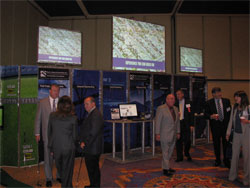 | �
�| Event exhibitors and sponsors contribute to an informative and engaging environment | �
�This year’s meeting was the best yet for the industry-leading construction defect and claims event.
�This year’s seminar concluded on May 13, 2011 with the Construction Defect Community Charitable Foundation Golf Tournament, held at Strawberry Farms Golf Course.
�The Disneyland Hotel in Anaheim, California was the place where more than 1,500 attendees convened for two days of professional development activities and seminars that included CLE workshops and panel discussions of special interest to legal and insurance professionals concerned with construction defect and claims litigation. Key events included “Challenges for Experts in Construction Defect Claims and Litigation,” “Keeping Up with Construction Defect Coverage,” and “Tips for Avoiding the ‘Perfect Storm’ in Handling of Wrap Claims.”
� �  | �
�| Supporting the golf tournament at the 15th hole | �
�This year’s Ollie award was given to George D. Calkins II, Esq. The West Coast Casualty Jerrold S. Oliver Award of Excellence was named in honor of the late Judge Jerrold S. Oliver, and recognizes an individual who is outstanding or has contributed to the betterment of the construction community.
�In addition to being the most comprehensive professional development seminar in the area of construction defects, this year’s seminar was equally valuable as a networking opportunity for members of the industry. People participated in professional development events during the day and then continued networking in the evening at numerous social events. The Lawn Party as well as the legendary Wood, Smith, Henning & Berman events were very well attended. Additional valuable networking events were hosted by a number of industry professionals at the House of Blues, and Tortilla Joe’s.
�As of this writing the 2011, West Coast Casualty's Construction Defect Seminar has applied for or has already received the following continuing education accreditation in the following areas;
�Read the full story…
�For more information about next year’s event, visit West Coast Casualty.