Another Las Vegas Tower at the Center of Construction Defect Claims
November 7, 2012 — CDJ Staff
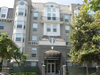
Accusations are coming from both sides over construction defects at a Las Vegas tower, only this time, it’s not the Harmon Towers, it’s Hilton Grand Vacations, which is part of the Planet Hollywood Resort. The project was originally dubbed PH Towers Westgate, and it was developed by Westgate Resorts, which is suing the contractor, Tutor-Saliba for $10 million over late completion and construction defects.
Among the defects Westgate is claiming are cracked floor tiles in the valet lobby and cracks and delamination of the pool deck. Tutor-Saliba argues that the failure of the valet lobby floor is due to Westgate specifying only 1/16th inch-wide grouting, instead of the specified ¬º inch, and Westgate’s refusal to allow expansion joints on the pool deck has lead to problems there. Westgate’s attorney, Robert Schumacher, attributes the problems to “shoddy construction practices.”
According to the article in the Las Vegas Review Journal, plans were only 60 percent complete when construction began, leading to “thousands of change orders.” Despite not meeting an August completion deadline, Tutor-Saliba is claiming it is owed a $1.5 million bonus nevertheless.
Read the full story…
There is No Non-Delegable Duty on the Part of Residential Builders in Colorado
August 2, 2012 — Brady Iandiorio, Higgins, Hopkins, McLain & Roswell, LLC
Recently, in the Arapahoe District Court, the Honorable Michael Spear, issued an order holding that builders do not owe a non-delegable duty to homeowners. In Marx and Corken v. Alpert Custom Homes, Inc., et al., Judge Spear’s order came in response to plaintiffs’ motion for determination of question of law seeking a finding that the defendants owed a non-delegable duty to the plaintiffs and thus, to strike defendants’ designation of nonparties at fault. After being fully briefed, Judge Spear, found that such a non-delegable duty does not exist.
The case arises from the construction of a single-family residence in Aurora, Colorado. Through the construction and interaction with Alpert Custom Homes, Inc. and Scott and Sally Alpert, the defendants, Paul Marx and Kay Corken, the plaintiffs claimed they suffered various damages and losses, and brought claims for breach of contract-warranty, breach of contract, violation of the Colorado Consumer Protection Act, breaches of the implied covenant of good faith, promissory estoppel, willful breach of contract, and quantum meruit. During litigation, the defendants filed a designation of nonparties at fault, which named several parties which were at fault for the alleged construction defects at issue in the case. The pertinent nonparties named were subcontractors of defendant Alpert Custom Homes, Inc. during the construction of the residence.
Read the full story…
Reprinted courtesy of Brady Iandiorio, Higgins, Hopkins, McLain & Roswell, LLC. Mr. Iandiorio can be contacted at iandiorio@hhmrlaw.com
Safer Schools Rendered Unsafe Due to Construction Defects
February 10, 2012 — CJD Staff
Built on a program for safer school buildings, schools in Neenan County, Colorado have been shown to have mild-to-moderate structural problems, rendering some of them unsafe. The Denver Post reports that a third-party review of schools built by the Neenan Company has shown structural issues in all fifteen school buildings.
� One school, Meeker Elementary, has been closed as it could collapse under high winds or during an earthquake. Sargent Junior-Senior High School is in use, but there are plans to evacuate the buildings if winds exceed 25 mile per hour. Two schools have roofs that are unable to bear expected loads of snow during the winter.
� The Neenan Company says that the school buildings are not up to their standards and is working with the school districts to repair the buildings. Repairs are expected to be complete by August.
Read the full story…
Ensuing Loss Provision Found Ambiguous
April 25, 2012 — Tred Eyerly, Construction Law Hawaii
After the insurer denied coverage in a homeowner’s policy for construction defects under various exclusions, the court found the ensuing loss provision was ambiguous.Kesling v. Am. Family Mut. Ins. Co., 2012 U.S. Dist. LEXIS 38857 (D. Colo. March 22, 2012).
�After purchasing a home from the sellers, the insureds noticed problems with the deck of the home. Massive cracking appeared, causing lifting and leaking on the deck and water running through the exterior foundation wall into the home. There was also damage to the roof and crawlspace.
�The insureds had a homeowner’s policy with American Family, which covered accidental direct physical loss to property described in the policy unless the loss was excluded. They requested coverage for "conditions, defects and damages." American Family denied coverage because wear and tear, as well as damage to foundations, floors and roofs were excluded. The policy did provide coverage, however, for "any resulting loss to property described . . . above, not excluded or excepted in this policy.
�When coverage was denied, the insureds sued American Family.
� Read the full story…
��Reprinted courtesy of Tred R. Eyerly, Insurance Law Hawaii. Mr. Eyerly can be contacted at te@hawaiilawyer.com
��
Is There a Conflict of Interest When a CD Defense Attorney Becomes Coverage Counsel Post-Litigation?
September 1, 2011 — Chad Johnson of Higgins, Hopkins, McLain & Roswell, LLC
In Weitz Co., LLC v. Ohio Cas. Ins. Co., the U.S. District Court for the District of Colorado was asked to rule on a motion to disqualify counsel in an insurance coverage action. 11-CV-00694-REB-BNB, 2011 WL 2535040 (D. Colo. June 27, 2011). Motions to disqualify counsel are viewed with suspicion, as courts “must guard against the possibility that disqualification is sought to ‘secure a tactical advantage in the proceedings.’” Id. at *2 (citing Religious Technology Center v. F.A.C.T. Net, Inc., 945 F. Supp. 1470, 1473 (D. Colo. 1996).
Weitz Company, LLC (“Weitz”) is a general contractor and defendant in an underlying construction defect suit which had concluded before the action bringing rise to this order. In the underlying action, Weitz made third-party claims against subcontractors, including NPW Contracting (“NPW”). Weitz was listed as an additional insured under NPW’s policies with both Ohio Casualty Insurance Company and Mountain States Mutual Casualty Company (collectively “the Carriers”). The Carriers accepted Weitz’s tender of defense under a reservation of rights. However, neither insurance carrier actually contributed to Weitz’s defense costs in the underlying action. At the conclusion of the construction defect action, the parties unsuccessfully attempted to apportion the attorney’s fees and costs. Eventually, Weitz brought suit against the recalcitrant carriers. The Lottner firm, which had previously represented Weitz in the underlying construction defect action, continued to represent Weitz in this coverage action.
Read the full story…
Reprinted courtesy of Higgins, Hopkins, McLain & Roswell, LLC. Mr. Johnson can be contacted at johnson@hhmrlaw.com
MGM Seeks to Demolish Harmon Towers
September 1, 2011 — CJD Staff
Citing public safety concerns and the cost of repair, MGM Resorts International is seeking to demolish the unfinished hotel tower. The company has a few hurdles to go through before they start laying the charges to implode the structure. Any plans would have to be approved by not only Clark County officials, but also the district court has an order blocking any activity during litigation between MGM and the general contractor on the project, Perini Building Company.
Architectural Record reports that MGM states it would take “approximately 18 months to conduct test and come up with an approved, permitted design to fix the Harmon.” MGM feels that repairs would then take another two to three years. Perini contends that they could “provide stamped drawings detailing all necessary repairs within three months.” They attribute MGM’s desire to demolish the building as “buyer’s remorse.”
Read the full story…
Allowing the Use of a General Verdict Form in a Construction Defect Case Could Subject Your Client to Prejudgment Interest
August 2, 2012 — Heather Anderson, Higgins, Hopkins, McLain & Roswell, LLC
A recent opinion from the Colorado Court of Appeals is a cautionary tale concerning the calculation of pre-judgment interest. See Hendricks v. Allied Waste Transportation, Inc., 2012 WL 1881004 (Colo. App. 2012). The Hendricks sued Allied after one of its drivers backed into the corner of their home with an Allied garbage truck. At trial, a jury awarded the Hendricks $160,100 in damages. Although the jury was instructed on the cost of repairs, diminution in value, and non-economic damages, the parties agreed to a general verdict form that did not ask the jury to specify the types of damages awarded. The Hendricks sought to amend the judgment to include prejudgment interest and costs, which the trial court granted.
Allied appealed, arguing that the trial court erred by awarding the Hendricks prejudgment interest from the date their property was damaged. Id. at *7. The Colorado Court of Appeals found no error, and affirmed.
Read the full story…
Reprinted courtesy of Heather Anderson, Higgins, Hopkins, McLain & Roswell, LLC. Ms. Anderson can be contacted at anderson@hhmrlaw.com
Florida trigger
May 18, 2011 — May 18, 2011 - CDCoverage.com
In Johnson-Graham-Malone, Inc. v. Austwood Enterprises, Inc., No. 16-2009-CA-005750-XXXX-MA (Fla. 4th Cir. Ct. Duval County, April 29, 2011), insured JGM was the general contractor for an apartment project completed in 1998. In 2007, the project owner sued JGM seeking damages for defective construction resulting in moisture penetration property damage. JGM tendered its defense to Amerisure. Amerisure denied a defense. JGM defended and settled the underlying suit and then filed suit against Amerisure seeking recovery of defense and settlement costs. The trial court granted JGM’s motion for partial summary judgment. The court first addressed Amerisure’s duty to defend. Applying Florida law, the court held that, although the underlying complaint alleged that the property damage was not discovered until after expiration of the Amerisure policies
�Read the full story…
�Reprinted courtesy of CDCoverage.com
Architect Not Responsible for Injuries to Guests
September 1, 2011 — CDJ Staff
The Texas Court of Appeals has ruled, with one dissent, that the architectural firm that designed a home was not responsible to the injuries caused to guests when a balcony collapsed. Judge David Puryear wrote the majority opinion in Black + Vernooy Architects v. Smith.
Black + Vernooy designed a vacation home for Robert and Kathy Maxfield in 2000. The Maxfields hired a general contractor to build the home. The general contractor hired a subcontractor to build a balcony; however, the subcontractor did not follow the architect’s design in building the balcony.
A year after the house was completed; the Maxfields were visited by Lou Ann Smith and Karen Gravely. The balcony collapsed under the two women. Ms. Gravely suffered a broken finger, a crushed toe, and bruises. Ms. Smith was rendered a paraplegic as a result of the fall. They sued the Maxfields, the general contractor, and the architects for negligence. The Maxfields and the general contractor settled. A jury found that the architects held 10% of the responsibility. The architects appealed the judgment of the district court.
The Appeals Court reversed this judgment, noting that “there has been no allegation that the Architects negligently designed the balcony or that the Architects actually created the defects at issue.” Further, “the Smiths allege that the defect was caused by the construction practices of the contractor and subcontractor when the balcony was not built in accordance with the design plans of the Architects.”
The court found that even though the architects had a duty “to endeavor to guard against defects and deficiencies in the construction of the home and to generally ascertain whether the home was being built in compliance with the construction plans,” this duty did not extend to third parties.
Read the court’s decision…
School Sues over Botched Pool�
October 23, 2012 — CDJ Staff
The Daily American reports that the Somerset Area School District has alleged that the contractor who repaired and renovated the district’s swimming pool “botched” the job. Now the school has filed a civil case in the Somerset County Court of Common Pleas. The contractor, Wilson Construction Co. would prefer the matter to be settled in binding arbitration.
�The school district alleges that the surface installed by Wilson Construction cracked and bubbled due to improper installation. The manufacturer of the waterproofing system, Dryvit Systems, tested the installation and concluded it was an installation failure instead of a product defect. Dryvit told the district that the exterior walls would have be removed.
�The school district paid Wilson Construction $591,081 for their work. In their lawsuit, they are seeking $594,596 to cover the cost of draining the pool and repairing it.
� Read the full story…
�
Boston’s Tunnel Project Plagued by Water
August 11, 2011 — CDJ Staff
Boston’s Tip O’Neil Tunnel, part of the “Big Dig” project, is suffering from water leaks which has lead to millions of dollars of damage, according to an article in the Boston Globe. The report quotes Frank DePaola, the highway administrator, as likening the water leaks to “three garden hoses.” The project’s chief engineer notes that those “three garden hoses” add up to 17 million gallons a year.
�Further, the chief engineer reports notes that the leaks could compromise both safety and structural integrity. Problems have included a 110-pound light fixture that fell in February, ventilation ducts clogged with ice during the winter, and mold in utility rooms and ventilation buildings.
Read the full story…
Preventing Costly Litigation Through Your Construction Contract
August 17, 2011 — Douglas Reiser, Builders Counsel
It’s Tuesday, which means it ’s the middle of your work week. Tuesday is a great time to take an hour to look over your contracts, while the crews are pushing through their scheduled work. Today’s food for thought: How do you use your contract to reduce your litigation burden?
�Your contract should do many things. It should discuss the scope of work, scheduling of work, quality of work, coverage for liabilities and conditions and timeliness for payment. But often overlooked is how your contract can lend to dispute resolution.
�Commonly, you will see a simple provision that covers governing law, venue for disputes and the awarding of attorneys’ fees. But you can do better. Remember, a contract is enforced to the maximum extent possible in Washington state.
Read the full story…
�Reprinted courtesy of Douglas Reiser of Reiser Legal LLC. Mr. Reiser can be contacted at info@reiserlegal.com
Texas res judicata and co-insurer defense costs contribution
March 23, 2011 — Original story by CDCoverage.com, March 23, 2011
In Truck Ins. Exchange v. Mid-Continent Casualty Co., No. 03-08-00526-CV (Tex. App. 3d Aug. 27, 2010), insured contractor DCI was sued by the project owner seeking damages for defective construction. DCI tendered its defense to its CGL insurers Truck and Mid-Continent. Truck agreed to defend while Mid-Continent denied a defense. While the underlying suit was pending, Mid-Continent sued DCI, but not Truck, and obtained a judicial declaration of no duty to defend or indemnify DCI in the underlying suit. After settling the underlying suit, Truck sued Mid-Continent seeking contribution towards defense costs and indemnity payments. The state trial court entered summary judgment for Mid-Continent. The intermediate appellate court affirmed.
�Read the full story...
�Reprinted courtesy of CDCoverage.com
Save a Legal Fee: Prevent Costly Lawsuits With Claim Limitation Clauses
April 25, 2012 — Douglas Reiser, Builders Cousel
Ever had that lingering problem with a contracting partner that went away for awhile and then came back to bite you ? years later? In Washington, construction contract claims can be raised for up to six years after substantial completion. Six years!? Why would I want to wait that long to find out if I have a problem? You don’t have to.
�Over the past few years, I have discussed the notion of “contractual claim periods” on The Builders Counsel. For today’s Save a Legal Fee column, I cannot think of a better topic. These provisions are specifically intended to save you from unnecessary legal fees that might arise if a problem goes unnoticed for too long.
�Contractual claim periods are simply a way to reduce the amount of time that a contracting party has to raise a claim against its contracting partner. For example, a subcontractor might require that a general contractor raise any claim that it might have ? for defective or incomplete work, injury, damages, etc ? within a particular amount of time or forever lose the ability to raise the claim in a legal proceeding.
� Read the full story…
�Reprinted courtesy of Douglas Reiser of Reiser Legal LLC. Mr. Reiser can be contacted at info@reiserlegal.com
�
Exclusions Bar Coverage for Damage Caused by Chinese Drywall
July 5, 2011 —
Tred R. Eyerly,
Insurance Law HawaiiThe insured homeowners were unsuccessful in arguing around the policy's exclusions when seeking coverage for damage caused by Chinese drywall. Ross v. C. Adams. Constr. & Design, L.L.C., 2011 La. App. LEXIS 769 (La. Ct. App. June 14, 2011).
�Before the insureds purchased and moved into their home, it was renovated. After moving in, the insures discovered foreign gypsum drywall, or Chinese drywall. The insureds submitted a claim to Louisiana Citizens Property Insurance Company. In an investigation, the insurer confirmed the presence of Chinese drywall and damage to the metal surfaces caused by corrosion. Louisiana Citizens refused coverage and the insureds sued. The trial court denied the insured's motion for summary judgment and granted summary judgment to Louisiana Citizens.
�The court of appeal affirmed. Initially, the court determined the insureds sustained a direct physical loss. The inherent qualities of the Chinese drywall created a physical loss to the home and required that the drywall be removed and replaced.
�Four exclusions, however, barred coverage. First, damages due to faulty or defective materials were excluded from coverage. The Chinese drywall emitted high levels of sulfuric gas which caused the damage to the insured's plumbing, electrical wiring and metal components.
� Read the full story…
� �Reprinted courtesy of Tred R. Eyerly, Insurance Law Hawaii. Mr. Eyerly can be contacted at te@hawaiilawyer.com
Washington Supreme Court Sides with Lien Claimants in Williams v. Athletic Field
September 30, 2011 — Douglas Reiser, Builders Counsel
The Washington Supreme Court issued their opinion today on Williams v. Athletic Field, perhaps the most talked about construction law case in the past few years. I have discussed this case exhaustively here on Builders Counsel. Today we have a resolution.
In an unanimous opinion issued today, the high court sided with lien filers who followed a sample form provided in RCW 60.04.091. Additionally, the court found that a lien company - and presumably other persons - could sign the lien for the lien claimant, as an agent, without invalidating the lien.
Read the full story…
Reprinted courtesy of Douglas Reiser of Reiser Legal LLC. Mr. Reiser can be contacted at info@reiserlegal.com
Lower Court “Eminently Reasonable” but Wrong in Construction Defect Case
July 10, 2012 — CDJ Staff
Noting that “circuit court’s orders are eminently reasonable, logical and just” the Supreme Court of Appeals of West Virginia has granted a writ to halt enforcement of these orders and to compel arbitration instead in the case of State v. Tucker. The initial case concerned claims that an HVAC system had been improperly designed, constructed, manufactured, or maintained, leading to serious problems. Glenmark Holding, the owner of the Suncrest Executive Plaza brought a lawsuit against seven defendants. Three of the defendants, Morgan Keller, Inc, York International Corporation, and Johnson Controls, Inc. argued that Glenmark was obligated to enter into arbitration.
Glenmark and the other defendants argued that the motions for arbitration should be denied “so all the claims and cross-claims of the parties could be litigated in one forum, in one proceeding.” The circuit court noted that arbitration is preferred over litigation because of its supposed “expeditious, economic resolution of issues,” but that in this case, “the petitioners would expend additional, not fewer resources responding to the parties’ claims and cross-claims.” As “compulsory arbitration would be insufficient and inequitable” the court denied the request, finding the arbitration clauses “unconscionable and, therefore, unenforceable.”
Morgan Keller, York, and Johson argued that “the interpretation of arbitration clauses is governed exclusively by the Federal Arbitration Act.” The appeals court found that “the circuit court was within its authority to consider Glenmark’s claim that the arbitration clauses were unenforceable.” However, the appeals court rejected the circuit court’s conclusion about the “piecemeal” resolution of the conflict, as it contradicts a Supreme Court ruling. The Supreme Court stated in 1983 that the FAA “requires piecemeal resolution when necessary to give effect to an arbitration agreement.” In a 1985 decision, the Court held that a court could “not substitute [its] own views of economy and efficiency.”
Nor could the court find the arbitration clause to be unconscionable or unenforceable. The court noted that the contract was a standard AIA form, and was amended by the parties involved, whom the court characterized as “commercially sophisticated.” The court found that the agreement limited the rights of all parties and was not one-sided.
As the arbitration clause was neither unconscionable nor unenforceable, and Supreme Court rulings preclude a court from substituting its own procedures, even when these are “eminently reasonable, logical and just,” the appeals court halted the order of the circuit court, sending the matter to arbitration.
Read the court’s decision…
Court Strikes Down Reasonable Construction Defect Settlement
December 20, 2012 — CDJ Staff
The Court of Appeals of Washington has struck down a construction defect settlement between a building owner and the companies she hired to repair the siding, among other repairs to bring the building up to code. Yuan Zhang hired Hawk Construction LLC to do repair work. Hawk, in turn, hired Ready Construction LLC for some aspects of the project. Hawk and Ready were both insured by Capital Specialty Insurance Corporation.
There were several problems with Ready’s work. After removing old siding, they did not protect the building, nor did they remove all of the damaged layers. Ready covered, but did not fix, a mildew problem under the old siding. When new siding was reattached, the nails used were too short to adequately attach it.
After paying for an inspection of the work, Zhang had Hawk and Ready begin the repairs again, but the work was abandoned without being completed. Zhang sued Hawk for breach of contract. Hawk then sued Ready, claiming that “Ready was liable to Hawk to the extent that Hawk was liable to Zhang.” Capitol retained defense for both contractors.
Zhang settled with Hawk, in an agreement that gave her “the right to collect and/or pursue all costs and attorney fees paid by Hawk or its insurance company defending against the Zhang’s claims and pursuing claims against Ready.” Subsequently, she also settled with Ready. Both companies ceased operations.
Zhang had the settlements reviewed by a court, which concluded that the settlements were reasonable. Capital was allowed to appeal, claiming that the settlement included costs that were Zhang’s responsibility. The appeals court did not examine the question of the reasonableness of the settlement, concluding that Capitol’s interests were relevant only to “questions of bad faith, collusion, and fraud.”
In the case of Zhang, the court concluded that the relationship between Zhang and her former contractors was collusive. The court noted that “bad faith or collusion may exist when the evidence indicates a joint effort to create, in a non-adversarial atmosphere, a resolution beneficial to both parties, yet highly prejudicial to the insurer as intervener.” The court noted that both companies had minimal assets which were, in any case, exempted from the agreement. Further, the court found that the agreements failed to determine “what amount of the repairs related to preexisting water damage.” Zhang’s calculation of costs also included her expenses for architectural and engineering services, which the court points out, “where always Zhang’s costs to bear.”
The court concluded that “the overall structure of the settlements is highly probative of collusion, fraud, or bad faith.” Zhang’s agreements with Hawk and Ready allowed her to collect compensation from Hawk and then collect Ready’s compensation to Hawk for their portion of the settlement, allowing Zhang to collect the monies twice. Further, she was allowed to pursue Capitol for Hawk’s attorney expenses, even though Hawk had none. “The right to recover Hawk’s fees merely set up a windfall recovery for Zhang.” The court described the agreements among Zhang, Hawk, and Ready as “precisely the type of manipulation [the law] is intended to preclude.”
Read the court’s decision…