Pier Fire Started by Welders
August 2, 2012 — CDJ Staff
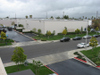
Welders working on Pier 29 in San Francisco were preparing the building for the America’s Cup sailing race. Instead, they accidentally caused $2.4 million in damages. Mindy Talmadge, a fire department spokesperson, attributed the fire to crews welding a latter to a wall. According to Talmadge, a spark entered a crack in the concrete wall and “the wood on the building underneath was really dry.” It took firefighters more than two hours to extinguish the blaze.
Read the full story…
Residential Construction: Shrinking Now, Growing Later?
August 17, 2011 — CDJ Staff
Jim Haugey, the Chief Economist for Reed Construction Data noted that new residential construction spending fell 0.2% in June and a slightly larger drop of 0.5% in residential remodeling. While economic growth is still low, Haugey states that homebuilders have “record low inventories.” He forecasts a shrinkage of 1.5% in 2011, followed by about 20% growth in 2012.
Read the full story…
Statute of Repose Dependant on When Subcontractors Finished
July 10, 2012 — CDJ Staff
Scott C. Sandberg of Snell and Wilmer writes a post on the JDSupra site about the Colorado Court of Appeals decision in Shaw Construction v. United Builder Services. Sanberg notes that when the general contractor was sued by an HOA, the contractor turned around and sued its subcontractors. The contractor made three claims. They claimed that “improvement” referred to the whole project, that “substantial completion” was reached when the architect certified completion, and that the statute of repose was tolled by the HOA’s service of a Construction Defect Action Reform Act notice.
The subcontractors claimed that “improvement” only referred to their specific work, which reached “substantial completion” when they finished, despite work to be done by other later, and the HOA’s notice to the contractor did not affect the subcontractors. The Colorado court agreed with the subcontractors.
Sandberg notes that some of the contractor’s were not addressed by the court, noting that “the court did not decide whether an improvement triggering the statute of repose can be determined on a trade-by-trade basis,” and that “the court did not decide whether substantial completion occurs when a certificate of occupancy is issued or when the architect certifies completion.”
Read the full story…
Condo Buyers Seek to Void Sale over Construction Defect Lawsuit
November 7, 2012 — CDJ Staff
A Michigan couple seeks to void their purchase of a condo in Texas after discovering that the complex was undergoing a construction defect lawsuit. ABQ Journal reports that Charles M. Lea and Olga Y. Ziabrikova said that they would not have purchased the condo if they had known the association was already alleging construction defects. The condo association discovered the defects “by at least late 2010,” according to the suit. The couple bought their condo in August 2011 and heard of the defects only in March 2012.
The couple notes that no one involved with the sale informed them of the construction defect complaints. The community association’s lawsuit states that problems have lead to $2.5 million in damages. The developer, Vegas Verde Condo Partners, have filed a general denial of the construction problems.
Read the full story…
Harmon Tower Construction Defects Update: Who’s To Blame?
August 17, 2011 — CDJ Staff
Reporting on the site VegasInc.com, Liz Benton notes that “nobody wants to take the fall for what happened at Harmon.” Work on the Harmon hotel building in Las Vegas’s CityCenter stopped in 2008 after 26 of the planned 49 stories were completed. Lorence Slutzky, a construction law professor at John Marshall Law School and a partner with the Chicago firm Robbins Schwartz Nicholas Lifton & Taylor told Benton that while inspectors and others are complicit, “the real responsibility rests with Perini, which has an obligation to comply with the plan specifications.” Perini’s claim is that they were given faulty design drawings. MGM disputes this.
�Perini has offered to repair the building defects, however MGM has released a statement that they have “zero confidence or trust that Perini can and will properly fix a building it has so badly constructed thus far.” One MGM spokesperson likened these requests from Perini to “the director of ‘Ishar’ demanding a sequel.” “Ishtar,’ cost Columbia Pictures $55 million dollars and earned only $4.2 million in its initial run. Perini claims that MGM halted work because of the economy.
Read the full story…
New Construction Laws, New Forms in California
July 10, 2012 — CDJ Staff
New construction laws came into effect in California on July 1. Writing for the Martindale-Hubble Legal Library, Glenn Mau, J. Michael McGuire, and John Tonsing, all of Archer Norris, discuss these changes. They note that the most important part of the changes to California construction law is that “all mechanics liens, stop notices and bond claims recorded after July 1, 2012 must use the new standardized forms and follow the new definitions, notice prerequisites and statutory release form language.”
Read the full story…
Insurer Must Defend Claims for Diminution in Value of Damaged Property
June 19, 2012 — Tred Eyerly, Insurance Law Hawaii
The insurer’s duty to defend a developer sued by purchasers of homes for damages for diminution in value of homes was at issue in Mid-Continent Cas. Co. v. Academy Dev., Inc., 2012 WL 1382459 (5th Cir. April 20, 2012).
In the underlying action, plaintiffs alleged the developer knew when it sold the homes that the lake walls were falling and that water was leaking from the lakes onto adjacent home sites. They sought damages for diminution in the value of their homes resulting from the defective lakes. The action was tried in 2008, and the jury returned a verdict for the developer.
Mid-Continent initially defended under a reservation of rights.
Reprinted courtesy of Tred R. Eyerly, Insurance Law Hawaii. Mr. Eyerly can be contacted at te@hawaiilawyer.com
Read the full story…
Contractor Removed from Site for Lack of Insurance
October 28, 2011 — CDJ Staff
The MetroWest Daily News reports that a demolition firm was told to leave the construction site at Natick High School since their failure to have workers compensation insurance makes them unable to work on the project. The contractor, Atlantic Dismantling and Site Construction, Inc. may have been working illegally since September.
The equipment that Atlantic had rented for the job was repossessed in August. Brait Builders Corp, the general contractor for the site had rented equipment so Atlantic could continue their work.
Their lack of insurance was discovered when a worker had a minor job-related injury. The state had issued a stop-work order for the firm and they could not legally bid on public projects. The school system did not receive any notice of this, and the school’s facilities director said of the general contractor, “chances are Brait never heard of anything either.”
Read the full story...
Faulty Workmanship may be an Occurrence in Indiana CGL Policies
April 7, 2011 — April 7, 2011 Beverley BevenFlorez - Construction Defect Journal
The question of whether construction defects can be an occurrence in Commercial General Liabilities (CGL) policies continues to find mixed answers. The United States District Court in Indiana denied the Plaintiff’s Motion for Summary Judgment in the case of General Casualty Insurance v. Compton Construction Co., Inc. and Mary Ann Zubak stating that faulty workmanship can be an occurrence in CGL policies.
�Judge Theresa L. Springmann cited Sheehan Construction Co., et al. v. Continental Casualty Co., et al. for her decision, ”The Indiana Supreme Court reversed summary judgment, which had been granted in favor of the insurer in Sheehan, holding that faulty workmanship can constitute an ‘accident’ under a CGL policy, which means any damage would have been caused by an ‘occurrence’ triggering the insurance policy’s coverage provisions. The Indiana Supreme Court also held that, under identically-worded policy exclusion terms that are at issue in this case, defective subcontractor work could provide the basis for a claim under a CGL policy.”
�As we reported on April 1st, South Carolina’s legislature is currently working on bill S-431 that would change the wording of CGL policies in their state to include construction defects. Ray Farmer, Southwest region vice president of the American Insurance Association spoke out against the bill. “CGL policies were never meant to cover faulty workmanship by the contractor,” he said. “The bill’s supplementary and erroneous liability provisions will only serve to unnecessarily impact construction costs in South Carolina.”
� �Read the Opinion and order... �
�Read the court’s ruling... �
�Read the American Insurance Association statement...
Contractors Admit Involvement in Kickbacks
December 9, 2011 — CDJ Staff
Two New Jersey contractors have pleaded guilty to charges that they made false representations for a government contract in a case related to kickbacks for construction work done in two school districts. New Jersey is recommending that the two men, Martin Starr and Stephen Gallagher, will each pay $50,000 in penalties, serve up to a year in jail, and be unable to accept public contracts for five years.
Last month, another individual in the case, Kenneth Disko, who had been the engineer for the school district, pleaded guilty on a similar charge. In addition to a $50,000 penalty, he will be serving three to five years in prison. A fourth conspirator, Robert Berman, the former business administrator for one of the school districts, has to pay a $13,000 fine and cooperate with the investigation. He is also barred from public employment in New Jersey and has been terminated from his position.
Starr admitted to preparing fictitious quotes which appeared to be from other contractors in order that his firm would seem to be the lowest bidder. Gallagher helped in preparing the fictitious bids and also provided cash kickbacks to Disko.
Read the full story…
Faulty Workmanship Causing Damage to Other Property Covered as Construction Defect
September 30, 2011 — Tred Eyerley, Insurance Law Hawaii
In yet another recent construction defect case, the Illinois Court of Appeal found for coverage. See Milwaukee Mut. Ins. Co. v. J.P. Larsen, Inc., 2011 Ill. App. Ct. LEXIS 872 (Ill. Ct. App. Aug. 15, 2011).
Weather-Tite, Inc. hired Larson as a subcontractor to apply sealant to windows installed by Weather-Tite in a condominium building. The windows subsequently leaked and caused water damage. The homeowner’s association sued Weather-Tite for breach of express and implied warranties. Weather-Tite filed a third-party complaint against Larsen alleging that, if it was liable to the association for breach of warranty, Larsen was liable for contribution as a joint tortfeasor. Weather-Tite and Larsen both tendered defenses to Milwaukee Insurance. The tenders were denied and Milwaukee Insurance filed suit to determine rights under the policy.
Cross-motions for summary judgment were filed by all parties. The trial court granted Milwaukee Insurance’s summary judgment motion as to Weather-Tite, but granted Larsen’s cross-motion against Milwaukee Insurance.
On appeal, the appellate court considered whether the underlying pleadings alleged facts demonstrating "property damage" resulting from an "occurrence" within the terms of the policy.
Read the full story…
Reprinted courtesy of Tred R. Eyerly, Insurance Law Hawaii. Mr. Eyerly can be contacted at te@hawaiilawyer.com
Legislatures Shouldn’t Try to Do the Courts’ Job
March 1, 2012 — CDJ Staff
David Thamann, writing in Property Casualty 360, argues that current actions by legislatures on insurance coverage amount to “legislative interference or overreach.” He notes that under current Colorado law, “a court shall presume that the work of a construction professional that results in property damage — including damage to the work itself or other work — is an accident unless the property damage is intended and expected by the insured.” He argues that here legislators are stepping into the role of the courts. “Insureds and insurers are not always going to be pleased with a court ruling, but that is the system we have.”
Read the full story…
2011 West Coast Casualty Construction Defect Seminar – Recap
June 1, 2011 — CDJ Staff
� 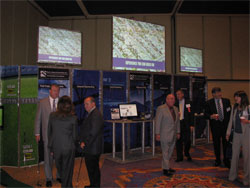 | �
�| Event exhibitors and sponsors contribute to an informative and engaging environment | �
�This year’s meeting was the best yet for the industry-leading construction defect and claims event.
�This year’s seminar concluded on May 13, 2011 with the Construction Defect Community Charitable Foundation Golf Tournament, held at Strawberry Farms Golf Course.
�The Disneyland Hotel in Anaheim, California was the place where more than 1,500 attendees convened for two days of professional development activities and seminars that included CLE workshops and panel discussions of special interest to legal and insurance professionals concerned with construction defect and claims litigation. Key events included “Challenges for Experts in Construction Defect Claims and Litigation,” “Keeping Up with Construction Defect Coverage,” and “Tips for Avoiding the ‘Perfect Storm’ in Handling of Wrap Claims.”
� �  | �
�| Supporting the golf tournament at the 15th hole | �
�This year’s Ollie award was given to George D. Calkins II, Esq. The West Coast Casualty Jerrold S. Oliver Award of Excellence was named in honor of the late Judge Jerrold S. Oliver, and recognizes an individual who is outstanding or has contributed to the betterment of the construction community.
�In addition to being the most comprehensive professional development seminar in the area of construction defects, this year’s seminar was equally valuable as a networking opportunity for members of the industry. People participated in professional development events during the day and then continued networking in the evening at numerous social events. The Lawn Party as well as the legendary Wood, Smith, Henning & Berman events were very well attended. Additional valuable networking events were hosted by a number of industry professionals at the House of Blues, and Tortilla Joe’s.
�As of this writing the 2011, West Coast Casualty's Construction Defect Seminar has applied for or has already received the following continuing education accreditation in the following areas;
�Read the full story…
�For more information about next year’s event, visit West Coast Casualty.
Former Zurich Executive to Head Willis North America Construction Insurance Group
March 1, 2012 — CDJ Staff
Insurance Journal reports that Sean McGroarty will be directing surety operations for their construction practice in North America. Previously, Mr. McGroarty was the senior vice president and head of international surety with Zurich Financial Services. He has also worked for Liberty Mutual Group and the St. Paul Companies.
�Mr. McGroarty will be leading a team of professionals offering brokerage services for contract and commercial surety.
Read the full story…
Exclusions Bar Coverage for Damage Caused by Chinese Drywall
July 5, 2011 —
Tred R. Eyerly,
Insurance Law HawaiiThe insured homeowners were unsuccessful in arguing around the policy's exclusions when seeking coverage for damage caused by Chinese drywall. Ross v. C. Adams. Constr. & Design, L.L.C., 2011 La. App. LEXIS 769 (La. Ct. App. June 14, 2011).
�Before the insureds purchased and moved into their home, it was renovated. After moving in, the insures discovered foreign gypsum drywall, or Chinese drywall. The insureds submitted a claim to Louisiana Citizens Property Insurance Company. In an investigation, the insurer confirmed the presence of Chinese drywall and damage to the metal surfaces caused by corrosion. Louisiana Citizens refused coverage and the insureds sued. The trial court denied the insured's motion for summary judgment and granted summary judgment to Louisiana Citizens.
�The court of appeal affirmed. Initially, the court determined the insureds sustained a direct physical loss. The inherent qualities of the Chinese drywall created a physical loss to the home and required that the drywall be removed and replaced.
�Four exclusions, however, barred coverage. First, damages due to faulty or defective materials were excluded from coverage. The Chinese drywall emitted high levels of sulfuric gas which caused the damage to the insured's plumbing, electrical wiring and metal components.
� Read the full story…
� �Reprinted courtesy of Tred R. Eyerly, Insurance Law Hawaii. Mr. Eyerly can be contacted at te@hawaiilawyer.com
Insurer Must Cover Construction Defects Claims under Actual Injury Rule
March 1, 2012 — Tred Eyerly, Insurance Law Hawaii
The Texas Court of Appeals held that the insured need not prove the exact dates physical damage occurred in order to trigger defense and indemnity coverage. Vines-Herrin Custom Homes, LLC v. Great Am. Lloyds Ins. Co., 2011 Tex. App. LEXIS 10027 (Tex. Ct. App. Dec. 21, 2011).
�In 1999, the insured built a home. He was insured under a CGL policy issued by Great American from November 9, 1998 to November 9, 2000. Thereafter, the insured held a CGL policy issued by Mid-Continent from November 9, 2000 to September 18, 2002.
�After construction was completed, the insured sold the house to the buyer in May 2000. After moving in, the buyer found numerous construction defects in the home, including water entering cracks in the home, and sinking and sagging of parts of the house. The buyer sued the insured, who sought coverage under the two policies. When the insurers refused to defend the underlying suit, the insured sued for a declaratory judgment.
�The underlying case went to arbitration and an award of $2.4 million was granted to the buyer. The insured assigned to the buyer his claims against the insurers.
Read the full story…
���Reprinted courtesy of Tred R. Eyerly, Insurance Law Hawaii. Mr. Eyerly can be contacted at te@hawaiilawyer.com
�
Florida Property Bill Passes Economic Affairs Committee with Amendments
April 14, 2011 — April 14, 2011 Beverley BevenFlorez - Construction Defect Journal
The Florida Property Bill (HBB 803) was passed by the Economic Affairs Committee by a vote of 11-7, according to Property Casualty 360, after adopting nine new amendments. The additions to the bill included limiting notice of claims to a set number of years, extending the statute of limitation on property claims from five years to six years, among others.
�HB 803 and SB 408, the Senate companion bill, focus primarily on residential property insurance. They make changes to the Florida Hurricane Catastrophe Fund, while also promoting increased notification of policy changes to policyholders. Sections of the bills provide minor fixes such as renaming Citizens Property Insurance Corporation to Taxpayer-Funded Property Insurance Corporation. However, other sections of the bills contain more significant policy changes such as sinkhole coverage and hurricane claims.
�The bills’ intent, according to the SunSentinel.com, is to reduce fraudulent claims and to bring new insurers into the insurance market. However, SunSentinel.com also reports that the bills may drastically increase property insurance premiums.
�Read the full Property Casualty 360 article...
�Read the full Sun Sentinel article...
Construction Law Client Alert: California Is One Step Closer to Prohibiting Type I Indemnity Agreements In Private Commercial Projects
June 15, 2011 — Haight Brown & Bonesteel, LLP
On June 1, 2011 by majority vote, the California Senate passed Senate Bill 474, which would amend Civil Code section 2782, and add Civil Code section 2782.05. The passage of this new law is a critical development for real estate developers, general contractors and subcontractors because it will affect how these projects are insured and how disputes are resolved.
�Civil Code section 2782 was amended in 2007 to prohibit Type I indemnity agreements for residential projects only. Since 2007, various trade associations and labor unions have lobbied to expand those very same restrictions to other projects. These new provisions apply to contracts, entered into after January 1, 2013, that are not for residential projects, and that are not executed by a public entity. The revisions provide that any provision in a contract purporting to indemnify, hold harmless, and defend another for their negligence or other fault is against public policy and void. These provisions cannot be waived.
�A provision in a contract requiring additional insured coverage is also void and unenforceable to the extent it would be prohibited under the new law. Moreover, the new law does not apply to wrap-up insurance policies or programs, or a cause of action for breach of contract or warranty that exists independently of the indemnity obligation.
�The practical impact of this new law is that greater participation in wrap-up insurance programs will likely result. While many wrap-up programs suffer from problems such as insufficient limits, and disputes about funding the self-insured retention, the incentive for the developer or general contractor to utilize wrap-up insurance will be greater than ever before because they will no longer be able to spread the risk of the litigation to the trades and the trade carriers.
�Read the full story…
�Reprinted courtesy of Steve Cvitanovic of Haight Brown & Bonesteel, LLP.