Crane Dangles and So Do Insurance Questions
November 7, 2012 — CDJ Staff
Hurricane Sandy sent a construction crane dangling from the top of One57, a condo construction project in New York City. In response to the risk, the nearby Parker Meridian and other nearby buildings were evacuated until the crane could be stabilized. Businessweek reports that One57 involves “a tangle of companies,” including the developer, Extell Development and the contractor, Lend Lease Construction. Pinnacle Industries was responsible for providing and operating the crane.
The insurance claims are yet to be made, but they will likely include the costs of evacuating nearby buildings and to cover any damage to the building itself. David DeLaRue, a vice president in construction practice at Willis Group Holdings said there would be two questions: “Did our insured do anything to cause that loss? Does this policy cover it?”
Read the full story…
One World Trade Center Due to Be America’s Tallest and World’s Priciest
February 10, 2012 — CDJ Staff
As One World Trade Center rises, so does the price tag. After construction delays and cost overruns, the cost of the building at the site of the September 11 attacks has risen to $3.8 billion. Part of the expense of the skyscraper is the heavily reinforced base of the building. The elevator shafts are also heavily reinforced, all part of guarding against future terrorist attacks.
� In comparison, the world’s tallest tower, the Burj Khalifa in Dubai, cost only $1.5 billion, less than half the cost of One World Trade Center. As a result, the Port Authority does not see the building as being profitable in near future. In order to fund it, the agency is raising tolls on bridge and tunnel traffic.
� Currently, about the half the unfinished building is leased. Construction is expected to conclude in 2013.
Read the full story…
The Year 2010 In Review: Design And Construction Defects Litigation
February 25, 2011 — Candace Matson, Harold Hamersmith, and Helen Lauderdale -
Construction & Infrastructure Law Blog - February 25, 2011
This article is the first in a series summarizing construction law developments for 2010
�1. Centex Homes v. Financial Pacific Life Insurance Co., 2010 U.S. Dist. LEXIS 1995 (E.D. Cal. 2010)
�After settling numerous homeowners’ construction defect claims — and more than ten years after the homes were substantially completed — a home developer brought suit against one of the concrete fabrication subcontractors for the development seeking indemnity for amounts paid to the homeowners, as well as for damages for breach of the subcontractor’s duties to procure specific insurance and to defend the developer against the homeowners’ claims. The subcontractor brought a motion for summary adjudication on the ground the developer’s claims were barred by the ten year statute of repose contained in Code of Civil Procedure Section 337.15.
The District Court agreed the developer’s claim for indemnity was barred by Section 337.15. And it held that because the damages recoverable for breach of the subcontractor’s duty to purchase insurance are identical to the damages recoverable through the developer’s indemnity claim, the breach of duty to procure insurance claim also was time-barred. The District Court, however, allowed the claim for breach of the duty to defend to proceed. The categories of losses associated with such a claim (attorneys’ fees and other defense costs) are distinct from the damages recoverable through claims governed by Section 337.15 (latent deficiency in the design and construction of the homes and injury to property arising out of the latent deficiencies).
� �2. UDC — Universal Development v. CH2M Hill, 181 Cal. App. 4th 10 (6th Dist. Jan. 2010)
��Indemnification clauses in construction agreements often state that one party to the agreement — the “indemnitor” — will defend and indemnify the other party from particular types of claims. Of course, having a contract right to a defense is not the same as actually receiving a defense. Any indemnitor attempting to avoid paying for defense costs can simply deny the tender of defense with the hope that when the underlying claim is resolved the defense obligations will be forgotten. In the past, when parties entitled to a defense — the “indemnitees” — had long memories and pressed to recover defense costs, indemnitors attempted to justify denying the tender by claiming their defense obligations coincided with their indemnity obligations and neither arose until a final determination was made that the underlying claim was one for which indemnity was owed.
��Read the full story...
�Reprinted courtesy of Candace Matson, Harold Hamersmith, and Helen Lauderdale, Sheppard Mullin Richter & Hampton LLP. Ms. Matson can be contacted at cmatson@sheppardmullin.com, Mr. Hamersmith can be contacted at hhamersmith@sheppardmullin.com, and Ms. Lauderdale can be contacted at hlauderdale@sheppardmullin.com.
Safety Officials Investigating Death From Fall
September 9, 2011 — CDJ Staff
California safety officials are looking into the circumstances surrounding the death of a construction worker who fell from a roof in Tiburon, California. Another worker found Gabriel Vasquez unconscious at the site. Vasquez was later pronounced dead. The State Division of Occupational Safety and Health are trying to determine how Vasquez fell.
Read the full story…
Federal Judge Dismisses Insurance Coverage Lawsuit In Construction Defect Case
December 9, 2011 — CDJ Staff
A federal judge dismissed a coverage lawsuit brought by Mid Continent Casualty Company against its insured, Greater Midwest Builders Ltd.
Plaintiff brought this declaratory judgment action in response to a suit filed in Johnson County District Court, seeking a judicial determination that it had no coverage obligation for claims asserted against its insured. This case was stayed until the state court action entered judgment against the insured. The prevailing parties then commenced a garnishment action against the plaintiff, and another insurance company, in state court in Missouri. The court was asked whether it should lift the stay and proceed with the case, or decline jurisdiction in favor of resolution in the Missouri state court.
The court granted the motion to dismiss holding that proceeding with the case would lead to protracted, piecemeal litigation, while deferring to the Missouri state court would decide all the claims involved in the dispute.
Read the court’s decision…
Federal District Court Continues to Find Construction Defects do Not Arise From An Occurrence�
May 10, 2012 — CDJ Staff
Coverage for construction defects continues to be hotly contested in Hawaii state and federal courts. In a recent decision, Judge Mollway felt bound to follow the Ninth Circuit’s decision in Burlington Ins. Co. v. Oceanic Design & Constr., Inc., 383 F.3d 940, 944 (9th Cir. 2004), where the court found construction defect claims arise from breach of contract, not from an occurrence. Judge Mollway’s most recent decision on the issue is Illinois Nat. Ins. Co. v. Nordic PCL Constr., Inc., 2012 U.S. Dist. LEXIS 58464 (D. Haw. April 26, 2012).
�Nordic constructed a grocery store for Safeway. In addition to the grocery store, Nordic built a 165-space rooftop parking deck, retail shops and related improvements. After opening for business in 2007, Safeway experienced significant leaks. Safeway demanded that Nordic repair the parking deck. Nordic sent the demand letter to the insurer, who agreed to appoint counsel subject to a reservation of rights.
�Safeway filed suit against Nordic in state court alleging, among other things, breach of contract and negligence. The insurer provided Nordic with a defense, but Nordic hired independent counsel.
�The insurer filed for declaratory relief in federal district court.
� Read the full story…
�
United States District Court Confirms That Insurers Can Be Held Liable Under The CCPA.
June 19, 2012 — Chad Johnson
In D.R. Horton, Inc.-Denver v. The Travelers Indem. Co. of Am., 10-CV-02826-WJM-KMT, 2012 WL 527204 (D. Colo. Feb. 16, 2012), the court was asked to rule on Travelers’[1] motion to dismiss D.R. Horton, Inc. ?Äì Denver’s (“DRH”) claim that Travelers violated the Colorado Consumer Protection Act (“CCPA”).
In the underlying construction defect case (“CD case”), DRH, as the developer and general contractor of a construction project, tendered the defense of the CD case to certain subcontractors and to Travelers as an insurer to those subcontractors. Travelers accepted the duty to defend DRH. DRH hired counsel to defend it, and the attorney fees and costs of suit were billed to Travelers. However, for a period of over five years, Travelers failed to actually pay any portion of the defense of DRH. Finally, on October 31, 2008, Travelers offered checks for payment of only 4% of the costs and fees incurred. DRH then returned the checks to Travelers and provided Travelers with authority to support its position that the amounts in Travelers’ checks were inadequate. Thereafter, Travelers dug its heels in, and resubmitted the same checks.
DRH was then forced to file a coverage action against Travelers for declaratory judgment, breach of contract, bad faith breach of insurance contract, and deceptive trade practices under the CCPA. In its motion to dismiss DRH’s CCPA claim, Travelers’ argued that DRH failed to plead specific facts that Travelers engaged in a deceptive trade practice under C.R.S. § 6-1-105, and DRH failed to plead sufficient facts showing that Travelers’ actions significantly affect the public ?Äì a necessary element of a CCPA claim.
Read the full story…
Reprinted courtesy of Chad Johnson, Higgins, Hopkins, McLain & Roswell, LLC. Mr. Johnson can be contacted at johnson@hhmrlaw.com
Cabinetmaker Exceeds Expectations as Conditions Improve�
October 23, 2012 — CDJ Staff
American Woodmark, the manufacturer of several national brands of cabinets and vanities, saw greater than anticipated earnings in its most recent quarter. Their revenue was $148.3 million, an increase of 13% over the same quarter a year prior. They saw a 40% increase in sales. As a result, their per-share earnings were 7 cents, instead of the projected loss of 3 cents per share. Forbes reports that the share price for American Woodmark has been rising in August 2012.
� Read the full story…
�
Drug Company Provides Cure for Development Woes
November 18, 2011 — CDJ Staff
Vertex Pharmaceuticals is poised to become the holder of Boston’s biggest commercial lease, paying $72.5 million for 1.1 million square feet on Boston’s waterfront. Vertex’s new buildings are still under construction, but the plans have spurred other development in the Fan Pier area, according to the New York Times. The Times quotes Mary A. Burke, a senior economist at the Federal Reserve Bank of Boston that the Vertex project gives “a big push” to the “momentum for economic growth.”
The Fallon Company is building Vertex’s new laboratory and office space. They are separately planning to build a high-rise with 150 luxury condominium units. According to Joseph Fallon, the chief executive and president of the Fallon Company, there is already a waiting list of 50 buyers for the condominiums.
Across the street from the Vertex site, a group including Morgan Stanley and Boston Global Investors is planning a 23-block mixed use project that would include 1.2 million square feet of retail space. Additionally, the New England Development and the Hanover Group is building a 356-unit apartment building at the adjacent Pier 4.
Read the full story…
Construction Suit Ends with Just an Apology
February 10, 2012 — CDJ Staff
After suing a contractor for failing to complete the remodeling of their home, an Orange County couple has settled for an apology. Douglas J. Pettibone represented the contractor, who had lost his business after a broken neck, multiple surgeries, and an addiction to pain medicine. Mr. Pettibone represented his client pro bone. The case was settled in arbitration by JAMS.
� Mr. Pettibone noted that his client gave “a heartfelt and very moving apology.” The remodeling was completed by another contractor, two years after Thorp Construction stopped work on the project. After the apology, the case was dismissed.
Read the full story…
2011 West Coast Casualty Construction Defect Seminar – Recap
June 1, 2011 — CDJ Staff
� 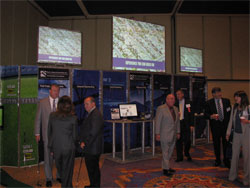 | �
�| Event exhibitors and sponsors contribute to an informative and engaging environment | �
�This year’s meeting was the best yet for the industry-leading construction defect and claims event.
�This year’s seminar concluded on May 13, 2011 with the Construction Defect Community Charitable Foundation Golf Tournament, held at Strawberry Farms Golf Course.
�The Disneyland Hotel in Anaheim, California was the place where more than 1,500 attendees convened for two days of professional development activities and seminars that included CLE workshops and panel discussions of special interest to legal and insurance professionals concerned with construction defect and claims litigation. Key events included “Challenges for Experts in Construction Defect Claims and Litigation,” “Keeping Up with Construction Defect Coverage,” and “Tips for Avoiding the ‘Perfect Storm’ in Handling of Wrap Claims.”
� �  | �
�| Supporting the golf tournament at the 15th hole | �
�This year’s Ollie award was given to George D. Calkins II, Esq. The West Coast Casualty Jerrold S. Oliver Award of Excellence was named in honor of the late Judge Jerrold S. Oliver, and recognizes an individual who is outstanding or has contributed to the betterment of the construction community.
�In addition to being the most comprehensive professional development seminar in the area of construction defects, this year’s seminar was equally valuable as a networking opportunity for members of the industry. People participated in professional development events during the day and then continued networking in the evening at numerous social events. The Lawn Party as well as the legendary Wood, Smith, Henning & Berman events were very well attended. Additional valuable networking events were hosted by a number of industry professionals at the House of Blues, and Tortilla Joe’s.
�As of this writing the 2011, West Coast Casualty's Construction Defect Seminar has applied for or has already received the following continuing education accreditation in the following areas;
�Read the full story…
�For more information about next year’s event, visit West Coast Casualty.
Instant Hotel Tower, But Is It Safe?
March 28, 2012 — CDJ Staff
Broad Sustainable Building has leapfrogged in China’s construction boom by building a thirty-story hotel in just fifteen days in the city of Changsha. According to an article in the Los Angeles Times, most of the building was prefabricated, but most prefabricated buildings require a longer time for assembly. Broad claimed that it cut no corners on safety. However, Zhang Li, a Beijing architect, told the Times that “incredible speed also means incredible risk.”
�At the completion date, the interior was still partially finished. Some rooms were furnished, while others weren’t quite so ready. The hotel will be used to house clients who are visiting Broad and some of its employees.
�Broad called their process “the most profound innovation in human history” and predicted that soon a third of new buildings worldwide would be constructed this way. The company anticipates using the same process to build taller buildings, with hopes of eventually constructing a 150-story building.
�China is currently undergoing a building boom which Zhang attributed to a desire to catch up to the developed world. As a result of this boom, he noted that building inspections are often skipped in China to speed up building.
Read the full story…
US Courts in Nevada Busy with Yellow Brass
August 2, 2012 — CDJ Staff
Judge Robert C. Jones, the chief judge of the United States District Court of Nevada, and Judge Peggy A. Leen, a magistrate judge with the same court, have issued orders in cases involving allegations of high-zinc yellow brass plumbing components. Judge Jones issued orders on Waterfall Homeowners Association v. Viega, Inc. and Greystone Nevada, LLC v. Anthem Highlands Community Association on July 9, 2012. Judge Leen issued orders on Southern Terrace Homeowners Association v. Viega, Inc. on July 10, and The Seasons Homeowners Association, Inc. v. Richmond American Homes of Nevada, Inc. on July 19.
Chief Judge Jones held an omnibus hearing on Waterfall v. Viega on June 12. During that hearing “Chief Judge Jones had already agreed that the claims against the product manufacturers should be be severed from the majority of the other claims and that discovery should proceed on different tracks.” Judge Leen ordered that the Southern Terrace claims be referred to Chief Judge Jones to determine if it should be consolidated with other yellow brass cases.
Chief Judge Jones’s decision in Greystone Nevada rests on issues of whether the affected homeowners had signed arbitration agreements. The judge found that the “Defendant’s claims that the seven homeowners they have identified are subsequent purchasers who need not arbitrate with Greystone is definitively refuted by the evidence.”
Judge Leen cites the Greystone decision in her ruling on Seasons Homeowners Association v. Richmond American Homes of Nevada. Richmond seeks to compel individual arbitration, stating that “the arbitration clause used singular rather than plural terms, and therefore, class arbitration was foreclosed.” Judge Leen determined that “under Nevada law, a homeowners association has statutory authority to represent homeowners associations in these types of actions. She did, however, accept Richmond’s argument that they could compel arbitration.
The Waterfall order involves an attempt by two homeowners associations to seek a class action against seventeen defendants, the first twelve of whom are described as “the Viega Defendants” and “the Uponor Defendants.” Chief Judge Jones notes that “many of these Defendants have been sued in identical class actions by the same law firms, but with different named defendants.” The homeowner association seek to “represent their own 998 members directly but also wish to represent up to 10,000 homeowner associations representing up to 250,000 similarly situated homeowner members throughout the Las Vega area via this class action.”
The judge has denied the Viega Defendants’ attempt to deny class certification, noting that the plaintiffs “argue that they intend to argue for class certification under Rule 23(b)(3). He also denied the motions by the two groups of the Viega Defendants. The U.S. Viega Defendants sought to be dismissed from the case for a variety of reasons. The judge noted of the claim that the plaintiffs had no injury of fact and are not alleging actual damage is contradicted by the allegations of actual damage made by the plaintiffs. ”They have alleged that the parts are defective and have already begun to corrode in at least a few sample circumstances, even if they have not yet failed.” To the argument that there re not particular claims made against defendants, the judge notes, “it is clear from the Complaint which Defendants are alleged to have manufactured and sold which brands of allegedly defective products, and which Defendants are alleged to have installed them.”
The German Viega firms also sought to be dismissed from the suit, noting that “they have no property, employees, accounts, advertisements, etc. in Nevada and have not sold any products in Nevada.” However, the judge notes that “at least Waterfall, and perhaps Red Bluff, was still under construction when Viega, Inc. became the sole shareholder of Vanguard Industries, Inc.”
Finally, both of Chief Judge Jones’s rulings cite a related case in the U.S. District Court for the District of Minnesota involving a class action settlement for those with F1807 systems. He notes in both these cases that “Plaintiffs disclaimed any claims based upon F1807 components.”
Read the courts' decisions…
Waterfall Homeowners Association v. Viega, Inc.
Greystone Nevada, LLC v. Anthem Highlands Community Association
Southern Terrace Homeowners Association v. Viega, Inc.
The Seasons Homeowners Association, Inc. v. Richmond American Homes of Nevada, Inc.
Construction on the Rise in Denver
September 13, 2012 — CDJ Staff
In another sign of a recovery in the housing industry, the Denver Business Journal reports that the pace of new home construction has accelerated in the Denver area. According to the article, in the first seven months of 2012, forty-eight percent more permits were issued than in the first seven months of 2011. In July, 2012, there were sixty-six percent more permits than a year previously. For the Denver metropolitan area, July was the sixteenth consecutive month in which permits were up from a year previously.
Read the full story…
Yellow Brass Fittings Play a Crucial Role in Baker v Castle & Cooke Homes�
May 10, 2012 — CDJ Staff
Baker v Castle & Cooke Homes Hawaii, et al. is a “class action filed by homeowners who allege that their homes have a construction defect. They allege that their plumbing systems include brass fittings susceptible to corrosion and likely to cause leaks. They bring this action against the developer of their homes and the manufacturers of the brass fittings.”
�Zurn, the manufacturer of the allegedly defective brass fittings, sought a dismissal, or if that could not be achieved, then “a more definite statement, of five of the six claims.” Zurn moved for summary judgment on the sixth claim, or alternately sought “summary judgment on one of the five claims it” sought to dismiss.” The court granted in part the motion, and denied the motion for summary judgment.
�The developer, Castle & Cooke, sought dismissal of the First Amended Complaint stating “that Plaintiffs have not complied with Hawaii’s Contractor Repair Act, chapter 672E of Hawaii Revised Statutes, which requires, among other things, a plaintiff to give a contractor the results of any testing done before filing an action against that contractor.” The court couldn’t determine “certain facts essential to ruling” on Castle & Cooke’s motion, and therefore denied the motion, but ordered Plaintiffs to submit requested material by the stated deadline.
�The Baker v Castle & Cooke case began with the Plaintiffs claim that the use of yellow brass fittings can lead to construction defects. They allege that “yellow brass is particularly susceptible to dezincification, a corrosion process in which zinc leaches into potable water that comes into contact with the brass. According to Plaintiffs, as the brass corrodes, it becomes porous and mechanically weak. Plaintiffs further allege that the PEX systems in the putative class members’ homes have begun to, or are about to, leak water into the walls, ceilings, and floors of their homes. Plaintiffs allege that the leakage will cause water damage and mold growth, exposing the occupants to toxins.”
�In response to the plaintiffs’ claims, Zurn argued “because their yellow brass fittings have not failed to date, Plaintiffs fail to allege, and have no evidence showing, that they have suffered any actual injury.” Plaintiffs replied, “even if the fittings have not failed as of today, failure in the future is inevitable.”
�However, the court stated, “whether Plaintiffs have suffered any injury, or whether Plaintiffs are attempting to proceed based solely on future injury, implicates Plaintiffs’ standing to bring this action, as well as whether this case is ripe for adjudication.” The court has requested the parties to submit “supplemental briefing on whether this case should be dismissed pursuant to Rule 12(b)(1). In supplemental briefs, Zurn argues that dismissal is appropriate because Plaintiffs lack standing, and Castle & Cooke argues that dismissal is appropriate because Plaintiffs’ claims are not ripe.”
�The court continues to discuss the problem of standing: “To establish standing, a plaintiff must demonstrate three things. First, the plaintiff must suffer an "injury-in-fact," which means that there must be a concrete and particularized "invasion of a legally protected interest" and the invasion is actual or imminent. Lujan v. Defenders of Wildlife, 504 U.S. 555, 560 (1992). Second, the injury must be fairly traceable to the challenged action. Third, a favorable decision must be likely to redress the injury. Id. It is the first element (injury-in-fact) that is in issue here.”
�The court found that the plaintiffs do have standing: “Even if the court could not rely on the allegations that the pipes will soon leak, the court would conclude that, for standing purposes, Plaintiffs have a sufficient injury-in-fact in the form of their alleged economic loss.” In a hearing, Plaintiffs argued that their homes had decreased in value.
�The court also denied Castle & Cooke’s motion to dismiss based on a lack of ripeness, stating “the same reasons Plaintiffs satisfy the injury-in-fact requirement for standing purposes, they satisfy the constitutional ripeness requirement.”
�Plaintiffs asserted six counts against Zurn. Zurn, in response, made a motion to dismiss counts VIII, IX, X, XII, and XIII. The court granted Zurn’s motion for Counts VIII, IX, and X only: “Counts VIII (product liability), IX (negligence), and X (strict liability) sound in tort. Zurn argues that, because Plaintiffs allege no injury other than to the PEX systems and the yellow brass fittings themselves, the economic loss rule bars their tort claims. The court agrees.”
�The court disagreed with Zurn’s motion regarding Count XII: “Count XII asserts that Zurn has breached the implied warranty of merchantability. Zurn argues that Count XII is barred by the applicable statute of limitations and that Plaintiffs do not sufficiently allege an injury. The court disagrees.”
�Zurn’s motion regarding Count XIII was also denied: “Count XIII asserts that Zurn violated section 480-2 of Hawaii Revised Statutes.” Furthermore, “Plaintiffs allege that Zurn ‘engaged in unfair and deceptive acts or practices when [it] designed, manufactured and sold Yellow Brass Fittings.’ Zurn argues that Plaintiffs fail to state a claim under section 480-2(a) because their claims are barred by the statute of limitations and they do not adequately allege reliance or a cognizable injury. The court disagrees.”
�The court denied the motion for summary judgment with respect to Counts XI and XII.
�Castle & Cooke sought to dismiss “Plaintiffs’ claims against it under section 672E-2 of Hawaii Revised Statutes, which provides for dismissal when claimants fail to comply with chapter 672E.” There was some discussion regarding the test results. Apparently, the plaintiffs had failed to provide a written notice of claim at least 90 days before filing the action. However, it is unclear if the Plaintiffs have since complied with the requirements of the chapter. “The court has received no supplemental information from either party about whether any test results from another case have been turned over or whether those materials are subject to a confidentiality agreement. The record at this point does not establish noncompliance with the requirement in chapter 672E to provide such information. The court therefore denies the motion to dismiss.”
�In summary, “Zurn’s motion to dismiss is granted as to Count VIII, Count IX, and Count X. Zurn’s motion to dismiss is denied with respect to Plaintiffs’ other claims. Zurn’s request for a more definite statement and its summary judgment motion are denied. Plaintiffs are given leave to file an amended Complaint no later than May 21, 2012.” Furthermore, “the court denies Castle & Cooke’s motion, but directs Plaintiffs to file, within two weeks, either a certificate of compliance with section 672E-3(c), or an explanation as to why they have not complied. Castle & Cooke may submit a response within two weeks of Plaintiffs’ submission. Each party’s submission is limited to 1000 words.”
� Read the court’s decision…
�
The Ever-Growing Thicket Of California Civil Code Section 2782
January 6, 2012 — Michael D. Worthing, Borton Petrini
California Civil Code section 2782 imposes limits on indemnity and defense provisions in construction contracts. Since the initial adoption of S.B. 8001 in 2002 (eff. January 1, 2003) section 27822 has been revised several times, and legislative history suggests that interest groups representing builders, developers and sub-contractors, as well as the insurance industry, have seen legislative action on these indemnity and defense issues as part of the overall response to the same economic pressures resulting from construction defect litigation that gave rise to S.B. 800. Amendments in 2005, 2007, 2008 and 2011 (each effective January 1 of the following year) have increasingly entangled the provisions of Section 2782 with various provisions of S.B. 800. The application of section 2782 to construction contracts, and in particular contracts between developer-builders and subcontractors, executed after January 1, 2006, will require a concurrent reading and understanding of S.B. 800, the application of which is itself still in flux.
The time a construction contract was executed will likely determine which version of section 2782, read in connection with provisions of S.B.800, is applicable. Because of the nature of construction defect litigation, the determination of relative rights and liabilities of developer-builders vis-à-vis subcontractors under construction contracts does not become the subject of litigation, and legal and judicial interpretation, until years after the contracts were entered and work performed. As of the date this article is submitted, there has been no case law interpreting or applying any of the post S.B. 800 amendments, in part, and perhaps primarily, because litigation arising from construction contracts executed after January 1, 2006, has not yet reached the appellate courts.
SECTION 2782 AT THE TIME S.B. 800 WAS ENACTED
Section 2782 was originally enacted in 1967 and amended several times to the version in effect when S.B. 800 became law, at which time the section was relatively simple and straightforward. It then consisted of two subdivisions, which have essentially remained unchanged until the most recent amendment during the 2011 legislative session.
Section 2782 (a) prohibited, and still prohibits, provisions in construction contracts that “purport to indemnify the promisee against liability for damages for death or bodily injury to persons, injury to property, or any other loss, damage or expense arising from the sole negligence or willful misconduct of the promise.” This provision essentially prohibits what had been referred to as so-called Type I or “specific” indemnity provisions. In such agreements, the indemnitor [the promisor, that is, the person or entity indemnifying] will indemnify the indemnitee [the promisee, that is, the person or entity being protected by the indemnity] for the indemnitee’s own negligence, whether active or passive, whether the indemnitee is solely negligent or concurrently negligent with the indemnitor. (See, MacDonald & Kruse, Inc. v. San Jose Steel Co. (1972) 29 Cal.App.3d 413, 419.)3 Section 2782 (a) has remained essentially intact since the enactment of S.B. 800. It still must be considered and applied to interpret a construction contract. Generally, it will apply to contracts not involving a public agency; the next part of section 2782 specifically governs such contracts.
The second subdivision prohibits provisions in any construction contract with a public agency which purport to impose on the contractor, or relieve the public agency from, liability for the active negligence of the public agency. Subdivision (b) has been revised by the 2011 amendment, discussed below. If a construction contract with the public agency is for residential construction, the standards of S.B. 800 likely apply.4
This was the extent of section 2782 on January 1, 2003, when S.B. 800 went into effect, and remained so until January 1, 2006. This version will govern interpretation and application of indemnity and defense provisions in construction contracts executed before January 1, 2006.5
2005 AMENDMENT
The first “post S.B. 800” change to Section 2782 was in enacted in 2005, effective January 1, 2006, and added two new sections. Subdivision (c) stated (in somewhat greater detail than paraphrased here) that for residential construction contracts, or amendments thereto, entered into after January 1, 2006, a subcontractor cannot be required to indemnify (including the cost to defend) a builder for construction defects that arise out of negligence or design defects of the builder or other independent contractors, or that do not arise out of the scope of the subcontractor=s scope of work. The term “residential construction” was defined by reference to S.B.800 generally, and the term “builder” was defined by reference to section 911 (a part of S.B. 800), for the first time expressly connecting provisions of section 2782 to S.B. 800. Contractual provisions not expressly prohibited were reserved to the agreement of the parties.
What subdivision (c) took away was partially given back by subdivision (d). It stated that “subdivision (c) does not prohibit a subcontractor and builder from mutually agreeing to the timing or immediacy of the defense and provisions for reimbursement of defense fees and costs, so long as that agreement, upon final resolution of the claims, does not waive or modify the provisions of subdivision (c).”6 In addition, it stated that this subdivision (c) did not affect the obligations of an insurance carrier under Presley Homes, Inc. v. American States Insurance Company (2001) 90 Cal.App.4th 571, which holds that where an insurer has a duty to defend a developer pursuant to an additional insured endorsement obtained under a subcontractor’s policy, that duty generally applies to the entire action, even if the suit involves both covered and uncovered claims, or a single claim only partially covered by the policy. Finally, subdivision (d) stated that the amendment did not affect the builder’s or subcontractor’s obligations under S.B. 800. Both of these latter provisions, relating to the Presley Homes case, and obligations under S.B. 800, have been carried forward essentially intact in subsequent amendments of section 2782.
This version of section 2782 will be applicable to any contract between a builder as defined by section 911 (see fn. 4, above) and a subcontractor executed between January 1, 2006, and December 31, 2008. Thus, a general contractor, etc., who is not a builder is not subject to the provisions added by the 2005 amendment; this changed with the next amendment.
It is not clear whether this version would apply to a contract entered before January 1, 2006, but amended after that date. Subdivision (c) applies to “all construction contracts, and amendments thereto, entered into after January 1, 2006, for residential construction.” It would seem that the clearest and most logical construction would apply it only to contracts originally made after January 1, 2006, and thereafter amended, but there has been no judicial determination of this issue.
In addition, logically it would seem that this version of section 2782 should be applicable to construction contracts for residential construction between a builder and a subcontractor, entered between January 1, 2006, and December 31, 2008; however, legislative history relating to the 2008 amendment discussed below suggests a different result might occur.
2007 AMENDMENT
The second “post S.B. 800” amendment in 2007 (effective January 1, 2008), added subdivisions (e)(1) and (e)(2).
Subdivision (e)(1) added general contractors and subcontractors not affiliated with the builder and imposed essentially the same restrictions on provisions to indemnify, including the cost to defend, them as had been imposed on the “builder” by the 2005 amendment. The amendment refers to section 911 (b), again part of S.B. 800, to define general contractors, etc., not affiliated with the builder.
Subdivision (e)(1) essentially repeated the provisions of subdivision (d) permitting agreement to the timing and immediacy of the defense, the reference to the Presley Homes case, and the general contractor’s or subcontractor’s obligations under S.B. 800.
It appears this amendment was an attempt to harmonize the new restrictions on indemnity and defense provisions with S.B. 800. The 2005 amendment, whether by oversight or intent, covered only builders and not general contractors, although both classes are subject to the provisions of S.B. 800; the 2007 amendment added non-builder-affiliated general contractors.
Again, logically, it would seem that this version of section 2782 should be applicable to construction contracts for residential construction between a general contractor or contractor not affiliated with a builder and a subcontractor, entered between January 1 and December 31, 2008; however, legislative history relating to the 2008 amendment discussed below suggests a different result might occur. The same potential uncertainty regarding applicability to a contract entered before January 1, 2008, but amended after that date, exists for this provision as for the prior amendment, discussed above.
2008 AMENDMENT
The third “post S.B. 800” amendment in 2008 (effective January 1, 2009), reorganized the language relating to prohibited indemnity provisions, added a reference to insurance in that same prohibition, extensively rewrote the provisions governing agreements relating to the timing or immediacy of defense, added language preserving equitable indemnity claims, and added language defining “construction defect” by reference to the standards set forth in S.B. 800.
Subdivisions (a) and (b) remained unchanged.
Subdivision (c) now made a combined reference to builders (again by reference to section 911), as well as general contractors or contractors not affiliated with the builder (again by reference to section 911 (b)), rather than dealing with the two groups in separate but nearly identical subdivisions as previously. It otherwise restated the same limitations that were previously set forth separately in subdivisions (c) and (e), as well as the reference to the Presley Homes case, and the general contractor’s or subcontractor’s obligations under S.B. 800, but with one important addition. The word “insure” was added to the description of prohibited provisions, to-wit: “provisions? that purport to insure or indemnify, including the cost to defend, the builder, [etc.]? are unenforceable” to the extent they arise out of claims of the type previously described.
It is unclear what impact the addition of this single word “insure” will have; and, it will have to be read in light of the preservation of the language that it shall not affect the obligations of an insurance carrier under the holding of the Presley Homes case. Suppose a carrier had issued an additional insured endorsement under which it would otherwise be required to defend a builder or general contractor consistent with the Presley Homes rule: would this newly added single word (restricting the construction contract, to which the carrier is not a party) give the carrier a basis for denying coverage under the insurance contract? Or would the continued inclusion of the express language that it does not affect the obligations of an insurance carrier under Presley Homes control? That is surely an issue that will have to be worked out by the courts.
The new subdivision (d) addressed defense obligations. Again it permitted parties to agree to the timing and immediacy of the defense and provision for reimbursement of defense fees and costs, but imposed a very detailed scheme that appears to limit the extent of such agreement. A subcontractor owes no defense or indemnity obligation until the builder or general contractor provides a written tender of the claim, which has the same force and effect as notice of commencement of a legal proceeding. Upon that tender the subcontractor shall elect to follow one of two ways of performing: subdivision (d) (1) permits the subcontractor to defend with counsel of its choice and to control the defense, if the subcontractor gives written notice of this election within a reasonable time after receipt of the written tender and in no event later than 90 days following that receipt; subdivision (d) (2) provides an alternative by which the subcontractor pays a reasonable allocated share of the builder’s or general contractor’s defense fees and costs within 30 days of receipt of an invoice, subject to reallocation upon final resolution of the claim by settlement or judgment. Subdivision (e) sets forth remedies available to the builder or general contractor if a subcontractor fails to timely and adequately perform its obligations under either of the two alternatives in subdivision (d), including compensatory and consequential damages, reasonable attorneys’ fees in connection with the first alternative, and interest on defense and indemnity costs in connection with the second alternative. Subdivision (e) ends with provisions relating to reallocation of defense costs, and damages for failure to reallocate.
Application of these requirements in actual litigation is likely to be cumbersome and potentially fraught with conflicts. If retained pursuant to subdivision (d) (1) does the attorney represent the builder, the subcontractor, or both? To whom does the attorney owe his or her fiduciary duty? Can an appropriate informed written consent be formulated, for example, under Rule 3-310 of the California Rules of Professional Conduct, or Rule 1.7, ABA Model Rules of Professional Conduct? Could an attorney retained by a subcontractor blame the subcontractor if that is in the developer’s best interests? If multiple subcontractors elect to defend directly, how would the defense be coordinated among the potentially multiple attorneys so retained? Would an attorney retained by one subcontractor be able, or inclined, to blame another subcontractor who also chose to defend directly, in other words, what would prevent inconsistent defense positions amongst the various counsel retained by subcontractors for the developer? There may be solutions to such practical and professional considerations but it seems an ethical thicket awaits any attorney involved in such circumstances.
Subdivision (e) and (f) preserve equitable indemnity claims for the builder, general contractor or subcontractor, the first in general, the second as against any supplier, design profession, or product manufacturer. Finally, the 2008 amendment added for the first time, in subdivision (h), language defining "construction defect" as used in section 2782 as a violation of standards set forth in S.B. 800.
The inclusion of these last three subsections would seem to work against simplification of litigation. A builder or general contractor is likely to allege a claim for equitable indemnity against any and all subcontractors in addition to claims for contractual indemnity and defense (however limited by the other provisions of section 2782). Nothing in the section suggests the subcontractor should, or even can, somehow take on the representation of the builder, etc., in connection with a claim of equitable indemnity back against the subcontractor.
And the limited definition of “construction defect” in subdivision (h) appears to raise an issue of the applicability of the limitations set forth in subdivision (c). Although there is a school of thought that section 941 limits residential construction defect claims only to breach of the performance standards under S.B. 800, it is still common for CD complaints to plead other legal theories, e.g., breach of contract, breach of warranty, negligence, etc., in addition to violation of S.B. 800 standards. With the addition of subdivision (h) it is arguable that the restrictions on indemnity and defense provisions spelled out in subdivisions (c) and (d), both of which relate to claims for residential construction defects, are applicable only to claims for violation of S.B. 800 standards, and not other residential construction defect claims. In other words, a developer might conceivably still be entitled to a broader scope of indemnity and concomitant defense for other types of claims, such as breach of contract, breach of warranty, negligence, etc., so long as the indemnity does not violate the limitation of subdivision (a) against Type I indemnity, which as noted above, has remained intact through these revisions.
Finally, it would seem that this version of section 2782 should be applicable to contracts executed between builders, general contractors, etc., on the one hand and subcontractors on the other hand on and after January 1, 2009. And, as noted above in connection with the 2005 and 2007 amendments, logic would suggest that those versions would ordinarily apply to contracts executed during the time periods mentioned above. But, the Legislative Counsel’s Digest for the 2008 amendment as it finally was enacted into law includes the following statements:
This bill would delete the provisions applicable to construction contracts entered into on or after January 1, 2008, that purport to indemnify the general contractor or contractor not affiliated with the builder. The bill would revise the provisions applicable to contracts entered into after January 1, 2006, to instead apply to contracts entered into after January 1, 2009, and to apply to agreements that purport to insure or indemnify the builder or the general contractor or contractor not affiliated with the builder, as described.
Although it seems a startling result, this legislative history suggests an argument can be made that the 2008 amendment retroactively nullified the effect of the 2005 and 2007 amendments, so that contracts executed from January 1, 2006, as to builders or January 1, 2008, for general contractors, etc., through December 31, 2008, are still governed by the provisions of section 2782 as it was on the books prior to the first post-S.B. 800 amendment in 2005.
2011 AMENDMENT
Section 2782 has been amended yet again in the 2011 session of the California Legislature, effective January 1, 2012; however, the substantive changes affect certain contracts entered on or after January 1, 2013. All of the provisions contained in the 2008 amendment have been carried forward in the most recent amendment, although re-numbered: (c) became (d), etc., through (h) becoming (i). So, the law governing construction contracts entered into after January 1, 2009, for residential construction, as between a builder, or a general contractor, etc., not affiliated with a builder, and regarding insurance, indemnity or defense relating to claims for construction defects, remains the same as in the 2008 amendment.
As noted above the substantive changes to section 2782 all affect contracts entered into on or after January 1, 2013. Subdivision (b) has been amended such that any provision in a contract with a public agency that purports to impose on any contractor, etc., or relieve the public agency from, liability for the active negligence of the public agency will be void and unenforceable. A new subdivision (c) has been added that imposes a similar restriction on construction contracts with the owner of privately owned real property to be improved and as to which the owner is not acting as a contractor or supplier of materials or equipment to the work. This new restriction in subdivision (c) does not apply to a homeowner performing a home improvement project on his or her own single family dwelling.
The 2011 bill amending section 2782 also added a new section 2782.05, which will make void and unenforceable any provision in any construction contract (again, entered on or after January 1, 2013) that purports to insure or indemnify, including the cost to defend, a general contractor, construction manager, or other subcontractor, by a subcontractor for claims that arise out of the active negligence or willful misconduct of the general contractor, etc., or other independent contractors, etc., or to the extent the claims do not arise out of the scope of work of the subcontractor. However, the section also includes a long list of situations to which it does not apply, including all of those covered by section 2782 (residential construction subject to S.B. 800, public agency contracts subject to section 2782 (b), and direct contracts with private property owners subject to the new section 2782 (c)) as well as eight other categories. This apparently is intended to serve as a “catch-all” to extend a limitation on indemnity agreements to all construction contracts not previously swept into this widening legislative scheme, although the exact phrasing is slightly different.7
The new section 2782.05 then permits a mutual agreement to the timing or immediacy of a defense under a scheme essentially identical to that imposed in the 2008 amendment to section 2782: defend with counsel of choice, and maintain control of the defense; or, pay a reasonable allocated share of defense fees and costs. The same logistical and ethical difficulties presented by the 2008 scheme discussed above would likely be present in cases that fall under the new section 2782.05.
CONCLUSION
The California Legislature has been revising section 2782 since shortly after the adoption of S.B. 800. Each revision has been more complicated than the last, and each has tied certain provisions of section 2782 more closely to S.B. 800. In particular, with regard to construction defect claims relating to residential dwellings which are subject to S.B. 800, the Legislature has apparently attempted to exercise more and more control over the scope of allowable indemnity and dictated a very narrow scheme to govern how the defense obligation arising from a contractual indemnity is to be implemented. It seems likely that any attempt to manage the defense of a construction defect case under the options that allow a subcontractor to defend directly and control the defense will create a logistical problem and an ethical difficulty for any attorney attempting to defend a developer at the behest and direction of a subcontractor. Finally, as set forth in the current version of section 2782 relating to contractual indemnity and defense of S.B. 800 type cases (subdivisions (c) through (h) in the 2008 version, now subdivisions (d) through (i) in the 2011 amendment), the Legislature has apparently narrowed the application to only claims of violation of S.B. 800 standards. This may have, in essence, removed the restrictions on indemnity and defense provisions as they relate to other theories pleaded against developers in construction defense cases, e.g., breach of contract, breach of warranty, negligence, and the like. It is not at all clear that the Legislature has accomplished what it set out do accomplish. Rather, the law may have come full circle back to where it began, except for one legal theory, i.e. violation of S.B. 800 standards, currently being used in residential construction defect cases. For any other legal theory the limitation of section 2782 (a) may be solely controlling.
- California Civil Code section 43.99, and sections 895 to 945.5.
- All statutory references in this article are to the California Civil Code unless otherwise specified.
- Type I or specific indemnity does not exactly match the scope of proscribed indemnity as described in section 2782 (a) but it is the closest. More recent case law in California has eschewed a mechanical application of the MacDonald & Kruse typology in favor of examining the precise text of the actual contract (See, e.g., St. Paul Mercury Ins. Co. v. Frontier Pacific Ins. Co. (2003) 111 Cal.App.4th 1234, 1246, n. 6) but some recent cases still use the Type I, II and II classifications. And, an understanding of that “historical” typology is useful as an aid to evaluating and understanding express indemnity in general.
- The provisions of S.B. 800 other than the prelitigation procedures of sections 910 through 938 apply to general contractors, subcontractors, etc., pursuant to section 936. The prelitigation procedures generally involve a “builder,” which is specifically defined in section 911 (a) by reference to entities or individuals in the business of selling residential units to the public or of building, developing, or constructing residential units for public purchase. Pursuant to section 911 (b) the term builder does not include general contractors, etc., not affiliated with the builder. Thus, a general contractor who constructs residential housing pursuant to a contract with a public agency is still subject to claims for violation of the standards set forth in sections 896 and 897, resulting from its negligent act or omission or breach of contract, pursuant to section 936.
- As noted above, there has been no case law yet interpreting any of the “post S.B. 800” changes to Section 2782. One of the most important legal decisions relating to express indemnity and defense obligations and rights between developer-builders and sub-contractors was published after two of the amendments but based upon contracts executed and the language of section 2782 prior to January 1, 2006. (See, Crawford v. Weather Shield Mfg., Inc. (2008) 44 Cal.4th 541, 547, 566-67, fn. 14).
- Subcontractor dissatisfaction with the perceived inadequacy of protection afforded by this provision apparently became the impetus for a 2008 amendment to section 2782, discussed below, at least based upon the numerous (form) letters submitted to legislators in connection therewith.
- Section 2782 (a), where we started, and which has continued without change, prohibits indemnity for claims arising out of the sole negligence or willful misconduct of the promisee; sole negligence can be either active or passive. The various versions relating to residential construction prohibit indemnity for the negligence of the builder, etc., suggesting there is no express contractual indemnity for the negligence of the subcontractor if the builder, etc., is at all negligent. This is tempered a bit by the preservation of the right to equitable indemnity, which will now be found in section 2782 (g) and (h).
Courtesy of Michael D. Worthing of Borton Petrini, LLP. Mr. Worthing can be contacted at mworthing@bortonpetrini.com.
Ohio subcontractor work exception to the “your work” exclusion
August 11, 2011 — CDCoverage.com
In Mosser Construction, Inc. v. Travelers Indem. Co., No. 09-4449 (6th Cir. July 14, 2011)(unpublished), claimant project owner Port Clinton contracted with insured general contractor Mosser for the construction of a building. Following completion, Port Clinton sued Mosser for breach of contract seeking damages because of physical injury to the project occurring after completion resulting from defective backfill material that settled improperly.��
Mosser’s CGL insurer Travelers denied a defense and Mosser filed suit against Travelers seeking a declaratory judgment. Mosser and Travelers filed cross-motions for summary judgment on the issue of whether the supplier of the backfill material?Gerken?qualified as a subcontractor for purposes of the subcontractor work exception to the “your work” exclusion—exclusion l.—for property damage to or arising out of Mosser’s completed work.  Mosser had purchased the backfill material from Gerken pursuant to a purchase order specifying that Gerken was to supply Mosser with an industry standard grade of backfill for use in the Port Clinton project.
Read the full story…
��Reprinted courtesy of CDCoverage.com
Park District Sues over Leaky Roof
August 2, 2012 — CDJ Staff
The Glen Ellyn Park District has filed suit against multiple firms over the leaks in the Ackerman Sports and Fitness Center. The district alleges at least twenty leaks can be found throughout the facility. In order to prevent further damage, they have put in a system of “buckets, tarps and flexible piping.”
According to the Chicago Daily Herald, the park district has most recently added the project construction manager, the building designer, and insurer that issued a performance bond on the builder. T.A. Bowman Constructors, the builder of the project, sued the park district. They were first name in the district’s countersuit.
The park district isn’t waiting for the outcome of the suit to repair the roof. Instead, they are using existing funds to pay for roof repairs.
Read the full story…