After Katrina Came Homes that Could Withstand Isaac�
October 23, 2012 — CDJ Staff
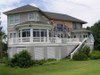
In the aftermath of Hurricane Katrina, Louisiana adopted its first uniform building code. Under the new standards, homes are better able to withstand the winds generated by hurricanes. The owner of one home said that during Hurricane Isaac, “there’s no shaking of the building itself, there’s no sign of a storm except for the rain.”
�WWWLTV reports that the new standards require home to be able to withstand 130 mile per hour winds. They also must follow FEMA guidelines for elevation. Build Now, a non-profit organization, is seeking to build green homes that meet the new standards. Their executive director said “we’re building higher. We’re building stronger. We’re building greener.”
� Read the full story…
�
Legislatures Shouldn’t Try to Do the Courts’ Job
March 1, 2012 — CDJ Staff
David Thamann, writing in Property Casualty 360, argues that current actions by legislatures on insurance coverage amount to “legislative interference or overreach.” He notes that under current Colorado law, “a court shall presume that the work of a construction professional that results in property damage — including damage to the work itself or other work — is an accident unless the property damage is intended and expected by the insured.” He argues that here legislators are stepping into the role of the courts. “Insureds and insurers are not always going to be pleased with a court ruling, but that is the system we have.”
Read the full story…
Insurer Has Duty to Defend Despite Construction Defects
January 6, 2012 — CDJ Staff
In a case the judge attributed to “shoddy masonry work,” the US District Court of Illinois has rendered a decision in AMCO Insurance Company v. Northern Heritage Builders. Northern Heritage built a home in Chicago for Michael McGrath (who joined Northern Heritage as a defendant). According to the decision, “seven months after he moved into the house, McGrath noticed water coming in the house and warped millwork.” This was attributed to porous block, installed by the mason with Northern Heritage’s knowledge.
McGrath sued National Heritage for both the damage to his house and its contents. The court rejected his claim for the contents. For the damages to his house, he was awarded $601,570.50 in damages. He also sued his homeowner’s insurance carrier for damages not covered in his suit against National Heritage. There he was awarded $1,130,680.16.
AMCO informed National Heritage that it had neither duty to defend nor duty to indemnify. The judge considered whether AMCO had a duty to defend. Under Illinois law, “damage to a construction project resulting from construction defects is not an ‘accident’ or ‘occurrence’ because it represents the natural and ordinary consequence of faulty construction.” However, it is noted that while if the defects lead only to damage to the project itself, there is no occurrence, “if the building owner asserts damages to other property besides the construction itself, there is an ‘occurrence’ and ‘property damage.’” The judge further noted that were construction defects an occurrence, “shoddy work” would be rewarded by double pay, once by the homeowner and a second time by the insurer. Judge Kendall concluded that as McGrath had alleged damage to the contents of his house, AMCO had a duty to defend National Heritage.
She then looked at the issue of whether AMCO had a duty to indemnify. Should they pay the $601,570.50? Judge Kendall noted that “the duty to indemnify is narrower than the duty to defend.” The key point here was that once McGrath’s insurance carrier covered him for the damage to the contents of his house, “AMCO’s duty to defend ended.” Once McGrath “only sought damages for the natural consequences of faulty workmanship” there was no occurrence, hence nothing for AMCO to cover.
Judge Kendall granted a summary dismissal of AMCO’s claim that they had no duty to defend while upholding their claim that they had no duty to indemnify.
Read the court’s decision…
Construction Defect Destroys Home, Forty Years Later
June 19, 2012 — CDJ Staff
Fire investigators in Monroe, North Carolina have blamed a nail as the source of a fire that lead to a home being declared a total loss. The nail, part of the original construction, nicked a wire within a wall, causing a short, which started a fire. The home was built in the late 1960s.
WBTV reported that the homeowner was awakened by a power outage. He went outside and saw flames coming from a vent in the roof. He was unable to contain the fire with a garden hose. Neighbors called firemen who were able to stop the blaze.
Read the full story…
State Farm Too Quick To Deny Coverage, Court Rules
July 22, 2011 — CDJ Staff
On July 13, 2011, Judge Sarah S. Vance of the US District Court issued a rule in the case of Travelers Cas. & Surety Co. of Am. v. Univ. Facilities, Inc. (E.D. La., 2011). In this case, Stanley Smith Drywall was contracted by Capstone Building Corporation to “perform undisclosed work at the facility believed to involve the installation of drywall.” The project involved the design and construction of student residences for the Southeastern Louisiana University in Hammond, Louisiana. In May, 2009, University Facilities, Inc. (UFI) sued Capstone Development Corporation and Capstone On-Campus Management.
�State Farm insured Stanley Smith Drywall and they sought a declaration that they have no duty: “(1) to insure Stanley Smith or CBC, or (2) to defend or indemnify any party against UFI's claims in the pending arbitration.” State Farm contends “(1) there is no "occurrence" to trigger coverage under the policy; (2) only breach of contract claims are asserted; (3) there is no property damage alleged; and (4) various coverage limitations and exclusions apply to prevent coverage.’
�The court concluded that “whether State Farm has a duty to defend in the arbitration must be determined by considering the claims asserted in the arbitration.” However, the arbitration claims were not made part of the record. There, “, the Court cannot determine as a matter of law State Farm's duty to defend on the present record.” The same was true of State Farm’s duty to indemnify. “Stanley Smith and CBC assert that State Farm's motion for summary judgment was filed before any discovery was conducted in the arbitration proceeding or in this case. The Court finds that State Farm has failed to develop the record sufficiently to establish that there is no genuine issue of material fact as to its duty to indemnify Stanley Smith or CBC in the arbitration.’
�The court denied State Farm’s motion for a summary judgment on its duty to defend and indemnify.
� Read the court’s decision…
Court Orders House to be Demolished or Relocated
April 26, 2011 — April 26, 2011 Beverley BevenFlorez - Construction Defect Journal
Decision Affirmed in Central Arkansas Foundation Homes, LLC v. Rebecca Choate
�The Arkansas Court of Appeals affirmed the decision by the trial court in Central Arkansas Foundation Homes, LLC v. Rebecca Choate. In the trial case, Central Arkansas Foundation Homes (CAFH) sought payment for a home built for Choate, while Choate alleged that the builders committed multiple construction defects including using the wrong foundation materials and positioning the house in the wrong direction.
�After the house was built, CAFH contacted Choate regarding payment, however, Choate alleged that the finished product did not match the contract. “ After CAFH completed construction, it obtained permanent home financing for Choate and tried to contact her to close the transaction. Choate did not respond until October 2005, when she sent CAFH a list of alleged construction defects, including that the house was facing in the wrong direction; that it was not built on a slab; and that the fireplace, garbage disposal, driveway, and storage area were missing. CAFH replied to Choate in writing, telling her that she had until January 6, 2006, to close on the house or CAFH would sell it. The correspondence enclosed worksheets showing that the amount Choate would owe at closing exceeded $94,000, which included interest that had accrued on the as-yet unpaid construction loan.”
�Initially, the court found in favor of CAFH. “On April 18, 2007, Choate’s attorney withdrew from representing her. Soon thereafter, CAFH’s attorney asked the court to set a final hearing on the case. The attorney purportedly sent Choate a letter by regular mail on May 15, 2007, advising her that the case was set for trial on July 9, 2007. Choate, however, did not appear. CAFH did appear, and its general manager, John Oldner, testified to events leading up to the case and the amount of damages claimed. According to Oldner, the interest on the construction loan had accrued to the point that CAFH now sought $104,965.88 from Choate. The court found in favor of CAFH and entered judgment for that amount, plus attorney fees, on July 18, 2007. The court ruled that CAFH could sell the house and either remit any excess to Choate or look to Choate for the deficiency if the sales price did not cover the judgment.”
�However, Choate successfully argued that she did not receive notice of the trial. A new trial was ordered, and the outcome was quite different. “On June 6, 2008, the circuit court entered judgment for Choate, ruling that the house was not in substantial compliance with the parties’ contract and that the contract should be rescinded. The court found that the house suffered from numerous construction defects, that the contract contemplated a slab rather than a concrete-pier foundation, and that CAFH ignored Choate’s complaints that the house was facing the wrong way. The judgment directed CAFH to hold Choate harmless on the construction loan, to deed Choate’s two acres back to her, and to remove the house from Choate’s property.”
�The Court of Appeals “found that Choate would be unjustly enriched by retaining the benefit of the septic systems and utility lines that CAFH installed on her land. The court therefore awarded $5340 to CAFH as a quantum-meruit recovery for the value of that work. CAFH contends that the award is not sufficient, but we see no clear error.” In the end, the Court of Appeals provided this reason for declining to reverse the trial court’s decision: “The court in this case apparently concluded that the house constructed by CAFH was so fundamentally at odds with Choate’s contractual expectations that she was not unjustly enriched and should simply be, as nearly as possible, returned to the status quo ante. Accordingly, the court ordered the house removed from her property and permitted CAFH to either relocate the house or salvage the house’s materials and unused appliances. We decline to reverse the court’s weighing of the equities in this manner.”
�Read the court’s decision…
The Colorado Court of Appeals Rules that a Statutory Notice of Claim Triggers an Insurer’s Duty to Defend.�
October 23, 2012 — David M. McLain, Higgins, Hopkins, McLain & Roswell
Gene and Diane Melssen d/b/a Melssen Construction (“Melssen”) built a custom home for the Holleys, during which period of time Melssen retained a CGL insurance coverage from Auto Owners Insurance Company. Soon after completion of the house, the Holleys noticed cracks in the drywall and, eventually, large cracks developed in the exterior stucco and basement slab. Thereafter, the Holleys contacted Melssen, the structural engineer, an attorney, and Auto-Owners, which assigned a claims adjuster to investigate the claim.
�In April 2008, the Holleys sent Melssen a statutory notice of claim pursuant to C.R.S. § 13-20-803.5 (“NOC”). In this NOC, the Holleys claimed approximately $300,000 in damages related to design and construction defects. The Holleys also provided a list of claimed damages and estimated repairs, accompanied by two reports from the Holleys’ consultant regarding the claimed design and construction defects. In June 2008, Melssen tendered the defense and indemnity of the claim to Auto-Owners. While Auto-Owners did not deny the claim at that time, it did not inspect the property or otherwise adjust the claim. Thereafter, in October 2008, Auto-Owners sent Melssen a letter denying coverage on the basis that the damage occurred outside of the applicable policy period.
�Ultimately, Melssen settled the claims against it for $140,000.
� Read the full story…
�Reprinted courtesy of David McLain, Higgins, Hopkins, McLain & Roswell, LLC. Mr. McLain can be contacted at mclain@hhmrlaw.com
�
Ghost Employees Steal Jobs from Legit Construction Firms
September 13, 2012 — CDJ Staff
Firms that skirt labor laws for construction workers can undercut firms that are obeying those laws. In a piece in Raleigh, North Carolina’s News & Observer, Doug Burton, a commercial masonry contractor summed it up: “my competitors are cheating.” The article describes the low-bidding firms “called their workers independent contractors ? or treated them like ghosts, paid under the table and never acknowledged.” The cost to the state is “unpaid medical bills for injured workers, uncollected business and personal taxes, and payments not made to a depleted state unemployment reserve.”
�One firm examined in the article, Martin’s Bricklaying, employs mostly immigrant Mexican laborers, many of whom are in the country illegally. One employee told the News & Observer, “we don’t complain.”
Read the full story…
Architectural Firm Disputes Claim of Fault
May 27, 2011 — CDJ Staff
Lake-Flato Architects has disputed the arbitration panel’s conclusion that problems with the home of Tom Hanks and Rita Wilson were due to design flaws. The firm settled with the couple for $900,000, however the Idaho Mountain Express reports that David Lake said, “the settlement in the case in no way represents that Lake Flato was responsible for faulty design.” The Express reported that “the arbitrators found that problems at the home were attributable to design errors that did not take into account the cold winter climate of the Sun Valley area.”
�Read the full story…
Florida Construction Defect Case Settled for $3 Million
June 19, 2012 — CDJ Staff
The Runaway Beach Club Condominium Association of Kissimmee, Florida has settled its construction defect claims against the parties involved in the construction and development of the buildings. The association claimed that defective roofs and improperly installed windows had lead to leaks and associated damages. A trial date had been set, but parties involved were able to reach this settlement instead.
Read the full story…
Hawaii Building Codes to Stay in State Control
March 1, 2012 — CDJ Staff
The Hawaii State Senate voted down Senate Bill 2692. Had it been passed, the State Building Code Council would have been abolished and building codes would have become the responsibility of county governments. The bill was opposed by the Insurance Institute for Business and Home Safety. Their director of code development, Wanda Edwards said that the bill “would have undermined key components that are essential to an effective state building code regime.”
Read the full story…
Insurers Reacting to Massachusetts Tornadoes
August 11, 2011 — CDJ Staff
The Patriot-Ledger reports that insurers could pay out as much as $200 million to cover homes damaged or destroyed in the tornadoes that hit central and southern Massachusetts in June, 2011. Joseph Murphy, Commissioner of the State Division of Insurance didn?t foresee problems with insurers covering these claims. “At this point, there doesn’t seem to be any one company overexposed in that area,” he told the Patriot-Ledger.
�Insurance executives did not think the tornadoes would cause them to raise rates. Steve Chevalier, CEO of NLC Companies, said, “it’s a major event for those impacted by it, but it’s not close to a financial hit to us.”
�One insurer noted that the winter weather generated more claims; however the cumulative value of those claims was $15 million.
� Read the full story…
Construction Suit Ends with Just an Apology
February 10, 2012 — CDJ Staff
After suing a contractor for failing to complete the remodeling of their home, an Orange County couple has settled for an apology. Douglas J. Pettibone represented the contractor, who had lost his business after a broken neck, multiple surgeries, and an addiction to pain medicine. Mr. Pettibone represented his client pro bone. The case was settled in arbitration by JAMS.
� Mr. Pettibone noted that his client gave “a heartfelt and very moving apology.” The remodeling was completed by another contractor, two years after Thorp Construction stopped work on the project. After the apology, the case was dismissed.
Read the full story…
Water Damage Covered Under Efficient Proximate Cause Doctrine
August 2, 2012 — Tred Eyerly, Insurance Law Hawaii
A U.S. District Court in Washington found coverage in what it described as a text book study of the efficient proximate cause rule. Hiller v. Allstate Pro. & Cas. Ins. Co., 2012 U.S. Dist. LEXIS 84862 (E.D. Wash. June 19, 2012).
The Hillers purchased a newly constructed home in December 2006. They also purchased an all-risk homeowner's policy from Allstate.
In July 2010, the Hillers discovered that the carpet in the basement of the residence was saturated with water. Allstate was immediately notified. Hiller began an investigation to attempt to determine the source of the water. He poured water into a downspout drain at the northwest corner of the residence. This caused water to leak into the northwest corner of the home's basement.
An area was excavated around the northwest downspout drain. The end of the drain pipe was partially blocked by rocks and had been wrapped with fabric landscaping material. Further, a “T” pipe installed at the foot of the drain was directing water toward the house's concrete foundation. Hiller notified Allstate that the problems with the drain was due to construction defects and the system was designed to fail.
Allstate denied the claim. Based upon Hiller's information, coverage was excluded under the policy's surface water, subsurface water, inherent vice, and latent defect exclusions.
Read the full story…
Reprinted courtesy of Tred R. Eyerly, Insurance Law Hawaii. Mr. Eyerly can be contacted at te@hawaiilawyer.com
Cogently Written Opinion Finds Coverage for Loss Caused By Defective Concrete
November 7, 2012 — Tred Eyerly, Insurance Law Hawaii
If ever in need of a concise, well-reasoned opinion on “occurrence,” “property damage” and applicability of the business risk exclusions, turn to Pamperin Rentals II, LLC v. R.G. Hendricks & Sons Construction, Inc., 2012 Wis Ct. App. LEXIS 698 (Wis. Ct. App. Sept. 5, 2012).
A contractor was hired to install concrete during construction of seven gas stations. Red-D-Mix provided the concrete. The contractor and Red-D-Mix were eventually sued by the gas stations, based upon allegations that the concrete was defectively manufactured and installed. The gas stations alleged that Red-D-Mix supplied concrete that was defective and resulted in damages, including the need to repair nearby asphalt.
Red-D-Mix tendered to its insurers, who denied coverage. Suit was filed and the insurers moved for summary judgment. The trial court determined there were no allegations of either “property damage” or an “occurrence.” Therefore, there was no duty to defend or indemnify Red-D-Mix.
Read the full story…
Reprinted courtesy of Tred R. Eyerly, Insurance Law Hawaii. Mr. Eyerly can be contacted at te@hawaiilawyer.com
Texas “your work” exclusion
January 6, 2012 — CDCoverage.com
In American Home Assurance Co. v. Cat Tech, L.L.C., No. 10-20499 (5th Cir. Oct. 5, 2011), claimant Ergon hired insured Cat Tech to perform service on a reactor at Ergon’s refinery. During a start-up of the reactor after Cat Tech had completed its work, the reactor suffered damage. Cat Tech performed additional service and repairs. However, again upon start-up of the reactor, it suffered additional damage. Ergon hired another contractor to repair the reactor. Ergon initiated arbitration proceedings against Cat Tech. Cat Tech’s CGL insurer American Home defended Cat Tech against the Ergon arbitration under a reservation of rights.
Read the full story…
Reprinted courtesy of CDCoverage.com
No Third-Quarter Gain for Construction
November 18, 2011 — CDJ Staff
The Associated Builders and Contractors released their analysis of construction work under contract and found that there was no increase in construction backlog from the second quarter of 2011. There was still improvement, however, over 2010, as the third quarter backlog is 16.3 percent higher than that of a year ago.
The current backlog is 8.1 months, which according to Anirban Basu, the chief economist of the ABC, “is consistent with flat construction spending.” He noted that less than 8 months indicated a decline.
Read the full story…
A Lien Might Just Save Your Small Construction Business
April 4, 2011 — Douglas Reiser in the Builders Counsel Blog
Many owners incorrectly believe that payment to the general contractor gets the owner off the hook for payment to subcontractors and suppliers. This assumption sometimes fosters the irresponsible owner, who fails to ensure that everyone is getting paid. Fortunately for those contractors further down the contracting chain, this assumption is incorrect.
�Suppliers and subcontractors can file a lien to secure payment for their labor and materials. A filing party must offer proper notice (if applicable) and file an adequate and timely lien in the County where the work is performed. You can read our earlier posts on these topics by following this link.
�A lien notice and a lien put an owner on notice that your business has provided labor and/or materials for the improvement of the owner’s property (See RCW 60.04.031 for more info). If the owner fails to take care to ensure that your business is paid the law mandates that the owner may have to pay twice.
�Read the full story...
�Reprinted courtesy of Douglas Reiser of Reiser Legal LLC. Mr. Reiser can be contacted at info@reiserlegal.com