Florida: No Implied Warranties for Neighborhood Improvements
July 10, 2012 — CDJ Staff
A new law in Florida ends suits from homeowners associations from suing over damages from off-site improvements on the basis of implied warranties. Rob Samouch, writing for the Naples Daily News quotes House Biill 1013: “There is no cause of action in law or equity available to a purchaser of a home or to a homeowners’ association based upon the doctrine or theory of implied warranty of fitness and merchantability or habitability for damages to off-site improvements." The off-site improvements are defined as: "The street, road, driveway, sidewalk, drainage, utilities, or any other improvement or structure that is not located on or under the lot on which a new home is constructed.”
Mr. Samouch notes that “there are no statutory warrant rights in homeowner associations of fitness and merchantability or habitability like there is for condominium associations.” He predicts that the Florida legislature will have to address this issue “once new homeowners start screaming and yelling to them about their shoddy infrastructure for which they have no legal remedy.”
The bill took effect on July 1, 2012 and applies to “all cases accruing before, pending on, or filed after July 1, 2012.”
Read the full story…
An Upward Trend in Commercial Construction?
March 28, 2012 — Melissa Dewey Brumback, Construction Law North Carolina
Year-end economic indicators demonstrate that private commercial construction may be increasing in 2012, primarily as demand grows for new projects built in the United States.
�According to an article in Businessweek, the Architecture Billings Index held at 52 in December, indicating a modest expansion in the market. The American Institute of Architects said that the commercial and industrial component of the number climbed to 54.1 in December, the highest in 10 months.
�The monthly survey of U.S.-based architecture firms is one of the main indicators of nonresidential construction, and these numbers suggest that modest improvement may be on the horizon.
�The information is confirmed by data from the Census Bureau that shows that spending on lodging, office, commercial and manufacturing buildings grew 8.2 percent in November to $9.2 billion from a year ago. These types of commercial and industrial projects are historically canaries in the mine and are usually the first part of the industry to improve as the economy expands.
Read the full story…
��Reprinted courtesy of Melissa Dewey Brumback of Ragsdale Liggett PLLC. Ms. Brumback can be contacted at mbrumback@rl-law.com.
Ohio Court Finds No Coverage for Construction Defect Claims
March 1, 2012 — Tred Eyerly, Insurance Law Hawaii
Charles and Valerie Myers hired Perry Miller to build their home. Myers v. United Ohio Ins. Co., 2012 Ohio App. LEXIS 287 (Ohio Ct. App. Jan. 26, 2012). After completion of the home, Miller was again hired to construct an addition which included a full basement, staircases, bathroom, bedroom, hallway and garage.
�After the addition was completed, one of the basement walls began to crack and bow. Miller began to make repairs, but eventually stopped working on the project. Other contractors were hired to make repairs, but further problems developed. A second basement wall began to bow and crack, allowing water into the basement. The wall eventually had to be replaced. Subsequently, the roof over the addition began to leak in five or six places before the drywall could be painted. The leaks caused water stains on the drywall and cause it to separate and tear. It was discovered the roof needed to be replaced.
�The Myers sued Miller and his insurer, United Ohio Insurance Company. The trial court ruled that the policy did not provide coverage for faulty workmanship, but did provide coverage for consequential damages caused by repeated exposure to the elements. United Ohio conceded liability in the amount of $2,000 to repair water damage to the drywall. United Ohio was also found liable for $51,576, which included $31,000 to repair the roof and ceiling and $18,576 to replace the basement wall.
Read the full story…
���Reprinted courtesy of Tred R. Eyerly, Insurance Law Hawaii. Mr. Eyerly can be contacted at te@hawaiilawyer.com
�
California Posts Nation’s Largest Gain in Construction Jobs
March 28, 2012 — CDJ Staff
California added about 8,900 construction jobs in January, 2012, as compared to December, 2011, leading the nation in the number of added construction jobs. Thirty-four other states also saw added construction jobs. A year prior, only twenty-eight states added construction jobs. The Associated General Contractors of America analyzed the monthly report from the Labor Department. Ken Simonson, the chief economist for the Associated General Contractors of America noted that “the gains this January partly reflect very mild weather this winter and exceptionally cold and snowy conditions a year before.”
Read the full story…
Federal District Court Continues to Find Construction Defects do Not Arise From An Occurrence�
May 10, 2012 — CDJ Staff
Coverage for construction defects continues to be hotly contested in Hawaii state and federal courts. In a recent decision, Judge Mollway felt bound to follow the Ninth Circuit’s decision in Burlington Ins. Co. v. Oceanic Design & Constr., Inc., 383 F.3d 940, 944 (9th Cir. 2004), where the court found construction defect claims arise from breach of contract, not from an occurrence. Judge Mollway’s most recent decision on the issue is Illinois Nat. Ins. Co. v. Nordic PCL Constr., Inc., 2012 U.S. Dist. LEXIS 58464 (D. Haw. April 26, 2012).
�Nordic constructed a grocery store for Safeway. In addition to the grocery store, Nordic built a 165-space rooftop parking deck, retail shops and related improvements. After opening for business in 2007, Safeway experienced significant leaks. Safeway demanded that Nordic repair the parking deck. Nordic sent the demand letter to the insurer, who agreed to appoint counsel subject to a reservation of rights.
�Safeway filed suit against Nordic in state court alleging, among other things, breach of contract and negligence. The insurer provided Nordic with a defense, but Nordic hired independent counsel.
�The insurer filed for declaratory relief in federal district court.
� Read the full story…
�
Massachusetts Couple Seek to Recuse Judge in Construction Defect Case
September 30, 2011 — CDJ Staff
After seeing their $1 million jury award overturned on appeal by a judge who called the award “against the weight of evidence and likely due to misapprehension, confusion or passion,” Kathryn and Christian Culley are seeking to have him removed from the case. The Massachusetts Supreme Judicial Court has rejected their claim.
The Culleys claim that Judge Thomas R. Murtagh’s decision was influence by him membership in the Andover Country Club which is represented by the opposing counsel in their construction defect case. Justice Margot G. Botsford had denied the Culley’s request, ruling that they had other remedies available to them.
The SJC noted in their ruling that if the Culleys are alleging judicial misconduct a request must be made to the Commission on Judicial Conduct. Their lawyer plans to file a new motion for recusal with the SJC.
Read the full story…
Construction Worker Dies after Building Collapse
November 18, 2011 — CDJ Staff
A Bronx construction worker died when the pillars gave way in the basement where he was working. The two-story commercial building collapsed, burying Mr. Kebbeh under about six feet of rubble. The New York Times reports that firefighters dug him out with their bare hands. Mr. Kebbeh was taken to Jacobi Medical Center where he died. Two other construction workers escaped unharmed.
Read the full story…
Judge Okays Harmon Tower Demolition, Also Calls for More Testing
August 2, 2012 — CDJ Staff
Vegas.Inc reports that Clark County District Court Judge Elizabeth Gonzalez has permitted the demolition the tower, which MGM Resorts has claimed is a safety hazard. Perini Building Co. claims that the building does not need to be demolished. CityCenter claims that repairing the building would take nearly a year longer than a demolition and cost about $200 million. Further, CityCenter assumes that the building’s reputation would cost it another $30 million.
Subsequently, Judge Gonzalez ruled that the pattern of destructive testing would not support a claim that there were an estimated 1,400 defective items in the building. An attorney for CityCenter, Steve Morris, has suggested that they may seek more testing, impossible to do once the building is demolished. CityCenter issued a statement that “nearly every time CityCenter has chipped away concrete to review structural work at the Harmon, we have found defects.” They describe the building as “unusable.”
Tutor Perini contends that it “remains confident that it will prevail when the issues of safety, reparability and responsibility for the issues facing the Harmon tower are considered.
Read the full story…
New Construction Laws, New Forms in California
July 10, 2012 — CDJ Staff
New construction laws came into effect in California on July 1. Writing for the Martindale-Hubble Legal Library, Glenn Mau, J. Michael McGuire, and John Tonsing, all of Archer Norris, discuss these changes. They note that the most important part of the changes to California construction law is that “all mechanics liens, stop notices and bond claims recorded after July 1, 2012 must use the new standardized forms and follow the new definitions, notice prerequisites and statutory release form language.”
Read the full story…
When Does a Claim Against an Insurance Carrier for Failing to Defend Accrue?
November 7, 2012 — David McLain, Colorado Construction Litigation
The following is an update on our December 20, 2010 article regarding United States Fire Insurance Company v. Pinkard Construction Company, Civil Action No. 09-CV-01854-MSK-MJW, and its underlying dispute, Legacy Apartments v. Pinkard Construction Company, Case No. 2003 CV 703, Boulder County Dist. Ct. That article can be found here.
The present action, St. Paul Fire and Marine Insurance Co., et al. v. The North River Insurance Co., et al., Civil Action No. 10-CV-02936-MSK-CBS, encompasses the coverage battle that ensued between Pinkard’s insurers, Travelers Indemnity Company of America (“Travelers”) and United States Fire Insurance Company (“USFI”), following the settlement of Legacy’s construction defect claims against Pinkard. A short history of the underlying facts is as follows:
In 1995, Pinkard constructed the Legacy Apartments housing complex in Longmont, Colorado. Following construction, Legacy notified Pinkard of water leaks associated with various elements of construction. Legacy ultimately filed suit against Pinkard in 2003, and would go on to clarify and amend its defect claims in 2004, 2006, and again in 2008. Following Pinkard’s notification of Legacy’s claims, USFI provided a defense to Pinkard, but Travelers refused to do so, on the purported basis that Legacy’s allegations did not implicate property damage under the terms of Travelers’ policy.
Read the full story…
Reprinted courtesy of David M. McLain, Higgins, Hopkins, McLain & Roswell, LLC. Mr. McLain can be contacted at mclain@hhmrlaw.com
2011 West Coast Casualty Construction Defect Seminar – Recap
June 1, 2011 — CDJ Staff
� 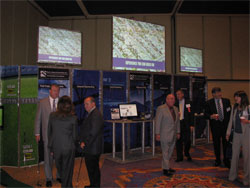 | �
�| Event exhibitors and sponsors contribute to an informative and engaging environment | �
�This year’s meeting was the best yet for the industry-leading construction defect and claims event.
�This year’s seminar concluded on May 13, 2011 with the Construction Defect Community Charitable Foundation Golf Tournament, held at Strawberry Farms Golf Course.
�The Disneyland Hotel in Anaheim, California was the place where more than 1,500 attendees convened for two days of professional development activities and seminars that included CLE workshops and panel discussions of special interest to legal and insurance professionals concerned with construction defect and claims litigation. Key events included “Challenges for Experts in Construction Defect Claims and Litigation,” “Keeping Up with Construction Defect Coverage,” and “Tips for Avoiding the ‘Perfect Storm’ in Handling of Wrap Claims.”
� �  | �
�| Supporting the golf tournament at the 15th hole | �
�This year’s Ollie award was given to George D. Calkins II, Esq. The West Coast Casualty Jerrold S. Oliver Award of Excellence was named in honor of the late Judge Jerrold S. Oliver, and recognizes an individual who is outstanding or has contributed to the betterment of the construction community.
�In addition to being the most comprehensive professional development seminar in the area of construction defects, this year’s seminar was equally valuable as a networking opportunity for members of the industry. People participated in professional development events during the day and then continued networking in the evening at numerous social events. The Lawn Party as well as the legendary Wood, Smith, Henning & Berman events were very well attended. Additional valuable networking events were hosted by a number of industry professionals at the House of Blues, and Tortilla Joe’s.
�As of this writing the 2011, West Coast Casualty's Construction Defect Seminar has applied for or has already received the following continuing education accreditation in the following areas;
�Read the full story…
�For more information about next year’s event, visit West Coast Casualty.
Congress Addresses Homebuilding Credit Crunch
May 20, 2011 — CDJ Staff
The National Association of Home Builders (NAHB) reports that Representatives Gary Miller (CA), Brad Miller (NC) and twenty-nine cosponsors have put forth a bill with bipartisan support to “address the severe credit crunch for acquisition, development, and construction (AD&C) financing.” They report in addition to more than 1.4 million construction workers who have been “idled since 2006,” the housing slump has cost 3 million jobs and $145 million in wages.
NAHB reports that they worked closely with lawmakers on the bill. The association had members meet with legislators both in D.C. and in their home districts. They state that HR 1755 would help homebuilders “find the credit they need to move forward with new or existing projects.”
The bill would allow lenders to use the value upon completion when assessing loan collateral and ban the use of foreclosed or distressed sale properties in assessing values of projects. The would bill would also lessen restrictions by banking regulators, which the lead sponsors said “have hindered federal and state chartered banks and thrifts’ ability to make and maintain loans to qualified small home builders that have viable projects.”
The NAHB is urging members of Congress to cosponsor the bill and is urging the Senate to introduce a companion bill.
Read the full story…
Read HR 1755
Builder to Appeal Razing of Harmon Tower
August 2, 2012 — CDJ Staff
An attorney for Tutor Perini, George Ogilvie, has said that he will appeal to the state Supreme Court to stop Clark County District Court Judge Elizabeth Gonzalez’s ruling from taking effect. She has given the go-ahead to MGM Resorts and CityCenter to implode the building. Ogilvie described the demolition as “a do-over at Perini’s expense” in protesting Gonzalez’s order. Gonzalez has said that she will instruct jurors that the demolition was an admission that the building was badly built. Ogilvie says this is “allowing MGM to bury its mistakes.”
MGM claims that it is only following the directive of county safety officials. “When Clark County demanded that CityCenter abate the potential hazard created by faulty construction at the Harmon, we determined that demolition is the surest, safest and fasted way to do so.”
Read the full story…
Follow Up on Continental Western v. Shay Construction
March 28, 2012 — Brady Iandiorio, Colorado Construction Litigation
Writing in Construction Law Colorado, Brady Iandiorio revisits the case Continental Western v. Shay Construction. He promises to continue to follow cases dealing with Colorado HB 10-1394.
�Recently the Court ruled on two Motions to Reconsider filed by Defendants Milender White and Shay Construction.
�Procedurally, the Motions to Reconsider were ruled on by the Honorable William J. Martinez, because the day after the motions were filed the action was reassigned to Judge Martinez. In the short analysis of the Motion to Reconsider, the court leaned on Judge Walker D. Miller’s ruling on the summary judgment and his analysis of the (j)(5) and (j)(6) exclusions.
�As a quick refresher regarding the grant of summary judgment, Judge Miller agreed with Continental Western’s argument that the asserted claims were excluded under the “damage to property” exclusion. The policy’s exclusions state: “(j) Damage to Property . . . (5) that particular part of real property on which you or any contractors or subcontractors working directly or indirectly on your behalf are performing operations, if the ‘property damage’ arises out of those operations; or (6) that particular part of any property that must be restored, repaired or replaced because ‘your work’ was incorrectly performed on it.” Judge Miller found that both exclusions (j)(5) and (6) applied to both Shay’s allegedly defective work.
Read the full story…
�Reprinted courtesy of Brady Iandiorio of Higgins, Hopkins, McClain & Roswell, LLC. Mr. Iandiorio can be contacted at iandiorio@hhmrlaw.com.
Unfinished Building Projects Litter Miami
November 18, 2011 — CDJ Staff
Buildings born in ambitious development plans that were never brought to completion form a grim reminder of the building bust in Miami, according to an article in the Miami Herald. One project started in 2007 as a residential project, later there were hopes to develop it as a hotel. These plans are ten months old with no work done.
Another project was projected as a 30-story office and commercial tower. Four were built before the project was abandoned. The article describes the site as “squalid.” Another project completed the planned 17 stories, but no work has been done beyond constructing the shell. Once planned as luxury condos, the owner owes more than $30,000 in property taxes.
Each of the three sites profiled in the Miami Herald have become dumping grounds for trash. The building skeletons have also become damaged by the elements. Some abandoned projects have been taken over by homeless people. Businesses near the abandoned properties have been hurt. The buildings also represent failed obligations to subcontractors who have put liens on the properties for work they performed but were never paid for.
Read the full story…
A Downside of Associational Standing - HOA's Claims Against Subcontractors Barred by Statute of Limitations
March 28, 2012 — Bret Cogdill, Colorado Construction Litigation
In multi-family construction defect litigation in Colorado, homeowners associations rely on associational standing to pursue claims affecting more than two units and to bring claims covering an entire development. This practice broadens an association’s case beyond what individual, aggrieved owners would otherwise bring on their own against a developer or builder-vendor. However, reliance on associational standing to combine homeowners’ defect claims into a single lawsuit has its drawbacks to homeowners.
�A recent order in the case Villa Mirage Condominium Owners’ Association, Inc., v. Stetson 162, LLC, et al., in El Paso County District Court, presents an example. There, the HOA unsuccessfully sought a determination from the court that its claims against subcontractors were not barred by the statute of limitations. To do so, the HOAs attempted to apply the Colorado Common Interest Ownership Act (“CCIOA”), which governs the creation and operation of HOAs, and a statute intended to apply to persons under a legal disability.
�Under CCIOA, during the period of “declarant control” the developer may appoint members to the association’s executive board until sufficient homeowners have moved into the development and taken seats on the board.
Read the full story…
��Reprinted courtesy of Bret Cogdill of Higgins, Hopkins, McClain & Roswell, LLC. Mr. Cogdill can be contacted at cogdill@hhmrlaw.com.
General Contractor/Developer May Not Rely on the Homeowner Protection Act to Avoid a Waiver of Consequential Damages in an AIA Contract
August 4, 2011 — Higgins, Hopkins, McLain & Roswell, LLC
Recently, in Caribou Ridge Homes, LLC v. Zero Energy, LLC, et al., Case No. 10CV1094, Boulder County District Court Judge Ingrid S. Bakke entered a ruling and order on the Plaintiff’s Motion for Determination of Question of Law Pursuant to C.R.C.P. 56(h) on Issue of Damages. The Order found that the Plaintiff was not a homeowner intended to be protected by the Homeowner Protection Act (the “HPA”) and thus could not pursue its claims for consequential damages against Defendant.
�By way of background, on June 18, 2008, Plaintiff Caribou Ridge Homes, LLC (“Caribou”) entered into a Standard Form Agreement Between Owner and Contractor AIA Document A114-2001 (the “Contract”) with Defendant Zero Energy, LLC (“Zero Energy”). Plaintiff hired Zero Energy to serve as a general contractor for the construction of a single-family home in the Caribou Ridge subdivision in Nederland, Colorado. A provision in the contract contained a mutual waiver of consequential damages (“Waiver”).
Read the full story…
�Reprinted courtesy Higgins, Hopkins, McLain & Roswell, LLC
Lawsuit over Construction Defects Not a Federal Case
August 16, 2012 — CDJ Staff
The United State District Court in California has dismissed the claims of a contractor against the United States government, on the grounds that it was not within the subject matter jurisdiction of the court. The origins of the case are in a related construction defect claim. The current plaintiff, Performance Contracting, Inc., did the lath and plaster work for a building for the Department of Veterans Affairs. After the building was completed, the Veterans Affairs complained to the general contractor, Wynema, Inc., of water intrusion problems.
Wyema and Performance conducted testing and the water intrusion was found to be due to “a variety of design defects and omissions, including: 1) omission of proper window flashing; 2) inadequate waterproof membrane around the windows; 3) inadequate T-molding around the windows; 4) lack of a window sill pan for the windows; 5) lack of any backing in the window framing; 6) lack of any backing for the stucco expansion joints and seams; and 7) failure to require that a performance mock-up of the window assembly and adjacent areas be built and water tested.” Wyema filed a construction defect action against Performance and other subcontractors.
In the current case, Performance claims that Veteran Affairs was negligent, that it “breached its duty to Plaintiff when it provided deficient plants and specifications” and “failed to properly oversee construction and inspect Project work.” The court determined that it could not hear this case, noting that “Federal Courts are presumptively without jurisdiction over civil actions.”
Performance raised its claims under the Federal Tort Claims Act. The judge was not persuaded by this claim, noting that the FTCA does not apply to purported breach of the General Contract. The FTCA waives the government’s sovereign immunity in cases of “injury or loss of property, or personal injury or death caused by the negligent or wrongful act or omission of an employee of the Government while acting within the scope of his office or employment, under circumstances where the United States, if a private person, would be liable to the claimant in accordance with the law of the place where the act or omission occurred.”
Performance was unable to pursue its claims in the Court of Federal Claims as there was no contract between Performance and the government. However, the court noted that Performance’s inability to file suit in the Court of Federal Claims does not open up a path to the District Court. “Litigants are not guaranteed a forum in which to sue the United States.” The court further noted that “if this Court were to accept Plaintiff’s logic, non-parties to contracts, but not parties, would be free to pursue contract claims in the fora of their choosing.”
Read the court’s decision…