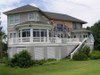
Pictorial Construction Terminology Dictionary — A Quick and Helpful Reference
July 10, 2012 — CDJ Staff
Does it seem like contractors speak their own language? Construction defect professionals can be hampered by not knowing the terminology. The Bert L. Howe & Associates, Inc. web site has a handy Pictorial Construction Terminology Dictionary in which more than a thousand terms are not only defined, but illustrated with pictures that give a visual component to each definition.
Whether you’re wondering what a balustrade is, or you need to identify a joist girder, or hundreds of other terms, the Pictorial Construction Terminology Dictionary is there to help you. It can be found at http://www.berthowe.com/bhapedia.php.
Bill Seeks to Protect Legitimate Contractors
December 20, 2012 — CDJ Staff
The California construction industry sees Senate Bill 863 as a needed help to legitimate construction businesses. The bill introduces regulations that will help shut down fraudulent contractors and help reduce workers’ compensation fraud. John Upshaw of the Independent Roofing Contractors of California described the revenue lost to California and other states as “phenomenal,” saying that “we need to continue the coordinated efforts if we are to see true workers’ compensation reform.”
Read the full story…
California Appeals Court Remands Fine in Late Completion Case
November 18, 2011 — CDJ Staff
The California Court of Appeals in Stanislaus County has reversed the decision of the lower court in Greg Opinski Construction Inc. v. City of Oakdale. The earlier court had awarded the city of judgment of $54,000 for late completion, $3,266 for repair of construction defects and interest, and $97,775 in attorneys’ fees. The late completion of the project was due to actions by the City of Oakdale, however, the court rejected Opinski’s argument that the California Supreme Court decision in Kiewit did not allow this, as his contract with the city established a procedure for claiming extensions.
The appeals court noted that the Kiewit decision has been “criticized as an unwarranted interference in the power of contracting parties to shift the risk of delays caused by one party onto the other party by forcing the second party to give the first notice of any intention to claim an extension of time based on delays caused by first.” They cited Sweet, a professor at Boalt Hall, UC Berkeley’s law school, that Kiewit “gutted” the “provision that conditions the contractor’s right to claim an extension of time for delays beyond his control.”
Further changes in California law in response to the Kiewit decision lead to the current situation which the court characterized as “if the contractor wished to claim it needed an extension of time because of delays caused by the city, the contractor was required to obtain a written change order by mutual consent or submit a claim in writing requesting a formal decision by the engineer.”
Opinski also argued that the lower court misinterpreted the contract. The Appeals court replied that “Opinski is mistaken.” He cited parts of the contract regarding the increase of time, but the court rejected these, noting that “an inability to agree is not the same as an express rejection.”
The court also rejects Opinski’s appeal that “the evidence the project was complete earlier than September 30, 2005, is weightier than the evidence to the contrary,” which they describe as “not a winning appellate argument.” The court points out that the role of an appeals court is not to reweigh the evidence, but to determine “whether the record contains substantial evidence in support of the judgment.”
The court did side with Opinski on one question of the escrow account. They rejected most of his arguments, repeating the line “Opinski is mistaken” several times. They decided that he was mistaken on the timing of the setoff decision and on whether the city was the prevailing party. However, the appeals court did find that Opinski was not liable for interest on the judgment.
The appeals court rejected the awarding of prejudgment interest to the city as the funds from which the judgment was drawn was held in an escrow account. The court noted that the city had access to the funds and could “access the funds when it determined that Opinski had breached the contract.” The appeals court noted that the judgment exhausted the escrow balance and remanded the case to the lower court to determine the amount own to Opinski.
Read the court’s decision…
Nevada Assembly Bill Proposes Changes to Construction Defect Litigation
April 14, 2011 — April 14, 2011 Beverley BevenFlorez - Construction Defect Journal
Assemblyman John Oceguera has written a bill that would redefine the term Construction Defect, set statutory limitations, and force the prevailing party to pay for attorney’s fees. Assembly Bill 401 has been referred to the Committee on Judiciary.
�Currently, the law in Nevada states that “a defect in the design, construction, manufacture, repair or landscaping of a new residence, of an alteration of or addition to an existing residence, or of an appurtenance, which is done in violation of law, including in violation of local codes or ordinances, is a constructional defect.” However, AB401 “provides that there is a rebuttable presumption that workmanship which exceeds the standards set forth in the applicable law, including any applicable local codes or ordinances, is not a constructional defect.”
�The Nevada courts may award attorney fees to the prevailing party today. However, AB401 mandates that attorney fees must be awarded, and the exact award is to be determined by the Court. “(1) The court shall award to the prevailing party reasonable attorney’s fees, which must be an element of costs and awarded as costs; and (2) the amount of any attorney’s fees awarded must be determined by and approved by the court.”
�AB401 also sets a three year statutory limit “for an action for damages for certain deficiencies, injury or wrongful death caused by a defect in construction if the defect is a result of willful misconduct or was fraudulently concealed.”
�This Nevada bill is in the early stages of development.
�Read the full story...
Boyfriend Pleads Guilty in Las Vegas Construction Defect Scam Suicide
November 7, 2012 — CDJ Staff
One of the odder twists of the Las Vegas construction defect scandal was the charge that Nancy Quon’s boyfriend helped her in an initial suicide attempt. Quon, implicated by not charged in the case of taking control of homeowner boards in order to profit from construction defect settlements. William Webb was alleged to have bought the drug GBH in order to allow Quon, his girlfriend, to commit suicide. Ms. Quon later overdosed on a combination of alcohol and prescription drugs.
In addition to pleading guilty to the drug charges, Webb also made a plea bargain with prosecutors in which he did not admit guilt in an insurance fraud charge, but acknowledged that prosecutors would likely be successful at obtaining a conviction. Webb will be sentenced February 7 and is expected to receive a sentence of six years imprisonment.
Read the full story…
Construction Defect Journal Seeks Article Submissions Regarding SB800 and Other Builders Right to Repair Laws
October 28, 2011 — CDJ Staff
As we approach the tenth anniversary of the passage and signing of SB800, California’s right-to-repair law, we’d like to hear your reactions to the law, your experiences with it, and your thoughts on it and right-to-repair laws in other states.
We invite you to submit articles either reacting to SB800 or on other matters relevant to construction defect and claims issues. You can promote your firm’s capabilities and get valuable exposure through the publication of your articles. Construction Defect Journal is widely read by our highly targeted audience of decision makers, construction attorneys, builders, owners, and claims professionals.
Articles may contain relevant images, your firm’s name, and links to your corporate website or third parties and can be submitted through e-mail to submitstory@constructiondefectjournal.com. Please remember to include your contact information if you would like it to be published with your content. If you are submitting photos or PDF documents with your article, please send them as e-mail attachments. Items submitted are assumed to be cleared for publishing upon receipt by CDJ.
Normally articles are published in full, although we reserve the right to edit content for space purposes. All articles submitted are considered for publication. For additional questions please contact editor@constructiondefectjournal.com.
Defective Shingle Claims Valid Despite Bankruptcy
June 19, 2012 — CDJ Staff
The Third Circuit Court has allowed claims to go forward against Owens Corning for making allegedly defective shingles. The shingles split, leading to leaking roofs. The building products manufacturer filed for bankruptcy in 2000, which “extinguished” claims against it. The company was facing millions in liabilities over asbestos lawsuits.
The lawsuit was filed in 2009. The courts initially found the lawsuit timely, but the Third Circuit Court later applied determined the exposure stated before the bankruptcy. On appeal, the court has reversed this and is again allowing the suit to proceed.
Read the full story…
Defense for Additional Insured Not Barred By Sole Negligence Provision
August 11, 2011 — Tred Eyerly, Insurance Law Hawaii
A general contractor was entitled to a defense as an additional insured when the underlying complaint did not allege it was solely negligent. A-1 Roofing Co. v. Navigators Ins. Co., 2011 Ill. App. LEXIS 656 (Ill. Ct. App. June 24, 2011).
�A-1 was the general contractor for a roof resurfacing job at a high school. Jack Frost Iron Works Inc. (“Frost”) was one of A-1’s subcontractors. Frost had a CGL policy with Navigators Insurance Company under which A-1 was an additional insured.
�An employee of Frost’s subcontractor Midwest Sheet Metal Inc. was killed at the job site when a boom-lift he was operating flipped over. The boom-lift had been leased by another Frost subcontractor, Bakes Steel Erectors, Inc. (BSE). The deceased's estate filed suit against A-1, BSE and two other defendants.
� Read the full story…
�Reprinted courtesy of Tred R. Eyerly, Insurance Law Hawaii. Mr. Eyerly can be contacted at te@hawaiilawyer.com
Florida: No Implied Warranties for Neighborhood Improvements
July 10, 2012 — CDJ Staff
A new law in Florida ends suits from homeowners associations from suing over damages from off-site improvements on the basis of implied warranties. Rob Samouch, writing for the Naples Daily News quotes House Biill 1013: “There is no cause of action in law or equity available to a purchaser of a home or to a homeowners’ association based upon the doctrine or theory of implied warranty of fitness and merchantability or habitability for damages to off-site improvements." The off-site improvements are defined as: "The street, road, driveway, sidewalk, drainage, utilities, or any other improvement or structure that is not located on or under the lot on which a new home is constructed.”
Mr. Samouch notes that “there are no statutory warrant rights in homeowner associations of fitness and merchantability or habitability like there is for condominium associations.” He predicts that the Florida legislature will have to address this issue “once new homeowners start screaming and yelling to them about their shoddy infrastructure for which they have no legal remedy.”
The bill took effect on July 1, 2012 and applies to “all cases accruing before, pending on, or filed after July 1, 2012.”
Read the full story…
Harmon Hotel Construction Defect Update
July 18, 2011 — CDJ Staff
Coverage of the ongoing litigation concerning the Harmon Hotel continues to proliferate. Architectural Record and a number of other news outlets continue to provide additional details and coverage of the matter. Chief among the conditions alleged are improperly installed reinforcing steel inside link beams on 15 floors. MGM Claims that the conditions amount to hundreds of millions of dollars in damages, while Perini (the builder) indicated in a July 12th statement that the buildings problems are related to the design, and the they are “fixable.”
�There is significant speculation that MGM Resorts International isn’t interested in repairing the hotel due to a glut of hotel rooms attendant to the troubled economy. In a statement Tuesday Perini reportedly stated that “Repairing and opening the Harmon would only create a greater glut of unused hotel rooms for MGM,” “If market conditions were better and MGM found that demand existed for the Harmon hotel rooms, MGM would not be claiming that the Harmon is unstable.”
�MGM asserts that Perini failed to ”properly construct” the project. Clark County’s Department of Development Services has reportedly asked MGM to provide a plan to fix the project by August 15th.
�The Harmon is part of the $8.5 billion CityCenter project that opened in the fourth quarter of 2009 and is jointly owned by MGM Resorts and Dubai World.
�Prior reports indicated that the owner (MGM) had considered razing the entire project. The future of the project remains uncertain.
Limitations of Liability in Subcontractors’ Contracts May Not Be Enforceable in Colorado to Limit Claims by Construction Professionals.�
October 23, 2012 — Heidi J. Gassman, Higgins, Hopkins, McLain & Roswell
The Colorado Homeowner Protection Act of 2007 (“HPA”), codified at C.R.S. § 13-20-806(7), specifically voids express waivers of, or limitations on, a residential property owner’s ability to enforce any rights, remedies, and damages provided by law in a construction defect case. Practically speaking, this means that limitation of liability provisions in contracts between construction professionals and residential homeowners are void and will not be enforced in Colorado. The HPA can extend even further, however, to subcontractors on residential projects, as seen in a recent District Court ruling.
�The HPA was tested in Thacker v. Gallery Homes, et al., v. Terracon Consultants, Inc., et al., Larimer County District Court Case No. 2007CV1195. Gallery Homes hired Terracon to provide geotechnical and structural engineering services at the Colony Ridge subdivision in Loveland, Colorado. Terracon performed work for Gallery Homes under three separate contracts, each of which included a provision limiting Terracon’s total liability to Gallery Homes.
�After the project was completed, two homeowners filed suit against Gallery Homes for alleged construction defects involving movement of their basement floor systems and foundations and damage to porches, patios, garages, and driveways. Gallery Homes sued Terracon as a third-party defendant, and Terracon sought to enforce its limitation of liability provisions via a partial summary judgment motion.
� Read the full story…
�Reprinted courtesy of Heidi J. Gassman, Higgins, Hopkins, McLain & Roswell, LLC. Ms. Gassman can be contacted at gassman@hhmrlaw.com
�
Seven Former North San Diego County Landfills are Leaking Contaminants
April 7, 2011 — April 7, 2011 Beverley BevenFlorez - Construction Defect Journal
Deborah Sullivan Brennan of the North County Times reported that seven former dumps in San Diego are leaking contaminants into the surrounding groundwater. John R. Odermatt, a senior engineering geologist for the California Regional Water Quality Control Board s San Diego region, told the North County Times, “the risk to most county residents is very small or negligible, while local water supplies located in more rural areas may be at a somewhat elevated but unquantified level of risk.”
�This issue is causing heavy scrutiny of a new proposed landfill in Gregory Canyon. The landfill would be located on 308 acres of undeveloped land near Pala, alongside the San Luis Rey River. The group “Save Gregory Canyon” has been speaking out against the landfill, stating that “the project threatens major detrimental impacts to both surface and groundwater, as well as a potential compromise of the two major San Diego Water Authority pipelines nearby.” Richard Felago, a Gregory Canyon Ltd. Consultant, told the North County Times that the 8-foot-thick liner, composed of layers of gravel and synthetic material, would not leak.
�The appeal hearing is being rescheduled later this month after one of the three panelists recused himself due to having a competing interest in the property, according to the article by Gary Warth in the North County Times.
�Read the full story (link 1)...
�Read the full story (link 2)...
Nevada Supreme Court Reverses Decision against Grader in Drainage Case
June 30, 2011 — CDJ Staff
The Nevada Supreme Court has issued an opinion in the case of Rayburn Lawn & Landscape Designers v. Plaster Development Corporation, reversing the decision of the lower court and remanding the case for a new trial.
�The case originated in a construction defect suit in which Plaster Development Corporation was sued by homeowners. Plaster filed a third-party complaint against its subcontractor, Reyburn. The testimony of Reyburn’s owner was considered to be admission of liability and so the court limited the scope of Reyburn’s closing argument and did not allow the jury to determine the extent of Reyburn’s liability. Reyburn appealed.
�Plaster, in their case, cited California’s Crawford v. Weather Sheild MFG, Inc. The court held the application of these standards, but noted that the “an indemnitor’s duty to defend an indemnitee is limited to those claims directly attributed to the indemnitor’s scope of work and does not include defending against claims arising from the negligence of other subcontractors and the indemnittee’s own negligence.”
�On the matter of law against Reyburn, the court concluded, “Given the conflicting evidence at trial as to whether Reyburn’s work was implicated in the defective retaining walls and sidewalls, and viewing the evidence and inferences in Reyburn’s favor, we conclude that a reasonable jury could have granted relief in favor of Reyburn.” The Nevada Supreme Court conduced that the district court should not have granted Plaster’s motion for judgement.
�Further, the Nevada Supreme Court found that the district court should have apportioned the fees and costs to those claims directly attributed to Reyburn’s scope of work, “if any,” and should not have assigned all attorney costs and court fees to Reyburn.
� Read the court’s decision…
Alaska Supreme Court Dismisses Claims of Uncooperative Pro Se Litigant in Defect Case
August 11, 2011 — CDJ Staff
The Alaska Supreme Court found that in the case of Khalsa v. Chose, Ms. Khalsa? failure to cooperate with the courts has obligated them to dismiss her claims against Mr. Chose. Ms. Khalsa bought a home kit from Mandala Custom Homes of Nelson, British Columbia, Canada. Mr. Chose, one of the owners of Mandala was paid by Ms. Khalsa to supervise assembly in Fairbanks. After construction, the roof developed leaks. Ms. Khalsa stated that when climbing a ladder to inspect a skylight leak, she fell and injured herself.
�During the subsequent suit, Khalsa proved uncooperative. She skipped a pretrial conference. She attended a hearing that set discovery deadlines but then did not comply with discovery, including her failure to provide medical records documenting her injuries. She eventually said that she would only be able to travel from Arizona to Alaska if the defendants paid for her and her caretaker?s expenses.
�When finally deposed, Khalsa terminated the deposition after five minutes, alleging the deposition was “intentionally designed to cause [her] to endure further emotional distress, due to the psychological trauma . . . that was caused or contributed to by the defendants.”
�Eventually, the lower court sanctioned her twice. In July, 2008, the court concluded that her failure to provide medical records required dismissal of her injury lawsuit. In October of that year, the court dismissed all remaining claims due to her “pattern of excuses and long delays in providing information for discovery culminating in her refusal to participate in her deposition by the defendants.” Further, Khalsa has argued that the trial court displayed “prejudice and bias toward the pro se plaintiff.”
�The Alaska Supreme Court rejected all of Ms. Khalsa?s claims, dismissing her case. They did, however, note that she has thirty days to file an appeal.
Read the court’s decision…
Construction Defects and Contractor-Owners
July 10, 2012 — CDJ Staff
On the expert advice site Avvo.com, a user asks if he can be sued for construction defects by the new owner of a building for which he served as general contractor and then owned for four years. He had construction insurance, but does not think he had construction defect insurance.
A lawyer responding to his question says that “you could be sued.” In the event of a suit, “you would have to bring claims against all of your subcontractors.”
Read the full story…
Builder Cannot Receive Setoff in Construction Defect Case
July 10, 2012 — CDJ Staff
The California Court of Appeals has dismissed an appeal in a San Diego construction defect case. In Smith v. Walters Group, Christopher and Maud Smith sued The Walters Group, a real estate developer, and Galen C. Pavelko, Inc, the builder of their home. Walters had bought five lots and hired Pavelko to build houses on them, selling one of these homes to the Smiths. “After moving in, the Smiths noticed a strong and obnoxious odor permeating the house.” The Smiths sued but were ordered to arbitrate instead, pursuant to a clause in the purchase contract. The Smiths were awarded $1.5 million at arbitration.
Walters requested that the arbitration remain open to determine if Walters was entitled to a setoff for settlements from defendants not involved in the arbitration. During this time, Pavelko made a settlement with the Smiths, which the court found was in good faith. At the same time, the arbitrator “reached the opposite conclusion.” The arbitrator concluded that “only settlements made ‘in good faith before verdict or judgment’ qualified for setoff.”
Walters moved that the trial court “‘correct’ the award,” but the trial court declined to do so and confirmed the award. In the appeal, Walters raised the issue of “whether Pavelko’s settlement occurred ‘before verdict or judgment.’” The appeals court dismissed the appeal, noting that “Walters would not be entitled to a $500,000 setoff if we reversed the trial court’s order determining the Smith-Pavelko settlement was made in good faith because Pavelko’s $500,000 payment was expressly conditioned on such an order.” They add that “were we to reverse the trial court’s order, Pavelko would have no obligation to pay the Smiths the $500,000.” This would then “deprive Walters of the corresponding statutory right to a setoff.”
Read the court’s decision…
Failure to Meet Code Case Remanded to Lower Court for Attorney Fees
May 24, 2011 — CDJ Staff
Judge Patricia J. Cottrell, ruling on the case Roger Wilkes, et al. v. Shaw Enterprises, LLC, in the Tennessee Court of Appeals, upheld the trial court’s conclusion that “the builder constructed the house in accordance with good building practices even though it was not in strict conformance with the building code.” However, Judge Cottrell directed the lower court to “award to Appellants reasonable attorneys' fees and costs incurred in their first appeal, as determined by the trial court.”
Judge Cottrell cited in her opinion the contract which specified that the house would be constructed “in accordance with good building practices.” However, after the Wilkes discovered water leakage, the inspections revealed that “that Shaw had not installed through-wall flashing and weep holes when the house was built.” The trial court concluded that:
“Separate and apart from the flashing and weep holes, the trial court concluded the Wilkeses were entitled to recover damages for the other defects they proved based on the cost of repair estimates introduced during the first and second trials, which the court adjusted for credibility reasons. Thus, the trial court recalculated the amount the Wilkeses were entitled to recover and concluded they were entitled to $17,721 for the value of repairs for defects in violation of good business practices, and an additional 15%, or $2,658.15, for management, overhead, and profit of a licensed contractor. This resulted in a judgment in the amount of $20,370.15. The trial court awarded the Wilkeses attorneys” fees through the Page 9 first trial in the amount of $5,094.78 and discretionary costs in the amount of $1,500. The total judgment following the second trial totaled $26,973.93.”
In this second appeal, Judge Cottrell concluded, that “the trial court thus did not have the authority to decide the Wilkeses were not entitled to their attorneys” fees and costs incurred in the first appeal.”
Read the court’s decision
Bound by Group Builders, Federal District Court Finds No Occurrence
August 11, 2011 — Tred Eyerly, Insurance Law Hawaii
The homeowners sued their contractor, alleging the contractor had defectively constructed and failed to complete their home.  State Farm Fire and Casualty Co. v. Vogelgesang, 2011 U.S. Dist. LEXIS 72618 (D. Haw. July 6, 2011). The homeowners' complaint pled, among other things, damage caused by breach of contract and negligence. State Farm agreed to defend under a reservation of rights.
�State Farm filed suit in federal court for declaratory relief. Judge Mollway granted State Farm's motion for summary judgment. Relying on the Hawaii Intermediate Court of Appeal's decision in Group Builders, Inc. v. Admiral Ins. Co., 123 Haw. 142, 231 P.3d 67 (Haw. Ct. App. 2010), Judge Mollway determined that the claims asserted in the underlying litigation arose from the contractor's alleged breach of contract.  Group Builders held that breach of contract claims based on allegations of shoddy performance were not covered under CGL policies.
Read the full story…
�Reprinted courtesy of Tred R. Eyerly, Insurance Law Hawaii. Mr. Eyerly can be contacted at te@hawaiilawyer.com