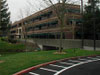
Bad Faith and a Partial Summary Judgment in Seattle Construction Defect Case
February 10, 2012 — CDJ Staff
The US District Court of Washington has issued a ruling in the case of Ledcor Industries v. Virginia Surety Company, Inc. Ledcor was the builder of a mixed-use real estate project in Seattle called the Adelaide Project. Ledcor purchased an insurance policy from Virginia Surety covering the project. After the completion of the project, Ledcor received complaints of construction defects from the homeowners, which they forwarded to Virginia Surety.
� Virginia Surety denied coverage on several grounds. Absent any lawsuit, Virginia claimed that there was “not yet any duty to defend or indemnify.” Further, as the policy commenced ten days after work on the project was substantially completed, Virginia cited a provision in the policy that excluded coverage for damage that occurred before the policy began. As problems included water intrusion, Virginia noted an exclusion for fungal damage. Finally, Virginia noted that it was not clear whether damage was due to Ledcor’s own actions.
� The homeowners sued over the construction defects. Ledcor settled these suits before trial. In this, they were defended by, and settlements were paid by American Home, another of Ledcor’s insurers. Ledcor claims that Virginia Surety acted in bad faith by denying coverage and by its failure to investigate the ongoing nature of the work at the project.
� The judge determined that Virginia Surety acted in bad faith when it invoked the fungus exclusion. Virginia noted that fungal damage “‘would have been’ referenced in the list of construction defects,” however, the HOAs claimed only “water stains” and “water damage,” and made no mention of mold or fungus. The court found that Virginia Surety “was not entitled to deny coverage simply because it may have suspected that mold or fungus damage existed.” The court noted that further proceedings would be needed to determine what portion of the settlement Virginia is obligated to pay.
� The court found that there were matters of fact to be determined on the further issues in the case. The judge wrote that although Virginia acted in bad faith in invoking the fungus exclusion, it still had to be determined if they were in breach of contract by failing to defend Ledcor. Ledcor still needs to show that the damages claimed by the HOA were due to work actually covered by Virginia Surety.
� Ledcor made an additional claim that Virginia Surety violated Washington’s laws concerning the insurance industry. Here, the court noted that the improper exclusion for fungus issues “constitutes a per se unfair trade practice.” Six other claims were made under this law. The court found that Virginia Surety did not misrepresent “pertinent facts or insurance policy provisions.” It also issued its denial letter promptly, satisfying the fifth provision. However, Virginia Surety did violate the second provision, in that it failed “to acknowledge and act reasonably promptly upon communications with respect to claims.” Two other issues could not be determined.
� Judge Martinez’s decision granted a summary judgment to Ledcor on the issue of bad faith. An additional summary judgment was granted that Virginia Surety violated Washington’s Insurance Fair Conduct Act. Judge Martinez did not grant summary judgment on any of the other issues Ledcor raised.
Read the court’s decision…
Arbitration Clause Not Binding on Association in Construction Defect Claim
June 19, 2012 — CDJ Staff
Determining that a community’s CC&Rs do not form an agreement to arbitrate, the California Court of Appeals has reversed the decision of the Superior Court inVerano Condo. Homeowners the Ass’n v. La Cima Dev., LLC (Cal. App., 2012). La Cima purchased an apartment complex in December 2004, which they converted into condominiums. In the process, La Cima created the CC&Rs, under which the Verano Condominium Homeowners Association came into being. One section of the CC&Rs included arbitration clauses. Additionally, the purchase agreements for individual condominium units also contained arbitration clauses. Subsequently, the owners became aware of construction defect both in units and in the common areas. The Association sued La Cima both in its own interest and on behalf of its members. La Cima moved to compel arbitration, which was denied by the trial court. La Cima appealed.
The court concluded that “CC&Rs are insufficient to form an agreement to arbitrate between La Cima and the Association.” The court noted that “no evidence exists to show the Association consented to the terms of the CC&Rs, either explicitly or implicitly.”
The court agreed with La Cima that the arbitration agreement applied to those owners who had purchased their units directly from La Cima. Moreover, as the conversion to condominiums involved interstate commerce, in part because a Delaware company was selling condominiums located in California, the court held that the Federal Arbitration Act (FAA) applied, and as such “even a state constitutional standard, such as the the jury waiver provision requirements of the California Constitution, cannot be used to circumvent the FAA in the face of an otherwise valid arbitration agreement.”
However, the court also held that there was “no agreement in the CC&Rs between La Cima and owners who did not purchase units directly from La Cima,” adding that “no meeting of the minds between La Cima and these later purchasers and their successors occurred.” The court did not believe that “the Legislature intended that CC&Rs would be used to provide continuing and irrevocable contractual development or role as a representative of the owners of the development.”
The purpose of the CC&Rs, according to the court are to “protect owners from one another and permit enforcement of its terms by the Association.” The court stated that “La Cima relinquished its interests in the land by selling its property and may not assert any rights under the CC&Rs following the transfer of its ownership interest.
In its conclusion, the court determined that claims must be organized in three classes. The claims the association made against La Cima for defects in the common area “are not subject to any valid agreement to arbitrate.” The second category are those owners who did not purchase their units directly from La Cima. Here, also, the court found that the units “are similarly not subject to a valid arbitration agreement.”
The third category, however, was “owners who purchased units directly from La Cima.” The court held that these arbitration agreements were valid, and if the claims were to be taken up by the association, the association could only submit these claims to arbitration. The lower court was instructed to separate these claims, as here La Cima’s motion could be granted.
Read the court’s decision…
Nevada Construction Defect Lawyers Dead in Possible Suicides
March 28, 2012 — CDJ Staff
A number of news sources have reported on the recent death of Nevada construction defect attorney, Nancy Quon. Ms. Quon was implicated in a recent scandal in which a group conspired to control homeowner associations in order to divert construction defect lawsuits to the members of the conspiracy.
�Ms. Quon was found dead in her bathtub. The details are still under investigations. She and her boyfriend were accused of a failed arson/suicide scheme in 2010. Ms. Quon survived an attempt to burn down her home. Subsequently, her boyfriend obtained some gamma-hydroxybutyric acid (GBH) for her, as part of another failed suicide attempt.
�Subsequent to Ms. Quon’s death, David Amesbury was found in California dead by hanging. Mr. Amesbury took a plea deal in the case, and he had admitted his role in providing legal and construction contracts to firms in the conspiracy. He was accused of fixing HOA elections.
Read the full story…
�Read the full story…
�Read the full story…
�Read the full story…
Construction Firm Charged for Creating “Hail” Damage
June 19, 2012 — CDJ Staff
A Burlington County, Pennsylvania judge has sentenced a firm and its employee for insurance fraud. In the scam, representatives of Precision Builders visited homes after hailstorms and advised homeowners that they could get new roofs and sidings covered by insurance. Many of the homeowners noted that they had not noticed any hail damage.
After homeowners filed claims, employees of Precision Builders would visit the homes and damage the roofs and sidings consistent with the adjusters’ reports.
One employee of Precision Builders, Dominik Sadowski, has pleaded guilty to third-degree insurance fraud. He has been sentenced to four years probation and 100 hours of community service. Another defendant, Marcin Gradziel, is alleged to have visited and damaged properties. He has plead not guilty.
Read the full story…
Denver Court Rules that Condo Owners Must Follow Arbitration Agreement
November 7, 2012 — CDJ Staff
Prior to initiating a construction defect lawsuit, the Glass House Residential Association voted to invalidate the arbitration agreement that had been written into its declaration and bylaws by the developer and general contractor. After the association started their construction defect claims, the developer and general contractor argued that the case must go to arbitration, as the arbitration clause contained a provision that it could not be altered without the agreement of the developer and general contractor.
The Denver District Court has ruled against that association, determining that the res triction was not in violation of Colorado condominium law. And, as a post from Polsinelli Shughart PC on JDSupra notes, the Colorado Common Interest Ownership Act encourages the use of arbitration procedures to settle disputes. The CCIOA does prohibit “certain restrictions on the homeowners association’s ability to amend the condominium declarations,” however, preserving an arbitration agreement is not one of them.
Read the full story…
Ohio Casualty’s and Beazer’s Motions were Granted in Part, and Denied in Part�
May 10, 2012 — CDJ Staff
The case Trinity Homes LLC and Beazer Homes Investments LLC has reached the summary judgment stage. The remaining plaintiffs are Trinity Homes LLC (Trinity) and Beazer Homes Investments LLC (Beazer), and the only defendant remaining is Ohio Casualty Insurance Company (Ohio Casualty). “Ohio Casualty has filed a motion for summary judgment (Dkt. #409) on all claims against it, and Trinity and Beazer have filed a cross-motion seeking partial summary judgment (Dkt. #431) in their favor.” Ohio Casualty’s Motion for Summary Judgment was granted in part and denied in part, and Beazer’s motion was granted in part and denied in part.
�The court’s ruling presented a bit of background on the companies involved in the litigation: “Trinity is an Indiana limited liability company with its principal place of business in Indiana and is one of several construction related companies owned by Beazer, which is a limited liability company incorporated under the laws of Delaware having its principal place of business in Atlanta, Georgia. Beazer’s predecessor, Beazer Homes Investment Corporation, acquired the stock of Crossman Communities, Inc. in 2002. Crossman and its subsidiary owned all interests in Trinity. Beazer and Trinity are in the business of residential real estate development and construction.”
�Furthermore, “Ohio Casualty’s home office is in Ohio, where it is incorporated. It sells insurance policies to commercial entities such as Plaintiffs. It purchased a book of business from Great American Insurance Company, a subsidiary of which had sold commercial general liability policies (‘CGL’) and umbrella liability policies to Trinity, covering the period of time between May 1, 1994 through May 1, 1999. For ease of reference, we will refer to these policies as the Ohio Casualty policies. Trinity sold and acted as a general contractor for the construction of new homes in Central Indiana throughout the period of time in which the Ohio Casualty policies were in place.”
�The court disagreed with almost every argument put forth by Ohio Casualty. However, they did concede “that Ohio Casualty is obligated to indemnify Trinity only for damages arising during its policy periods for pro rata liability as opposed to several and indivisible, by reason of its having limited its indemnity obligation to ‘those sums’ that Trinity becomes liable to pay for property damage which ‘occurs during the policy period.’”
�Finally, the court ruled that “Ohio Casualty Company’s Motion For Summary Judgment (Dkt. #409) is GRANTED IN PART, that is, to the extent that Beazer is not an insured under the Ohio Casualty insurance policies, but the motion is DENIED in all other respects.”
�The court further ruled that “Trinity and Beazer’s Motion For Partial Summary Judgment (Dkt. #431) is GRANTED IN PART, that is: (1) Trinity is an insured under the Ohio Casualty CGL and umbrella policies in effect for the time period from May 1, 1994 to May 1, 1999; (2) the claims at issue in the Underlying Lawsuits are "property damage" claims resulting from an "occurrence" and are therefore within the policy coverage provided under the Ohio Casualty Policy; and (3) none of the exclusions in the Ohio Casualty Policy bars coverage. Trinity and Beazer’s Motion is DENIED in all other respects. Moreover, material questions of fact remain with respect to whether payments made to the 54 homeowners, who were part of the putative class in the underlying Colon class action but were not included in the certified settlement class, were voluntary payments and as such do not qualify for indemnification. Material questions of fact also preclude a summary ruling on the issue of whether Ohio Casualty is estopped from raising their voluntary nature as a defense to indemnity.”
� Read the court’s decision…
�
Insurer Has Duty to Disclose Insured's Interest In Obtaining Written Explanation of Arbitration Award�
October 23, 2012 — Tred Eyerly, Insurance Law Hawaii
The issue faced by the Minnesota Supreme Court was whether the insurer had a duty to disclose the insured's interest in obtaining a written explanation of an arbitration award that identified the claims of recovery and the portions of the award attributable to each. Remodeling Dimensions, Inc. v. Integrity Mut. Ins. Co., 2012 LEXIS Minn. 404 (Minn. Sup. Ct., Aug. 22, 2012).
�Remodeling Dimensions, Inc. ("RDI") built an addition for the homeowners and installed windows in the original part of the house. After construction began, the homeowners also asked RDI to fix the master bedroom window in the original part of the house.
�After completion of the project, the house sustained storm damage.
� Read the full story…
��Reprinted courtesy of Tred R. Eyerly, Insurance Law Hawaii. Mr. Eyerly can be contacted at te@hawaiilawyer.com
��
Dust Infiltration Due to Construction Defect Excluded from Policy
September 9, 2011 — CDJ Staff
A summary judgment was affirmed in the case of Brown v. Farmers Group, by the California Court of Appeals. The Browns bought a new home in Oakley, California. At the time, they signed disclosure statement “acknowledging that the area around their home experienced gusty winds and would be in development for years to come, which might result in dust and airborne mold.”
The Browns found an unusual amount of dust in their home, which became worse when they ran their heating and air conditioning system. Shelia Brown was later diagnosed with chronic valley fever, which was attributed to airborne mold. The Browns contacted Farmers which investigated the house. Although the adjustor from Farmers said the Browns would be covered, Farmers denied the claim.
After the Browns moved out of the house, an inspector found that the HVAC line in the attic was disconnected, sending dust into the home. The Browns brought action against Mid-Century Insurance, which managed the policy, and Farmers. The identified the HVAC defect, window problems, and valley fever as causes, suing for breach of contact, breach of implied covenant of good faith and fair dealing, and the intentional infliction of emotional distress.
The court rejected all these claims. The policy with Farmers excluded losses due to defective construction. This ruled out the faulty HVAC system and any problems there might have been from the windows. The policy also specifically excluded losses from contamination, fungi, pathogens, and noxious substances. The court further found that the adjustor’s opinion was irrelevant to the question of what the policy actually covered. Finally, the court found no evidence of intentional infliction of emotional stress.
On review, the appeals court upheld the trial court’s conclusions and affirmed the summary judgment.
Read the court’s decision…
Harmon Towers Case to Last into 2014
December 20, 2012 — CDJ Staff
Don’t expect a fast resolution to the Harmon Tower case in Las Vegas. The latest schedule sets trial for the construction defect claims in January 2014. Previously, these claims were going to be heard during the trial set to start in June 2013. Now the June trial will be over payment issues only.
Don’t expect the building to come down soon either. While CityCenter claims the building could come down in an earthquake, Judge Elizabeth Gonzalez had determined that as the structural testing was not random; its results cannot be extrapolated through the entire structure. As a result, CityCenter has elected to do more testing, holding off on demolishing the building. They are appealing Gonzalez’s order to the Nevada Supreme Court.
Read the full story…
Park District Sues over Leaky Roof
August 2, 2012 — CDJ Staff
The Glen Ellyn Park District has filed suit against multiple firms over the leaks in the Ackerman Sports and Fitness Center. The district alleges at least twenty leaks can be found throughout the facility. In order to prevent further damage, they have put in a system of “buckets, tarps and flexible piping.”
According to the Chicago Daily Herald, the park district has most recently added the project construction manager, the building designer, and insurer that issued a performance bond on the builder. T.A. Bowman Constructors, the builder of the project, sued the park district. They were first name in the district’s countersuit.
The park district isn’t waiting for the outcome of the suit to repair the roof. Instead, they are using existing funds to pay for roof repairs.
Read the full story…
Town Files Construction Lawsuit over Dust
August 16, 2012 — CDJ Staff
Washington Township in Ohio has filed a lawsuit against Underground Utilities for their handling of construction fill on a road project. The City of Mansfield had hired the firm to improve road safety. The lawsuit is over the company’s actions in processing soil for fill, which they are doing on three vacant lots that are zoned for residential use. Washington Township Trustee Jack Butler told the Mansfield Journal that “what brought the lawsuit to a head was the fact that the contractor did not control the dust.” Subsequent receiving notices of zoning violations, the company began to move its operation to another site.
Read the full story…
Tennessee Court: Window Openings Too Small, Judgment Too Large
November 18, 2011 — CDJ Staff
The Tennessee Court of Appeals has issued a ruling in the case of Dayton v. Ackerman, upholding the decision of the lower court, even as they found that the award was incorrectly computed. The Daytons purchased a house that had been designed and built by the Ackermans, who operated a construction business. The court noted that the warranty with the house promised that “for a period of 60 days, the following items will be free of defects in materials or workmanship: doors (including hardware); windows; electric switches; receptacles; and fixtures; caulking around exterior openings; pluming fixtures; and cabinet work.”
Soon, the Daytons began to experience problems with the house. Many were addressed by the Ackermans, but the Daytons continued to have problems with the windows. Neither side could specify a firm date when the Ackermans were contacted by the Daytons about the window problems. The Ackermans maintained that more than two years passed before the Daytons complained about the windows. The lower court found the Daytons more credible in this.
Initially, the Daytons included the window manufacturer in their suit, but after preliminary investigations, the Daytons dropped Martin Doors from their suit. Martin Doors concluded that the windows were improperly installed, many of them “jammed into openings that were too small for them.”
After the Daytons dismissed Martin Doors, the Ackermans sought to file a third party complaint against them. This was denied by the court, as too much time had elapsed. The Ackermans also noted that not all of the window installations were defective, however, the courts found that the Daytons ought not to have mismatched windows.
Unfortunately for the Daytons, the window repair was done incorrectly and the windows were now too small for the openings. The firm that did the repair discounted the windows and Daytons concealed the problem with plantation shutters, totalling $400 less than the original lowest estimate. However, the appeals court noted that it was here that the trial court made their computation error. Correcting this, the appeals court assessed the Ackermans $12,016.20 instead of $13,016.20.
Finally, the Ackerman’s expert was excluded as he had changed his testimony between deposition and trial. The trial reviewed the expert’s testimony and had it been admissible, it would not have changed the ruling.
Read the court’s decision…
Insurer Unable to Declare its Coverage Excess In Construction Defect Case
January 6, 2012 — CDJ Staff
The Ninth Circuit Court of Appeals has upheld a summary judgment in the case of American Family Mutual Insurance Co. v. National Fire & Marine Insurance Co. Several other insurance companies were party to this case. In the earlier case, the US District Court of Appeals for Arizona had granted a summary judgment to Ohio Casualty Group and National Fire & Marine Insurance Company. At the heart of it, is a dispute over construction defect coverage.
The general contractor for Astragal Luxury Villas, GFTDC, contracted with American Family to provide it with a commercial liability policy. Coverage was issued to various subcontractors by Ohio Casualty and National Fire. These policies included blanket additional insured endorsements that provided coverage to GFTDC. The subcontractor policies had provisions making their coverage excess over other policies available to GFTDC.
The need for insurance was triggered when the Astragal Condominium Unit Owners Association filed a construction defect claim in the Arizona Superior Court. CFTDC filed a third-party claim against several subcontractors. The case was settled with American Family paying the settlement, after which it filed seeking reimbursement from the subcontractor’s insurers. The court instead granted summary judgment in favor of Ohio Casualty and National Fire.
American Family appealed to the Ninth Circuit for a review of the summary judgment, arguing that the “other insurance” clauses were “mutually repugnant and unenforceable.” The Ninth Circuit cited a case from the Arizona Court of Appeals that held that “where two policies cover the same occurrence and both contain ‘other insurance’ clauses, the excess insurance provisions are mutually repugnant and must be disregarded. Each insurer is then liable for a pro rate share of the settlement or judgment.”
The court noted that unlike other “other insurance” cases, the American Family policy “states that it provides primary CGL coverage for CFTDC and is rendered excess only if there is ‘any other primary insurance’ available to GFTDC as an additional insured.” They note that “the American Family policy purports to convert from primary to excess coverage only if CFTDC has access to other primary insurance as an additional insured.”
In comparison, the court noted that “the ‘other insurance’ language in Ohio Casualty’s additional insured endorsement cannot reasonably be read to contradict, or otherwise be inconsistent with, the ‘other primary insurance’ provision in the American Family policy.” They find other reasons why National Fire’s coverage did not supersede American Family’s. In this case, the policy is “written explicitly to apply in excess.”
Finally, the Astragal settlement did not exhaust American Family’s coverage, so they were obligated to pay out the full amount. The court upheld the summary dismissal of American Family’s claims.
Read the court’s decision…
BUILD Act Inching Closer To Reality
July 8, 2011 — Douglas Reiser, Builders Counsel
A select group of Senators have launched a marketing campaign for the BUILD Act. If this is the first you are hearing about the BUILD Act, do not fret. The Act still has a long way to go, but if successful it would bring a national infrastructure bank.
�I have been fascinated with the concept of a national infrastructure bank for quite some time. The idea has been around since the Clinton years ? and perhaps beyond. The Act’s purpose is to create a national bank (American Infrastructure Financing Authority) to provide loans and loan guarantees to encourage private investment in upgrading America’s infrastructure. For a number of years, we have seen similar legislation float around Congress. But, none of those initiatives have gained as much traction as BUILD.
Read the full story…
�Reprinted courtesy of Douglas Reiser of Reiser Legal LLC. Mr. Reiser can be contacted at info@reiserlegal.com
Fourteen More Guilty Pleas in Las Vegas Construction Defect Scam
June 19, 2012 — CDJ Staff
The ongoing case over claims that a group fixed homeowner board elections in order to supply the conspirators with a stream of construction defect cases and repairs has lead to fourteen guilty pleas. The judge recently issued charges against fifteen of the accused; one defendant did not join in the group as he was recovering from pneumonia. The prosecutors have asked the judge to delay sentencing, as the investigation is continuing. Prosecutors note that another dozen people may be indicted.
Along with an earlier group who plead guilty, this brings the total number of guilty pleas in the case to twenty-five. All have promised to cooperate with authorities.
The case has also involved four deaths, although authorities have not suspected foul play in the deaths. Nancy Quon, one of the four, was the construction defect attorney suspected to be at the center of the conspiracy.
Read the full story…
After Katrina Came Homes that Could Withstand Isaac�
October 23, 2012 — CDJ Staff
In the aftermath of Hurricane Katrina, Louisiana adopted its first uniform building code. Under the new standards, homes are better able to withstand the winds generated by hurricanes. The owner of one home said that during Hurricane Isaac, “there’s no shaking of the building itself, there’s no sign of a storm except for the rain.”
�WWWLTV reports that the new standards require home to be able to withstand 130 mile per hour winds. They also must follow FEMA guidelines for elevation. Build Now, a non-profit organization, is seeking to build green homes that meet the new standards. Their executive director said “we’re building higher. We’re building stronger. We’re building greener.”
� Read the full story…
�
Louisiana Politicians Struggle on Construction Bills, Hospital Redevelopment
June 16, 2011 — CDJ Staff
Louisiana politicians are still working on a compromise in the state’s construction budget, as reported in the Times-Picayune. Rob Marrianneax, the chair of the Senate Revenue and Fiscal Affairs Committee, removed a $45 million request from Governor Bobby Jindal and added $4 million for projects that Jindal vetoed last year.
�Two senators have formed competing plans to fund redevelopment construction for New Orleans’s Methodist Hospital. Mitch Landrieu, the mayor of New Orleans, hoped for $30 million dollars in state bonds. Senator Cynthia Willard-Lewis proposed an amendment that would supply $1.6 million, while Senator J.P. Morrell has an amendment that would supply $4 million.
�Read the full story…
Building Inspector Jailed for Taking Bribes
September 30, 2011 — CDJ Staff
The LA Times reports that Raoul Germain, a city Los Angeles building inspector has been sentenced to 21 months in prison after pleading guilty to taking bribes. Germain was caught as part of an FBI sting operation in which he approved work in exchange for thousands of dollars in bribes. The Times notes that that in some cases, Germain never visited the construction sites. Germain was offered a chance to cooperate with investigators. His lawyer, Steve Cron asked the Times, “What do you think happens to someone who cooperates?”
In addition to Germain, another city inspector has pleaded guilty to taking bribes and two more employees of the Department of Building and Safety have been fired in connection with the investigation.
Read the full story…