


















Architectural Firm Disputes Claim of Fault
May 27, 2011 — CDJ Staff
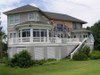
Lake-Flato Architects has disputed the arbitration panel’s conclusion that problems with the home of Tom Hanks and Rita Wilson were due to design flaws. The firm settled with the couple for $900,000, however the Idaho Mountain Express reports that David Lake said, “the settlement in the case in no way represents that Lake Flato was responsible for faulty design.” The Express reported that “the arbitrators found that problems at the home were attributable to design errors that did not take into account the cold winter climate of the Sun Valley area.”
Read the full story…
Homebuilders Go Green in Response to Homebuyer Demand
May 10, 2012 — CDJ Staff
McGrawHill Construction reports that 17 percent of new homes and remodels in 2011 were done with green building practices. Their report estimates that by 2016, this will rise to 29 to 38 percent of the market for home construction and remodeling.
Consumers see the green buildings as more desirable, particularly where they are more energy efficient. Two thirds of builders noted their customers were interested in features that would lower the energy use of their homes. Consumers also feel that green building materials are more durable and see green homes as higher quality.
Read the full story…
Kentucky Court Upholds Arbitration Award, Denies Appeal
June 15, 2011 — CDJ Staff
The Kentucky Court of Appeals has ruled in Lake Cumberland Community Action Agency v. CMW, Inc. affirming the arbitration award. CMW, Inc. was responsible for the construction of a facility to be used for pre-school students and the housing of Alzheimer patients and senior citizens. An agreement was made that any disputes would be heard by an arbitrator selected by the construction industry.
The plaintiff alleged that there were design and construction defects in the building trusses, violation of the Kentucky Building Code, and problems with the HVAC system. The arbitrator awarded $106,000 to the plaintiff which then sought to vacate the award. The circuit court upheld the arbitrator’s decision.
The Court of Appeals found that there was no basis for rejecting the arbitrator’s decision, noting “there is nothing to show that there was any fraud or bias on the part of the arbitrator.” The appeals court, with all three judges concurring, upheld the arbitration award.
Read the court’s decision
Equipment Costs? It’s a Steal!
July 8, 2011 — CDJ Staff
KCBD reports on the problems of a Lubbock, Texas contractor. It’s hard to do the job when your tools keep getting stolen. Corey Meadows, owner of Top Cut Interiors, told KCBD that he had chained an air compressor to a table saw. Since the thieves couldn’t cut the chain, they cut the table saw “and just took the air compressor and the chain.” Meadows estimates the thieves cost him $2,000 in damaged or stolen equipment and time lost.
Read the full story…
High School Gym Closed by Construction Defects
October 28, 2011 — CDJ Staff
The high school gym in Lake Oswego, Oregon has been shut down because testing has revealed that the construction defects have lead to deterioration of the structural integrity of the roof. The school district noted that there was a chance of collapse if there were a “significant seismic event or heavy rain and winds and snow.” The school district has been in a lawsuit with the builders since 2008, which was recently settled for $600,000.
The school board is still determining whether the original contractor will be asked to correct the defect or if they will bid the job out.
Read the full story...
Mississippi exclusions j(5) and j(6) “that particular part”
June 7, 2011 — CDCoverage.com
In Lafayete Ins. Co. v. Peerboom, No. 3:10cv336 (S.D. Miss. June 2, 2011), claimant homeowner Peerboom hired insured contractor Absolute to raise Peerboom’s house two feet to avoid future flooding. While Absolute was raising the house, it fell, resulting in physical injury to the home. Peerboom sued Absolute for negligence, breach of contract, and fraud, seeking damages for the destruction of the home. Absolute’s CGL insurer Lafayette defended under a reservation of rights and filed a declaratory judgment action.
Read the full story…
Reprinted courtesy of CDCoverage.com
Follow Up on Continental Western v. Shay Construction
March 28, 2012 — Brady Iandiorio, Colorado Construction Litigation
Writing in Construction Law Colorado, Brady Iandiorio revisits the case Continental Western v. Shay Construction. He promises to continue to follow cases dealing with Colorado HB 10-1394.
Recently the Court ruled on two Motions to Reconsider filed by Defendants Milender White and Shay Construction.
Procedurally, the Motions to Reconsider were ruled on by the Honorable William J. Martinez, because the day after the motions were filed the action was reassigned to Judge Martinez. In the short analysis of the Motion to Reconsider, the court leaned on Judge Walker D. Miller’s ruling on the summary judgment and his analysis of the (j)(5) and (j)(6) exclusions.
As a quick refresher regarding the grant of summary judgment, Judge Miller agreed with Continental Western’s argument that the asserted claims were excluded under the “damage to property” exclusion. The policy’s exclusions state: “(j) Damage to Property . . . (5) that particular part of real property on which you or any contractors or subcontractors working directly or indirectly on your behalf are performing operations, if the ‘property damage’ arises out of those operations; or (6) that particular part of any property that must be restored, repaired or replaced because ‘your work’ was incorrectly performed on it.” Judge Miller found that both exclusions (j)(5) and (6) applied to both Shay’s allegedly defective work.
Read the full story…
Reprinted courtesy of Brady Iandiorio of Higgins, Hopkins, McClain & Roswell, LLC. Mr. Iandiorio can be contacted at iandiorio@hhmrlaw.com.
Is There a Conflict of Interest When a CD Defense Attorney Becomes Coverage Counsel Post-Litigation?
September 1, 2011 — Chad Johnson of Higgins, Hopkins, McLain & Roswell, LLC
In Weitz Co., LLC v. Ohio Cas. Ins. Co., the U.S. District Court for the District of Colorado was asked to rule on a motion to disqualify counsel in an insurance coverage action. 11-CV-00694-REB-BNB, 2011 WL 2535040 (D. Colo. June 27, 2011). Motions to disqualify counsel are viewed with suspicion, as courts “must guard against the possibility that disqualification is sought to ‘secure a tactical advantage in the proceedings.’” Id. at *2 (citing Religious Technology Center v. F.A.C.T. Net, Inc., 945 F. Supp. 1470, 1473 (D. Colo. 1996).
Weitz Company, LLC (“Weitz”) is a general contractor and defendant in an underlying construction defect suit which had concluded before the action bringing rise to this order. In the underlying action, Weitz made third-party claims against subcontractors, including NPW Contracting (“NPW”). Weitz was listed as an additional insured under NPW’s policies with both Ohio Casualty Insurance Company and Mountain States Mutual Casualty Company (collectively “the Carriers”). The Carriers accepted Weitz’s tender of defense under a reservation of rights. However, neither insurance carrier actually contributed to Weitz’s defense costs in the underlying action. At the conclusion of the construction defect action, the parties unsuccessfully attempted to apportion the attorney’s fees and costs. Eventually, Weitz brought suit against the recalcitrant carriers. The Lottner firm, which had previously represented Weitz in the underlying construction defect action, continued to represent Weitz in this coverage action.
Read the full story…
Reprinted courtesy of Higgins, Hopkins, McLain & Roswell, LLC. Mr. Johnson can be contacted at johnson@hhmrlaw.com
Amerisure Case to be Heard by Texas Supreme Court
August 16, 2012 — CDJ Staff
The Fifth Circuit Court of Appeals has withdrawn its decision in Ewing Construction Company Inc. v. Amerisure Insurance Company, according to Insurance Developments. The Fifth Circuit had concluded that “a contractor’s obligation to perform its contact in a workmanlike manner constituted an ‘assumption of liability.’” Two questions have now been certified to the Texas Supreme Court. The dissent in the case argued the majority had misread Texas Supreme Court precedent. The court will now have the opportunity to clarify this matter.
Read the full story…
Ohio Adopts Energy-Efficient Building Code
June 19, 2012 — CDJ Staff
In a compromise between environmental groups, who were looking for stricter standards, and homebuilders, who were trying to contain building costs, the state of Ohio has adopted buildings codes that will increase the energy efficiency of new homes. The estimated costs are about $1,100 with estimated annual savings of $230. According to Corey Roblee of the International Code Council, “It’s something needed in the state of Ohio.”
The Ohio Home Builders Association opposed a proposal to adopt the guidelines of the International Code Council. Builders will be able to either follow the ICC guidelines or they can use the Ohio guidelines to meet the same energy efficiency. Vincent Squillace, the executive vice president of the OHBA, said, “We came up with an equivalent code that’s more strict but is about $2,000 cheaper per home to implement than the original code.”
The new code will require that at least 75% of lighting must be high efficiency, increases the degree of insulation, and specifies more efficient windows, among other changes.
Read the full story…
Contract Not So Clear in South Carolina Construction Defect Case
November 7, 2012 — CDJ Staff
The South Carolina Court of Appeals has reversed a partial summary judgment issued by one of the lower courts in the case of The Retreat at Edisto Co-Owners Association v. The Retreat at Edisto. The underlying issues of the case deal with a construction defect complaint.
The lower court had concluded “Developer’s ‘First Amendment’ to the Master Deed required the Developer to satisfy the provision in the paragraph labeled ‘Master Deed Amendment or Phase II’ as a condition precedent to its election to proceed with the development of Phase II.”
The appeals court found that “the language of the First Amendment to the Master Deed is susceptible to more than one interpretation.” The court additionally concluded that the “Developer presented the requisite scintilla of evidence on the question of its intent in order to establish a genuine issue of material fact. As the material facts were in dispute, the appeals court reversed the summary judgment and remanded the case to the circuit court for further proceedings.
Read the court’s decision…
Texas contractual liability exclusion
May 18, 2011 — May 18, 2011 - CDCoverage.com
In Ewing Construction Co., Inc. v. Amerisure Ins. Co., No. C-10-256 (S.D. Tex. April 28, 2011), insured Ewing was the general contractor for an athletic facility constructed for a school district. The school district sued Ewing alleging defective construction of the project. The underlying complaint included contract and negligence causes of action, and sought damages for the repair of the damages and loss of the use of the project. The complaint did not allege damage to any property other than the project itself. Ewing tendered its defense to its CGL insurer Amerisure. Amerisure denied a defense and Ewing filed suit against Amerisure. The federal district trial court entered summary judgment for Amerisure. Applying Texas law, the court held that all of the damages fell within the “contractual liability†exclusion precluding any duty to defend or indemnify.
Read the full story…
Reprinted courtesy of CDCoverage.com
New Jersey Court Rules on Statue of Repose Case
May 26, 2011 — CDJ Staff
A three-judge panel issued a per curium ruling on May 23 in Fairview Heights Condo. v. Investors (N.J. Super., 2011), a case which the members of a condominium board argued: “that the judge erred by: 1) dismissing plaintiff’s claims against RLI based upon the statute of repose; 2) dismissing the breach of fiduciary duty claims against the Luppinos based upon a lack of expert opinion; 3) barring the testimony of Gonzalez; and 4) barring the May 23, 1989 job site report.” The court rejected all claims from the condominium board.
The court found that the building must be unsafe for the statute of repose to apply. They noted, “the judge made no findings on whether the water seepage, or the property damage caused by such seepage, in any way rendered the building, or any of the units, unsafe.” Further, “without a specific finding on the question of whether the defects had rendered the building ‘unsafe,’ defendants were not entitled to the benefit of the ten-year statute of repose.“
On the second point, the court also upheld the lower court’s findings regarding the management company:
“The report submitted by Berman establishes that the EIFS product was defective in its design and would therefore have failed from the outset. The defects in that product were, according to Berman, not prone to repair or other mitigation. Therefore, even if defendants did not appropriately inspect or repair the EIFS, their failure to do so would have had no impact on the long-term performance of the EIFS exterior cladding. As plaintiff failed to raise a genuine issue of material fact on these questions, the judge properly granted summary judgment to the Luppinos on plaintiff’s breach of fiduciary duty claim.”
On the final two points, the judges noted “plaintiff maintains that the judge committed reversible error when he excluded the Gonzalez certification and the 1989 job site report prepared by Raymond Brzuchalski.” They saw “no abuse of discretion related to the exclusion of the Gonzalez certification, and reject plaintiff’s arguments to the contrary.” Of the job site report, they found, “no abuse of discretion in the judge's finding that the Brzuchalski 1989 job site report did not satisfy the requirements of N.J.R.E.803(c)(6).”
Read the court’s decision
Construction Jobs Expected to Rise in Post-Hurricane Rebuilding
November 7, 2012 — CDJ Staff
Businessweek reports that construction jobs and materials will see increased demand as property owners in New York and New Jersey rebuild after hurricane Sandy. Tom Jeffery, of Irvine, California-based CoreLogic, a real estate information service, noted that “a high percent of damaged properties are going to be repaired.” Experts estimate property damage to total anywhere from $7 billion to $40 billion.
It is also estimated that about 739,000 properties in the area are underwater in the way that has nothing to do with flooding, with negative equity of 25 percent or more. Many of these homeowners are likely to walk away from their mortgages.
Ken Simonson, chief economist of the Associated General Contractors of America, expects “localized spikes in construction employment throughout November and the winter.” Martin Connor, the chief financial officer of Toll Brothers, expects to see more a rise in labor costs than in materials.
Read the full story…
Insurer Beware: Failure to Defend Ends with Hefty Verdict
June 1, 2011 — Douglas Reiser in the Builders Counsel Blog
Served with a lawsuit that you turned over to your insurer? Insurer refusing to defend you? Well, find some hope in this news. Washington’s IFCA has the claws to ensure that insurers perform their duties.
Contractors heavily rely on the defense provisions of their Commercial General Liability (CGL) policies. In construction, a legal dispute can easily rear its head when you least expect it. Luckily, Washington registered contractors are required to maintain CGL insurance. That insurance often provides contractors with adequate legal defense in the event that they are sued.
But, what if your insurer turns down the defense request? They might be staring at massive damages. A current Reiser Legal client, Australia Unlimited, Inc., recently won a large verdict against Hartford Insurance, after the insurer unreasonably denied their claim. The firm who represented Australia Unlimited Inc. in that case, Hackett Beecher and Hart, were successful in procuring a $5.43 Million verdict
Read the full story…
Reprinted courtesy of Douglas Reiser of Reiser Legal LLC. Mr. Reiser can be contacted at info@reiserlegal.com
Cabinetmaker Exceeds Expectations as Conditions Improve
October 23, 2012 — CDJ Staff
American Woodmark, the manufacturer of several national brands of cabinets and vanities, saw greater than anticipated earnings in its most recent quarter. Their revenue was $148.3 million, an increase of 13% over the same quarter a year prior. They saw a 40% increase in sales. As a result, their per-share earnings were 7 cents, instead of the projected loss of 3 cents per share. Forbes reports that the share price for American Woodmark has been rising in August 2012.
Read the full story…
Colorado Court of Appeals Rejects Retroactive Application of C.R.S. § 13-20-808.
April 25, 2012 — Chad W. Johnson, Higgins, Hopkins, McClain & Roswell, LLC
In TCD, Inc. v. American Family Mutual Insurance Company, TCD appealed the district court’s summary judgment ruling in favor of American Family. TCD, Inc. v. American Family Mutual Insurance Company Colo. App. No. 11CA1046 (April 12, 2012). TCD was the general contractor on a project to construct a building for Frisco General Gateway Center, LLC (“Gateway”). TCD subcontracted with a roofer named Petra Roofing and Remodeling Company (“Petra”) to performing the roofing work for the building. The subcontract required Petra to defend and indemnify TCD and to name TCD as an additional insured under its CGL policy. American Family issued a CGL policy to Petra that named TCD as an additional insured from 2006-2007.
TCD filed suit against Gateway seeking payment for its work at the project. Gateway counterclaimed against TCD for breach of contract, negligence, and violation of the CCPA. TCD demanded that American Family defend it from the counterclaims pursuant to Petra’s policies. American Family denied coverage and a separate coverage suit ensued. At the trial court level, the court entered summary judgment for American Family because the counterclaims of Gateway did not trigger the duty to defend or indemnify TCD as an additional insured.
On appeal, TCD argued that: 1) the counterclaims raise a genuine issue of material fact regarding American Family’s duty to defend; 2) the court should hear evidence beyond the four corners of the complaint; and, 3) the court should apply C.R.S. § 13-20-808 retroactively.
Read the full story…Reprinted courtesy of Chad W. Johnson of Higgins, Hopkins, McClain & Roswell, LLC. Mr. Johnson can be contacted at johnson@hhmrlaw.com.
Colorado Statutes of Limitations and Repose, A First Step in Construction Defect Litigation
December 20, 2012 — CDJ Staff
Grund Dagner, a law firm operating in Denver and Boulder, Colorado notes on their blog that when defending a construction defect claim, one of their first steps is to determine if the claims are affected by the statutes of limitations or repose, and that they “have had much success raising these defenses with the court before trial.”
Colorado has a two-year statute of limitations, starting from when the homeowner discovers the defect. Further, Colorado’s statute of repose precludes lawsuits beginning “more than six years after the substantial completion of the improvement to the real property.”
Grund Dagner notes that they “recently obtained dismissal of claims related to eight of 22 buildings in a condominium project, where the homeowners in those building observed the defects more than two years before the HOA initiated its claims against our client.”
Read the full story…