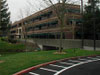
Condo Owners Allege Construction Defects
July 6, 2011 — CDJ Staff
Last November, mold problems were discovered at the Siena Condominiums in Montclair, New Jersey, which had been described by their developers as “an enclave of luxury in an urban village setting.” The owners have filed a lawsuit against Pinnacle Companies, Kohl Parnters, and Herod Development, seeking “compensatory damages, interest, reasonable attorney’s fee and costs, and for such other, further, and different relief as the Court may deem just and proper.”
�According to the article on Baristanet.com, an engineering report commissioned by the condominium association revealed many problems, including improperly installed windows and siding. The developers commissioned two engineering reports themselves and found evidence of water pounding on the roof. Despite these reports and repeated promises, no repairs have been made.
Read the full story…
Insurance Company Must Show that Lead Came from Building Materials
August 17, 2011 — CDJ Staff
The Fourth Circuit Court of Appeals for Louisiana has reversed the summary judgment of a lower court in the case of Widder v. Louisiana Citizens Property Insurance Company. Judge Roland L. Belsome wrote the opinion for the panel of three judges. Ms. Widder discovered that her home and its content were contaminated by lead. She applied to her insurer, Louisiana Citizens Property Insurance, which denied her claim.
�In response to Ms. Widder’s suit, LCPIC applied for a summary judgment on the grounds that there was no physical loss and that the policy did not cover defective material, latents defects, and pollution damage.
�The appeals court found that the lead contamination of Widder’s home did meet the standards of a direct physical loss, citing a recent Chinese Drywall case. There, it was found, “when a home has been rendered unusable or uninhabitable, physical damage is not necessary.”
�The lower court addressed only one of LCPIC’s exclusions, addressing only the exclusion on basis of “faulty, inadequate or defective material.” The appeals court noted that the evidence offered at trial does not show that the building materials were the source of the lead. This provided the appeals court with a matter of fact to remand to the lower court.
Read the court’s decision…
Water Drainage Case Lacks Standing
March 28, 2012 — CDJ Staff
The Texas Court of Appeals has ruled in the case La Tierra de Simmons Familia Ltd. V. Main Event Entertainment, LP. The trial court had found for Main Event. On appeal, the court threw out some of the grounds on which the trial court had reached its decision.
�The case involved two commercial lots in northwest Austin, Texas. The uphill tract (Phase III of the Anderson Arbor development) diverts its runoff onto the lower tract (the “Ballard tract”). The owners of the Ballard tract claim that “the drainage system was designed or constructed in a manner that has damaged and continues to damage the Ballard tract.”
�Both tracts have undergone changes of ownership since the construction of the drainage system in 2004. At the time the drainage system was constructed, the parcel was owned by Sears Roebuck and Co. Sears later sold the property. Main Event Entertainment is the current tenant. Likewise, the Ballard tract was previously owned by the Ballard Estate which sold the property to La Tierra on an “as is” basis in 2007.
�After La Tierra bought the Ballard tract, La Tierra’s engineer “witnessed and videotaped what he described as ‘flooding’ on the Ballard tract caused by storm water discharge from the Anderson Arbor drainage system during a rainfall event.” La Tierra determined that an adequate drainage system would cost about $204,000. Development plans were put on hold.
�La Tierra sued Main Event and various other parties associated with the uphill tract, seeking “actual damages for (1) decrease and loss in rental income due to delay in obtaining the development permit, (2) interest on carrying costs during that time period, (3) the cost to build a water conveyance system on the Ballard tract, (4) engineering fees incurred to redesign the water conveyance system, (5) unspecified out-of-pocket real estate expenses, and (6) property devaluation occasioned by the need to construct an expensive water conveyance system.” The trial court never reached these claims, ruling instead that La Tierra lacked standing, that its claims were barred under the statute of limitations, and that there was no evidence of damage.
�La Tierra appealed, arguing that “(1) the summary-judgment evidence does not conclusively establish that property damage claims accrued or were discovered prior to September 11, 2007, which is within the limitations period and was after La Tierra purchased the property; (2) even if the property was damaged before La Tierra acquired ownership of the Ballard tract, standing exists based on the assignments of interest from the Ballard Estate heirs, and the discovery rule tolls limitations until the injury was discovered on September 11, 2007; (3) limitations does not bar La Tierra's request for injunctive relief; (4) La Tierra's water code claim against Main Event and M.E.E.P. is viable based on their control over the drainage system, which makes them necessary and indispensable parties for injunctive relief; (5) La Tierra presented more than a scintilla of evidence to raise a fact issue on damages, causation, and other essential elements of its causes of action; and (6) the trial court abused its discretion when it sustained the defendants' objections to La Tierra's summary-judgment evidence.”
�The appeals court concluded that La Tierra’s second claim was irrelevant to standing, as La Tierra “obtained assignments from the Ballard Estate heirs ? nearly one year after the lawsuit was initially filed.” Nor did the court accept their first point. The water system had been operating unaltered since January, 2004, with monthly maintenance and inspection to maintain its designed operation. Further, a feasibility report La Tierra received stated that “over sixteen acres drain into those ponds, and thus onto this site.” The court noted that “the underlying facts giving rise to a cause of action were known before La Tierra acquired ownership of the Ballard tract.”
�The court concluded that the drainage issue is a permanent injury, but that it “accrued before La Tierra acquired an ownership interest in the property.” As La Tierra has standing, the appeals court ruled that it was improper for the trial court to rule on the issues. The appeals court dismissed the questions of whether the case was barred under the statute of limitation and also the question of whether or not La Tierra had damages.
�As the issue of standing would not allow La Tierra to bring the suit, the appeals court found for the defendants, dismissing the case for this single reason, and otherwise affirming the ruling of the lower court.
Read the court’s decision…
Federal Court Denies Summary Judgment in Leaky Condo Conversion
August 4, 2011 — CDJ Staff
In the US District Court for Illinois, Judge William Hibber has rejected the request for summary judgment sought by the developers of a condominium building in the case of Nautilus Ins. Co. v. 1735 W. Diversey, LLC (the insureds). The insureds renovated a building at 1735 W. Diversey, Chicago, converting it into condominiums. After the project was completed and all units sold, and a condominium association form, one of the owners found that unit suffered leaks during rainstorms. The condo board hired a firm, CRI, to investigate the cause of the leakage. CRI found “water infiltration through the exterior brick masonry walls, build-up of efflorescence on the interior surfaces of the masonry, and periodic spalling of portions of the brick masonry.”
�The redevelopment firm had purchased coverage from Nautilus. “Shortly after the Board filed its first complaint, the Insureds tendered the mater to Nautilus and requested that it indemnify and defend them from the Board's underlying claims. Nautilus, however, rejected the Insureds’ tender and denied coverage under both insurance policies.” Nautilus stated that the water leakage did not constitute an occurrence under the policies. The court cited these policies in which an occurrence is defined as “an accident, including continuous or repeated exposure to substantially the same general harmful conditions.” The Illinois courts have determined that construction defects are not accidents.
�The court concluded that the insured did not bring forth claims within the coverage of the policies and denied the motion for summary judgment.
� Read the court’s decision…
Foundation Arbitration Doesn’t Preclude Suing Over Cracks
March 28, 2012 — CDJ Staff
The Louisiana Court of Appeals has reversed the decision of a lower court, allowing a construction defect case to go through. In Greer v. Town Construction Company, the Greers hired Town Construction to build a home in Baton Rouge. The business relationship went sour, with disputes over “costs, change orders, workmanship, and timeliness issues.”
�Town Construction filed an arbitration claim for the unpaid contract balance. In the counterclaim, the Greers made claims of mold and mildew problems, and wall cracks that they attributed to a “structural defect in the foundation.” In arbitration, Town Construction was awarded the full contract balance plus extra costs and interest, while the Greers were awarded for their structural claims.
�Three years later, the Greers found additional cracks and filed a suit against Town Construction. Town Construction argued that the Greer’s lawsuit should be dismissed, as the claims had already been through the arbitration process. The district court agreed with Town Construction and dismissed the suit.
�The appeals court noted that the Greers would have no ground for a suit if the arbitration was a “valid and final judgment,” and went on to note that there was no evidence in the trial record that the arbitration met this qualification. The court noted that although it was clear that both parties had agreed to the decisions of the arbiter, under Louisiana law, arbitration is not final until it has been “rendered by a court with jurisdiction over subject mater and over parties.”
�The court remanded the case to the lower court, noting that “the district court is obligated to first determine whether a valid arbitration award is in existence and had been confirmed before considering the merits of the exception. The court noted that their decision “should not be read to express any opinion as to the merits of the claims or as to the propriety of damages sought in the Greer’s lawsuit.”
Read the court’s decision…
�
Florida Appeals Court Rules in Favor of Homeowners Unaware of Construction Defects and Lack of Permits
December 9, 2011 — CDJ Staff
The Florida Court of Appeals has ruled that a homeowner is not liable for defects in unpermitted alterations, reversing a lower court’s decision in Jensen v. Bailey. The Jensens sold their house to the Baileys. During the sale, the Jensens filled out a property disclosure statement, checking “no” to a question about “any improvement or additions to the property, whether by your or by others that have been constructed in violation of building codes or without necessary permits.”
After moving in, the Baileys discovered several problems with the home. One involved a defective sewer connection leading to repeated backups. The Baileys also found problems with remodeling the Jensens had done in the kitchen, master bath, and bedroom. The remodeling work was not done with required permits nor was it up to code.
The court noted that an earlier case, Johnson v. Davis, established four criteria: “the seller of a home must have knowledge of a defect in the property; the defect must materially affect the value of the property; the defect must not be readily observable and must be unknown to the buyer; and the buyer must establish that the seller failed to disclose the defect to the buyer.” The court found that the first of these criteria was crucial to determining the case.
In the Johnson ruling, the then Chief Justice dissented, fearing that the courts “would ultimately construe Johnson’s requirement of actual knowledge to permit a finding of liability based on constructive knowledge,” quoting Justice Boyd, “a rule of constructive knowledge will develop based on the reasoning that if the seller did not know of the defect, he should have known about it before attempting to sell the property.” The Appeals Court concluded that the lower court hit this point in ruling on Jensen v. Bailey.
Citing other Florida cases, the court noted that the Johnson rule does require “proof of the seller’s actual knowledge of the defect.” The court cited a case in which it was concluded that the seller “should have known” that there was circumstantial evidence was that the seller did know about the defects, as the seller had been involved in the construction of the home.
In the case of the Jensens, the lower court concluded that they did not know that the work was defective, nor did they know that they were obligated to obtain permits for it. The Appeals Court found this one fact sufficient to reverse the decision and remand the case to the lower court for a final judgment in favor of the Jensens.
Read the court’s decision…
The Complete and Accepted Work Doctrine and Construction Defects
August 16, 2012 — CDJ Staff
Matthew C. Bouchard of Lewis & Roberts PLLC, writes how North Carolina is “bucking the trend” on the “complete and accepted work doctrine.” As he notes, in most states “a contractor can be found liable for personal injuries suffered by third parties from accidents occurring after the contractor’s work is completed and accepted.” But one exception is North Carolina.
He gives the example of a case, Lamb v. D.S. Duggins Welding, Inc., in which a site superintendent was “injured by the alleged negligence of the project’s steel deck installer, a sub-subcontractor in the contractual chain” “after the sub-sub’s work had been completed and accepted.” The trial court held that the “completed and accepted work doctrine” ended the subcontractor’s liability. The case noted that “employees of the general contractor had modified the installation of the perimeter safety cable in question after the sub-sub had demobilized from the site.”
Mr. Bouchard notes that “once a project is accepted and turned over, the contractor typically loses control over maintenance of the new facility.” However, he notes that “where the contractor’s work constitutes negligence ?Ķ the doctrine may not apply.” Nor does it end breach of contract claims. It only covers third parties.
Read the full story…
Texas Windstorm Insurance Agency Under Scrutiny
April 5, 2011 — April 5, 2011 Beverley BevenFlorez - Construction Defect Journal
Representative Larry Taylor has introduced a bill in the Texas Legislature (HB 2818) that would further regulate the Texas Windstorm Insurance Agency (TWIA). According to Taylor, “In order to be adequately prepared for future hurricane seasons, it is imperative that TWIA be operating at maximum efficiency, that the Reserve Trust Fund be solvent and that the agency have adequate management measures in place to protect consumers and ensure that claims are paid in a timely manner. House Bill 2818 is an important step in the right direction toward restoring public confidence in TWIA.”
�HB 2818 includes measures that would create an expert panel that would advise the commissioner on how to evaluate loss from the storm, and a greater transparency of TWIA Board meetings and actions.
�In addition, the Texas Department of Insurance (TDI) has placed TWIA on Administrative Oversight. According to TDI, “While under Administrative Oversight, the Department may require its prior review and approval of executive decisions, certain expenditures, and other transactions. The insurer is required to fully cooperate with the Department and provide complete and timely disclosure of all information responsive to Department requests.”
�Read the full story (Rep. Taylor’s Press Release)...
�Read the full story (Texas Department of Insurance’s Press Release)...
Architectural Firm Disputes Claim of Fault
May 27, 2011 — CDJ Staff
Lake-Flato Architects has disputed the arbitration panel’s conclusion that problems with the home of Tom Hanks and Rita Wilson were due to design flaws. The firm settled with the couple for $900,000, however the Idaho Mountain Express reports that David Lake said, “the settlement in the case in no way represents that Lake Flato was responsible for faulty design.” The Express reported that “the arbitrators found that problems at the home were attributable to design errors that did not take into account the cold winter climate of the Sun Valley area.”
�Read the full story…
Cogently Written Opinion Finds Coverage for Loss Caused By Defective Concrete
November 7, 2012 — Tred Eyerly, Insurance Law Hawaii
If ever in need of a concise, well-reasoned opinion on “occurrence,” “property damage” and applicability of the business risk exclusions, turn to Pamperin Rentals II, LLC v. R.G. Hendricks & Sons Construction, Inc., 2012 Wis Ct. App. LEXIS 698 (Wis. Ct. App. Sept. 5, 2012).
A contractor was hired to install concrete during construction of seven gas stations. Red-D-Mix provided the concrete. The contractor and Red-D-Mix were eventually sued by the gas stations, based upon allegations that the concrete was defectively manufactured and installed. The gas stations alleged that Red-D-Mix supplied concrete that was defective and resulted in damages, including the need to repair nearby asphalt.
Red-D-Mix tendered to its insurers, who denied coverage. Suit was filed and the insurers moved for summary judgment. The trial court determined there were no allegations of either “property damage” or an “occurrence.” Therefore, there was no duty to defend or indemnify Red-D-Mix.
Read the full story…
Reprinted courtesy of Tred R. Eyerly, Insurance Law Hawaii. Mr. Eyerly can be contacted at te@hawaiilawyer.com
Dust Infiltration Due to Construction Defect Excluded from Policy
September 9, 2011 — CDJ Staff
A summary judgment was affirmed in the case of Brown v. Farmers Group, by the California Court of Appeals. The Browns bought a new home in Oakley, California. At the time, they signed disclosure statement “acknowledging that the area around their home experienced gusty winds and would be in development for years to come, which might result in dust and airborne mold.”
The Browns found an unusual amount of dust in their home, which became worse when they ran their heating and air conditioning system. Shelia Brown was later diagnosed with chronic valley fever, which was attributed to airborne mold. The Browns contacted Farmers which investigated the house. Although the adjustor from Farmers said the Browns would be covered, Farmers denied the claim.
After the Browns moved out of the house, an inspector found that the HVAC line in the attic was disconnected, sending dust into the home. The Browns brought action against Mid-Century Insurance, which managed the policy, and Farmers. The identified the HVAC defect, window problems, and valley fever as causes, suing for breach of contact, breach of implied covenant of good faith and fair dealing, and the intentional infliction of emotional distress.
The court rejected all these claims. The policy with Farmers excluded losses due to defective construction. This ruled out the faulty HVAC system and any problems there might have been from the windows. The policy also specifically excluded losses from contamination, fungi, pathogens, and noxious substances. The court further found that the adjustor’s opinion was irrelevant to the question of what the policy actually covered. Finally, the court found no evidence of intentional infliction of emotional stress.
On review, the appeals court upheld the trial court’s conclusions and affirmed the summary judgment.
Read the court’s decision…
Insurer Beware: Failure to Defend Ends with Hefty Verdict
June 1, 2011 — Douglas Reiser in the Builders Counsel Blog
Served with a lawsuit that you turned over to your insurer? Insurer refusing to defend you? Well, find some hope in this news. Washington’s IFCA has the claws to ensure that insurers perform their duties.
�Contractors heavily rely on the defense provisions of their Commercial General Liability (CGL) policies. In construction, a legal dispute can easily rear its head when you least expect it. Luckily, Washington registered contractors are required to maintain CGL insurance. That insurance often provides contractors with adequate legal defense in the event that they are sued.
�But, what if your insurer turns down the defense request? They might be staring at massive damages. A current Reiser Legal client, Australia Unlimited, Inc., recently won a large verdict against Hartford Insurance, after the insurer unreasonably denied their claim. The firm who represented Australia Unlimited Inc. in that case, Hackett Beecher and Hart, were successful in procuring a $5.43 Million verdict
�Read the full story…
�Reprinted courtesy of Douglas Reiser of Reiser Legal LLC. Mr. Reiser can be contacted at info@reiserlegal.com
State Farm Too Quick To Deny Coverage, Court Rules
July 22, 2011 — CDJ Staff
On July 13, 2011, Judge Sarah S. Vance of the US District Court issued a rule in the case of Travelers Cas. & Surety Co. of Am. v. Univ. Facilities, Inc. (E.D. La., 2011). In this case, Stanley Smith Drywall was contracted by Capstone Building Corporation to “perform undisclosed work at the facility believed to involve the installation of drywall.” The project involved the design and construction of student residences for the Southeastern Louisiana University in Hammond, Louisiana. In May, 2009, University Facilities, Inc. (UFI) sued Capstone Development Corporation and Capstone On-Campus Management.
�State Farm insured Stanley Smith Drywall and they sought a declaration that they have no duty: “(1) to insure Stanley Smith or CBC, or (2) to defend or indemnify any party against UFI's claims in the pending arbitration.” State Farm contends “(1) there is no "occurrence" to trigger coverage under the policy; (2) only breach of contract claims are asserted; (3) there is no property damage alleged; and (4) various coverage limitations and exclusions apply to prevent coverage.’
�The court concluded that “whether State Farm has a duty to defend in the arbitration must be determined by considering the claims asserted in the arbitration.” However, the arbitration claims were not made part of the record. There, “, the Court cannot determine as a matter of law State Farm's duty to defend on the present record.” The same was true of State Farm’s duty to indemnify. “Stanley Smith and CBC assert that State Farm's motion for summary judgment was filed before any discovery was conducted in the arbitration proceeding or in this case. The Court finds that State Farm has failed to develop the record sufficiently to establish that there is no genuine issue of material fact as to its duty to indemnify Stanley Smith or CBC in the arbitration.’
�The court denied State Farm’s motion for a summary judgment on its duty to defend and indemnify.
� Read the court’s decision…
Construction on the Rise in Denver
September 13, 2012 — CDJ Staff
In another sign of a recovery in the housing industry, the Denver Business Journal reports that the pace of new home construction has accelerated in the Denver area. According to the article, in the first seven months of 2012, forty-eight percent more permits were issued than in the first seven months of 2011. In July, 2012, there were sixty-six percent more permits than a year previously. For the Denver metropolitan area, July was the sixteenth consecutive month in which permits were up from a year previously.
Read the full story…
Contractor Burns Down Home, Insurer Refuses Coverage�
May 10, 2012 — CDJ Staff
InsuranceStep reports that a Connecticut insurance company has rejected a claim over a fire in a remodeling project that killed five people. Utica First Insurance states that the coverage was invalid as the insured, Tiberias Construction, had misrepresented information about the company and the work performed in applying for insurance. During a remodel, the contractor allegedly placed fireplace ashes near trash. The trash ignited, leading to the house fire.
� Read the full story…
�
Florida “get to” costs do not constitute damages because of “property damage”
August 11, 2011 — CDCoverage.com
In Palm Beach Grading, Inc. v. Nautilus Ins. Co., No. 10-12821 (11th Cir. July 14, 2011), claimant general contractor Palm Beach Grading (?PBG?) subcontracted with insured A-1 for construction of a sewer line for the project.  A-1 abandoned its work and PBG hired another subcontractor to complete construction of the sewer line.  The new subcontractor discovered that A-1?s work was defective requiring repair and replacement of portions of the sewer line which also required the destruction and replacement of surrounding work.�
Read the full story…
Reprinted courtesy of CDCoverage.com
Insurer Has Duty to Defend in Water Intrusion Case
July 10, 2012 — CDJ Staff
The Seventh Circuit Court of Appeals has upheld a summary judgment against an insurance company in a construction defect suit. Lagestee-Mulder, Incorporated (LMI) was hired by Crown Centre to construct a multi-story office building in Franfort, Illinois. LMI hired Frontrunner Glass & Metal to supply and install windows and doors. Frontrunner purchased an insurance policy from Consolidated which named LMI as an additional insured. The project experienced water intrusion and other construction defects and Crown sued LMI. Consolidated denied coverage. LMI sued Consolidated and the US District Court granted a summary judgment against Consolidated.
The appeals court reviewed the grounds for summary judgment and determined that under Illinois law, Consolidated had a duty to defend. The court cited an earlier opinion that “if the underlying compliant alleges facts within or potentially within policy coverage, an insurer is obligated to defend its insured even if the allegations are groundless, false, or fraudulent.”
Read the court’s decision…
Delaware “occurrence” and exclusions j(5) and j(6)
June 10, 2011 — CDCoverage.com
In Goodville Mut. Cas. Co. v. Baldo, No. 09-338 (D. Del. June 2, 2011), claimants condominium association and unit owners sued project developer Rehoboth and general contractor Capano seeking damages because of moisture penetration property damage to common elements and individual units resulting from construction defects. Rehoboth and Capano filed a third party complaint against insured property manager Baldo alleging that, if Rehoboth and Capano were liable to claimants, Baldo was also liable because of Baldo’s failure to properly manage, maintain, and repair the property
Read the full story…
Reprinted courtesy of CDCoverage.com