Construction Defects: 2010 in Review
July 10, 2012 — CDJ Staff
Candace Matson, Harold Hammersmith, and Helen Lauderdale, all of Sheppard Mullin, recently looked at design and construction defect litigation in 2010. They look at three California construction law cases. In one prominent case, the developer’s claims were barred under California law. However, the court did allow a claim for breach of the duty to defend.
In a second case, the California Supreme Court ruled that a duty to defend is separate from a duty to indemnify. A developer sought to include its engineering subcontractor in a suit. The subcontractor unsuccessfully argued that it had no duty to defend as the homeowners had not sued it.
The third case involved a lawyer who had represented a homeowner accused a libel against a construction firm and then later represented one of the subcontractors the firm had employed. The California Court of appeals concluded that there was no conflict of interest and so the contractor could not disqualify the subcontractor’s lawyer.
Read the full story…
Counterpoint: Washington Supreme Court to Rule on Resulting Losses in Insurance Disputes
September 1, 2011 — Douglas Reiser, Builders Counsel
This is the fourth installment of posts on Vision One v. Philadelphia Indemnity, a Washington Supreme Court case touching on Washington construction and insurance law. After Williams v. Athletic Field got so much coverage, I wished that I had provided a forum for argument on Builders Counsel. While we await that opinion from the Supreme Court, I decided to let a few good writers have at Vision One here on the blog. Last week, attorney Chris Carr weighed in. Today, insurance expert David Thayer returns to give his final impression. David provided an initial peak at the case earlier this year. Thanks to both Chris and David for contributing to the debate.
In August 2011 the Washington Supreme Court will rule on a pair of joined cases that involve critical insurance coverage issues. The outcome of the ruling will impact a large swath of policyholders in Washington State including builders, developers, and homeowners to name a few.
The cases are Vision One vs. Philadelphia Indemnity Insurance and Sprague vs. Safeco. The Vision one case comes from Division Two of the Appellate Court which overturned a lower court decision in favor the plaintiff, Vision One. Division Two decided that the collapse of a concrete pour during the course of construction did not constitute a resulting loss due to faulty workmanship. They further went on to redefine efficient proximate cause in a way that is harmful to policyholders by broadening rather than narrowing the meaning of exclusionary language in Philadelphia’s Builders Risk Policy.
Read the full story…
Reprinted courtesy of Douglas Reiser of Reiser Legal LLC. Mr. Reiser can be contacted at info@reiserlegal.com
Damage During Roof Repairs Account for Three Occurrences
August 2, 2012 — Tred Eyerly, Insurance Law Hawaii
Southgate Gardens Condominium had buildings damaged by Hurricane Wilma in 2005. See Mid-Continent Cas. Co. v. Basedeo, 2012 U.S. App. LEXIS 11864 (11th Cir. June 12, 2012). First State Development Corporation was hired by Southgate to do repairs.
On November 1, 2005, First State completed tarping on the buildings. Thereafter, on November 11, 2005, First State contracted with Southgate to remove and replace the roofs of the Southgate Buildings.
The tarps placed by First State were inadequate and allowed water to enter the unit of Wayne Basdeo and cause damage. Further, when it attached the tarps, First State caused holes to be made in the roofs of buildings, leading to additional damage. First State also left open the mansards (a type of roof which has two slopes on all all sides, but with the lower slope steeper that the upper one). Finally, the peeled-back condition of the roofing allowed rain to enter.
Basdeo filed a claim with Mid-Continent.
Read the full story…
Reprinted courtesy of Tred R. Eyerly, Insurance Law Hawaii. Mr. Eyerly can be contacted at te@hawaiilawyer.com
Arizona Court of Appeals Rules Issues Were Not Covered in Construction Defect Suit
December 9, 2011 — CDJ Staff
The Arizona Court of Appeals has ruled in the case of Peters v. Marque Homes. In this case, Walter Peters provided the land and funding for Marque Homes to build a luxury residence in Glendale, Arizona. By the terms of the “Joint Venture Agreement,” Peters provided the land and funding, while Marque would not charge Peters for overhead, profits, or supervision fees. The agreement specified that profits would be divided equally.
Two years later, Marque sued Peters claiming he had breached his obligations by refusing several offers for the home. Peters replied that Marque had “failed to complete the home so it is habitable to prospective purchasers.” Peters stated he had “retained an expert inspector who had identified numerous defects.” The court appointed a Special Commissioner to list the home for sale. Peters purchased the home with two stipulations ordered by the court. At this point, the earlier case was dismissed with prejudice.
Peters then sued Marque “asserting express and implied warranty claims arising out of alleged construction defects in the home.” Marque claimed that Peters’s claims were “precluded by the prior joint venture dispute.” The court granted Marque’s motion.
The appeals court reversed the lower court’s decision, determining that Peters’s claims were not precluded by the agreement. Although there had been a prior case between the two parties, warranty issues did not form a part of that case. “Peters never raised these allegations nor presented this evidence in support of any warranty claim.”
The court also noted that the “parties never agreed to preclude future warranty claims.” Marque and Peters “agreed in the stipulated sale order that ‘the sale of the property to a third party shall be “as is” with a 10-year structural warranty.’” The court noted that the agreement said nothing about one of the parties buying the house.
The appeals court left open a claim by Marque that there are no implied or express warranties available to Peters. They asked the Superior Court to address this.
Read the court’s decision…
Ensuing Loss Provision Found Ambiguous
April 25, 2012 — Tred Eyerly, Construction Law Hawaii
After the insurer denied coverage in a homeowner’s policy for construction defects under various exclusions, the court found the ensuing loss provision was ambiguous.Kesling v. Am. Family Mut. Ins. Co., 2012 U.S. Dist. LEXIS 38857 (D. Colo. March 22, 2012).
�After purchasing a home from the sellers, the insureds noticed problems with the deck of the home. Massive cracking appeared, causing lifting and leaking on the deck and water running through the exterior foundation wall into the home. There was also damage to the roof and crawlspace.
�The insureds had a homeowner’s policy with American Family, which covered accidental direct physical loss to property described in the policy unless the loss was excluded. They requested coverage for "conditions, defects and damages." American Family denied coverage because wear and tear, as well as damage to foundations, floors and roofs were excluded. The policy did provide coverage, however, for "any resulting loss to property described . . . above, not excluded or excepted in this policy.
�When coverage was denied, the insureds sued American Family.
� Read the full story…
��Reprinted courtesy of Tred R. Eyerly, Insurance Law Hawaii. Mr. Eyerly can be contacted at te@hawaiilawyer.com
��
Local Government Waives Construction Fees to Spur Jobs
June 19, 2012 — CDJ Staff
Warren Township in New Jersey has waived building and electrical permit fees, up to $5,000, for businesses that create at least five new jobs. The fee reductions are available for construction in areas zones under various designations. Buildings that have received a zoning variance are not eligible. The Echoes-Sentinel notes that other towns in Somerset County, New Jersey have adopted similar ordinances.
Read the full story…
South Carolina Legislature Redefining Occurrences to Include Construction Defects in CGL Policies
April 1, 2011 — April 1, 2011 Beverley BevenFlorez - Construction Defect Journal
The question of what circumstances must be in place for construction defects to be covered in a general commercial liability (CGL) policies is being raised by the courts and the legislature in South Carolina. The Insurance Journal reports that the American Insurance Association as well as the Property and Casualty Insurers Association of America are speaking out on the issue.
The problem seems to be centered on what defines an “occurrence.” CGL policies were not meant to cover faulty workmanship, according to the filing by the South Carolina Supreme Court. In January of this year, the South Carolina Supreme Court reversed the ruling in Crossmann Communities v Harleysville Mutual declaring that “Respondents cannot show the damage here was the result of an occurrence. Rather, the damage was a direct result and the natural and expected consequence of faulty workmanship; faulty workmanship did not cause an occurrence resulting in damage.” They focused their attention on the word “accident,” stating that there is a fortuity element that is not diminished.
�The South Carolina legislature reacted by producing a bill that would add new language directly negating the ruling by the Supreme Court. The South Carolina bill S-431 would change the definition of an occurrence in regards to construction defects as follows: “For a liability insurance policy issued to a construction professional, an ‘occurrence’ means, at a minimum: (1) an accident; or (2) continuous or repeated exposure to substantially the same general harmful condition or substance. No additional requirement of a fortuitous event is needed to constitute an ‘occurrence.’”
�S-431 is currently residing in the House Committee on Labor, Commerce and Industry.
�Read the full story...
General Contractors Must Plan to Limit Liability for Subcontractor Injury
May 18, 2011 — May 18, 2011 - Douglas Reiser in the Builders Counsel Blog
It takes more than a hard hat, but safety checks, a good policy and a smart contract might save you some problems.If you are a general contractor, you will want to pay close attention to this article. A new Washington appellate decision showcases a general contractor’s liability to subcontractors who are injured on the job, when security barriers fail. But can a general limit this liability? Will its contract help?
�In Wrought Corporation, Inc., Appellant V. Mario Interiano (quick note: this opinion is unpublished, but we are here to talk about an issue that was not determined on appeal – WISHA compliance), a subcontractor was injured when a security barrier failed and he fell into an elevator shaft.
�A jury awarded a $1.56 million verdict against the general contractor, and the court of appeals affirmed on the basis that the general contractor has a non-delegable duty to ensure compliance with the Washington Industrial Safety and Health Act of 1973, codified under RCW 49.17 (WISHA).
�Read the full story… �Reprinted courtesy of Douglas Reiser of Reiser Legal LLC. Mr. Reiser can be contacted at info@reiserlegal.com
2011 West Coast Casualty Construction Defect Seminar – Recap
June 1, 2011 — CDJ Staff
� 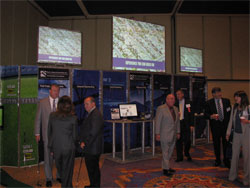 | �
�| Event exhibitors and sponsors contribute to an informative and engaging environment | �
�This year’s meeting was the best yet for the industry-leading construction defect and claims event.
�This year’s seminar concluded on May 13, 2011 with the Construction Defect Community Charitable Foundation Golf Tournament, held at Strawberry Farms Golf Course.
�The Disneyland Hotel in Anaheim, California was the place where more than 1,500 attendees convened for two days of professional development activities and seminars that included CLE workshops and panel discussions of special interest to legal and insurance professionals concerned with construction defect and claims litigation. Key events included “Challenges for Experts in Construction Defect Claims and Litigation,” “Keeping Up with Construction Defect Coverage,” and “Tips for Avoiding the ‘Perfect Storm’ in Handling of Wrap Claims.”
� �  | �
�| Supporting the golf tournament at the 15th hole | �
�This year’s Ollie award was given to George D. Calkins II, Esq. The West Coast Casualty Jerrold S. Oliver Award of Excellence was named in honor of the late Judge Jerrold S. Oliver, and recognizes an individual who is outstanding or has contributed to the betterment of the construction community.
�In addition to being the most comprehensive professional development seminar in the area of construction defects, this year’s seminar was equally valuable as a networking opportunity for members of the industry. People participated in professional development events during the day and then continued networking in the evening at numerous social events. The Lawn Party as well as the legendary Wood, Smith, Henning & Berman events were very well attended. Additional valuable networking events were hosted by a number of industry professionals at the House of Blues, and Tortilla Joe’s.
�As of this writing the 2011, West Coast Casualty's Construction Defect Seminar has applied for or has already received the following continuing education accreditation in the following areas;
�Read the full story…
�For more information about next year’s event, visit West Coast Casualty.
Continuous Trigger of Coverage Adopted for Loss Under First Party Policy
August 2, 2012 — Tred Eyerly, Insurance Law Hawaii
The Seventh Circuit predicted that the Wisconsin Supreme Court would adopt the continuous injury trigger for first party property loss that extends over several policy periods. Miller v. Safeco Ins. Co. of Am., 2012 U.S. App. LEXIS 12940 (7th Cir. June 25, 2012).
A home inspection report performed before the Millers purchased their home showed a soft spot on the roof. The stucco's finish color was also uneven and stained. Further, some water damage was found in the study and skylights above the kitchen sink. But the report advised that the exterior walls, chimney, grass roof, flashings, floor joists/beams and columns, garage walls and floor appeared serviceable. A roof specialist determined the soft spot was not significant and could be repaired for $1,500.
The Millers purchased a homeowner's policy from Safeco on June 30, 2005. The policy went into effect the next day when the Millers closed on the property. But the Millers did not see the policy's terms until Safeco mailed them a copy of the policy at the end of July.
Before receiving the policy, the Millers discovered severe inner wall water leaks and significant water infiltration on three of the home's exterior walls.
Read the full story…
Reprinted courtesy of Tred R. Eyerly, Insurance Law Hawaii. Mr. Eyerly can be contacted at te@hawaiilawyer.com
Homeowner’s Policy Excludes Coverage for Loss Caused by Chinese Drywall
November 18, 2011 — Tred Eyerley, Insurance Law Hawaii
Exclusions barred the homeowners from recovering for losses caused by Chinese drywall in their home. Ross v. C. Adams Const. & Design, L.L.C., 2011 La. App. LEXIS 769 (La. Ct. App., released for publication Oct. 5, 2011).
Two years after purchasing their home, the Rosses began experiencing chronic malfunctions in the heating, ventilation and air conditioning system. After discovering the presence of gypsum drywall, or "Chinese drywall", they submitted a claim to their insurer, Louisiana Citizens Property Insurance Company, for damages caused by the Chinese drywall. Louisiana Citizens denied the claim.
The Rosses sued. The trial court granted summary judgment to Louisiana Citizens based upon exclusions in the policy.
On appeal, the appellate court first agreed the Rosses had sustained a direct physical loss. The inherent qualities of the Chinese drywall created a physical loss to the home and the drywall had to be removed and replaced.
Read the full story…
Reprinted courtesy of Tred R. Eyerly, Insurance Law Hawaii. Mr. Eyerly can be contacted at te@hawaiilawyer.com
Loose Bolts Led to Sagging Roof in Construction Defect Claim
February 10, 2012 — CDJ Staff
Though the sagging roof is neither leaking nor a safety hazard, the town of Waynesville, North Carolina is suing the builder of its new fire station, as reported in the Smoky Mountain News. The engineers who examined the roof found a substantial number of loose bolts in the roof trusses. Additionally, the trusses themselves have become bent.
� Tom Galloway, Waynesville’s Town Manager said “it needs to be remedied and fixed.” He said that the builder, Construction Logic, “never indicated a willingness to fix the roof.” The town is seeking the cost of repair, which Galloway estimated could be $400,000, and an additional $30,000 in damages. The suit states that Construction Logic failed to follow the plan specifications for the roof.
Read the full story…
Housing Prices Up through Most of Country
December 20, 2012 — CDJ Staff
Home prices in October were up more than six percent compared with prices in October 2011. The LA Times noted that some of the strongest gains were in California and Arizona. The Phoenix metropolitan area saw a 24.5% rise in home prices. In California, Riverside and Los Angeles were just above the national average, at 7.3% and 6.4%, contributing to the state’s overall nine percent increase.
The news wasn’t good throughout the entire country, as five states did not see any price increases. Mark Fleming, the chief economist at CoreLogic, a research firm in Irvine, California said that “the housing recovery that started earlier in 2012 continues to gain momentum.
Read the full story…
Florida Law: Defects in Infrastructure Improvements Not Covered in Home Construction Warranties
July 10, 2012 — CDJ Staff
In April 2012, Governor Rick Scott signed into law House Bill 1013, despite lobbying from homeowner and condominium associations among others. The law was in response to a case in which the court had found that implied warranties covered external subdivision improvements. Prior to the court decision, these were not thought to be covered.
According to an article in the Martindale-Hubble Legal Library, under the new law, road and drainage improvements will not be included implied warranty of a new home. The law took effect on July 1.
Read the full story…
Contractor Sues Supplier over Defective Products
June 28, 2011 — CDJ Staff
Fast Track Specialties has sued RJF International after needing to remove wall protection units at Methodist West Houston Hospital, according to an article in the Houston Chronicle. Fast Track claims that contractors had to disconnect gas, water, and electric from the area to facilitate removal of corner guards, handrails, and crash guards from the hospital. This cost the contractor more than $135,000.
�Fast Track is claiming that RJD International has committed breach of contract, breach of warranty, and negligent representation.
Read the full story…
Gut Feeling Does Not Disqualify Expert Opinion
July 6, 2011 — CDJ Staff
The New Jersey Supreme Court issued a ruling in June on the case of Nevins v. Toll in which they reversed an earlier decision and remanded the case to a lower court for retrial. At issue in the case was the testimony of the plaintiff’s expert, J. Anthony Dowling. In depositions, Mr. Dowling said that his estimates for repair were based on a “gut feeling.” Dowling said he had “very little” experience in cost estimates for single-family homes. The defendants sought to bar Dowling’s testimony which was granted by the judge. Without an expert, Ms. Nevin’s case was dismissed.
�Describing Dowling’s report as “far from a model of how an expert’s opinion in a construction case should be presented,” the court noted that Dowling is not a professional expert witness. However, the court did note that Dowling is a professional cost estimator. Despite Mr. Dowling using his “gut feeling” to construct his estimate, the New Jersey Supreme Court felt that whether his estimate is convincing is “a question for the jury.”
� Read the court’s opinion…
Although Property Damage Arises From An Occurrence, Coverage Barred By Business Risk Exclusions
July 8, 2011 — Tred R. Eyerly, Insurance Law Hawaii
The homeowners hired the insured to raise the structure of their home twenty-four inches above the flood zone. Lafayette Ins. Co. v. Peerboom, 2011 U.S. Dist. LEXIS 58985 (S.D. Miss. June 2, 2011). When the insured’s crew returned from lunch one day, they found the house had fallen from hydraulic jacks being used to raise the structure a few inches at a time. There was substantial damage to the entire structure.
�The homeowners sued, asserting several claims, including negligence and breach of contract. The complaint alleged the homeowners entered a contract with the insured to raise their structure while maintaining its integrity. However, the insured failed to use proper equipment, which caused the house to fall and be completely destroyed.
�The insured tendered the claim to its insurer, Lafayette Insurance Company. Lafayette defended under a reservation of rights and filed suit for a declaratory judgment. Lafayette’s subsequent motion for summary judgment contended there was no “occurrence” alleged in the underlying complaint and, even if there was, the business risk exclusions barred coverage.
Read the full story…
� �Reprinted courtesy of Tred R. Eyerly, Insurance Law Hawaii. Mr. Eyerly can be contacted at te@hawaiilawyer.com
Coverage Rejected Under Owned Property and Alienated Property Exclusions
June 6, 2011 —
Tred R. Eyerly,
Insurance Law HawaiiThe insured’s request for a defense when sued in a construction defect action was denied under the owned property exclusion and the alienated property exclusion in1777 Lafayette Partners v. Golden Gate Ins. Co., 2011 U.S. Dist. LEXIS 48562 (N.D. Cal. April 29, 2011).
�In 1999, Lafayette Partners purchased an abandoned walnut processing factory to convert into living and working units. The property was developed into a rental property from 2000-2001, and thereafter rented. In May 2003, Lafayette Partners entered into a sales agreement with Wolff Enterprises LLC. The sale closed in February 2005. Wolff then converted the rental units into condominiums.
�In December 2007, the Walnut Factory Owners Association sued Wolff for construction defects. In Lafayette Partners was added to the suit in 2009. The suit alleged a variety of defective conditions, including the roofs, exteriors, windows, electrical , plumbing, and mechanical components and systems.
�Read the full story…
� � �Reprinted courtesy of Tred R. Eyerly, Insurance Law Hawaii. Mr. Eyerly can be contacted at te@hawaiilawyer.com