


















Architectural Firm Disputes Claim of Fault
May 27, 2011 — CDJ Staff
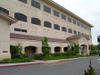
Lake-Flato Architects has disputed the arbitration panel’s conclusion that problems with the home of Tom Hanks and Rita Wilson were due to design flaws. The firm settled with the couple for $900,000, however the Idaho Mountain Express reports that David Lake said, “the settlement in the case in no way represents that Lake Flato was responsible for faulty design.” The Express reported that “the arbitrators found that problems at the home were attributable to design errors that did not take into account the cold winter climate of the Sun Valley area.”
Read the full story…
Allowing the Use of a General Verdict Form in a Construction Defect Case Could Subject Your Client to Prejudgment Interest
August 2, 2012 — Heather Anderson, Higgins, Hopkins, McLain & Roswell, LLC
A recent opinion from the Colorado Court of Appeals is a cautionary tale concerning the calculation of pre-judgment interest. See Hendricks v. Allied Waste Transportation, Inc., 2012 WL 1881004 (Colo. App. 2012). The Hendricks sued Allied after one of its drivers backed into the corner of their home with an Allied garbage truck. At trial, a jury awarded the Hendricks $160,100 in damages. Although the jury was instructed on the cost of repairs, diminution in value, and non-economic damages, the parties agreed to a general verdict form that did not ask the jury to specify the types of damages awarded. The Hendricks sought to amend the judgment to include prejudgment interest and costs, which the trial court granted.
Allied appealed, arguing that the trial court erred by awarding the Hendricks prejudgment interest from the date their property was damaged. Id. at *7. The Colorado Court of Appeals found no error, and affirmed.
Read the full story…
Reprinted courtesy of Heather Anderson, Higgins, Hopkins, McLain & Roswell, LLC. Ms. Anderson can be contacted at anderson@hhmrlaw.com
Construction Defect Exception Does Not Lift Bar in Payment Dispute
September 13, 2012 — CDJ Staff
The Court of appeals of Oregon has affirmed the ruling of a lower court, agreeing that ORS 701.131(1) bars John Pincetich from pursuing a payment dispute against his clients, Thomas and Frances Nolan. The Nolans hired Mr. Pincetich to build a home, during which time Mr. Pinchtich lost his license due to a lapse in liability insurance. Mr. Pincetich was reinstated after reestablishing insurance.
After the house was concluded, a dispute over payment arose. The Nolans claimed that Mr. Pincetich was unable to bring an action against them as ORS 701.131(1)(b) specifies that the contractor must hold a license “continuously while performing the work for which compensation is sought.” As there were fourteen days in which Mr. Pincetich did not hold a license, the trial court concluded that this law did not apply.
Mr. Pincetich claimed that in hiring him, the defendants became residential developers. Mr. Pincetich argued that developers are exempted under ORS 701.121(2)(C), but this was rejected by the trial court. This formed the basis of his appeal. The appeals court concluded that the exception he cited was motivated to “further benefit consumers by providing authority for unlicensed contractors to pursue third-party claims in construction-defect cases.” The court concluded that Mr. Pincetich’s reasoning would “allow unlicensed contractors to do the very thing that the claims bar is intended to prevent them from doing.”
Read the court’s decision…
The Flood Insurance Reform Act May be Extended to 2016
April 7, 2011 — April 7, 2011 Beverley BevenFlorez - Construction Defect Journal
The Flood Insurance Reform Act of 2011 (H. R. 1309) has been referred to the House Committee on Financial Services—the first step in the legislative process. The bill, if passed, would extend the program to September 30, 2016. It is currently slated to be terminated September 30 of this year. The bill also contains changes to premium rates, mapping protocols, and privatization initiatives.
H. R. 1309 has garnered the support of several Insurance organizations. Leigh Ann Pusey, president and CEO of the American Insurance Association (AIA), sent a letter of support to the Chair and Ranking member of the House Financial Services Subcommittee. “AIA has advocated for a long term reauthorization of the NFIP to protect consumers and help increase stability for real estate transactions and policyholders,” Pusey said. “AIA believes the five-year extension contained in HR 1309, will provide certainty in the flood program thereby increasing consumer and business confidence in the NFIP.”
Jimi Grande, senior vice president of federal and political affairs for the National Association of Mutual Insurance Companies (NAMIC) spoke out in support of the bill. “For the NFIP to survive, the prices for flood insurance must reflect the actual costs of flood risk for a property,” Grande said. “HR 1309 will provide that transparency. In addition, the Technical Mapping Advisory Council will give communities a voice in the flood mapping process, fostering a better understanding of what flood maps represent and how they are made.”
Read H. R. 1309...
Read the American Insurance Association statement...
Read the NAMIC Press Release...
Ninety-Day Extension Denied to KB Home in Construction Defect Insurance Claim
July 10, 2012 — CDJ Staff
A magistrate judge has denied a request by KB Home Nevada to extend the time for service an additional ninety days. KB claims that St. Paul Fire & Marine Insurance Company has failed to defend them in a construction defect claim. However, the judge did grant KB an additional twenty days to effectuate service, noting that the request for additional time may be renewed.
Read the court’s decision…
Association May Not Make Claim Against Builder in Vermont Construction Defect Case
October 23, 2012 — CDJ Staff
The Vermont Supreme Court issued a ruling on September 28 on Long Trail House Condominium Association. The case was heard by a panel of two Supreme Court justices, Marilyn Skoglund and Brian Burgess, and three justices specially assigned for the case, Kupersmith, Davenport, and Johnson. The decision came down with a 3-2 split; Judges Kupersmith and Johnson joining in a dissent.
In the underlying case, Stratton Corporation entered into an agreement with Engelberth Construction in which Engelberth would supply “recommendations on construction feasibility, consultation as to the selection of materials and equipment, assistance with zoning requirements and permits, and cooperation with the ‘design team’ to provide valuable engineering services.” Engelberth was not responsible to determine that the drawings and specifications were in accordance with the law and building codes, nor were they responsible “for the design team’s designs, errors, or omissions.”
Subsequent to the agreement was a construction project which culminated in the incorporation of the Long Trail House Condominium Association. The condominium owners initiated a lawsuit over alleged defects. Stratton, Intrawest, and the association settled claims for $7,025,00 with Stratton and Intrawest both pursuing claims against Engelberth. This case is still unsettled.
The association progressed on remediation, which cost about $1,500,00 more than was provided by the settlement, and so the association also sued Engelberth. In this case, the court granted a summary judgment to Engelberth, concluding that negligence claim was barred both “by the economic loss rule and that the absence of contractual privity was fatal to the warranty claims.”
The court upheld both determinations of the lower court. The court noted that “the economic loss rule ‘prohibits recovery in tort for purely economic losses’” and that “in tort law, duties are imposed by law to protect the public from harm.” A negligence claim could only be supported with evidence of “some accompanying physical harm, which does not include economic loss.”
The association made the claim that the economic loss rule applies only when there is a contractual relationship between the two parties. The court rejected this argument, citing a reference that “economic interests are protected, if at all, by contract principles, rather than tort principles.”
Nor did the court find it persuasive that a “professional services” exception to the economic loss doctrine applied, noting that the court has rejected this notion in two prior cases. The noted that the association’s losses were purely economic, and their inability to settle those claims with Engelberth did not mean that they had not means of settling them, as they were able to settle these very claims with Stratton and Intrawest.
The association also raised claims of an implied warranty, resting on the construction contract between Engelberth and Stratton. This was also rejected by the court, noting that Vermont “case law plainly contemplates the existence of contractual privity before a breach of implied warranty claim can be raised.” The court noted that there was neither a contract nor a sale between Engelberth and the association, and thus there were no grounds for an implied warranty. The court concluded that “the Association’s warranty remedy lies against the entity that sold it the condominium units and implicitly warranted through the sale that the units were built in a good and workmanlike manner and that they were suitable for habitation.”
Read the court’s decision …
Construction Defect Not a RICO Case, Says Court
August 4, 2011 — CDJ Staff
The US District Court of North Carolina has rejected an attempt by a homeowner to restart her construction defect claim by turning it into a RICO lawsuit. Linda Sharp, the plaintiff in the case of Sharp v. Town of Kitty Hawk, attempted to amend a claim under the Racketeer Influenced and Corrupt Organizations Act (RICO) and argued that her case belonged in the federal courts.
Ms. Sharp sued in November, 2010 claiming construction defects. She sued in federal court, although the court noted that as she and most of the defendants are citizens of North Carolina, the state court would have been the appropriate jurisdiction. Further, the court noted that one federal claim Sharp made was dismissed with prejudice, leaving only the state law claims. These the court dismissed without prejudice, declining to exercise jurisdiction over North Carolina law.
After the dismissal, Ms. Sharp attempted to amend her complaint after the deadline. To do so, according to the court, she would be required to obtain consent from defendants or leave of the court. She did neither.
In his opinion, Judge W. Earl Britt rejected her motion for leave to amend. He also granted the defendants’ motion to dismiss. The clerk was directed to close the case.
Read the court’s decision…
Insurer’s Discovery Requests Ruled to be Overbroad in Construction Defect Suit
October 28, 2011 — CDJ Staff
The US District Court has ruled in the case of D.R. Horton Los Angeles Holding Co. Inc. v. American Safety Indemnity, Co. D.R. Horton was involved in a real estate development project. Its subcontractor, Ebensteiner Co., was insured by ASIC and named D.R. Horton as an additional insured and third-party beneficiary. D.R. Horton, in response to legal complaints and cross-complaints, filed for coverage from ASIC under the Ebensteiner policy. This was refused by ASIC. ASIC claimed that “there is no potential coverage for Ebensteiner as a Named Insurer and/or D.R. Horton as an Additional Insured.” They stated that “the requirements for coverage are not satisfied.”
The case same to trial with the deadline for discovery set at March 1, 2011. ASIC stated they were seeking the developer’s “job file” for the Canyon Gate project. D.R. Horton claimed that ASIC’s discovery request was overbroad and that it would be “unduly burdensome for it to produce all documents responsive to the overbroad requests.”
D.R. Horton did agree to produce several categories of documents, which included:
“(1) final building inspection sign-offs for the homes that are the subject of the underlying litigation;(2) an updated homeowner matrix for the underlying actions; (3) the concrete subcontractor files; (4) the daily field logs for D.R. Horton’s on-site employee during Ebensteiner’s work; (5) documents relating to concrete work, including documents for concrete suppliers; (6) documents relating to compacting testing; (7) documents relating to grading; and (8) D.R. Horton’s request for proposal for grading”
The court found that the requests from ASIC were overbroad, noting that the language of the ASIC Request for Production of Documents (RFP) 3-5 would include “subcontractor files for plumbing, electric, flooring, etc. - none of these being at issue in the case.” The court denied the ASIC’s motion to compel further documents.
The court also found fault with ASIC’s RFPs 6 and 7. Here, D.R. Horton claimed the language was written so broadly it would require the production of sales information and, again, subcontractors not relevant to the case.
Further, the court found that RFPs 8, 10, 11, and 13 were also overbroad. RFP 8 covered all subcontractors. D.R. Horton replied that they had earlier complied with the documents covered in RFPs 10 and 11. The court concurred. RFP 13 was denied as it went beyond the scope of admissible evidence, even including attorney-client communication.
The court denied all of ASIC’s attempts to compel further discovery.
Read the court’s decision…
Water Is the Enemy
August 16, 2012 — CDJ Staff
So says Melissa Mitchell, writing in the blog of Community Association Consultants. She cites the nightmare scenario of “an unseen presence lurking behind the walls.” Not a horror movie, but water intrusion, which she notes can cause hundreds of thousands of dollars in damage. Eric Hoff, of Western Architectural, is quoted that “it only takes a hole one-eighth inch diameter in a building’s exterior to allow the intrusion of 35 gallons of water over twelve months.” Destructive testing on a building in in the Pacific Northwest revealed that water intrusion had lead to structural failure of the building. The wet wood had made a home for carpenter ants. Repairs exceeded $100,000.
Mitchell notes that “deferred maintenance can be costly” and cites the importance of preventative maintenance or the development of a maintenance plan. She concludes that “if you own or are responsible for maintaining a condominium complex, apartment building or commercial structure, it’s simply good business sense to have a building envelope assessment conducted by experts in the field.”
Read the full story…
Negligent Construction an Occurrence Says Ninth Circuit
June 30, 2011 — CDJ Staff
One June 27, the US Court of Appeals has rejected an appeal from Mid-Continent Casualty Company. Mid-Continent had appealed a summary judgment granted to Titan Construction Company.
Titan Construction had built condominiums for the Williamsburg Condominium Association, which later filed a construction defect lawsuit against Titan and other defendants. Titan settled with the developer, Kennydale, assigning its rights against Mid-Continent to Kennydale. Mid-Continent filed suit, claiming that “it had no obligation to indemnify or defend Titan, Kennydale, or various other defendants.” The district court found in favor of Mid-Continent, granting a summary judgment, concluding that Titan’s insurance covered “occurrences,” and none had taken place.
On appeal, the court found that the negligent construction of the condominiums constituted an “occurrence” The case was remanded and the district court this time found in favor of Titan, “concluding that Mid-Continent failed to raise a triable issue as to the applicability of the remaining policy exclusions.
The Ninth Circuit Court of Appeals has now affirmed that decision and Titan’s summary judgment stands.
Read the court’s decision…
More Charges in Las Vegas HOA Scandal
September 13, 2012 — CDJ Staff
The indictments continue in the Las Vegas HOA scandal. A lawyer for the Justice Department told the judge in the case that “we expect several indictments before the end of the year.” According to the Las Vegas Review Journal, “a dozen or more” additional people will be charged in the conspiracy.
The judge in the case, Senior U.S. District Judge Lloyd George, told prosecutors that he wanted to address the issue of compensation for homeowners. Currently, defendants have agreed to pay $1.5 million to compensate homeowners associations and banks. Vistana homeowners have claimed that the conspirators got the bulk of a $19 million construction defect settlement.
Read the full story…
Foundation Arbitration Doesn’t Preclude Suing Over Cracks
March 28, 2012 — CDJ Staff
The Louisiana Court of Appeals has reversed the decision of a lower court, allowing a construction defect case to go through. In Greer v. Town Construction Company, the Greers hired Town Construction to build a home in Baton Rouge. The business relationship went sour, with disputes over “costs, change orders, workmanship, and timeliness issues.”
Town Construction filed an arbitration claim for the unpaid contract balance. In the counterclaim, the Greers made claims of mold and mildew problems, and wall cracks that they attributed to a “structural defect in the foundation.” In arbitration, Town Construction was awarded the full contract balance plus extra costs and interest, while the Greers were awarded for their structural claims.
Three years later, the Greers found additional cracks and filed a suit against Town Construction. Town Construction argued that the Greer’s lawsuit should be dismissed, as the claims had already been through the arbitration process. The district court agreed with Town Construction and dismissed the suit.
The appeals court noted that the Greers would have no ground for a suit if the arbitration was a “valid and final judgment,” and went on to note that there was no evidence in the trial record that the arbitration met this qualification. The court noted that although it was clear that both parties had agreed to the decisions of the arbiter, under Louisiana law, arbitration is not final until it has been “rendered by a court with jurisdiction over subject mater and over parties.”
The court remanded the case to the lower court, noting that “the district court is obligated to first determine whether a valid arbitration award is in existence and had been confirmed before considering the merits of the exception. The court noted that their decision “should not be read to express any opinion as to the merits of the claims or as to the propriety of damages sought in the Greer’s lawsuit.”
Read the court’s decision…
Can Negligent Contractors Shift Blame in South Carolina?
July 10, 2012 — CDJ Staff
Clay Olson looks back to a 1991 Carolina case, Nelson v. Concrete Supply Company. The court concluded in that case that “a plaintiff in South Carolina may recover only if his/her negligence does not exceed that of the defendant’s and amount of plaintiff’s recovery shall be reduced in proportion to amount of his or her negligence; if there is more than one defendant, plaintiff’s negligence shall be compared to combined negligence of all defendants.” In 2005, he reports, as part of tort reform in South Carolina, the legislature further addressed this.
He then suggests a possible outcome of this is that negligent contractors may be able to shift some of the blame (and cost of the settlement) to other defendants who may not be to blame. He offers a scenario in which a contractor is sued for construction defects and a jury has to allocate responsibility for indivisible damage. “A jury need only find the two subcontractors to have each contributed 15% of the indivisible damage.” He adds in another 15% for claims against the architect. Minor blame is given to the manufacturers, and suddenly the negligent contractor is paying less than 50% of the total settlement.
He notes that the previous system in place also had its problems, but notes that this one may not be “fair and equitable.”
Read the full story…
Insurance Firm Under No Duty to Defend in Hawaii Construction Defect Case
September 13, 2012 — CDJ Staff
The US District Court for Hawaii has granted a motion for summary judgment in Evanston Insurance v. Nagano. The case is related to a construction defect claim, Hu v. Nagano, and the issue at hand is whether Evanston Insurance is obligated to defend the Naganos in the underlying case.
The Hus hired Eric Nagano and his firm PMX to construct a house. Mr. Nagano’s firm was insured by Evanston, however, he lost his contractor’s license in “approximately March 2006.” Mr. Nagano sought the Hus’ authorization to allow HC Builders to take over the contract. HC Builders is headed by Mr. Nagano’s wife, Hiroko, who has held a contractor’s license since “approximately September 2006.” Ms. Nagano and HC Builders were also insured by Evanston Insurance. The house, started by PMX was finished by HC Builders.
The Hus authorized construction to begin in July 2003, but “construction did not commence until approximately October 2004 and, even after commencement, there were numerous delays resulting in months of inactivity on the Project.” The Hus had expressed to Mr. Nagano and PMX “that the construction period could not exceed twelve months after July 1, 2003.” As a result of the delays, “the Hus’ community association fined them because of the prolonged construction and the Hus’ construction lender assessed extension fees and fines for exceeding the term of the loan.”
The Hus noted that the project did not have a licensed contractor from March through September 2006. In the end, the Hus “allege that Defendants did not fulfill the obligations under the Construction Contract,” and that “the Project was ‘grossly delayed’ and the construction was ‘riddled with defects.’” Despite an Owner’s Notice of Completion filed in December 2007, the residence “had no electricity, no hot water, ... no installed appliances” and “parts of the flooring were either missing or incomplete.” And then it leaked.
The Naganos tendered the defense to Evanston. The Naganos “allege the defense is limited because Evanston: allowed default to be entered against the Naganos (the default was later set aside); delayed retaining experts; and limited the ability of the Naganos’ retained counsel to perform necessary actions to advance the case.” Evanston argues that it “does not have a duty to defend or indemnify Defendants against the Hus’ claims,” as the Hus’ claims are not covered under the policy. Further, the PMX policies have an exclusion for breach of contract.
The court concluded that all of the claims made by the Hus were based in contract and therefore were outside of the terms of the Naganos insurance coverage, as the courts have "construed Hawaii law as not providing for insurance coverage for contract related claims." Therefore, Evanston does not have a duty to defend the Naganos.
Read the court’s decision…
Construction Defects Lead to Demolition of Seattle’s 25-story McGuire Apartments Building
March 16, 2011 — March 16, 2011 Construction Defect Journal Staff
According to a story published last Thursday in Seattle PI: " The 25-story McGuire Apartments, at Second Avenue and Wall Street, would cost more to fix than the building is worth, according to its owners. Its most serious defect involves steel cables that are corroding inside of concrete slabs because the ends weren’t properly treated with a rust-proof coating and a pocket in the edge of the concrete that wasn’t properly sealed"
The report by Aubrey Cohen outlines the demolition plans which are expected to take between 12 and 18 months, and will utilize robotic Brokk Machines. The demolition plan calls for one story at a time to be demolished, with the debris to be trucked offsite. Demolition plans aim to minimize disruption to residents and businesses in the area by Limiting work 7 a.m. to 6 p.m. on weekdays and 9 a.m. to 6 p.m. Saturdays with "impact and percussive activities" limited to 8 a.m to 5 p.m weekdays.
Read More...
Insurer Not Liable for Construction Defect Revealed by Woodpecker
September 13, 2012 — CDJ Staff
The Eighth Circuit Court of Appeals has ruled that an insurance provision that excluded construction defects must stand in Friedberg v. Chubb, granting a summary judgment to the insurance firm.
The Friedbergs discovered extensive water damage to their home after a woodpecker drilled a hole in a vertical support. They sought insurance coverage under their Chubb “Masterpiece” policy. The decision quotes the policy as covering “all risk of physical loss” “unless stated otherwise or an exclusion applies.” These exclusions included “gradual or sudden loss,” “structural movement,” and “faulty planning, construction or maintenance,” but the policy covered “ensuing covered loss unless another exclusion applies.”
Chubb’s expert determined that the Friedbergs’ home had defective construction, and “attributed the damage to the beams and walls below the beam to a failure to install control joints.” After Chubb denied coverage, the Friedbergs sued, although the court ruled that “even under the Friedbergs’ theory, the water damage was a loss caused by faulty construction and therefore excluded under the policy.”
On appeal, the Friedbergs argued that “the loss resulted from the combination of both faulty construction and the presence of water” and that Minnesota’s “concurrent causation” doctrine must apply, which according to the decision, “when a loss results from both a covered peril and an excluded peril, coverage exists unless the excluded peril is the ‘overriding cause’ of the loss.” The court rejected this reasoning, noting that “once the house was plagued with faulty construction, it was a foreseeable and natural consequence that water would enter.”
The Friedbergs also contended that “the damage caused by the intrusion of water into their home is an ‘ensuing covered loss’ for which they are due coverage.” The court also rejected this claim, noting that Minnesota law excludes defective construction from the ensuing loss provision. The court said that “the Friedbergs’ reading of their ensuing-loss clause, by contrast, would dramatically limit their policy’s faulty-construction exclusion, because almost ‘any loss cause by’ faulty construction could also be characterized as an ensuing loss under an all-risk policy.”
Read the court’ decision…
California Bill Would Notify Homeowners on Construction Defect Options
October 23, 2012 — CDJ Staff
The California Building Industry Association supported Assembly Bill 1892, but its goals of informing homeowners of their rights under SB800 have been accomplished through the administrative process. The Department of Consumer Affairs has now posted text on its web site noting that “prior to pursuing legal action or responding to a construction defect solicitation, you must first contact your home builder.” The text goes on to note that “if the homebuilder fails to follow any of the procedures, the homeowner is entitled to proceed with the filing of an action.”
Read the full story…
Consumer Protection Act Whacks Seattle Roofing Contractor
July 21, 2011 — Douglas Reiser, Builders Council
It’s been over 1 year since we last visited the CertainTeed Corp. v. Seattle Roof Brokers lawsuit. After my original post, the contractor, James Garcia, appeared at Builders Counsel in a comment to defend himself. It appears that 1 year later, the court decided to side with CertainTeed and award them significant attorneys’ fees. Ready for the whole story? Its a pricey one.
Back in July 2010, good friend Mike Atkins (Seattle Trademark Attorney) authored a post about a Seattle roofing contractor who had been sued for false advertising on his website. The lawsuit was raised by CertainTeed, a roofing material producer, whose products were the target of a Seattle contractor’s ire. Seattle Roof Brokers, owned by James Garcia, published content on its website, remarking that CertainTeed products have a history of “premature failure” and that they “will fail?.resale inspection after 15-20 years.”
CertainTeed filed its action to obtain an injunction and damages under the Consumer Protection Act.
Read the full story…
Reprinted courtesy of Douglas Reiser of Reiser Legal LLC. Mr. Reiser can be contacted at info@reiserlegal.com