Construction Defect Journal Seeks Article Submissions Regarding SB800 and Other Builders Right to Repair Laws
October 28, 2011 — CDJ Staff
As we approach the tenth anniversary of the passage and signing of SB800, California’s right-to-repair law, we’d like to hear your reactions to the law, your experiences with it, and your thoughts on it and right-to-repair laws in other states.
We invite you to submit articles either reacting to SB800 or on other matters relevant to construction defect and claims issues. You can promote your firm’s capabilities and get valuable exposure through the publication of your articles. Construction Defect Journal is widely read by our highly targeted audience of decision makers, construction attorneys, builders, owners, and claims professionals.
Articles may contain relevant images, your firm’s name, and links to your corporate website or third parties and can be submitted through e-mail to submitstory@constructiondefectjournal.com. Please remember to include your contact information if you would like it to be published with your content. If you are submitting photos or PDF documents with your article, please send them as e-mail attachments. Items submitted are assumed to be cleared for publishing upon receipt by CDJ.
Normally articles are published in full, although we reserve the right to edit content for space purposes. All articles submitted are considered for publication. For additional questions please contact editor@constructiondefectjournal.com.
Policyholder Fails to Build Adequate Record to Support Bad Faith Claim
May 19, 2011 — May 19, 2011 -
Tred R. Eyerly,
Insurance Law HawaiiThe importance of careful preparation and documentation was the take away lesson in a Texas bad faith case, C.K. Lee v. Catlin Specialty Ins. Co., 2011 U.S. Dist. LEXIS 19145 (S.D. Tex. Feb. 28, 2011).
�C.K. Lee owned a commercial shopping center in Houston. Catlin issued a commercial property policy to Lee. On September 12, 2008, Hurricane Ike hit and caused substantial property damage throughout the Texas Gulf Coast area. On September 24, 2008, Lee submitted a claim for damage to the roof of his shopping center to Catlin.
�Catlin hired Engle Martin to represent its interests in adjusting the claim. Engle Martin eventually adjusted over 200 Ike-related claims for Catlin.
�In November 2008, Engle Martin and Emergency Services Inc., retained by Lee, inspected Lee’s property. Engle Martin observed evidence of roof repairs that had apparently been made both before and after Hurricane Ike. Engle Martin decided it was necessary to use an infrared scan of the roof to help identify which damages, if any, were attributable to wind and which, if any, were attributable to sub par, prior repairs or natural deterioration.
�Engle Martin retained Project, Time & Cost (PT&C) to conduct the infrared inspection. PT&C’s inspection determined there was no wind-related damage to the roof and no breaches or openings created by wind. Instead, the roof had exceeded its life expectancy and was in need of replacement due to normal wear and weathering. Consequently, Catlin decided that the damage to Lee’s roof was not caused by winds from Hurricane Ike.
�Meanwhile, Lee’s contractor, Emergency Services, prepared a report estimating that the total cost of repairing the roof would be $871,187. Engle Martin’s estimate for repair of the roof was $22,864.
�Lee filed suit for breach of contract, breach of the duty of good faith and fair dealing, and violations of the Texas Insurance Code. Catlin moved for summary judgment on all claims but breach of contract, arguing that because there was a bona fide dispute concerning the cause of the damages and whether they were covered under the policy, there was no evidence of bad faith or violations of the Texas Insurance Code.
�Read the full story…
� �Reprinted courtesy of Tred R. Eyerly, Insurance Law Hawaii. Mr. Eyerly can be contacted at te@hawaiilawyer.com
North Carolina Exclusion j(6) “That Particular Part”
February 10, 2012 — CDCoverage.com
In Alliance Mutual Insurance Co. v. Dove, 714 S.E.2d 782 (N.C. Ct. App. 2011), claimant Murphy-Brown hired insured Dove to repair a broken elevator belt in a grain elevator in Murphy-Brown’s feed mill. The elevator was inside a metal duct and, to access the broken belt, Dove had to cut out a section of the duct. After replacing the belt, Dove welded the metal section back to the duct. Immediately after Dove completed the welding, dust inside the duct ignited, causing an explosion in the elevator, resulting in property damage to the elevator and other property. Murphy-Brown sued Dove for negligence seeking damages for the repair and replacement of the elevator, repair and replacement of the other property, increased grain handling costs during the repairs, and loss of use.
Read the full story…
� Reprinted courtesy of CDCoverage.com
�
New Households Moving to Apartments
December 20, 2012 — CDJ Staff
The New York Times reports that multifamily construction?Äîapartment buildings?Äîis leading the recovery in construction. Construction of single-family homes is only a third of the way up from its fall from its earlier heights, while multifamily construction has recovered two-thirds of its peak. Young adults are moving out of their parents’ homes, but instead of buying homes, they’re renting apartments.
Houston is adding thousands of new units, leading to a fear of overbuilding. Rents have been rising, but as the supply of apartment units rises, higher rents may be unsustainable. However, during the recession, young adults did not move out of their parents’ homes, leading to about two million doubled-up households. David Crowe, the chief economist of the National Association of Home Builders, noted that “all of the net addition to households since 2004 has been in rentals.”
Read the full story…
Ohio Court Finds No Coverage for Construction Defect Claims
March 28, 2012 — Tred Eyerly, Construction Law Hawaii
Charles and Valerie Myers hired Perry Miller to build their home. Myers v. United Ohio Ins. Co., 2012 Ohio App. LEXIS 287 (Ohio Ct. App. Jan. 26, 2012). After completion of the home, Miller was again hired to construct an addition which included a full basement, staircases, bathroom, bedroom, hallway and garage.
�After the addition was completed, one of the basement walls began to crack and bow. Miller began to make repairs, but eventually stopped working on the project. Other contractors were hired to make repairs, but further problems developed. A second basement wall began to bow and crack, allowing water into the basement. The wall eventually had to be replaced. Subsequently, the roof over the addition began to leak in five or six places before the drywall could be painted. The leaks caused water stains on the drywall and caused it to separate and tear. It was discovered the roof needed to be replaced.
�The Myers sued Miller and his insurer, United Ohio Insurance Company. The trial court ruled that the policy did not provide coverage for faulty workmanship, but did provide coverage for consequential damages caused by repeated exposure to the elements. United Ohio conceded liability in the amount of $2,000 to repair water damage to the drywall. United Ohio was also found liable for $51,576, which included $31,000 to repair the roof and ceiling and $18,576 to replace the basement wall.
Read the full story…
���Reprinted courtesy of Tred R. Eyerly, Insurance Law Hawaii. Mr. Eyerly can be contacted at te@hawaiilawyer.com
�
Allowing The Use Of a General Verdict Form in a Construction Defect Case Could Subject Your Client to Prejudgment Interest
August 16, 2012 — Heather Anderson, Higgins, Hopkins, McLain & Roswell, LLC
A recent opinion from the Colorado Court of Appeals is a cautionary tale concerning the calculation of pre-judgment interest. See Hendricks v. Allied Waste Transportation, Inc., 2012 WL 1881004 (Colo. App. 2012). The Hendricks sued Allied after one of its drivers backed into the corner of their home with an Allied garbage truck. At trial, a jury awarded the Hendricks $160,100 in damages. Although the jury was instructed on the cost of repairs, diminution in value, and non-economic damages, the parties agreed to a general verdict form that did not ask the jury to specify the types of damages awarded. Id. at *1. The Hendricks sought to amend the judgment to include prejudgment interest and costs, which the trial court granted.
Allied appealed, arguing that the trial court erred by awarding the Hendricks prejudgment interest from the date their property was damaged. Id. at *7. The Colorado Court of Appeals found no error, and affirmed.
Read the full story…5
Reprinted courtesy of Heather Anderson, Higgins, Hopkins, McLain & Roswell, LLC. Ms. Anderson can be contacted at anderson@hhmrlaw.com
Statute of Repose Dependant on When Subcontractors Finished
July 10, 2012 — CDJ Staff
Scott C. Sandberg of Snell and Wilmer writes a post on the JDSupra site about the Colorado Court of Appeals decision in Shaw Construction v. United Builder Services. Sanberg notes that when the general contractor was sued by an HOA, the contractor turned around and sued its subcontractors. The contractor made three claims. They claimed that “improvement” referred to the whole project, that “substantial completion” was reached when the architect certified completion, and that the statute of repose was tolled by the HOA’s service of a Construction Defect Action Reform Act notice.
The subcontractors claimed that “improvement” only referred to their specific work, which reached “substantial completion” when they finished, despite work to be done by other later, and the HOA’s notice to the contractor did not affect the subcontractors. The Colorado court agreed with the subcontractors.
Sandberg notes that some of the contractor’s were not addressed by the court, noting that “the court did not decide whether an improvement triggering the statute of repose can be determined on a trade-by-trade basis,” and that “the court did not decide whether substantial completion occurs when a certificate of occupancy is issued or when the architect certifies completion.”
Read the full story…
Nevada Construction Defect Lawyers Dead in Possible Suicides
March 28, 2012 — CDJ Staff
A number of news sources have reported on the recent death of Nevada construction defect attorney, Nancy Quon. Ms. Quon was implicated in a recent scandal in which a group conspired to control homeowner associations in order to divert construction defect lawsuits to the members of the conspiracy.
�Ms. Quon was found dead in her bathtub. The details are still under investigations. She and her boyfriend were accused of a failed arson/suicide scheme in 2010. Ms. Quon survived an attempt to burn down her home. Subsequently, her boyfriend obtained some gamma-hydroxybutyric acid (GBH) for her, as part of another failed suicide attempt.
�Subsequent to Ms. Quon’s death, David Amesbury was found in California dead by hanging. Mr. Amesbury took a plea deal in the case, and he had admitted his role in providing legal and construction contracts to firms in the conspiracy. He was accused of fixing HOA elections.
Read the full story…
�Read the full story…
�Read the full story…
�Read the full story…
Tampa Condo Owners Allege Defects�
October 23, 2012 — CDJ Staff
Owners in the Bel Mare towers have filed a lawsuit alleging that the building have construction defects that could lead to problems during periods with high winds. The Tampa Bay Business Journal reports that the condo association has sued the developer, the general contractor, the architects, the structural engineers, and subcontractors.
� Read the full story…
�
Florida County Suspends Impact Fees to Spur Development
November 18, 2011 — CDJ Staff
Hernando County, just north of Tampa on Florida’s west coast, has suspended impact fees for a year, hoping to spur development. Hernando Today reports that the move drew applause from the audience at the county commissioners meeting. Many of those in attendance were builders or members of the Greater Hernando Chamber of Commerce.
Not all were convinced. Frankie Burnett, the mayor of Brooksville, told the commissioners that his city council were not convinced that this would spur development. “Development should pay its fair share, even in slow economic times.” Burnett’s letter to the board warned that “if lowering impact fees succeeded in stimulating more residential overbuilding, it would only further depress the current real estate market.”
Read the full story…
2011 West Coast Casualty Construction Defect Seminar – Recap
June 1, 2011 — CDJ Staff
� 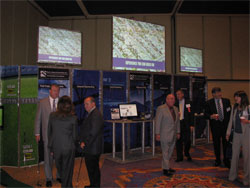 | �
�| Event exhibitors and sponsors contribute to an informative and engaging environment | �
�This year’s meeting was the best yet for the industry-leading construction defect and claims event.
�This year’s seminar concluded on May 13, 2011 with the Construction Defect Community Charitable Foundation Golf Tournament, held at Strawberry Farms Golf Course.
�The Disneyland Hotel in Anaheim, California was the place where more than 1,500 attendees convened for two days of professional development activities and seminars that included CLE workshops and panel discussions of special interest to legal and insurance professionals concerned with construction defect and claims litigation. Key events included “Challenges for Experts in Construction Defect Claims and Litigation,” “Keeping Up with Construction Defect Coverage,” and “Tips for Avoiding the ‘Perfect Storm’ in Handling of Wrap Claims.”
� �  | �
�| Supporting the golf tournament at the 15th hole | �
�This year’s Ollie award was given to George D. Calkins II, Esq. The West Coast Casualty Jerrold S. Oliver Award of Excellence was named in honor of the late Judge Jerrold S. Oliver, and recognizes an individual who is outstanding or has contributed to the betterment of the construction community.
�In addition to being the most comprehensive professional development seminar in the area of construction defects, this year’s seminar was equally valuable as a networking opportunity for members of the industry. People participated in professional development events during the day and then continued networking in the evening at numerous social events. The Lawn Party as well as the legendary Wood, Smith, Henning & Berman events were very well attended. Additional valuable networking events were hosted by a number of industry professionals at the House of Blues, and Tortilla Joe’s.
�As of this writing the 2011, West Coast Casualty's Construction Defect Seminar has applied for or has already received the following continuing education accreditation in the following areas;
�Read the full story…
�For more information about next year’s event, visit West Coast Casualty.
Guilty Pleas Draw Renewed Interest In Nevada’s Construction Defect Laws
December 9, 2011 — CDJ Staff
A report this week by David McGrath Schwarz of the Las Vegas Sun suggests that Nevada’s construction defect laws will be a point of much contention in upcoming legislative sessions. The report cites renewed interest in the state’s construction defect laws due to ongoing federal investigations of construction defect attorney Nancy Quon and construction company owner Leon Benzer. Guilty pleas have been entered by at least ten individuals including an attorney, property managers, straw purchasers, and former HOA board members.
The article suggests that Nevada’s Chapter 40 laws are easily manipulated to the detriment of Nevada’s homebuilding industry. Construction industry lobbyists have tried unsuccessfully to change the laws in past legislative sessions.
The Sun’s article speculates that the building industry might be able to gain legislative concessions due to the volume of guilty pleas and what it refers to as examples of Chapter 40 abuses. ”With federal authorities collecting guilty pleas, the construction industry has prime examples of the system being abused, and how lucrative it can be for attorneys.”
Read the full story…
San Diego Construction Defect Claim Settled for $2.3 Million
July 10, 2012 — CDJ Staff
The Nauman Law firm has settled the lawsuit by the Latitude Owners Association against CS-Crossroads and others, as reported in the Sacramento Bee from a press release by the firm. The owners at Latitude, a condominium community in San Diego, found that hillside crawl spaces were not property waterproofed, leading to rotting plywood, water intrusion, and pipe leaks. There were additional problems with retrofitted windows and repairs of outside decks. The case was filed in San Diego Superior Court, but settled after multiple mediations.
Read the full story…
Crane Dangles and So Do Insurance Questions
November 7, 2012 — CDJ Staff
Hurricane Sandy sent a construction crane dangling from the top of One57, a condo construction project in New York City. In response to the risk, the nearby Parker Meridian and other nearby buildings were evacuated until the crane could be stabilized. Businessweek reports that One57 involves “a tangle of companies,” including the developer, Extell Development and the contractor, Lend Lease Construction. Pinnacle Industries was responsible for providing and operating the crane.
The insurance claims are yet to be made, but they will likely include the costs of evacuating nearby buildings and to cover any damage to the building itself. David DeLaRue, a vice president in construction practice at Willis Group Holdings said there would be two questions: “Did our insured do anything to cause that loss? Does this policy cover it?”
Read the full story…
Construction Workers Unearth Bones
June 28, 2011 — CDJ Staff
While digging for a new steam line at Eastern Michigan University, workers unearthed some old bones. Experts have yet to determine if the bones are human or animal, however Walter Kraft, the EMU vice president of communications, noted that a handle also unearthed might have come from a casket. Cindy Heflin, reporting in AnnArbor.com notes that until 1900 a Catholic cemetery was located in the area. Although the bodies were relocated, these may have been left behind.
Read the full story…
Boston Tower Project to Create 450 Jobs
November 18, 2011 — CDJ Staff
Continuing the development of Boston’s Theater District, Millennium Partners broke ground for the building of Hayward Place, a 15-story residential tower with street-level shops. The project is expected to take two years to complete and will employ about 450 construction workers.
Thomas Menino, the mayor of Boston said that the “ground breaking of Hayward Place is another sign of economic growth and forward progress on the revitalization of this area.” The project will be built by Suffolk Construction. John Fish, their CEO, said they were “fortunate as a contractor to be the beneficiary of this.”
The report in the Boston Herald notes that a few blocks away, the site of the former Filenes department store is still “an empty eyesore.” Menino joked, “anyone want to bid for it?” He promised that site would also be developed.
Read the full story…
Nevada Court Adopts Efficient Proximate Cause Doctrine
February 10, 2012 — Tred Eyerly, Insurance Law Hawaii
Although the Nevada Supreme Court adopted the efficient proximate cause doctrine, it determined it did not apply to salvage coverage under an all-risk policy for a rain-damaged building. Fourth Street Place, LLC v. The Travelers Indemn. Co., 2011 Nev LEXIS 114 (Nev. Dec. 29, 2011).
� Fourth Street owned an office building which was insured by an all-risk policy issued by Travelers. Fourth Street hired Above It All Roofing to repair the roof of the office building. Above It All removed the waterproof membrane on the roof and prepared to replace the membrane the following week. Over the weekend, however, substantial rain hit. On Sunday, Above It All returned to cover the exposed portions of the roof with tarps, but wind later blew the tarps away. The building suffered significant interior damage as it continued to be exposed to the rain.
Read the full story…
� � � Reprinted courtesy of Tred R. Eyerly, Insurance Law Hawaii. Mr. Eyerly can be contacted at te@hawaiilawyer.com
Joinder vs. Misjoinder in Colorado Construction Claims: Roche Constructors v. One Beacon
July 10, 2012 — David McLain, Higgins, Hopkins, McLain & Roswell, LLC
Often, those practicing in the construction defect field have faced questions concerning the joinder of a party. Recently, the U.S. District Court for the District of Colorado weighed in on the requirements for joinder under the Colorado Rules of Civil Procedure. See Roche Constructors, Inc. v. One Beacon America Ins. Co., 2012 WL 1060000 (D. Colo. 2012). Roche secured a construction contract to build a detention facility for the Lincoln County Sheriff’s Office in Lincoln County, Nebraska. In turn, Roche entered into a subcontract with Dobberstein Roofing Company, Inc. in October 2009 to install the roofing system and other related work at the detention facility. The subcontract agreement required Dobberstein to maintain adequate commercial general liability insurance and to add Roche as an additional insured under the policy. Roche maintained a builder’s risk policy issued by OneBeacon America Insurance Company and Dobberstein secured a certificate of liability insurance underwritten by Transportation Insurance Company (“TIC”). Id. at *1.
Roche alleged that Dobberstein constructed the roofing system in a negligent manner in violation of the subcontract. Roche claims it incurred additional costs to repair structural damage to the roofing system as a result of Dobberstein’s negligent work. In order to cover said damage, Roche tendered insurance claims to OneBeacon and TIC.
Read the full story…
Reprinted courtesy of David McLain, Higgins, Hopkins, McLain & Roswell, LLC. Mr. McLain can be contacted at mclain@hhmrlaw.com