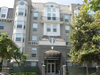
MGM Seeks to Demolish Harmon Towers
September 1, 2011 — CJD Staff
Citing public safety concerns and the cost of repair, MGM Resorts International is seeking to demolish the unfinished hotel tower. The company has a few hurdles to go through before they start laying the charges to implode the structure. Any plans would have to be approved by not only Clark County officials, but also the district court has an order blocking any activity during litigation between MGM and the general contractor on the project, Perini Building Company.
Architectural Record reports that MGM states it would take “approximately 18 months to conduct test and come up with an approved, permitted design to fix the Harmon.” MGM feels that repairs would then take another two to three years. Perini contends that they could “provide stamped drawings detailing all necessary repairs within three months.” They attribute MGM’s desire to demolish the building as “buyer’s remorse.”
Read the full story…
New Safety Standards Issued by ASSE and ANSI
March 28, 2012 — Melissa Dewey Brumback, Construction Law North Carolina
The American National Standards Institute (ANSI) and the American Society of Safety Engineers (ASSE) have recently announced their approval of two new safety standards to enhance construction site safety.
�The two new standards, which are set to take effect during June 2012, are the ANSI/ASSE A10.1-2011 Pre-Project and Pre-Task Safety and Health Planning for Construction and Demolition Operations, and the ANSI/ASSE A10.26-2011 Emergency Procedures for Construction and Demolition Sites.
�The new A10.1-2011 standard was designed to assist construction owners, contractors, and designers by ensuring that safety and health planning were standard parts of their pre-construction planning. It is also intended to help owners of construction sites to establish a process for evaluating constructor candidates with regard to their safety and health performance planning.
�The A10.26 standard applies to emergency situations, including fires, collapses, and hazardous spills. The standard deals with emergency rescue, evacuation, and transportation of injured workers, and also plans for coordinating with emergency medical facilities ahead of potential disasters.
� Read the full story…
���Reprinted courtesy of Melissa Dewey Brumback of Ragsdale Liggett PLLC. Ms. Brumback can be contacted at mbrumback@rl-law.com.
�
Court Rules on a Long List of Motions in Illinois National Insurance Co v Nordic PCL�
May 10, 2012 — CDJ Staff
The case Illinois National Insurance Co. v Nordic PCL, et al. “involves a dispute about whether insurance benefits are available to a general contractor who built structures that allegedly have construction defects. Plaintiffs Illinois National Insurance Company (‘Illinois National’) and National Union Fire Insurance Company of Pittsburgh, PA (‘National Union’) (collectively, the ‘Insurers’), commenced this action for declaratory relief against Defendant Nordic PCL Construction, Inc., f/k/a Nordic Construction, Ltd. ("Nordic"), on August 23, 2011.”
�The court was asked to rule on a long list of motions: “Counterclaim Defendants’ Request for Judicial Notice in Support of Their (1) Motion to Dismiss the Counterclaim and (2) Motion to Strike Portions of the Counterclaim, ECF No. 16 (‘Request for Judicial Notice’); Counterclaim Defendants’ Motion to Dismiss Counterclaim Filed October 24, 2011, ECF No. 14 (‘Motion to Dismiss Counterclaim’); Counterclaim Defendants’ Motion to Strike Portions of the Counterclaim Filed October 24, 2011, ECF No. 15 (‘Motion to Strike’); Third-Party Defendant Marsh USA, Inc.’s Motion to Dismiss or, in the Alternative, Stay Proceedings in Favor of Pending State Action, ECF No. 33 (‘Marsh’s Motion To Dismiss Or Stay’); Defendant and Third-Party Plaintiff Nordic PCL Construction, Inc., f/k/a Nordic Construction Ltd.’s Substantive Joinder to Third-Party Defendant Marsh USA Inc.’s Motion to Dismiss or, in the Alternative, Stay Proceedings in Favor of Pending State Action, ECF No. 36 (‘Nordic’s Joinder’); and Third-Party Defendant Marsh USA, Inc.’s Motion for Judgment on the Pleadings on Counts V and VI of Defendant/Third-Party Plaintiff Nordic PCL Construction, Inc.’s Third-Party Complaint, ECF No. 29 (‘Marsh’s Motion for Judgment on the Pleadings’).”
�In result, the court reached the following decisions: “The court GRANTS IN RELEVANT PART the Insurers’ Request for Judicial Notice to the extent it covers matters relevant to these motions; GRANTS IN PART the Insurers’ Motion to Dismiss Counterclaim, but gives Nordic leave to amend the Counterclaim in certain respects; DENIES the Insurers’ Motion to Strike; DENIES Marsh’s Motion To Dismiss Or Stay and Nordic’s Joinder; and GRANTS Marsh’s Motion for Judgment on the Pleadings.”
�The court provides a bit of background on the case: “This action arises out of alleged construction defects involving two projects on which Nordic acted as the general contractor. Nordic is a defendant in a pending state court action with respect to one of the projects and says it spent more than $400,000 on repairs with respect to the other project. Nordic tendered the defense of the pending state court action to the Insurers and sought reimbursement of the cost of repairs already performed. The Insurers responded by filing this action to determine their rights under the insurance policies issued to Nordic.”
�Furthermore, the court presented a brief procedural history: “The Insurers commenced this declaratory action in this court on August 23, 2011. The Complaint asserts two claims, one seeking a declaration that the Insurers have no duty to provide a defense or indemnification regarding the Safeway Action, the other seeking such a declaration regarding the Moanalua Claims. Along with its Answer, Nordic filed a Counterclaim against the Insurers. The Counterclaim asserts breach of contract, breach of the covenant of good faith and fair dealing, misrepresentations and omissions of material fact, and bad faith, and seeks declaratory relief against the Insurers.”
�The procedural history continues: “Nordic also filed a Third-Party Complaint against Marsh, the broker that had procured the Policies from the Insurers for Nordic. Nordic alleges that it reasonably believed that the Policies would provide completed operations insurance coverage for the types of construction defects alleged in the Safeway Action and Moanalua Claims. The Third-Party Complaint asserts breach of contract, negligence, promissory estoppel, breach of fiduciary duties, implied indemnity, and contribution and equitable subrogation.”
�In conclusion, “The court GRANTS IN RELEVANT PART the Insurers’ Request for Judicial Notice. With regard to the Insurers’ Motion to Dismiss Counterclaim, the court GRANTS the motion as to Count I (breach of contract), Count II (duty of good faith and fair dealing), Count III (fraudulent and negligent misrepresentation), the portion of Count IV (bad faith) premised on fraud, and Count IV (declaratory relief). The court DENIES the motion as to Count IV (bad faith) that is not premised on fraud. Except with respect to the "occurrence" issue, which the court disposes of here on the merits, and Count V, which concerns only a form of relief, Nordic is given leave to amend its Counterclaim within three weeks of the date of this order. The court DENIES the Insurers’ Motion to Strike, DENIES Marsh’s Motion to Dismiss or Stay and Nordic’s Joinder, and GRANTS Marsh’s Motion for Judgment on the Pleadings with respect to Counts V and VI of the Third-Party Complaint.”
� Read the court’s decision…
�
Insurers Reacting to Massachusetts Tornadoes
August 11, 2011 — CDJ Staff
The Patriot-Ledger reports that insurers could pay out as much as $200 million to cover homes damaged or destroyed in the tornadoes that hit central and southern Massachusetts in June, 2011. Joseph Murphy, Commissioner of the State Division of Insurance didn?t foresee problems with insurers covering these claims. “At this point, there doesn’t seem to be any one company overexposed in that area,” he told the Patriot-Ledger.
�Insurance executives did not think the tornadoes would cause them to raise rates. Steve Chevalier, CEO of NLC Companies, said, “it’s a major event for those impacted by it, but it’s not close to a financial hit to us.”
�One insurer noted that the winter weather generated more claims; however the cumulative value of those claims was $15 million.
� Read the full story…
Insurer Must Cover Construction Defects Claims under Actual Injury Rule
March 1, 2012 — Tred Eyerly, Insurance Law Hawaii
The Texas Court of Appeals held that the insured need not prove the exact dates physical damage occurred in order to trigger defense and indemnity coverage. Vines-Herrin Custom Homes, LLC v. Great Am. Lloyds Ins. Co., 2011 Tex. App. LEXIS 10027 (Tex. Ct. App. Dec. 21, 2011).
�In 1999, the insured built a home. He was insured under a CGL policy issued by Great American from November 9, 1998 to November 9, 2000. Thereafter, the insured held a CGL policy issued by Mid-Continent from November 9, 2000 to September 18, 2002.
�After construction was completed, the insured sold the house to the buyer in May 2000. After moving in, the buyer found numerous construction defects in the home, including water entering cracks in the home, and sinking and sagging of parts of the house. The buyer sued the insured, who sought coverage under the two policies. When the insurers refused to defend the underlying suit, the insured sued for a declaratory judgment.
�The underlying case went to arbitration and an award of $2.4 million was granted to the buyer. The insured assigned to the buyer his claims against the insurers.
Read the full story…
���Reprinted courtesy of Tred R. Eyerly, Insurance Law Hawaii. Mr. Eyerly can be contacted at te@hawaiilawyer.com
�
Texas exclusions j(5) and j(6).
April 27, 2011 — April 27, 2011, by CDCoverage.com
In Evanston Ins. Co. v. D&L Masonry of Lubbock, Inc., No. 07-10-00358-CV (Tex. Ct. App. April 18, 2011), insured masonry subcontractor D&L sued its CGL insurer Evanston to recover costs incurred by D&L for the replacement of window frames damaged by D&L while performing masonry work adjacent to the window frames. The trial court granted summary judgment for D&L.
�Read the full story…
�Reprinted courtesy of CDCoverage.com
Read Her Lips: “No New Buildings”
November 18, 2011 — CDJ Staff
Martha Johnson, the head of the General Services Administration, has said that her agency will not be building any new buildings in the near future. Among other duties, the GSA is responsible for the building, renovating, and leasing of federal office space. The White House had proposed $840 million in new construction, the Senate only $56 million. The House did not appropriate any money for the agency to use for new construction.
In addition to cutbacks on new buildings, Congress is suggesting only $280 million in repairs of existing government buildings. In order to cut back, the GSA has dropped plans to renovate their own offices in favor of renovations at the Department of Homeland Security and the Food and Drug Administration.
Read the full story…
Construction Demand Unsteady, Gains in Some Regions
June 29, 2011 — CDJ Staff
The Associated General Contractors of America reported Tuesday, June 28 that construction employment increased in 120 of the 337 metropolitan areas surveyed between May 2010 and May 2011.
�‘While construction employment has stopped plunging, any sign of a recovery remains spotty at best,” said Ken Simonson, the association’s chief economist. ‘The close to even split between areas adding and losing jobs is a reminder that for every market doing well, there is another market that is still hurting.”
�The largest number of jobs created was in the Dallas, Texas region, with 5,600 new jobs, a five percent increase. The northern Massachusetts/southern New Hampshire region near Haverhill saw the greatest percentage increase, although that twenty-two percent increase represents only 800 new jobs. The Chicago, Illiinois area added 4,600 jobs, a four percent increase.
�Other regions were not so lucky. The Atlanta, Georgia area saw a loss of 7,400 jobs, an eight percent loss. Las Vegas also lost 7,400 jobs, which there represented a sixteen percent decline. The New York City area lost 6,700 jobs, a six percent reduction. The Riverside, California area lost 5,300 jobs, a nine percent loss.
�Stephen E. Sandherr, the association’s chief executive officer, blamed a combination of regulation and budget squeezes. "Some in Washington never met a regulation they didn’t like and others never found a penny they didn’t want to pinch. Together that makes for a bad way to boost employment and a great way to stifle the private sector and neglect critical economic infrastructure.”
� Read the full story…
Nevada Bill Aims to Reduce Legal Fees For Construction Defect Practitioners
March 21, 2011 — March 21, 2011 Construction Defect Journal Staff
Assemblyman Ira Hansen and twelve additional members of Nevada’s Assembly are sponsoring Assembly Bill 285. AB 285 Revises provisions governing an award of attorney’s fees in causes of action for constructional defects. Existing law generally provides that a claimant may recover reasonable attorney’s fees as part of the claimant’s damages in a cause of action for constructional defects. (NRS 40.655)
�This bill removes this provision and instead authorizes a court to award reasonable attorney’s fees to a prevailing party involved in such a cause of action if an independent basis for the award exists pursuant to existing law which authorizes a court to award attorney’s fees in certain circumstances, or Rule 68 of the Nevada Rules of Civil Procedure, which provides for the payment of reasonable attorney’s fees by an offeree who rejects an offer and subsequently fails to obtain a more favorable judgment.
�In an AP report published in Business Week it is suggested that the target objective of legislators centers on what it refers to as Nevada’s "Rampant construction defect lawsuits".
�According to Business Week "The suits bring in hundreds of millions of dollars for lawyers and have put construction companies out of business. Hansen says fewer construction firms mean higher prices for Nevada consumers."
�Click Here To Read Full Text and Revisions of Assembly Bill 285
Exclusions Bar Coverage for Damage Caused by Chinese Drywall
July 5, 2011 —
Tred R. Eyerly,
Insurance Law HawaiiThe insured homeowners were unsuccessful in arguing around the policy's exclusions when seeking coverage for damage caused by Chinese drywall. Ross v. C. Adams. Constr. & Design, L.L.C., 2011 La. App. LEXIS 769 (La. Ct. App. June 14, 2011).
�Before the insureds purchased and moved into their home, it was renovated. After moving in, the insures discovered foreign gypsum drywall, or Chinese drywall. The insureds submitted a claim to Louisiana Citizens Property Insurance Company. In an investigation, the insurer confirmed the presence of Chinese drywall and damage to the metal surfaces caused by corrosion. Louisiana Citizens refused coverage and the insureds sued. The trial court denied the insured's motion for summary judgment and granted summary judgment to Louisiana Citizens.
�The court of appeal affirmed. Initially, the court determined the insureds sustained a direct physical loss. The inherent qualities of the Chinese drywall created a physical loss to the home and required that the drywall be removed and replaced.
�Four exclusions, however, barred coverage. First, damages due to faulty or defective materials were excluded from coverage. The Chinese drywall emitted high levels of sulfuric gas which caused the damage to the insured's plumbing, electrical wiring and metal components.
� Read the full story…
� �Reprinted courtesy of Tred R. Eyerly, Insurance Law Hawaii. Mr. Eyerly can be contacted at te@hawaiilawyer.com
Fourteen More Guilty Pleas in Las Vegas Construction Defect Scam
June 19, 2012 — CDJ Staff
The ongoing case over claims that a group fixed homeowner board elections in order to supply the conspirators with a stream of construction defect cases and repairs has lead to fourteen guilty pleas. The judge recently issued charges against fifteen of the accused; one defendant did not join in the group as he was recovering from pneumonia. The prosecutors have asked the judge to delay sentencing, as the investigation is continuing. Prosecutors note that another dozen people may be indicted.
Along with an earlier group who plead guilty, this brings the total number of guilty pleas in the case to twenty-five. All have promised to cooperate with authorities.
The case has also involved four deaths, although authorities have not suspected foul play in the deaths. Nancy Quon, one of the four, was the construction defect attorney suspected to be at the center of the conspiracy.
Read the full story…
Florida Law: Defects in Infrastructure Improvements Not Covered in Home Construction Warranties
July 10, 2012 — CDJ Staff
In April 2012, Governor Rick Scott signed into law House Bill 1013, despite lobbying from homeowner and condominium associations among others. The law was in response to a case in which the court had found that implied warranties covered external subdivision improvements. Prior to the court decision, these were not thought to be covered.
According to an article in the Martindale-Hubble Legal Library, under the new law, road and drainage improvements will not be included implied warranty of a new home. The law took effect on July 1.
Read the full story…
Homebuilding on the Rise in Nation’s Capitol
November 7, 2012 — CDJ Staff
Is the homebuilding crunch over in DC? The Washington Post has reported that while new home construction is up throughout the country, in the DC area, construction has reached levels last seen in 2006. From January to August 2012, there were more than 19,000 building permits issued in the area, nearly doubling the number issued by that point in 2011.
While building is on a quicker pace, what’s being built has changed. As compared to 2006, there are more townhomes, condos, and smaller homes being built. The article notes that 11 percent of new construction is condos, while in 2006, it was only 5 percent.
Read the full story…
Nevada District Court Dismisses Case in Construction Defect Coverage Suit
August 16, 2012 — CDJ Staff
The United States District Court of Nevada has dismissed a case filed by Maryland Casualty Company against National Fire & Marine Insurance Company. This case follows a case in which National was sued over “200 causes of action arising out of 193 separate insurance coverage disputes related to 75 different insureds and 163 unrelated construction defect or Chapter 40 proceedings across seven states.” The judge in this initial case severed the plaintiffs, as he found that allowing joinder “would make this case impossible to manage.” In this particular instance, National seeks to have the claims made by Maryland Casualty dismissed.
Maryland Casualty alleged that for insurance policies issued to 38 companies, National was obligated to defend the insured. National was, according to the plaintiff, named as defendants in 72 unrelated lawsuits to which National disclaimed coverage. However, the court found that Maryland Casualty failed “to provide enough detail regarding the relevant property damage, policies, claims, and time periods.” The court found that Maryland failed to “state a claim upoin which relief can be granted.
The court also found that “the Complaint lacks any well-pled allegations from which the Court could conclude the Plaintiff has standing since the Complaint is devoid of information about the specific policies at issue.
The court did allow Maryland Casualty up to September 3, 2012 in which to file an amended complaint.
Read the court’s decision…
Construction Defect Lawsuit Stayed by SB800
September 13, 2012 — CDJ Staff
The California Court of Appeals has reversed the decision of the lower court and has stayed, instead of dismissed, a claim of construction defects. A group of Victorville homeowners sued their homebuilder, K. Hovnanian Communities on a claim of construction defects. Hovnanian argued that under the procedures set forth in SB800, the suit should be dismissed, and that the claims should undergo arbitration. The trial agreed, dismissing the claims of 82 plaintiffs under a first motion, and then granted a second motion to dismiss, which affected a further 21 plaintiffs. The homeowners appealed.
�The Court noted that “the parties disagree about the standard of review,” with the Court determining that as the facts were not in dispute, they would use “an independent standard of review.”
�Reviewing the relevant statues, the Court concluded that the terms of the limited warranty set out the pre-litigation procedure, noting that “plaintiffs admit they did not comply with the limited warranty because they challenge its validity and enforceability.” The Court concluded that “plaintiffs’ action was premature.”
�The Court further noted that “a civil action will not be filed until after the contractual procedures have been followed.” Until these procedures have been followed, the Court said that they “decline to resolve issues about validity and enforceability.” However, as these issues could arise after the limited warranty procedures, the court stayed, rather than dismissed the claims.
Read the court’s decision…
Orange County Home Builder Dead at 93
April 25, 2012 — CDJ Staff
Randall E. Presley was a homebuilder in Southern California for more than thirty years, acting as head of Presley Development Company from 1956 until selling the firm to Lyon Homes in 1987. The two companies merged in 1991 as the Presley Cos. Mr. Presley saw the need in the 1950s to provide people in Southern California with low- to medium-priced quality homes.
�His firm built more than 160 communities and was among the ten largest homebuilding firms in the country, expanding beyond California. Mr. Presley was 93 when he succumbed to pneumonia. He is survived by a wife, three children, seven grandchildren, and 11 great-grandchildren.
� Read the full story…
�
Court Rejects Anti-SLAPP Motion in Construction Defect Suit
September 1, 2011 — CJD Staff
The California Court of Appeals has upheld the denial of an anti-SLAPP motion in Claredon American Insurance Company v. Bishop, Barry, Howe, Haney & Ryder. This case was triggered by a water intrusion problem at a condominium complex, the Terraces at Emerystation, built and sold by Wareham Development Corporation. The insurer, Claredon, retained Risk Enterprise Management as the third party claims administrator. REM retained the law firm Bishop, Barry, Howe, Haney & Ryder. The construction defect case was settled in 2007 and the condo owners moved back by early 2008.
Due to issues with the claims settlement, Claredon filed against REM for “professional negligence, indemnity, apportionment and contribution,” with a cross-complaint that the cross-defendants negligently defended the developer, Wareham.
In response, the cross-defendants filed a motion to strike the cross-complaint under the anti-SLAPP statute. The trial court denied this motion and now this has been upheld by the appeals court.
The court noted that “The fundamental thrust of the cross-complaint is not protected litigation-related speech and petitioning activity undertaken on another’s behalf in a judicial proceeding.”
Read the court’s decision…
Certificate of Merit to Sue Architects or Engineers Bill Proposed
May 3, 2011 — May 3, 2011 Beverley BevenFlorez - Construction Defect Journal
North Carolina may become the twelfth state to require a Certificate of Merit to sue an architect or engineer. If North Carolina Senate Bill 435 (SB435) passes, then plaintiffs when filing a complaint will need to also attach an affidavit of a third-party licensed professional engineer or architect stating that the case has merit.
�SB435 is a short two pages in its current form. The bill states that the “third-party licensed professional engineer or licensed architect shall (i) be competent to testify and hold the same professional license and practice in the same area of practice as the defendant design professional and (ii) offer testimony based upon knowledge, skill, experience, education, training, and practice. The affidavit shall specifically state for each theory of recovery for which damages are sought, the negligence, if any, or other action, error, or omission of the design professional in providing the professional service, including any error or omission in providing advice, judgment, opinion, or a similar professional skill claimed to exist and the factual basis for each such claim. The third-party licensed professional engineer or licensed architect shall be licensed in this State and actively engaged in the practice of engineering or architecture respectively.”
�A few of the amendments allude to disciplining design professionals who certify civil actions that are without merit. The bill has been referred to the Committee on Judiciary I.
�While North Carolina is considering enacting a Certificate of Merit law, eleven other states already require one, including Arizona, California, Colorado, Georgia, Maryland, Minnesota, New Jersey, Oregon, Pennsylvania, South Carolina, and Texas. Christopher D. Montez, a partner with Thomas, Feldman & Wilshusen, LLP, has written a useful summary for each state’s certificate of merit scheme.
�Read the text of SB435
�Track the progress of SB435
�Read more from Christopher D. Montez’s article on Thomas, Feldman & Wilshusen, LLP site