Amerisure Case to be Heard by Texas Supreme Court
August 16, 2012 — CDJ Staff
The Fifth Circuit Court of Appeals has withdrawn its decision in Ewing Construction Company Inc. v. Amerisure Insurance Company, according to Insurance Developments. The Fifth Circuit had concluded that “a contractor’s obligation to perform its contact in a workmanlike manner constituted an ‘assumption of liability.’” Two questions have now been certified to the Texas Supreme Court. The dissent in the case argued the majority had misread Texas Supreme Court precedent. The court will now have the opportunity to clarify this matter.
Read the full story…
Homebuilders Go Green in Response to Homebuyer Demand�
May 10, 2012 — CDJ Staff
McGrawHill Construction reports that 17 percent of new homes and remodels in 2011 were done with green building practices. Their report estimates that by 2016, this will rise to 29 to 38 percent of the market for home construction and remodeling.
�Consumers see the green buildings as more desirable, particularly where they are more energy efficient. Two thirds of builders noted their customers were interested in features that would lower the energy use of their homes. Consumers also feel that green building materials are more durable and see green homes as higher quality.
� Read the full story…
�
2011 West Coast Casualty Construction Defect Seminar – Recap
June 1, 2011 — CDJ Staff
� 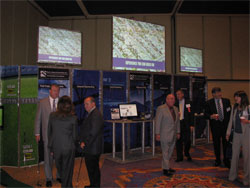 | �
�| Event exhibitors and sponsors contribute to an informative and engaging environment | �
�This year’s meeting was the best yet for the industry-leading construction defect and claims event.
�This year’s seminar concluded on May 13, 2011 with the Construction Defect Community Charitable Foundation Golf Tournament, held at Strawberry Farms Golf Course.
�The Disneyland Hotel in Anaheim, California was the place where more than 1,500 attendees convened for two days of professional development activities and seminars that included CLE workshops and panel discussions of special interest to legal and insurance professionals concerned with construction defect and claims litigation. Key events included “Challenges for Experts in Construction Defect Claims and Litigation,” “Keeping Up with Construction Defect Coverage,” and “Tips for Avoiding the ‘Perfect Storm’ in Handling of Wrap Claims.”
� �  | �
�| Supporting the golf tournament at the 15th hole | �
�This year’s Ollie award was given to George D. Calkins II, Esq. The West Coast Casualty Jerrold S. Oliver Award of Excellence was named in honor of the late Judge Jerrold S. Oliver, and recognizes an individual who is outstanding or has contributed to the betterment of the construction community.
�In addition to being the most comprehensive professional development seminar in the area of construction defects, this year’s seminar was equally valuable as a networking opportunity for members of the industry. People participated in professional development events during the day and then continued networking in the evening at numerous social events. The Lawn Party as well as the legendary Wood, Smith, Henning & Berman events were very well attended. Additional valuable networking events were hosted by a number of industry professionals at the House of Blues, and Tortilla Joe’s.
�As of this writing the 2011, West Coast Casualty's Construction Defect Seminar has applied for or has already received the following continuing education accreditation in the following areas;
�Read the full story…
�For more information about next year’s event, visit West Coast Casualty.
Contractual Liability Exclusion Bars Coverage
August 2, 2012 — Tred Eyerly, Insurance Law Hawaii
The Fifth Circuit Court of Appeals considered whether coverage existed for a defectively built tennis court in light of a contractual liability exclusion. Ewing Construction Company, Inc. v. Amerisure Ins. Co., 2012 U.S. App. LEXIS 12154 (5th Cir. June 15, 2012).
Ewing Construction Company entered a contract with the School District to construct tennis courts at a school. After completion, the School District complained that the courts were cracking and flaking, rendering them unfit for playing tennis. The School District filed suit, seeking damages for defective construction. It alleged that Ewing breached its contract and performed negligently.
Ewing tendered the underlying lawsuit to Amerisure. Amerisure denied coverage and Ewing filed suit.
Read the full story…
Reprinted courtesy of Tred R. Eyerly, Insurance Law Hawaii. Mr. Eyerly can be contacted at te@hawaiilawyer.com
In Colorado, Repair Vendors Can Bring First-Party Bad Faith Actions For Amounts Owed From an Insurer
December 20, 2012 — Brady Iandiorio, Higgins, Hopkins, McLain & Roswell
With the aftermath of Sandy still being felt up and down the Eastern seaboard, the question of many victims turns to how they can rebuild their lives and homes. One of the first things many people do is call on their insurance carriers to help rebuild whatever damaged property they have. In a recent case here in Colorado, those rebuilding efforts got reaffirmed by a Court of Appeals case, Kyle W. Larson Enterprises, Inc., Roofing Experts, d/b/a The Roofing Experts v. Allstate Insurance Company, --- P.3d ----, 2012 WL 4459112 (Colo. App. September 27, 2012).
The facts of the case are pretty straightforward and could describe many repair vendors in numerous situations. Roofing Experts contracted with four homeowners insured by Allstate to repair their damaged roofs. The contracts provided that repair costs would be paid from insurance proceeds. The contracts also allowed Roofing Experts full authority to communicate with Allstate regarding all aspects of the insurance claims. Before work began, Roofing Experts met with adjusters from Allstate to discuss the four homes and the amount of each claim. After receiving approval for the claims, Roofing Experts began the repairs. During construction, Roofing Experts discovered additional repairs were necessary to maintain certain manufacturer’s warranties and to conform to applicable building codes.
Read the full story…
Reprinted courtesy of Brady Iandorio, Higgins, Hopkins, McLain & Roswell, LLC. Mr. Iandorio can be contacted at iandiorio@hhmrlaw.com
Colorado Court of Appeals holds that insurance companies owe duty of prompt and effective communication to claimants and repair subcontractors
March 1, 2011 — Courtesy
Colorado Construction LitigationIn Dunn v. American Family Insurance, 09CA2173, 2010 WL 4791948 (Colo. App. Nov. 24, 2010), the Dunns reported a claim to American Family on their homeowners insurance policy after sewer and water backup caused sewage to flood their basement. American Family gave the Dunns contact information for a contractor (ICA) to remediate the flooding. However, ICA was unsuccessful and sewage began to infiltrate the Dunns’ HVAC system. Subsequently, black mold was detected in the HVAC system, the Dunns suffered health and respiratory problems, and they soon after vacated the home. The Dunns hired and fired two more contractors for unsatisfactory work throughout the winter before hiring a fourth to finish the job. Because the home remained vacant and unheated throughout the winter, the water pipes ruptured. The mold spread throughout the entire home and all of the contents needed to be replaced, which amounted to a claim of $340,000 on the policy.
�American Family agreed to pay the full $340,000. However, the Dunns brought suit claiming that American Family breached the implied duty of good faith and fair dealing by: 1) failing to screen ICA for expertise; 2) failing to screen ICA for liability insurance coverage; 3) failing to monitor ICA’s work; 4) failing to advise them that flooding can cause further damage, including freezing pipes and mold; and, 5) failing to adequately and promptly communicate with them and remediation subcontractors in the course of investigating and handling their claim.�The trial court found no duty owed by American Family beyond adjustment and timely payment of claims. Because American Family paid timely and in full, they dismissed all of the Dunns’ claims. However, the Court of Appeals reversed in part.
�Read the full story...
�Reprinted courtesy of Chad Johnson, Higgins, Hopkins, McLain & Roswell, LLC. Mr. Johnson can be contacted at johnson@hhmrlaw.com
High School Gym Closed by Construction Defects
October 28, 2011 — CDJ Staff
The high school gym in Lake Oswego, Oregon has been shut down because testing has revealed that the construction defects have lead to deterioration of the structural integrity of the roof. The school district noted that there was a chance of collapse if there were a “significant seismic event or heavy rain and winds and snow.” The school district has been in a lawsuit with the builders since 2008, which was recently settled for $600,000.
The school board is still determining whether the original contractor will be asked to correct the defect or if they will bid the job out.
Read the full story...
Construction Defect Lawsuits? There’s an App for That
July 10, 2012 — CDJ Staff
The website ebeeky.com reviews Picture It Settled, an app designed to help people engaged in lawsuits figure out where settlement strategies would be most successful. First available for Android and then iOS, the app is now available for Blackberry. One user of the application wrote that “anyone who has set through a construction defect mediation can immediately grasp the value of this app.
The app tracks the negotiation process, allowing users to see a history of bids and counteroffers. It also models the negotiation process in order to predict the ultimate cost of settlement. These numbers are based on past similar negotiations that the user has entered.
Read the full story…
Homeowners Sue Over Sinkholes, Use Cash for Other Things
January 6, 2012 — CDJ Staff
Quoting one homeowner as saying that his house “can fall in the ground for all I care, I made my money,” the Tampa Bay Times looks at the issue of sinkhole claims in Florida. Homeowners “have paid off mortgages, put in pools, replaced roofs, or otherwise used money from sinkhole claims to do something besides fix sinkhole damage.
It’s been tough for insurance companies. Citizens Property Insurance took in $32 million in premiums for sinkhole coverage in 2010, but paid out $245 million in sinkhole claims. The Tampa Bay Times notes that some of those claims come from settling problems caused by their repairs, including one settlement of $350,000 for repairs to a house worth $39,000.
One couple, after receiving $217,000 from Citizens, sold the house to a company that bought unrepaired sinkhole homes for $190,000. The home has been sold since and remains unrepaired.
Sometimes the preferred solution by the insurance company isn’t the cheapest either. One couple was informed that Citizens was going to spend $150,000 to have the hole filled with grout. After they settled with the insurance company, they fixed the problem by installing steel piers, at a cost of about $45,000.
Read the full story…
Joinder vs. Misjoinder in Colorado Construction Claims: Roche Constructors v. One Beacon
July 10, 2012 — David McLain, Higgins, Hopkins, McLain & Roswell, LLC
Often, those practicing in the construction defect field have faced questions concerning the joinder of a party. Recently, the U.S. District Court for the District of Colorado weighed in on the requirements for joinder under the Colorado Rules of Civil Procedure. See Roche Constructors, Inc. v. One Beacon America Ins. Co., 2012 WL 1060000 (D. Colo. 2012). Roche secured a construction contract to build a detention facility for the Lincoln County Sheriff’s Office in Lincoln County, Nebraska. In turn, Roche entered into a subcontract with Dobberstein Roofing Company, Inc. in October 2009 to install the roofing system and other related work at the detention facility. The subcontract agreement required Dobberstein to maintain adequate commercial general liability insurance and to add Roche as an additional insured under the policy. Roche maintained a builder’s risk policy issued by OneBeacon America Insurance Company and Dobberstein secured a certificate of liability insurance underwritten by Transportation Insurance Company (“TIC”). Id. at *1.
Roche alleged that Dobberstein constructed the roofing system in a negligent manner in violation of the subcontract. Roche claims it incurred additional costs to repair structural damage to the roofing system as a result of Dobberstein’s negligent work. In order to cover said damage, Roche tendered insurance claims to OneBeacon and TIC.
Read the full story…
Reprinted courtesy of David McLain, Higgins, Hopkins, McLain & Roswell, LLC. Mr. McLain can be contacted at mclain@hhmrlaw.com
Save A Legal Fee? Sometimes You Better Talk With Your Construction Attorney�
May 10, 2012 — Douglas Reiser, Builders Counsel
I love writing this column, because I think it’s refreshing for contractors to hear that they don’t always need an attorney. Today’s post is the “Un-Save a Legal Fee” because I want to point out a specific illustration of when you definitely need your attorney. Using a construction contract template can be fine, but you always need to consider its application to each project ? or it could bite you in the rear.
�Seattle attorney Paul Cressman published a prime depiction of bad contract management, last week. A Florida appellate court struck down a general contractor’s “pay if paid” clause when it became ambiguous because of some incorporated language from its prime contract. Specifically, a clause in the prime contract required the general contractor to pay all subcontractors before receiving payment from the owner, while the general contractor’s “pay if paid” clause required its subcontractors to wait for payment until it arrived from the owner.
� Read the full story…
�
Construction Defects Are Occurrences, Says Georgia Supreme Court
July 10, 2012 — CDJ Staff
Michael Bradford writes about the implications of a March decision of the Georgia Supreme Court in which the court found that “negligent construction resulting in damage to surrounding property constitutes an occurrence under a commercial general liability policy. The contractor in the case, American Empire Surplus Lines Insurance Co. Inc. vs. Hathaway Development Co. Inc, argued that a damage caused by a plumbing subcontractor’s work was covered. American Empire was the insurer for the plumbing subcontractor.
Bradford notes that this follows similar decisions in other courts. The George court ruled that “an occurrence can arise where faulty workmanship causes unforeseen or unexpected damage to other property.”
Read the full story…
Ensuing Losses From Faulty Workmanship Must be Covered�
May 10, 2012 — Tred Eyerly, Insurance Law Hawaii
Coverage for damages resulting from faulty workmanship in the construction of an apartment complex was at issue in The Bartram, LLC v. Landmark Am. Ins. Co., 2012 U.S. Dist. LEXIS 44535 (N.D. Fla. March 30, 2012).
�The owner of the apartments, Bartram, had primary coverage and three layers of excess coverage. Each contract excluded loss from faulty workmanship. The policies provided, however, "if loss or damage by a Covered Cause of Loss results, we will pay for that resulting loss or damage."
�Bartram contended water intrusion occurred because of faulty workmanship, which caused damage to the buildings’ exterior and interior finishes, wood sheathing, framing, balcony systems, drywall ceilings and stucco walls. This damage was separate from the work needed to simply fix the faulty workmanship. Therefore, Bartram argued, the ensuing losses that resulted from the water intrusion was covered.
�The insurer argued the ensuing loss exception was not applicable if the ensuing loss was directly related to the original excluded loss.
� Read the full story…
��Reprinted courtesy of Tred R. Eyerly, Insurance Law Hawaii. Mr. Eyerly can be contacted at te@hawaiilawyer.com
��
Colorado Senate Bill 12-181: 2012’s Version of a Prompt Pay Bill�
May 10, 2012 — W. Berkeley Mann, Jr., Higgins, Hopkins, McLain & Roswell, LLC
A potentially important legislative bill has been introduced in waning days of the 2012 legislative session, which would change many of the commercial practices that prevail in the construction industry. Senate Bill 12-181 applies to all building and construction contracts and would prohibit any contract provision that requires a contractor, subcontractor, or supplier to waive their lien in advance of payment. It also would ban any “choice of law” provisions that make a Colorado-based construction contract subject to enforcement only in another state, or under the laws of another state.
�The bill also seeks to change many existing commercial practices between contractors, subcontractors, and suppliers. It is presently unclear whether the bill allows parties to contract around these payment procedure provisions, or whether these requirements are simply “gap filling” provisions that pertain if there are no written contract terms specified on these issues. The proposed statute would mandate payment to subcontractors and material suppliers due within seven days in the absence of a dispute about the work or materials being billed. After this seven day period, the bill would require the payment of interest at the rate of 1.5% monthly (18% annually). In any later suit for payment, the creditor would also be able to collect reasonable attorneys’ fees. Additionally, non-payment to a subcontractor or supplier who is later found to be entitled to prompt payment would excuse the subcontractor or supplier, and its surety bond provider, from any further performance under the contract.
�It is presently unclear whether the bill allows parties to contract around these payment procedure provisions. However, it is clear that the bill provides some leeway for change orders, as long as there is (1) negotiation in good faith between the parties concerning the changed scope of work, and (2) a 50% payment of a subcontractor’s costs by the changing party within 30 days of the change order work being done. Additionally, the bill provides for retainage, but in an amount of no more than 5%.
�The bill is presently set for hearing before the Colorado Senate Committee on Business, Labor, and Technology Committee on May 2, 2012 at 1:30 p.m.
� Read the full story…
�Reprinted courtesy of W. Berkeley Mann, Jr. of Higgins, Hopkins, McLain & Roswell, LLC. Mr. Mann can be contacted at mann@hhmrlaw.com.
�
Pictorial Construction Terminology Dictionary — A Quick and Helpful Reference
July 10, 2012 — CDJ Staff
Does it seem like contractors speak their own language? Construction defect professionals can be hampered by not knowing the terminology. The Bert L. Howe & Associates, Inc. web site has a handy Pictorial Construction Terminology Dictionary in which more than a thousand terms are not only defined, but illustrated with pictures that give a visual component to each definition.
Whether you’re wondering what a balustrade is, or you need to identify a joist girder, or hundreds of other terms, the Pictorial Construction Terminology Dictionary is there to help you. It can be found at http://www.berthowe.com/bhapedia.php.
The Montrose Language Interpreted: How Many Policies Are Implicated By A Construction Defect That Later Causes a Flood?
March 17, 2011 — By Shaun McParland Baldwin, March 17, 2011
The Court of Appeals of Indiana recently addressed the “Montrose” language added to the CGL ISO form in 2001 in the context of a construction defect claim where a fractured storm drain caused significant flooding a year after the drain was damaged. The insuring agreement requires that “bodily injury or “property damage” be caused by an occurrence and that the “bodily injury or “property damage” occur during the policy period. The Montrose language adds that the insurance applies only if, prior to the policy period, no insured knew that the “bodily injury or “property damage” had occurred in whole or in part. Significantly, it also states that any “bodily injury” or “property damage” which occurs during the policy period and was not, prior to the policy period known to have occurred, includes a continuation, change or resumption of that “bodily injury” or “property damage” after the end of the policy period.
�In Grange Mutual Cas. Co. v. West Bend Mut. Ins. Co., No. 29D04-0706-PL-1112 (Ct. App. IN March 15, 2011), http://www.ai.org/judiciary/opinions/pdf/03151109ehf.pdf, Sullivan was the General Contractor for a school construction project. Its subcontractor, McCurdy, installed the storm drain pipes. One of the storm pipes was fractured in 2005 while McCurdy was doing its installation work. More than a year later, the school experienced significant water damage due to flooding. It was later discovered that the flooding was due to the fractured storm drain. Sullivanrsquo;s insurer paid $146,403 for the water damage. That insurer brought a subrogation claim against McCurdy and its two insurers: West Bend and Grange. West Bend had issued CGL coverage to McCurdy while the construction was ongoing, including the date in which the storm pipe was fractured. Grange issued CGL coverage to McCurdy at the time of the flooding. Those two carriers jointly settled the subrogation claim and then litigated which insurer actually owed coverage for the loss. Significantly, the loss that was paid included only damages from the flooding, not any damages for the cost of repairing the pipe.
�Read the full story...
�Reprinted courtesy of Shaun McParland Baldwin of Tressler LLP. Ms Baldwin can be contacted at sbaldwin@tresslerllp.com
Florida: No Implied Warranties for Neighborhood Improvements
July 10, 2012 — CDJ Staff
A new law in Florida ends suits from homeowners associations from suing over damages from off-site improvements on the basis of implied warranties. Rob Samouch, writing for the Naples Daily News quotes House Biill 1013: “There is no cause of action in law or equity available to a purchaser of a home or to a homeowners’ association based upon the doctrine or theory of implied warranty of fitness and merchantability or habitability for damages to off-site improvements." The off-site improvements are defined as: "The street, road, driveway, sidewalk, drainage, utilities, or any other improvement or structure that is not located on or under the lot on which a new home is constructed.”
Mr. Samouch notes that “there are no statutory warrant rights in homeowner associations of fitness and merchantability or habitability like there is for condominium associations.” He predicts that the Florida legislature will have to address this issue “once new homeowners start screaming and yelling to them about their shoddy infrastructure for which they have no legal remedy.”
The bill took effect on July 1, 2012 and applies to “all cases accruing before, pending on, or filed after July 1, 2012.”
Read the full story…
Insurer’s Motion for Summary Judgment Based on Earth Movement Exclusion Denied
October 28, 2011 — Tred Eyerley, Insurance Law Hawaii
After carefully dissecting the earth movement exclusion, the court denied the insurer’s motion for summary judgment. High Street Lofts Condominium Assoc., Inc. v. Am. Family Mut. Ins. Co., 2011 U.S. Dist. LEXIS 109043 (D. Colo. Sept. 26, 2011).
The City of Boulder performed road repair work near High Street’s property, some of which involved the use of a vibrating compactor to compact and set the roadbed. High Street noticed damage to its building, such as cracks in walls, sloping of floors and separations of porches from the building itself. High Street contacted the City of Boulder, who forwarded the complaint to its contractor, Concrete Express, Inc.
High Street also filed a claim with its business insurer, American Family, who denied the claim. American Family relied on an opinion letter by High Street’s engineer. The letter indicated that the damage was the result of "soil consolidation/settlement," in response to the construction activities. Based on this letter American Family concluded the claim was excluded under the policy’s earth movement exclusion.
High Street sued American Family, who moved for summary judgment.
Read the full story...
Reprinted courtesy of Tred R. Eyerly, Insurance Law Hawaii. Mr. Eyerly can be contacted at te@hawaiilawyer.com