Insurer Rejects Claim on Dolphin Towers
July 22, 2011 — CDJ Staff
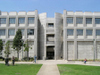
A year after residents were forced to leave Dolphin Towers in Sarasota, Florida because of concrete problems, some residents are defaulting on their obligations, abandoning their units. In June, the building’s insurer, Great American, rejected a claim, arguing that the building’s problems were due to latent defects, not covered under the policy. Repair estimates, previously put at $8.2 million, have now risen to $11.5 million. If homeowners cover this cost, it would require an assessment of about $100,000 for each unit.
�About thirty owners are in arrears on dues and fees. Charlotte Ryan, the president of the Dolphin Tower board, wrote to owners, that “the board will have no choice but to lien your property and pursue foreclosure if you do nothing to bring your delinquencies up to date.” However, as homeowners default, the funding for repairs is imperiled. The board has already spent more than $500,000 on shoring up the building and hiring consultants. Their lawyers, on the other hand, are working on a contingency basis.
� Read the full story…
The Montrose Language Interpreted: How Many Policies Are Implicated By A Construction Defect That Later Causes a Flood?
March 17, 2011 — By Shaun McParland Baldwin, March 17, 2011
The Court of Appeals of Indiana recently addressed the “Montrose” language added to the CGL ISO form in 2001 in the context of a construction defect claim where a fractured storm drain caused significant flooding a year after the drain was damaged. The insuring agreement requires that “bodily injury or “property damage” be caused by an occurrence and that the “bodily injury or “property damage” occur during the policy period. The Montrose language adds that the insurance applies only if, prior to the policy period, no insured knew that the “bodily injury or “property damage” had occurred in whole or in part. Significantly, it also states that any “bodily injury” or “property damage” which occurs during the policy period and was not, prior to the policy period known to have occurred, includes a continuation, change or resumption of that “bodily injury” or “property damage” after the end of the policy period.
�In Grange Mutual Cas. Co. v. West Bend Mut. Ins. Co., No. 29D04-0706-PL-1112 (Ct. App. IN March 15, 2011), http://www.ai.org/judiciary/opinions/pdf/03151109ehf.pdf, Sullivan was the General Contractor for a school construction project. Its subcontractor, McCurdy, installed the storm drain pipes. One of the storm pipes was fractured in 2005 while McCurdy was doing its installation work. More than a year later, the school experienced significant water damage due to flooding. It was later discovered that the flooding was due to the fractured storm drain. Sullivanrsquo;s insurer paid $146,403 for the water damage. That insurer brought a subrogation claim against McCurdy and its two insurers: West Bend and Grange. West Bend had issued CGL coverage to McCurdy while the construction was ongoing, including the date in which the storm pipe was fractured. Grange issued CGL coverage to McCurdy at the time of the flooding. Those two carriers jointly settled the subrogation claim and then litigated which insurer actually owed coverage for the loss. Significantly, the loss that was paid included only damages from the flooding, not any damages for the cost of repairing the pipe.
�Read the full story...
�Reprinted courtesy of Shaun McParland Baldwin of Tressler LLP. Ms Baldwin can be contacted at sbaldwin@tresslerllp.com
Construction Spending Dropped in July
September 13, 2012 — CDJ Staff
Bloomberg News reports that after four months of gains in construction spending, July saw a drop of 0.9 percent, wiping out June’s gain of 0.4 percent. Despite the overall decline in spending, there was an increase of 1.5 percent in expenditure on building new single-family homes and 2.8 percent on multifamily residential construction.
Read the full story…
Texas contractual liability exclusion
May 18, 2011 — May 18, 2011 - CDCoverage.com
In Ewing Construction Co., Inc. v. Amerisure Ins. Co., No. C-10-256 (S.D. Tex. April 28, 2011), insured Ewing was the general contractor for an athletic facility constructed for a school district. The school district sued Ewing alleging defective construction of the project. The underlying complaint included contract and negligence causes of action, and sought damages for the repair of the damages and loss of the use of the project. The complaint did not allege damage to any property other than the project itself. Ewing tendered its defense to its CGL insurer Amerisure. Amerisure denied a defense and Ewing filed suit against Amerisure. The federal district trial court entered summary judgment for Amerisure. Applying Texas law, the court held that all of the damages fell within the “contractual liability†exclusion precluding any duty to defend or indemnify.
�Read the full story…
�Reprinted courtesy of CDCoverage.com
Pictorial Construction Terminology Dictionary — A Quick and Helpful Reference
July 10, 2012 — CDJ Staff
Does it seem like contractors speak their own language? Construction defect professionals can be hampered by not knowing the terminology. The Bert L. Howe & Associates, Inc. web site has a handy Pictorial Construction Terminology Dictionary in which more than a thousand terms are not only defined, but illustrated with pictures that give a visual component to each definition.
Whether you’re wondering what a balustrade is, or you need to identify a joist girder, or hundreds of other terms, the Pictorial Construction Terminology Dictionary is there to help you. It can be found at http://www.berthowe.com/bhapedia.php.
Construction Law: Unexpected, Fascinating, Bizarre
April 25, 2012 — CDJ Staff
Guy Randles offers an amusing set of odd construction law cases in the Daily Journal of Commerce, which he describes as “the unexpected, the fascinating and even the bizarre.” He noted that in one case “a whistleblower claimed he was terminated for reporting to the owner that the contractor’s painters had not applied the required coating thickness.” The whistleblower was the project manager and “was responsible for ensuring the proper coating thickness.”
��A less amusing case was that of an architect who was arrested for manslaughter. Gerard Baker “told investigators that the considered the fireplaces to be merely decorative.” Randles notes that “the mansion’s fireplaces were built of wood framing and lined with combustible drywall.” Further, a “gas fireplace even vented into the house’s interior.” Building officials called the house “a death trap.” According to the LA police chief this may be the only case in which building defects lead to a manslaughter charge.
� Read the full story…
�
No Coverage For Damage Caused by Chinese Drywall
October 28, 2011 — Tred Eyerley, Insurance Law Hawaii
The pollution exclusion barred coverage for alleged property damage and bodily injury in Evanston Ins. Co. v. Harbor Walk Dev., LLC, No. 2:10cv312 (E.D. Va. Sept. 9, 2011).
Homeowners sued the insured, Harbor Walk, in three lawsuits, alleging the Chinese drywall installed in their homes emitted sulfides and other noxious gases. This caused corrosion and damage to the air-conditioning and ventilation units, refrigeration coils, copper tubing, faucets, metal surfaces, electrical appliances and other personal items. The homeowners also alleged the compounds emitted by the drywall caused bodily injury, such as allergic reactions, headaches, etc.
Harbor Walk’s insurer, Evanston, filed for a declaratory judgment that the pollution exclusion precluded coverage.
Read the full story...
Reprinted courtesy of Tred R. Eyerly, Insurance Law Hawaii. Mr. Eyerly can be contacted at te@hawaiilawyer.com
“Other Insurance” and Indemnity Provisions Determine Which Insurer Must Cover
September 1, 2011 — Tred Eyerley, Insurance Law Hawaii
A policy’s “other insurance” clause and a contractual indemnity provision were at the root for determining which of two insurers had to cover for injuries at a construction site. Valley Forge Ins. Co. v. Zurich Am. Ins. Co., 2011 U.S.Dist. LEXIS 76061 (N.D. Calif. July 14, 2011).
Hathaway was the general contractor at a demolition and construction project. Hathaway was insured by Zurich. Reinhardt Roofing was the roofing subcontractor. Reinhardt was insured by Valley Forge under a policy which named Hathaway as an additional insured. The subcontract also required Reinhardt to indemnify Hathaway for acts or omissions arising from Reinhardt’s work unless Hathaway was solely negligent.
Four of Reinhardt’s workers were injured when a canopy roof on which they were working collapsed. At the time of the accident, Hathaway’s on-site supervisor was inspecting a gap in the canopy roof, but did not order Reinhardt’s workers to stop working.
Read the full story…
Reprinted courtesy of Tred R. Eyerly, Insurance Law Hawaii. Mr. Eyerly can be contacted at te@hawaiilawyer.com
Was Jury Right in Negligent Construction Case?
September 30, 2011 — CDJ Staff
Yes, said the South Carolina Court of Appeals in Pope v. Heritage Communities, Inc. Heritage Communities developed Riverwalk, a community in South Carolina. During the earlier trial, HCI “conceded that construction defects existed at Riverwalk, and repairs needed to be made.” The trial court found that the construction was negligent, awarding the property owners association $4.25 million in actual damages and $250,000 in punitive damages, with the class of owners awarded $250,000 in actual damages and $750,000 in punitive damages. HCI appealed on nine issues. All were rejected by the appeals court.
The court rejected HCI’s claim that the judge’s instruction to the jury suggested to the jury that “the court had already determined that Appellants were willful, wanton, and reckless.” But here, the appeals court found “no reversible error.”
The general contractor for Riverwalk was BuildStar. Off-site management and sale were managed by Heritage Riverwalk, Inc., which also owned title to the property. Both these companies were owned by Heritage Communities, Inc. During the trial, an HCI employee testified that “the three corporations shared the same officers, directors, office, and telephone number.” The trial court found that the three entities were amalgamated. This was upheld by the appeals court.
Nor did the appeals agree with the HCI that the trial court had improperly certified a class. The owners were seen as properly constituting a class. Further, the court held that the property owners’ losses were properly included by the trial court. HCI objected at trial to the inclusion of evidence of subsequent remedial measures, however, as they did not object that it was inadmissible, the issue could not be addressed at appeal.
HCI argued on appeal that the trial court should not have allowed evidence of defects at other HCI developments. The appeals court noted that “the construction defects at the other HCI developments were substantially similar to those experienced by Riverwalk.”
The court additionally found that the negligence claims, the estimated damages (since full damage could not be determined until all defective wood was removed), and the award of punitive damages were all properly applied.
Read the court’s decision…
Construction Defect Not Occurrences, Says Hawaii Court
July 10, 2012 — CDJ Staff
Some insurers in Hawaii have made it clear that they will be covering construction defects, despite a court ruling concluding that defects are not occurrences, under Hawaii law. The case, heard by Hawaii’s Intermediate Court of Appeals found that “breach-of-contract claims based on allegations of shoddy performance are not covered under CGL policies and that tort-based claims derivative of such breach of contract claims also are not covered.”
Writing in Business Insider, Michael Bradford notes that the case, Group Builders Inc. and Tradewind Insurance Co. Ltd. vs. Admiral Insurance Co., involved improperly installed insulation at the Hilton Hawaiian Village’s Kalia Tower. Hilton was forced to close 21 floors due to extensive mold in guest rooms. Although the court did recognize this property damage, they did not feel it triggered insurance coverage, noting that if disputes over the quality of work were covered, CGL policies would become professional liability policies or performance bonds.
One critic of the decision, Warren C. Perkins, the risk manager at Boh Bros. Construction of New Orleans, noted that under the decision, “it doesn’t matter what the policy says and there is no need to investigate the policy wording.”
Read the full story…
State Audit Questions College Construction Spending in LA
August 17, 2011 — CDJ Staff
A state audit of the Los Angeles Community College District found many problems with their construction spending. Their report, as described in the Los Angeles Times, found construction money spent for other purposes, such as promotional photography and public relation tours, $28.3 million spent on projects that were later cancelled, and oversight committees that provided no oversight.
�Earlier this year, the LA Times ran a series of articles detailing problems with the Los Angles Community College District’s construction program. The LA Times reported that the State Controller’s audit reached many of the same conclusions.
�The Community College District disputed the findings.
Read the full story…
Firm Sued For Construction Defects in Parking Garage�
October 23, 2012 — CDJ Staff
Northhampton County, Pennsylvania is suing a contractor who resurfaced a parking garage in 2009. According to the Express-Times, three years later, the surface is cracked and the county is seeking $700,000 for repairs. Additionally, they have withheld $44,000 of the $2.2 million contract because of the problems. John Stoffa, Northampton County Executive, says that the garage is stable, but not up to safety standards.
� Read the full story…
�
Is Construction Heading Off the Fiscal Cliff?
December 20, 2012 — CDJ Staff
After a period of growth, the construction industry lost 20,000 jobs in November, based on the federal jobs data. Damon Scott of New Mexico Business Weekly suggests that contractors may have laid off employees in anticipation of the “fiscal cliff.” Ken Simpson, the chief economist of the National Association of Home Builders said in a press release that “it is discouraging that construction employment is still struggling after three years of expansion in the overall economy.”
Read the full story…
Ensuing Loss Provision Does Not Salvage Coverage�
October 23, 2012 — Tred Eyerly, Insurance Law Hawaii
The insureds' home was built in 1989. In 2006, extensive water damage was found to the house. The insureds notified their carrier, Chubb. The insureds had coverage for all risks unless stated otherwise in the policy or if an exclusion applied.
�Chubb hired an adjustor who determined that defective construction had enabled water to enter the wall and beam systems. Chubb denied coverage under the faulty planning, construction or maintenance exclusion.
� Read the full story…
��Reprinted courtesy of Tred R. Eyerly, Insurance Law Hawaii. Mr. Eyerly can be contacted at te@hawaiilawyer.com
��
One to Watch: Case Takes on Economic Loss Rule and Professional Duties
June 28, 2011 — Douglas Reiser, Builders Counsel
According to the Supreme Court of Washington Blog, The Supreme Court heard oral argument in Jackowski v. Hawkins Poe on Thursday, June 16, 2011. The court’s synopsis of the case can be found on the Washington State Court website.
�In short, two home purchasers brought a lawsuit against the home’s sellers, the sellers’ agent and the purchasers’ own agent, alleging claims of fraud, fraudulent concealment, negligent misrepresentation and breach of common law and statutory duties. The trial court dismissed the buyers’ claims on the basis of the economic loss doctrine and Division II reversed, opining that the ELR does not apply to professional duties. The Supreme Court will now look at applying the Independent Duty Doctrine established last year, and whether professional duties (those of the real estate agents) should be reviewed under a different light.
Read the full story…
�Reprinted courtesy of Douglas Reiser of Reiser Legal LLC. Mr. Reiser can be contacted at info@reiserlegal.com
Analysis of the “owned property exclusion” under Panico v. State Farm
March 8, 2011 — March 8, 2011, Colorado Construction Litigation
The U.S. Court of Appeals for the Tenth Circuit recently concluded that the “owned property exclusion” applied to bar coverage for claims of property damage. See Panico v. State Farm Fire and Cas. Co., 2011 WL 322830 (10th Cir. 2011). In Panico, the plaintiffs sold property in Aspen, Colorado to the Taylors, who sued the Panicos upon discovering the property was not as represented. After refusing to defend, the Panicos sued State Farm for breach of contract. The district court concluded that the Taylors’ claims were not covered under the Panicos insurance policies and granted summary judgment in State Farm’s favor. The U.S. Court of Appeals for the Tenth Circuit affirmed.
�Mr. Panico built the house on the property as well as several additions to the house. As the Taylors lived in Florida, they primarily relied on their real estate agent and an inspector to ensure the property was acceptable. According to their complaint, the Taylors discovered that the house was “virtually uninhabitable due to serious design and construction defects, mold, rodents, and drainage problems.” Id. at *1. In their complaint, the Taylors asserted three claims for relief against the Panicos based upon misrepresentation and fraudulent concealment about the condition of the property.
�Read the full story...
�Reprinted courtesy of Heather M. Anderson of Higgins, Hopkins, McClain & Roswell, LLP. Ms Anderson can be contacted at anderson@hhmrlaw.com
Cogently Written Opinion Finds Coverage for Loss Caused By Defective Concrete
November 7, 2012 — Tred Eyerly, Insurance Law Hawaii
If ever in need of a concise, well-reasoned opinion on “occurrence,” “property damage” and applicability of the business risk exclusions, turn to Pamperin Rentals II, LLC v. R.G. Hendricks & Sons Construction, Inc., 2012 Wis Ct. App. LEXIS 698 (Wis. Ct. App. Sept. 5, 2012).
A contractor was hired to install concrete during construction of seven gas stations. Red-D-Mix provided the concrete. The contractor and Red-D-Mix were eventually sued by the gas stations, based upon allegations that the concrete was defectively manufactured and installed. The gas stations alleged that Red-D-Mix supplied concrete that was defective and resulted in damages, including the need to repair nearby asphalt.
Red-D-Mix tendered to its insurers, who denied coverage. Suit was filed and the insurers moved for summary judgment. The trial court determined there were no allegations of either “property damage” or an “occurrence.” Therefore, there was no duty to defend or indemnify Red-D-Mix.
Read the full story…
Reprinted courtesy of Tred R. Eyerly, Insurance Law Hawaii. Mr. Eyerly can be contacted at te@hawaiilawyer.com
Bad Faith and a Partial Summary Judgment in Seattle Construction Defect Case
February 10, 2012 — CDJ Staff
The US District Court of Washington has issued a ruling in the case of Ledcor Industries v. Virginia Surety Company, Inc. Ledcor was the builder of a mixed-use real estate project in Seattle called the Adelaide Project. Ledcor purchased an insurance policy from Virginia Surety covering the project. After the completion of the project, Ledcor received complaints of construction defects from the homeowners, which they forwarded to Virginia Surety.
� Virginia Surety denied coverage on several grounds. Absent any lawsuit, Virginia claimed that there was “not yet any duty to defend or indemnify.” Further, as the policy commenced ten days after work on the project was substantially completed, Virginia cited a provision in the policy that excluded coverage for damage that occurred before the policy began. As problems included water intrusion, Virginia noted an exclusion for fungal damage. Finally, Virginia noted that it was not clear whether damage was due to Ledcor’s own actions.
� The homeowners sued over the construction defects. Ledcor settled these suits before trial. In this, they were defended by, and settlements were paid by American Home, another of Ledcor’s insurers. Ledcor claims that Virginia Surety acted in bad faith by denying coverage and by its failure to investigate the ongoing nature of the work at the project.
� The judge determined that Virginia Surety acted in bad faith when it invoked the fungus exclusion. Virginia noted that fungal damage “‘would have been’ referenced in the list of construction defects,” however, the HOAs claimed only “water stains” and “water damage,” and made no mention of mold or fungus. The court found that Virginia Surety “was not entitled to deny coverage simply because it may have suspected that mold or fungus damage existed.” The court noted that further proceedings would be needed to determine what portion of the settlement Virginia is obligated to pay.
� The court found that there were matters of fact to be determined on the further issues in the case. The judge wrote that although Virginia acted in bad faith in invoking the fungus exclusion, it still had to be determined if they were in breach of contract by failing to defend Ledcor. Ledcor still needs to show that the damages claimed by the HOA were due to work actually covered by Virginia Surety.
� Ledcor made an additional claim that Virginia Surety violated Washington’s laws concerning the insurance industry. Here, the court noted that the improper exclusion for fungus issues “constitutes a per se unfair trade practice.” Six other claims were made under this law. The court found that Virginia Surety did not misrepresent “pertinent facts or insurance policy provisions.” It also issued its denial letter promptly, satisfying the fifth provision. However, Virginia Surety did violate the second provision, in that it failed “to acknowledge and act reasonably promptly upon communications with respect to claims.” Two other issues could not be determined.
� Judge Martinez’s decision granted a summary judgment to Ledcor on the issue of bad faith. An additional summary judgment was granted that Virginia Surety violated Washington’s Insurance Fair Conduct Act. Judge Martinez did not grant summary judgment on any of the other issues Ledcor raised.
Read the court’s decision…