History of Defects Leads to Punitive Damages for Bankrupt Developer
March 1, 2012 — CDJ Staff
The South Carolina Court of Appeals has ruled that evidence of construction defects at a developer’s other projects were admissible in a construction defect lawsuit. They issued their ruling on Magnolia North Property Owners’ Association v. Heritage Communities, Inc. on February 15, 2012.
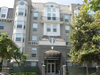
�Magnolia North is a condominium complex in South Carolina. The initial builder, Heritage Communities, had not completed construction when they filed for bankruptcy protection under Chapter 11. The remaining four buildings were completed by another contractor. The Property Owners’ Association subsequently sued Heritage Communities, Inc. (HCI) alleging defects. The POA also sued Heritage Magnolia North, and the general contractor, BuildStar.
�The trial court ruled that all three entities were in fact one. On appeal, the defendants claimed that the trial court improperly amalgamated the defendants. The appeals court noted, however, that “all these corporations share officers, directors, office space, and a phone number with HCI.” Until Heritage Communities turned over control of the POA to the actual homeowners, all of the POA’s officers were officers of HCI. The appeals court concluded that “the trial court’s ruling that Appellants’ entities were amalgamated is supported by the law and the evidence.”
�Heritage also claimed that the trial court should not have allowed the plaintiffs to produce evidence of construction defects at other Heritage properties. Heritage argued that the evidence was a violation of the South Carolina Rules of Evidence. The court cited a South Carolina Supreme Court case which made an exception for “facts showing the other acts were substantially similar to the event at issue.” The court noted that the defects introduced by the plaintiffs were “virtually identical across all developments.” This included identical use of the same products from project to project. Further, these were used to demonstrate that “HCI was aware of water issues in the other projects as early as 1998, before construction on Magnolia North had begun.”
�The trial case ended with a directed verdict. Heritage charged that the jury should have determined whether the alleged defects existed. The appeals court noted that there was “overwhelming evidence” that Heritage failed “to meet the industry standard of care.” Heritage did not dispute the existence of the damages during the trial, they “merely contested the extent.”
�Further, Heritage claimed in its appeal that the case should have been rejected due to the three-year statute of limitations. They note that the first meeting of the POA was on March 8, 2000, yet the suit was not filed until May 28, 2003, just over three years. The court noted that here the statute of limitation must be tolled, as Heritage controlled the POA until September 9, 2002. The owner-controlled POA filed suit “approximately eight months after assuming control.”
�The court also applied equitable estoppel to the statute of limitations. During the time in which Heritage controlled the board, Heritage “assured the unit owners the construction defects would be repaired, and, as a result, the owners were justified in relying on those assurances.” Since “a reasonable owner could have believed that it would be counter-productive to file suit,” the court found that also prevented Heritage from invoking the statute of limitations. In the end, the appeals court concluded that the even apart from equitable tolling and equitable estoppel, the statute of limitations could not have started until the unit owners took control of the board in September, 2002.
�Heritage also contested the jury’s awarding of damages, asserting that “the POA failed to establish its damages as to any of its claims.” Noting that damages are determined “with reasonable certainty or accuracy,” and that “proof with mathematical certainty of the amount of loss or damage is not required,” the appeals court found a “sufficiently reasonable basis of computation of damages to support the trial court’s submission of damages to the jury.” Heritage also claimed that the POA did not show that the damage existed at the time of the transfer of control. The court rejected this claim as well.
�Finally, Heritage argued that punitive damages were improperly applied for two reasons: that “the award of punitive damages has no deterrent effect because Appellants went out of business prior to the commencement of the litigation” and that Heritages has “no ability to pay punitive damages.” The punitive damages were upheld, as the relevant earlier decision includes “defendant’s degree of culpability,” “defendants awareness or concealment,” “existence of similar past conduct,” and “likelihood of deterring the defendant or others from similar conduct.”
�The appeals court rejected all of the claims made by Heritage, fully upholding the decision of the trial court.
Read the court’s decision…
South Carolina “occurrence” and allocation
September 1, 2011 — CDCoverage.com
In Crossman Communities of North Carolina, Inc. v. Harleysville Mutual Insurance Co., No. 26909 (S.C. Aug. 22, 2011), insured Crossman was the developer and general contractor of several condominium projects constructed by Crossman’s subcontractors over multiple years. After completion, Crossman was sued by homeowners alleging negligent construction of exterior components resulting in moisture penetration property damage to non-defective components occurring during multiple years. Crossman settled the underlying lawsuit and then filed suit against its CGL insurers to recover the settlement amount. Crossman settled with all of the insurers except for Harleysville. Crossman and Harleysville stipulated that the only coverage issue was whether there was an “occurrence.” The trial court subsequently entered judgment in favor of Crossman, determining that there was an “occurrence.” The trial court also ruled that Harleysville was liable for the entire settlement amount without offset for the amounts paid by the other insurers.
Read the full story…
Reprinted courtesy of CDCoverage.com
Good Signs for Housing Market in 2013
December 20, 2012 — CDJ Staff
Dan Green, a loan officer at Waterstone Mortgage, is optimistic about the construction market in 2013. He notes that the rise in building permit, housing starts, and housing completions are all good signs. Mortgage rates are still low, making these new homes attractive to buyers.
Read the full story…
Las Vegas Home Builder Still in Bankruptcy�
October 23, 2012 — CDJ Staff
American West Development attempted to exit Chapter 11 bankruptcy on September 27, but their plan was turned down by U.S. Bankruptcy Court Judge Mike Nakagawa. According to the Las Vegas Review-Journal, Judge Nakagawa rejected the plan over a trust fund for construction defects. America West’s attorney said they were hoping to complete the process by the end of the year.
�Under approved portions of the plan, America West’s owner, Lawrence Canarelli, will retain control of the corporation, although he must contribute $10 million into the firm and an additional $1.5 million into the fund for construction defects. America West faces charges for construction defects reported in the broad range of “less than $20 million” to “as much as $80 million.”
� Read the full story…
�
Construction Upturn in Silicon Valley
August 17, 2011 — CDJ Staff
Work resumed after nearly three years on an office tower in Santa Clara, according to the San Jose Mercury News. Work had stalled on the building due to the economy, but now the developer is planning a second five-story building on the site. Other dormant projects in the area are also getting restarted. Santa Clara County saw the addition of 1,800 construction jobs in June.
�A spokesperson for the Operating Engineers Local 3 in Alameda told the paper, “two years ago we had five thousand folks on the out-of-work list. It’s now down to about 1,700.”
Read the full story…
Construction Defects Are Occurrences, Says South Carolina High Court
December 20, 2012 — CDJ Staff
The South Carolina Supreme Court has left the legislature’s new, expanded definition of “occurrence” in place, declining to declare it unconstitutional. South Carolina included faulty workmanship as an occurrence in response to a Supreme Court decision, which the court later reversed. One of the parties in that earlier decision, Harleysville Insurance, challenged the new law, claiming that the legislature didn’t have the power to pass a law to overturn a court ruling. The court did not concur.
However, the court did determine that the law was not retroactive and covered only claims filed after the law became effective in May 2011. The Chief Justice of South Carolina noted that “insurance coverage for construction liability lacks clarity, particularly with respect to whether construction defects constitute ‘occurrences’ under construction general insurance policies.”
Read the full story…
Boston’s Tunnel Project Plagued by Water
August 11, 2011 — CDJ Staff
Boston’s Tip O’Neil Tunnel, part of the “Big Dig” project, is suffering from water leaks which has lead to millions of dollars of damage, according to an article in the Boston Globe. The report quotes Frank DePaola, the highway administrator, as likening the water leaks to “three garden hoses.” The project’s chief engineer notes that those “three garden hoses” add up to 17 million gallons a year.
�Further, the chief engineer reports notes that the leaks could compromise both safety and structural integrity. Problems have included a 110-pound light fixture that fell in February, ventilation ducts clogged with ice during the winter, and mold in utility rooms and ventilation buildings.
Read the full story…
Loss Caused by Seepage of Water Not Covered
July 10, 2012 — Tred Eyerly, Insurance Law Hawaii
The anti-concurrent clause in a homeowner’s policy barred coverage for damage caused by hidden seepage. Boazova v. Safety Ins. Co., 2012 Mass. LEXIS 462 (Mass. May 29, 2012).
The insured had a concrete patio built along the rear wall of her house at a grade higher than the home’s foundation. Years later, severe deterioration was discovered in the floor joists, wall studs and other parts of the home. The insured held a homeowner’s policy with Safety. An inspector hired by Safety determined the deterioration was caused by the placement of the concrete patio slab adjacent to the wall of the house, allowing water to seep onto the top of the foundation.
Safety denied coverage because the damage was caused by a combination of surface water, deterioration, settling and improper construction of the concrete patio.
Read the full story…
Reprinted courtesy of Tred R. Eyerly, Insurance Law Hawaii. Mr. Eyerly can be contacted at te@hawaiilawyer.com
Damron Agreement Questioned in Colorado Casualty Insurance v Safety Control Company, et al.
February 10, 2012 — CDJ Staff
Safety Control and EMC appealed the judgment in Colorado Casualty Insurance Company versus Safety Control Company, Inc., et al. (Ariz. App., 2012). The Superior Court in Maricopa County addressed “the validity and effect of a Damron agreement a contractor and its excess insurer entered into that assigned their rights to sue the primary insurer.” Judge Johnsen stated, “We hold the agreement is enforceable but remand for a determination of whether the stipulated judgment falls within the primary insurer’s policy.”
� The Opinion provides some facts and procedural history regarding the claim. “The Arizona Department of Transportation (“ADOT”) hired DBA Construction Company (“DBA”) to perform a road-improvement project on the Loop 101 freeway. Safety Control Company, Inc. was one of DBA’s subcontractors. As required by the subcontract, Safety Control purchased from Employer’s Mutual Casualty Company (“EMC”) a certificate of insurance identifying DBA as an additional insured on a policy providing primary coverage for liability arising out of Safety Control’s work.”
� A collision occurred on site, injuring Hugo Roman. Roman then sued ADT and DBA for damages. “Colorado Casualty tendered DBA’s defense to the subcontractors, including Safety Control. Safety Control and EMC rejected the tender. Roman eventually settled his claims against DBA and ADOT. DBA and ADOT stipulated with Roman for entry of judgment of $750,000; Roman received $75,000 from DBA (paid by Colorado Casualty) and $20,000 from ADOT, and agreed not to execute on the stipulated judgment. Finally, DBA, ADOT and Colorado Casualty assigned to Roman their rights against the subcontractors and other insurers.”
� Colorado Casualty attempted to recover what “it had paid to defend DBA and ADOT and settle with Roman. However, Roman intervened, and argued that “Colorado Casualty had assigned its subrogation rights to him as part of the settlement agreement.” The suit was not dismissed, but the Superior Court allowed Roman to intervene. “Roman then filed a counterclaim against Colorado Casualty and a cross-claim against the subcontractors.”
� All claims were settled against all of the defendants except Safety Control and EMC. “The superior court ruled on summary judgment that EMC breached a duty to defend DBA and that as a result, ‘DBA was entitled to settle with Roman without EMC’s consent as long as the settlement was not collusive or fraudulent.’ After more briefing, the court held the stipulated judgment was neither collusive nor procured by fraud and that EMC therefore was liable to Roman on the stipulated judgment and for his attorney’s fees. The court also held Safety Control breached its subcontract with DBA by failing to procure completed-operations insurance coverage and would be liable for damages to the extent that EMC did not satisfy what remained (after the other settlements) of the stipulated judgment and awards of attorney’s fees.” Safety Control and EMC appealed the judgment.
� Four reasons were given for the decision of the ruling. First, “the disagreement between Roman and Colorado Casualty does not preclude them from pursuing their claims against EMC and Safety Control.” Second, “the settlement agreement is not otherwise invalid.” Third, “issues of fact remain about whether the judgment falls within the EMC policy.” Finally, “Safety Control breached the subcontract by failing to procure ‘Completed Operations’ coverage for DBA.”
� In conclusion, the Superior Court affirmed in part, reversed in part, and remanded . “Although, as stated above, we have affirmed several rulings of the superior court, we reverse the judgment against EMC and remand for further proceedings consistent with this Opinion to determine whether the stipulated judgment was a liability that arose out of Safety Control’s operations. In addition, we affirm the superior court’s declaratory judgment against Safety Control but remand so that the court may clarify the circumstances under which Safety Control may be liable for damages and may conduct whatever further proceedings it deems appropriate to ascertain the amount of those damages. We decline all parties’ requests for attorney’s fees pursuant to A.R.S. § 12-341.01 without prejudice to a request for fees incurred in this appeal to be filed by the prevailing party on remand before the superior court.”
Read the court’s decision…
Florida Construction Defect Case Settled for $3 Million
June 19, 2012 — CDJ Staff
The Runaway Beach Club Condominium Association of Kissimmee, Florida has settled its construction defect claims against the parties involved in the construction and development of the buildings. The association claimed that defective roofs and improperly installed windows had lead to leaks and associated damages. A trial date had been set, but parties involved were able to reach this settlement instead.
Read the full story…
Florida Appeals Court Rules in Favor of Homeowners Unaware of Construction Defects and Lack of Permits
December 9, 2011 — CDJ Staff
The Florida Court of Appeals has ruled that a homeowner is not liable for defects in unpermitted alterations, reversing a lower court’s decision in Jensen v. Bailey. The Jensens sold their house to the Baileys. During the sale, the Jensens filled out a property disclosure statement, checking “no” to a question about “any improvement or additions to the property, whether by your or by others that have been constructed in violation of building codes or without necessary permits.”
After moving in, the Baileys discovered several problems with the home. One involved a defective sewer connection leading to repeated backups. The Baileys also found problems with remodeling the Jensens had done in the kitchen, master bath, and bedroom. The remodeling work was not done with required permits nor was it up to code.
The court noted that an earlier case, Johnson v. Davis, established four criteria: “the seller of a home must have knowledge of a defect in the property; the defect must materially affect the value of the property; the defect must not be readily observable and must be unknown to the buyer; and the buyer must establish that the seller failed to disclose the defect to the buyer.” The court found that the first of these criteria was crucial to determining the case.
In the Johnson ruling, the then Chief Justice dissented, fearing that the courts “would ultimately construe Johnson’s requirement of actual knowledge to permit a finding of liability based on constructive knowledge,” quoting Justice Boyd, “a rule of constructive knowledge will develop based on the reasoning that if the seller did not know of the defect, he should have known about it before attempting to sell the property.” The Appeals Court concluded that the lower court hit this point in ruling on Jensen v. Bailey.
Citing other Florida cases, the court noted that the Johnson rule does require “proof of the seller’s actual knowledge of the defect.” The court cited a case in which it was concluded that the seller “should have known” that there was circumstantial evidence was that the seller did know about the defects, as the seller had been involved in the construction of the home.
In the case of the Jensens, the lower court concluded that they did not know that the work was defective, nor did they know that they were obligated to obtain permits for it. The Appeals Court found this one fact sufficient to reverse the decision and remand the case to the lower court for a final judgment in favor of the Jensens.
Read the court’s decision…
Georgia Law: “An Occurrence Can Arise Where Faulty Workmanship Causes Unforeseen or Unexpected Damage to Other Property”
March 5, 2011 — By
CDCoverage.com, March 5, 2011
In American Empire Surplus Lines Ins. Co. v. Hathaway Development Co., Inc., No. S10G0521 (Ga. March 7, 2011), insured plumbing subcontractor Whisnant was sued by general contractor Hathaway seeking damages for costs incurred by Hathaway in repairing damage to property other than Whisnant’s plumbing work resulting from Whisnant’s negligently performed plumbing work on three separate projects. On one project, Whisnant installed a pipe smaller
�Read the full story...�Reprinted courtesy of CDCoverage.com
Water District Denied New Trial in Construction Defect Claim
August 16, 2012 — CDJ Staff
The United District Court in Tampa, Florida has rejected the motion by Tampa Bay Water for a new trial in their claims that HDR Engineering negligently designed the C.W. Bill Young Regional Reservoir. The claims went to a jury trial, at the end of nineteen days, the jury deliberated for four hours, finding for HDR Engineering. In rejecting Tampa Bay’s motion, the judge noted that “on close examination, TBW’s contentions have little to do with the factual determinations of the jury, which evidently concluded that TBW did not meet its burden of proof, an unsurprising conclusion, considering HDR’s evidence and the weaknesses in TBW’s evidence.”
The court cited an earlier decision that “a new trial may be granted where the jury’s ‘verdict is against the great, not merely the greater weight of the evidence.’” However, the court found that the jury’s verdict “was well supported by the evidence” and that “TBW’s case showed signs of weakness at virtually every turn.” TBW’s expert “changed his opinion late in the case concerning the culpability of the contractor.” As a result, “Brumund’s change in opinions effectively bolstered HDR’s faulty construction defense.”
TBW also raised claims a pre-trial order prevented it “from introducing evidence that HDR did not fulfill its contractual quality control responsibilities” and that evidentiary rulings prevented “TBW from introducing evidence concerning quality control.” However, TBW dismissed its claims over quality control, then “attempted no less than three times during ?Ķ testimony to introduce evidence of the purpose of the quality control requirement and quality control assurance.”
TBW also contended “that it was precluded from introducing evidence that HDR’s inspectors never reported that the protective layer exceeded three feet after inspecting the work as part of HDR’s quality control duties.” The court noted that “TBW asked these very questions of HDR’s Engineer of Record.” The court also found that testimony regarding photographs of the construction was properly excluded as TBW never entered the photos into evidence.
TBW had made an argument for a jury view. Prior the trial “after discussion, and to their credit, the parties agreed to a jointly-prepared helicopter ‘flyover’ video.” The court noted that “the size and physical characteristics of the reservoir were adequately and effectively depicted in the video.” The hazards the jury did not, then, have to encounter included the narrow, unpaved rim of the reservoir, snakes, and alligators.
Read the court’s decision…
Insurer Must Cover Construction Defects Claims under Actual Injury Rule
March 1, 2012 — Tred Eyerly, Insurance Law Hawaii
The Texas Court of Appeals held that the insured need not prove the exact dates physical damage occurred in order to trigger defense and indemnity coverage. Vines-Herrin Custom Homes, LLC v. Great Am. Lloyds Ins. Co., 2011 Tex. App. LEXIS 10027 (Tex. Ct. App. Dec. 21, 2011).
�In 1999, the insured built a home. He was insured under a CGL policy issued by Great American from November 9, 1998 to November 9, 2000. Thereafter, the insured held a CGL policy issued by Mid-Continent from November 9, 2000 to September 18, 2002.
�After construction was completed, the insured sold the house to the buyer in May 2000. After moving in, the buyer found numerous construction defects in the home, including water entering cracks in the home, and sinking and sagging of parts of the house. The buyer sued the insured, who sought coverage under the two policies. When the insurers refused to defend the underlying suit, the insured sued for a declaratory judgment.
�The underlying case went to arbitration and an award of $2.4 million was granted to the buyer. The insured assigned to the buyer his claims against the insurers.
Read the full story…
���Reprinted courtesy of Tred R. Eyerly, Insurance Law Hawaii. Mr. Eyerly can be contacted at te@hawaiilawyer.com
�
Coverage Exists Under Ensuing Loss Provision
July 10, 2012 — Tred Eyerly, Insurance Law Hawaii
Finding coverage under the ensuing loss provision, the Washington Supreme Court overruled a Court of Appeals decision we previously reported here. Vision One, LLC v. Philadelphia Indem. Ins. Co., 276 P.3d 300 (Wash. 2012).
Vision developed a condominium project. Before concrete was poured, a subcontractor supplied the shoring to temporarily support the poured concrete slabs. After the shoring installation was completed, concrete was poured on the first floor. When the pouring was finished, the shoring gave way. The framing, rebar and newly poured concrete came crashing down onto the the lower level parking area, where the wet concrete eventually hardened. It took several weeks to clean up the debris and repair the damage.
Vision had a builders’ risk policy with Philadelphia. The policy excluded losses caused by or resulting from deficient design or faulty workmanship. Collapse, however, was not listed as an excluded event. Further, the exclusion for faulty workmanship contained a resulting loss clause providing that "if loss or damage by a Covered Cause of Loss results, [Philadelphia] will pay for the loss or damage caused by that Covered Cause of Loss."
Philadelphia denied coverage under the faulty workmanship exclusion.
Read the full story…
Reprinted courtesy of Tred R. Eyerly, Insurance Law Hawaii. Mr. Eyerly can be contacted at te@hawaiilawyer.com
Contractors Admit Involvement in Kickbacks
December 9, 2011 — CDJ Staff
Two New Jersey contractors have pleaded guilty to charges that they made false representations for a government contract in a case related to kickbacks for construction work done in two school districts. New Jersey is recommending that the two men, Martin Starr and Stephen Gallagher, will each pay $50,000 in penalties, serve up to a year in jail, and be unable to accept public contracts for five years.
Last month, another individual in the case, Kenneth Disko, who had been the engineer for the school district, pleaded guilty on a similar charge. In addition to a $50,000 penalty, he will be serving three to five years in prison. A fourth conspirator, Robert Berman, the former business administrator for one of the school districts, has to pay a $13,000 fine and cooperate with the investigation. He is also barred from public employment in New Jersey and has been terminated from his position.
Starr admitted to preparing fictitious quotes which appeared to be from other contractors in order that his firm would seem to be the lowest bidder. Gallagher helped in preparing the fictitious bids and also provided cash kickbacks to Disko.
Read the full story…
Insurer Has Duty to Defend Despite Construction Defects
January 6, 2012 — CDJ Staff
In a case the judge attributed to “shoddy masonry work,” the US District Court of Illinois has rendered a decision in AMCO Insurance Company v. Northern Heritage Builders. Northern Heritage built a home in Chicago for Michael McGrath (who joined Northern Heritage as a defendant). According to the decision, “seven months after he moved into the house, McGrath noticed water coming in the house and warped millwork.” This was attributed to porous block, installed by the mason with Northern Heritage’s knowledge.
McGrath sued National Heritage for both the damage to his house and its contents. The court rejected his claim for the contents. For the damages to his house, he was awarded $601,570.50 in damages. He also sued his homeowner’s insurance carrier for damages not covered in his suit against National Heritage. There he was awarded $1,130,680.16.
AMCO informed National Heritage that it had neither duty to defend nor duty to indemnify. The judge considered whether AMCO had a duty to defend. Under Illinois law, “damage to a construction project resulting from construction defects is not an ‘accident’ or ‘occurrence’ because it represents the natural and ordinary consequence of faulty construction.” However, it is noted that while if the defects lead only to damage to the project itself, there is no occurrence, “if the building owner asserts damages to other property besides the construction itself, there is an ‘occurrence’ and ‘property damage.’” The judge further noted that were construction defects an occurrence, “shoddy work” would be rewarded by double pay, once by the homeowner and a second time by the insurer. Judge Kendall concluded that as McGrath had alleged damage to the contents of his house, AMCO had a duty to defend National Heritage.
She then looked at the issue of whether AMCO had a duty to indemnify. Should they pay the $601,570.50? Judge Kendall noted that “the duty to indemnify is narrower than the duty to defend.” The key point here was that once McGrath’s insurance carrier covered him for the damage to the contents of his house, “AMCO’s duty to defend ended.” Once McGrath “only sought damages for the natural consequences of faulty workmanship” there was no occurrence, hence nothing for AMCO to cover.
Judge Kendall granted a summary dismissal of AMCO’s claim that they had no duty to defend while upholding their claim that they had no duty to indemnify.
Read the court’s decision…
Construction Firm Charged for Creating “Hail” Damage
June 19, 2012 — CDJ Staff
A Burlington County, Pennsylvania judge has sentenced a firm and its employee for insurance fraud. In the scam, representatives of Precision Builders visited homes after hailstorms and advised homeowners that they could get new roofs and sidings covered by insurance. Many of the homeowners noted that they had not noticed any hail damage.
After homeowners filed claims, employees of Precision Builders would visit the homes and damage the roofs and sidings consistent with the adjusters’ reports.
One employee of Precision Builders, Dominik Sadowski, has pleaded guilty to third-degree insurance fraud. He has been sentenced to four years probation and 100 hours of community service. Another defendant, Marcin Gradziel, is alleged to have visited and damaged properties. He has plead not guilty.
Read the full story…