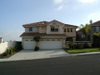
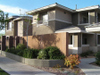
Construction Defect Litigation at San Diego’s Alicante Condominiums?
March 25, 2011 — Alicante HOA Website
According to recent posts in the Alicante HOA website, construction experts and legal counsel have been retained. The HOA board has been informed that testing of a variety of the building’s components are underway or will begin in the near future.
�Read More...
After Breaching its Duty to Defend, Insurer Must Indemnify
August 11, 2011 — Tred Eyerly, Insurance Law Hawaii
In a brief decision analyzing Oregon law, the Ninth Circuit determined that once an insurer breaches its duty to defend, it must indemnify. See Desrosiers v. Hudson Speciality Ins. Co., 2011 U.S. App. LEXIS 12591 (9th CIr. June 21, 2011).
�The victim secured a judgment against the insured after he was beaten by another patron outside the insured's bar. Hudson Speciality Insurance refused to defend the insured, claiming the injury arose from an assault and battery, which excluded coverage.
Read the full story…
�Reprinted courtesy of Tred R. Eyerly, Insurance Law Hawaii. Mr. Eyerly can be contacted at te@hawaiilawyer.com
Good and Bad News on Construction Employment
February 10, 2012 — CDJ Staff
The construction industry hit a two-year high in January, with 21,000 jobs added that month. The mild winter is assumed to have helped. According to the General Contractors of America, the construction industry currently employs about 5.57 million people. This is a 21 percent gain over January 2010. Ken Simonson, the chief economist of GCA, noted that “the unemployment rate in construction is still double that of the overall economy.” He said it was not currently clear if “the recent job growth reflects a sustained pickup or merely acceleration of homebuilding and highway projects that normally halt when the ground freezes in December and January.”
� Stephen Sandherr, the chief executive officer of the GCA, said that the federal government had to make infrastructure funding a top priority. “Without adequate long-term funding for infrastructure, competitive tax rates and fewer costly regulatory hurdles, the construction industry may lose some of the jobs it gained in the last year.”
Read the full story…
Insurance Firm Under No Duty to Defend in Hawaii Construction Defect Case
September 13, 2012 — CDJ Staff
The US District Court for Hawaii has granted a motion for summary judgment in Evanston Insurance v. Nagano. The case is related to a construction defect claim, Hu v. Nagano, and the issue at hand is whether Evanston Insurance is obligated to defend the Naganos in the underlying case.
�The Hus hired Eric Nagano and his firm PMX to construct a house. Mr. Nagano’s firm was insured by Evanston, however, he lost his contractor’s license in “approximately March 2006.” Mr. Nagano sought the Hus’ authorization to allow HC Builders to take over the contract. HC Builders is headed by Mr. Nagano’s wife, Hiroko, who has held a contractor’s license since “approximately September 2006.” Ms. Nagano and HC Builders were also insured by Evanston Insurance. The house, started by PMX was finished by HC Builders.
�The Hus authorized construction to begin in July 2003, but “construction did not commence until approximately October 2004 and, even after commencement, there were numerous delays resulting in months of inactivity on the Project.” The Hus had expressed to Mr. Nagano and PMX “that the construction period could not exceed twelve months after July 1, 2003.” As a result of the delays, “the Hus’ community association fined them because of the prolonged construction and the Hus’ construction lender assessed extension fees and fines for exceeding the term of the loan.”
�The Hus noted that the project did not have a licensed contractor from March through September 2006. In the end, the Hus “allege that Defendants did not fulfill the obligations under the Construction Contract,” and that “the Project was ‘grossly delayed’ and the construction was ‘riddled with defects.’” Despite an Owner’s Notice of Completion filed in December 2007, the residence “had no electricity, no hot water, ... no installed appliances” and “parts of the flooring were either missing or incomplete.” And then it leaked.
�The Naganos tendered the defense to Evanston. The Naganos “allege the defense is limited because Evanston: allowed default to be entered against the Naganos (the default was later set aside); delayed retaining experts; and limited the ability of the Naganos’ retained counsel to perform necessary actions to advance the case.” Evanston argues that it “does not have a duty to defend or indemnify Defendants against the Hus’ claims,” as the Hus’ claims are not covered under the policy. Further, the PMX policies have an exclusion for breach of contract.
�The court concluded that all of the claims made by the Hus were based in contract and therefore were outside of the terms of the Naganos insurance coverage, as the courts have "construed Hawaii law as not providing for insurance coverage for contract related claims." Therefore, Evanston does not have a duty to defend the Naganos.
Read the court’s decision…
When Does a Claim Against an Insurance Carrier for Failing to Defend Accrue?
November 7, 2012 — David McLain, Colorado Construction Litigation
The following is an update on our December 20, 2010 article regarding United States Fire Insurance Company v. Pinkard Construction Company, Civil Action No. 09-CV-01854-MSK-MJW, and its underlying dispute, Legacy Apartments v. Pinkard Construction Company, Case No. 2003 CV 703, Boulder County Dist. Ct. That article can be found here.
The present action, St. Paul Fire and Marine Insurance Co., et al. v. The North River Insurance Co., et al., Civil Action No. 10-CV-02936-MSK-CBS, encompasses the coverage battle that ensued between Pinkard’s insurers, Travelers Indemnity Company of America (“Travelers”) and United States Fire Insurance Company (“USFI”), following the settlement of Legacy’s construction defect claims against Pinkard. A short history of the underlying facts is as follows:
In 1995, Pinkard constructed the Legacy Apartments housing complex in Longmont, Colorado. Following construction, Legacy notified Pinkard of water leaks associated with various elements of construction. Legacy ultimately filed suit against Pinkard in 2003, and would go on to clarify and amend its defect claims in 2004, 2006, and again in 2008. Following Pinkard’s notification of Legacy’s claims, USFI provided a defense to Pinkard, but Travelers refused to do so, on the purported basis that Legacy’s allegations did not implicate property damage under the terms of Travelers’ policy.
Read the full story…
Reprinted courtesy of David M. McLain, Higgins, Hopkins, McLain & Roswell, LLC. Mr. McLain can be contacted at mclain@hhmrlaw.com
Condominium Exclusion Bars Coverage for Construction Defect
August 17, 2011 — Tred Eyerley, Insurance Law Hawaii
Coverage was denied under the policy’s condominium exclusion in California Traditions, Inc. v. Claremont Liability Ins. Co.,2011 Cal. App.LEXIS912 (Cal. Ct. App., ordered published July 11, 2011).
� California Traditions was the developer and general contractor for a housing development. California Traditions subcontracted with Ja-Con to perform the rough framing work for 30 residential units. The project had 146 separate residences that were freestanding with no shared walls, roof, halls, or plumbing or electrical lines. To allow a higher density development, the project was developed, marketed and sold as condominiums.
� The purchaser of one of the units filed a complaint against California Traditions alleging property damage from the defective construction. California Traditions cross-complained against Ja-Con.
Read the full story…
�Reprinted courtesy of Tred R. Eyerly, Insurance Law Hawaii. Mr. Eyerly can be contacted at te@hawaiilawyer.com
2011 Worst Year Ever for Home Sales
September 9, 2011 — CDJ Staff
So few new single-family homes have sold in 2011 that expectations are that this will be the worst year for new homes sales since the Commerce Department started tracking this in 1963. The Harford Courant notes that previously builders created a new supply to which was added homes under foreclosure.
Ed Leamer, economist and director of UCLA’s Anderson Forecast, says that recovery would be driven by two sectors, manufacturing and construction. “It doesn’t look like there is going to be a big recovery in manufacturing,” he says. “It is going to have to come in housing.”
The soft housing market, however, is leading to a loss of construction jobs, as reported by the Associated General Contractors of America. As a result, stock prices for the twelve largest publicly-traded home builders have declined 22.7 percent in a market that has declined 4.2 percent overall.
Read the full story…
Construction Defect Lawsuit Stayed by SB800
September 13, 2012 — CDJ Staff
The California Court of Appeals has reversed the decision of the lower court and has stayed, instead of dismissed, a claim of construction defects. A group of Victorville homeowners sued their homebuilder, K. Hovnanian Communities on a claim of construction defects. Hovnanian argued that under the procedures set forth in SB800, the suit should be dismissed, and that the claims should undergo arbitration. The trial agreed, dismissing the claims of 82 plaintiffs under a first motion, and then granted a second motion to dismiss, which affected a further 21 plaintiffs. The homeowners appealed.
�The Court noted that “the parties disagree about the standard of review,” with the Court determining that as the facts were not in dispute, they would use “an independent standard of review.”
�Reviewing the relevant statues, the Court concluded that the terms of the limited warranty set out the pre-litigation procedure, noting that “plaintiffs admit they did not comply with the limited warranty because they challenge its validity and enforceability.” The Court concluded that “plaintiffs’ action was premature.”
�The Court further noted that “a civil action will not be filed until after the contractual procedures have been followed.” Until these procedures have been followed, the Court said that they “decline to resolve issues about validity and enforceability.” However, as these issues could arise after the limited warranty procedures, the court stayed, rather than dismissed the claims.
Read the court’s decision…
Ensuing Loss Provision Found Ambiguous
April 25, 2012 — Tred Eyerly, Construction Law Hawaii
After the insurer denied coverage in a homeowner’s policy for construction defects under various exclusions, the court found the ensuing loss provision was ambiguous.Kesling v. Am. Family Mut. Ins. Co., 2012 U.S. Dist. LEXIS 38857 (D. Colo. March 22, 2012).
�After purchasing a home from the sellers, the insureds noticed problems with the deck of the home. Massive cracking appeared, causing lifting and leaking on the deck and water running through the exterior foundation wall into the home. There was also damage to the roof and crawlspace.
�The insureds had a homeowner’s policy with American Family, which covered accidental direct physical loss to property described in the policy unless the loss was excluded. They requested coverage for "conditions, defects and damages." American Family denied coverage because wear and tear, as well as damage to foundations, floors and roofs were excluded. The policy did provide coverage, however, for "any resulting loss to property described . . . above, not excluded or excepted in this policy.
�When coverage was denied, the insureds sued American Family.
� Read the full story…
��Reprinted courtesy of Tred R. Eyerly, Insurance Law Hawaii. Mr. Eyerly can be contacted at te@hawaiilawyer.com
��
Failure to Meet Code Case Remanded to Lower Court for Attorney Fees
May 24, 2011 — CDJ Staff
Judge Patricia J. Cottrell, ruling on the case Roger Wilkes, et al. v. Shaw Enterprises, LLC, in the Tennessee Court of Appeals, upheld the trial court’s conclusion that “the builder constructed the house in accordance with good building practices even though it was not in strict conformance with the building code.” However, Judge Cottrell directed the lower court to “award to Appellants reasonable attorneys' fees and costs incurred in their first appeal, as determined by the trial court.”
Judge Cottrell cited in her opinion the contract which specified that the house would be constructed “in accordance with good building practices.” However, after the Wilkes discovered water leakage, the inspections revealed that “that Shaw had not installed through-wall flashing and weep holes when the house was built.” The trial court concluded that:
“Separate and apart from the flashing and weep holes, the trial court concluded the Wilkeses were entitled to recover damages for the other defects they proved based on the cost of repair estimates introduced during the first and second trials, which the court adjusted for credibility reasons. Thus, the trial court recalculated the amount the Wilkeses were entitled to recover and concluded they were entitled to $17,721 for the value of repairs for defects in violation of good business practices, and an additional 15%, or $2,658.15, for management, overhead, and profit of a licensed contractor. This resulted in a judgment in the amount of $20,370.15. The trial court awarded the Wilkeses attorneys” fees through the Page 9 first trial in the amount of $5,094.78 and discretionary costs in the amount of $1,500. The total judgment following the second trial totaled $26,973.93.”
In this second appeal, Judge Cottrell concluded, that “the trial court thus did not have the authority to decide the Wilkeses were not entitled to their attorneys” fees and costs incurred in the first appeal.”
Read the court’s decision
Boston’s Tunnel Project Plagued by Water
August 11, 2011 — CDJ Staff
Boston’s Tip O’Neil Tunnel, part of the “Big Dig” project, is suffering from water leaks which has lead to millions of dollars of damage, according to an article in the Boston Globe. The report quotes Frank DePaola, the highway administrator, as likening the water leaks to “three garden hoses.” The project’s chief engineer notes that those “three garden hoses” add up to 17 million gallons a year.
�Further, the chief engineer reports notes that the leaks could compromise both safety and structural integrity. Problems have included a 110-pound light fixture that fell in February, ventilation ducts clogged with ice during the winter, and mold in utility rooms and ventilation buildings.
Read the full story…
Harmon Towers Case to Last into 2014
December 20, 2012 — CDJ Staff
Don’t expect a fast resolution to the Harmon Tower case in Las Vegas. The latest schedule sets trial for the construction defect claims in January 2014. Previously, these claims were going to be heard during the trial set to start in June 2013. Now the June trial will be over payment issues only.
Don’t expect the building to come down soon either. While CityCenter claims the building could come down in an earthquake, Judge Elizabeth Gonzalez had determined that as the structural testing was not random; its results cannot be extrapolated through the entire structure. As a result, CityCenter has elected to do more testing, holding off on demolishing the building. They are appealing Gonzalez’s order to the Nevada Supreme Court.
Read the full story…
There Is No Non-Delegable Duty on the Part of Residential Builders in Colorado
August 16, 2012 — Brady Iandiorio, Higgins, Hopkins, McLain & Roswell, LLC
Recently, in the Arapahoe District Court, the Honorable Michael Spear, issued an order holding that builders do not owe a non-delegable duty to homeowners. In Marx and Corken v. Alpert Custom Homes, Inc., et al., Judge Spear’s order came in response to plaintiffs’ motion for determination of question of law seeking a finding that the defendants owed a non-delegable duty to the plaintiffs and thus, to strike defendants’ designation of nonparties at fault. After being fully briefed, Judge Spear, found that such a non-delegable duty does not exist.
The case arises from the construction of a single-family residence in Aurora, Colorado. Through the construction and interaction with Alpert Custom Homes, Inc. and Scott and Sally Alpert, the defendants, Paul Marx and Kay Corken, the plaintiffs claimed they suffered various damages and losses, and brought claims for breach of contract-warranty, breach of contract, violation of the Colorado Consumer Protection Act, breaches of the implied covenant of good faith, promissory estoppel, willful breach of contract, and quantum meruit. During litigation, the defendants filed a designation of nonparties at fault, which named several parties which were at fault for the alleged construction defects at issue in the case.
Read the full story…
Reprinted courtesy of Brady Iandiorio, Higgins, Hopkins, McLain & Roswell, LLC. Mr. Iandiorio can be contacted at iandiorio@hhmrlaw.com
After Katrina Came Homes that Could Withstand Isaac�
October 23, 2012 — CDJ Staff
In the aftermath of Hurricane Katrina, Louisiana adopted its first uniform building code. Under the new standards, homes are better able to withstand the winds generated by hurricanes. The owner of one home said that during Hurricane Isaac, “there’s no shaking of the building itself, there’s no sign of a storm except for the rain.”
�WWWLTV reports that the new standards require home to be able to withstand 130 mile per hour winds. They also must follow FEMA guidelines for elevation. Build Now, a non-profit organization, is seeking to build green homes that meet the new standards. Their executive director said “we’re building higher. We’re building stronger. We’re building greener.”
� Read the full story…
�
Lien Claimant’s Right to Execute against Bond Upheld in Court of Appeals
February 10, 2012 — Douglas Rieser, Builders Counsel
Stonewood v. Infinity Homes is a simple construction dispute over a matter of about $9,000.00. But sometimes these tiny little disputes turn into expensive legal battles over mere procedural quivering. In Stonewood, a small subcontractor won a big victory yesterday when the Divison 1 Court of Appeals upheld its judgment against a lien release bond posted by an owner.
� Infinity Homes contracted with Stonewood Design to lay tile in one of its customer’s homes. Stonewood did the work, but Infinity withheld roughly $9,000.00 of the contract sums for what it alleged were trade damages left on the tile. The two parties were unable to come to an agreement over payment and Stonewood proceeded with a lien under RCW 60.04. It then filed an action to enforce the lien against the homeowner, Infinity and its bonding company.
Read the full story…
� Reprinted courtesy of Douglas Reiser of Reiser Legal LLC. Mr. Reiser can be contacted at info@reiserlegal.com
�
Florida Contractor on Trial for Bribing School Official
October 28, 2011 — CDJ Staff
Lloyd Whann, an executive in M. M. Parrish Construction, a Gainesville, Florida firm, is going to trial over claims that he bribed a school district official with more than $50,000 in gifts. The trial has been pushed to March of 2012, in order for his defense to review documents.
Bob Williams, the former school official, plead guilty to conspiracy to commit bribery. He agreed to testify against Whann and M.M. Parrish Construction.
Read the full story...
Harmon Hotel Construction Defect Update
July 18, 2011 — CDJ Staff
Coverage of the ongoing litigation concerning the Harmon Hotel continues to proliferate. Architectural Record and a number of other news outlets continue to provide additional details and coverage of the matter. Chief among the conditions alleged are improperly installed reinforcing steel inside link beams on 15 floors. MGM Claims that the conditions amount to hundreds of millions of dollars in damages, while Perini (the builder) indicated in a July 12th statement that the buildings problems are related to the design, and the they are “fixable.”
�There is significant speculation that MGM Resorts International isn’t interested in repairing the hotel due to a glut of hotel rooms attendant to the troubled economy. In a statement Tuesday Perini reportedly stated that “Repairing and opening the Harmon would only create a greater glut of unused hotel rooms for MGM,” “If market conditions were better and MGM found that demand existed for the Harmon hotel rooms, MGM would not be claiming that the Harmon is unstable.”
�MGM asserts that Perini failed to ”properly construct” the project. Clark County’s Department of Development Services has reportedly asked MGM to provide a plan to fix the project by August 15th.
�The Harmon is part of the $8.5 billion CityCenter project that opened in the fourth quarter of 2009 and is jointly owned by MGM Resorts and Dubai World.
�Prior reports indicated that the owner (MGM) had considered razing the entire project. The future of the project remains uncertain.
Crane Dangles and So Do Insurance Questions
November 7, 2012 — CDJ Staff
Hurricane Sandy sent a construction crane dangling from the top of One57, a condo construction project in New York City. In response to the risk, the nearby Parker Meridian and other nearby buildings were evacuated until the crane could be stabilized. Businessweek reports that One57 involves “a tangle of companies,” including the developer, Extell Development and the contractor, Lend Lease Construction. Pinnacle Industries was responsible for providing and operating the crane.
The insurance claims are yet to be made, but they will likely include the costs of evacuating nearby buildings and to cover any damage to the building itself. David DeLaRue, a vice president in construction practice at Willis Group Holdings said there would be two questions: “Did our insured do anything to cause that loss? Does this policy cover it?”
Read the full story…