Construction Case Alert: Appellate Court Confirms Engineer’s Duty to Defend Developer Arises Upon Tender of Indemnity Claim
January 27, 2010 — By
Steven M. Cvitanovic,
Haight Brown & Bonesteel, LLP, January 27, 2010
In the recent case of UDC-Universal Development, L.P. v. CH2M Hill, 2010 Cal.App.LEXIS 47 (filed January 15, 2010), the Sixth District Court of Appeal provided a stunning illustration of the far-reaching effects of the California Supreme Court’s holding in Crawford v. Weather Shield Manufacturing Inc. (2008) 44 Cal.4th 541. In Crawford, the Court held the duty to defend under an indemnity agreement arose upon the mere tender of defense of a claim covered by the indemnity.
�In the UDC case, CH2M Hill provided engineering and environmental planning services to developer UDC on a project that ultimately wound up in a construction defect lawsuit by the homeowners association ( HOA ). UDC tendered its defense to CH2M Hill, the tender was rejected, and UDC filed a cross-complaint for negligence, breach of contract and indemnity against CH2M Hill and others. After the HOA’s construction defect claims were settled, UDC proceeded to trial against CH2M Hill. The jury found in favor of CH2M Hill on the claims for negligence and breach of contract. At the request of the parties prior to trial, the trial court ruled on the application of the indemnity agreement in light of Crawford and, in so doing, found that the defense obligation arose upon the tender and that CH2M Hill breached that duty despite the jury finding in favor of CH2M Hill.
�The Court of Appeal affirmed, noting that the defense obligation arose as soon as the defense was tendered and did not depend on the outcome of the litigation, and that the HOA’s general description of the defects along with an allegation that Doe engineers were negligent triggered the duty to defend.
�Although this case did not expand the crushing impact of Crawford’s holding, it is
�Read the full story...
Battle of “Other Insurance” Clauses
March 23, 2011 —
Tred R. Eyerly -
Insurance Law Hawaii - March 23, 2011
The New York Court of Appeals considered the impact of competing “other insurance” provisions located in both a CGL policy and a D&O policy. See Fieldston Property Owners Assoc., Inc. v. Hermitage Ins. Co., Inv., 2011 N.Y. LEXIS 254 (N.Y. Feb. 24, 2011).
�In the underlying case, Fieldston’s officers were charged with making false statements and fraudulent claims with respect to a customer's right to access its property from adjacent streets. Suit was eventually filed against Fieldston and its officers, alleging several causes of action including injurious falsehood. Damages were sought.
�Fieldston’s CGL policy was issued by Hermitage. The “other insurance” provision stated, “If other valid and collectible insurance is available to the insured for a loss we cover . . . our obligations are limited,” but also stated it would share with all other insurance as a primary policy.
�Read the full story...�Reprinted courtesy of Tred R. Eyerly, Insurance Law Hawaii. Mr. Eyerly can be contacted at te@hawaiilawyer.com
Insurer Has Duty to Disclose Insured's Interest In Obtaining Written Explanation of Arbitration Award�
October 23, 2012 — Tred Eyerly, Insurance Law Hawaii
The issue faced by the Minnesota Supreme Court was whether the insurer had a duty to disclose the insured's interest in obtaining a written explanation of an arbitration award that identified the claims of recovery and the portions of the award attributable to each. Remodeling Dimensions, Inc. v. Integrity Mut. Ins. Co., 2012 LEXIS Minn. 404 (Minn. Sup. Ct., Aug. 22, 2012).
�Remodeling Dimensions, Inc. ("RDI") built an addition for the homeowners and installed windows in the original part of the house. After construction began, the homeowners also asked RDI to fix the master bedroom window in the original part of the house.
�After completion of the project, the house sustained storm damage.
� Read the full story…
��Reprinted courtesy of Tred R. Eyerly, Insurance Law Hawaii. Mr. Eyerly can be contacted at te@hawaiilawyer.com
��
2011 West Coast Casualty Construction Defect Seminar – Recap
June 1, 2011 — CDJ Staff
� 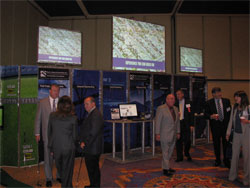 | �
�| Event exhibitors and sponsors contribute to an informative and engaging environment | �
�This year’s meeting was the best yet for the industry-leading construction defect and claims event.
�This year’s seminar concluded on May 13, 2011 with the Construction Defect Community Charitable Foundation Golf Tournament, held at Strawberry Farms Golf Course.
�The Disneyland Hotel in Anaheim, California was the place where more than 1,500 attendees convened for two days of professional development activities and seminars that included CLE workshops and panel discussions of special interest to legal and insurance professionals concerned with construction defect and claims litigation. Key events included “Challenges for Experts in Construction Defect Claims and Litigation,” “Keeping Up with Construction Defect Coverage,” and “Tips for Avoiding the ‘Perfect Storm’ in Handling of Wrap Claims.”
� �  | �
�| Supporting the golf tournament at the 15th hole | �
�This year’s Ollie award was given to George D. Calkins II, Esq. The West Coast Casualty Jerrold S. Oliver Award of Excellence was named in honor of the late Judge Jerrold S. Oliver, and recognizes an individual who is outstanding or has contributed to the betterment of the construction community.
�In addition to being the most comprehensive professional development seminar in the area of construction defects, this year’s seminar was equally valuable as a networking opportunity for members of the industry. People participated in professional development events during the day and then continued networking in the evening at numerous social events. The Lawn Party as well as the legendary Wood, Smith, Henning & Berman events were very well attended. Additional valuable networking events were hosted by a number of industry professionals at the House of Blues, and Tortilla Joe’s.
�As of this writing the 2011, West Coast Casualty's Construction Defect Seminar has applied for or has already received the following continuing education accreditation in the following areas;
�Read the full story…
�For more information about next year’s event, visit West Coast Casualty.
Builder Waits too Long to Dispute Contract in Construction Defect Claim�
May 10, 2012 — CDJ Staff
The Louisiana Court of Appeals has affirmed the lower court’s judgment in the case of Richard v. Alleman. The Richards initiated this lawsuit under Louisiana’s New Home Warranty Act, claiming that they had entered into a construction contract with Mr. Alleman and that they quickly found that his materials and methods had been substandard. They sued for the cost of repairing the home and filing the lawsuit. Mr. Alleman countersued, claiming the Richards failed to pay for labor, materials, and services. By his claim, they owed him $12,838.80.
�The trial court split the issues of liability and damages. In the first trial, the court concluded that there was a contact between Alleman and the Richards and that the New Home Warranty Act applied. Mr. Alleman did not appeal this trial.
�The second trial was on the issue of damages. Under the New Home Warranty Act, the Richards were found to be entitled to $36,977.11 in damages. In a second judgment, the couple was awarded $18,355.59 in attorney’s fees. Mr. Alleman appealed both judgments.
�In his appeal, Alleman contended that the trial court erred in determining that the Home Warranty Act applied. This was, however, not the subject of the trial, having been determined at the earlier trial. Nor did the court accept Alleman’s claim that the Richards failed to comply with the Act. The trial record made clear that the Richards provided Alleman with a list of problems with their home by certified mail.
�The court did not establish whether the Richards told Alleman to never return to their home, or if Alleman said he would never return to the home, but one thing was clear: Alleman did not complete the repairs in the list.
�A further repair was added after the original list. The Richards claimed that with a loud noise, a large crack appeared in their tile flooring. Mr. Alleman stated that he was not liable for this as he was not given a chance to repair the damage, the Richards hired the flooring subcontractors, and that the trial court rejected the claim that the slab was defective. The appeals court found no problem with the award. Alleman had already “refused to make any of the repairs.”
�Finally Alleman made a claim on a retainage held by the Richards. Since Alleman did not bring forth proof at trial, the appeals court upheld the trial courts refusal to award a credit to Alleman.
� Read the court’s decision…
�
Condo Board May Be Negligent for not Filing Construction Defect Suit in a Timely Fashion
December 9, 2011 — CDJ Staff
The Maryland Court of Special Appeals has ruled that condominium association boards have a duty to “properly pursue any claims,” overturning the decision of a lower court that said that it had no legal duty to file suit. Tom Schild, writing at Marylandcondominiumlaw.net, writes about Greenstein v. Avalon Courts Six Condominium, Inc.
In this case, the condominium board waited six years after residents complained about water intrusion problems before suing the developer. The court ruled that the suit could not be filed, as the statute of limitations was only three years. After residents were assessed for the repairs, homeowners sued the board, arguing that their delay lead to the need for the special assessment.
After overturning the decision, the Court of Special Appeals has asked the trial court to review the negligence claim.
Read the full story…
Condominium Communities Must Complete Construction Defect Repairs, Says FHA
July 10, 2012 — CDJ Staff
Laura K. Sanchez of HindmanSanchez writes that the FHA “will not approve or recertify” any condominium community “where there are any pending or incomplete repairs within the community which are a result of a construction defect claim, regardless of whether the litigation has been resolved and regardless of whether there are funds in the bank paid by the developer to pay for the repairs.” The FHA notes that failure to complete or fund repairs could “put FHA insured loans at risk.” Communities must disclose all maintenance and repair issues to the FHA. Sanchez notes that the FHA has stated that incomplete repairs could put FHA-insured loans at risk.
Read the full story…
Insurer’s Motion for Summary Judgment Based on Earth Movement Exclusion Denied
October 28, 2011 — Tred Eyerley, Insurance Law Hawaii
After carefully dissecting the earth movement exclusion, the court denied the insurer’s motion for summary judgment. High Street Lofts Condominium Assoc., Inc. v. Am. Family Mut. Ins. Co., 2011 U.S. Dist. LEXIS 109043 (D. Colo. Sept. 26, 2011).
The City of Boulder performed road repair work near High Street’s property, some of which involved the use of a vibrating compactor to compact and set the roadbed. High Street noticed damage to its building, such as cracks in walls, sloping of floors and separations of porches from the building itself. High Street contacted the City of Boulder, who forwarded the complaint to its contractor, Concrete Express, Inc.
High Street also filed a claim with its business insurer, American Family, who denied the claim. American Family relied on an opinion letter by High Street’s engineer. The letter indicated that the damage was the result of "soil consolidation/settlement," in response to the construction activities. Based on this letter American Family concluded the claim was excluded under the policy’s earth movement exclusion.
High Street sued American Family, who moved for summary judgment.
Read the full story...
Reprinted courtesy of Tred R. Eyerly, Insurance Law Hawaii. Mr. Eyerly can be contacted at te@hawaiilawyer.com
Time to Repair Nevada’s Construction Defect Laws?
February 10, 2012 — CDJ Staff
The Builders Magazine writes that during the previous session of the Nevada legislature, reforms sought by the building industry were stopped by the Speaker of the Nevada Assembly. The new session brings a new speaker and new hope for construction defect reform in Nevada.
� Pat Hickey, a member of the Assembly and a small business owner told The Builders Magazine that “we need to apply pressure on the legislators to fix the law.” He also recommended that people “go to Governor Sandoval and ask for his help.” Builders seeks legislation that will include right to repair and it should “define construction defect in such a way that it allows for a fair process.”
Read the full story…
When Does a Claim Against an Insurance Carrier for Failing to Defend Accrue?
November 7, 2012 — David McLain, Colorado Construction Litigation
The following is an update on our December 20, 2010 article regarding United States Fire Insurance Company v. Pinkard Construction Company, Civil Action No. 09-CV-01854-MSK-MJW, and its underlying dispute, Legacy Apartments v. Pinkard Construction Company, Case No. 2003 CV 703, Boulder County Dist. Ct. That article can be found here.
The present action, St. Paul Fire and Marine Insurance Co., et al. v. The North River Insurance Co., et al., Civil Action No. 10-CV-02936-MSK-CBS, encompasses the coverage battle that ensued between Pinkard’s insurers, Travelers Indemnity Company of America (“Travelers”) and United States Fire Insurance Company (“USFI”), following the settlement of Legacy’s construction defect claims against Pinkard. A short history of the underlying facts is as follows:
In 1995, Pinkard constructed the Legacy Apartments housing complex in Longmont, Colorado. Following construction, Legacy notified Pinkard of water leaks associated with various elements of construction. Legacy ultimately filed suit against Pinkard in 2003, and would go on to clarify and amend its defect claims in 2004, 2006, and again in 2008. Following Pinkard’s notification of Legacy’s claims, USFI provided a defense to Pinkard, but Travelers refused to do so, on the purported basis that Legacy’s allegations did not implicate property damage under the terms of Travelers’ policy.
Read the full story…
Reprinted courtesy of David M. McLain, Higgins, Hopkins, McLain & Roswell, LLC. Mr. McLain can be contacted at mclain@hhmrlaw.com
Alaska Supreme Court Dismisses Claims of Uncooperative Pro Se Litigant in Defect Case
August 11, 2011 — CDJ Staff
The Alaska Supreme Court found that in the case of Khalsa v. Chose, Ms. Khalsa? failure to cooperate with the courts has obligated them to dismiss her claims against Mr. Chose. Ms. Khalsa bought a home kit from Mandala Custom Homes of Nelson, British Columbia, Canada. Mr. Chose, one of the owners of Mandala was paid by Ms. Khalsa to supervise assembly in Fairbanks. After construction, the roof developed leaks. Ms. Khalsa stated that when climbing a ladder to inspect a skylight leak, she fell and injured herself.
�During the subsequent suit, Khalsa proved uncooperative. She skipped a pretrial conference. She attended a hearing that set discovery deadlines but then did not comply with discovery, including her failure to provide medical records documenting her injuries. She eventually said that she would only be able to travel from Arizona to Alaska if the defendants paid for her and her caretaker?s expenses.
�When finally deposed, Khalsa terminated the deposition after five minutes, alleging the deposition was “intentionally designed to cause [her] to endure further emotional distress, due to the psychological trauma . . . that was caused or contributed to by the defendants.”
�Eventually, the lower court sanctioned her twice. In July, 2008, the court concluded that her failure to provide medical records required dismissal of her injury lawsuit. In October of that year, the court dismissed all remaining claims due to her “pattern of excuses and long delays in providing information for discovery culminating in her refusal to participate in her deposition by the defendants.” Further, Khalsa has argued that the trial court displayed “prejudice and bias toward the pro se plaintiff.”
�The Alaska Supreme Court rejected all of Ms. Khalsa?s claims, dismissing her case. They did, however, note that she has thirty days to file an appeal.
Read the court’s decision…
Wisconsin “property damage” caused by an “occurrence.”
April 4, 2011 — April 4, 2011 in CDCoverage.com
In American Family Mut. Ins. Co. v. American Girl, Inc., 673 N.W.2d 65 (Wis. 2004), the insured general contractor was hired by the owner to design and build a warehouse on the owner s property. The general contractor hired a soil engineer to do a soil analysis and make site preparation recommendations. The soil engineer determined that the soil conditions were poor and recommended a compression process which the general contractor followed. After the warehouse was completed and the owner took possession, excessive soil settlement caused the foundation to sink which in turn caused structural damage to the warehouse. The warehouse had to be torn down.
�Read the full story...
�Reprinted courtesy of CDCoverage.com
Contractor Underpaid Workers, Pocketed the Difference
February 10, 2012 — CDJ Staff
Property Casualty 360 reports that the owner of a construction company in California’s Bay Area has been arraigned in San Francisco Superior Court. The fifty-seven felony counts include charges of payroll theft and insurance fraud.
� San Francisco District Attorney, George Gascon is quoted as saying that Doherty’s actions “hurts the honest businesses that were unable to successfully compete for these projects which the defendant was able to underbid and win as a result of this scheme.”
� Frances Ann Doherty, owner of Doherty Painting & Construction has been charged with submitting false documentation as to what wages she paid her workers. It is alleged that over three years she pocketed $600,000. Additionally, she is charged with underpaying her insurer by more than $100,000 by submitting to them the fake payroll information.
Read the full story…
Construction Worker Dies after Building Collapse
November 18, 2011 — CDJ Staff
A Bronx construction worker died when the pillars gave way in the basement where he was working. The two-story commercial building collapsed, burying Mr. Kebbeh under about six feet of rubble. The New York Times reports that firefighters dug him out with their bare hands. Mr. Kebbeh was taken to Jacobi Medical Center where he died. Two other construction workers escaped unharmed.
Read the full story…
Insurer Able to Refuse Coverage for Failed Retaining Wall
October 28, 2011 — CDJ Staff
The Eleventh District of the US Court of Appeals has ruled in the case of Nix v. State Farm Fire & Casualty Company. In this case, the Nixes filed a claim after a portion of the retaining wall in their home collapsed and their basement flooded. State Farm denied the claim “on the ground that the policy excluded coverage for collapses caused by defects in construction and for damage caused by groundwater.”
The court reviewed the Nixes’ policy and found that State Farm’s statement did specifically exclude both of these items. In reviewing the lower court’s ruling, the appeals court noted that State Farm’s expert witness, Mark Voll, determined that the retaining wall “lacked reinforcing steel, as required by a local building code, and could not withstand the pressure created by groundwater that had accumulated during a heavy rainfall.” Additionally, a french drain had been covered with clay soil and so had failed to disperse the groundwater.
The Nixes argued that the flooding was due to a main line water pipe, but their opinions were those of Terry Nix and the contractor who made temporary repairs to the wall. “Those opinions were not admissible as lay testimony. Neither Nix nor the contractor witnessed the wall collapse or had personal knowledge about the construction of the Nixes’ home.”
The lower court granted a summary judgment to State Farm which has been upheld by the appeals court.
Read the court’s decision…
Bar to Raise on Green Standard
November 7, 2012 — CDJ Staff
Next June, members of the U.S. Green Building Council will be voting on changes to the LEED green building standard. “The bar is getting raised,” said Navad Malin of BuildingGreen, a consulting and publishing firm, in an article in USA Today. Under the proposed guidelines, builders would have to project energy and water use for five years as part of the certification process. However, if the occupants aren’t as green as the builders anticipated, the buildings will not lose their certification.
The new rules will include higher energy standards, award points for avoiding potentially hazardous materials, and even determine what kind of plumbing items can be used.
Read the full story…
Construction Spending Dropped in July
September 13, 2012 — CDJ Staff
Bloomberg News reports that after four months of gains in construction spending, July saw a drop of 0.9 percent, wiping out June’s gain of 0.4 percent. Despite the overall decline in spending, there was an increase of 1.5 percent in expenditure on building new single-family homes and 2.8 percent on multifamily residential construction.
Read the full story…
In Re Golba: The Knaubs v. Golba and Rollison, Debtors
June 19, 2012 — Brady Iandiorio
Now comes another cautionary tale for builders and developers, especially those using single purpose business entities to handle individual construction projects. The United States Bankruptcy Court in Denver, Colorado, through the Honorable Michael Romero, provided an order regarding plaintiffs’ problems with a home they purchased from an entity controlled or represented by defendants. Plaintiffs, Kelvin and Holly Knaub (the “Knaubs”) filed adversary proceedings against debtor Robert Golba in his bankruptcy proceeding and against debtor Greg Rollison in his separate bankruptcy proceeding. The adversary proceedings were partially consolidated to proceed in parallel but not substantively.
The Knaubs purchased a home from Gemm Homes (“Gemm”) in May 2003. Problems stemming from the foundation caused the Knaubs to seek an explanation and ultimately a solution from Gemm and then from Avalon Homes (“Avalon”), which the Knaubs claim is just a continuation of Gemm. Through their complaint, the Knaubs seek relief for 1) damages caused by fraudulent representations and false pretenses under 11 U.S.C. § 523(a)(2)(A), based on Golba’s misrepresentation that Gemm and Rollison were not involved in Avalon; 2) damages caused by actual fraud under § 523(a)(2)(A), based on Golba’s and Rollison’s alleged conspiracy fraudulently to convey the assets of Gemm to the Avalon entities; and 3) damages caused by breach of fiduciary duty under § 523(a)(4), alleging Gemm was an insolvent company which owed a fiduciary duty to its creditors, and alleging Golba participated in transferring Gemm’s assets to Avalon for no consideration. In the Golba action, the third claim for relief was dismissed.
The facts of the case are important and somewhat convoluted. In an effort to make the cases clear, the evidence, allegations, and facts will be laid out in detail below. The Knaubs’ house was purchased from Gemm and soon after both Gemm and Rollison had an engineering company perform an analysis which discovered the foundation was not laid on stable ground.
Read the full story…
Reprinted courtesy of Brady Iandiorio, Higgins, Hopkins, McLain & Roswell, LLC. Mr. Iandiorio can be contacted at iandiorio@hhmrlaw.com