Homeowners Must Comply with Arbitration over Construction Defects
January 6, 2012 — CDJ Staff
The California Court of Appeals has upheld a decision by the Superior Court of Kern County that homeowners must comply with arbitration procedures in their construction defect claim. The California Court of Appeals ruled on December 14 in the case of Baeza v. Superior Court of Kern County, denying the plaintiff’s petition that the trial court vacate its order.
The plaintiffs in the case are homeowners in various developments built by Castle & Cook. The homes were sold with a contract that provided for “nonadversarial prelitigation procedures, including mediation, and judicial reference.” The homeowners made defect claims and argued that Castle & Cooke failed to comply with statutory disclosure requirements and that some of the contracts violate related statutes.
The appeals court found that there was no ground for appeal of the lower court’s order to continue with prelitigation procedures. The court noted that the plaintiffs could not seek a review of the mediation until a judgment was issued, but that then the issue would be moot. The court felt that there were issues presented that needed clarification, and so they reviewed this case. This was cleared for publication.
The court considered the intent of the legislature in passing the Right to Repair Act, noting that “under the statutory scheme, the builder has the option of contracting for an alternative nonadversarial prelitigation procedure,” as established in Chapter 4. The court noted that Chapter 4 “contains no specifics regarding what provisions the alternative nonadversarial contractual provisions may or must include.”
The plaintiffs contended that the builder was in violation of the standards set out in Section 912, however the court responded that these sections set out one set of procedures, but they concluded that “if the Legislature had intended the section 912 disclosure provisions…it could have made the requirements applicable to all builders by locating them in a section outside Chapter 4.”
Read the court’s decision…
2011 West Coast Casualty Construction Defect Seminar – Recap
June 1, 2011 — CDJ Staff
� 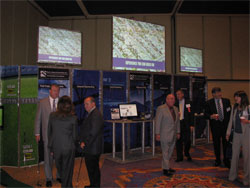 | �
�| Event exhibitors and sponsors contribute to an informative and engaging environment | �
�This year’s meeting was the best yet for the industry-leading construction defect and claims event.
�This year’s seminar concluded on May 13, 2011 with the Construction Defect Community Charitable Foundation Golf Tournament, held at Strawberry Farms Golf Course.
�The Disneyland Hotel in Anaheim, California was the place where more than 1,500 attendees convened for two days of professional development activities and seminars that included CLE workshops and panel discussions of special interest to legal and insurance professionals concerned with construction defect and claims litigation. Key events included “Challenges for Experts in Construction Defect Claims and Litigation,” “Keeping Up with Construction Defect Coverage,” and “Tips for Avoiding the ‘Perfect Storm’ in Handling of Wrap Claims.”
� �  | �
�| Supporting the golf tournament at the 15th hole | �
�This year’s Ollie award was given to George D. Calkins II, Esq. The West Coast Casualty Jerrold S. Oliver Award of Excellence was named in honor of the late Judge Jerrold S. Oliver, and recognizes an individual who is outstanding or has contributed to the betterment of the construction community.
�In addition to being the most comprehensive professional development seminar in the area of construction defects, this year’s seminar was equally valuable as a networking opportunity for members of the industry. People participated in professional development events during the day and then continued networking in the evening at numerous social events. The Lawn Party as well as the legendary Wood, Smith, Henning & Berman events were very well attended. Additional valuable networking events were hosted by a number of industry professionals at the House of Blues, and Tortilla Joe’s.
�As of this writing the 2011, West Coast Casualty's Construction Defect Seminar has applied for or has already received the following continuing education accreditation in the following areas;
�Read the full story…
�For more information about next year’s event, visit West Coast Casualty.
Insurer Not Entitled to Summary Judgment on Construction Defect Claims
February 10, 2012 — Tred Eyerly, Insurance Law Hawaii
The insurer unsuccessfully moved for summary judgment, contending it had no obligation to defend two related underlying construction defect cases. Amerisure Ins. Co. v. R.L.Lantana Boatyard, Ltd., 2012 U.S. Dist. LEXIS 2466 (S.D. Fla. Jan. 9, 2012).
� An engineering report noted design construction defects and deficiencies in visible, physical improvements at The Moorings at Lantana Condominium. In two lawsuits, The Moorings sued the developer, R.L. Lantana Boatyard ("RLLB"), and the contractor, Current Builders of Florida.
� Current Builders was insured by Amerisure. RLLB was named as an additional insured under the Amerisure policy.
Read the full story…
� � � Reprinted courtesy of Tred R. Eyerly, Insurance Law Hawaii. Mr. Eyerly can be contacted at te@hawaiilawyer.com
�
Construction Jobs Expected to Rise in Post-Hurricane Rebuilding
November 7, 2012 — CDJ Staff
Businessweek reports that construction jobs and materials will see increased demand as property owners in New York and New Jersey rebuild after hurricane Sandy. Tom Jeffery, of Irvine, California-based CoreLogic, a real estate information service, noted that “a high percent of damaged properties are going to be repaired.” Experts estimate property damage to total anywhere from $7 billion to $40 billion.
It is also estimated that about 739,000 properties in the area are underwater in the way that has nothing to do with flooding, with negative equity of 25 percent or more. Many of these homeowners are likely to walk away from their mortgages.
Ken Simonson, chief economist of the Associated General Contractors of America, expects “localized spikes in construction employment throughout November and the winter.” Martin Connor, the chief financial officer of Toll Brothers, expects to see more a rise in labor costs than in materials.
Read the full story…
Quarter Four a Good One for Luxury Homebuilder
December 20, 2012 — CDJ Staff
Toll Brothers has announced that their fourth-quarter net income is $2.35 per share, which they attribute in part to an income tax benefit. Their revenue, at $632.8 million, easily exceeded analysts’ projections of $565.1 million. Additionally, their number of signed contracts jumped seventy percent while their cancellation rate dropped nearly half to 4.9 percent.
Read the full story…
Judge Kobayashi Determines No Coverage for Construction Defect Claim�
October 23, 2012 — Tred Eyerly, Insurance Law Hawaii
Judge Kobayashi of the U.S. District Court, District of Hawaii, largely followed earlier precedent established by Judge Mollway in finding no coverage for construction defect claims. See Evanston v. Nagano, 2012 WL 3800320 (D. Hawaii Aug. 31, 2012).
�Evanston issued several liability policies to the insured contractor from 2002 and 2011. The insured entered a contract to build a residence in Honolulu. The homeowners were not happy with their home after the work was completed. They filed suit, alleging that the project was delayed and the construction was "riddled with defects." The complaint included claims for breach of contract and breach of warranties. Negligence was not alleged. Evanston defended, but under a reservation of rights.
�Evanston filed suit for a declaratory judgment and moved for summary judgment.
� Read the full story…
��Reprinted courtesy of Tred R. Eyerly, Insurance Law Hawaii. Mr. Eyerly can be contacted at te@hawaiilawyer.com
��
School District Settles Construction Lawsuit
November 7, 2012 — CDJ Staff
The Franklin County, Pennsylvania Public Opinion reports that an area school is coming to an end with its construction lawsuit. The school district was sued by its contractors for a combined $1.4 million, which the school district withheld when the project was not completed on schedule. Lobar Inc. claimed that the district additionally owed interest and should pay attorney fees. The school claimed that only $1.15 million was due under the contract. Under the settlement, they will be paying $1.136 million.
Read the full story…
Time to Repair Nevada’s Construction Defect Laws?
February 10, 2012 — CDJ Staff
The Builders Magazine writes that during the previous session of the Nevada legislature, reforms sought by the building industry were stopped by the Speaker of the Nevada Assembly. The new session brings a new speaker and new hope for construction defect reform in Nevada.
� Pat Hickey, a member of the Assembly and a small business owner told The Builders Magazine that “we need to apply pressure on the legislators to fix the law.” He also recommended that people “go to Governor Sandoval and ask for his help.” Builders seeks legislation that will include right to repair and it should “define construction defect in such a way that it allows for a fair process.”
Read the full story…
New OSHA Fall Rules to Start Early in Minnesota
June 14, 2011 — CDJ Staff
Minnesota has elected to implement the new OSHA rules concerning fall prevention in residential construction on June 20, well before OSHA’s September 15 deadline. Brian Johnson, reporting in Finance and Commerce, quotes Pam Perri, the executive vice president of the Builders Association of Minnesota, “this is the worst time to implement a new rule.” Ms. Perri notes “In Minnesota, education time for the residential construction industry is between November and March 1, not in the middle of the construction season.”
�Mike Swanson of Rottlund Homes estimated that the new regulations would add between $200 to $500 to the cost of a house and that he felt the current safety regulations were adequate. OSHA officials are quoted that there continues “to be a high number of fall-related deaths in construction.”
�Read the fully story…
Court Strikes Down Reasonable Construction Defect Settlement
December 20, 2012 — CDJ Staff
The Court of Appeals of Washington has struck down a construction defect settlement between a building owner and the companies she hired to repair the siding, among other repairs to bring the building up to code. Yuan Zhang hired Hawk Construction LLC to do repair work. Hawk, in turn, hired Ready Construction LLC for some aspects of the project. Hawk and Ready were both insured by Capital Specialty Insurance Corporation.
There were several problems with Ready’s work. After removing old siding, they did not protect the building, nor did they remove all of the damaged layers. Ready covered, but did not fix, a mildew problem under the old siding. When new siding was reattached, the nails used were too short to adequately attach it.
After paying for an inspection of the work, Zhang had Hawk and Ready begin the repairs again, but the work was abandoned without being completed. Zhang sued Hawk for breach of contract. Hawk then sued Ready, claiming that “Ready was liable to Hawk to the extent that Hawk was liable to Zhang.” Capitol retained defense for both contractors.
Zhang settled with Hawk, in an agreement that gave her “the right to collect and/or pursue all costs and attorney fees paid by Hawk or its insurance company defending against the Zhang’s claims and pursuing claims against Ready.” Subsequently, she also settled with Ready. Both companies ceased operations.
Zhang had the settlements reviewed by a court, which concluded that the settlements were reasonable. Capital was allowed to appeal, claiming that the settlement included costs that were Zhang’s responsibility. The appeals court did not examine the question of the reasonableness of the settlement, concluding that Capitol’s interests were relevant only to “questions of bad faith, collusion, and fraud.”
In the case of Zhang, the court concluded that the relationship between Zhang and her former contractors was collusive. The court noted that “bad faith or collusion may exist when the evidence indicates a joint effort to create, in a non-adversarial atmosphere, a resolution beneficial to both parties, yet highly prejudicial to the insurer as intervener.” The court noted that both companies had minimal assets which were, in any case, exempted from the agreement. Further, the court found that the agreements failed to determine “what amount of the repairs related to preexisting water damage.” Zhang’s calculation of costs also included her expenses for architectural and engineering services, which the court points out, “where always Zhang’s costs to bear.”
The court concluded that “the overall structure of the settlements is highly probative of collusion, fraud, or bad faith.” Zhang’s agreements with Hawk and Ready allowed her to collect compensation from Hawk and then collect Ready’s compensation to Hawk for their portion of the settlement, allowing Zhang to collect the monies twice. Further, she was allowed to pursue Capitol for Hawk’s attorney expenses, even though Hawk had none. “The right to recover Hawk’s fees merely set up a windfall recovery for Zhang.” The court described the agreements among Zhang, Hawk, and Ready as “precisely the type of manipulation [the law] is intended to preclude.”
Read the court’s decision…
Broker Not Liable for Failure to Reveal Insurer's Insolvency After Policy Issued
March 28, 2012 — Tred Eyerly, Insurance Law Hawaii
Faced with an issue of first impression in California, the Court of Appeals held that a broker was not liable for failing to reveal the insurer's insolvency occurring after issuance of the policy. Pacific Rim Mechanical Contractors, Inc. v. Aon Risk Ins. Serv. West, Inc., 2012 Cal. App. LEXIS 232 (Cal. Ct. App. Feb. 28, 2012).
�The developer for a construction project in downtown San Diego retained Aon as its broker to secure coverage. Aon procured a general liability policy for the project with Legion Indemnity Company. Legion was solvent when it issued the policy.
�The developer hired Pacific Rim (“PacRim”) as one of several subcontractors on the project. The parties entered into a contract in which the developer agreed to provide PacRim with liability insurance through an Owner Controlled Insurance Program (“OCIP”). Aon was not a party to the contract and PacRim was never its client. PacRim, however, enrolled in the OCIP by contacting Aon and providing all necessary paperwork.
Read the full story…
��Reprinted courtesy of Tred R. Eyerly, Insurance Law Hawaii. Mr. Eyerly can be contacted at te@hawaiilawyer.com
Architectural Firm Disputes Claim of Fault
May 27, 2011 — CDJ Staff
Lake-Flato Architects has disputed the arbitration panel’s conclusion that problems with the home of Tom Hanks and Rita Wilson were due to design flaws. The firm settled with the couple for $900,000, however the Idaho Mountain Express reports that David Lake said, “the settlement in the case in no way represents that Lake Flato was responsible for faulty design.” The Express reported that “the arbitrators found that problems at the home were attributable to design errors that did not take into account the cold winter climate of the Sun Valley area.”
�Read the full story…
No Resulting Loss From Deck Collapsing Due to Rot
July 10, 2012 — Tred Eyerly, Insurance Law Hawwaii
The Washington Supreme Court reversed the Court of Appeals’ decision that the ensuing loss provision provided coverage for a deck that collapsed due to rot and decay. Sprague v. Safeco Ins. Co. of Am., 2012 Wash. LEXIS 375 (Wash. May 17, 2012). Our prior post on the Court of Appeals’ decision is here.
The Sprague’s home had a deck supported by six "fin walls." The fin walls were encased in a foam and stucco coating. Twenty years after they purchased the home, it was discovered that the fin walls were in an advanced state of decay. Engineers discovered that construction defects caused the supports to rot. The deck was in danger of imminent collapse.
Safeco denied coverage. The all-risk policy did not exclude collapse, but did exclude coverage for losses causes by mold, wet or dry rot.
Read the full story…
Reprinted courtesy of Tred R. Eyerly, Insurance Law Hawaii. Mr. Eyerly can be contacted at te@hawaiilawyer.com
Kansas Man Caught for Construction Scam in Virginia
December 20, 2012 — CDJ Staff
A Virginia court sent charges of construction fraud against a Kansas man to a grand jury. Larry Foster visited homes in Bedford County, Virginia, tested the water, and told homeowners that they needed new water filtration systems. The homeowners paid, but Mr. Foster never delivered. One homeowner who testified paid him $1,690. Another paid even more, giving $3,090 to Mr. Foster. In order to dupe his victims, Foster used the address of a chiropractor as a business address, unbeknownst to the actual business there.. He is wanted for charges in other states as well.
Read the full story…
In Oregon Construction Defect Claims, “Contract Is (Still) King”
April 25, 2012 — CDJ Staff
Writing in Oregon’s Daily Journal of Commerce, David Anderson looks at the aftermath of the case Abraham v. T. Henry Construction, Inc. In that case, Anderson notes that “the homeowners hired a contractor to build their house, and subsequently discovered extensive water damage” “after expiration of the time to sue for breach of contract.” The homeowners claimed negligence. Oregon’s Supreme Court concluded that “homeowners only had to prove that the contractor negligently caused reasonably foreseeable harm to the homeowner’s property.”
�Anderson views this decision as leading to two risks for contractors. “First, contractors can be held liable in tort for breaching building code standards; second, they can be held liable for violating the often-difficult-to-define ‘reasonable care’ standard.” But here, “contract can be king.” The Oregon Supreme Court noted that the contractor “could have avoided exposure to the general ‘reasonable care’ standard by more carefully defining its obligations in the original construction contract.”
�He notes that contractors who fail to define their obligations or use generic definitions “may be exposing themselves to a more vague scope of liability.”
� Read the full story…
�
Contractors with Ties to Trustees Reaped Benefits from LA Community College Modernization Program
March 3, 2011 — Original reporting by Gale Holland, Michael Finnegan and Doug Smith, Los Angeles Times
In the latest installment of the “Billions To Spend” series of investigative reports focused on construction defects, management, and cost issues relevant to LACC’s Community College Modernization Projects, the LA Times examines the costs associated with the various layers of construction management and benefits that accrued to contractors with ties to LACC trustees.
�The reporting by the Times is seemingly critical of the project’s utilization of “body shops” an industry term for companies that function as employers of record. The article segment published today cites a number of circumstances wherein their utilization appears to have escalated costs substantially.
�“To gauge the cost of the staffing system, The Times reviewed thousands of pages of financial records from April 2007, when URS began managing the program, to July 2010. Reporters identified two dozen contractors serving as conduits for pay and benefits for employees they did not supervise.
�At least 230 people were employed in this manner, at a total cost of about $40 million, the records show.
�Approximately $18 million of the total was paid to the employees, according to the Times analysis. The remaining $22 million went to profit and overhead for contractors, the records indicate.
�For employees on its own payroll, the district says that medical and other benefits increase compensation costs 40% above base salaries. So if the district had employed its construction staff directly, the total cost for the period studied would have been $25 million instead of $40 million, a savings of $15 million, The Times calculated.”
�Read Full Story...
Connecticut Gets Medieval All Over Construction Defects
February 10, 2012 — CDJ Staff
The Hartford Courant reports that Connecticut is trying a very old tactic in a construction defect suit. The law library building at the University of Connecticut suffered from leaks which have now been repaired. The state waited twelve years after was complete to file lawsuit, despite that Connecticut has a six-year statute of limitations on construction defect claims. Connecticut claims that the statute of limitations does apply to the state.
� The state is arguing that a legal principle from the thirteenth century allows it to go along with its suit. As befits a medieval part of common law, the principle is called “nullum tempus occurrit regi,” or “time does not run against the king.” In 1874, the American Law Register said that nullum tempus occurrit reipublicae “has been adopted in every one of the United States” and “is now firmly established law.”
� In the case of Connecticut, Connecticut Solicitor General Gregory D’Auria said that “the statute of limitations does not apply to the state.” He also noted that “the state did not ‘wait’ to file the lawsuit. The lawsuit was filed only after all other options and remedies were exhausted.”
� Connecticut also argued that “nullus tempus occurrit regi” applied in another construction defect case at the York Correctional Institution. The judge in that case ruled in December 2008 to let the case proceed. But in the library case, Judge William T. Cremins ruled in February 2009 that the statute of limitations should apply to the state as well. Both cases have been appealed, with the library case moving more quickly toward the Connecticut Supreme Court.
Read the full story…
State Farm Too Quick To Deny Coverage, Court Rules
July 22, 2011 — CDJ Staff
On July 13, 2011, Judge Sarah S. Vance of the US District Court issued a rule in the case of Travelers Cas. & Surety Co. of Am. v. Univ. Facilities, Inc. (E.D. La., 2011). In this case, Stanley Smith Drywall was contracted by Capstone Building Corporation to “perform undisclosed work at the facility believed to involve the installation of drywall.” The project involved the design and construction of student residences for the Southeastern Louisiana University in Hammond, Louisiana. In May, 2009, University Facilities, Inc. (UFI) sued Capstone Development Corporation and Capstone On-Campus Management.
�State Farm insured Stanley Smith Drywall and they sought a declaration that they have no duty: “(1) to insure Stanley Smith or CBC, or (2) to defend or indemnify any party against UFI's claims in the pending arbitration.” State Farm contends “(1) there is no "occurrence" to trigger coverage under the policy; (2) only breach of contract claims are asserted; (3) there is no property damage alleged; and (4) various coverage limitations and exclusions apply to prevent coverage.’
�The court concluded that “whether State Farm has a duty to defend in the arbitration must be determined by considering the claims asserted in the arbitration.” However, the arbitration claims were not made part of the record. There, “, the Court cannot determine as a matter of law State Farm's duty to defend on the present record.” The same was true of State Farm’s duty to indemnify. “Stanley Smith and CBC assert that State Farm's motion for summary judgment was filed before any discovery was conducted in the arbitration proceeding or in this case. The Court finds that State Farm has failed to develop the record sufficiently to establish that there is no genuine issue of material fact as to its duty to indemnify Stanley Smith or CBC in the arbitration.’
�The court denied State Farm’s motion for a summary judgment on its duty to defend and indemnify.
� Read the court’s decision…