
















Broker Not Liable for Failure to Reveal Insurer's Insolvency After Policy Issued
March 28, 2012 — Tred Eyerly, Insurance Law Hawaii
Faced with an issue of first impression in California, the Court of Appeals held that a broker was not liable for failing to reveal the insurer's insolvency occurring after issuance of the policy. Pacific Rim Mechanical Contractors, Inc. v. Aon Risk Ins. Serv. West, Inc., 2012 Cal. App. LEXIS 232 (Cal. Ct. App. Feb. 28, 2012).
The developer for a construction project in downtown San Diego retained Aon as its broker to secure coverage. Aon procured a general liability policy for the project with Legion Indemnity Company. Legion was solvent when it issued the policy.
The developer hired Pacific Rim (“PacRim”) as one of several subcontractors on the project. The parties entered into a contract in which the developer agreed to provide PacRim with liability insurance through an Owner Controlled Insurance Program (“OCIP”). Aon was not a party to the contract and PacRim was never its client. PacRim, however, enrolled in the OCIP by contacting Aon and providing all necessary paperwork.
Read the full story…
Reprinted courtesy of Tred R. Eyerly, Insurance Law Hawaii. Mr. Eyerly can be contacted at te@hawaiilawyer.com
Changes To Indemnification Statute Are Here! Say Hello To Defense Duties
June 19, 2012 — Douglas Reiser, Builders Counsel
A months back, I discussed the passage of SHB 1559. The law changes the existing statutory indemnification regulation to include the costs of defense and to rid contracts of unfair indemnification for someone else’s sole negligence. The law went into effect last week!
Check back to my recent article on the changes set forth in the new law. The amendments to RCW 4.24.115 will broaden the existing law and clarify what types of indemnification are unenforceable. In short, an “up the chain” contractor (such as a general contractor) cannot expect to pass 100% of the defense and indemnification obligations downward if it is partially liable.
Read the full story…
Reprinted courtesy of Douglas Reiser of Reiser Legal LLC. Mr. Reiser can be contacted at info@reiserlegal.com
The U.S. Tenth Circuit Court of Appeals Rules on Greystone
November 18, 2011 — Derek J. Lindenschmidt, Higgins, Hopkins, McLain & Roswell, LLC
On November 1, 2011, the Tenth Circuit Court of Appeals ruled on the certified question of whether property damage caused by a subcontractor’s faulty workmanship is an “occurrence” for purposes of a commercial general liability (CGL) insurance policy. In Greystone Const., Inc. v. National Fire & Marine Ins. Co., No. 09-1412 (10th Cir. Nov. 1, 2011), the Tenth Circuit determined that because damage to property caused by poor workmanship is generally neither expected nor intended, it may qualify under Colorado law as an occurrence and liability coverage should apply. Id. at 2.
The short history of the Greystone case is as follows. In Greystone Const., Inc. v. National Fire & Marine Ins. Co., 649 F. Supp. 2d 1213 (D. Colo. 2009), two contractors and one of their insurers brought an action against a second insurer after the second insurer refused to fund the contractors’ defense in construction defect actions brought by separate homeowners. Id. at 1215. The U.S. District Court for the District of Colorado, relying on General Sec. Indem. Co. of Arizona v. Mountain States Mut. Cas. Co., 205 P.3d 529 (Colo. App. 2009), granted summary judgment in favor of the second insurer on the basis that the homeowners’ complaints did not allege accidents that would trigger covered occurrences under the second insurer’s policies. Id. at 1220. Notably, the Greystone, General Security, and other similar decisions prompted the Colorado General Assembly to enact C.R.S. § 13-20-808, which was designed to provide guidance for courts interpreting perceived coverage conflicts between insurance policy provisions and exclusions. The statute requires courts to construe insurance policies to favor coverage if reasonably and objectively possible. C.R.S. § 13-20-808(5).
The Tenth Circuit began its analysis by determining whether C.R.S. § 13-20-808, which defines the term “accident” for purposes of Colorado insurance law, would have a retroactive effect, and thereby settle the question before the court. The Tenth Circuit gave consideration to several Colorado district court orders issued since the enactment of C.R.S. § 13-20-808 which have suggested that the statute does not apply retroactively, including Martinez v. Mike Wells Constr., No. 09cv227 (Colo. Dist. Ct., Mar. 1, 2011), and Colo. Pool. Sys., Inv. V. Scottsdale Ins. Co., No. 09cv836 (Colo. Dist. Ct., Oct. 4, 2010). The Tenth Circuit also attempted to ascertain the General Assembly’s intent behind the term “all insurance policies currently in existence...” Greystone, No. 09-1412, at 12. The Tenth Circuit determined that the General Assembly would have more clearly stated its intentions for the term if it was supposed to apply retroactively to expired policies, rather than those still running. Id. at 12-13. Ultimately, the Tenth Circuit decided that C.R.S. § 13-20-808 did not apply retroactively, but noted that “the retrospective application of the statute is not necessarily unconstitutional.” Id. at 9, 11-14. As such, the Tenth Circuit advised that it was required to decide the question presented in the appeal under the principles of Colorado insurance law. Id. at 15.
Read the full story…
Reprinted courtesy of Higgins, Hopkins, McLain & Roswell, LLC. Mr. Lindenschmidt can be contacted at lindenschmidt@hhmrlaw.com
Construction Jobs Expected to Rise in Post-Hurricane Rebuilding
November 7, 2012 — CDJ Staff
Businessweek reports that construction jobs and materials will see increased demand as property owners in New York and New Jersey rebuild after hurricane Sandy. Tom Jeffery, of Irvine, California-based CoreLogic, a real estate information service, noted that “a high percent of damaged properties are going to be repaired.” Experts estimate property damage to total anywhere from $7 billion to $40 billion.
It is also estimated that about 739,000 properties in the area are underwater in the way that has nothing to do with flooding, with negative equity of 25 percent or more. Many of these homeowners are likely to walk away from their mortgages.
Ken Simonson, chief economist of the Associated General Contractors of America, expects “localized spikes in construction employment throughout November and the winter.” Martin Connor, the chief financial officer of Toll Brothers, expects to see more a rise in labor costs than in materials.
Read the full story…
Judge Okays Harmon Tower Demolition, Also Calls for More Testing
August 2, 2012 — CDJ Staff
Vegas.Inc reports that Clark County District Court Judge Elizabeth Gonzalez has permitted the demolition the tower, which MGM Resorts has claimed is a safety hazard. Perini Building Co. claims that the building does not need to be demolished. CityCenter claims that repairing the building would take nearly a year longer than a demolition and cost about $200 million. Further, CityCenter assumes that the building’s reputation would cost it another $30 million.
Subsequently, Judge Gonzalez ruled that the pattern of destructive testing would not support a claim that there were an estimated 1,400 defective items in the building. An attorney for CityCenter, Steve Morris, has suggested that they may seek more testing, impossible to do once the building is demolished. CityCenter issued a statement that “nearly every time CityCenter has chipped away concrete to review structural work at the Harmon, we have found defects.” They describe the building as “unusable.”
Tutor Perini contends that it “remains confident that it will prevail when the issues of safety, reparability and responsibility for the issues facing the Harmon tower are considered.
Read the full story…
Safety Officials Investigating Death From Fall
September 9, 2011 — CDJ Staff
California safety officials are looking into the circumstances surrounding the death of a construction worker who fell from a roof in Tiburon, California. Another worker found Gabriel Vasquez unconscious at the site. Vasquez was later pronounced dead. The State Division of Occupational Safety and Health are trying to determine how Vasquez fell.
Read the full story…
2011 West Coast Casualty Construction Defect Seminar – Recap
June 1, 2011 — CDJ Staff
 |
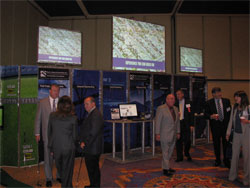
| Event exhibitors and sponsors contribute to an informative and engaging environment |
This year’s meeting was the best yet for the industry-leading construction defect and claims event.
This year’s seminar concluded on May 13, 2011 with the Construction Defect Community Charitable Foundation Golf Tournament, held at Strawberry Farms Golf Course.
The Disneyland Hotel in Anaheim, California was the place where more than 1,500 attendees convened for two days of professional development activities and seminars that included CLE workshops and panel discussions of special interest to legal and insurance professionals concerned with construction defect and claims litigation. Key events included “Challenges for Experts in Construction Defect Claims and Litigation,” “Keeping Up with Construction Defect Coverage,” and “Tips for Avoiding the ‘Perfect Storm’ in Handling of Wrap Claims.”
 |
| Supporting the golf tournament at the 15th hole |
This year’s Ollie award was given to George D. Calkins II, Esq. The West Coast Casualty Jerrold S. Oliver Award of Excellence was named in honor of the late Judge Jerrold S. Oliver, and recognizes an individual who is outstanding or has contributed to the betterment of the construction community.
In addition to being the most comprehensive professional development seminar in the area of construction defects, this year’s seminar was equally valuable as a networking opportunity for members of the industry. People participated in professional development events during the day and then continued networking in the evening at numerous social events. The Lawn Party as well as the legendary Wood, Smith, Henning & Berman events were very well attended. Additional valuable networking events were hosted by a number of industry professionals at the House of Blues, and Tortilla Joe’s.
As of this writing the 2011, West Coast Casualty's Construction Defect Seminar has applied for or has already received the following continuing education accreditation in the following areas;
Read the full story…
For more information about next year’s event, visit West Coast Casualty.
Negligent Construction an Occurrence Says Ninth Circuit
June 30, 2011 — CDJ Staff
One June 27, the US Court of Appeals has rejected an appeal from Mid-Continent Casualty Company. Mid-Continent had appealed a summary judgment granted to Titan Construction Company.
Titan Construction had built condominiums for the Williamsburg Condominium Association, which later filed a construction defect lawsuit against Titan and other defendants. Titan settled with the developer, Kennydale, assigning its rights against Mid-Continent to Kennydale. Mid-Continent filed suit, claiming that “it had no obligation to indemnify or defend Titan, Kennydale, or various other defendants.” The district court found in favor of Mid-Continent, granting a summary judgment, concluding that Titan’s insurance covered “occurrences,” and none had taken place.
On appeal, the court found that the negligent construction of the condominiums constituted an “occurrence” The case was remanded and the district court this time found in favor of Titan, “concluding that Mid-Continent failed to raise a triable issue as to the applicability of the remaining policy exclusions.
The Ninth Circuit Court of Appeals has now affirmed that decision and Titan’s summary judgment stands.
Read the court’s decision…
Consulting Firm Indicted and Charged with Falsifying Concrete Reports
August 17, 2011 — CDJ Staff
The New York Times reports that a company paid to inspect concrete at major public works projects in New York has been charged with falsifying results. They had been hired by the city three years ago after their predecessor was found to have falsified results.
According to the Times, investigators found nothing legitimate in nearly three thousand reports. The owner and five employees of American Standard Testing and Consulting Laboratories have been indicted on twenty-nine counts, including charges under New York’s racketeering law. Prison terms could be up to twenty-five years.
Prior to the city’s contract with American Standard, the city employed a firm called Testwell. Testwell was found in 2008 to have falsified its test results.
Read the full story…
Arizona Homeowners Must Give Notice of Construction Defect Claims
August 2, 2012 — CDJ Staff
Chris Combs of the Combs Law Group notes that “the new home construction industry is recovering” and that some of the buyers of these homes “will have claims for construction defects.” But not so quick on filing that claim.
Under Arizona law, as Mr. Combs notes the law “requires that, at least 90 days before filing any lawsuit, the buyer furnish notice by certified mail to the homebuilder specifying in detail the construction defect.” Only if there is no agreement over proposed repair can the homeowner file a lawsuit.
Read the full story…
Mark Van Wonterghem To Serve as Senior Forensic Consultant in the Sacramento Offices of Bert L. Howe & Associates, Inc.
March 1, 2012 — CDJ Staff
Sacramento, CA — Bert L. Howe and Associates, Inc., is pleased to announce that Mark Van Wonterghem - General Contractor, has joined the firm as Senior Forensic Consultant. Mark will be responsible for leading the firm’s expansion in the newly formed Sacramento headquarters.
His focus will continue to be working with construction practice groups and claims professionals in the Sacramento and Bay Area markets. He will utilize the resources of the Construction Experts Group at Bert L. Howe & Associates in furthering the litigation support needs attendant to the firm’s Northern California clientele.
Mr. Van Wonterghem possesses extensive consulting and testimony experience. Through 32 years of experience in the construction industry he leverages extensive practical experience with multiple trades including concrete foundations, walls and flatwork, structural wood and steel framing, finish carpentry, drywall, lath & plaster/stucco, window & door installations, deck coating systems, metal and membrane flashings and above/below grade waterproofing. This trade experience encompasses both the commercial and residential construction sectors and has been vital in his ability to provide concise explanation of construction industry standards, as well as trade-specific standards of care.
Mr. Van Wonterghem has broad experience with all types of building construction ranging from concrete and steel commercial construction to high-end custom residential construction.
In connection with the Construction Experts Group at BHA, Mr. Van Wonterghem provides construction consulting and litigation support services to a wide variety of recognized construction claims professionals, owners, and publicly traded builders.
The firm’s Sacramento offices are located at the Gateway Oaks III office complex, 2520 Venture Oaks Way, Suite 435, Sacramento, CA 95833. Mr. Van Wonterghem can be reached via e mail at mvanwonterghem@berthowe.com or at (800) 783-1822.
General Contractors Must Plan to Limit Liability for Subcontractor Injury
May 18, 2011 — May 18, 2011 - Douglas Reiser in the Builders Counsel Blog
It takes more than a hard hat, but safety checks, a good policy and a smart contract might save you some problems.If you are a general contractor, you will want to pay close attention to this article. A new Washington appellate decision showcases a general contractor’s liability to subcontractors who are injured on the job, when security barriers fail. But can a general limit this liability? Will its contract help?
In Wrought Corporation, Inc., Appellant V. Mario Interiano (quick note: this opinion is unpublished, but we are here to talk about an issue that was not determined on appeal – WISHA compliance), a subcontractor was injured when a security barrier failed and he fell into an elevator shaft.
A jury awarded a $1.56 million verdict against the general contractor, and the court of appeals affirmed on the basis that the general contractor has a non-delegable duty to ensure compliance with the Washington Industrial Safety and Health Act of 1973, codified under RCW 49.17 (WISHA).
Read the full story… Reprinted courtesy of Douglas Reiser of Reiser Legal LLC. Mr. Reiser can be contacted at info@reiserlegal.com
Environment Decision May Expand Construction Defect Claims
August 16, 2012 — CDJ Staff
Could a California Supreme Court decision on environmental claims have an effect on construction defect cases? Jonathan B. Sokol, a lawyer at Greenberg Glusker argues just that in a post on his firm’s blog. He notes that the California Supreme Court has held that “the ‘all sums” method of allocation applies in California” and that “an insurer cannot limit its liability to just the amount of loss that occurred in its particular policy period.” While his focus is on environmental cases, he says that “the decision could also potentially expand the scope of coverage for construction defect claims and other claims involving continuous and progressive property damage and bodily injury.
Read the full story…
Pennsylvania Court Extends Construction Defect Protections to Subsequent Buyers
December 20, 2012 — CDJ Staff
The Pennsylvania courts have long held that there is an implied warranty of habitability for the initial purchaser of a home. Now, as some defects may not immediately show up, the court has extended that implied warranty to second and subsequent purchasers. As Marc D. Brookman, David I. Haas, and Christopher Bender of Duane Morris note, “this judicially created doctrine shifts the risk of a latent defect in the construction of a new home from the purchaser to the builder-vendor.”
The Pennsylvania Supreme Court concluded that a contractual relationship is not needed for an implied warranty of habitability. The court’s concern was inequalities would result when a home was sold while other homes were protected by being within the statute of repose.
Read the full story…
JDi Data Introduces Mobile App for Litigation Cost Allocation
October 23, 2012 — CDJ Staff
JDi Data of Fort Lauderdale, Florida has announced that they are about to release a mobile app for their Vendor Cost Control service. Their mobile app is a web app, and so can be used by customers on the iOS, Android, or Blackberry platforms. It provides a secure link to their database with no risk of releasing proprietary information. JDi Data notes that their product will allow users to “track their full subscribed case listings,” give them “easy access to carrier allocations, payments, and outstanding balances reports,” and to “call or email case managers directly from their mobile application.
James DeRosa, the founder of JDi Data says that “pushing the boundaries of technology has enabled us to further our goal of providing credible reporting and cost allocation expertise to insured, carriers and the legal community.”
Read the full story…
Partial Settlement in DeKalb Construction Management Case
July 10, 2012 — CDJ Staff
The DeKalb County School District has made a partial settlement in a lawsuit over their claims of mismanagement of construction projects. The Atlanta Journal-Constitution reports that the school board settled with E. R. Mitchell & Co., the smaller of two firms that they have sued. As part of the settlement, Mitchell will be testifying against their former partner. Claims from the other side of the lawsuit are that the school board improperly fired the Heery/Mitchell partnership. The superintendant who fired the company, Crawford Lewis, and his chief operations office, Pat Reid, have since been charged with criminal conspiracy to defraud the construction program. A lawyer for Heery said that “we believe that when presented to a jury, Heery will be vindicated.”
Read the full story…
Unlicensed Contractors Nabbed in Sting Operation
September 9, 2011 — CDJ Staff
The California State License Board charged sixteen people in the Fresno area with accepting contracting jobs without licenses. The Statewide Investigative Fraud Team of the CSLB set up a sting operation at a home in Clovis, California seeking bids on tree service, painting, and general contracting services. Those who bid for jobs at more than $500 are required under California law to be licensed. Unlicensed contractors can only work on jobs with a cost to the homeowner of less than $500 and must inform the homeowner that they are not licensed.
In addition to citing contractors for not possessing appropriate licenses, the CSLB also cited contractors for failure to carry workers compensation insurance and illegal advertising. Further, California law limits down payments to the lesser of ten percent or $1,000. Two contractors were cited for requesting excessive down payments.
One contractor, an unlicensed tree service contractor, had been cited previously in a sting operation. He failed to show up for his court date.
Read the full story…
Ohio Court Finds No Coverage for Construction Defect Claims
March 28, 2012 — Tred Eyerly, Construction Law Hawaii
Charles and Valerie Myers hired Perry Miller to build their home. Myers v. United Ohio Ins. Co., 2012 Ohio App. LEXIS 287 (Ohio Ct. App. Jan. 26, 2012). After completion of the home, Miller was again hired to construct an addition which included a full basement, staircases, bathroom, bedroom, hallway and garage.
After the addition was completed, one of the basement walls began to crack and bow. Miller began to make repairs, but eventually stopped working on the project. Other contractors were hired to make repairs, but further problems developed. A second basement wall began to bow and crack, allowing water into the basement. The wall eventually had to be replaced. Subsequently, the roof over the addition began to leak in five or six places before the drywall could be painted. The leaks caused water stains on the drywall and caused it to separate and tear. It was discovered the roof needed to be replaced.
The Myers sued Miller and his insurer, United Ohio Insurance Company. The trial court ruled that the policy did not provide coverage for faulty workmanship, but did provide coverage for consequential damages caused by repeated exposure to the elements. United Ohio conceded liability in the amount of $2,000 to repair water damage to the drywall. United Ohio was also found liable for $51,576, which included $31,000 to repair the roof and ceiling and $18,576 to replace the basement wall.
Read the full story…
Reprinted courtesy of Tred R. Eyerly, Insurance Law Hawaii. Mr. Eyerly can be contacted at te@hawaiilawyer.com