Federal Judge Dismisses Insurance Coverage Lawsuit In Construction Defect Case
December 9, 2011 — CDJ Staff
A federal judge dismissed a coverage lawsuit brought by Mid Continent Casualty Company against its insured, Greater Midwest Builders Ltd.
Plaintiff brought this declaratory judgment action in response to a suit filed in Johnson County District Court, seeking a judicial determination that it had no coverage obligation for claims asserted against its insured. This case was stayed until the state court action entered judgment against the insured. The prevailing parties then commenced a garnishment action against the plaintiff, and another insurance company, in state court in Missouri. The court was asked whether it should lift the stay and proceed with the case, or decline jurisdiction in favor of resolution in the Missouri state court.
The court granted the motion to dismiss holding that proceeding with the case would lead to protracted, piecemeal litigation, while deferring to the Missouri state court would decide all the claims involved in the dispute.
Read the court’s decision…
Who Is To Blame For Defective — And Still LEED Certified — Courthouse Square?
September 1, 2011 — Douglas Reiser, Builders Counsel
Remember Courthouse Square? I sure do. We have talked about the closed and evacuated LEED certified building a couple of times here on Builders Counsel. Well, it’s back in the news. This time building professionals are pointing fingers — but there is some talk about a fix. Still, its LEED certification remains.
If you read my past articles about Courthouse Square, you can get caught up on this mess. The short of it is that Salem, Oregon had the five-story government building and bus mall completed in 2000 for $34 Million. It was awarded LEED certification during the USGBC’s infancy. Last year, it became public that the building had significantly defective concrete and design. The Salem-Keizer Transit District worked with the City of Salem to shut the building down, and it has not been occupied since.
Last fall, Courthouse Square failed thorough forensic testing leading to a lengthy bout with a number of insurers. The contractors and designers had been hauled into court, but the Transit District was able to settle with the architect and contractors. The only remaining party involved in the lawsuit appears to be the engineering firm, Century West Engineering. Most expert reports have pinned the responsibility for the poor design and materials on Century West’s shoulders.
Read the full story…
Reprinted courtesy of Douglas Reiser of Reiser Legal LLC. Mr. Reiser can be contacted at info@reiserlegal.com
History of Defects Leads to Punitive Damages for Bankrupt Developer
March 1, 2012 — CDJ Staff
The South Carolina Court of Appeals has ruled that evidence of construction defects at a developer’s other projects were admissible in a construction defect lawsuit. They issued their ruling on Magnolia North Property Owners’ Association v. Heritage Communities, Inc. on February 15, 2012.
�Magnolia North is a condominium complex in South Carolina. The initial builder, Heritage Communities, had not completed construction when they filed for bankruptcy protection under Chapter 11. The remaining four buildings were completed by another contractor. The Property Owners’ Association subsequently sued Heritage Communities, Inc. (HCI) alleging defects. The POA also sued Heritage Magnolia North, and the general contractor, BuildStar.
�The trial court ruled that all three entities were in fact one. On appeal, the defendants claimed that the trial court improperly amalgamated the defendants. The appeals court noted, however, that “all these corporations share officers, directors, office space, and a phone number with HCI.” Until Heritage Communities turned over control of the POA to the actual homeowners, all of the POA’s officers were officers of HCI. The appeals court concluded that “the trial court’s ruling that Appellants’ entities were amalgamated is supported by the law and the evidence.”
�Heritage also claimed that the trial court should not have allowed the plaintiffs to produce evidence of construction defects at other Heritage properties. Heritage argued that the evidence was a violation of the South Carolina Rules of Evidence. The court cited a South Carolina Supreme Court case which made an exception for “facts showing the other acts were substantially similar to the event at issue.” The court noted that the defects introduced by the plaintiffs were “virtually identical across all developments.” This included identical use of the same products from project to project. Further, these were used to demonstrate that “HCI was aware of water issues in the other projects as early as 1998, before construction on Magnolia North had begun.”
�The trial case ended with a directed verdict. Heritage charged that the jury should have determined whether the alleged defects existed. The appeals court noted that there was “overwhelming evidence” that Heritage failed “to meet the industry standard of care.” Heritage did not dispute the existence of the damages during the trial, they “merely contested the extent.”
�Further, Heritage claimed in its appeal that the case should have been rejected due to the three-year statute of limitations. They note that the first meeting of the POA was on March 8, 2000, yet the suit was not filed until May 28, 2003, just over three years. The court noted that here the statute of limitation must be tolled, as Heritage controlled the POA until September 9, 2002. The owner-controlled POA filed suit “approximately eight months after assuming control.”
�The court also applied equitable estoppel to the statute of limitations. During the time in which Heritage controlled the board, Heritage “assured the unit owners the construction defects would be repaired, and, as a result, the owners were justified in relying on those assurances.” Since “a reasonable owner could have believed that it would be counter-productive to file suit,” the court found that also prevented Heritage from invoking the statute of limitations. In the end, the appeals court concluded that the even apart from equitable tolling and equitable estoppel, the statute of limitations could not have started until the unit owners took control of the board in September, 2002.
�Heritage also contested the jury’s awarding of damages, asserting that “the POA failed to establish its damages as to any of its claims.” Noting that damages are determined “with reasonable certainty or accuracy,” and that “proof with mathematical certainty of the amount of loss or damage is not required,” the appeals court found a “sufficiently reasonable basis of computation of damages to support the trial court’s submission of damages to the jury.” Heritage also claimed that the POA did not show that the damage existed at the time of the transfer of control. The court rejected this claim as well.
�Finally, Heritage argued that punitive damages were improperly applied for two reasons: that “the award of punitive damages has no deterrent effect because Appellants went out of business prior to the commencement of the litigation” and that Heritages has “no ability to pay punitive damages.” The punitive damages were upheld, as the relevant earlier decision includes “defendant’s degree of culpability,” “defendants awareness or concealment,” “existence of similar past conduct,” and “likelihood of deterring the defendant or others from similar conduct.”
�The appeals court rejected all of the claims made by Heritage, fully upholding the decision of the trial court.
Read the court’s decision…
Architectural Firm Disputes Claim of Fault
May 27, 2011 — CDJ Staff
Lake-Flato Architects has disputed the arbitration panel’s conclusion that problems with the home of Tom Hanks and Rita Wilson were due to design flaws. The firm settled with the couple for $900,000, however the Idaho Mountain Express reports that David Lake said, “the settlement in the case in no way represents that Lake Flato was responsible for faulty design.” The Express reported that “the arbitrators found that problems at the home were attributable to design errors that did not take into account the cold winter climate of the Sun Valley area.”
�Read the full story…
Residential Construction Down in San Diego
September 13, 2012 — CDJ Staff
While new home construction is on the rise in some parts of the country, San Diego has seen a fall, comparing the first seven months of 2012 with the first seven months of 2011, dropping nine percent, according to an article in the San Diego Business Journal. The news isn’t all bad, since although July residential construction dropped sharply, nonresidential construction increased thirty-six percent.
Read the full story…
Judge Rejects Extrapolation, Harmon Tower to Remain Standing
November 7, 2012 — CDJ Staff
CityCenter has filed an emergency motion asking the Nevada Supreme Court to intervene in Judge Elizabeth Gonzalez’ order that the building’s defects cannot be extrapolated from those tested. CityCenter’s structural engineering expert “evaluated 397 of the Harmon’s critical structural elements and found all but one defective,” according to the article on Vegas.Inc. Judge Gonzalez would not permit this to be extrapolated to the untested 1,072, as the locations tested were not random.
Judge Gonzalez also ruled that if CityCenter does additional testing, they may not appeal her order that ruled the extrapolation inadmissible. CityCenter argued to the Nevada Supreme Court that “the notion that CityCenter should be forced to incur additional millions of dollars in testing costs and sanctions ?Äì on the condition that it waive its right to appeal this ruling ?Äì just to be permitted to present its own damages evidence, shocks the conscience.”
Gonzalez gave the okay to CityCenter to demolish the building, but its demolition would make any further testing impossible. Under Gonzalez’ ruling, the untested structural elements cannot b assumed to be defective.
Read the full story…
One to Watch: Case Takes on Economic Loss Rule and Professional Duties
June 28, 2011 — Douglas Reiser, Builders Counsel
According to the Supreme Court of Washington Blog, The Supreme Court heard oral argument in Jackowski v. Hawkins Poe on Thursday, June 16, 2011. The court’s synopsis of the case can be found on the Washington State Court website.
�In short, two home purchasers brought a lawsuit against the home’s sellers, the sellers’ agent and the purchasers’ own agent, alleging claims of fraud, fraudulent concealment, negligent misrepresentation and breach of common law and statutory duties. The trial court dismissed the buyers’ claims on the basis of the economic loss doctrine and Division II reversed, opining that the ELR does not apply to professional duties. The Supreme Court will now look at applying the Independent Duty Doctrine established last year, and whether professional duties (those of the real estate agents) should be reviewed under a different light.
Read the full story…
�Reprinted courtesy of Douglas Reiser of Reiser Legal LLC. Mr. Reiser can be contacted at info@reiserlegal.com
Unit Owners Have No Standing to Sue under Condominium Association’s Policy
February 10, 2012 — Tred Eyerly, Insurance Law Hawaii
If a condominium owner suffers damage caused by a leak from another unit, may it sue the insurer for the Association of Apartment Owner (AOAO) for coverage? The federal district court for Hawaii said "no" in a decision by Judge Mollway. See Peters v. Lexington Ins. Co., 2011 U.S. Dist. LEXIS 148734 (D. Haw. December 27, 2011).
� Two cases were consolidated. In each case, Plaintiffs owned condominium units at the Watercrest Resort on Molokai. Water leaking from another unit damaged Plaintiffs’ units.
� Watercrest Resort was insured by Lexington pursuant to a policy maintained by the AOAO. Plaintiffs filed claims with Lexington. Lexington hired an adjustor.
� Unhappy with the adjustment of their claims, Plaintiffs sued Lexington and the adjustor.
Read the full story…
� Reprinted courtesy of Tred R. Eyerly, Insurance Law Hawaii. Mr. Eyerly can be contacted at te@hawaiilawyer.com
Ohio “property damage” caused by an “occurrence.”
May 18, 2011 — May 18, 2011 - CDCoverage.com
In JTO, Inc. v. State Automobile Mut. Ins. Co., No. 2010-L-062 (Ohio Ct. App. March 25, 2011), general contractor JTO was sued by hotel project owner Marriott for breach of contract and warranties seeking damages for the repair of construction defects resulting in moisture penetration property damage to interior components. JTO filed a third party complaint against subcontractor Farizel and also tendered its defense as an additional insured under Farizel’s State Auto CGL policy.
�Read the full story…
�Reprinted courtesy of CDCoverage.com
�
�Census Bureau, HUD Show Declines in Residential Construction
�May 17, 2011 – CDJ Staff
�The U.S. Census Bureau and the Department of Housing and Urban Development released their summary of residential construction for April 2011 on May 17.
�Building permits for privately owned housing units were down 4% from last month and 12% from last year. Similarly, privately-owned housing starts were down 10% from March and 23% below the previous year.
�For further details, read the Census Bureau/HUD report
Policyholder Fails to Build Adequate Record to Support Bad Faith Claim
May 19, 2011 — May 19, 2011 -
Tred R. Eyerly,
Insurance Law HawaiiThe importance of careful preparation and documentation was the take away lesson in a Texas bad faith case, C.K. Lee v. Catlin Specialty Ins. Co., 2011 U.S. Dist. LEXIS 19145 (S.D. Tex. Feb. 28, 2011).
�C.K. Lee owned a commercial shopping center in Houston. Catlin issued a commercial property policy to Lee. On September 12, 2008, Hurricane Ike hit and caused substantial property damage throughout the Texas Gulf Coast area. On September 24, 2008, Lee submitted a claim for damage to the roof of his shopping center to Catlin.
�Catlin hired Engle Martin to represent its interests in adjusting the claim. Engle Martin eventually adjusted over 200 Ike-related claims for Catlin.
�In November 2008, Engle Martin and Emergency Services Inc., retained by Lee, inspected Lee’s property. Engle Martin observed evidence of roof repairs that had apparently been made both before and after Hurricane Ike. Engle Martin decided it was necessary to use an infrared scan of the roof to help identify which damages, if any, were attributable to wind and which, if any, were attributable to sub par, prior repairs or natural deterioration.
�Engle Martin retained Project, Time & Cost (PT&C) to conduct the infrared inspection. PT&C’s inspection determined there was no wind-related damage to the roof and no breaches or openings created by wind. Instead, the roof had exceeded its life expectancy and was in need of replacement due to normal wear and weathering. Consequently, Catlin decided that the damage to Lee’s roof was not caused by winds from Hurricane Ike.
�Meanwhile, Lee’s contractor, Emergency Services, prepared a report estimating that the total cost of repairing the roof would be $871,187. Engle Martin’s estimate for repair of the roof was $22,864.
�Lee filed suit for breach of contract, breach of the duty of good faith and fair dealing, and violations of the Texas Insurance Code. Catlin moved for summary judgment on all claims but breach of contract, arguing that because there was a bona fide dispute concerning the cause of the damages and whether they were covered under the policy, there was no evidence of bad faith or violations of the Texas Insurance Code.
�Read the full story…
� �Reprinted courtesy of Tred R. Eyerly, Insurance Law Hawaii. Mr. Eyerly can be contacted at te@hawaiilawyer.com
Know the Minnesota Statute of Limitations for Construction Defect Claims
July 10, 2012 — CDJ Staff
Writing on the Benson Kerrane Storz Nelson web site, Alex Nelson gives an overview of the Minnesota laws covering statutes of limitation and repose. He notes that frequently when his firm declines to take a construction defect case its’ over a missed statute of limitation. He describes the time periods as both “short” and “ambigious.” The briefest limit is that a homeowner “has only 6 months within which to give written notice of the defect to the builder once the defect has manifested itself.” Any legal action must commence within two years of the same point.
The Minnesota statutes also have a six-year limitation, which starts for a single home at transfer of title to the first purchaser or when the purchaser takes possession, whichever happens first. For a condo, it is the last of “completion of the common element,” first unit sale or “Termination of Declarant control.” Fraud or misrepresentation also has a six-year limit, while negligence claims are limited to within the first two years “after the manifestation of the defect.”
The statues of repose also provide limits to filing construction defect lawsuits. Mr. Nelson points out that the longest are for negligence, fraud, and “major construction defects,” all of which have a ten-year limit. On the other hand, claims against general workmanship and materials must be made in the first year.
Read the full story…
2011 West Coast Casualty Construction Defect Seminar – Recap
June 1, 2011 — CDJ Staff
� 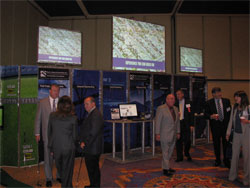 | �
�| Event exhibitors and sponsors contribute to an informative and engaging environment | �
�This year’s meeting was the best yet for the industry-leading construction defect and claims event.
�This year’s seminar concluded on May 13, 2011 with the Construction Defect Community Charitable Foundation Golf Tournament, held at Strawberry Farms Golf Course.
�The Disneyland Hotel in Anaheim, California was the place where more than 1,500 attendees convened for two days of professional development activities and seminars that included CLE workshops and panel discussions of special interest to legal and insurance professionals concerned with construction defect and claims litigation. Key events included “Challenges for Experts in Construction Defect Claims and Litigation,” “Keeping Up with Construction Defect Coverage,” and “Tips for Avoiding the ‘Perfect Storm’ in Handling of Wrap Claims.”
� �  | �
�| Supporting the golf tournament at the 15th hole | �
�This year’s Ollie award was given to George D. Calkins II, Esq. The West Coast Casualty Jerrold S. Oliver Award of Excellence was named in honor of the late Judge Jerrold S. Oliver, and recognizes an individual who is outstanding or has contributed to the betterment of the construction community.
�In addition to being the most comprehensive professional development seminar in the area of construction defects, this year’s seminar was equally valuable as a networking opportunity for members of the industry. People participated in professional development events during the day and then continued networking in the evening at numerous social events. The Lawn Party as well as the legendary Wood, Smith, Henning & Berman events were very well attended. Additional valuable networking events were hosted by a number of industry professionals at the House of Blues, and Tortilla Joe’s.
�As of this writing the 2011, West Coast Casualty's Construction Defect Seminar has applied for or has already received the following continuing education accreditation in the following areas;
�Read the full story…
�For more information about next year’s event, visit West Coast Casualty.
West Coast Casualty Promises Exciting Line Up at the Nineteenth Annual Conference
March 28, 2012 — CDJ Staff
West Coast Casualty has announced the lineup for the annual WCC Construction Defect Seminar. This year’s seminar will be the nineteenth anniversary, and it will be held on May 17th and 18th, 2012 in Anaheim, California. They are the largest construction defect event in the world and this year’s seminar will again bring the top people in the field to address many of the current issues and where the construction defect community will be going in the future.
�The event, anticipated to be even larger than prior years, will have numerous panels and presentations on the current state of construction defect litigation. Among the topics that will be presented are “Arbitrate? Let’s See You Make Me!” “Defending Construction Defect Failure Mechanisms?An Expert’s Perspective,” and “Current Trends in Effectively Handling SB800 Cases.”
�Speakers at the event will include judges, lawyers, and representatives of the insurance industry. One event, “Meet Your Judges, A Candid Discussion on Construction Defect Claims and Litigation from the Bench?” will include judges from five states, including the Honorable Nancy M. Saitta, Chief Justice of the Nevada Supreme Court, the Honorable Clifton Newman of the South Carolina Circuit Court, and the Honorable Rex Heeseman of the Los Angeles County Superior Court.
�Daniel A. Berman, Esq. and Stephen Henning, Esq. will be talking on the topic of “Social Networking Sites: Strategies, Ethical Pitfalls, and Practice Pointers for Litigating and Winning Your Construction Defect Case.” Mr. Berman is a Founding and Managing Partner of Wood, Smith, Henning & Berman LLP. He has been named a Southern California Super Lawyer for eight consecutive years. Mr. Henning is a Founding Partner of Wood, Smith, Henning & Berman, LLP and Fellow of the Litigation Counsel of America. Mr. Henning will also be one of the presenters on the panel “Important Court Decisions Impacting Construction Defect Claims.”
�The panel “Why Do We Need to Know Certain Things and How Decisions Are Made” will be presented by important figures in the construction claims industry, including Phyllis Modlin, Todd Schweitzer, Teresa D. Wolcott, and Lee Wright. Ms. Modlin is a Construction Defect Claims Supervisor responsible for nationwide claims for Markel Corporation. Mr. Schweitzer is an Assistant Vice President of Major Case for Construction Defect and Professional Liability Claims Services at Zurich North America. Ms. Wolcott is the National Product Manager for Construction Defect Claims within the Construction Claims Organization at Travelers Insurance. Mr. Wright is an Assistant Vice President and Senior Claims Consultant for XL Specialty Insurance.
�The event will also include a Science and Technology Fair in which exhibitors will be presenting technological problem solving and decision making as they relate to resolving ongoing construction and post construction-defect related issues while reducing costs for all those involved in claims and litigation. The fair is dedicated to these novel applications of science and technology that benefit the construction defect community but are not yet commonly available. This will be the third time the Construction Defect Seminar will include a Science and Technology Fair.
�Sessions at the event are approved for MCLE credit in Arizona, California, Colorado, Illinois, Maine, Minnesota, New York, Ohio, and Pennsylvania. MCLE credits vary by state; attendees can obtain up to 10.25 hours of credit in Arizona, California, Maine, and New York. Applications for several other states are still pending. Additionally, the event is also worth continuing education credits with the Florida Department of Insurance and for Registered Professional Adjusters. West Coast Casualty has applications pending for adjuster continuing education in an additional thirty-six states.
�West Coast Casualty recommends this event for anyone involved in construction or construction defect claims, whether they are a claims adjuster, a member of a homeowner board, a judge, a property manager, a construction claims attorney, a general contractor, or anyone else with an interest in this area. The event typically has more than 1,600 attendees. Those interested can register online.
Read the full story…
Montrose Language Interpreted: How Many Policies Are Implicated By A Construction Defect That Later Causes a Flood?
March 17, 2011 — By Shaun McParland Baldwin, March 17, 2011
The Court of Appeals of Indiana recently addressed the “Montrose” language added to the CGL ISO form in 2001 in the context of a construction defect claim where a fractured storm drain caused significant flooding a year after the drain was damaged. The insuring agreement requires that “bodily injury” or “property damage” be caused by an “occurrence” and that the “bodily injury” or “property damage” occur during the policy period. The Montrose language adds that the insurance applies only if, prior to the policy period, no insured knew that the “bodily injury” or “property damage” had occurred in whole or in part. Significantly, it also states that any “bodily injury“ or “property damage” which occurs during the policy period and was not, prior to the policy period known to have occurred, includes a continuation, change or resumption of that “bodily injury” or “property damage” after the end of the policy period.
� In Grange Mutual Cas. Co. v. West Bend Mut. Ins. Co., No. 29D04-0706-PL-1112 (Ct. App. IN March 15, 2011), http://www.ai.org/judiciary/opinions/pdf/03151109ehf.pdf, Sullivan was the General Contractor for a school construction project. Its subcontractor, McCurdy, installed the storm drain pipes. One of the storm pipes was fractured in 2005 while McCurdy was doing its installation work. More than a year later, the school experienced significant water damage due to flooding. It was later discovered that the flooding was due to the fractured storm drain. Sullivan’s insurer paid $146,403 for the water damage. That insurer brought a subrogation claim against McCurdy and its two insurers: West Bend and Grange. West Bend had issued CGL coverage to McCurdy while the construction was ongoing , including the date in which the storm pipe was fractured. Grange issued CGL coverage to McCurdy at the time of the flooding. Those two carriers jointly settled the subrogation claim and then litigated which insurer actually owed coverage for the loss. Significantly, the loss that was paid included only damages from the flooding, not any damages for the cost of repairing the pipe.
�Read the full story...
�Reprinted courtesy of Shaun McParland Baldwin of Tressler LLP. Ms Baldwin can be contacted at sbaldwin@tresslerllp.com
Texas exclusions j(5) and j(6).
April 27, 2011 — April 27, 2011, by CDCoverage.com
In Evanston Ins. Co. v. D&L Masonry of Lubbock, Inc., No. 07-10-00358-CV (Tex. Ct. App. April 18, 2011), insured masonry subcontractor D&L sued its CGL insurer Evanston to recover costs incurred by D&L for the replacement of window frames damaged by D&L while performing masonry work adjacent to the window frames. The trial court granted summary judgment for D&L.
�Read the full story…
�Reprinted courtesy of CDCoverage.com
Judge Concludes Drywall Manufacturer Sold in Florida
September 13, 2012 — CDJ Staff
A Florida judge has concluded that the Chinese drywall manufacturer Taishan actively sought to sell its products in Florida and cannot now claim that it was not involved. Judge Joseph Farnia also noted that the main distributor of the drywall was, as noted in the Miami Herald, an arm of the company. Lennar Hones has sued the firm after installing drywall manufactured by the company in hundreds of homes.
�Taishan’s activities in Florida included not only distributing samples, but also hosting tours of their plants in China for construction executives, and even making customized runs. According to other reports, has lost past cases over defects in their drywall.
Read the full story…
A Downside of Associational Standing - HOA's Claims Against Subcontractors Barred by Statute of Limitations
March 28, 2012 — Bret Cogdill, Colorado Construction Litigation
In multi-family construction defect litigation in Colorado, homeowners associations rely on associational standing to pursue claims affecting more than two units and to bring claims covering an entire development. This practice broadens an association’s case beyond what individual, aggrieved owners would otherwise bring on their own against a developer or builder-vendor. However, reliance on associational standing to combine homeowners’ defect claims into a single lawsuit has its drawbacks to homeowners.
�A recent order in the case Villa Mirage Condominium Owners’ Association, Inc., v. Stetson 162, LLC, et al., in El Paso County District Court, presents an example. There, the HOA unsuccessfully sought a determination from the court that its claims against subcontractors were not barred by the statute of limitations. To do so, the HOAs attempted to apply the Colorado Common Interest Ownership Act (“CCIOA”), which governs the creation and operation of HOAs, and a statute intended to apply to persons under a legal disability.
�Under CCIOA, during the period of “declarant control” the developer may appoint members to the association’s executive board until sufficient homeowners have moved into the development and taken seats on the board.
Read the full story…
��Reprinted courtesy of Bret Cogdill of Higgins, Hopkins, McClain & Roswell, LLC. Mr. Cogdill can be contacted at cogdill@hhmrlaw.com.
Another Guilty Plea in Las Vegas HOA Scandal
December 20, 2012 — CDJ Staff
A twenty-eighth person has plead guilty in the ongoing Las Vegas HOA scandal. Dax Louderman, who had been a construction company manager had acknowledged that he stole more than $495,000 from his former employers, Alpha 1 Construction and the Stone Canyon Homeowners Association, and further that he did not report this improper income on his tax returns. He has agreed to work with prosecutors and to pay $134,860 to the IRS. His actual sentencing will happen on June 24.
Read the full story…